Fender Design
AIM
To design a front fender from the given skin data and the master section provided with Drip mounting, A-pillar, Sill, Bumper and Baffle (splash) Mounts.
INTRODUCTION
Fender:
Fender is the US English term for the part of an automobile that frames a wheel well. It is a plastic, metal, or rubber curved panel over the wheels on the side of a car, extending from the front bumper of the car to the door. The main purpose of fenders is to keep dirt, mud, and other debris off of the tires and braking system, making them safer and more efficient. Fenders help prevent mud, dirt, dust particles, and other liquids from getting thrown in the air while the tires rotate. These materials can be ejected from the surface of the tire at high velocity as the tire imparts kinetic energy to the attached objects. For a vehicle moving forward, the top of the tire is rotating upward and forward, and can throw objects into the air at other vehicles or pedestrians in front of the vehicle. Most passenger automobiles have four fenders, one over each wheel. Fenders are attached to the frame of the car, and they come in different styles and sizes. Fender has a plastic part called Baffle or fender Liner which fits underside the fender to protect the metal from corrosion by stopping the flow of mud and water inside from different road conditions.
Types of Fender:
There are two different types of Fender used in car:
(1) Full Bumper Type:
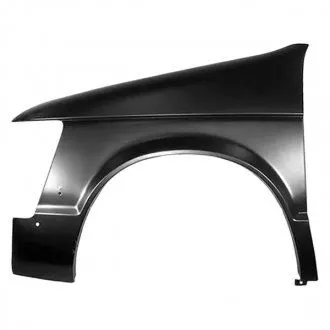
The full bumper type is the traditional type of fender where more material consumption is observed as a bigger size blank is used to produce the part & material is wasted while manufacturing. This type is used in the old designs of automobiles where it increases the overall weight and thus reduces performance. The maintenance also relatively more due to more surface.
(2) Half Bumper Type:
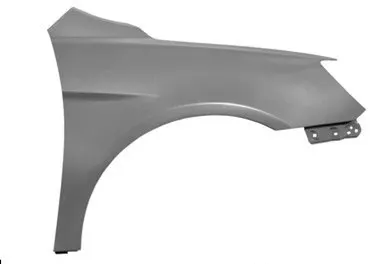
Half bumper type is the modern design where less material consumption is observed, so productivity increases by reducing the size of the blank and thus providing more performance. The maintenance also relatively low compared to the full bumper type.
Mounting points on Fender:
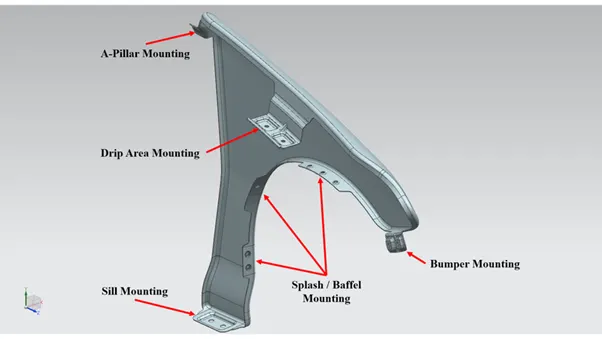
(1) Drip Area Mounting:
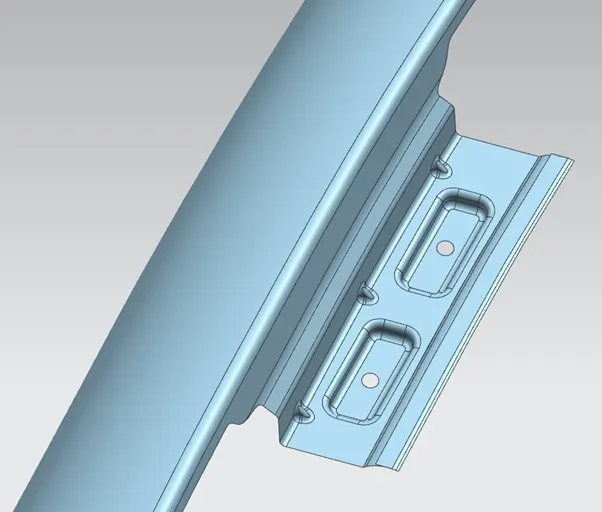
- It is the area where the fender is to be attached to engine housing through bolts. There are some standards to design the drip area, from the backside of the fender there should be 200mm clearance for cowl mounting and from the front the side the clearance should be 150mm for the head lamp.
- Cowl top part consists pf wiper motor and its instruments.
- Three darts are added on the longer side of the drip area in order to provide the stiffness and adds strength to the part. This helps the fender to not to vibrate and impact the forces outside of the fender during motion of the vehicle.
(2) Sill Mounting:
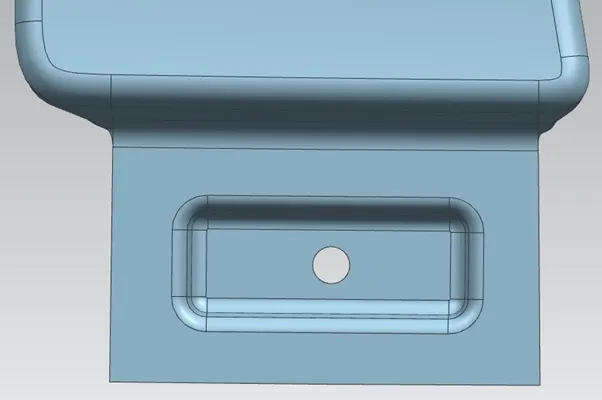
Sill is the panel directly below the bottom of the door supporting the floor and may be used to combine the floor and the body. The bottom end of the fender is mounted on the sill body for reinforcement of the fender panel, thus the sill mounting position is designed with holes and emboss.
(3) A-Pillar Mounting:
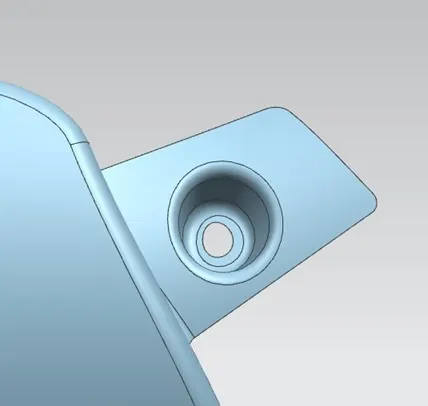
The A -pillar is the structural pillar that combines the body to the roof. A-pillar mounting is a vertical support on a vehicle. It holds the windshield set up and just downside to the A-pillar fender is mounted to hold the position.
(4) Bumper Mounting:
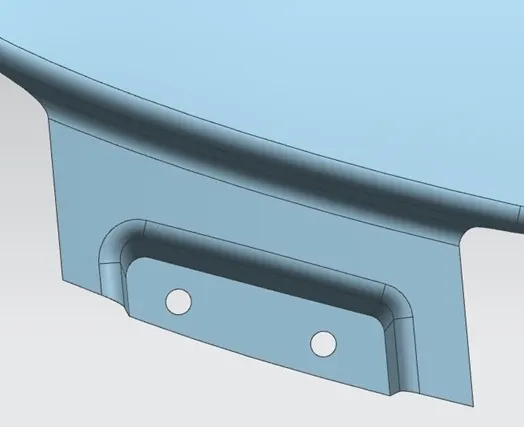
Bumper mounting area is used to fix the plastic bumper to the fender with the help of the fasteners.
(5) Baffle Mounting:
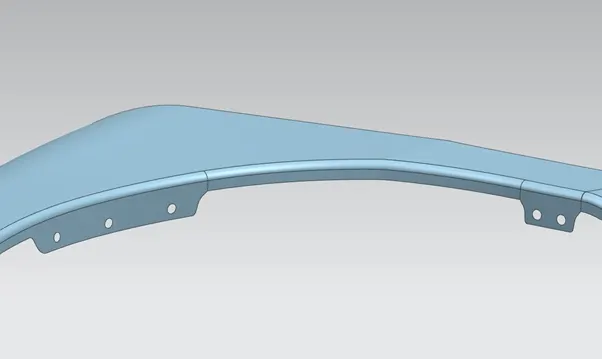
Baffle mounting or mudguard are clipping fit type of mounting on the inner side of the fender arch above the tyre. It protects the car engine compartment and pedestrians from causing injuries from chip out debris on the road when the car is in motion. They are mounted on the fender using a special type of locking clips which are made up of plastics.
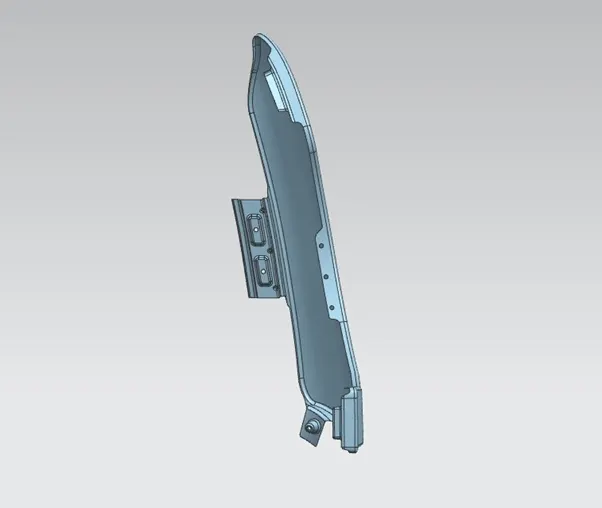
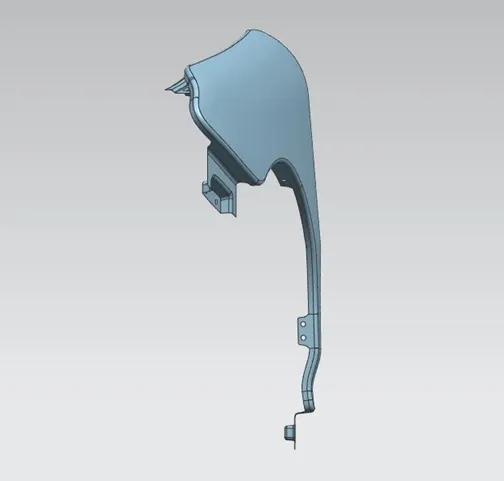
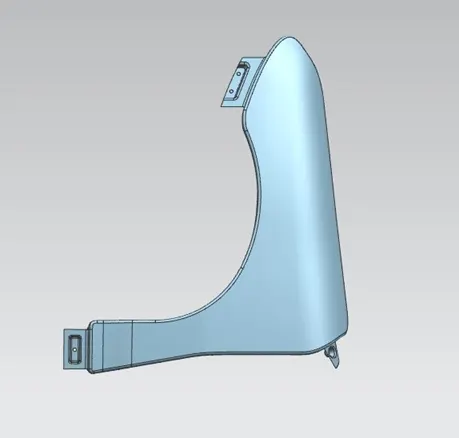
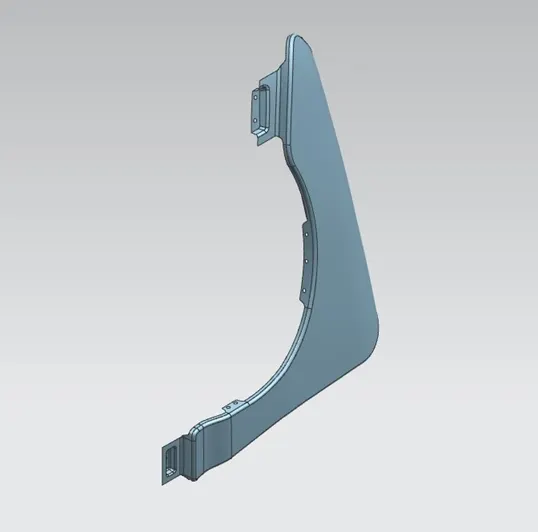
Different Views of Fender
Front View:
Top View:
Side View:
Isometric View:
CONCLUSION
A Front Fender is designed from the given skin data and master section with Drip mounting, A-pillar, Sill, Bumper and Baffle Mounts.