Fender Design
FENDER:
Fender is the part of an automobile that frames the wheel well.The primary purpose is to prevent the sand, mud,rocks,liquids and other road spray from being thrown into the air by the rotating tire.The automobile contains four fenders which covers four wheels. It is an aesthetic component/part of a car that frames the wheels. Prevention of sand, mud particles, and other road contaminants from being thrown into the engine compartment and also to the pedestrians by the rotating tires are the main purpose served by the fenders. The front fenders are separate components whereas the rear fenders are integrated with the body sides.
The Importance of car Fenders:
- The fenders are an intricate sheet of metal covering the wheel well of your car.
- Fenders are designed in a manner to provide resistance against wind and other roadside debris.
- When you travel on rough terrains tour vehicle might get minor scratches and dents which look no better. Frequent road bumps can cause your cars paint to chip off which needs a paint job done.
- The car fender are located on either side of the front and rear wheels. The front car fenders begin where the front door hinges run and end just before the bumper. The rear car fenders begin where the back doors close and terminate before the back bumpers.
- Fender is the side closing component for the engine compartment. It’s major role is to avoid chipping of sand, small stones and mud particles inside the engine compartment when the wheels rotate. Fender also plays a major role to prevent injuries for the pedestrians(The main purpose of the fender is to prevent the particles from hitting the pedestrians). Material Suggested : Aluminium, plastics, magnesium, and fiber materials.
TYPES OF FENDERS
- FULL BUMPER TYPE: These types of fenders were used in earlier models of vehicles. They contribute to the major increment of the steel weight by just covering the front headlights with respect to the bumper region. The problem associated with this kind of fender is there is a lot of wastage in the blank.
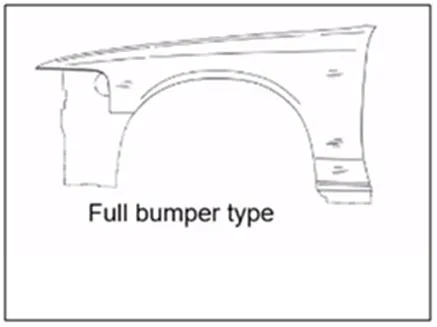
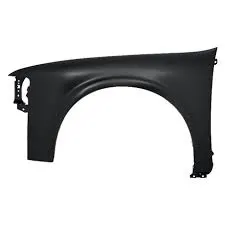
- HALF BUMPER TYPE: These fenders are mainly used for serving the purpose of cost-cutting and reducing enough proportions of the steel wait resulting in a reduction of the weight of the vehicle slightly. They can be economically manufactured, i.e by slightly increasing the blank size, we can produce two fenders at a time.
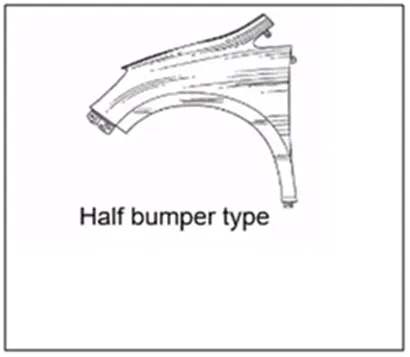
- FULL BUMPER TYPE: These types of fenders were used in earlier models of vehicles. They contribute to the major increment of the steel weight by just covering the front headlights with respect to the bumper region. The problem associated with this kind of fender is there is a lot of wastage in the blank.
- Sheet metal embossing is a type of a stamping process to create raised or sunken sheet metal with proper reliefs
- Bending and Flanging process is used for bending the sheet metal at the required angle
- Punching is a type of a forming process which uses a tool to punch a hole into the sheet metal Different mountings:
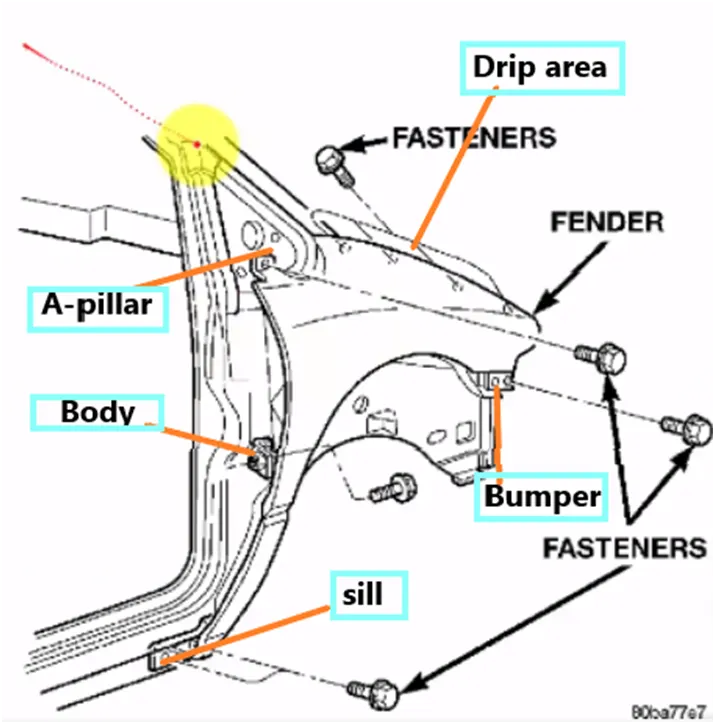
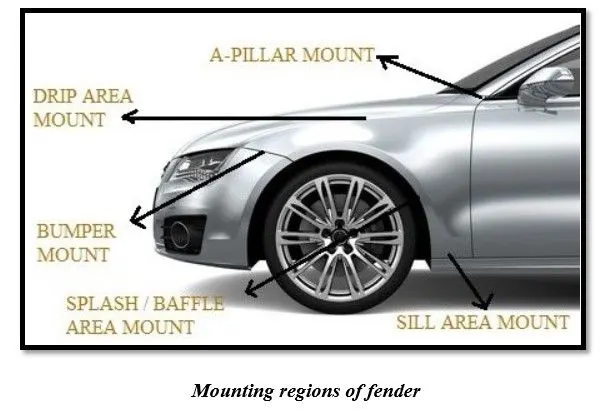
There are 5 mounting points in a Fender . They are
-
Body
-
A-pillar
-
Sill
-
cowl
-
Drip FENDER Design Using NX-CAD: Fender Images:
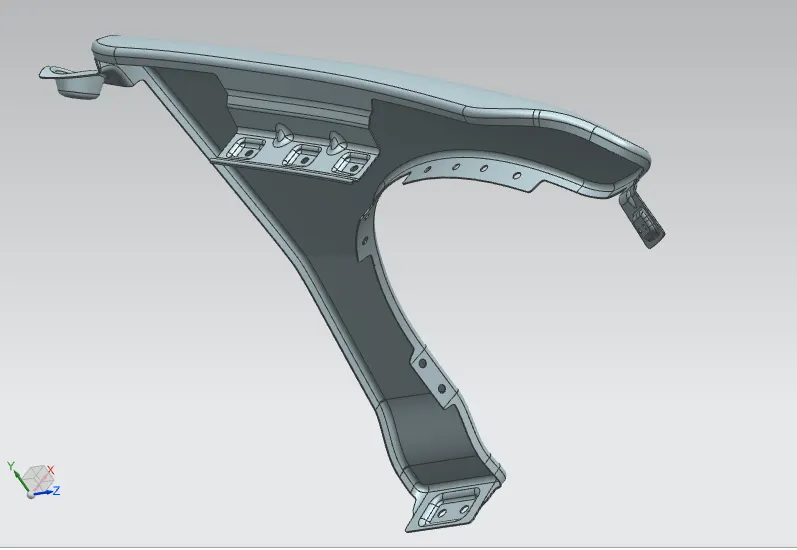
Front fender is designed based on the design standards :
General Considerations for Design :
Design parameters:
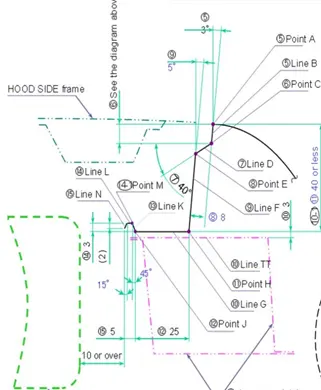
3 degrees spring back must be secured for the drip area to account for the spring back effect.
The clearance of more than 6mm must be left between the holes and the edges
The bend radius of the sheet should be more than three times the thickness of the sheet metal
The draft angle should be taken into consideration in order to create manufacturable parts.
FenderThickness is given 0.75 mm.
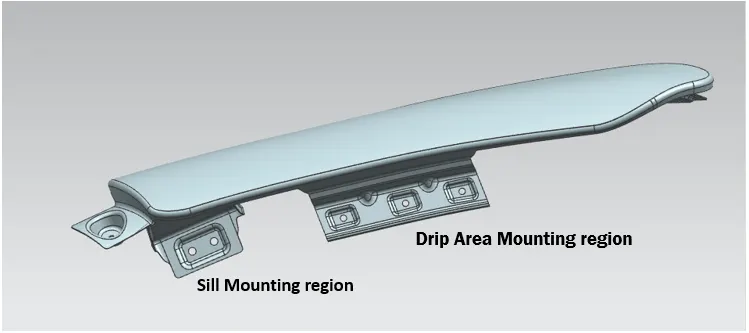
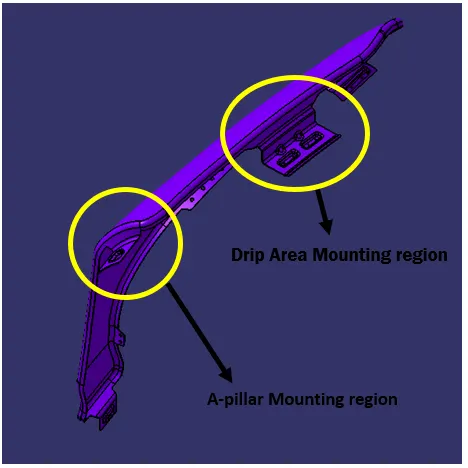
Drip Area Mounting region:
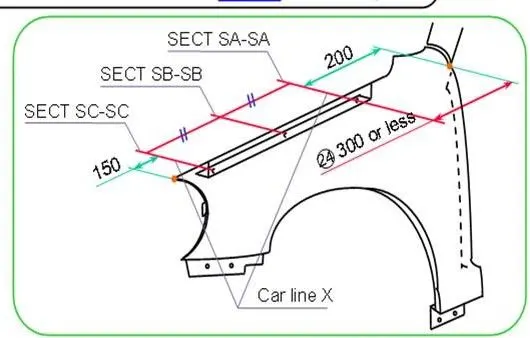
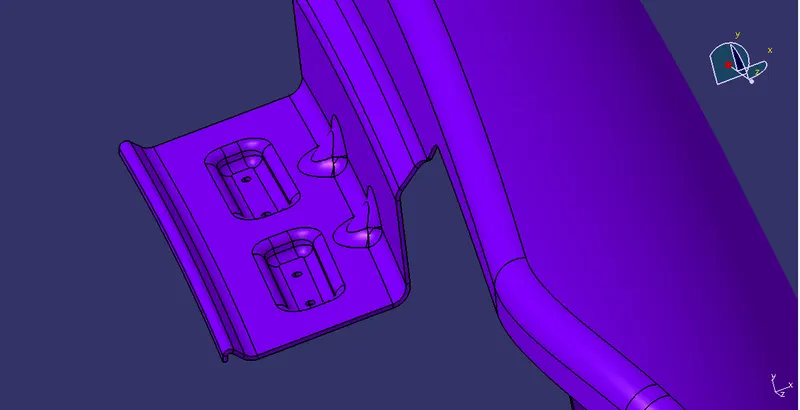
Drip area mounting is the part which connects the fender with the engine compartment. We use fasteners for joining the component. Designing the drip area has few constraints that there must be enough space at the front and rear end of the fender. At the rear end there needs to be space for the cowl top mount which carries the cowl top along with the wiper motor arrangement. And this must be 300mm or less.
The front end we know that the headlight arrangement occupies at least 150 mm. So now this must be attached to the engine compartment. This must be designed so that from seeing from outside there should not be any ugly components visible. And this part should be given embosses to avoid spring back effect
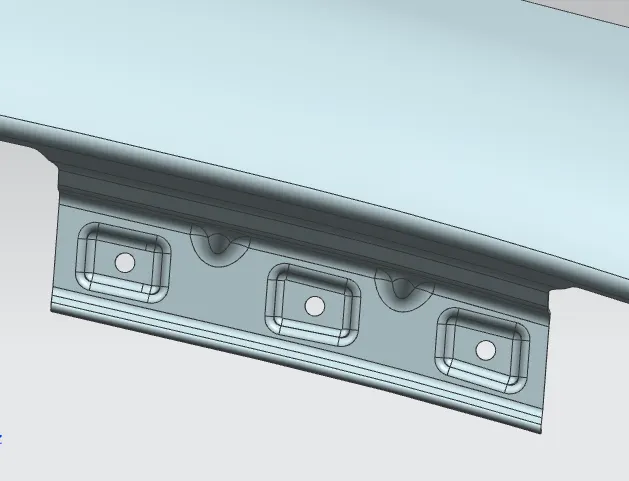
The drip area is the area with many flanges and the flanges are created by taking into consideration of the draft angle also
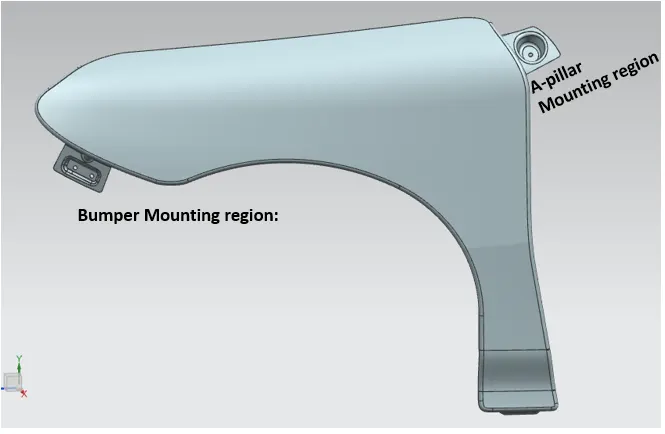
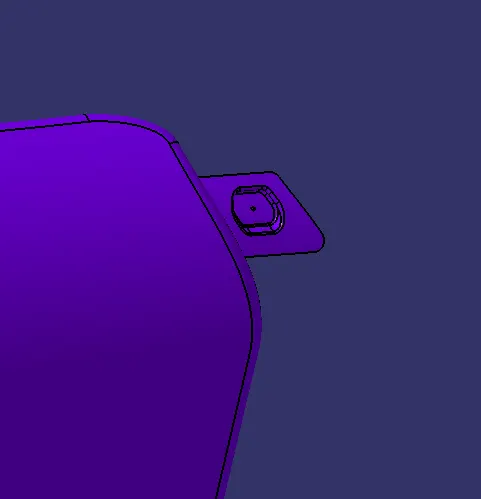
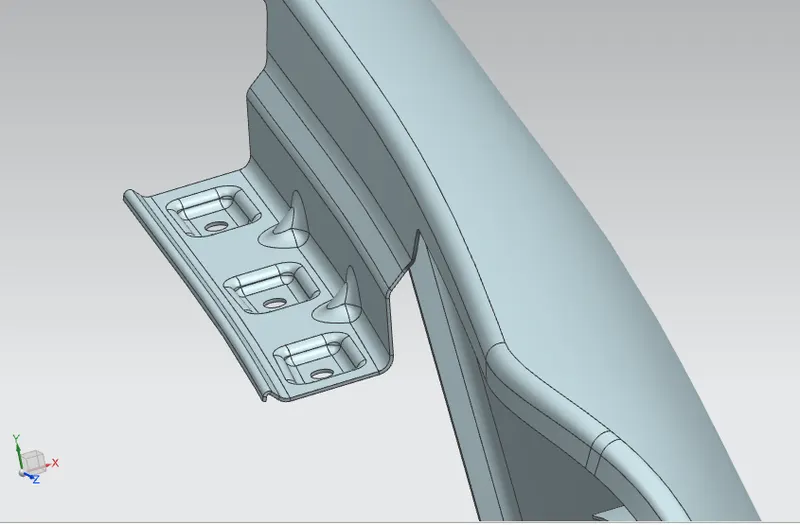 A-pillar Mounting region: This connects the fender with the A Pillar. A Pillar is the structure that combines body with the roof. This is the reason for windshield is in place. It is fitted with Fasteners and those will be kept out of human vision.The A-pillar is the structural upright that partially frames the windshield. A-pillars (one on each side of the body) are joined across the top of the windshield by the header rail. The base of the windshield where it meets the hood is called the cowl.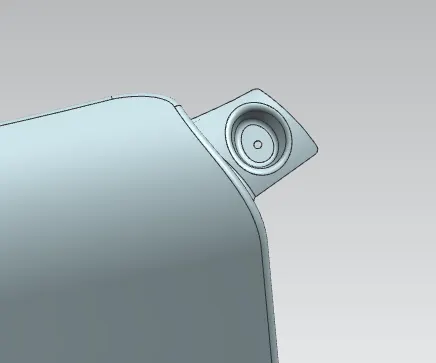
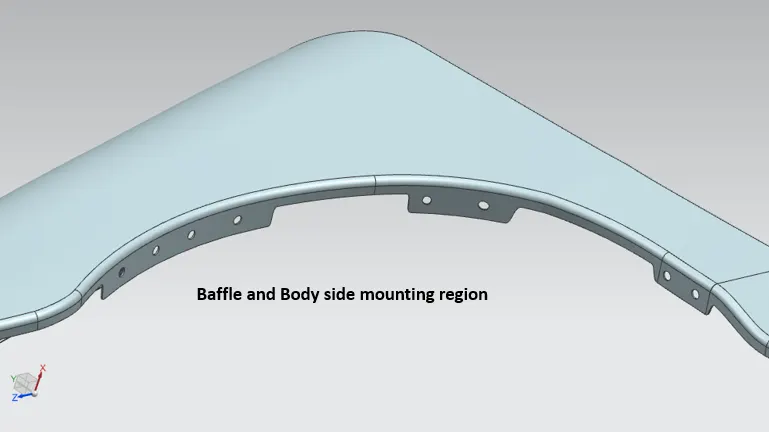
Body Mounting region: The region of the fender which is connected to the body side of the car
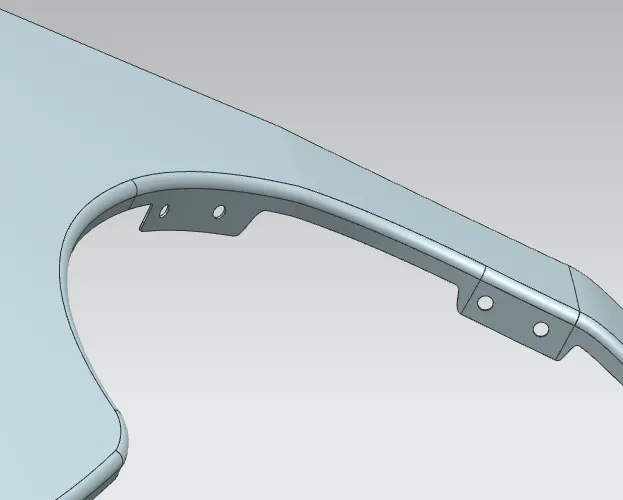 Bumper Mounting region: This Mounting connects the fender with the bumper. Bumpers are mostly made up of plastics. It is forms the front end of the car. During collision bumper hits first. Fasteners are used to fit the portions. So we provide holes here.
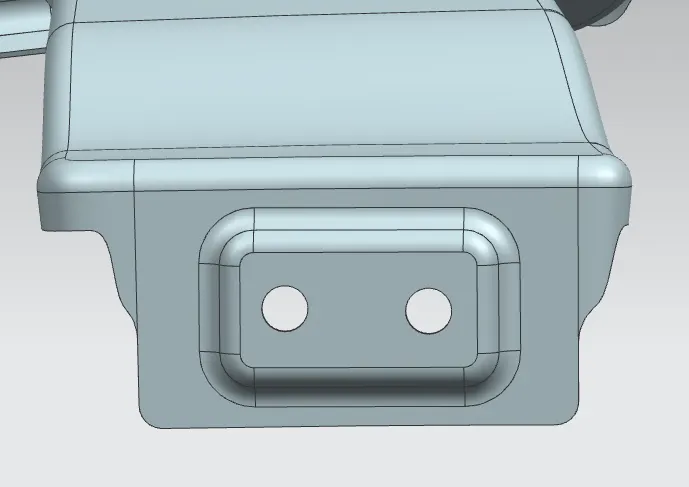
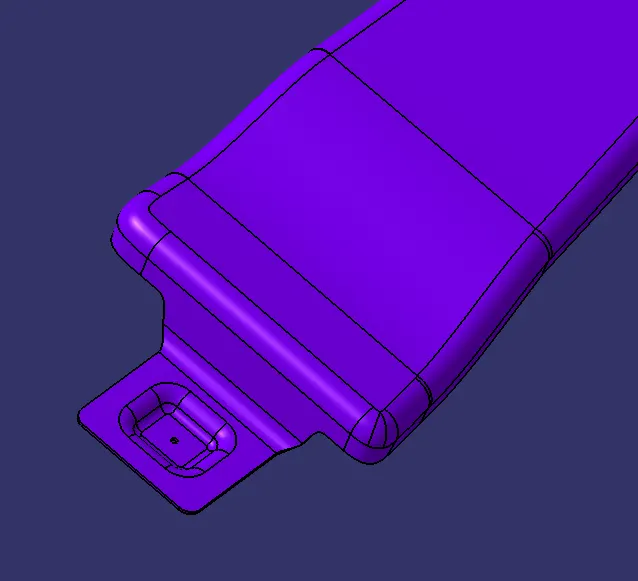
 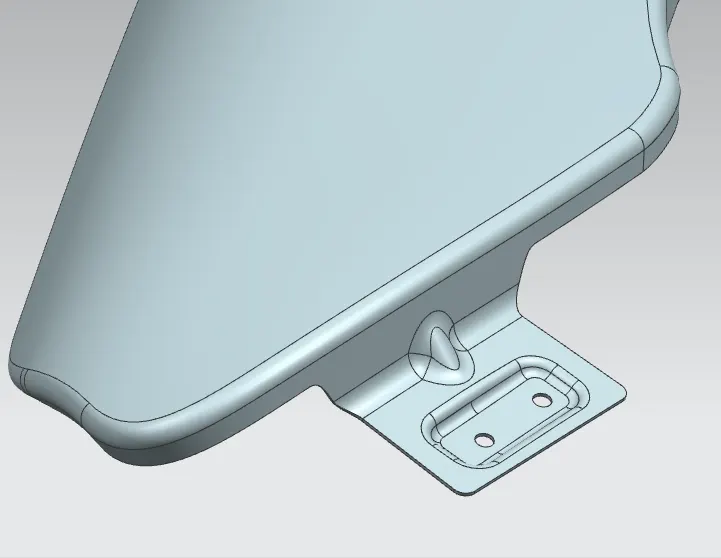 Sill Mounting region: Sill Mounting is used to link the fender with the sill. Sill is the under side portion of the door. M5 Fasteners are used to fit the Sill and the fender. So emboss and holes are provided in the sill mounting.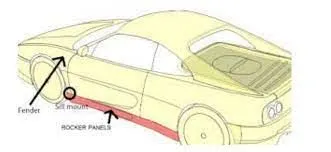
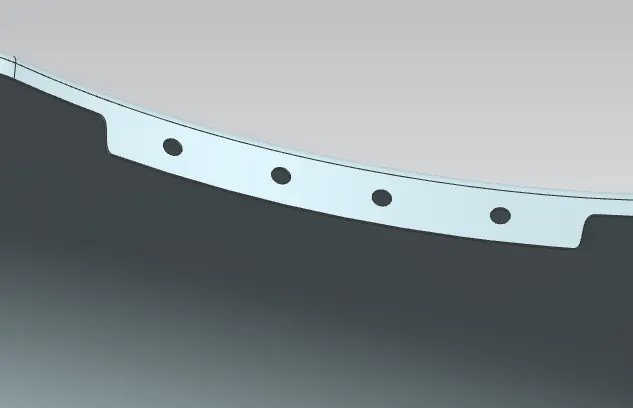
 Baffle region: This region is used to attach the wheel Arch with the fender. Also called Splash Cover Mounting, Splash cover protects the car tyre debris entering into the engine compartment. This mounting is given as holes that holds the cover in place. This plastic cover restricts small rocks, sand and mud splashing into the car.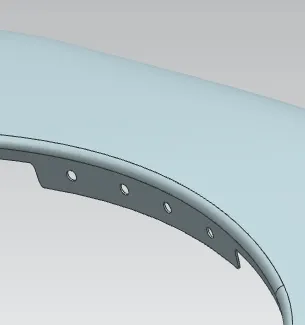
 Isometric View of Front Fender: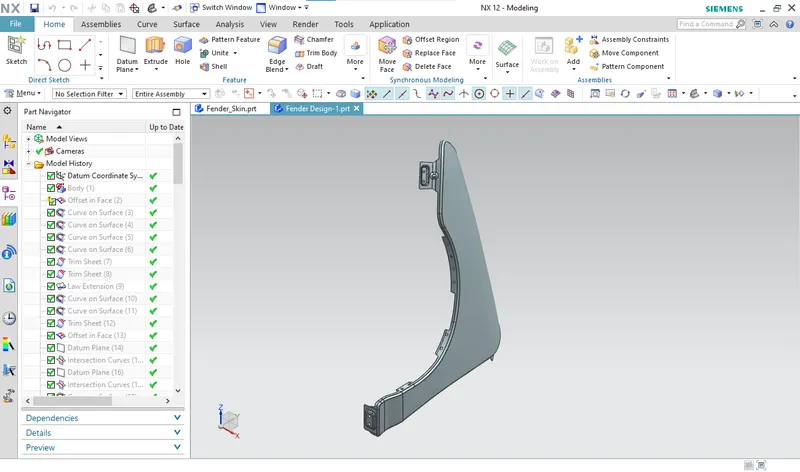
 FENDER DESIGN USING CATIA : FENDER MOUNTING REGIONS :
  Drip Area Mounting: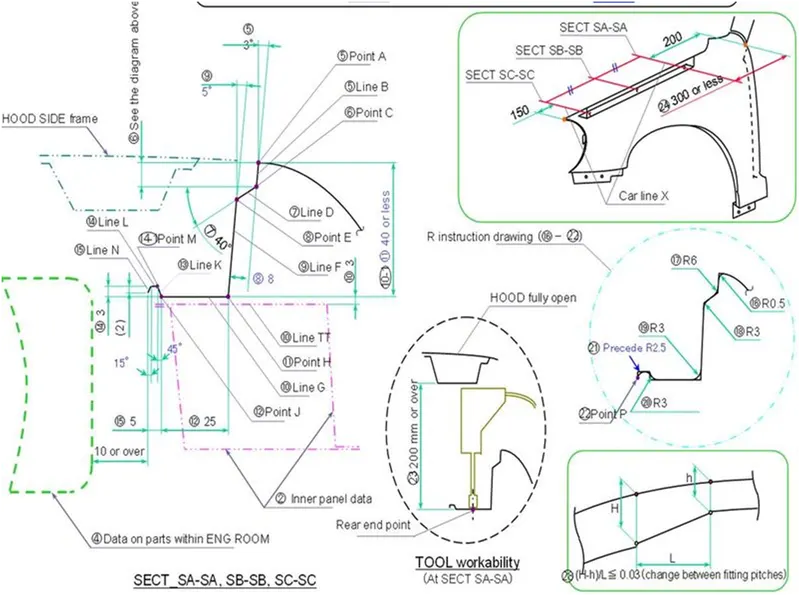
 Sill Mounting:
  Bumper Mounting:
 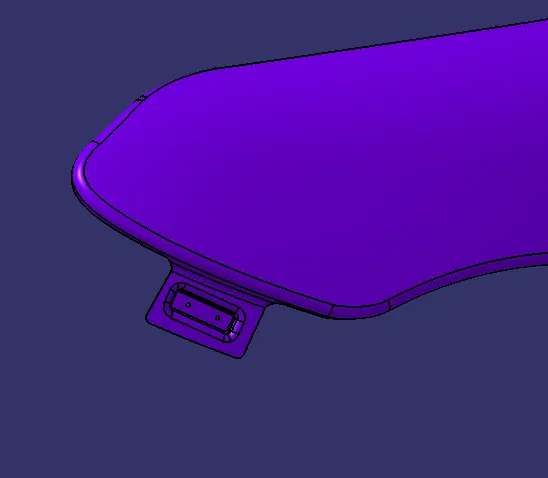 A Pillar Mounting:
  Splash Cover Mounting: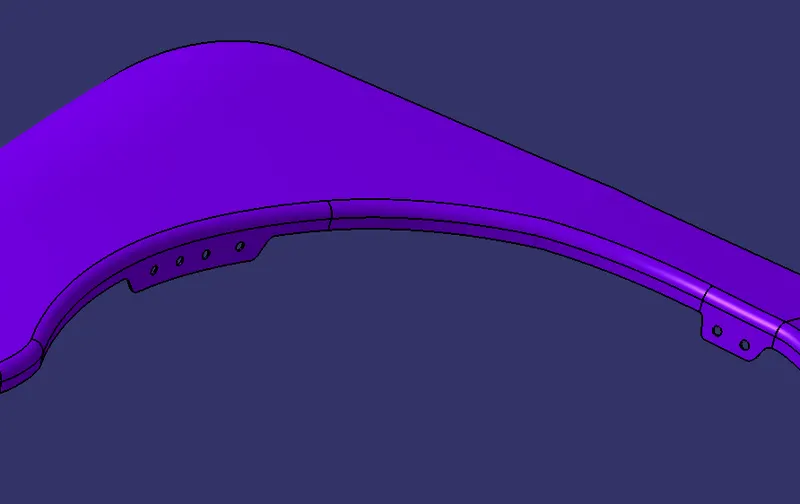
MANUFACTURING PROCESS:
Bumper is made by reaction injection molding (RIM). RIM is a process that conserves raw materials and reduces costs. It is similar to injection molding, But here we use thermosetting polymers. This requires a curing reaction to occur within the mold. Common items made via RIM are automotive bumpers, air spoilers, and fenders
Overall View of the fender with mounting i designed,
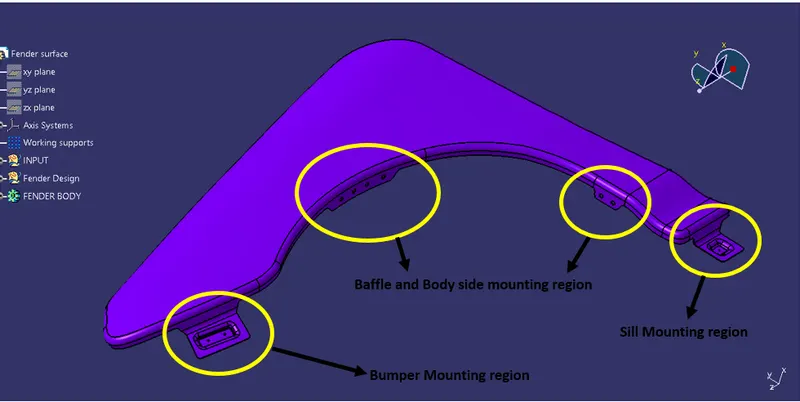
 TREE STRUCTURE :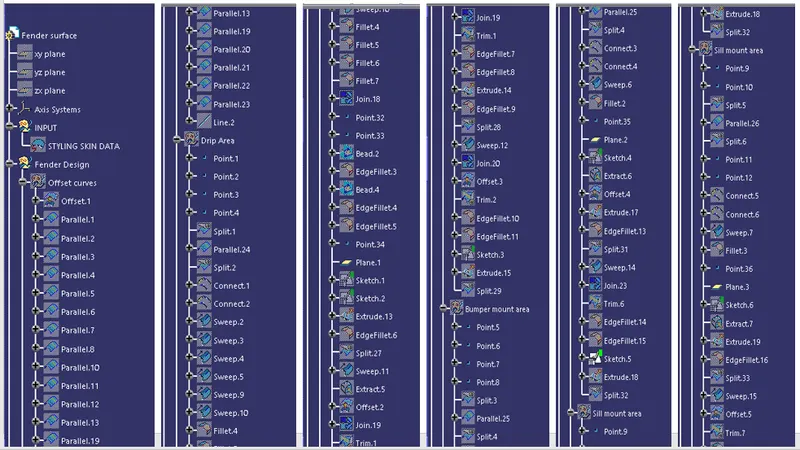
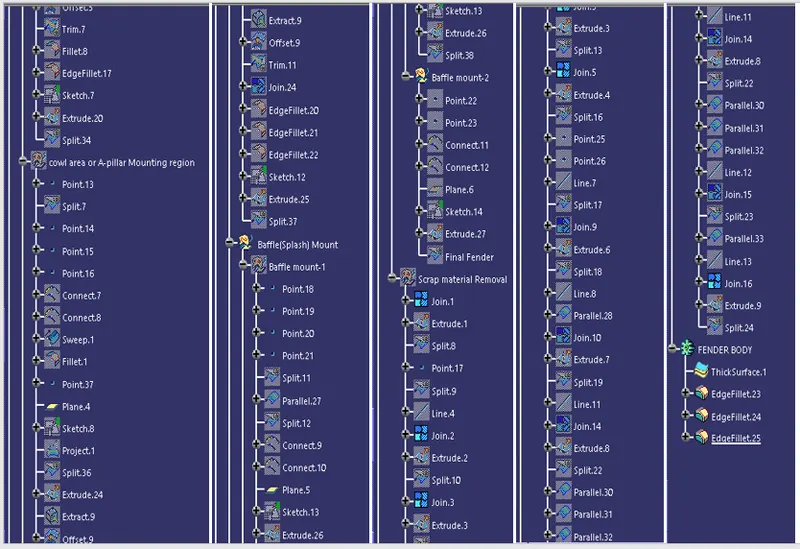
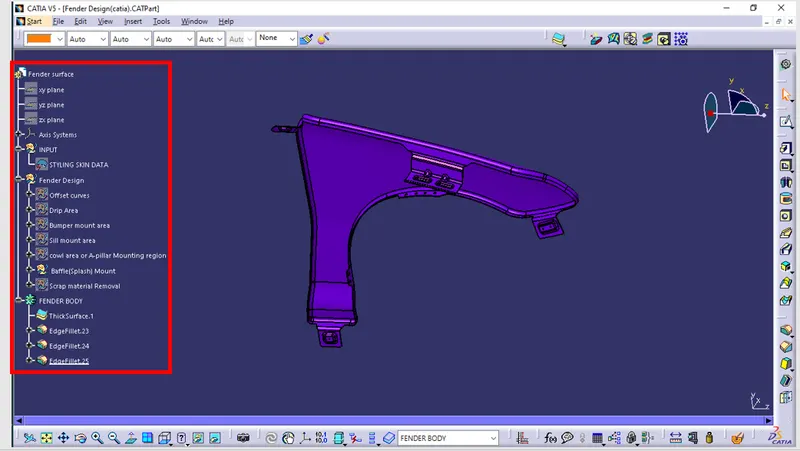 Thus front fender designed with Drip Area, A-pillar, Bumper, Sill, Body and Buffle using nx-cad and catia as per the design and Engineering standards.