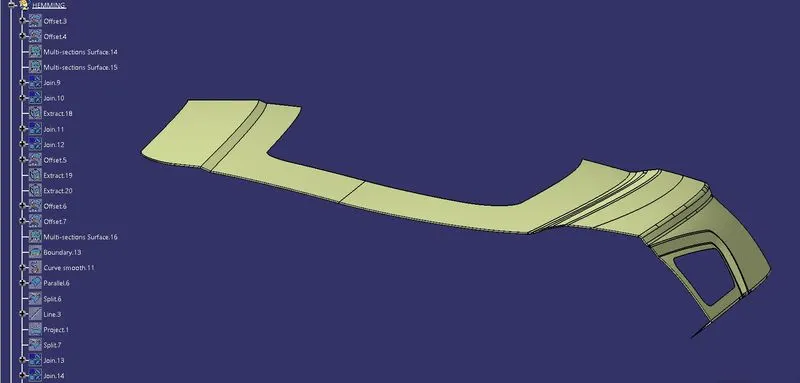
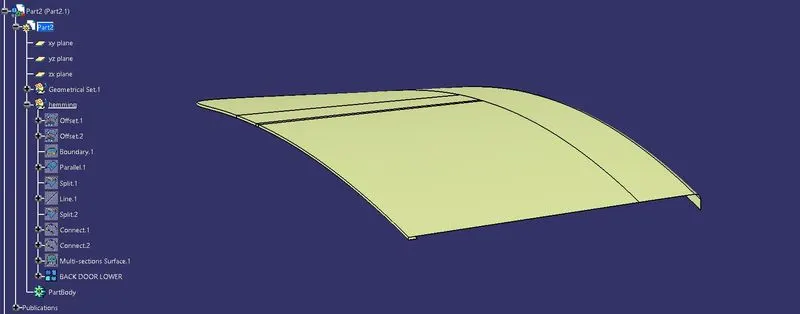
Design of backdoor
SHEET METAL DESIGN
While designing components top priority is for function and the second is for cost-effective manufacturing process selection.
- Keeping parts simple
- Lesser material yield
- Consideration of minimum manufacturing stages
- Function: Most low stress (and much high stress) components requiring moderate stiffness can be created from sheet metal. Sheetmetal is particularly effective for parts that function as containers, chutes, and gates, but can effectively be used for mounting brackets as well.
- Attachment method: Sheetmetal parts are typically joined by welding, riveting, or via fasteners.
DESIGN TIPS
- Study Manufacturing process available.
- Shape: Use simple shapes such as straight cuts, bends, and punched holes. Whenever possible, avoid internal cuts, curved cuts, and close-fit holes.
- Simple: Complex sheet metal parts are difficult to manufacture using the tooling available. Typically, complex sheet metal parts can be broken down into multiple simple parts.
- Material specification: Choose an optimum material and thickness.
- Tolerances: In modern industry, parts are made using high-precision CNC lasers and bending equipment. However, sheet metal features are generally cut by aligning the layout lines by eye, so design sheet metal parts to have large feature tolerances.
- Order of operations: The order of forming operations is important for sheet metal parts. Holes and cuts must be created before bending. The bending sequence can typically be performed in only one or two ways. Be familiar with the available tooling and processes and do not design parts that cannot be fabricated using the available tooling in the lab.
BACKDOOR
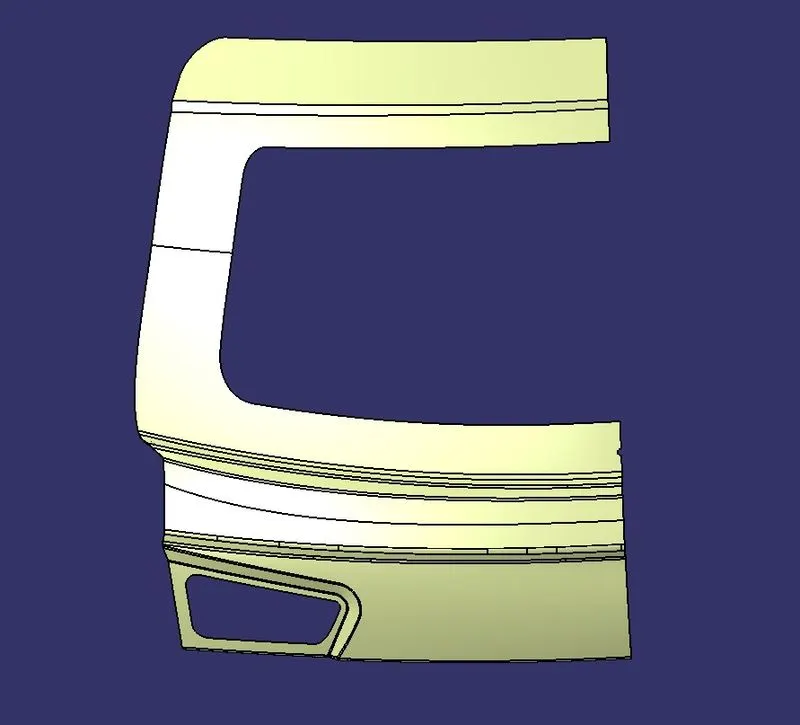
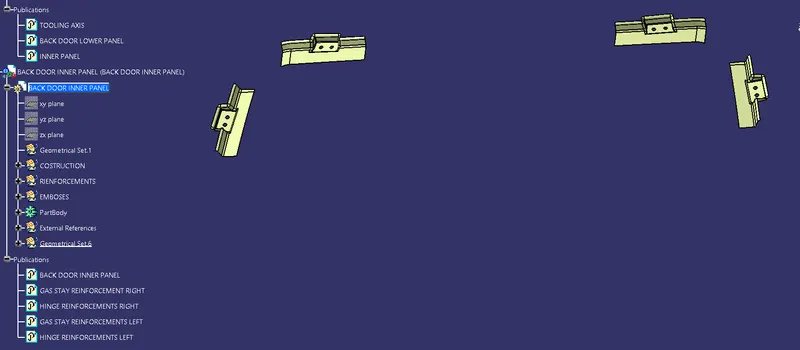
A car backdoor consists of an inner pannel, 2-3 outer panels & reinforcements. The car backdoor is mainly made of steel or aluminum based on the budget of a car. The inner panel consists of hinge reinforcement, gas stay reinforcement, latch, and striker reinforcement & wiper motor housing.
CHARACTERISTICS
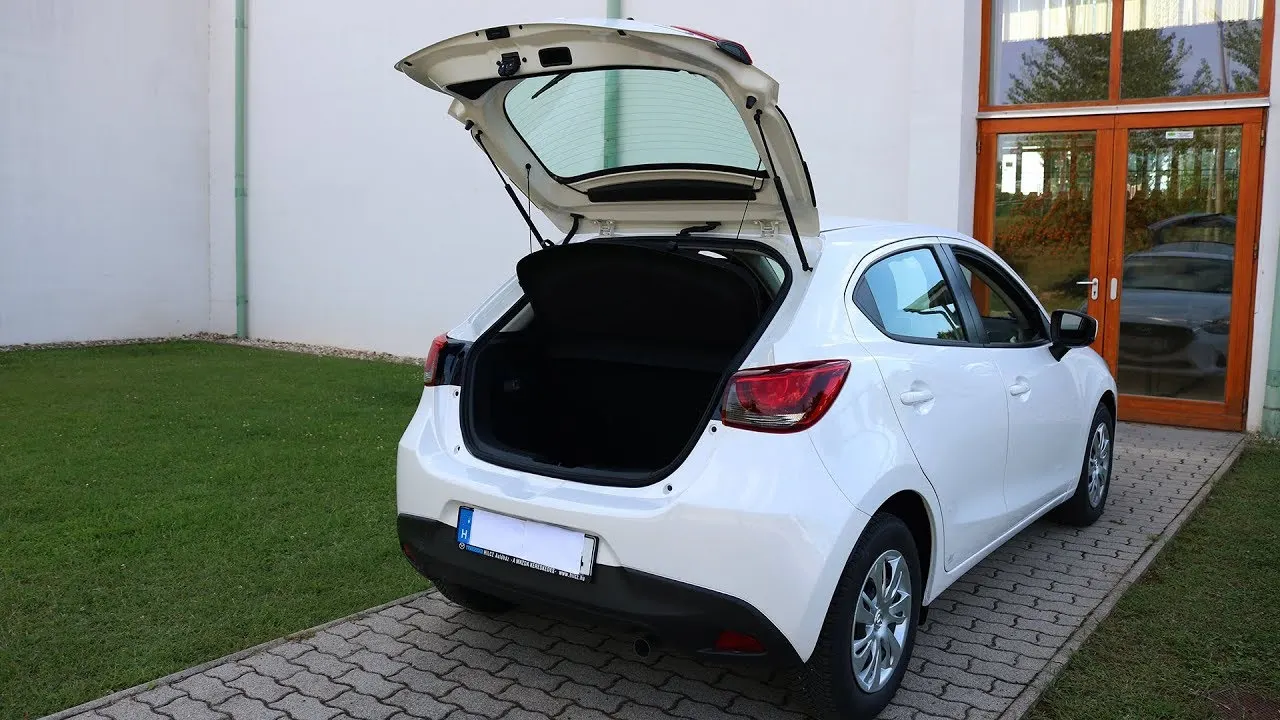
The distinguishing feature of a hatchback is a rear door that opens upwards and is hinged at roof level (as opposed to the boot/trunk lid of a sedan, which is hinged below the rear window). Most hatchbacks use a two-box body style, where the cargo area and passenger areas are a single volume. The rear seats can often be folded down to increase the available cargo area. Hatchbacks may have a removable rigid parcel shelf or flexible roll-up cover to cover the cargo space behind the rear seats.
Why Inner Panel
The inner door panel is a component that is used for strengthening the door assembly and it is one of the most important components on which all accessories are mounted like hinges, glass guide channel. The back door inner panel is mounted with the Roof. The weight of the Door inner panel is about 7to8kg depending upon its material and its thickness. The possible method is the integration method. In the integration method, the part is stamped out of a single blank. This reduces the number of tools needed; the assembly cost, and eliminates any fit ability problem. However, the design engineer is forced to work with the same grade, thickness, and corrosion resistance throughout the entire part. Since the most demanding of all these conditions must be satisfied for the entire blank, this would increase the cost and weight of the part.
MATERIAL USED
The material used for existing inner door panel 0. 7mm thick, EDD 513,1.6mm thick, St40e
Designing of Back Door using CATIA V5
CRITERIA
HATCH BACK TYPE OF CAR
1. Compact design:
Hatchback cars offer space and convenience over luxurious sedan cars. They offer the convenience of driving in narrow spaces where a usual sedan or SUV may not fit. For example, driving a hatchback on a traffic-laden road is easier as compared to driving larger models of other types of cars.
2. Basic controls:
It is easier to learn to drive on a hatchback car as compared to a sedan or SUV. Sedans may have complex mechanisms like additional gears or complicated control panels. This is not the case with a hatchback. These cars consist of some of the most basic models. Thus they are considered to be the best for new drivers. If you have a learning driver in your family, you can consider buying a hatchback rather than choosing other types of cars.
3. Low maintenance cost:
India serves as a huge market for hatchback cars. Models like Maruti Wagon R are manufactured in the country. This is one of the main factors that contributed to the maintenance cost being lower as compared to other types of cars. The availability of spare parts is high when it comes to Indian automobile manufacturers. This not only speeds up the repair/replacement process but also lowers the final cost.
4. Enhanced boot space:
As mentioned earlier, a hatchback car is capable of carrying a decent amount of goods/load plus passengers. To serve this purpose, you will receive a large boot space in your hatchback car. This makes it an ideal fit for families with fewer members, singles, and people who travel alone and carry a load. Nowadays, people prefer to change the fuel type of their car to CNG due to its affordability. The CNG kit mainly consists of a large cylinder filled with CNG fuel and control options. Enhanced boot space of hatchback cars serves as a perfect fit for installing the CNG kit, making this category of cars even more popular.
5. Affordability:
In India, buying a hatchback is cheaper than buying a sedan or SUV. We have numerous options like Maruti Alto, Maruti Wagon R, Tata Tiago, Hyundai Santro, and many more that cost less than 5 lakh rupees. As mentioned earlier, their maintenance cost is also low. Thus, a hatchback is a complete package consisting of useful features and low cost. Those who wish to avail more features can always opt for premium hatchback models. The above factors make hatchback cars a popular choice in the Indian market.
Parts Of the BackDoor
Inner Panel
Hinge Mounting Bracket ( LH & RH )
Gas Stay Bracket ( LH & RH )
Wiper Motor Support Bracket
Latch
Latch Reinforcement
Hinge reinforcement ( LH & RH )
Gas Stay Reinforcement ( LH & RH )
INNER PANEL
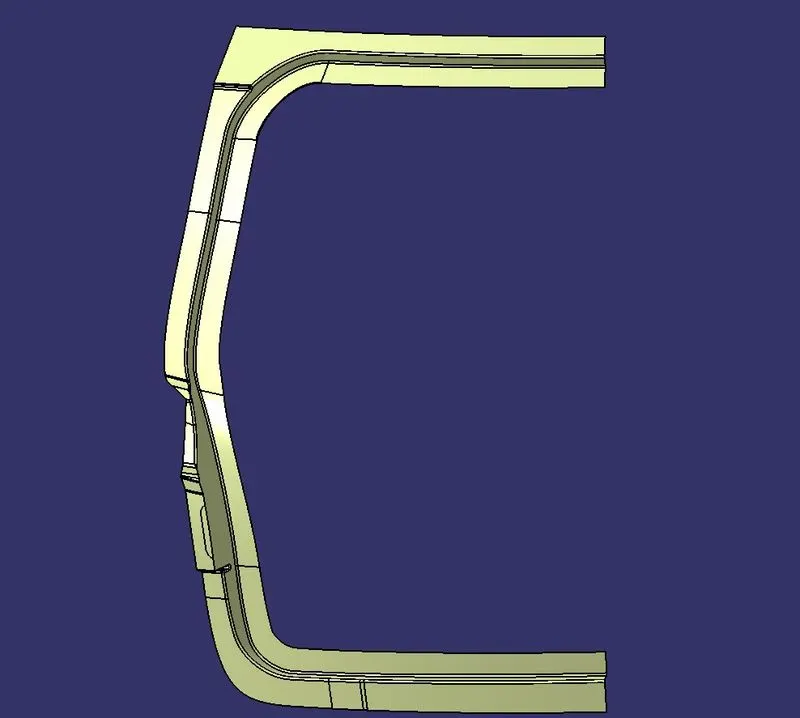
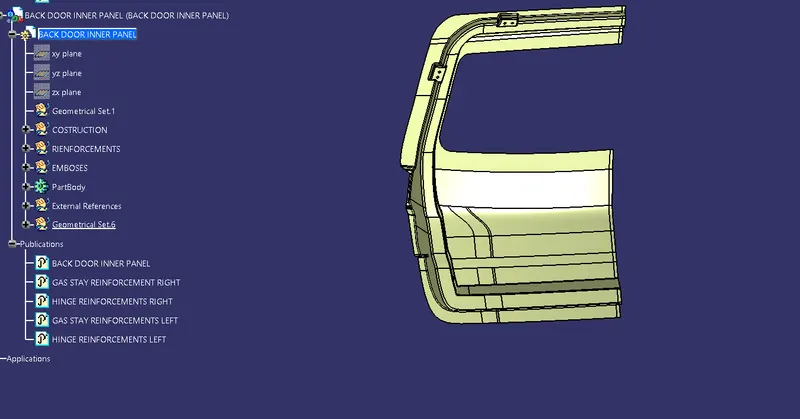
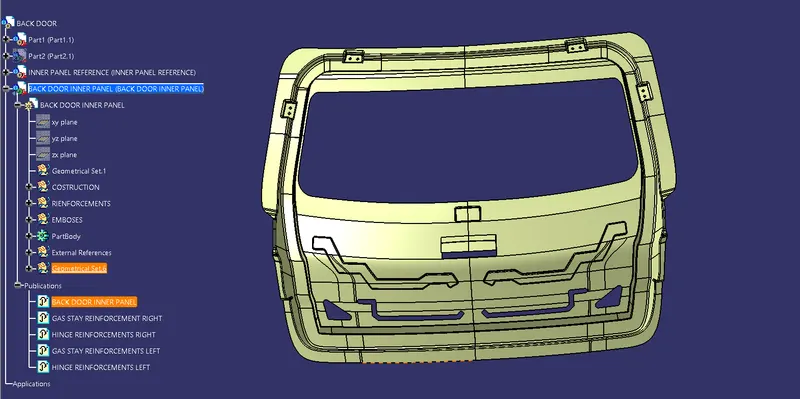
The inner door panel is a component that is used for strengthening the door assembly and it is one of the most important components on which all accessories are mounted like hinges, glass guide channel, and gas stay. The back door inner panel is mounted with the Roof. Inner is mounted with the outer panel with the help of the hemming process.
- Materials used for the Inner panels are steel, Aluminum.
- For giving more strength to the inner panels by Adding extra reinforcements to strengthen the parts.
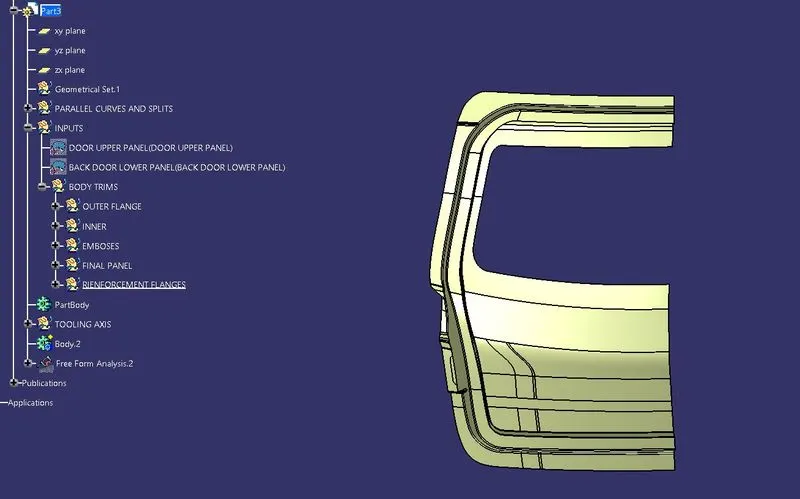
The above picture shows the inner panel for the Back door of a car.
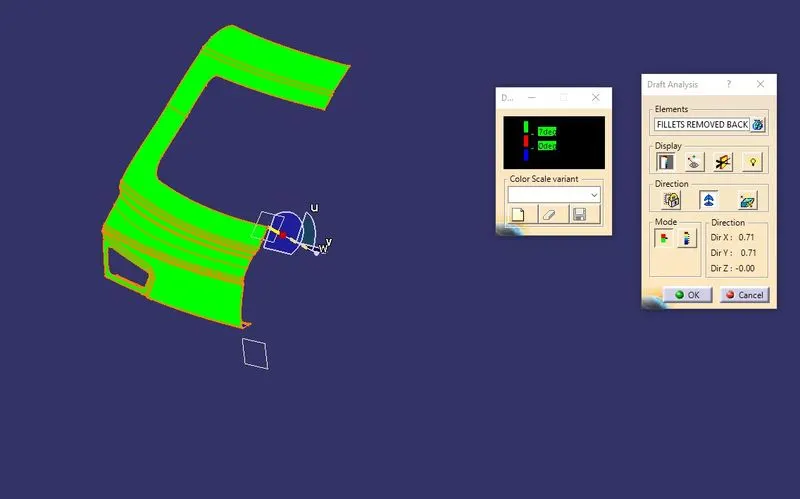
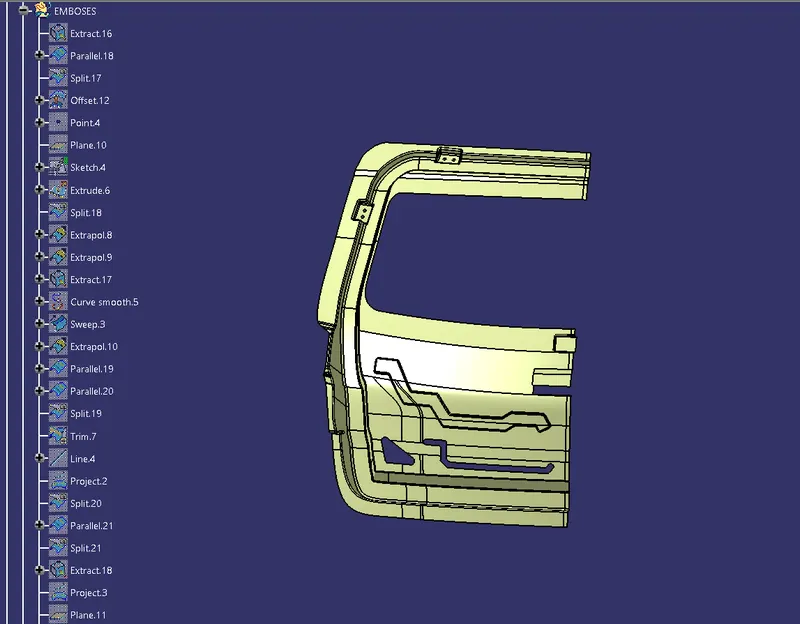
In the Inner panel, I used embosses, Outer panel and inner panel mounting area, space for Harness, Wind Glass Mount and fillets, No sharp corners
EMBOSSING
Embossing is a metal forming process for producing raised or sunken designs or relief in sheet material using matched male and female roller dies, theoretically with no change in metal thickness, or by passing sheet or a strip of metal between rolls of the desired pattern.
- Metal sheet is drawn through the male and female roller dies producing a pattern or design on the metal sheet. Depending on the roller dies used, different patterns can be produced on the metal sheet.
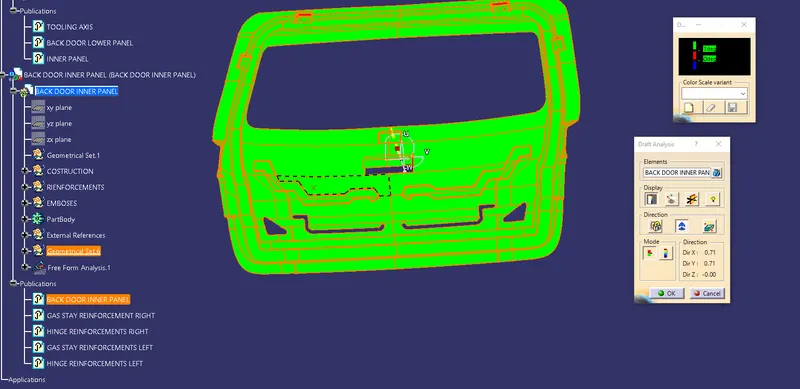
- Emboss should be in 7 degrees to 25-degree incline in angle and it should not be in a 90-degree angle, why because when we do stamping in manufacturing the stamping tool fits the sheet metal hence it will not come out of that sheet metal, So this is the main reason why the emboss face is in angle.
Characteristics of the metal embossing process include:
- Its ability to form ductile metals,
- Its use in medium to high production runs,
- The ability to maintain the same metal thickness before and after embossing,
- The ability to produce unlimited patterns, depending on the roll dies, and
- The ability to reproduce products with no variation.
Creating emboss in the outer panel direction because when a collision happens from the backside of the car this impact initially falls on the embossed faces then force dissipates according to the design of embossing then the remaining force hits the inner panel. For this case I designed my emboss towards the outer panel direction.
- Located within the embossing stand itself are two engraved and mated hardened steel rolls, geared together to maintain top-to-bottom pattern registration. The width and diameter of these roles depend on the strip width, material thickness, pattern depth, and material tensile strength and hardness.
- In most machines, the upper roll blocks are stationary, while the bottom roll blocks are movable. The pressure with which the bottom roll is raised is referred to as the tonnage capacity. This figure also depends on the aforementioned parameters.
- Embossing machines are generally sized to give 2" of strip clearance on each side of an engraved embossing roll. Many embossing machines are custom-manufactured, so there are no industry-standard widths. It is not uncommon to find embossing machines in operation producing patterns less than 6' wide up to machines producing patterns 70"+ wide.
- The illustration that follows provides a two-dimensional look at a typical embossing line setup with an embossing roller in the middle. The illustration shows the metal sheet entering the roller, and then the embossed sheet leaving toward the drawing rollers
- Embossed metals are used in industry for two reasons: aesthetic and functional. Aesthetic applications also include appliance panels, building products, elevator panels, garage door panels, automotive trim, metal office furniture, and others.
- Functional applications are those in which a performance characteristic is enhanced. This can include a metal product's ability to disperse liquid more effectively, reduce friction and static, increase a metal panel’s stiffness and rigidity, increase a metal surface area for acoustic or heat transfer applications, and improve traction.
- The embossing process can produce a variety of patterns. Some of the most common patterns include stucco, leather grain, wood grain, weather grain, and rough sawn cedar. Most embossers will tool to form any needed pattern, depending on the cost parameters involved.
Materials commonly used in the metal embossing process include:
- Aluminum (All Alloys)
- Aluminum (T1/T2)
- Brass
- Cold rolled steel
- Copper
- Galvanized steel
- High strength, low alloy, steel
- Hot rolled steel
- Steel (All Alloys)
- Zinc
PROCEDURE