Challenge 5 : Concept Modeling of Car Bumper
Challenge : 1
- Title of the Project:
Development of Front bumper of Abarth 500 using Alias Auto Studio
- Objective
To build the Bumper of the car using the Curves traced from the given blueprint of the car model.
- Introduction
Concept Sculpting is more interesting and skill full work, where we can bring our design from paper sketch to 3D model. Concept sketch is brought to work area of modelling tool, tracing out outline structure of the model. Curve tracing is more essential to build the model, which plays bounding pillar of the surface structure. Proper Curve tracing of the model makes design easier to fill surface and makes the design more aesthetic.
- Design methodology / approach :
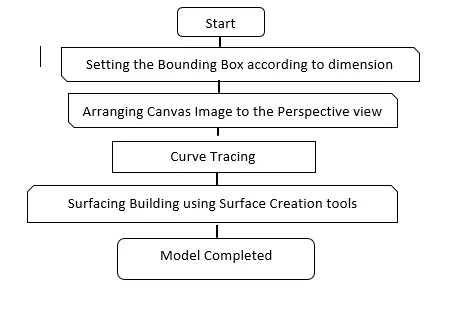
A design approach for modelling this Bumper Part has been briefly explained below using flow chart
5.Description of Modelling:
Concept modelling is done by various methodology, here we have blue print of the Bumper part. It’s easier to develop the model by tracing out the curves of the bumper by curve generate options. Once the curve networking is done, we pour the surfaces to curve which gives volume to your model.
Step 1:
In the working layout we are going to set the bounding box according giving dimension in the blue print of the car. Then import the canvas image and place inside the box proportionally as shown below in the figure.
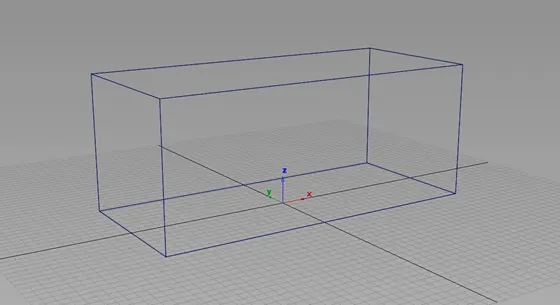
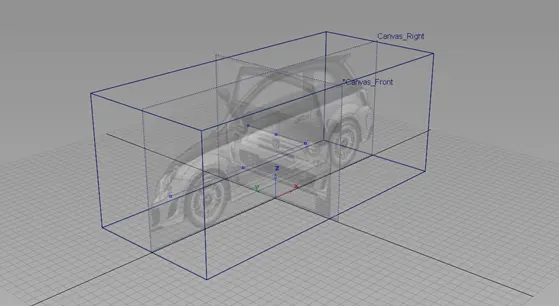
Once the canvas images arranged according to the view, curve tracing has been initiated by using the key point curve tool with maximum 5 degree curve. This curves are arranged according to the shape of given blue print by the stretching CV hulls in all proportion view to build as 3D object.
To achieve the class A surface, the patch is aligned to the nearby surface to achieve the surface continuity by using Object Edit – Align option shown below.
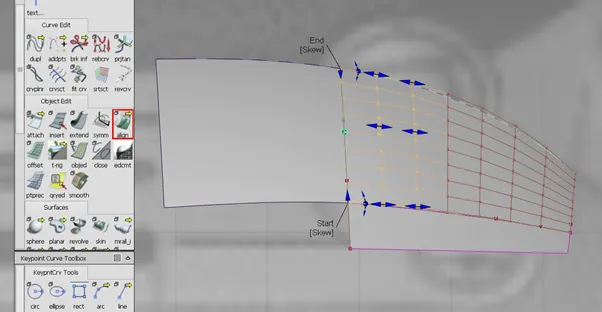
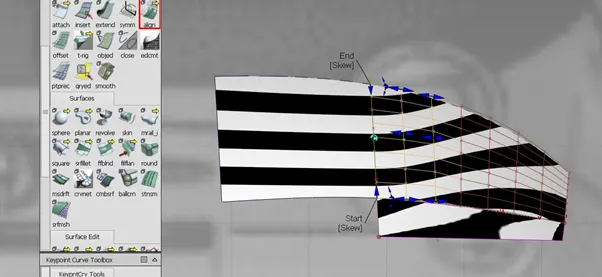
The unwanted surface are removed by using trim option, in order to required shape by projecting curve on surface and trimmed out.
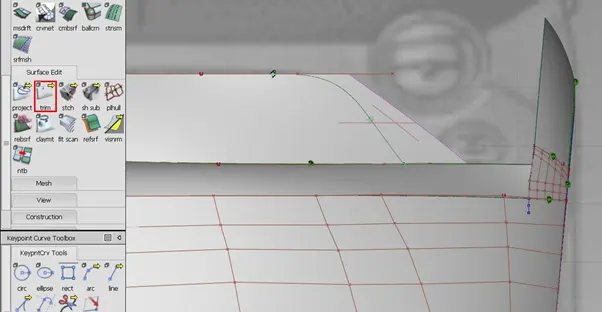
Once major surface are completed and then started to detailing to look the model as aesthetic look. Then smooth the corners of sharp edge by surface fillet by chord option as shown below.
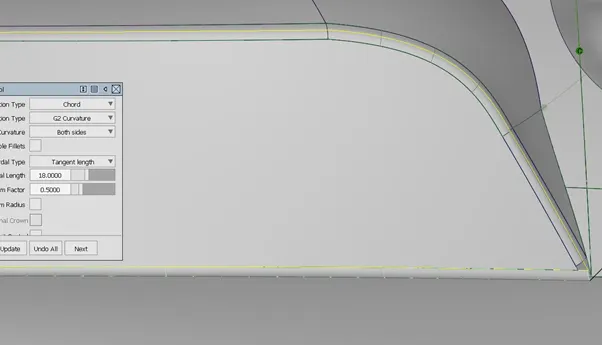
The design of the Bumper is Symmetry model, so once build one side of the car and it is easily make transition to complete both by using Duplicate - Object in the tool option.
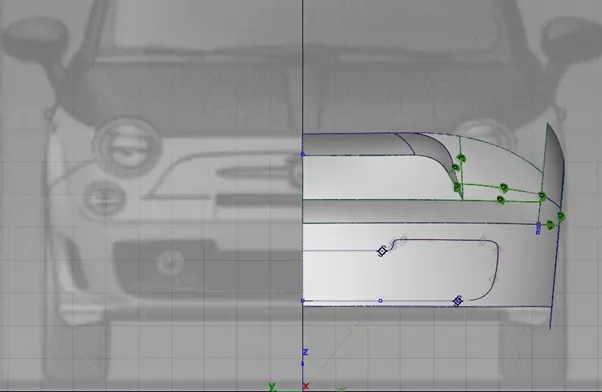
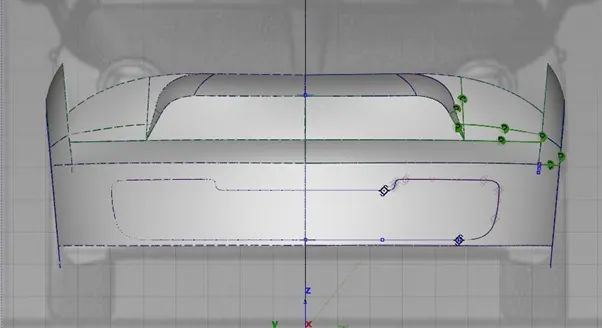
6. Screenshots of Model in the report.
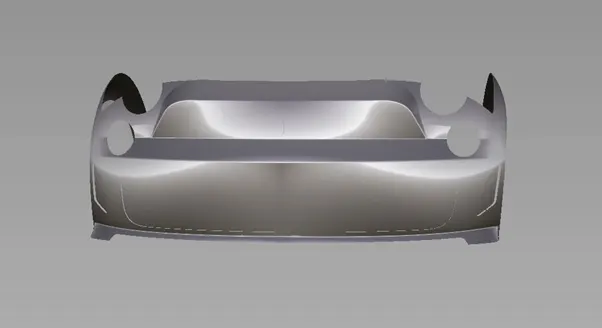
Front View of the Bumper Model
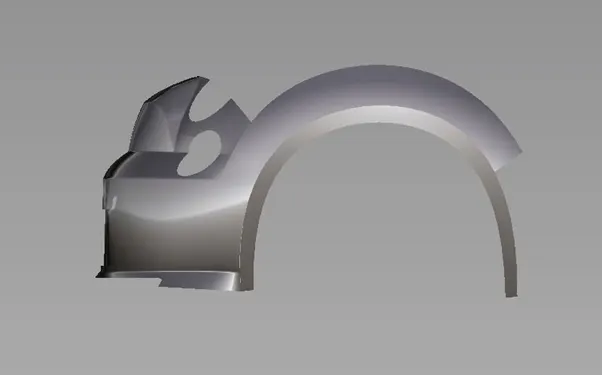
Side View of the Bumper Model
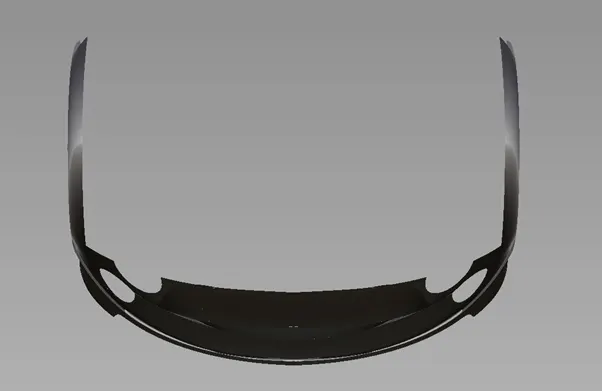
Top View of the bumper Model
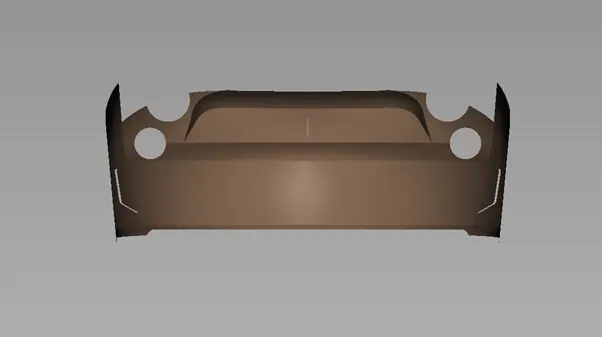
Clay Model Shading of the Bumper
7.Conclusion
Modelling of Bumper has been developed successfully by using Curve networking and Surface volume. Surface continuity has been achieve at required area, it is shaped according to the proportion in perspective manner. Modelling strategy of the Bumper part has been discussed briefly with feature used to make surface volume in the pictorial representation.
Challenge 2:
- Title of the Project:
Development of Rear bumper of Abarth 500 using Alias Auto Studio
- Objective
To build the Bumper of the car using the Curves traced from the given blueprint of the car model.
- Introduction
Concept Sculpting is more interesting and skill full work, where we can bring our design from paper sketch to 3D model. Concept sketch is brought to work area of modelling tool, tracing out outline structure of the model. Curve tracing is more essential to build the model, which plays bounding pillar of the surface structure. Proper Curve tracing of the model makes design easier to fill surface and makes the design more aesthetic.
- Design methodology / approach :
A design approach for modelling this Bumper Part has been briefly explained below using flow chart.
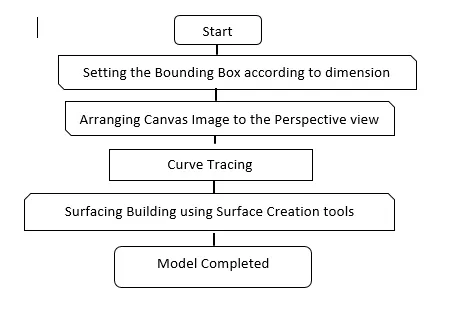
5. Description of Modelling:
Concept modelling is done by various methodology, here we have blue print of the Bumper part. It’s easier to develop the model by tracing out the curves of the bumper by curve generate options. Once the curve networking is done, we pour the surfaces to curve which gives volume to your model.
Step 1:
In the working layout we are going to set the bounding box according giving dimension in the blue print of the car. Then import the canvas image and place inside the box proportionally as shown below in the figure.
Once the canvas images arranged according to the view, curve tracing has been initiated by using the key point curve tool with maximum 5 degree curve. This curves are arranged according to the shape of given blue print by the stretching CV hulls in all proportion view to build as 3D object.
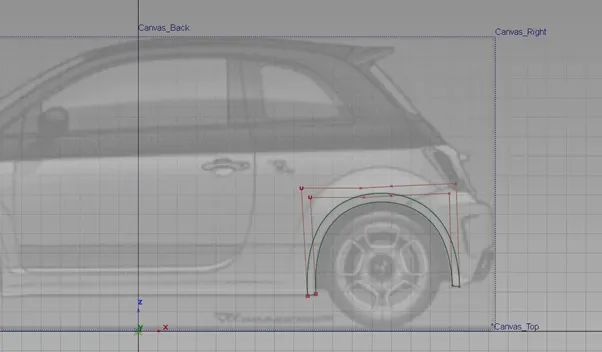
To achieve the class A surface, the patch is aligned to the nearby surface to achieve the surface continuity by using Object Edit – Align option shown below.
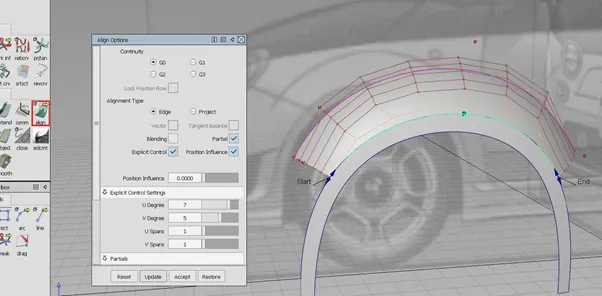
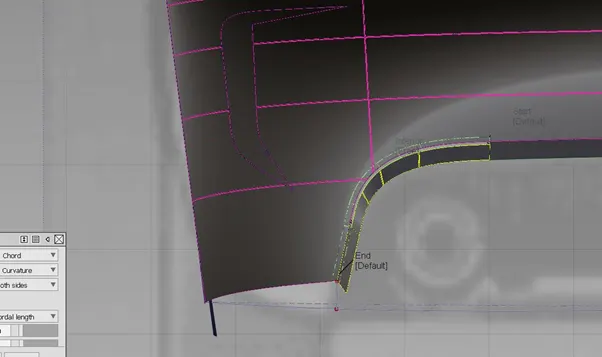
Once major surface are completed and then started to detailing to look the model as aesthetic look. Then smooth the corners of sharp edge by surface fillet by chord option as shown below.
The design of the Bumper is Symmetry model, so once build one side of the car and it is easily make transition to complete both by using Duplicate - Object in the tool option.
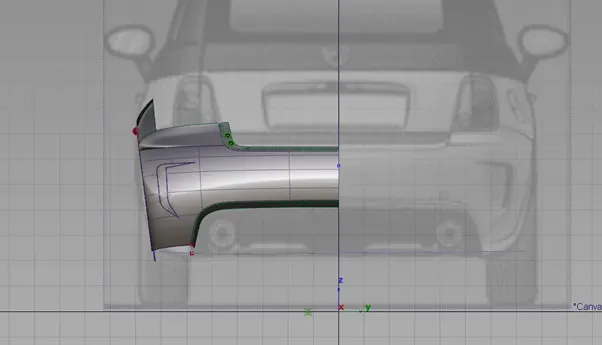
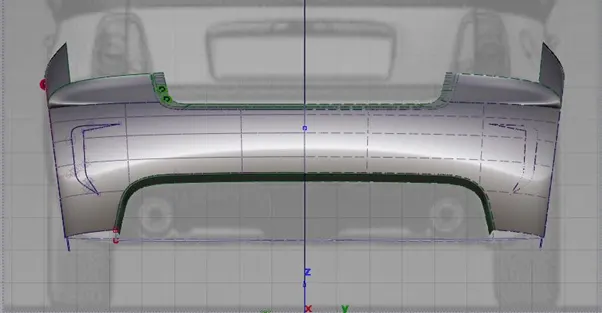
6.Screenshots of Model in the report.
Front View of the Bumper Model
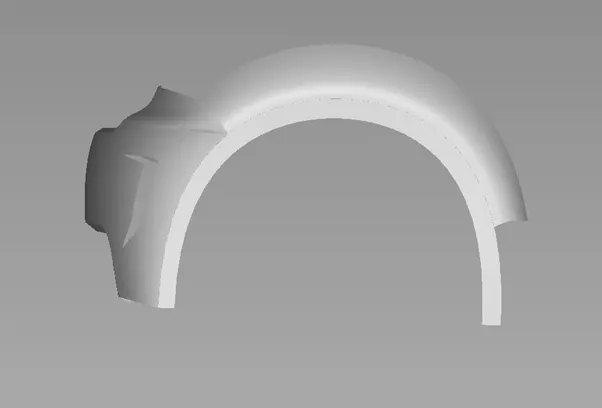
Side View of the Bumper Model
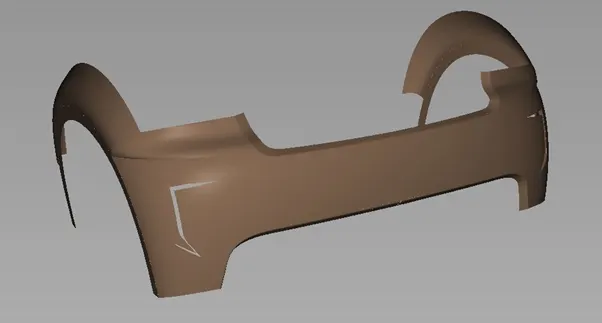
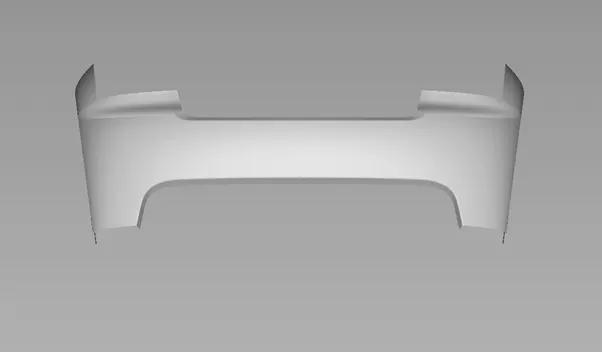
Clay Model Shading of the Bumper
7. Conclusion
Modelling of Rear Bumper has been developed successfully by using Curve networking and Surface volume. Surface continuity has been achieve at required area, it is shaped according to the proportion in perspective manner. Modelling strategy of the Bumper part has been discussed briefly with feature used to make surface volume in the pictorial representation.