Assignment 2
AIM:
1) Check the material properties of the rail component and calculate the speed of sound in steel rail.
2) The length of the rail is about 1000 mm.calculate the time takes for a shock wave to travel from one end of the rail to the other.
3) What's the time for sound to travel length of rail?
4) Edit the engine file so that the stress wave can be monitored, moving from one end of the rail to the other during impact -this will require a termination time equal to the time it takes for the sound to travel the length of the rail(set on/RUN card)
5) Set the frequency of animation output to a time that will give 20 animation steps(/ANIM/DT)
6) Change /print -10
7) 3d meshing tetra mesh and hex mes
i) Repeat class examples and maintain the quality.
ii) Target tet size=5mm, hex size=10mm, tet collapse=0.15.
DESCRIPTION:
1) CHECK THE MATERIAL PROPERTIES OF THE RAIL COMPONENT & CALCULATE THE SPEED OF SOUND IN STEEL RAIL:
MATERIAL PROPERTIES OF RAIL COMPONENTS:
To be able to withstand these functions, the rails and rail steel is to meet the requirements of (i) high wear resistance, (ii) high resistance to deformation caused by compression, (iii) high fatigue strength, (iv) high yield strength, toughness / tensile strength, and hardness, (v) high resistance to brittle fracture.
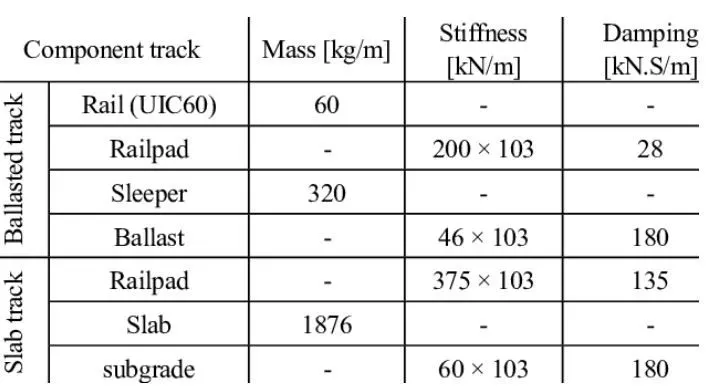
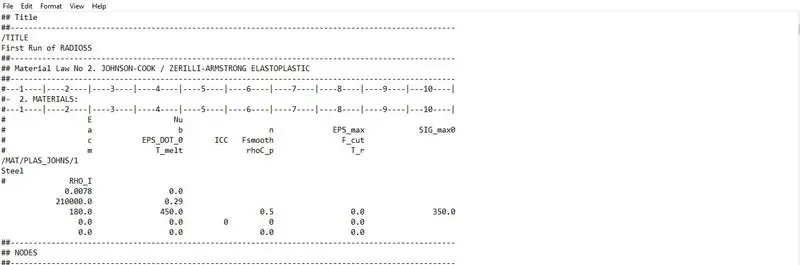
where;
Young's modulus - 21000.0
Density - 0.0078
Speed of sound in air - `sqrt(E/rho)`
Speed of sound - `sqrt(21000/0.0078)`
- 5188.7g/ms
Speed of the sound in steel rail is 5188.7g/ms
2) CALCULATE THE TIME TAKES FOR A SHOCK WAVE TO TRAVEL FROM ONE END OF A RAIL TO ANOTHER:
Length of the rail is 1000 mm
Speed of the sound is 5188.7 g/ms
Time takes for a shock wave - ( Length of the rail/ Speed of the sound)
- ( 1000/ 5188.7)
- 0.1927 msec
The time takes for a shock wave to travel from one end to another end is 0.1927 msec
3) TIME FOR SOUND TO TRAVEL LENGTH OF THE RAIL:
The time for sound to travel length of the rail is 0.1927 msec
4) EDIT THE ENGINE FILE, SO THAT THE STRESS WAVE CAN BE MONITORED MOVING FROM ONE END OF THE RAIL TO THE OTHER DURING IMOACT THIS WILL REQUIRE A TERMINATION TIME EQUAL TO THE TIME IT TAKES FOR THE SOUND TO TRAVEL THE LENGTH OF THE RAIL ( SET ON / RUN CARD):
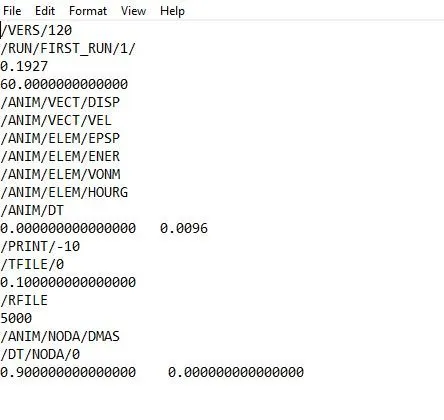
5) SET THE FREQUENCY OF ANIMATION OUTPUT TO A TIME THAT WILL GIVE 20 ANIMATION STEPS (/ANIM/DT):
Dividing the termination time by 20 will give the animation output time as 0.0096 ms
6) 3D MESHING TETRA MESH & HEX MESH:
i) Repeat class examples, maintain the quality.
ii) Target tet size=5mm,hex size=10mm,tet collapse=0.15.
ARM BRACKET MODEL:
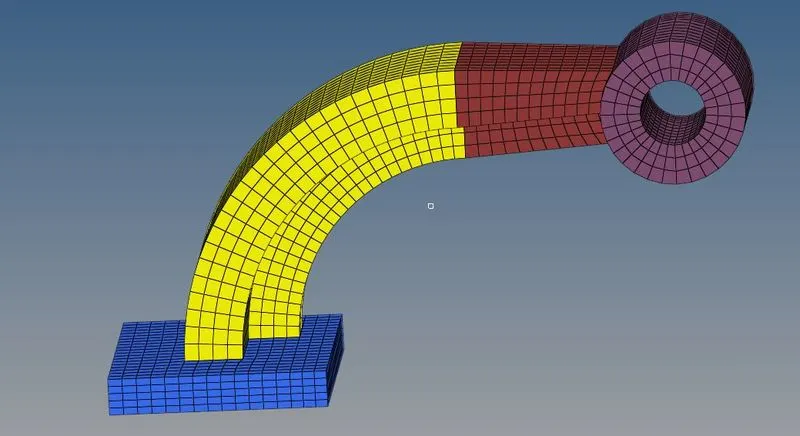
PROCEDURE:
- The base part is selected Arm curve surface is seperated for meshing. Once meshing is done click the element offset option & select the surfaces which has to be meshed.
- Then curve arm is meshed by spin option. Once spin is done, we have to reject the duplicate surfaces.
- Once curve arm is meshed, straight arm is selected. By choosing face arm the surface of arm is selected. Nodes are placed for proper mesh. By selecting both the elements, meshing is completed.
- Boss component is selected & it should be alligned to the straight arm. Nodes should be created & select the line by selecting the elements on both surfaces.
HUB & COVER:
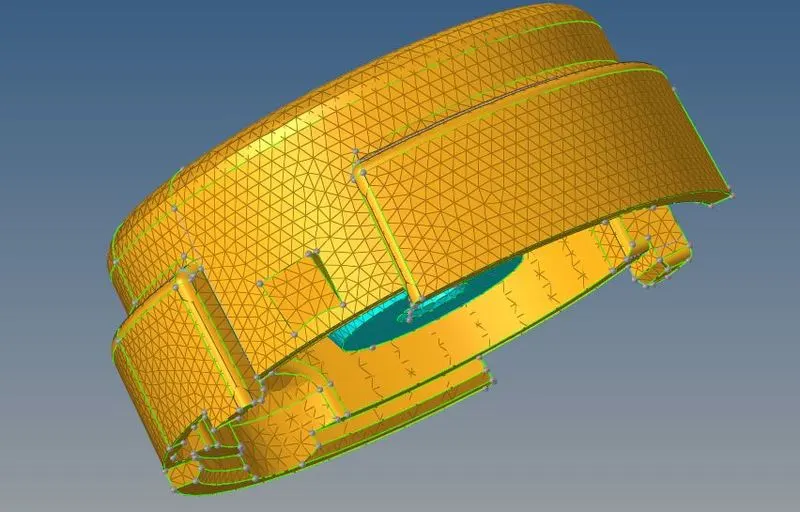
PROCEDURE:
- First select 2d meshing for the hub component & mesh with trias on the surface.
- Then select tetramesh, assign the parameters, which should be followed such as tet collapse, time step & element size.
- Select 2d trias & perform the mesh.
RESULTS:
1) Speed of the sound rail in steel rail is 5188.7 g/ms
2) The time takes for a shock wave to travel from one end to another end is 0.1927 msec