Black FridayUpgrade your career this Black Friday. Get up to ₹60,000 Scholarship on IIT programsUp to ₹60K Black Friday Scholarship52 seats leftOffer ends Fri, 27 Nov, 11:59 pm IST.
Black Friday Scholarship – IIT Jammu & IIT Roorkee

The best Black Friday deal isn't a gadget. It's your next career move.

Get up to ₹60,000 Black Friday Scholarship on our PG programs with IIT Jammu and iHUB DivyaSampark, IIT Roorkee. IIT certification, 12 live sessions with IIT faculty and 100% placement assistance.

Only 52 seats left. Offer ends Fri, 27 Nov, 11:59 pm IST

3,905 engineers placed since 2019 · 1,276 hiring companies

By submitting you agree to our Terms and Privacy Policy.

Your free demo class is requested

Browse courses
Mechanical · Course

Mold Design using SOLIDWORKS

This course introduces you to the concepts of designing molds that are used in the manufacturing process of plastic components. The software that will be used in this course is Solidworks which is a prominent design tool.

Duration
12 weeks
Content
14 hours
Projects
2
Mode
Online
Overview

What you'll
be able to do.

Mold Design using SOLIDWORKS is an online course from Skill-Lync: 12 weeks, 14 hours of content and 2 industry projects.

  • The course contains 12 weeks of curated content about the basics of SOLIDWORKS which will help the students master all the commands required to start working on the tool.
  • They will be introduced to the basics of plastics and injection molding which will provide them with a better understanding of the processes involved.
  • It also explains the steps involved in creating a basic mold for simple parts, and eventually, more complex concepts in mold design.
  • As the course progresses, the design of additional mold components such as sliders, inserts, ejector system, air vents, cooling channels, etc. will also be covered.
Curriculum

12 modules,
built with industry.

Get the full syllabus ↓
  1. 01Mold Design using SOLIDWORKS12 modules
    1. Basics of Injection Molding / SOLIDWORKS ModellingW01
      • In this week, the following topics are covered.
        • Injection molding process
        • Plastic processing methods
          • Rotational molding
          • Extrusion
          • Vacuum forming
          • Blow molding
          • Gas-assisted injection molding
        • Mold cycle and the factors affecting it
        • Thermoplastics and thermosets
        • Current trends in the industry
        • Types of plastics
        • Properties of plastics
        • Selection of plastics
        • Basics of sketching
        • Basics of using features in SOLIDWORKS
    2. Basics of Mold Design / SOLIDWORKS SurfacingW02
      • In this session, the following topics are covered.
        • Product development process
        • Various departments in plastic manufacturing industries and the workflow
        • Parts of mold
          • Core, cavity, guide pillar, sprue, register ring, guide bush, ejector pin, return pin, spacer blocks, core plate, cavity plate, ejector plates, etc.
        • 2 plate & 3 plate molds
        • Drafts
        • Parting lines
        • Various surface tools for designing in SOLIDWORKS
    3. DFM and DefectsW03
      • In this module, we will be covering theory related to various concepts and terms used in mold design.
      • The topics we shall cover are:
        • Concept of machine tonnage and its calculation
        • DFM study
          • Gate point, wall thickness, cores, tolerance, venting, ejector pads, inserts, ejector inserts, guide pillar, support block, relief, free play inserts, multi-gate position, and flow leader.
        • Defects in mold design process
          • Short shots, flash, weld lines, sink marks, blisters, jetting, burn marks, warpage, gloss differences, hesitation, overpacking, and unbalanced flow.
    4. Parting Surface / Mold Design Tutorial 1W04
      • In this module, we will be studying the theory behind parting surfaces.
      • The topics that will be covered are as follows:
        • Parting surface
        • Types of parting surfaces
          • Flat stepped
          • Angled
          • Profiled
        • Example cases to understand the selection of parting surfaces
        • Matching drafts
        • Shrinkage
        • Inserts
        • Mold design tutorial
          • Doing draft analysis for the model
          • Creating parting lines
          • Creating shut-off surfaces
          • Creating parting surfaces
          • Create basic mold blocks
    5. Sliders and Ejection System/ Mold Design Tutorial 2W05
      • In this module, we will be looking at the topic of sliders and ejection systems.
      • The topics that will be covered are:
        • Need for sliders and their working
        • General types of sliders
          • Sliding split type molds
          • Angular lift pin type molds
        • Methods of actuating the sliders
          • Finger cam
          • Dog leg
          • Cam track
          • Spring
          • Hydraulic actuation
        • Concept of slider locking
        • Types of ejector systems
          • Pin
          • Sleeve
          • Stripper
          • Blade ejector systems
        • Creating a mold for the outer cover of a disposable camera
          • Creating parting lines, shut-off surface, parting surface, and mold blocks for the model
          • Creating ejector pins for the mold
          • Creating inserts for the mold
    6. Gates and Runners / Mold Design Tutorial 3 - Part 1W06
      • In this module, we will be learning about runners and gates.
      • The various topics covered are as follows:
        • Types of gates: Sprue, edge, tab, overlap, fan, disk, ring, spoke, film, pin, submarines, and cashew gates
        • Runner diameter calculation
        • Types of runners
        • Runner configurations
        • Why engravings are used in cavities?
      • Creating a mold for a door bezel model
        • Creating the parting lines, shut-off surfaces, and parting surfaces of 3D profile for the model
        • How to work in assemblies and how to arrange files in a specific format?
        • How to align the sprue of the mold with the origin of the assembly?
        • How to select proper dimensions for the mold blocks?
        • Creating mold blocks for door bezel
    7. Mold Design Tutorial 3 - Part 2W07
      • In this module, we will continue working on the door bezel model from the previous session and learn the following topics:
        • Locating undercuts in the model
        • Understanding the use of sliders in solving the undercut issue
        • Creating slider split
        • Assigning proper dimensions to the slider
        • Editing the core cavity blocks according to the shape of the slider
        • Creating bolts, washers, and locking mechanisms for the sliders
    8. Mold Design Tutorial 4 - Part 1W08
      • In this module, we will start creating a mold for a CPU fan case model and we will learn the following topics:
        • Complex parting line selection
        • Providing correct matching drafts for the model
        • Creating the core-cavity surfaces for the model.
        • Aligning the sprue location
        • Selecting dimensions
        • Creating the mold blocks for the CPU fan case in the assembly
        • Adding reliefs for the core-cavity blocks
    9. Mold Design Tutorial 4 - Part 2W09
      • In this module, we will continue working on the CPU fan case model and we will learn the following topics:
        • Locating undercuts in the model
        • Creating a slider split for the undercuts
        • Assigning proper dimensions for the sliders
        • Providing reliefs for the sliders
        • Creating inserts for the model
    10. Mold Design Tutorial 5 - Part 1W10
      • In this module, we will start creating a mold for a plastic knob model and we will learn the following topics:
        • Creating the parting line, shut-off surface, and the parting surfaces for the plastic knob model
        • Automatic and manual shut-off surface creation
        • Core-cavity surfaces for the plastic knob model
        • Sprue alignment
        • Selecting dimensions and creating the mold blocks for the plastic knob in assembly
        • Theories behind the cooling channels for a mold
    11. Mold Design Tutorial 5 - Part 2W11
      • In this module, we will continue working on the plastic knob model and we will learn the following topics:
        • Creating multiple inserts for the model
        • Creating holes for fixing the inserts
        • Locating undercuts and creating a slider split for it
        • Complex slider creation
        • Assigning proper dimensions for the slider
    12. Mold Design Tutorial 5 - Part 3W12
      • In this module, we will continue working on the plastic knob model and we will learn the following topics:
        • Creating an ejector system
          • Angled ejector pins
          • Reliefs
          • Ejector plates
          • Ejector backplates
        • Making channels for plastic injection
          • Sprue
          • Runner
          • Gate
        • Use of air vents in a mold
        • Creating channels for air passage
        • Selection of the dimensions and positions of the cooling channels
        • Creation of cooling channels
Industry projects

2 projects
you'll ship.

Our projects are designed by experts in the industry to reflect industry standards. By working through our projects, Learners will gain a practical understanding of what they will take on at a larger-scale in the industry. In total, there are 2 Projects that are available in this program.

Creation of Mold for a Table Fan Outer Casing

Creation of Mold for a Table Fan Outer Casing

This project is about creating the mold for a table fan outer casing with consideration of side cores.
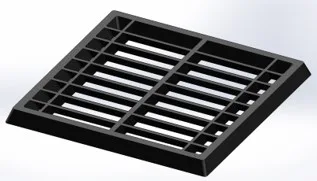
Mold Design of Fan Bezel 

Mold Design of Fan Bezel 

This project is about designing the mold for a fan bezel. In this project, you will be extracting Core & Cavity for a fan bezel.

Learner stories

Learners from Skill-Lync's mechanical programs.
In their own words.

Video stories from learners of related mechanical programs, from Skill-Lync's YouTube channel.

VivekHyundaiPG in Automotive Manufacturing Design
ShubhamTimetooth TechnologiesPG in Automotive Design & Analysis
AkashDesign Engineer, TATA GotionPG Program in Automotive Design and Analysis
SebastianSenior Design EngineerPG Program in Automotive Design (and Analysis)
Satheesh YesudasGraduate Engineer Trainee, Tata Technologies · TamilPG Program in CAD
Nikhit BolarCFD Engineer (USA)PG Program in CFD
Guide

Plastic mould design, explained.

by the Skill-Lync team

What does a plastic mould design engineer do?

A mould design engineer designs the steel tool that an injection moulding machine fills with molten plastic. That means splitting the part into core and cavity along a parting surface, adding sliders for undercuts, the ejection system, gates and runners that feed the plastic, then releasing the tool drawings. It starts with checking the part itself for mouldability (DFM).

Skill-Lync's free DFM checklist lists the wall, rib and boss rules a moulded part is checked against, each with its source.

What is a draft angle and how much do plastic parts need?

Draft is a slight taper on every face that runs along the mould's opening direction, so the part releases without scraping the tool or sticking under vacuum. In Skill-Lync's Basics of Plastics lessons the instructor gives a typical range of a quarter of a degree to 2 degrees: polished, glossy tools need less draft, textured surfaces need more.

How do you choose the injection moulding machine tonnage?

The clamp force must hold the core and cavity shut against the injection pressure. The working rule taught at Skill-Lync: multiply the part's projected area in cm² by the injection pressure in kg/cm² and divide by 1,000 to get tonnes. A part with 35 cm² of projected area in ABS at about 500 kg/cm² needs 17.5 t, so you pick a 20 t machine, not 15 t.

Too little clamp force flashes the part; too much can burn it, damage vents and inserts and wear the core and cavity.

Which software is used for mould design?

Most CAD packages have a mould module: SOLIDWORKS Mold Tools, Siemens NX Mold Wizard, CATIA V5 and Creo. Filling simulation tools such as Autodesk Moldflow predict weld lines, air traps and warpage. This course uses SOLIDWORKS: three weeks of modelling, surfacing and DFM basics, then five mould design tutorials covering parting surfaces, sliders, ejection, gates and runners.

The two projects are complete moulds for a table fan's outer casing and for a fan bezel.

Do mould and plastic design skills lead to jobs?

Skill-Lync's own data, as of 16 Nov 2026: the PG Program in BIW Fixture and Plastic Design, which includes this course, has 23 recorded placements (2020 to 2023), mostly as design engineers. The 21 disclosed salaries range from ₹2.16 to ₹8.0 LPA, median ₹3.75 LPA. Cyient hired 5; others include Magna, Tata Technologies, Hyundai Motor India and Expleo.

Which Skill-Lync plastics course fits you?

CourseLengthProjectsToolsFee
Mold Design using SOLIDWORKS (this page)Tool design: parting surface, sliders, ejectors, gates and runners12 weeks, 14 h2SOLIDWORKS₹40,000
Automotive Plastic Design using CATIA V5Product design of car plastic parts: switch bezel, B-pillar cover, door panel12 weeks, 25 h5CATIA V5₹40,000
Basics of PlasticsShort introduction to plastics and moulds; first 3 lessons free on Grow1 week, 3 h--₹40,000
PG Program in BIW Fixture and Plastic DesignBoth plastic courses plus BIW and fixture design; 23 recorded placements24 weeks, 82 h18CATIA V5, Siemens NX CAD, SOLIDWORKS₹2,75,000

Lengths, projects and fees are taken from each course page on 16 Nov 2026; fees are the Premium plan in INR, including all charges.

Fee

One fee.
Everything included.

Become job ready with our comprehensive industry focused curriculum for freshers & early career professionals

Premium
₹40,000
Inclusive of all charges
  • 1 Year Access
  • Personalized Page
  • Live Individual & Group Sessions
  • Personalized & Hands-On
  • Job-Oriented Industry Relevant Curriculum
Check eligibility →
FAQ

Questions,
answered.

Who can take this mould design course?

Students and graduates of mechanical, manufacturing, production and related engineering streams who want to design injection-moulded parts and the moulds that make them.

Is this mould design course online?

Yes, Mold Design using SOLIDWORKS is a 100% online course.

How long is the course?

12 weeks, from injection moulding and SOLIDWORKS basics to five complete mould design tutorials.

How much can a mould design engineer earn?

In Skill-Lync's placement records (as of 16 Nov 2026), learners from the BIW Fixture and Plastic Design PG program, which includes this course, were placed at a median of ₹3.75 LPA (21 disclosed salaries, ₹2.16 to ₹8.0 LPA). Pay rises with experience.

What does the course cost and what is included?

The Premium plan is ₹40,000 including all charges. It gives 1 year of access to Skill-Lync's learning management system, live individual and group sessions to resolve queries and discuss progress, and a personalised page to showcase your projects and certificate.

Is there a certificate?

Yes. Everyone who completes the course gets a Skill-Lync course completion certificate, and the top 5% of scorers also get a merit certificate.

How do I get help with doubts during the course?

Through the forum and email, and in the live individual and group sessions included in the Premium plan.

Next step

Not sure it's
the right fit?

A counsellor will walk you through the syllabus, projects and fee options — and tell you honestly if another course suits you better.

Get the syllabus + a call back

We'll email the full syllabus and call within one working day.

By submitting you agree to our Terms and Privacy Policy.

Call usEnquire
Talk to a career counsellor

Talk to a career counsellor

Free 20-minute call. We'll map the right course to where you want to work.

By submitting you agree to our Terms and Privacy Policy.