DussehraFestive scholarship on Skill-Lync courses, this week onlyFestive scholarship is openOffer ends Wed, 21 Oct, 11:59 pm IST.
Dussehra 2026

Start your next chapter this Dussehra

Tell us where you want to work. A counsellor will match you to the right course and confirm the festive scholarship you qualify for.

  • Festive scholarship on course fees, confirmed on your call
  • Free 20-minute call to map the right course to your goal
  • Real industry projects and placement support with every course

Offer ends Wed, 21 Oct, 11:59 pm IST

3,905 engineers placed since 2019 · 1,277 hiring companies

By submitting you agree to our Terms and Privacy Policy.

You're on the list

Browse courses
Mechanical · Course

Advanced Turbomachinery Simulations using CONVERGE

A comprehensive course on turbo-machinery simulations using CONVERGE-CFD Software. This course is highly suited for beginners

Duration
12 weeks
Content
11 hours
Projects
4
Mode
Online
Overview

What you'll
be able to do.

  • This program is based on the application of Computational Fluid Dynamics theory on internal flows.
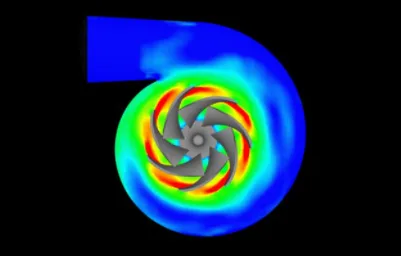
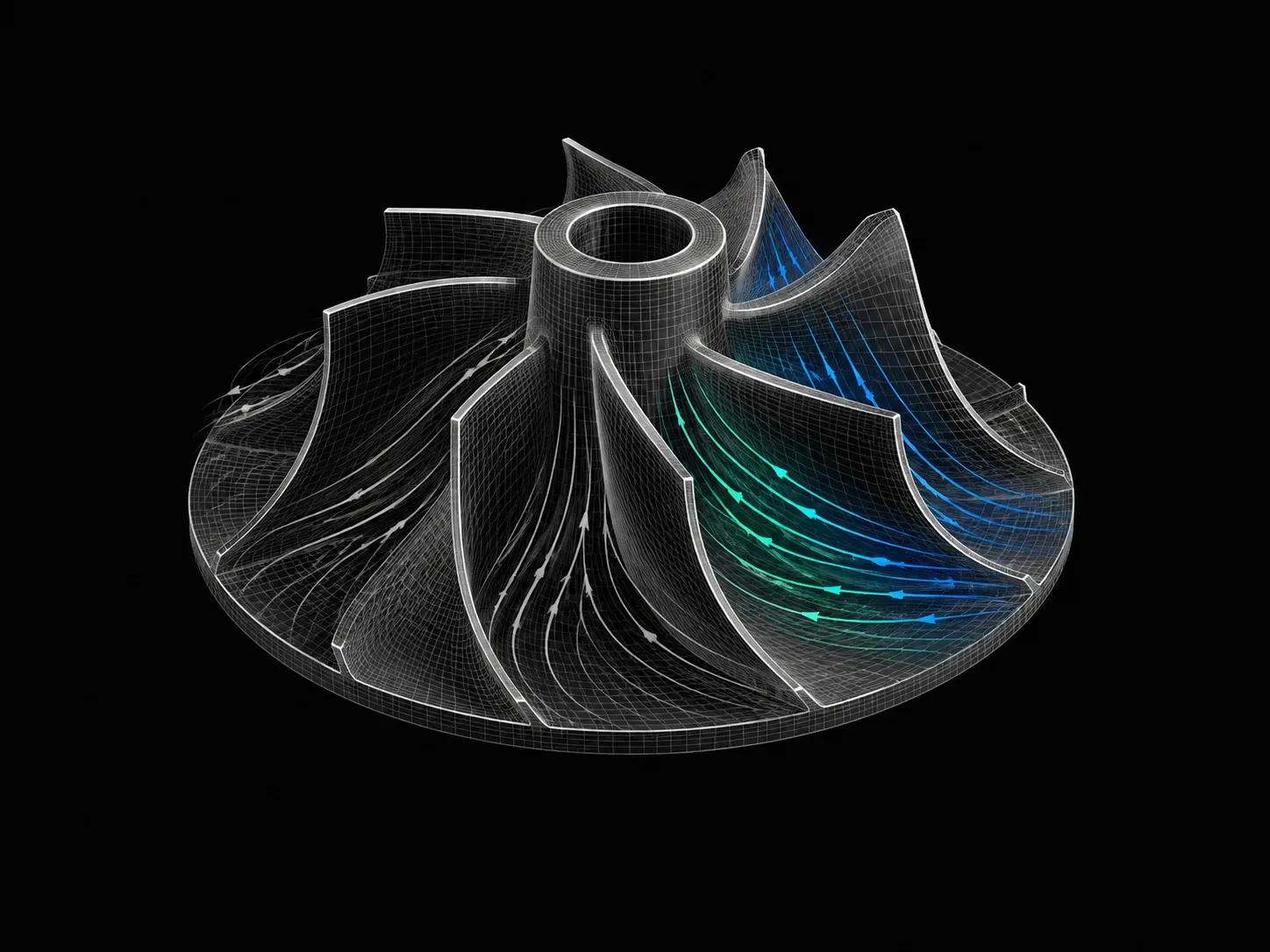
  • It especially focuses on simulating the Centrifugal Pump, Superchargers, and Turbochargers.
  • The course will help you understand important concepts like how fluid flows through turbomachine, where the fluid separates and the recirculation zone where it gets generated.
  • You will also delve deep into how the shape of blades and the shape of outlet runners affect the results and plot performance curves for all applications.
Tools you'll use
CONVERGEParaview
Curriculum

5 modules,
built with industry.

Get the full syllabus ↓
  1. 01Advanced Turbomachinery Simulations using CONVERGE5 modules
    1. Converge Studio ModuleW01
      In this module, you will learn how to set up a CFD simulation using CONVERGE CFD. We will provide step-by-step instructions on the following:
      • CAD import and cleanup
      • Decomposing the model into boundaries and volumetric regions
      • Inputting valve timing
      • Choosing turbulence and combustion models
      • Running the case in a parallel environment
      • Post-processing
    2. Surface PreparationW02

      In this module, we will elaborate on surface preparation in complete detail. Here you will learn the following:

      • Setting up the moving boundaries
      • Geometry cleanup
    3. Regions and InitializationW03

      In this module, you will learn the following concepts:

      • Initializing pressure, temperature, and species concentration in different flow regions
      • Disconnecting triangles
      • While setting up the case, one will come across complex problems where there will be different zones where the value for any thermodynamic properties like Pressure or temperature will be different and set up the case accordingly, CONVERGE provides a very good feature of creating a region (volumetric region) in which there will be particular value for the pressure, a temperature that user will provide according to his needs.
      • A very good example of the application of regions and initialization is a SHOCK TUBE problem in which there are 2 chambers filled with fluid, one at high pressure and the other at low pressure and these 2 regions are separated with the help of the diaphragm. Now to set up such cases, a feature of Regions and Initialization seems to be important and useful.
      • After creating 2 regions, we need to provide initial values to both regions accordingly and this is how students will learn to create volumetric regions.
    4. Turbulence ModellingW04

      In this module, students will learn how turbulence is modeled and simulated in a state-of-the-art CFD solver. You will learn about the different classes of turbulence models and understand their merits and demerits.

      • Here, students will learn about the RANS approach to model turbulence.
      • You will get to appreciate the mathematics involved behind RANS and will learn the derivation part as well.
      • You will learn various turbulence models available like (RNG k-ε, k-ω SST, etc) and understand which model is suitable for which application.
      • Mostly, RNG k-ε suits best for Internal flows and k-ω SST suits best for external flows.
    5. Cavitation ModellingW05
      • In this module, you will learn how Cavitation can be simulated.
      • We will be focussing on the Volume of Fluid Method (VOF).
      • You will also learn about VOID FRACTION which is the basis of the VOF method.
Industry projects

4 projects
you'll ship.

Our projects are designed by experts in the industry to reflect industry standards. By working through our projects, Learners will gain a practical understanding of what they will take on at a larger-scale in the industry. In total, there are 4 Projects that are available in this program.

Performance Characterization of a Centrifugal Pump

Performance Characterization of a Centrifugal Pump

In this project, you will perform a simulation of flow through a centrifugal pump and plot performance curves from the simulation results.
Supercharger Flow Analysis

Supercharger Flow Analysis

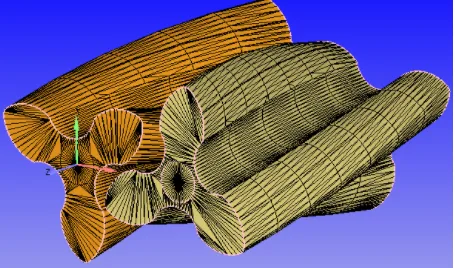
In order to understand the working of a supercharger, in this project, the students will simulate the flow in a supercharger. They should validate the mass flow rate and outlet tem…

Turbocharger Flow Analysis

Turbocharger Flow Analysis

In this project, the students will analyse the flow in a turbocharger. They will perform simulations for obtaining the performance curve
Flow-through Winkyl-Hoffer Nozzle (2D Cavitation)

Flow-through Winkyl-Hoffer Nozzle (2D Cavitation)

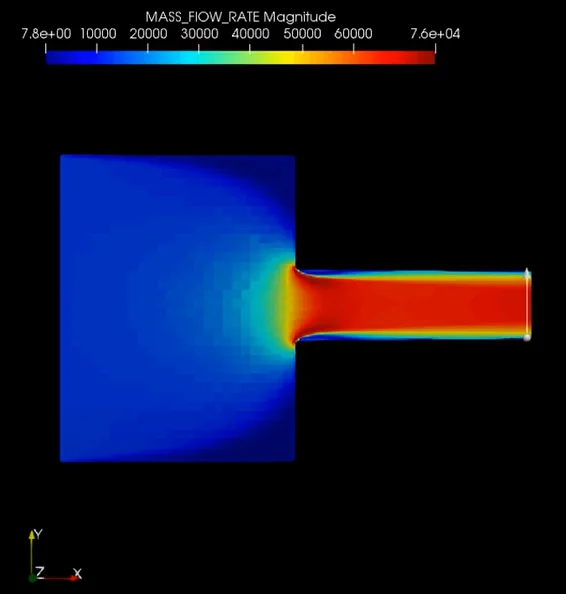
The aim of this project is to understand cavitation and its relevance with pressure differences. Here, we use a Winkul-Hoffer Nozzle to understand this phenomenon.

Fee

One fee.
Everything included.

Become job ready with our comprehensive industry focused curriculum for freshers & early career professionals

Premium
₹40,000
Inclusive of all charges
  • 1 Year Access
  • Personalized Page
  • Live Individual & Group Sessions
  • Personalized & Hands-On
  • Job-Oriented Industry Relevant Curriculum
Check eligibility →
FAQ

Questions,
answered.

Why enroll in the Advanced Turbomachinery Simulations using CONVERGE course?

The demand for turbomachinery engineers is going to be high since the CFD market will grow by 12% annually, and there aren't enough certified professionals. 

What is the duration of the turbomachinery course ?

The duration of the course is usually three months.

What are the advantages of doing this course?

Learners who enroll in this course can find lucrative jobs with the best companies in India across different industries. 

Which companies hire CFD engineers in India?

The leading companies hiring CFD engineers in India include Tata Consultancy Services, General Motors, Robert Bosch, and Mercedes-Benz. 

What salary can I get after completing this course?

You can expect a salary ranging from Rs. 4 lacs to Rs. 8 lacs on completing this course. 

Next step

Not sure it's
the right fit?

A counsellor will walk you through the syllabus, projects and fee options — and tell you honestly if another course suits you better.

Get the syllabus + a call back

We'll email the full syllabus and call within one working day.

By submitting you agree to our Terms and Privacy Policy.

Call usEnquire

Talk to a career counsellor

Free 20-minute call. We'll map the right course to where you want to work.

By submitting you agree to our Terms and Privacy Policy.