DussehraFestive scholarship on Skill-Lync courses, this week onlyFestive scholarship is openOffer ends Wed, 21 Oct, 11:59 pm IST.

Dussehra 2026

Start your next chapter this Dussehra

Tell us where you want to work. A counsellor will match you to the right course and confirm the festive scholarship you qualify for.

  • Festive scholarship on course fees, confirmed on your call
  • Free 20-minute call to map the right course to your goal
  • Real industry projects and placement support with every course

Offer ends Wed, 21 Oct, 11:59 pm IST

3,905 engineers placed since 2019 · 1,277 hiring companies

By submitting you agree to our Terms and Privacy Policy.

You're on the list

Browse courses
Computer Science · Course

Path Planning & Trajectory Optimization Using C++ & ROS

A 3 month course which will introduce you to path planning and trajectory optimization techniques which can be implemented in autonomous vehicles

Duration
12 weeks
Content
23 hours
Projects
2
Mode
Online
Overview

What you'll
be able to do.

  • The students will gain a thorough knowledge of Robot Motion Planning.
  • During the coursework, the students will learn the following concepts:
    • Configuration space for motion planning
    • Random sampling-based motion planning
    • Motion planning with non-holonomic robots
    • Trajectory planning
    • Reinforcement learning for planning
  • During the coursework, the students will work on the Robot Programming Environment - ROS, Simulation Environment - RVIZ, and C++ Programming.
  • The students are exposed to the modern trends and standard practices being followed in the industry right now.
  • This course forms the foundation for anyone wanting to pursue a career in the domain.
Tools you'll use
C++ROSEclipse ADORe
Curriculum

12 modules,
built with industry.

  1. 01Path Planning & Trajectory Optimization Using C++ & ROS12 modules
    1. IntroductionW01

      Robots are programmable machines that influence every aspect of a human's work and have a high potential to replace humans from performing a range of tasks. For example, it is becoming possible for computers to assist our daily driving. The topics include:

      • Graph-Based Algorithms
      • Breadth-First Search Algorithm
      • Depth-First Search Algorithm
    2. Configuring Space for Motion PlanningW02

      In this week, the students will learn about C-Space i.e., Configuration Space. C-space is the space that provides possible positions for the robot to move. The topics include:

      • How to Use the Configuration Space?
      • Representing Configuration Space as a Graph
      • Planning using Visibility Graph
      • Finding the Shortest Path.
      • Dijkstra’s Algorithm, A*, Bellman-Ford Algorithm
    3. Random Sampling-Based Motion PlanningW03

      In this week, the students will learn about sampling-based motion planning. This will solve the navigation queries. Instead of depending on the entire map of the C-space, the robot depends on the procedures that decide if the robot’s configuration is approaching an obstacle or not. The topics include

      • Various Types of Rapidly Exploring Random Tree(RRT)
      • Application of RRTs
      • Path Planning using the RRT Algorithm
      • Setting up the Ubuntu Environment
    4. Robot Operating SystemW04

      In this week, the students will learn about ROS. ROS is a robotics middleware that manages the complexity and heterogeneity of the hardware and applications. Also, it performs low-level device control, implementation of commonly-used functionality, message-passing between processes, and package management. The topics include:

      • Setting up ROS
      • Following Instructions on the ROS Website
      • Adding ROS to the Docker Container
      • Introduction to Cmake
      • Programming using ROS
      • Introduction to 3-D Visualization Tool - Rviz
      • Difference between
        • ROS/RTOS
        • ROS1/ROS2
      • DDS
      • Middleware
    5. Motion Planning with Non-Holonomic RobotsW05

      In this week, the students will learn about motion planning with non-holonomic robots. Non-Holonomic robots are built in such a way that they only travel in one direction along a given axis. To put it in simple words, Non-Holonomic robots can only move forward, backward, or sideways. The topics for this week include:

      • Path and Speed Planning
      • Trajectory Representations
        • Splines
        • Clothoid
        • Bezier Curves
        • Polynomials
      • Introduction to Frenet Frame
      • Planning in Frenet Frame
      • Boundary Value Constraint Problem and Methods
      • Pointwise Constraint Problem and Methods
    6. Mobile Robot Collision DetectionW06

      In this week, the students will learn about Mobile Robot collision detection. The robot will detect a collision and will change its trajectory to escape the contact as fast as possible and move away safely. The topics for this week include:

      • Collision Detection for Static Obstacles
      • Motion Prediction for Dynamic Obstacles
      • Motion Prediction in Frenet Frame with Kalman Filters
      • Collision Prediction for Dynamic Obstacles
    7. Hierarchical Planning for Autonomous RobotsW07

      In this week, the students will learn about Hierarchical Planning for Autonomous Robots. Hierarchical planning optimizes the global path and it requires only a considerable amount of time for the path replanning operations. The topics for this week include:

      • Route Planning, A*, D*, D* lite
      • HD Maps, SD Maps
      • Behavior Planning - State Machines, Decision Tree, Behavior Tree, etc.
      • Behavior and Motion Planning Integration
    8. Trajectory PlanningW08

      In this week, the students will learn about Trajectory Planning. Trajectory planning plays a major role in robotics and paves way for autonomous vehicles. It is basically the movement of robots from point A to point B by avoiding obstacles over time. The topics for this week include:

      • Polynomial Planners
      • Motion Planning with Differential Constraints
      • Lattice Planners
      • Collision Checking
      • Trajectory Selection (Cost Functions)
    9. Planning AlgorithmW09

      The topics for this week include:

      • Vehicle and Tire Model
      • Optimal Control
      • MPC Planners
    10. Planning in Unstructured EnvironmentsW10

      In this week, the students will learn about planning in unstructured environments. Unstructured environments include off-roads, parking lots, etc. In such an environment, the robots should be able to identify the optimal path between the start and the goal path. So, for the robots to perform this, a suitable path planning algorithm is required. The topics for this week include:

      • Unstructured Planner: Hybrid A*
      • Parking Planner
      • Automated Driving Open Research (ADORe)
    11. Reinforcement Learning for PlanningW11

      In this week the students will learn about Reinforcement Learning for Planning. Basically, it is a machine learning method that has increased applications in robot path planning. The robot will explore its surrounding environment and learn using the trial and error process. The machine learning method has an advantage in path planning and requires less prior information. The topics for this week include:

      • Machine Learning
      • Markov Decision Process
      • Policy Evaluation
      • Value iteration
      • Reinforcement Learning
      • On/Off Policy, Model-based/Model-free Monte Carlo
      • Bellman Optimality, SARSA
      • Q-learning, Epsilon Greedy
      • Decision Making for AVs
    12. ConclusionW12

      The topics for this week include:

      • Overview of the Topics Learned
      • Paper Review
      • Non-Traditional Applications
Industry projects

2 projects
you'll ship.

Our projects are designed by experts in the industry to reflect industry standards. By working through our projects, Learners will gain a practical understanding of what they will take on at a larger-scale in the industry. In total, there are 2 Projects that are available in this program.

Design Implementation and Comparison of the Graph based Trajectory Planners

Design Implementation and Comparison of the Graph based Trajectory Planners

A project on the design and implementation of different graph-based trajectory planers in a partially known static environment. Students will design different graph-based algorithm…
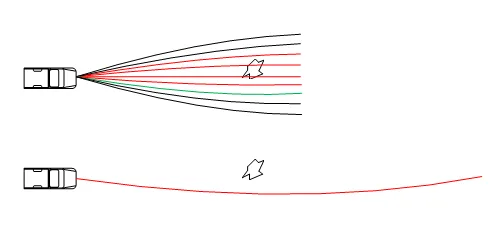
Trajectory Planning with Optimization Approach for Autonomous Car in Urban Area

Trajectory Planning with Optimization Approach for Autonomous Car in Urban Area

A project on the design and implementation of a motion planner for an autonomous car in a realistic dynamic environment. The motion planner must plan a collision-free trajectory fo…

Fee

One fee.
Everything included.

Become job ready with our comprehensive industry focused curriculum for freshers & early career professionals

Premium
₹40,000
Inclusive of all charges
  • 1 Year Access
  • Personalized Page
  • Live Individual & Group Sessions
  • Personalized & Hands-On
  • Job-Oriented Industry Relevant Curriculum
Check eligibility →
FAQ

Questions,
answered.

Can anyone join this course?

A: The ideal candidates for this course are those who understand C++ or Python and some basic mathematical concepts. Candidates hailing from such backgrounds can easily make it in this line.

Will I be able to get an e-verification after completing the course?

A: Yes, students will get an e-verified profile after completing the course, which they can share on relevant websites such as LinkedIn.

Will I get any support if I have doubts?

A: Yes, students can approach a skilled expert through email support, group video support, forum support, and telephone support to get their doubts cleared.

What will be the mode of delivery of the course?

A: The course will be delivered to the students through online mode.

Is there any use in doing this course if I want to get a job afterwards?

A: The course introduces various software and tools useful in tackling real-life situations, including making autonomous cars, robots, and more.

Which software is taught during the course?

A: Among the few software taught to you during the course are C++, ROS, Eclipse ADORe, and more.

Will I get to work on any projects during the course?

A: Yes, you will work on two design and implementation courses while undergoing the program.

Can students from a non-electrical background start this course?

A: The course is highly focused and intended for you if you are a graduate in mechanical engineering or hold a Bachelor’s degree in ECE, EEE, and more.

Next step

Not sure it's
the right fit?

A counsellor will walk you through the syllabus, projects and fee options — and tell you honestly if another course suits you better.

Get the syllabus + a call back

We'll email the full syllabus and call within one working day.

By submitting you agree to our Terms and Privacy Policy.

Call usEnquire

Talk to a career counsellor

Free 20-minute call. We'll map the right course to where you want to work.

By submitting you agree to our Terms and Privacy Policy.