DussehraFestive scholarship on Skill-Lync courses, this week onlyFestive scholarship is openOffer ends Wed, 21 Oct, 11:59 pm IST.
Dussehra 2026

Start your next chapter this Dussehra

Tell us where you want to work. A counsellor will match you to the right course and confirm the festive scholarship you qualify for.

  • Festive scholarship on course fees, confirmed on your call
  • Free 20-minute call to map the right course to your goal
  • Real industry projects and placement support with every course

Offer ends Wed, 21 Oct, 11:59 pm IST

3,905 engineers placed since 2019 · 1,277 hiring companies

By submitting you agree to our Terms and Privacy Policy.

You're on the list

Browse courses
Computer Science · Course

Introduction to Camera Systems

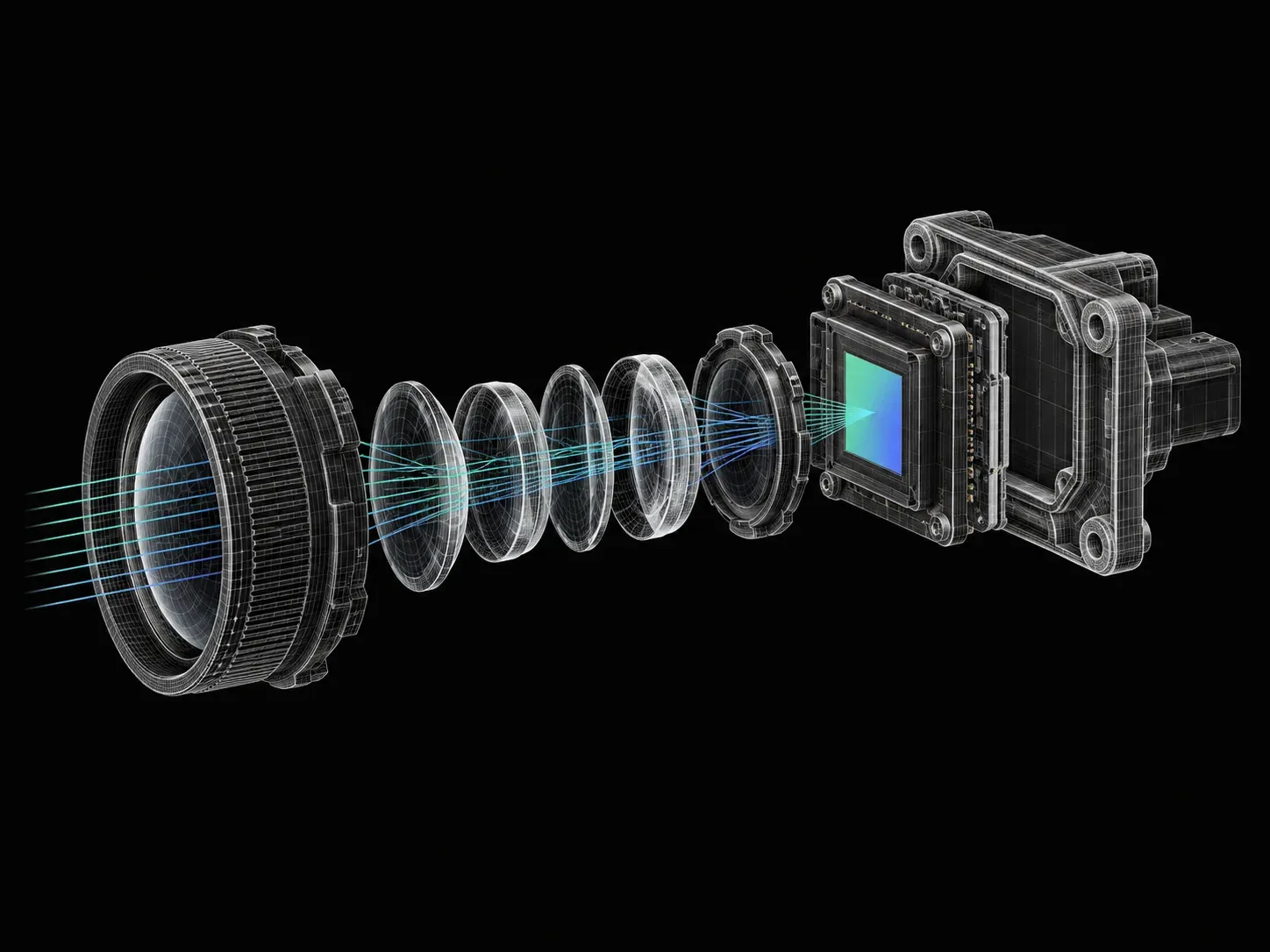
This program deals with detailed studies about cameras and the camera systems being used in the ADAS/Autonomous driving vehicles in the current times. In this course, we study the camera and how it is constructed and understand different parts of the camera and their effect on an image. We also deal with Image formation, different types of camera models along with the processing of the same images with an introduction to basic Image processing techniques and algorithms.

Duration
8 weeks
Content
28 hours
Projects
2
Mode
Online
Overview

What you'll
be able to do.

  • The students will learn about camera systems used in ADAS/Autonomous Driving Vehicles in the industry.
  • During the coursework, the students will learn the following concepts:
    • Camera Study
    • Construction of Cameras
    • Projective Geometry and Stereo Vision
    • Image Processing
  • During the coursework, the students will learn about camera calibration, image processing techniques like filtering, smoothening, and gradient-based techniques.
  • The students are exposed to the modern trends and standard practices being followed in the industry right now.
  • This course forms the foundation for anyone wanting to pursue a career in the domain.
Curriculum

12 modules,
built with industry.

  1. 01Introduction to Camera Systems12 modules
    1. Camera ConstructionW01

      The following modules are discussed:

      • Introduction to Geometrical Construction
      • Introduction to Optical Construction
      • Introduction to Camera Types
      • Camera Sensor Types – CCD, CMOS
      • Camera Sensor Types – RGGB, RCCB, RCCC
      • Different Lens Types – Normal vs Fisheye
      • Optical Parameters – Exposure Time, Shutter, White Balance, Gain
    2. Camera ModelsW02

      The following modules are discussed this week :

      • Different Camera Models
      • Pin hole model, Perspective model, fisheye model
      • Lens Distortion – Barrel /Radial, Pin Cushion
      • Depth Of Field , Field of View
      • Effects on changing aperture
    3. Camera CalibrationW03

      The following modules are discussed this week :

      • Camera Calibration
      • Introduction to Camera Parameters
      • Calibration Techniques
      • Calibration for Intrinsic vs Extrinsic
      • Image Undistortion
    4. Projective GeometryW04

      The following modules are discussed this week :

      • Introduction to Projective Geometry
      • What is Lost / Preserved ?
      • Vanishing Lines & Points
      • Dimensionality Reduction
      • World to Image Projection
      • Orthographic Projection
    5. Stereo VisionW05

      The following modules are discussed this week :

      • Introduction To Stereo Vision
      • Basic Idea of Stereo
      • Epipolar Geometry
      • Image rectification
      • Stereo Correspondence
      • Disparity Maps
      • Depth Maps
    6. Camera SystemsW06

      The following modules are discussed this week :

      • Low FOV Long range cameras
      • Stereo Camera
      • FLIR Camera
      • Fisheye Camera – Continental
      • Camera Parameters
      • Different Uses for each of them
    7. Image Pre-ProcessingW07

      The following modules are discussed this week :

      • Image Color Spaces
      • Color Space conversions (RAW -> RGB, RGB-> GRAYSCALE, RGB->YUV , …)
      • Image Digitization, Sampling, Quantization
      • Image Interpolation, Extrapolation
      • Image Normalization
      • Image Noise – Salt and Pepper noise, Gaussian Noise , Impulse Noise
      • Image Erosion/Dilution
    8. Image Processing -1 (Transformations)W08

      The following modules are discussed this week :

      • Basic Transformations and Filtering
      • Domain Transformations
      • Noise Reduction
      • Filtering as Cross Correlation
      • Convolution
    9. Image Processing -2W09

      The following modules are discussed this week :

      • Basic Image Filtering and Detection techniques
      • Corners Detection
      • Edge Detection
      • Contour Detection
      • Image Thresholding Histogram
      • Histogram Equalization
    10. Image Processing -3W10

      The following modules are discussed this week :

      • Features and Image Matching
      • Image Features, Invariant Features (Geometrical, Photometric Invariance)
      • Image Descriptors
      • HOG
      • SIFT
      • SURF
      • Image Stitching
    11. Image Processing - 4W11

      The following modules are discussed this week :

      • Introduction to Structure from Motion (SFM)
      • Epipolar Constraint and Essential Matrix
      • 3d Reconstruction
      • Bundle Adjustment
      • SVD approach to SFM
      • SLAM example
    12. Introduction to Embedded SystemsW12

      The following modules are discussed this week :

      • Camera Interfaces. Ex : GMSL, LVDS
      • Communication Protocol – I2C
      • Camera Initialization Sequence
      • Automated Exposure Gain (AEG) Control
      • Vision Processing Units (VPU)
      • Graphic Processing units
Industry projects

2 projects
you'll ship.

Our projects are designed by experts in the industry to reflect industry standards. By working through our projects, Learners will gain a practical understanding of what they will take on at a larger-scale in the industry. In total, there are 2 Projects that are available in this program.

01

Immersion of practical knowledge of camera system concepts on datasets in detail

Stream a video from your laptop and perform the following functions

02

Implementation of basic SLAM algorithm

Using OpenCV and public datasets, implement the basic SLAM algorithm and display the results

Fee

One fee.
Everything included.

Become job ready with our comprehensive industry focused curriculum for freshers & early career professionals

Premium
₹40,000
Inclusive of all charges
  • 1 Year Access
  • Personalized Page
  • Live Individual & Group Sessions
  • Personalized & Hands-On
  • Job-Oriented Industry Relevant Curriculum
Check eligibility →
FAQ

Questions,
answered.

Who can take up C++ programming courses?

Students and graduates with a technical background in Computer Science and Information Technology can take up this course.

Is this the best C++ course or an online course?

Yes, this is a 100% online course.

What is C++ programming?

C++ is a widely-used programming language. It is used in developing OS, GUI and embedded systems.

What is the fee for this C++ online course with a certificate?

The fee structure is flexible, and you can choose a plan that suits you. The basic plan would give you two months of access, the pro plan would give you four months of access, and the premium plan would provide you with lifetime access.

How much can an ADAS Application Engineer earn?

According to Glassdoor, the national average salary of an ADAS Engineer is INR 8.7LPA, however, it also depends on the experience.

Is there any certificate for learning online C++ programming?

Yes, After completing this C++ programming course for camera systems, you shall be given a course completion certificate. The top 5% of the scorers will be given a merit certificate alongside the course completion certificate.

Is there any technical support available for this best camera system online course?

Yes, you can clear your queries with email and forum support.

Next step

Not sure it's
the right fit?

A counsellor will walk you through the syllabus, projects and fee options — and tell you honestly if another course suits you better.

Get the syllabus + a call back

We'll email the full syllabus and call within one working day.

By submitting you agree to our Terms and Privacy Policy.

Call usEnquire

Talk to a career counsellor

Free 20-minute call. We'll map the right course to where you want to work.

By submitting you agree to our Terms and Privacy Policy.