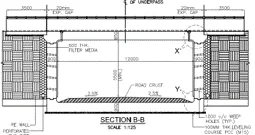
Design a Raft Foundation for a Box Bridge with Specific Dimensions and Safe Bearing Capacity
Learners are required to design a raft foundation for a box bridge with dimension and safe bearing capacity specifications that will be given.
DussehraFestive scholarship on Skill-Lync courses, this week onlyFestive scholarship is openOffer ends Wed, 21 Oct, 11:59 pm IST.
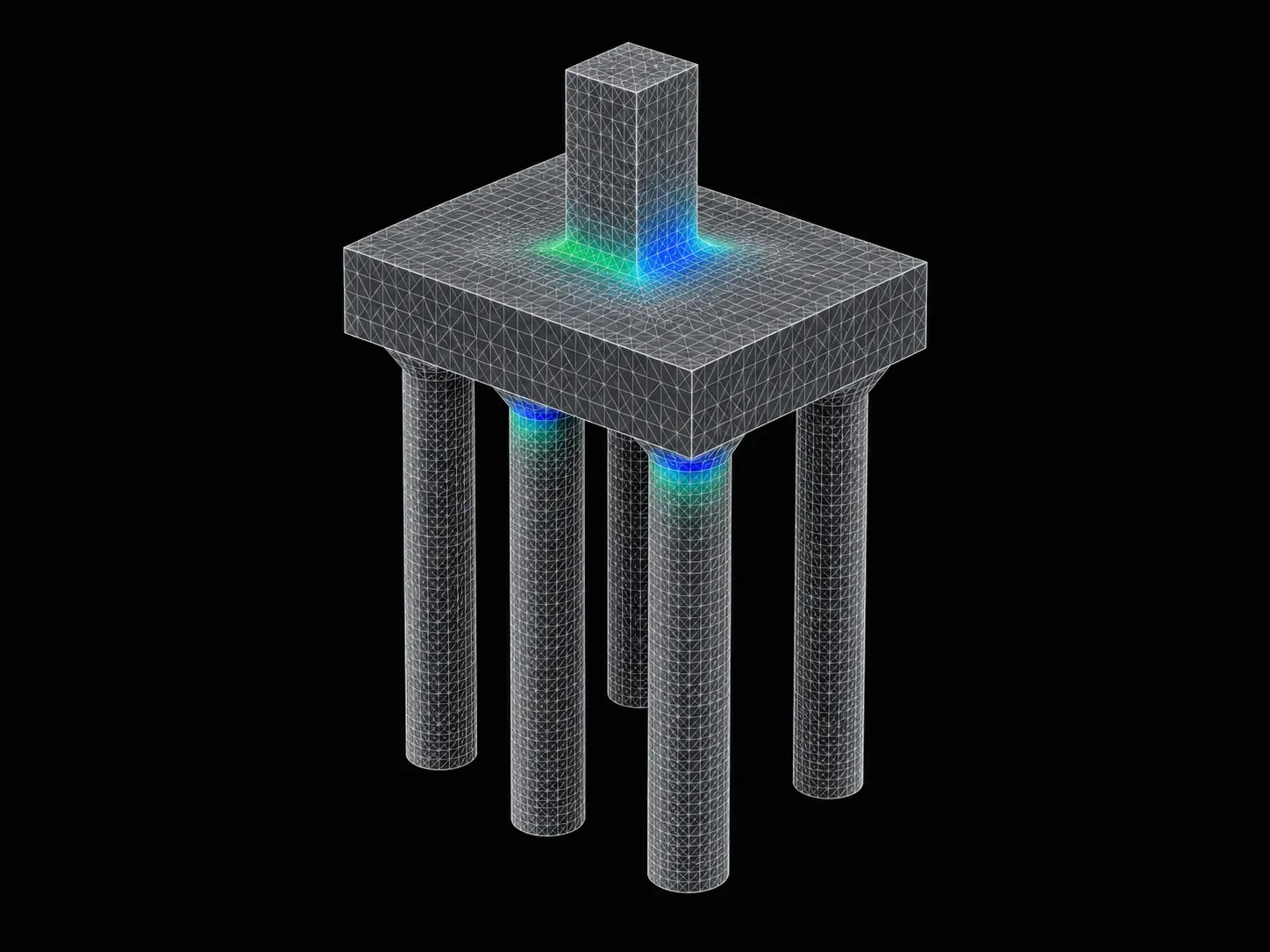
Learn about the use of STAAD.Pro in the design, modeling, analysis, and simulation of a variety of bridge foundations. This is a fundamental course in the civil design domain.
Bridges are significant structures that facilitate movement across obstacles like roads, water bodies, railroads, and more. While the span of the bridge supports the load of crossing pedestrians, vehicles, and more, it is the foundation that safely transfers these loads to the ground. There are different types of bridge foundations that vary in their site application, depth, and load bearing/distribution abilities. This is why software tools like STAAD.Pro are used in the industry to design, analyse, and simulate the response of bridges and the different foundations to various loading conditions. By doing this, civil engineers can identify the optimal foundation type and design suited for a specific application.
To give learners a practical understanding of how bridge foundations are designed in the civil industry, Skill-Lync offers this course on the Design of Bridge Foundations using STAAD.Pro.
By taking this course, learners will…
Who can enrol in this course?
Students and working professionals with a background in civil engineering can enrol in this course.
Bridges are structures made of beams, columns, and trusses. They pass over obstacles and connect two disconnected ends. At the base of the bridge is the foundation that transfers loads from the superstructure to the ground. There are different types of bridges, each varying in the way they distribute load. The selection of a bridge depends on the load it has to handle, the location, resources, and the span needed. When designing bridge foundations, it is important for learners to understand the basics of bridges, their foundations, and the different types.
This week will cover
Shallow foundations have a depth less than their width, and transfer loads close to the surface of the earth. These foundations are used when shallow layers of soil can support the loads, and are commonly used in the initial stages of developing highway bridges. It is important for learners to understand the different types of shallow foundations and the properties based on which they are selected.
This week will cover
Before structures like bridges are constructed at a site, the site is analyzed in terms of geographical, climatic, legal, and historical parameters. There are a series of calculations involved in this process. These site parameters help civil engineers determine whether the bridge can safely be constructed at the site. It is important for learners to understand the parameters considered for identifying a site, as well as the associated calculations.
This week will cover
Abutments are found at the end of bridges and support the lateral and vertical loads acting on the superstructure. They safely balance these loads and transfer them to the ground. It is important to understand the design of abutments in shallow foundations in terms of their load bearing capacities.
This week will cover
Piers are vertical members that provide intermediate support to the span of the bridge. They transfer vertical and lateral loads to the ground, and are commonly found in multi-span bridges that need more support between the abutments at the ends. It is important for learners to understand the design of piers in terms of their load bearing capacities.
This week will cover
Raft foundations have RC slabs extending over a large area, which is generally the footprint of the structure. Just like all bridge foundations, it transfers the weight and load of the structure to the ground. Raft foundations can be designed and analyzed using STAAD.Pro under varying loading conditions. When designing raft foundations, learners need to understand the theory behind it, as well as how loads can be applied and analysed using STAAD.Pro.
This week will cover
Deep foundations have a depth that is more than or equal to their width. They transfer loads farther away from the surface of the ground to competent layers of soil that can stabilize the structure. There are different types of deep foundations, each used for specific load bearing applications. It is important to understand the basics of deep foundations and the different types.
This week will cover
Pile foundations are deep foundations that have many long columns placed into the ground. These foundations are generally composed of RC or steel, and include components like pile caps. When designing deep foundations, it is important for learners to understand the components involved to ensure they work together to effectively support the structure.
This week will cover
Before deep foundations are designed and inserted into the ground, the site is studied to understand the site parameters. This involves analysis and calculations that determine whether deep foundations can safely be inserted at the site. Engineers will then have to interpret this data. It is important for learners to understand the different site parameters considered during analysis, and how the resulting data is interpreted.
This week will cover
After deep foundations are inserted into the ground, they are checked for stability. There are various stability checks that can be performed by engineers. It is important for learners to understand the different stability checks, and their importance in the safety of deep foundations.
This week will cover
The design of pile foundations considers the length, size, depth, type, and number of piles needed to support the load of the whole superstructure. Engineers use the limit state method to consider the point of strength at which the structure experiences failure. It is important for learners to understand the limit state method, and how it is used in the design of buildings.
This week will cover
Well foundations are also deep foundations that extend below the surface level of water for bridges. They are used for the stability they offer during turbulent water conditions. As many bridges extend below the surface level of water, it is important for learners to understand the design of well foundations and their load bearing capacity.
This week will cover
Our projects are designed by experts in the industry to reflect industry standards. By working through our projects, Learners will gain a practical understanding of what they will take on at a larger-scale in the industry. In total, there are 2 Projects that are available in this program.
Learners are required to design a raft foundation for a box bridge with dimension and safe bearing capacity specifications that will be given.
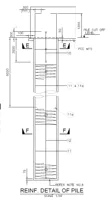
Learners are required to design a pile foundation for an RCC slab with dimension and safe bearing capacity specifications that will be given.
Become job ready with our comprehensive industry focused curriculum for freshers & early career professionals
A counsellor will walk you through the syllabus, projects and fee options — and tell you honestly if another course suits you better.