Week 9 Tension and Torsion test challenge
OBJECTIVE: To perform tension and torsion test on a dogbone component and obtained required results using ANSYS.
CASE 1: TENSION TEST
PROCEDURE:
- Open Ansys Workbench and choose Explicit Dynamics from the toolbox.
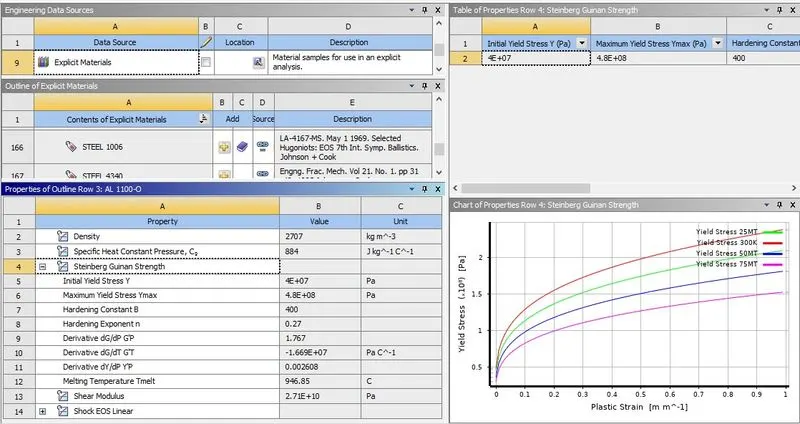
- In the Engineering data, let the material be Steel 1006 from the Explicit Materials.
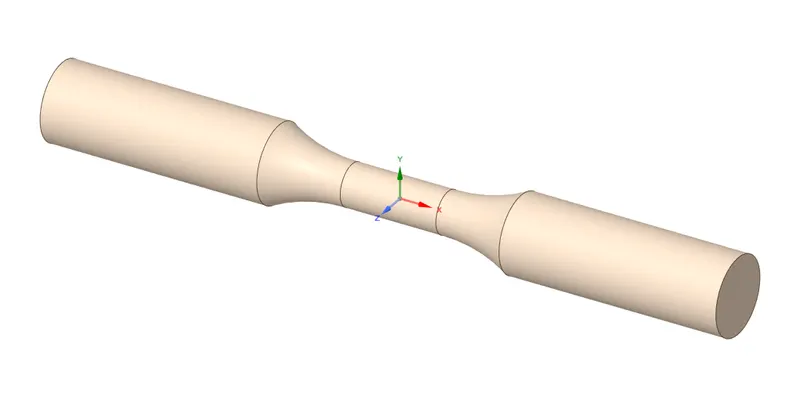
- For the geometry, right-click and import the given "tensile_test1.x_t" and open with space claim.
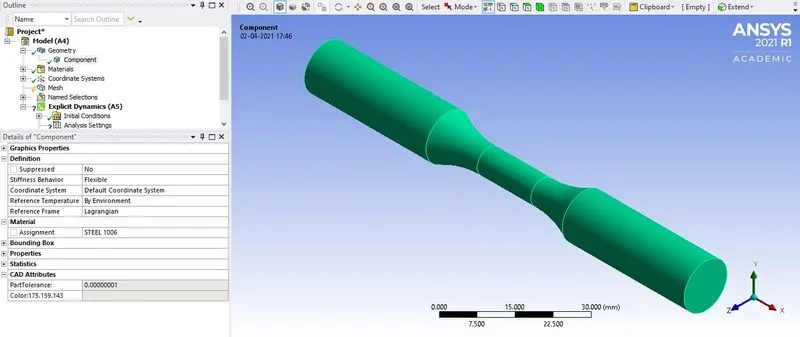
- Now in the workbench goto Model -> Edit, in the model window check the Geometry for the material and assign Steel 1006 to the dogbone component.
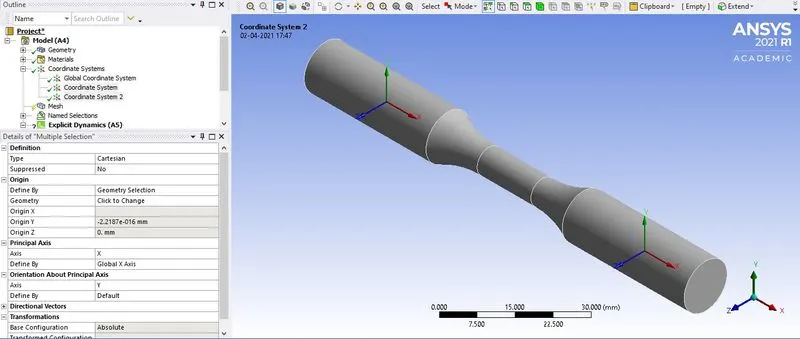
- Create a coordinate system at both end of the dogbone component.
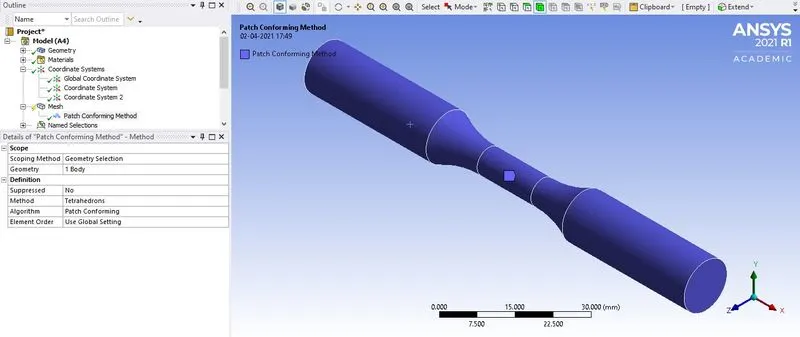
- For mesh, apply the method to the component select the body, Method= tetrahedron, Algorithm= Patch conforming.
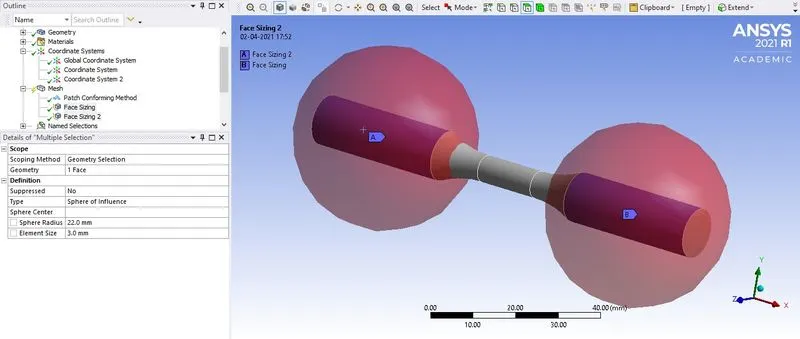
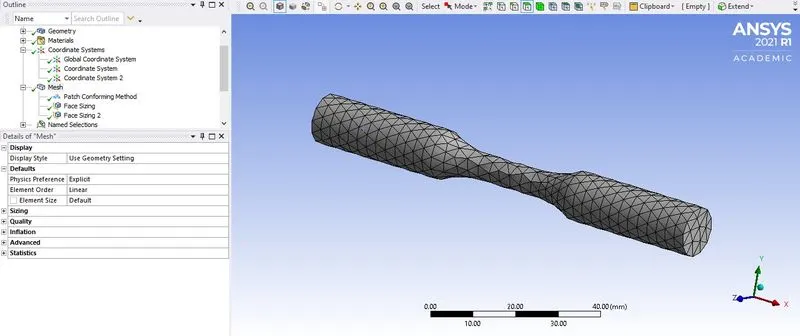
- In mesh also apply face sizing to both ends, type= sphere of influence, sphere radius= 22 mm and element size= 3 mm, click on generate mesh.
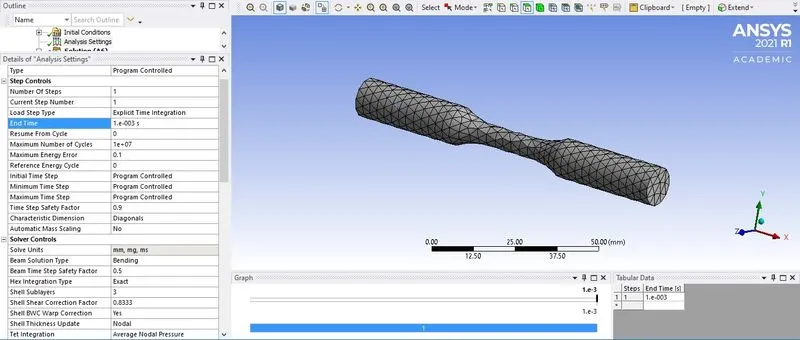
- For analysis setting, the end time= 1e-3, maximum number of cycles= 1e+7 and maximum energy error= 0.1
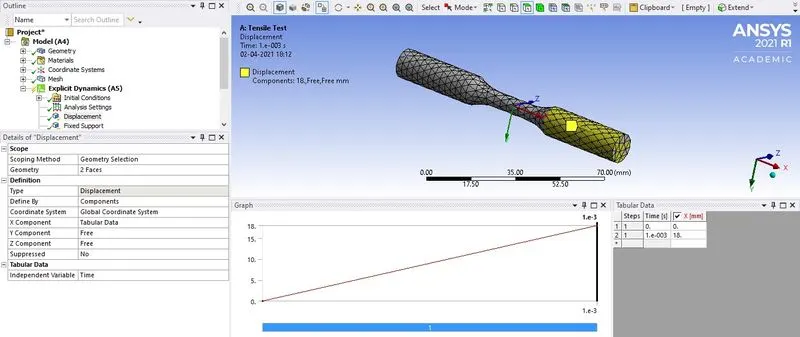
- Apply displacement load to the one end of the dogbone component in the X component of value 18 mm.
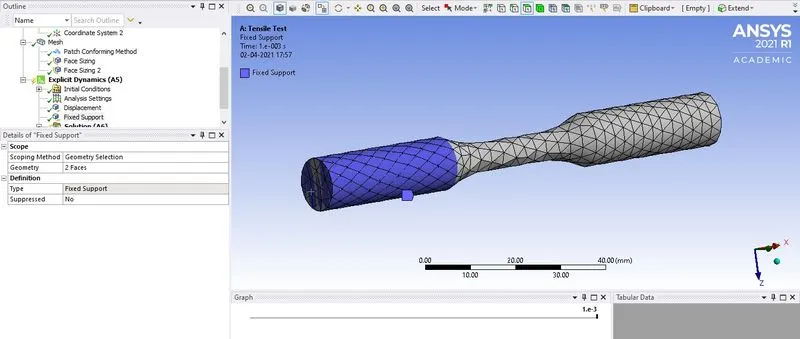
- To the opposite end of the displacement load applied, apply for fixed support.
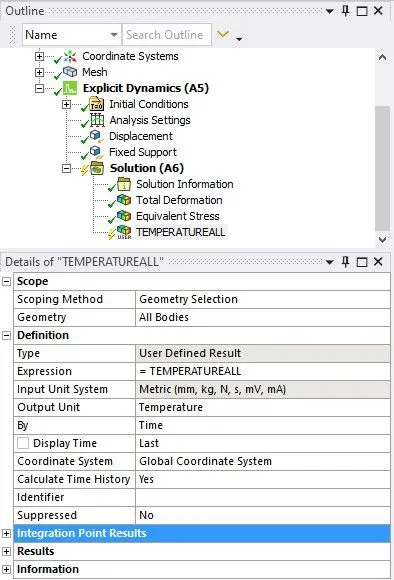
- In the solution request select for the required output like Total deformation and Equivalent Stress. Click on solve to generate the result and once the solution is completed insert user-defined result temperature from the worksheet by clicking on solution and solve the result.
CASE 2: TORSION TEST
- In the project window duplicate the tension test and rename it to torsion test and open the model -> edit.
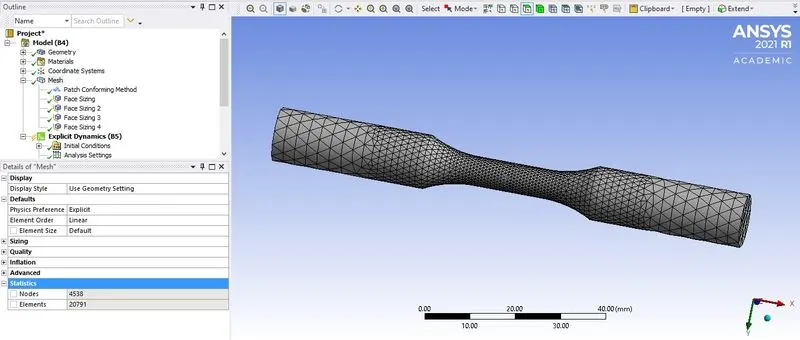
- In the mesh clear the previously generated mesh, along with previous face sizing and method apply another face sizing and choose both the fillet edges and provide element size= 1.5mm.
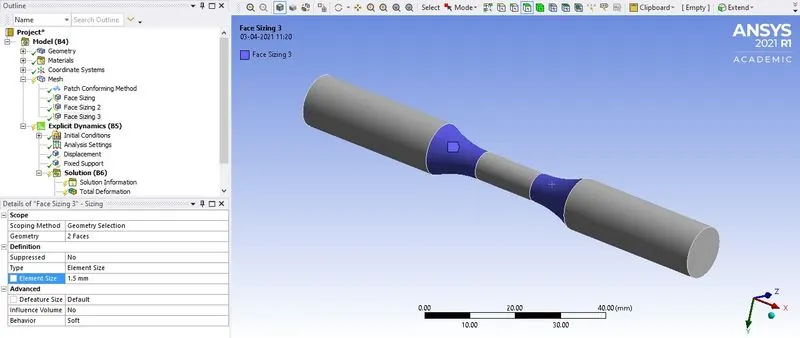
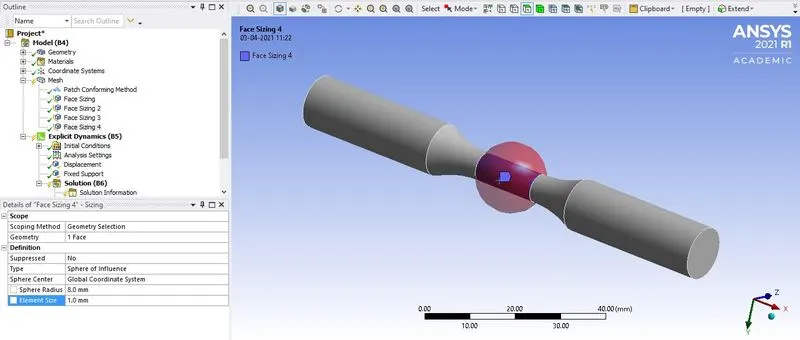
- Apply another face sizing to the middle part of the dogbone component but here select type= Sphere of influence, Sphere center= global coordinate system, sphere radius= 8 mm and element size= 1 mm, click on generate mesh.
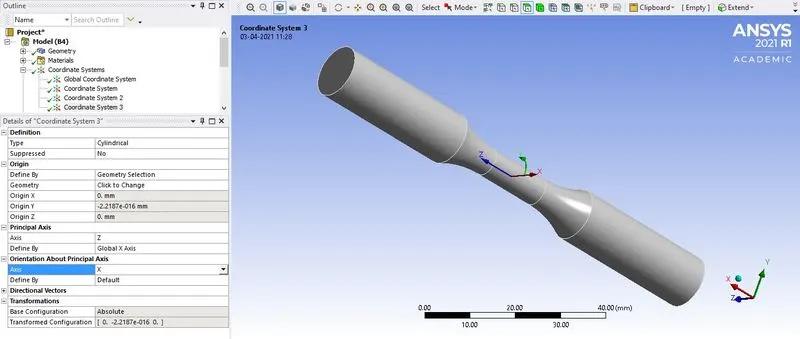
- In the coordinate system, create a new coordinate system at the middle of the component which will be Type= Cylindrical and check for the coordinates.
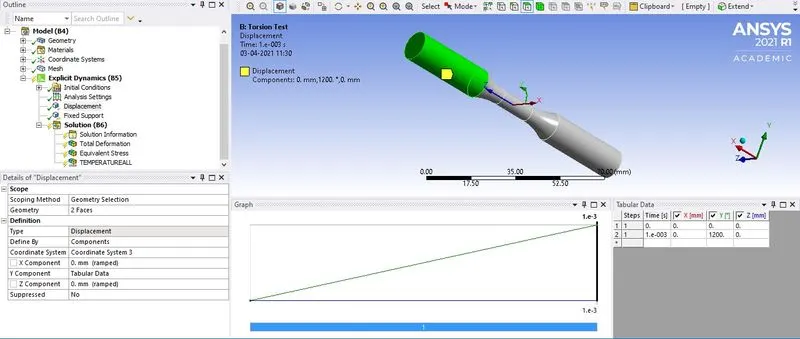
- Now edit the displacement in Explicit Dynamics, Coordinate system= select the newly created coordinate system, X and Z will have 0 while Y component will have tabular data where the rotation value is provided of 1200. After these changes it will be solved for solution.
RESULT:
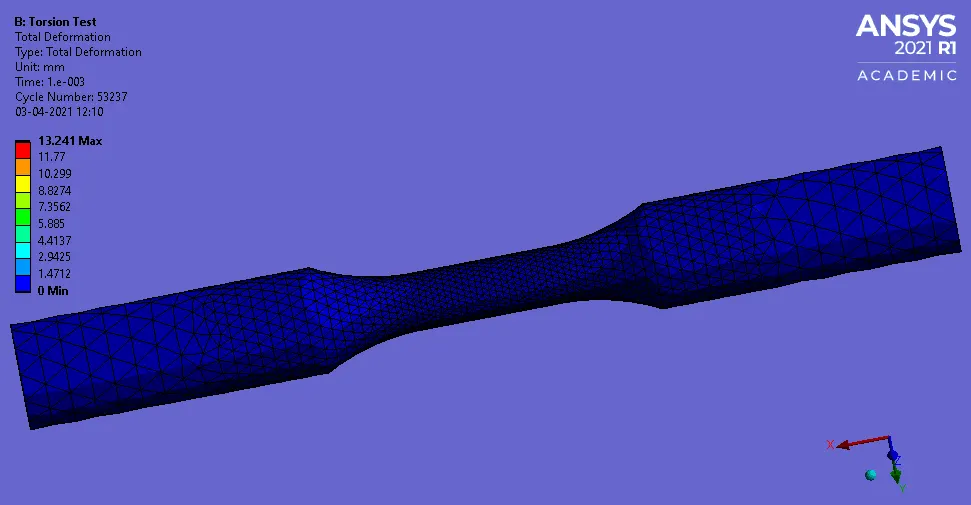
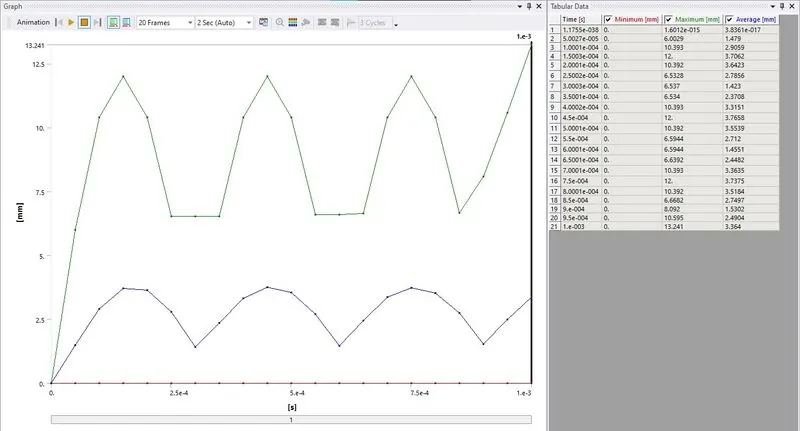
TOTAL DEFORMATION
CASE 1: TENSION TEST
CASE 2: TORSION TEST
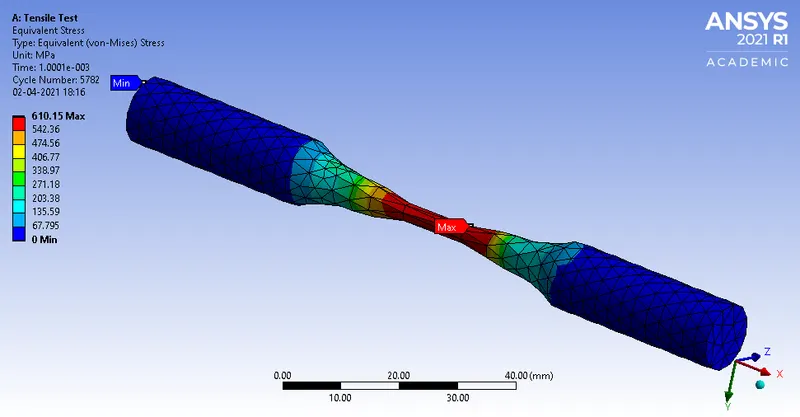
EQUIVALENT STRESS
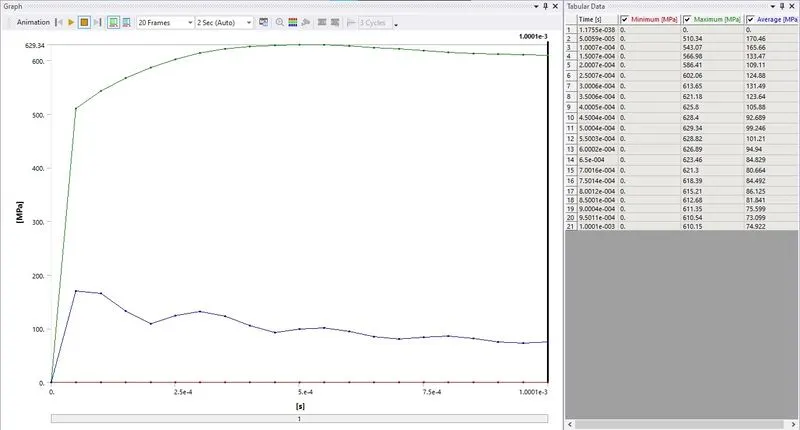
CASE 1: TENSION TEST
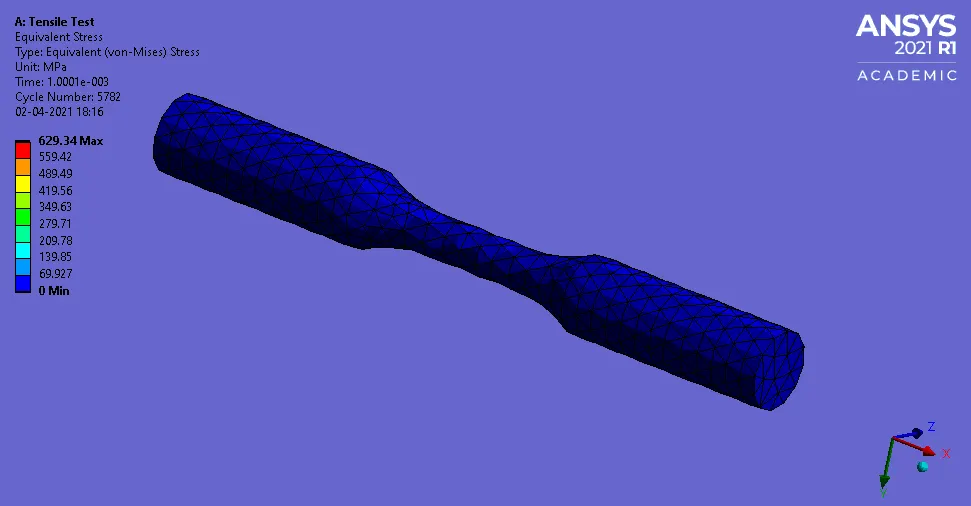
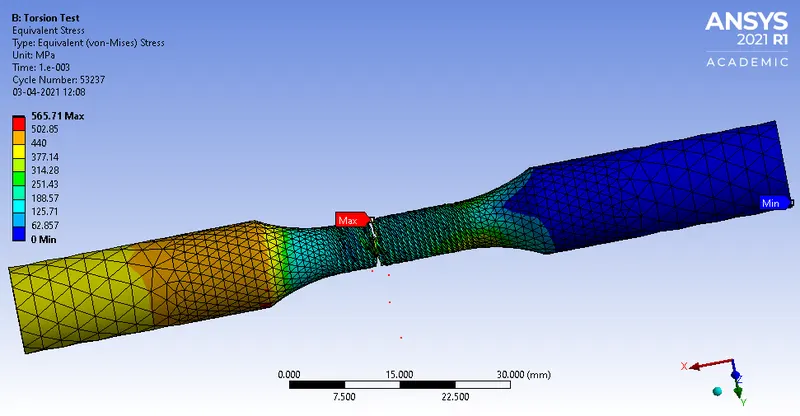
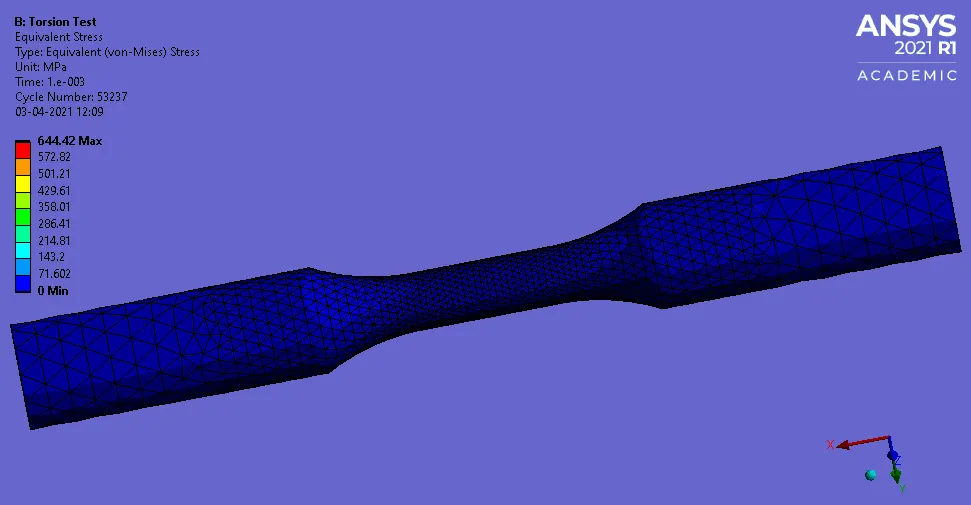
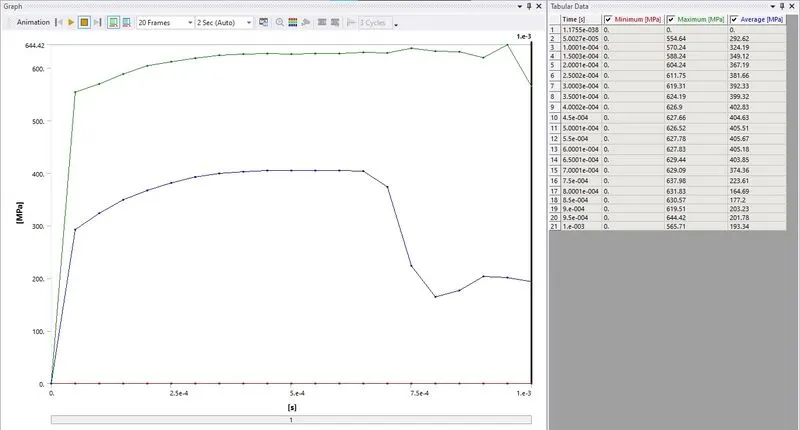
CASE 2: TORSION TEST
TEMPERATURE
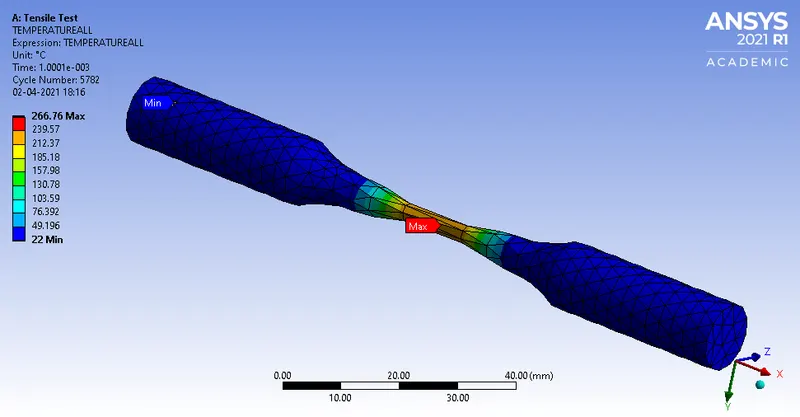
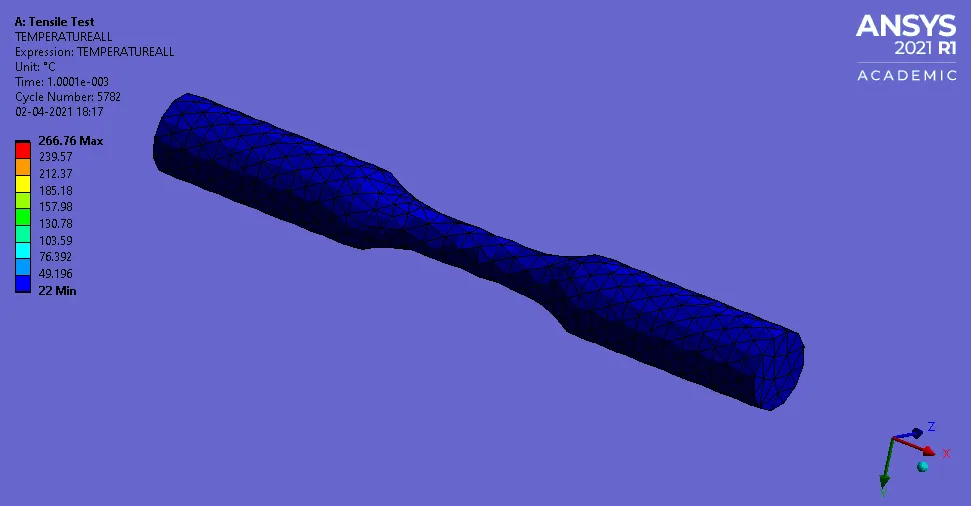
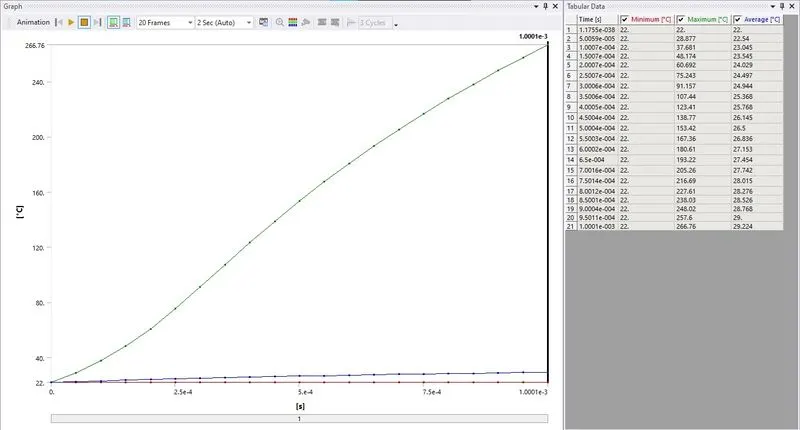
CASE 1: TENSION TEST
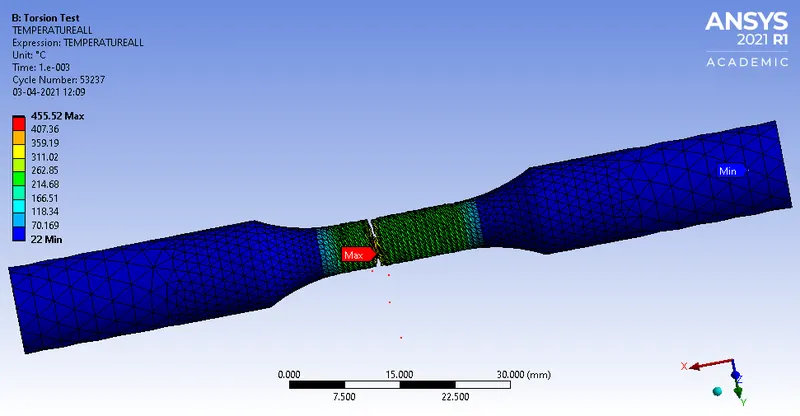
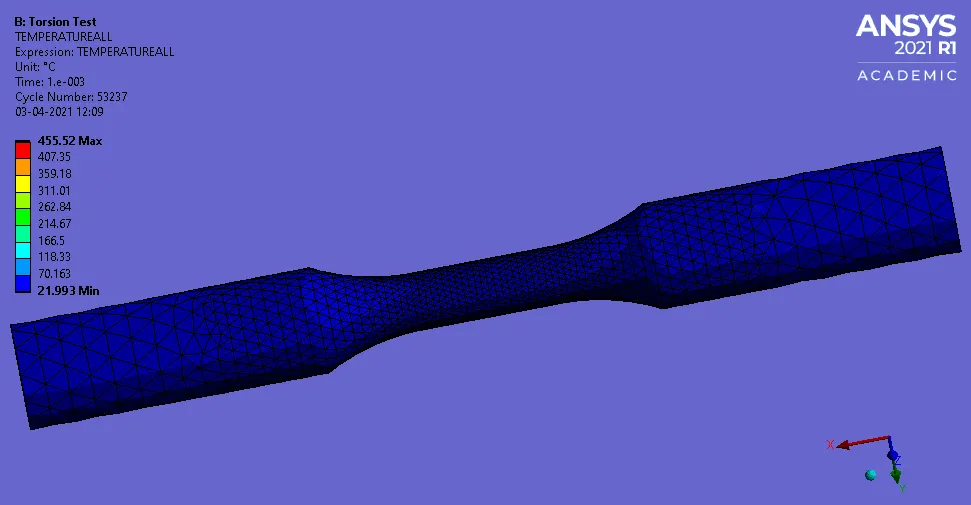
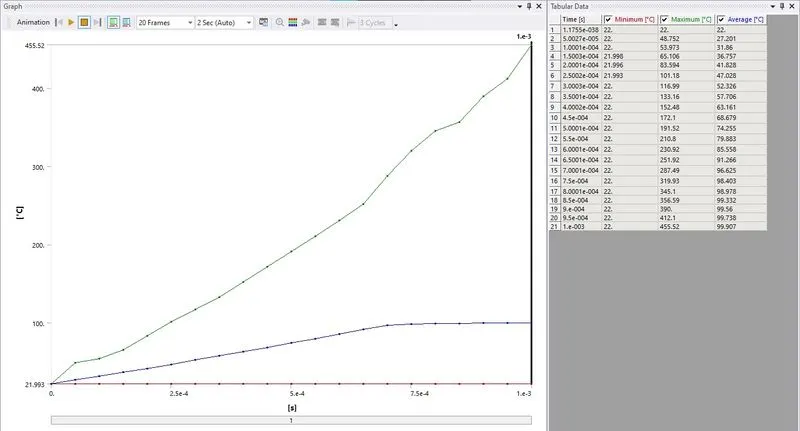
CASE 2: TORSION TEST
| Total Deformation (mm) | Equivalent Stress (MPa) | Temperature (°C) | |||||||
| Min. | Max. | Average | Min. | Max. | Average | Min. | Max. | Average | |
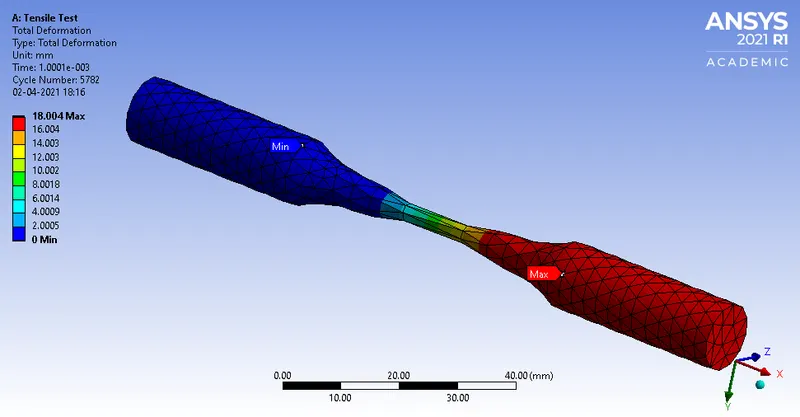
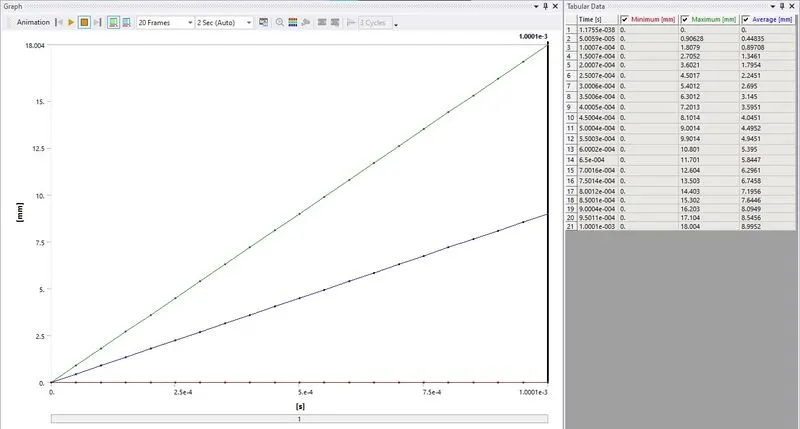
| Tensile Test | 0. | 18.004 | 8.9952 | 0 | 610.15 | 74.922 | 22. | 266.76 | 29.224 |
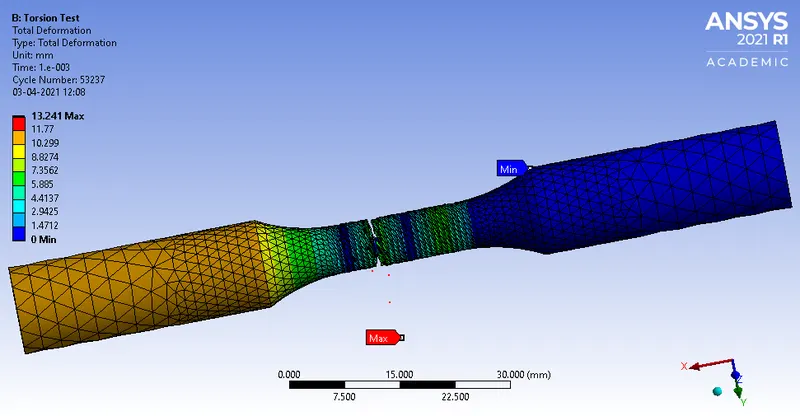
| Torsion Test | 0. | 13.241 | 3.364 | 0 | 565.71 | 193.34 | 22. | 455.52 | 99.907 |
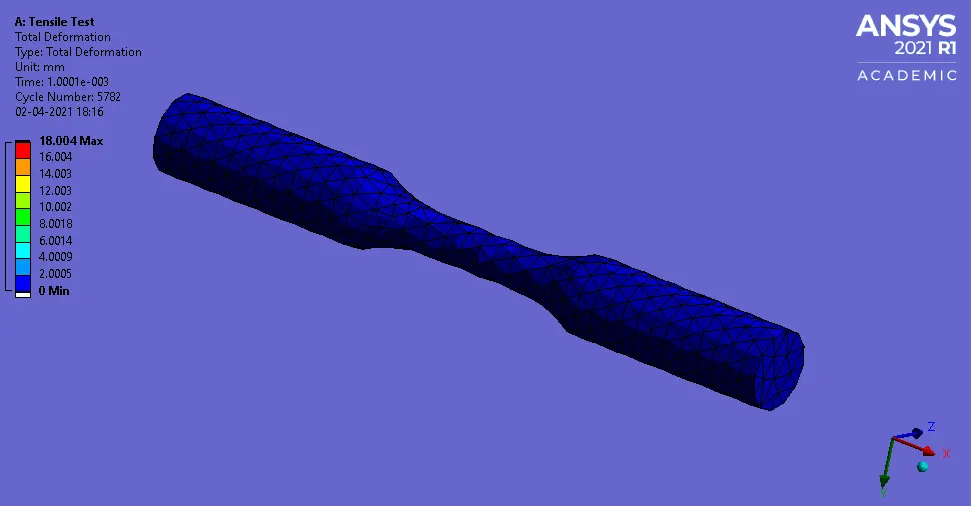
It can be observed from the analysis and the table that for the tensile test the dogbone component has undergone necking as the yield stress of Steel 1006 is 350 MPa for the displacement of 18 mm it has experienced max equivalent stress of 610.15 MPa which is very high in compared to the yield stress so the component has permanent deformation while for the torsion test the max equivalent stress experienced is 565.71 MPa which is lower than the stress experienced in the tensile test but in case of torsion the component breaks which suggest the shear stress would be very high due to the given rotation of 1200° which also produces a high temperature of 455.52 °C.
CONCLUSION:
So from the analysis, it can be inferred that the dogbone component of Steel 1006 experiences max equivalent stress and undergoes permanent deformation and necking for the tensile test while for the torsion test the component fails although the max equivalent stress is low in comparison to the tensile test which tells the max shear stress would be very high which also leads to high temperature.
SIMULATION FILE: "https://drive.google.com/file/d/19ciMlTrxGJNCNivxlU5Q3AHlvoNynT3D/view?usp=sharing"