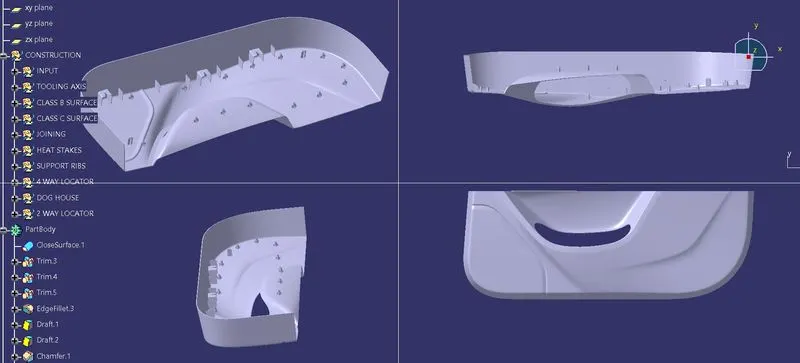
Week 9 - Project 1 - Door Trim Lower with Engineering Features
OBJECTIVE
Create the Door Trim Lower Plastic component through the given Class-A surface.Create the Heat Stakes and the locators considering the design rules mentioned in the video for the door applique.
PROCEDURE
- Creation of Tooling axis
- Creation of CLASS B surface
- Creation of CLASS C surface
- Creation of Heat stakes, 2 way locator and 4 way locator
- Perform draft analysis
CREATION OF TOOLING AXIS
We have created a point on part surface and created a line by using that point. Tooling axis is the direction on which the mold moves.
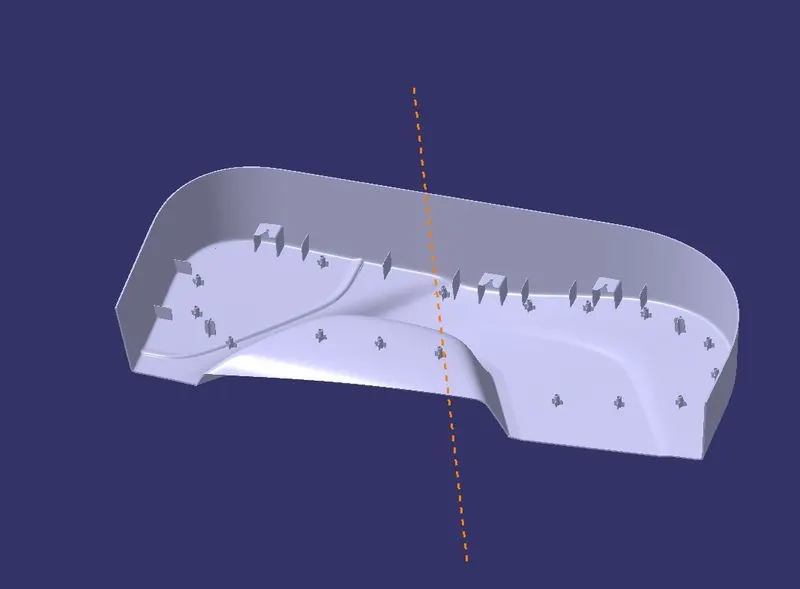
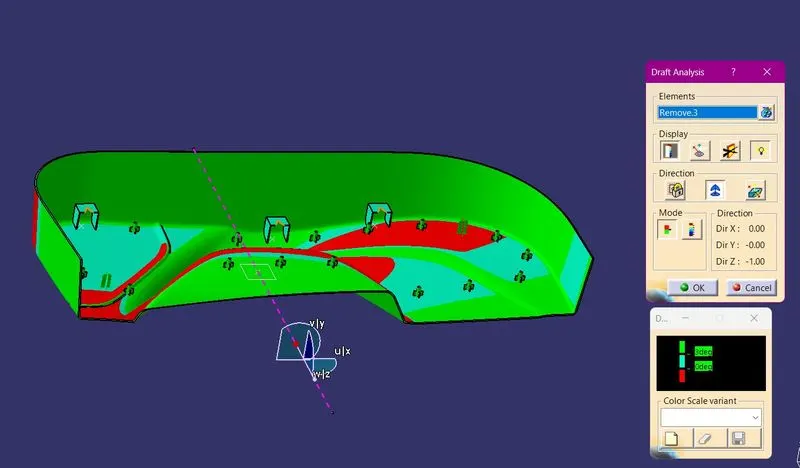
We have created a side core axis for the dog house.
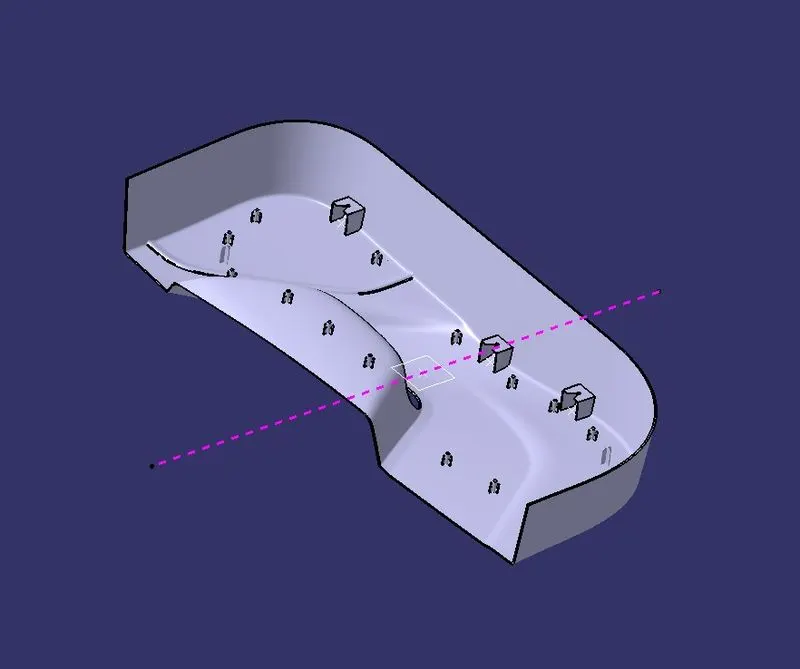
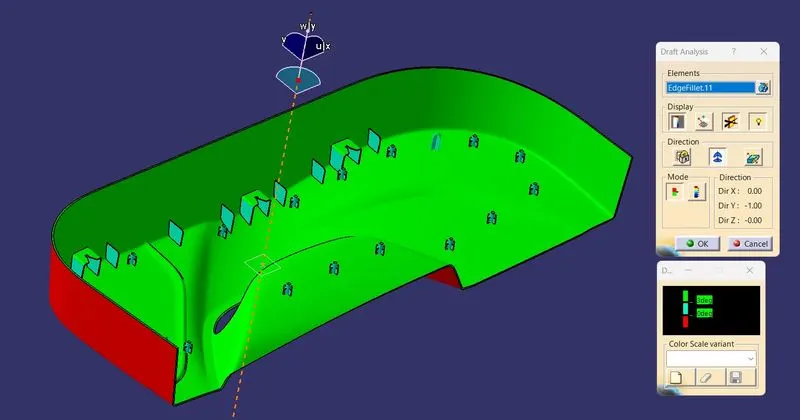
DRAFT ANALYSIS OF CLASS A SURFACE
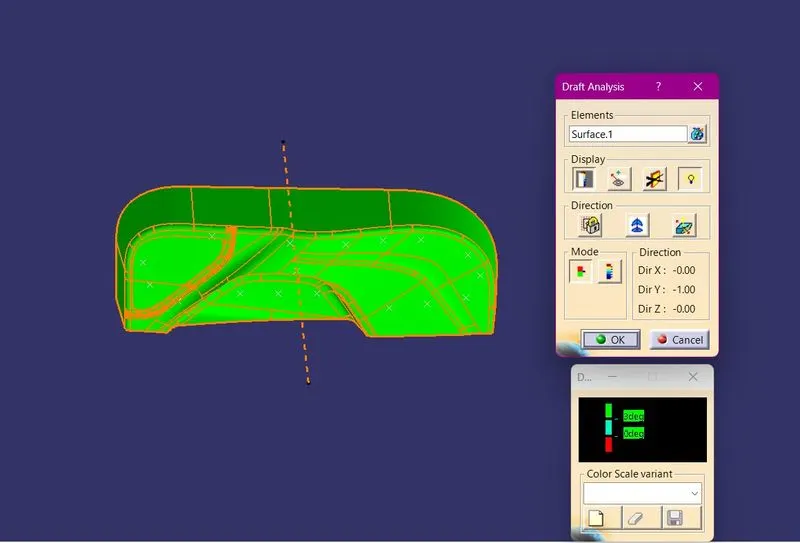
Draft analysis is done to know wheather the part will be easily manufacturable by the given draft angle or not. It will ensure that the part will not stuck in the core and cavity.
PROCEDURE TO PERFORM DRAFT ANALYSIS:-
- Right Click on Tab < Go to Analysis < Feature Draft analysis
- Put the View Mode in material option
- Align the compass with the tooling direction line
- The surface will turn into green colour it means the part is manufacturable with the given draft angle.
We have given minimum 3deg. draft and the green colour parts are easily removed from the mold.
CREATION OF CLASS B SURFACE
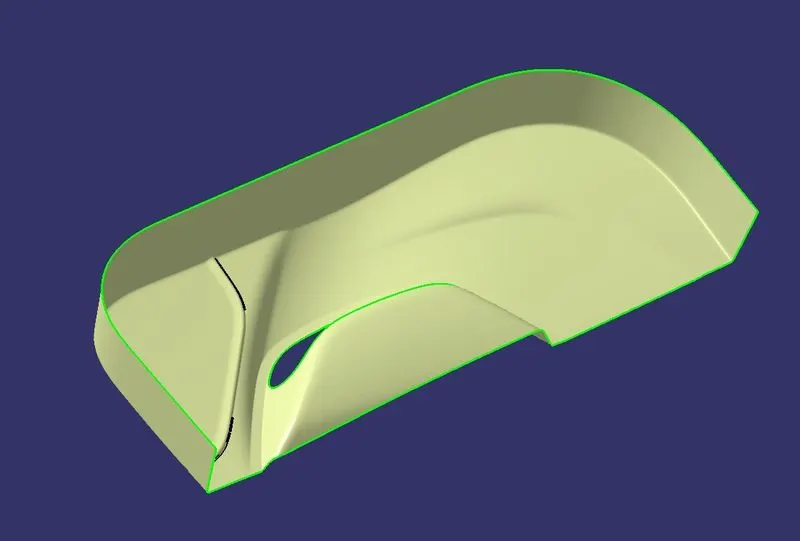
Class B surface is used for Engineering purpose. All the design parameter are done on the Class B surface. We have offsetted the class surface for 2.5 mm to created CLASS B Surface. After offsetting, we have fixed some error surfaces of the part.
CREATION OF CLASS C SURFACE
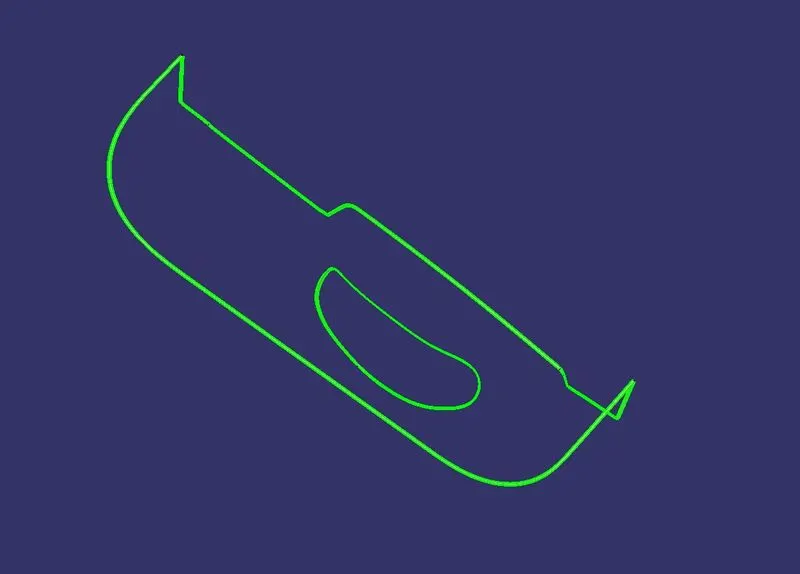
Class C surface is used to join the Class A and Class B surface together. For this surface Customer feels do not need to meet a high cosmetic finish. By using sweep command in CATIA we have created the C surface.
SOLID SURFACE
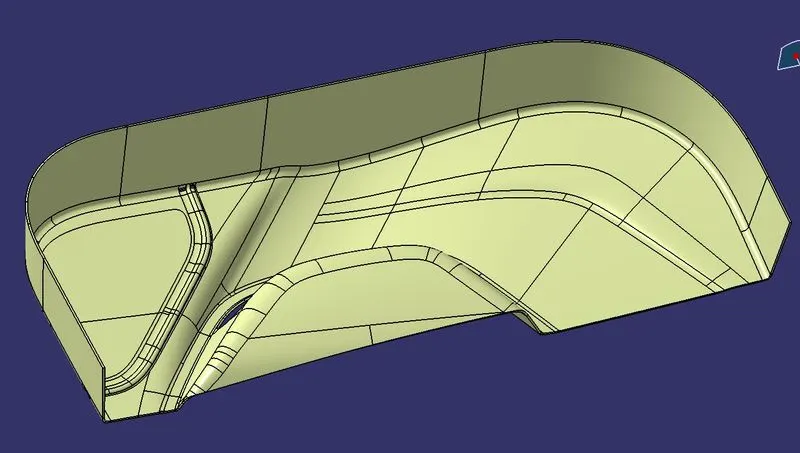
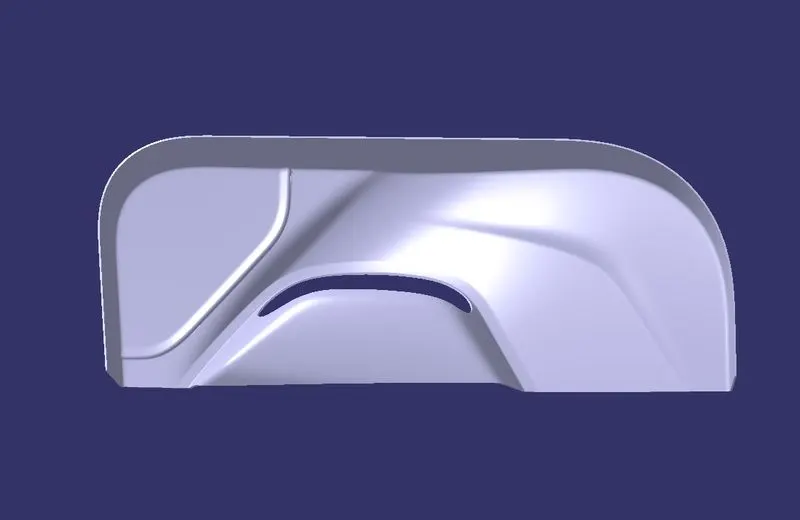
We have first joined the CLASS C surface with CLASS A surface and then trimmed it with CLASS B surface, so it automatically joined together and formed a closed surface then we made it a solid surface.
CREATION OF HEAT STAKES, 4 WAY AND 2 WAY LOCATOR
HEAT STAKE
Heat staking also known as thermoplastic staking is the process of joining two dissimilar materials together. It is an assembly method that uses the controlled melting and reforming of a plastic stud or boss to lock another plastic component of an assembly in place. The plastic stud protruded through a hole in the component to be locked in place. The heated thermal tip contacts the top of the stud, which melts and fills the volume of the tip cavity to produce a head locking the component on place.
The progressive melting o plastic under continuous pressure forms the head. When staking the right combination of heat and pressure for thr application is critical.
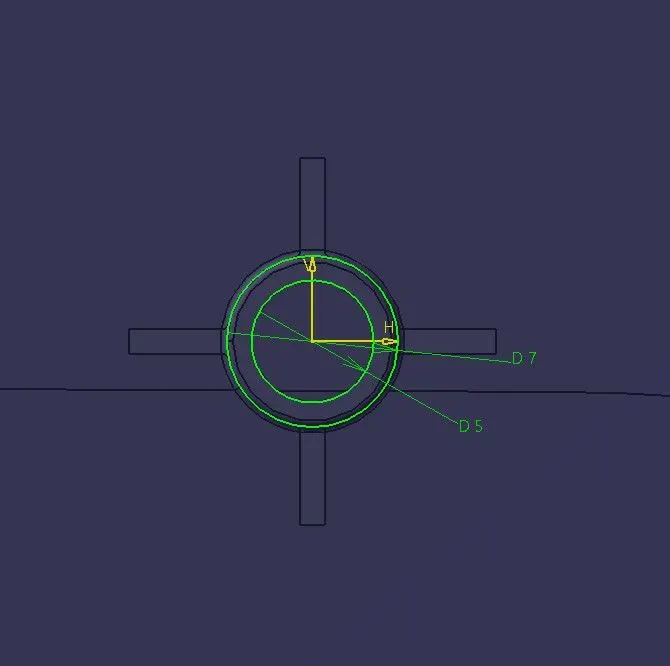
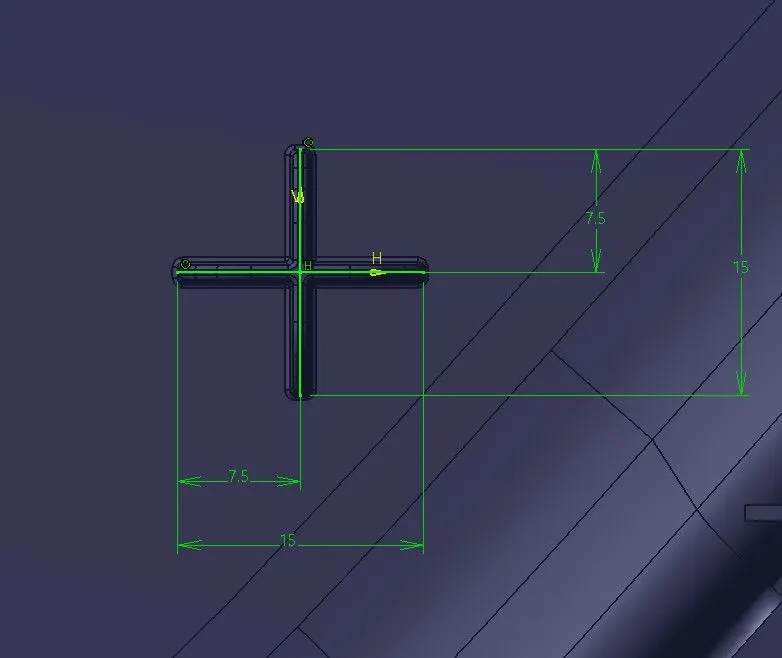
4 WAY LOCATOR
DRAFT ANALYSIS OF FINAL PART
DRAFT ANALYSIS FOR DOG HOUSE USING SIDE CORE AXIS
FINAL PART