Hood design-Week 2
OBJECTIVE
Design Hood Outer Panel, Inner Panel and the necessary reinforcements by following the Master Section mentioned with the Design parameters.
INTRODUCTION
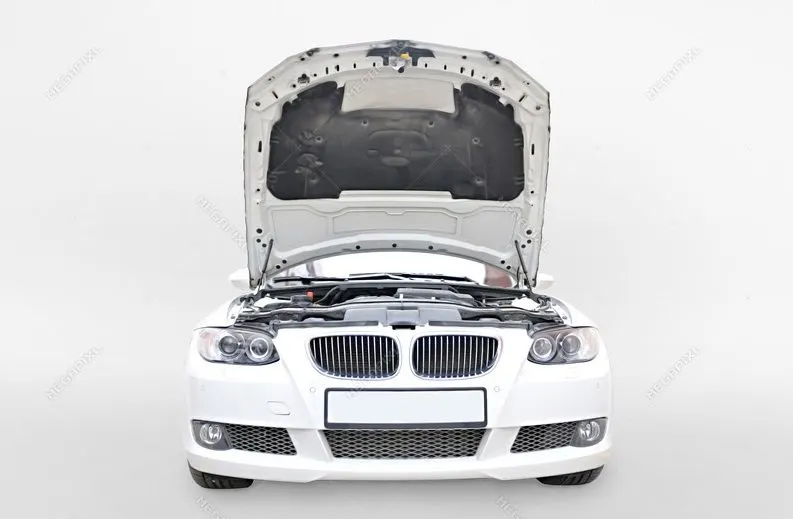
HOOD:-
The car hood is also known as a bonnet in some countries. This is the type of thin sheet cover that is hinged and rests over the engine of motor vehicles. It covers and protect engine, battery, coolant, windscreen fluid, cooling fan, compressor, alternator, and many more component of car that are present in the front. A hidden latch is commonly used along with the hood to hold it securely when we are taking a look inside your car.It gives an asthetic look and provide aerodynamic to the car.
In recent years, the work has been done on the bumper and hood design of the vehicle front end to reduce the injuries to the pedestrians in the event of a pedestrian vehicle collision.In a crash, a pedestrian is impacted twice, first by the car and then by the ground. But a majority of fatal injuries often happen due to the traumatic interaction with the car.In an unfortunate scenario of an accident, the vehicle bumper first hits the lower limbs of the pedestrian, the leading edge of the hood hits the upper thigh or pelvis, and the head and upper torso are struck by the top surface of the hood. Therefore manufacturers around the globe have incorporated key changes in vehicle design to avoid fatal accidents.
The hood in a majority of vehicles is generally fabricated from sheet metal, which is capable of absorbing energy posing a comparatively lesser threat, most fatal head injuries occur when there isn’t a sufficient clearance between the hood sheet and the underlying engine components.An energy observing hood is good for both pedestrian and the car.
MASTER SECTION:-
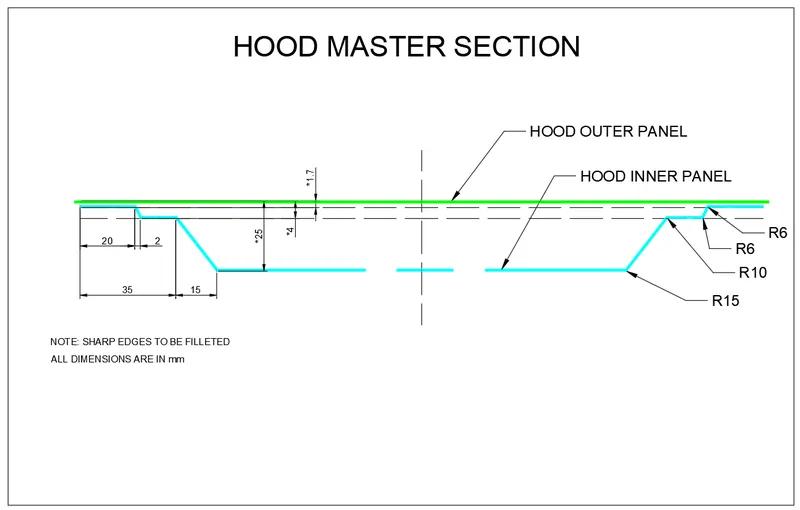
HOOD THICKNESS INFORMATION
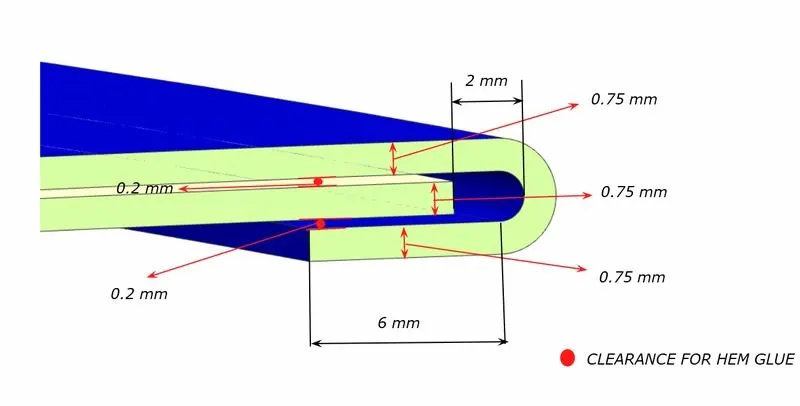
- Outer Panel Thickness = 0.75mm
- Inner Panel Thickness = 0.75mm
- Reinforcement Thickness = 1.5mm
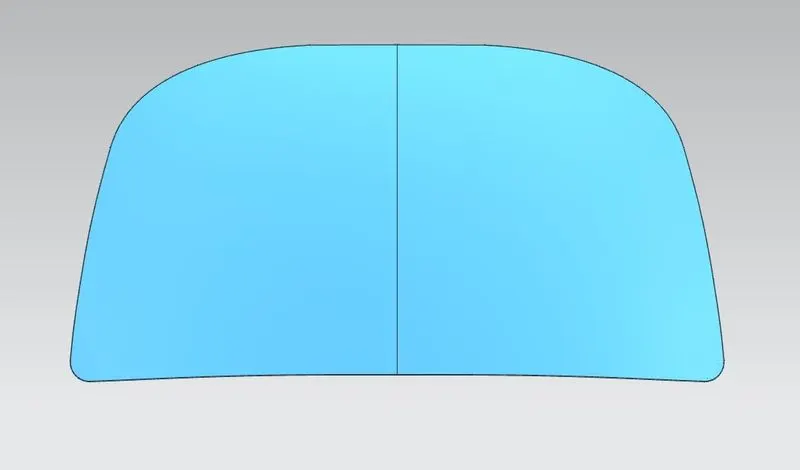
OUTERPANEL:-
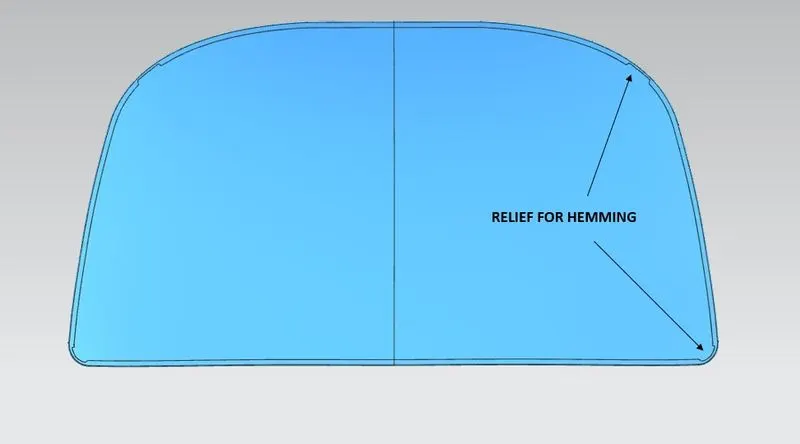
It is the outer part of the hood,it is basically for the asthetic and give a stylish look to the car.
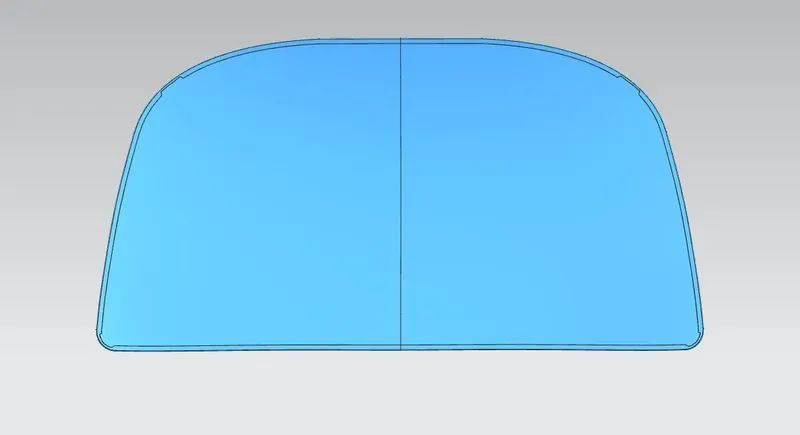
INNER PANEL:-
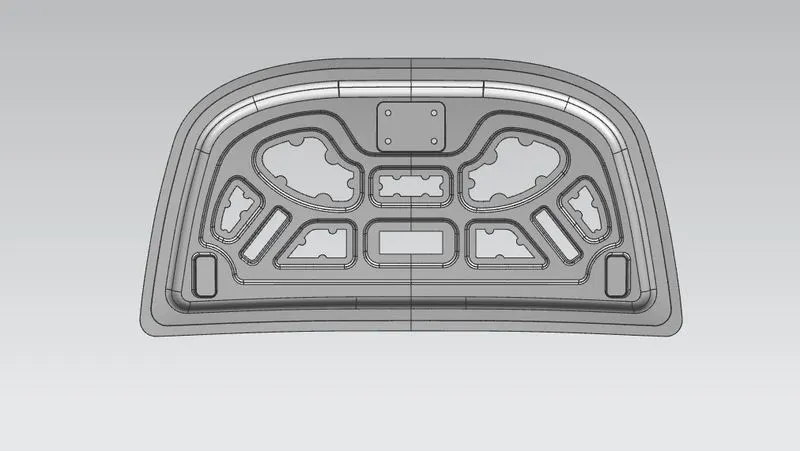
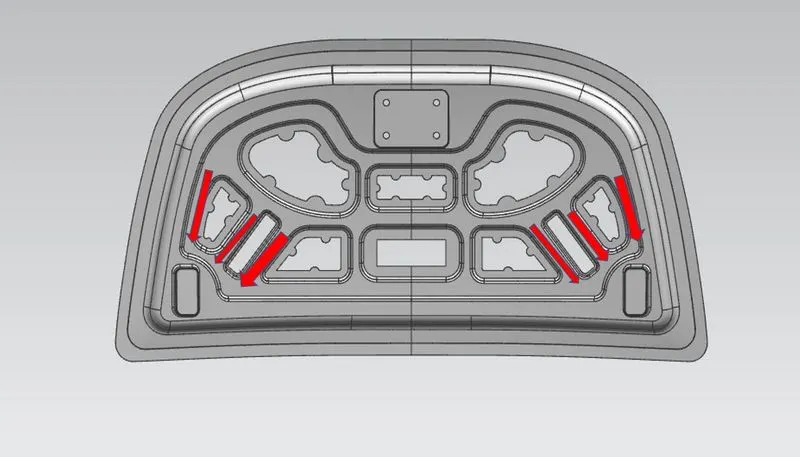
A hood inner panel for a vehicle is provided to improve rigidity, durability, and pedestrian protecting performance by comprising a composite structure in which a multi-cone structure and a frame structure are individually arranged on the front and the rear.The hood panel of the vehicle has a form in which an outer panel and an inner panel are combined, and has a frame structure for rigidity reinforcement in order to ensure hood rigidity and durability.
MASTIC SEALANT:-
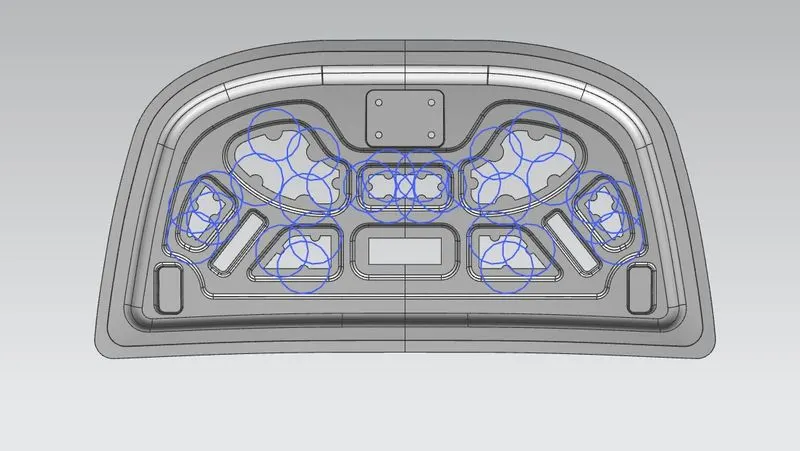
A mastic sealant is a compound that is used to join the outer and inner panel,it behave like a rubber. These sealant are used on the mastic point which are provided in the inner panel. We can not use other joining techniques because there is a risk of lowering the beauty of car.Every sealant point has its effect around 80 mm in diameter region.It is resistance to heat,water and UV rays.
EMBOSS DEFINATION:-
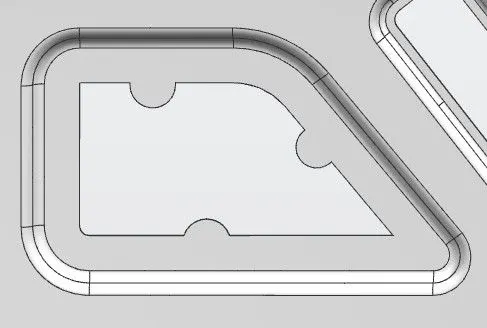
Embossing is using techniques to create a raised pattern on a material. Emboss is given so that during the crash the energy is dissipated away from the vehicle occupants and along with the other cut outs to reduce the weight.It gives strength to the outer panel.
LATCH TRAJECTORY:-
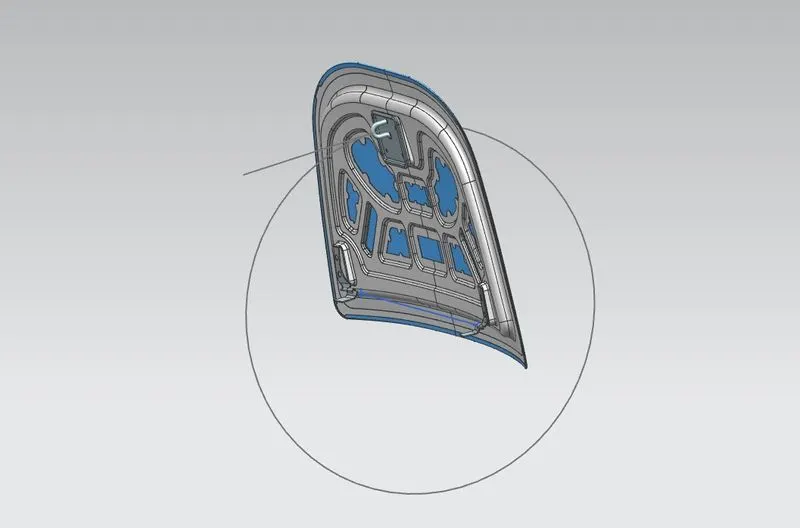
A line is drawn from the axis of the two hinges by using the midpoint of that line we draw a circle. we take the mid point of the line as the midpoint of the circle and extend it from there to the position of latch. By doing this we check wheather the latch is parallel to axis or not. if it is not parallel then it will create problem when closing the hood. The circle is called Latch trajectory circle.
STRIKER AND HINGES:-
Hinges are used to join two parts together. It helps to open and close the component with minimum effort.
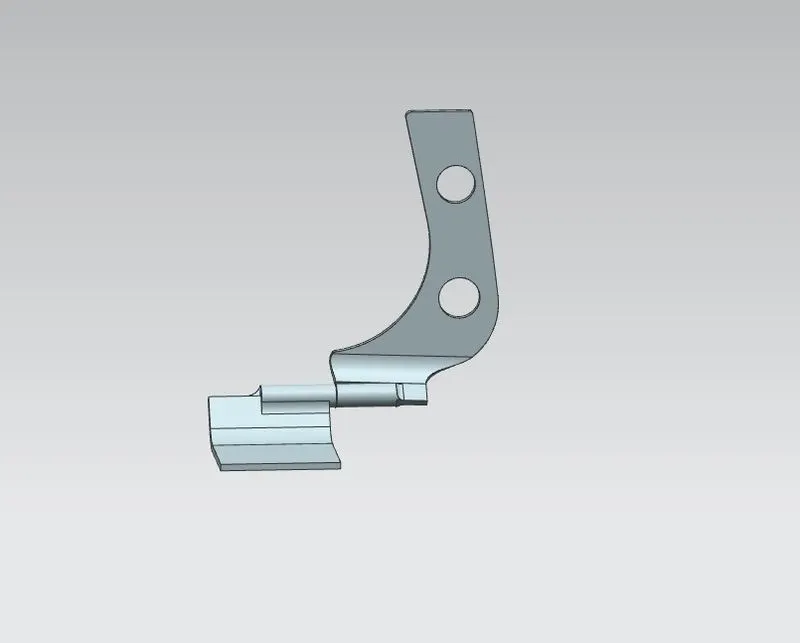
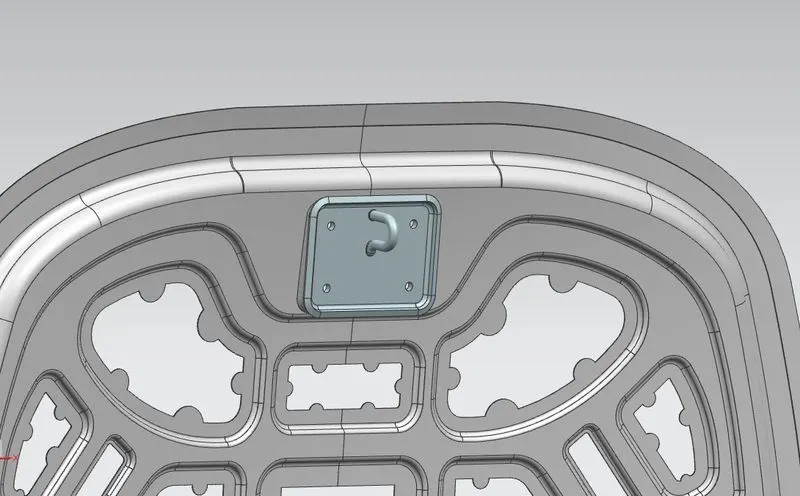
Striker is a compoent which is fixed on the upper side of the inner panel. It is used to lock the hood to prevent the hood from unexpected opening.
DEEP DRAWING:-
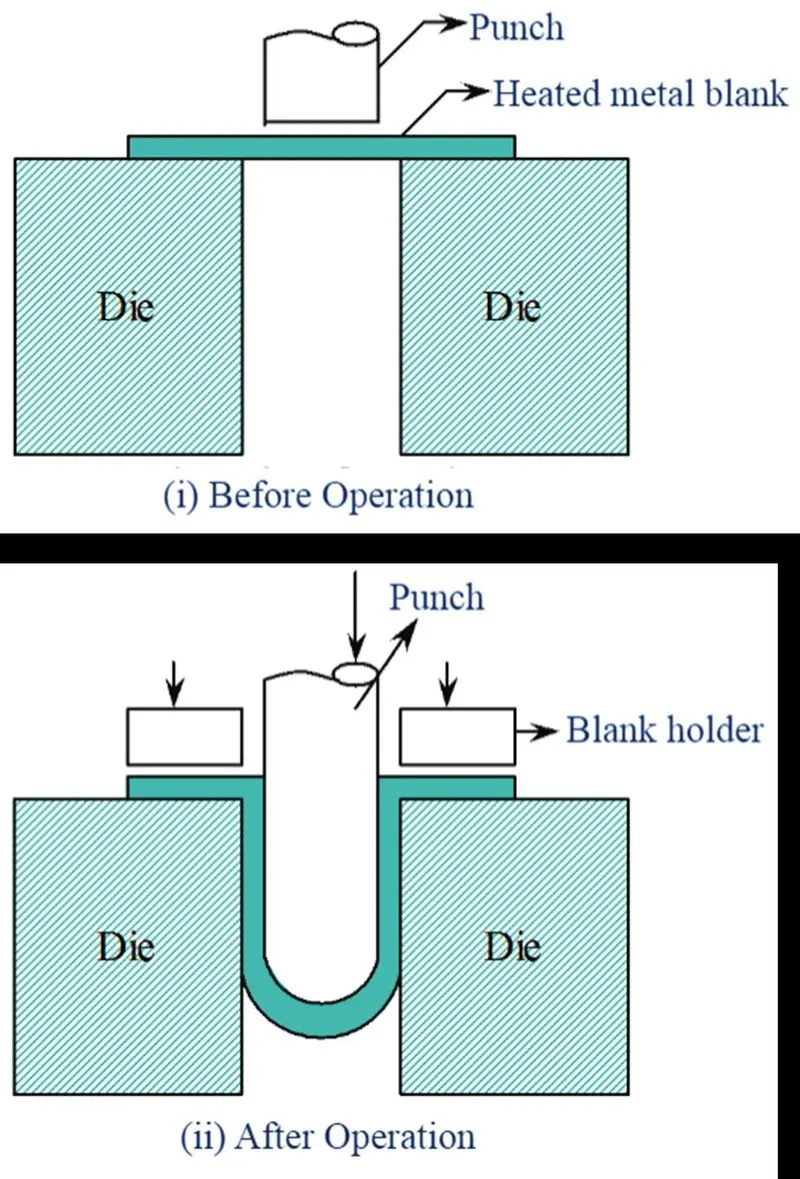
In Deep drawing we use metal dies to form blank sheets of metal into a desired shape,if the depth of the item created is equal to or greater than its radius, then the metal forming process can be called deep drawing. in this process the metal blank is shaped through pressure applied by a metal die.
HEMMING:-
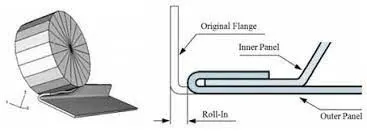
In hemming, joining is done by simply folding the outer edge of one sheet over the outer edge of the second sheet.There are two types of hemming-1:-Conventional die hemming, 2:- Roller hemming
Conventional die hemming:- This process is performed by using a hemming tool.It is very expensive but requires less time.

Roll Hemming:- This process is performed by robots by using a hemming roller.It require low cost but it is time consuming.
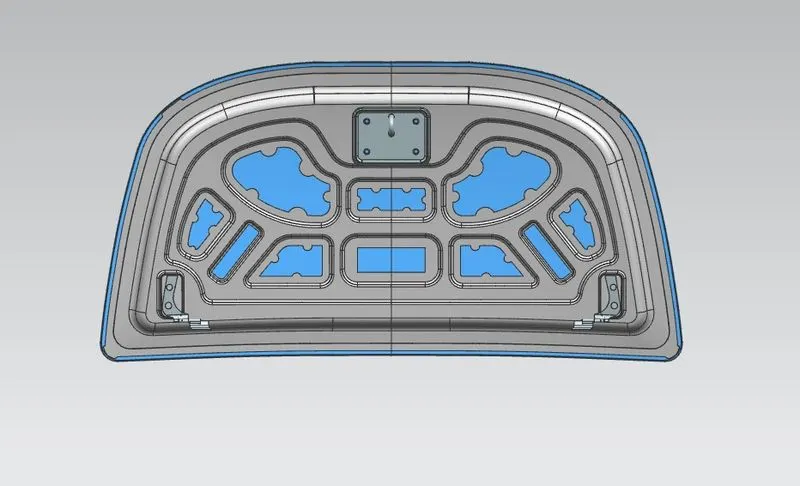
FINAL DESIGN OF HOOD
CONCLUSION
This is the report of a car hood and its components designed in NX 12.0 software. All measurements are given according to the master section.