Week 9 - Project 1 - Door Applique Design with Engineering Features
DESIGN OF DOOR APPLIQUE WITH ENGINEERING FEATURE
AIM
To design a door applique from a specified class A surface and to generate engineering features to integrate the component in the main surface.
OBJECTIVES:
- The tooling direction for the provided Class-A Surface must be designed to fulfill the draft angle criteria.
- Desgin door applique plastic component using the provided Class-A surface.
- Conduct a Draft analysis on the model.
- Design the Heat Stakes and locators while keeping the design principles in mind.
INTRODUCTION:
HEAT STAKING –
Heat Staking is a pulsed-heat method used to attach two or more pieces, at least one of which is composed of plastic. At a certain period, the plastic material is deformed through heat and force. The connection is formed by partly deforming one plastic portion to fix the other.
Heat Staking facilitates the bonding of metal to plastic and is widely utilized in large volume/low-cost industries such as automotive, information technology, and consumer products.
In the production of thermoplastic components, it is frequently essential to link the thermoplastic to a section of a dissimilar material, whether it is a metal, a dissimilar substance, or another material. Thermal staking is a method of assembly that involves the controlled melting and reformation of a plastic stud or boss to trap or lock another plastic or metal component of an assembly in place. Plastic studs protrude through holes of a component to secure it in place. The heated thermal tip makes contact with the top of the stud, melting and filling the volume of the tip cavity to form the head and securing the component in place. The head is formed by the gradual melting of the plastic under constant pressure. The proper mix of heat and pressure for the applications is crucial during staking.
Advantages of Heat Stakes:
- Materials that are similar and different can be joined: metal to metal, plastic to plastic, and metal to plastic.
- Excellent control within a narrow process window.
- Local heating does no harm to the surrounding materials.
- Glass-filled material manufacturing
- There is no mechanical vibration.
- Custom-designed tools enable the creation of a wide range of heat-stake forms.
LOCATORS
In any type of assembling, before attaching the component to the mating part, the position of the part with regard to the mating part must be fixed. In these instances, we must adhere to some engineering standards. The 3-2-1 Principle will be followed in this project. Any part that must be fixed during the welding or machining process has 12 degrees of freedom.
- Translation Movement along X Axis
- Translation Movement along Y Axis
- Translation Movement along Z Axis
- Rotational Movement along X Axis
- Rotational Movement along Y Axis
- Rotational Movement along Z Axis
STEPS TO DESIGN
First, open CATIA V5 and import the Class A Surface of Door Applique model.
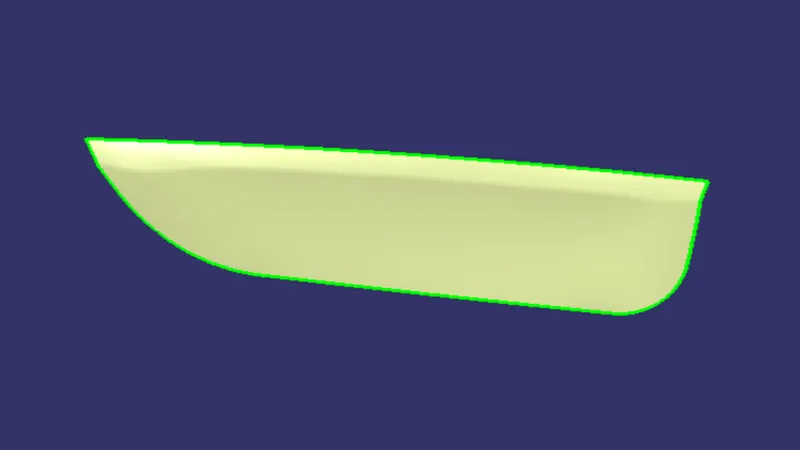
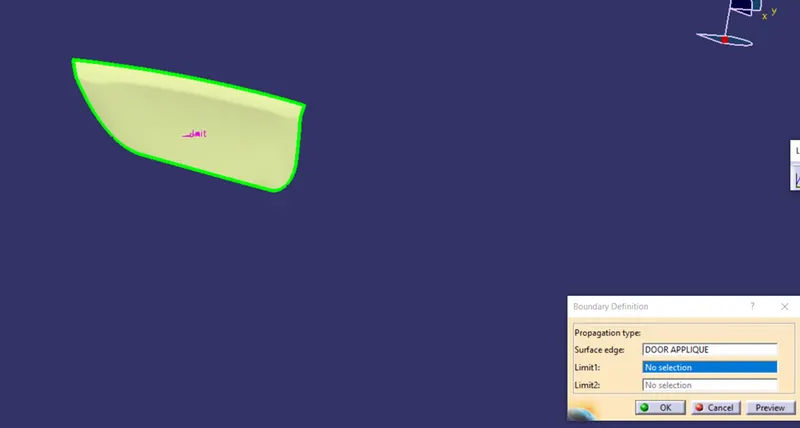
Using the boundary option, check the connection of Class A Surface. Make certain that there is no space between the two surfaces.
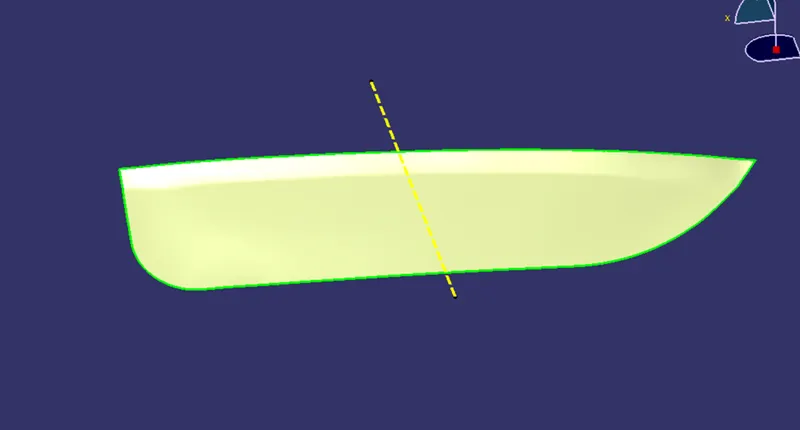
TOOLING AXIS –
- The tooling axis determines the direction in which the component is expelled from the mold. The draft on the component should be positive in order for the part to be easily manufactured. In relation to the tooling direction, the draft angle should be positive.
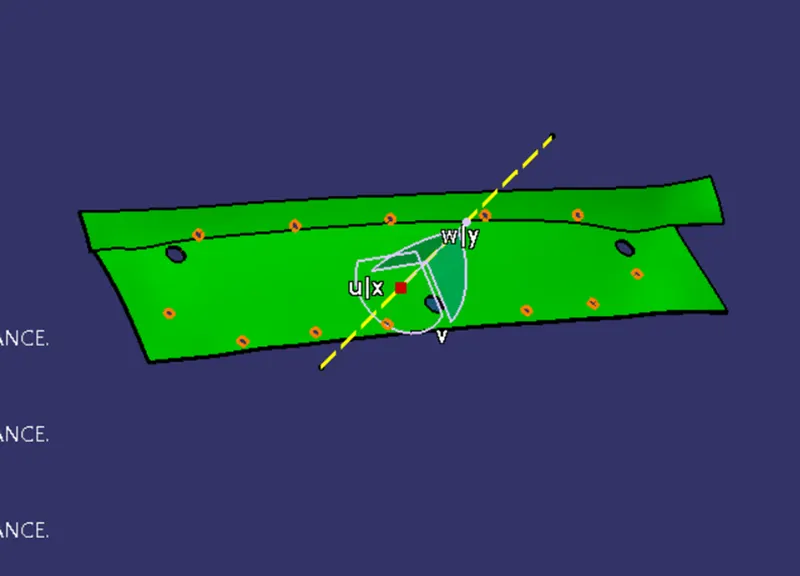
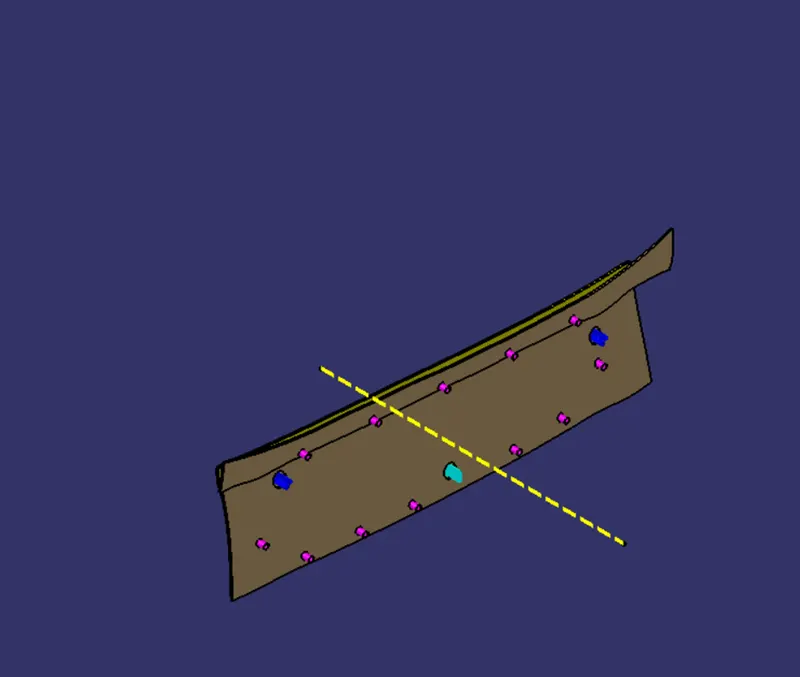
- In this case, the Y axis provides the correct perspective for the tooling axis.
- Now, we know the Y direction is from where the tooling axis will be, but we do not know the axis direction.
- As a result, the base is removed and a point at the 0 coordinate is formed (center of the surface).
- Then, in the Y direction, a line or axis is generated.
CLASS-A SURFACE: a surface made by the designer which is given as an input to the plastic
modeler to work on. It is aesthetic surface and the outer most
surface.
CLASS-B SURFACE: a surface below a certain thickness from the class-A surface is class-B
surface. This is the surface that contains engineering aspects of a
model.
CLASS-C SURFACE: a surface that joins class-A and class-B surfaces is class-C surface
Class A
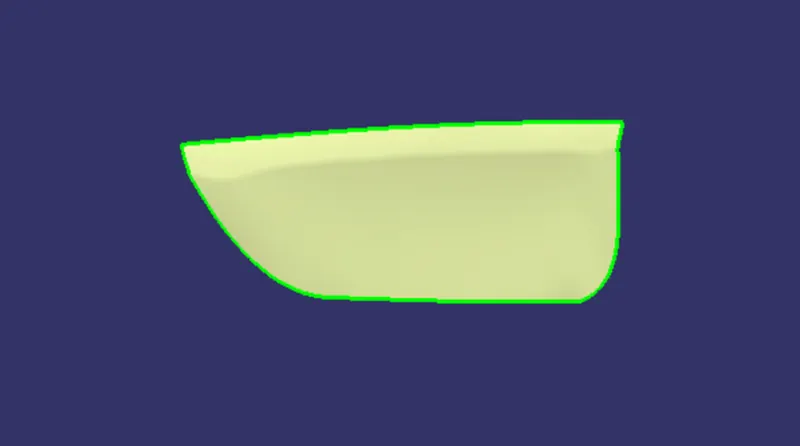
Class B
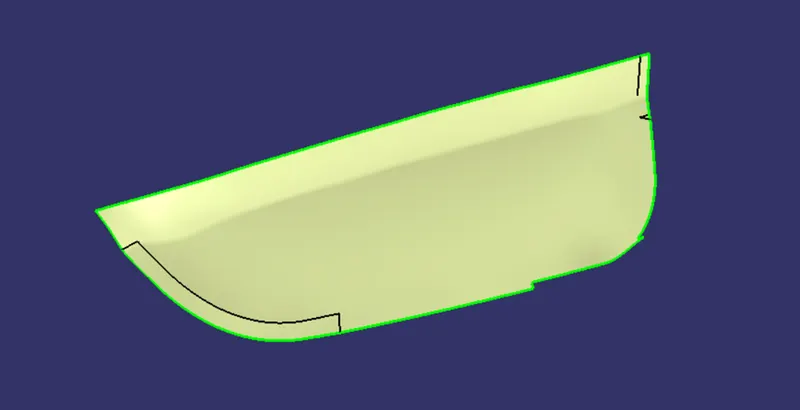
Class C
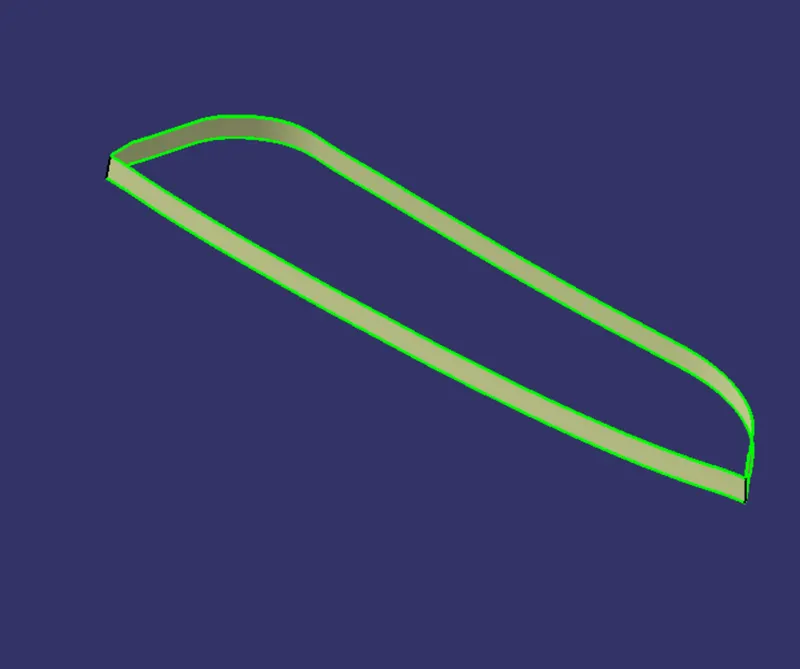
Class A and C join
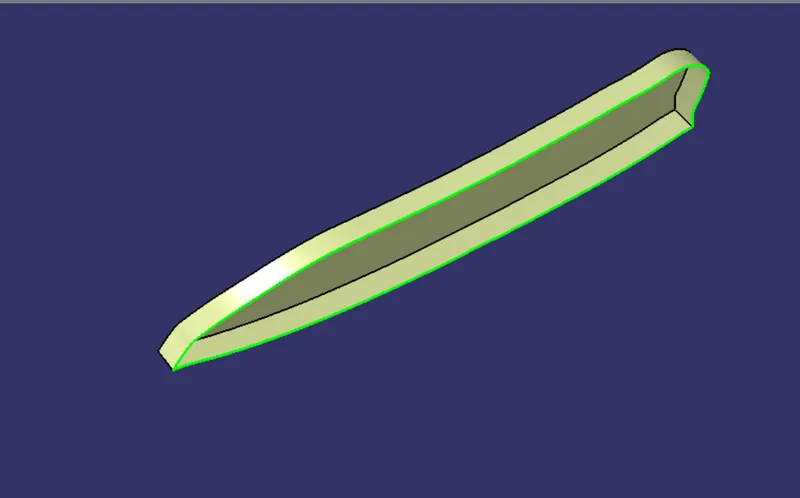
Final trim
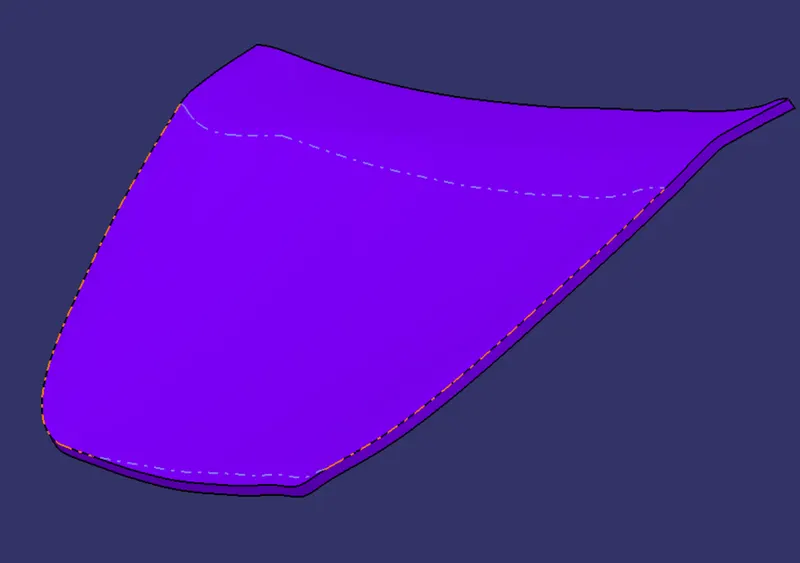
Create a solid body using the close surface command from the component workbench.
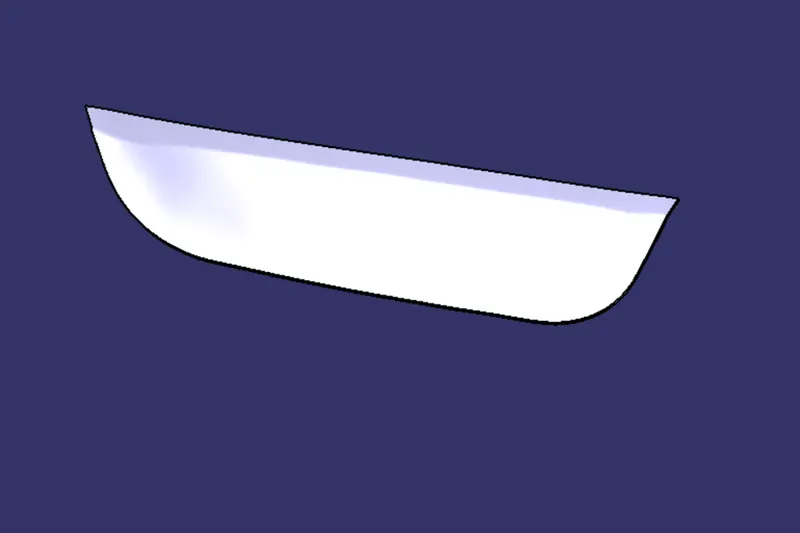
Create a solid surface from the attachment component by increasing the thickness command by 2mm.
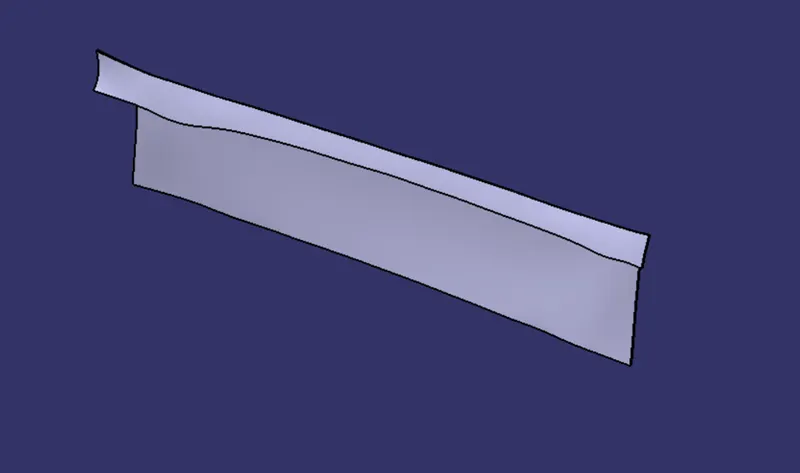
B SIDE FEATURES
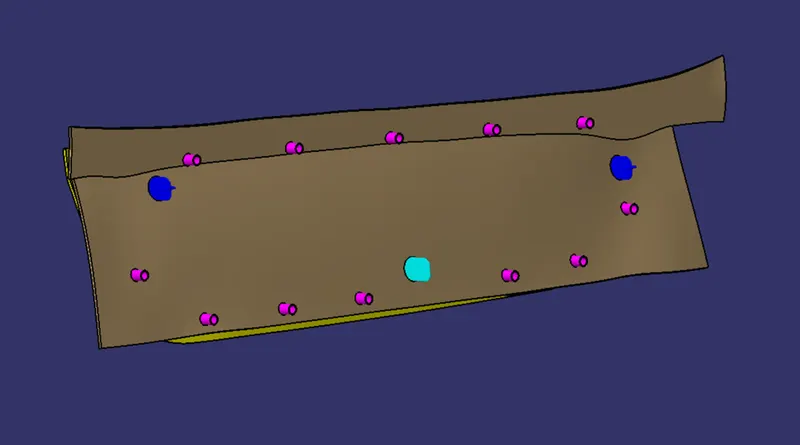
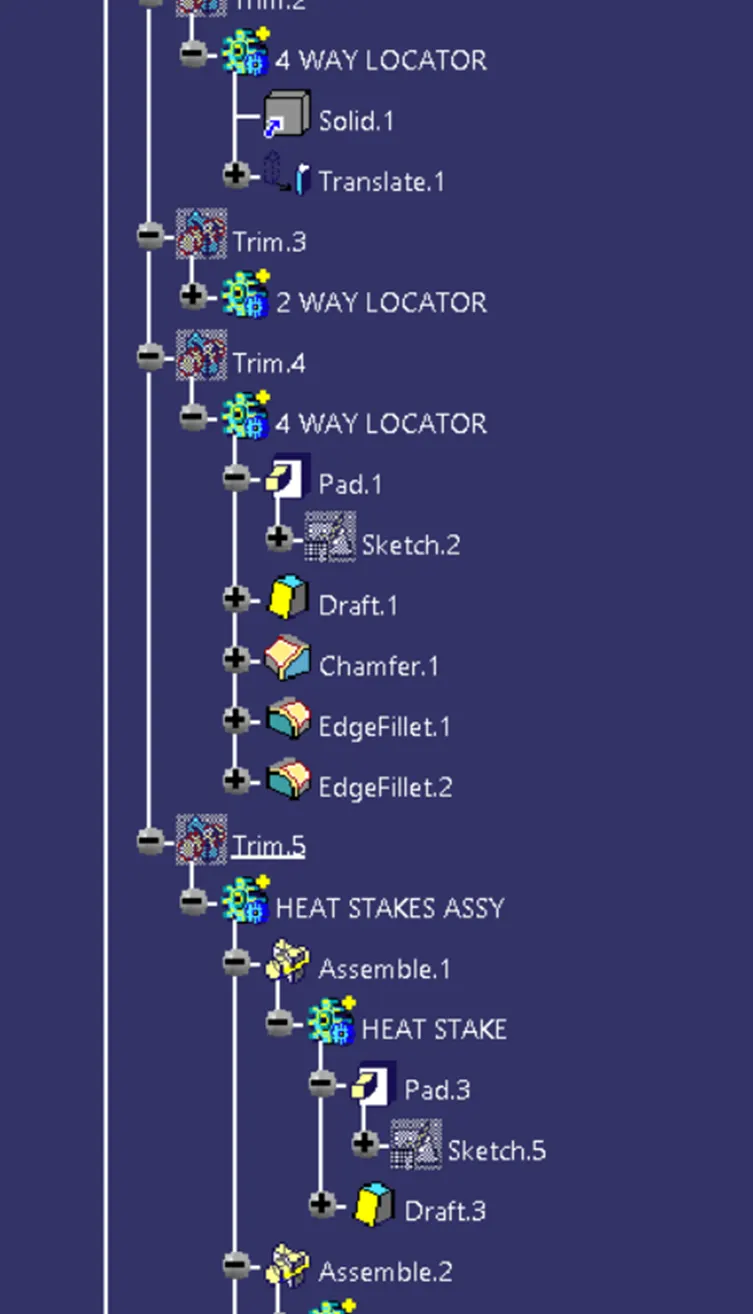
2 WAY AND 4 WAY LOCATORS:
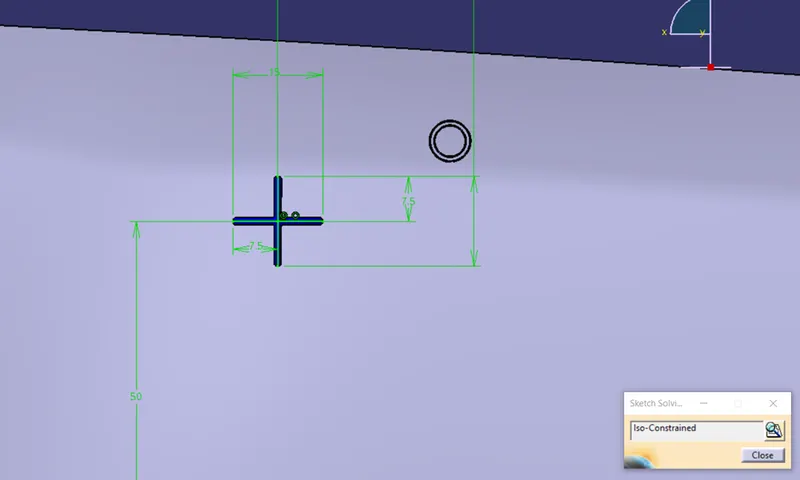
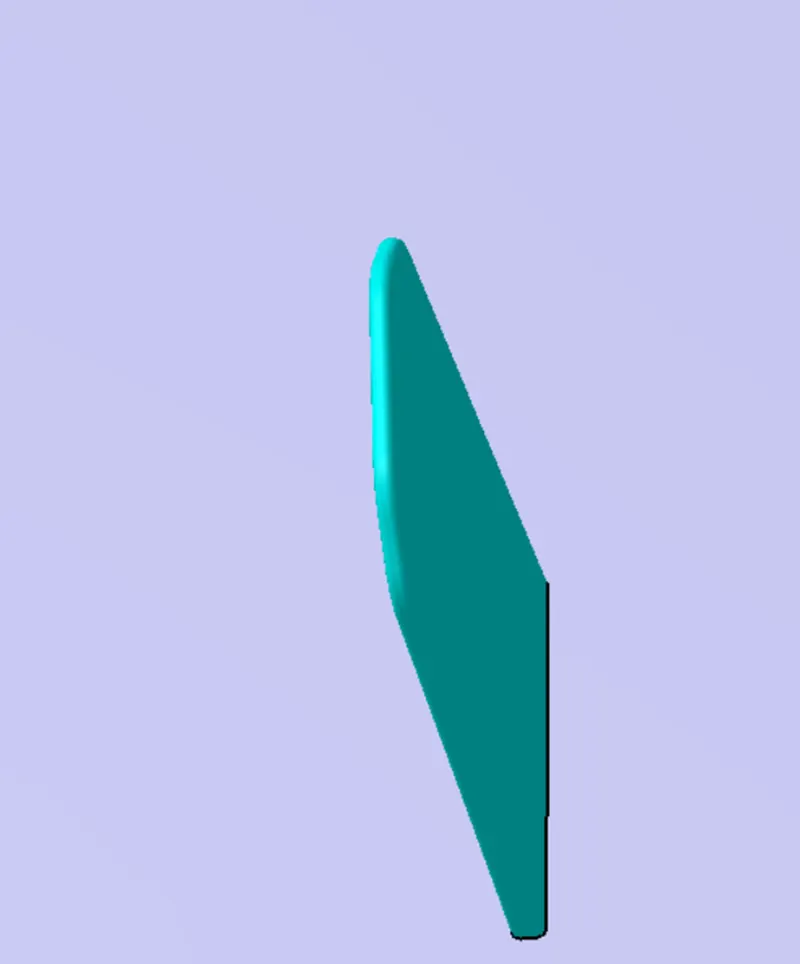
- To make 4 Way locators, the ribs should intersect with one another.
- Open the Sketcher Workbench and draw two intersecting lines that are constrained.
- Exit the Sketcher Workbench and pad the Sketch to 1.3 mm thickness.
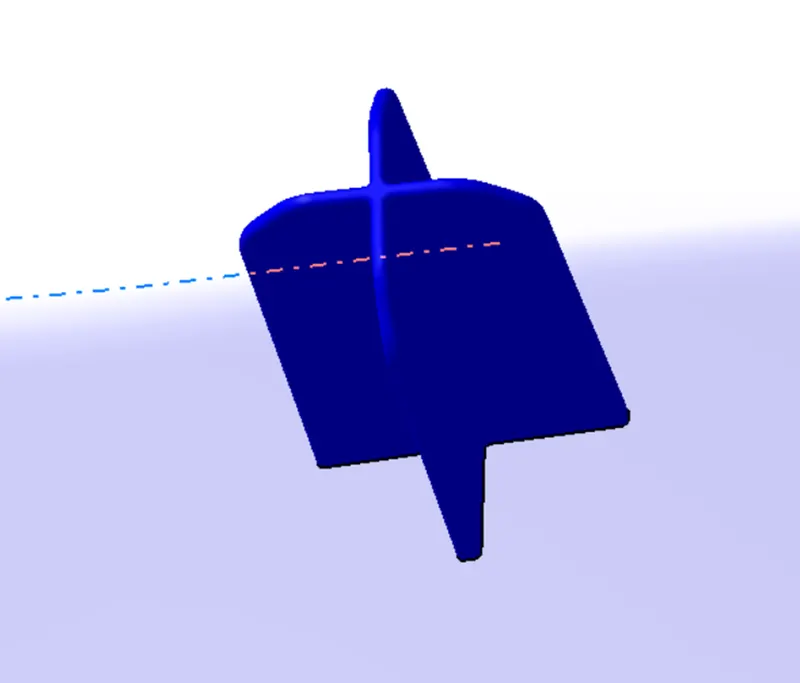
- Now, apply a 0.5-degree draft to the faces. The tooling axis is the pulling direction in this case, and the neutral face is the top face.
- Apply a chamfer of 3*45 to the locators' edges.
- Only a single line is required for 2-way locators, and the rest of the method is the same as for 4-way locators.
- And and paste and translate it using coordinates.
HEAT STAKES:
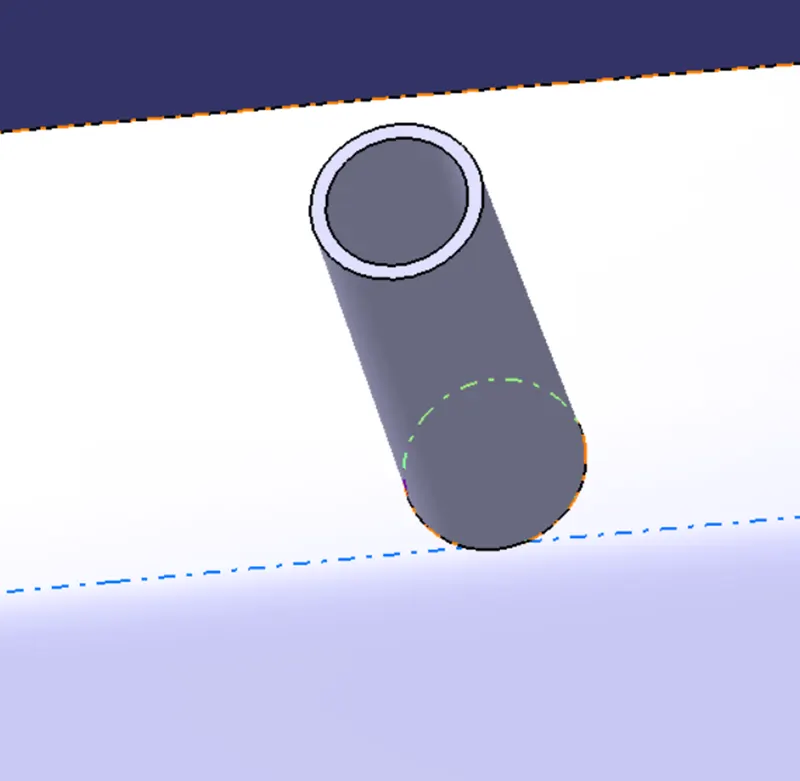
To make the heat stakes, open the Sketcher Workbench and draw two circles with 7 and 5 mm diameters.
Exit the Sketcher Workbench and draft the Heat Stakes to 0.5 degrees. Make sure to draft both faces
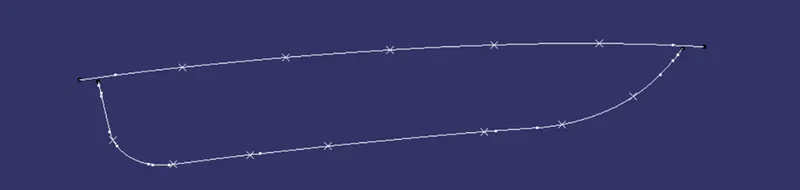
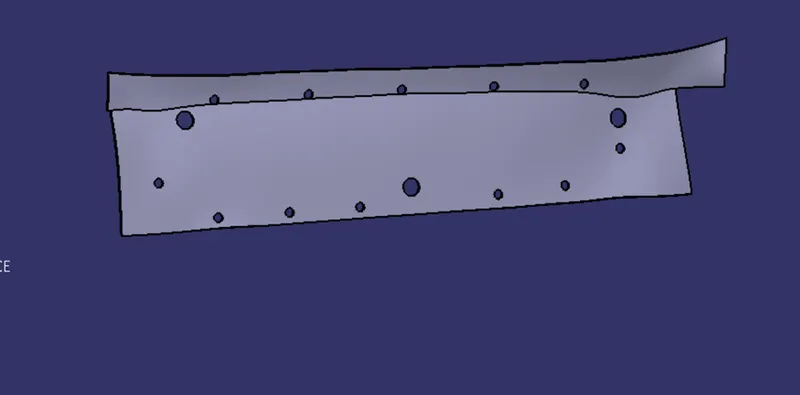
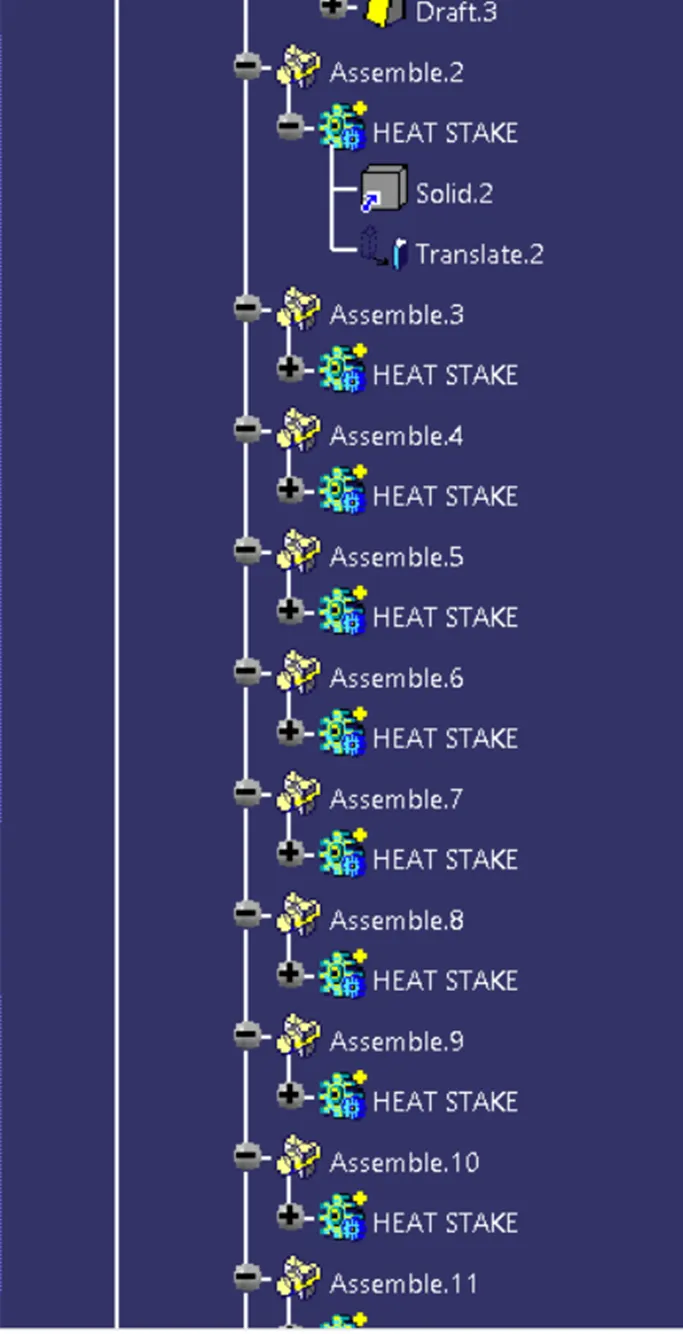
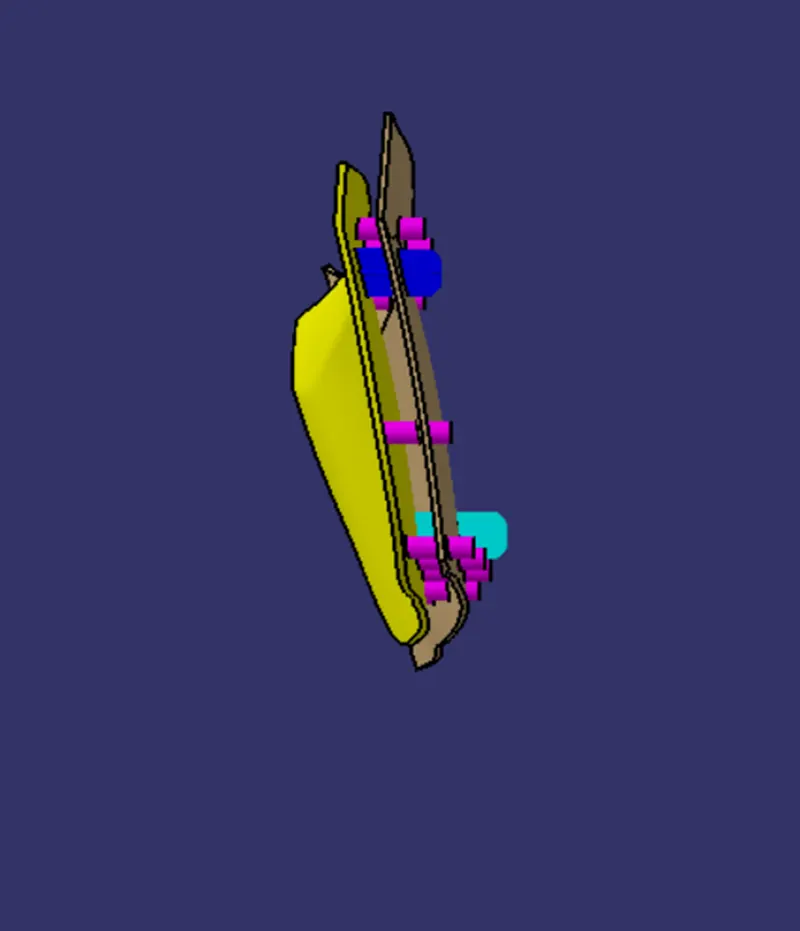
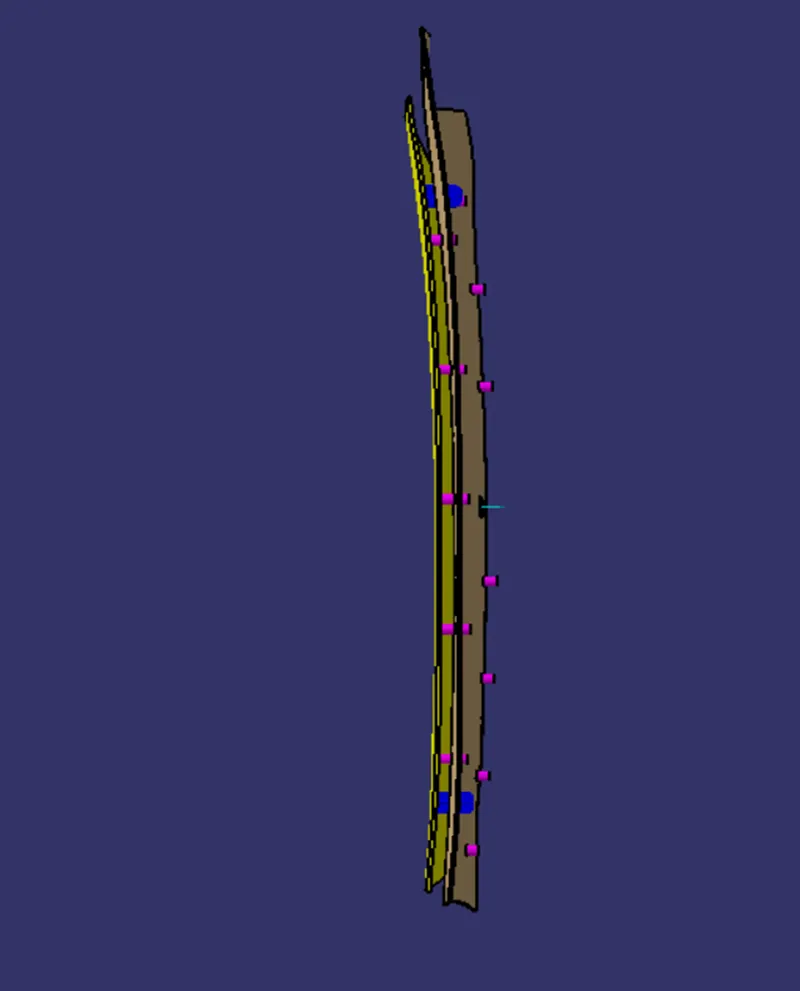
Make two parallel cures with 15mm offset distance and create reference points to translate the heat steak as shown in the figure below and using point to point translate copy the heat steak to the required point.
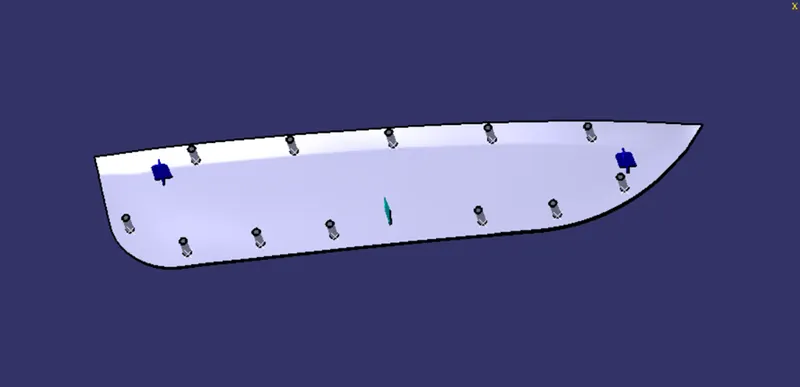
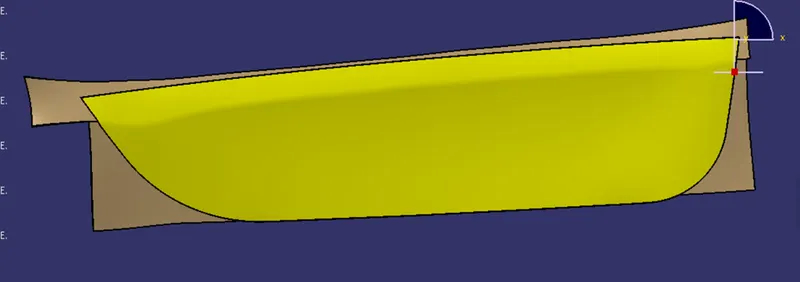
Union trim the appliques with locators and heat steaks and remove the unwanted material
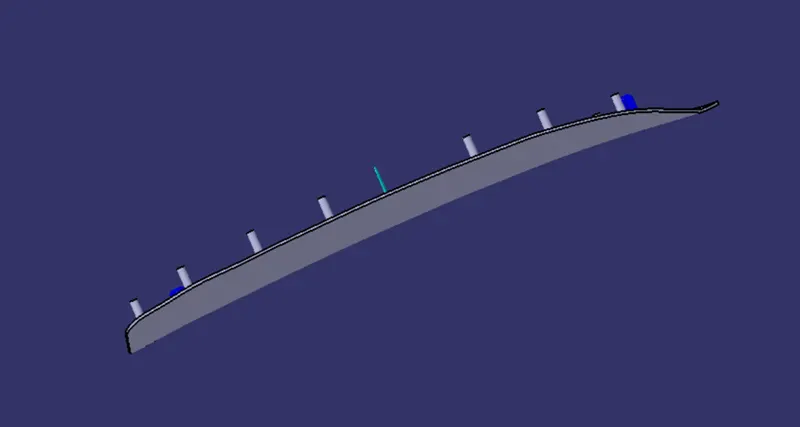
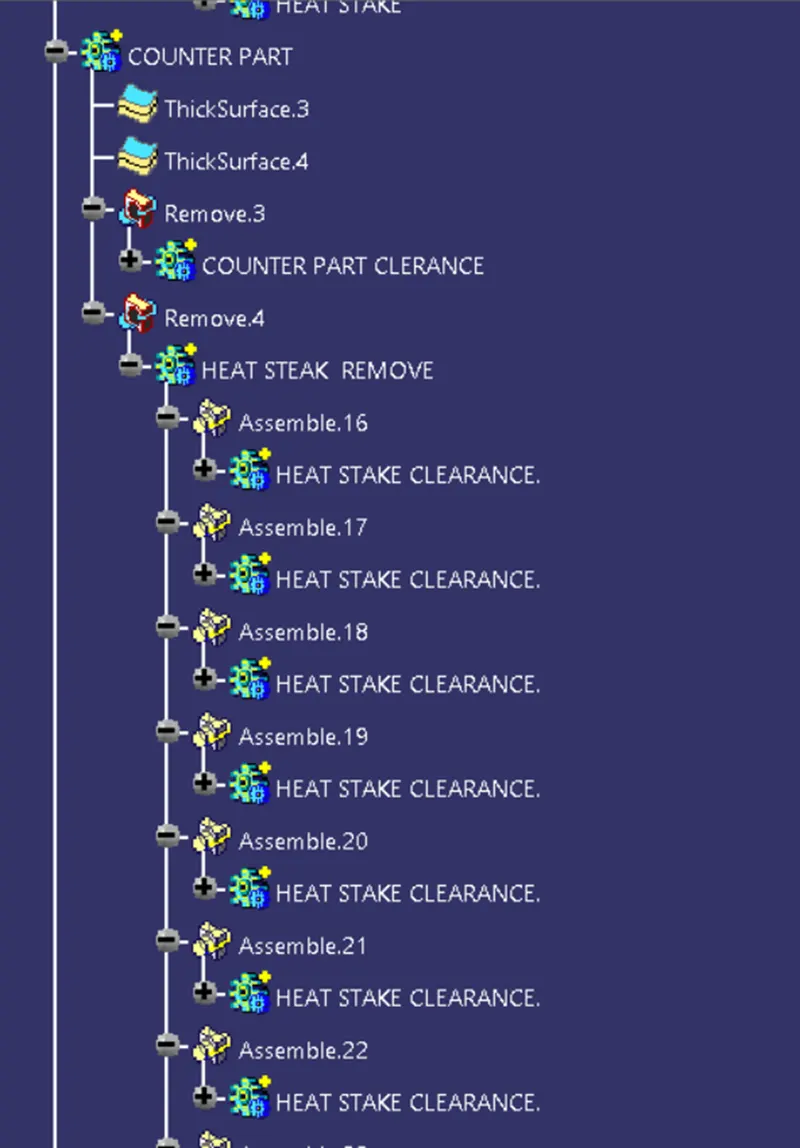
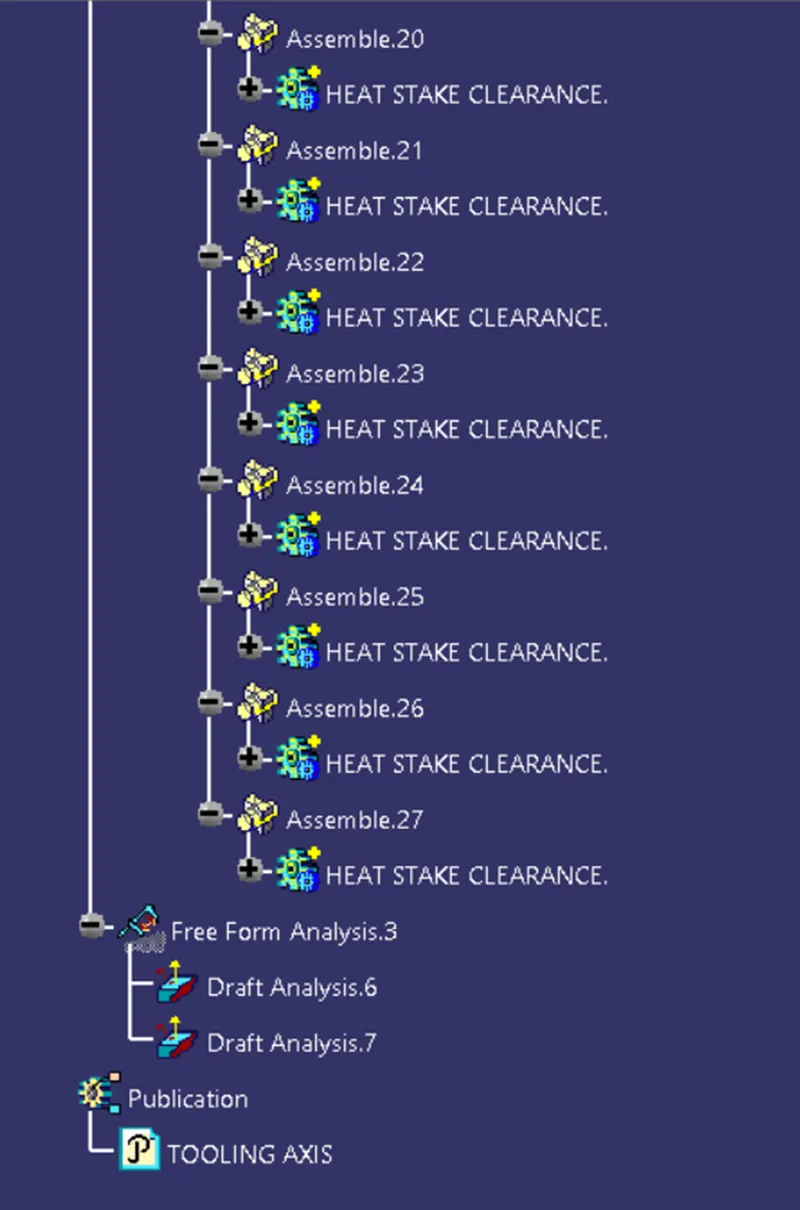
Design clearance for counterpart and take make sure the clear is 0.1 for locators and 0.5 for heat steaks
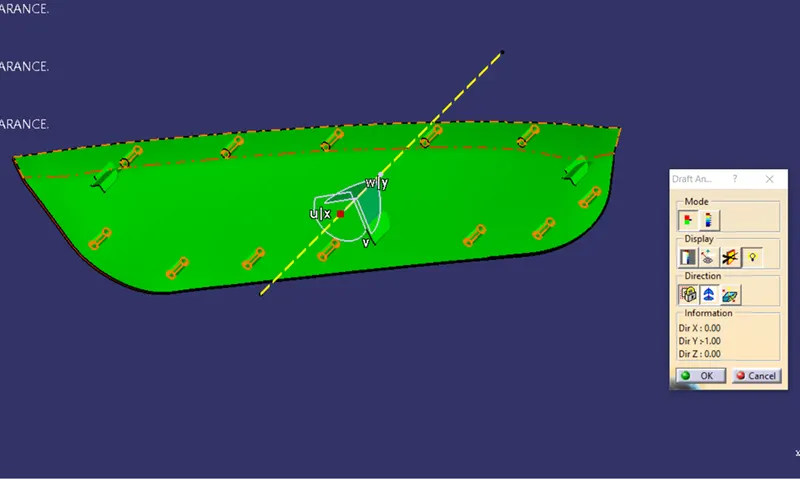
DRAFT ANALYSIS:
- To perform the draft analysis the view mode to material mode.
- Then navigate to Insert >>analysis>>feature draft analysis
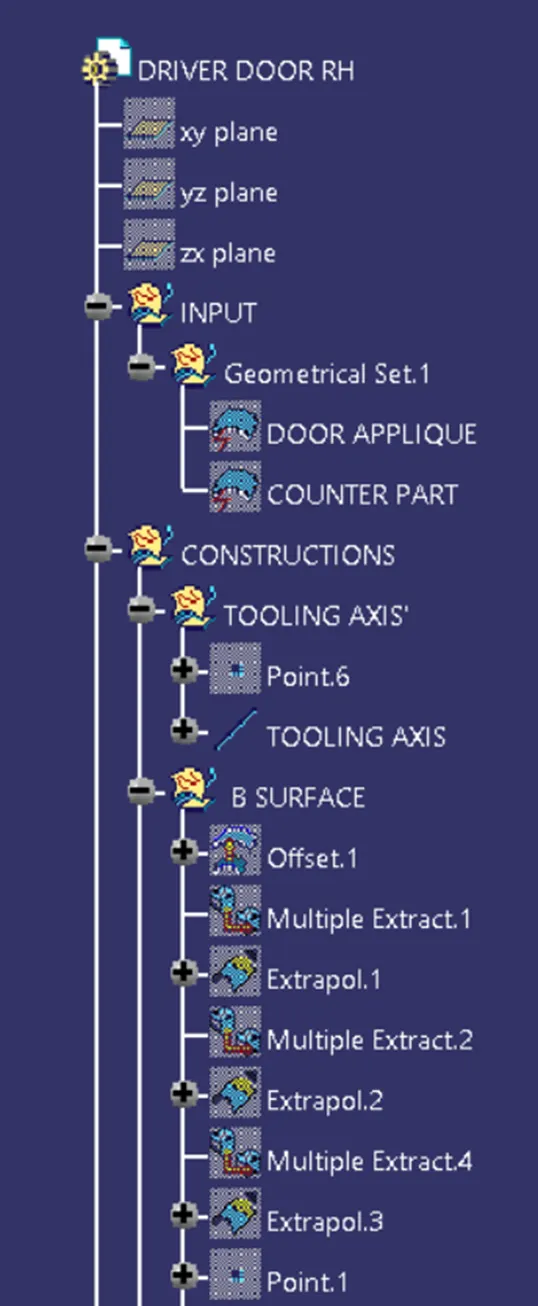
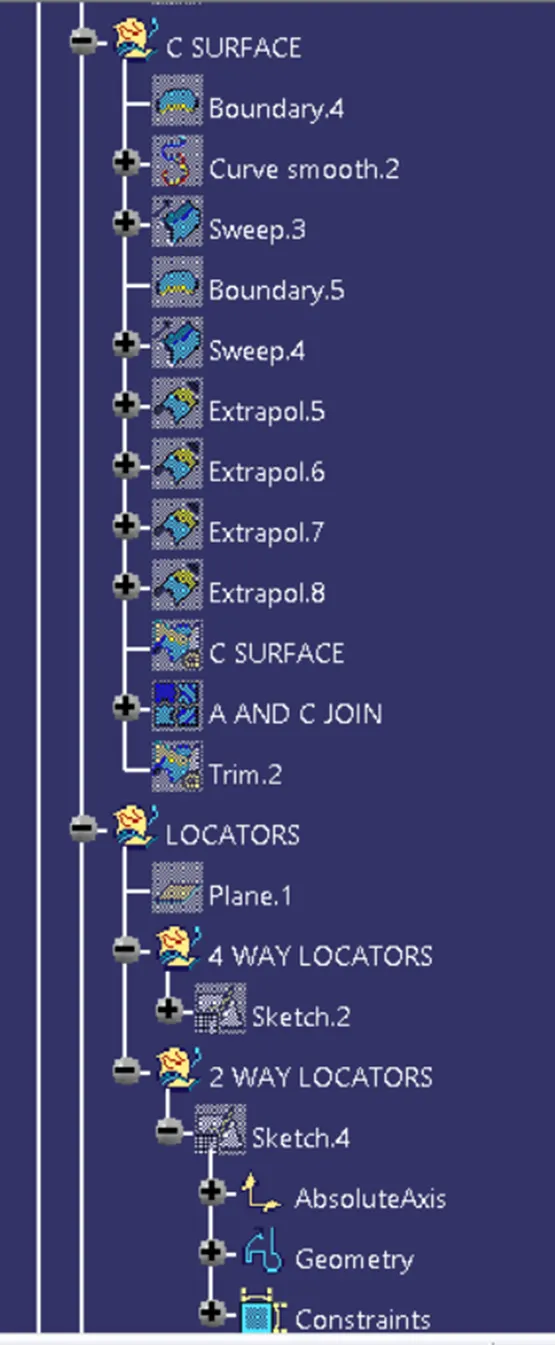
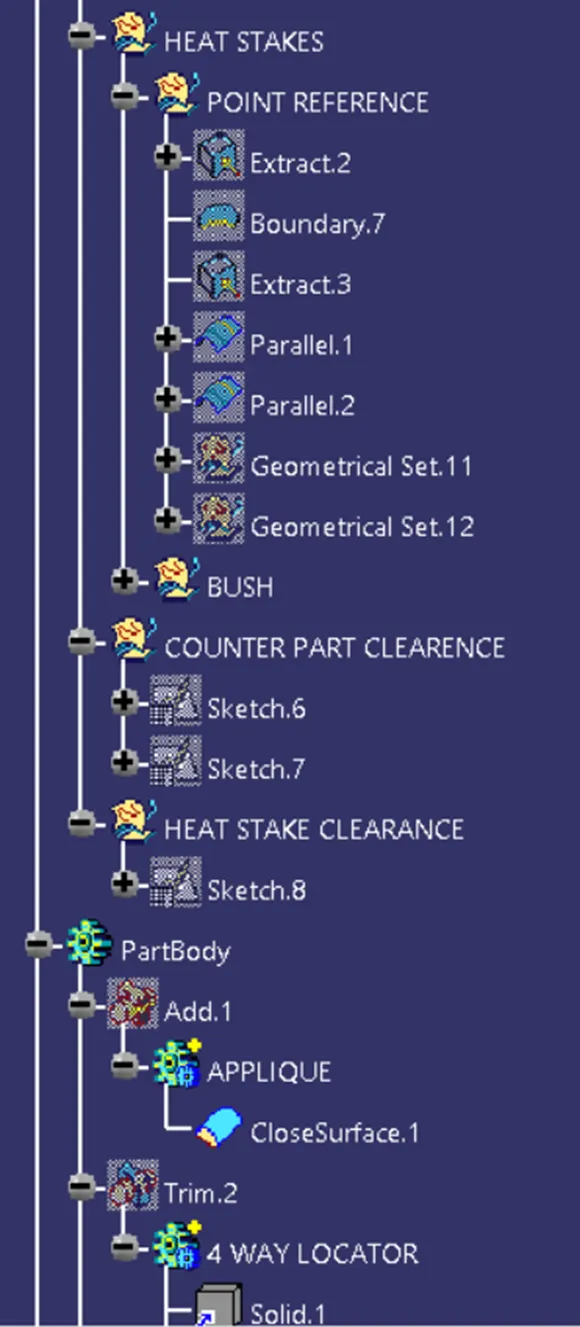
TREE STRUCTURE
CONCLUSION:
As a result, the Door Applique is created by utilizing the provided Class A surface.
2 and 4 Way locators have been devised to establish the position of the appliqué with the matching door panel. Heat stakes have also been made to fix the component with the mating panel by melting.