Week 9 Machining with Planer Challenge
OBJECTIVE: To perform explicit dynamics analysis of a cutting tool on a workpiece and find the required output in ANSYS.
CASE 1: Velocity of the Cutting Tool 20000 mm/s
PROCEDURE:
- Open Ansys Workbench and choose Explicit Dynamics from the toolbox.
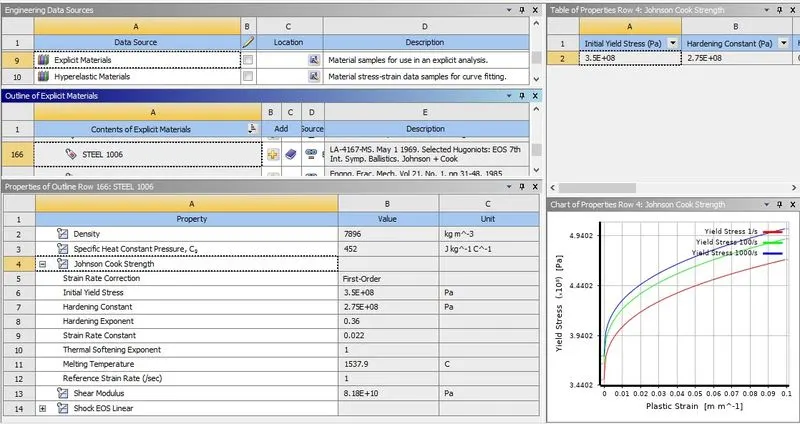
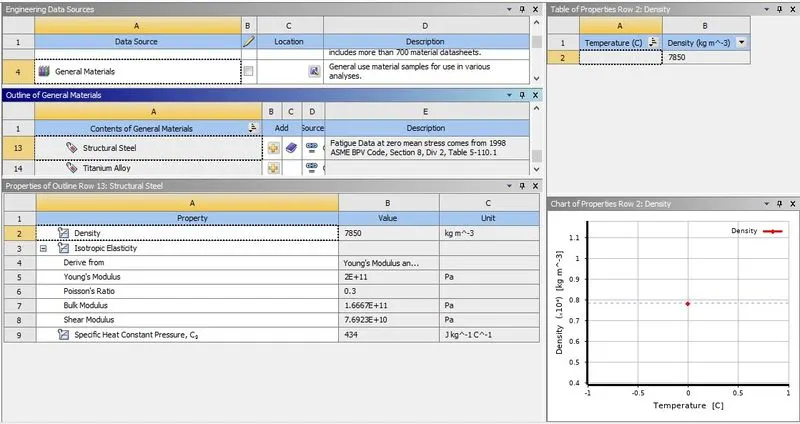
- In the Engineering data, let the material be structural steel and also choose Steel 1006 from the Explicit materials.
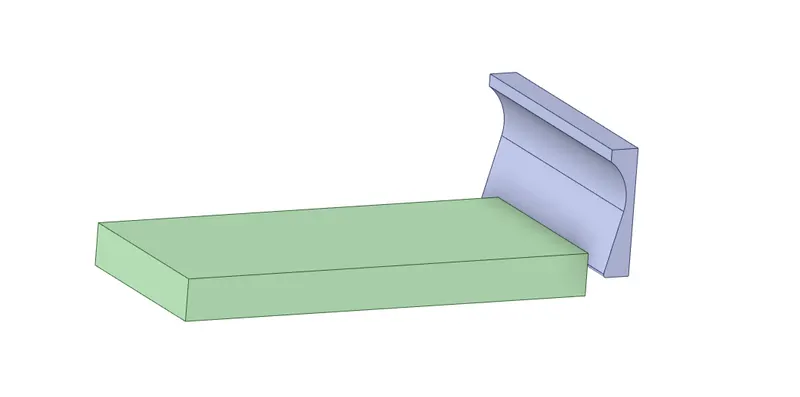
- For the geometry, right-click and import the given "Machining with Planer.x_t" and open with space claim.
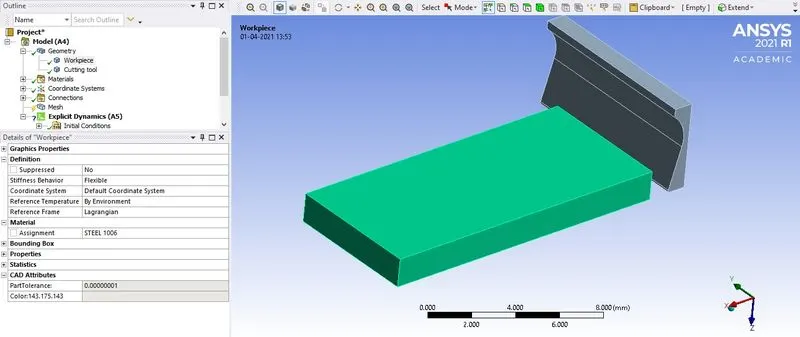
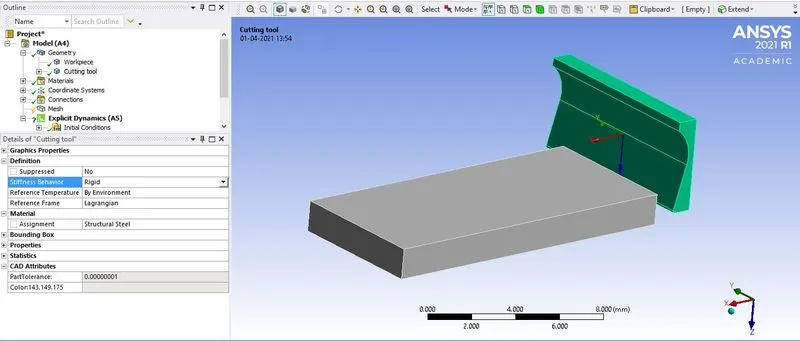
- Now in the workbench goto Model -> Edit, in the model window check the Geometry for the material and assign Steel 1006 to the workpiece and Structural Steel to the cutting tool and change the stiffness behaviour to rigid for the cutting tool.
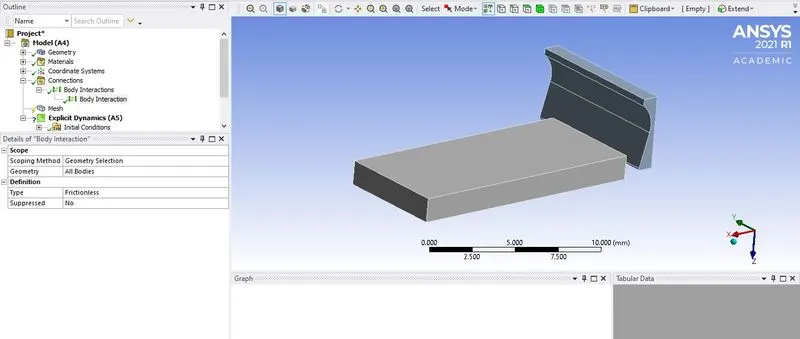
- In connections delete all the available connection, choose Body Interaction for geometry= All bodies and type= Frictionless.
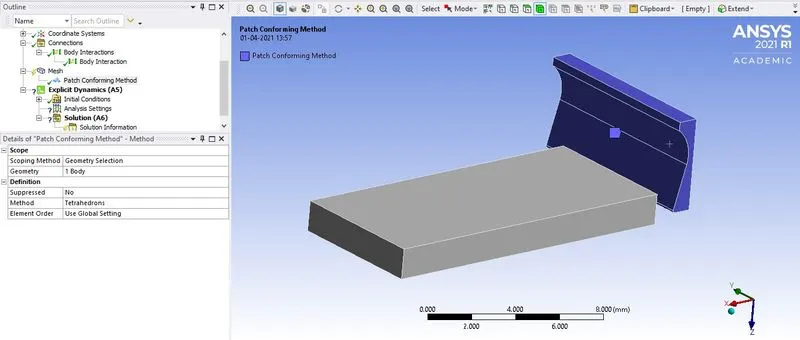
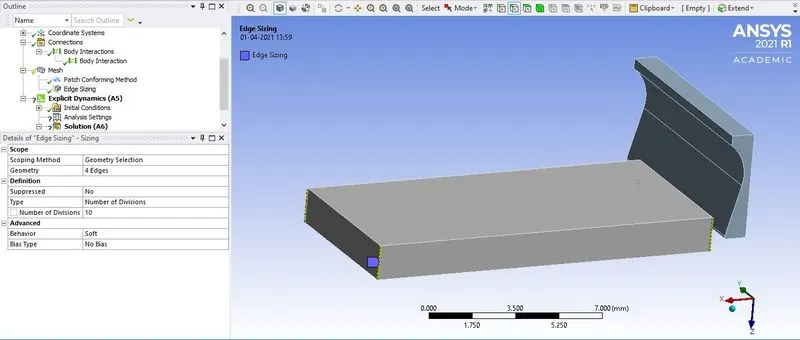
- For mesh, select method for the cutting tool and method type= tetrahedron also select sizing and choose the 4 edges of the workpiece where Type= Number of division and Division= 10, click on generate mesh.
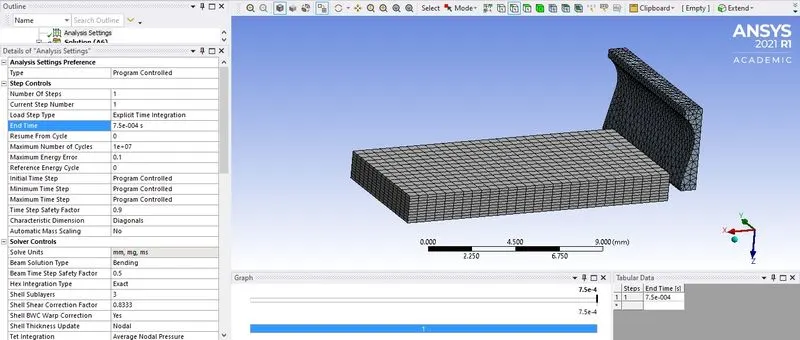
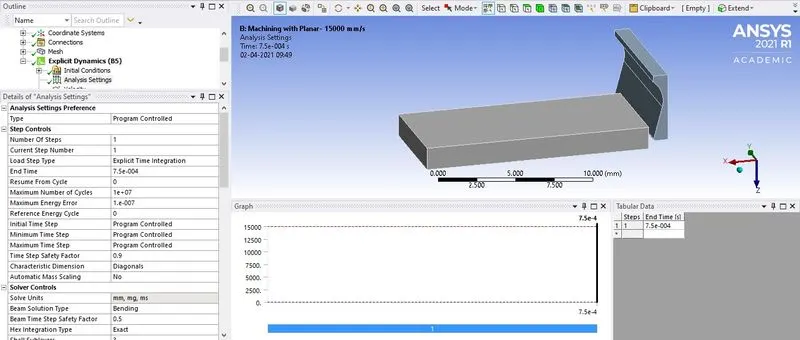
- For analysis setting, Load Step Type= Explicit Time Integration, End time= 7.5e-4, Max. Number of cycle= 1e+7, Maximum energy error= 0.1.
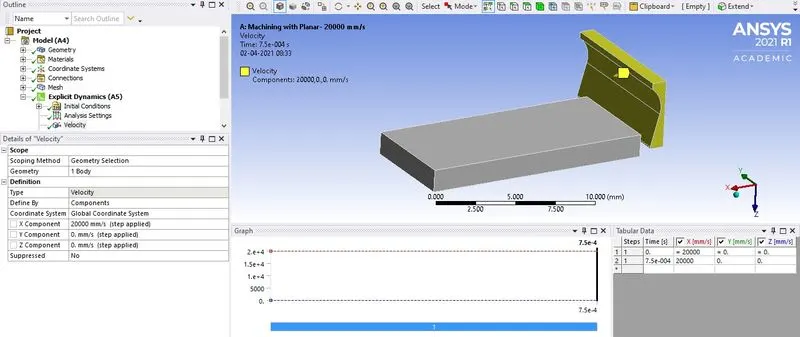
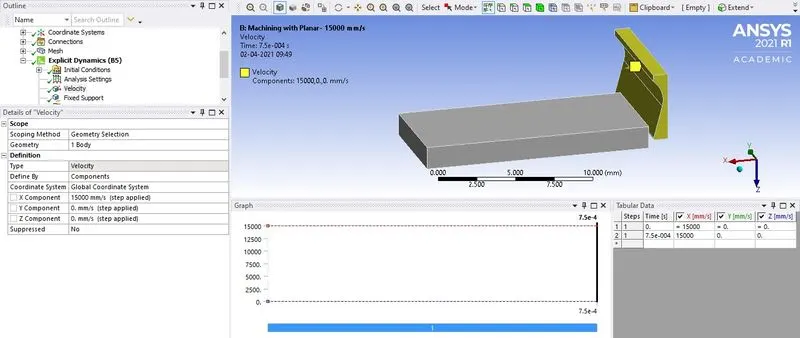
- Assign velocity to the cutting tool in the X component with 20000 mm/s and assign 0 for Y and Z component.
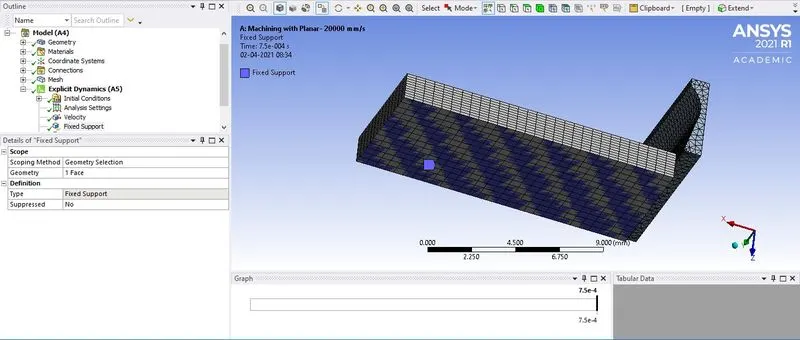
- Apply fixed support to the workpiece by choosing the bottom face of the workpiece.
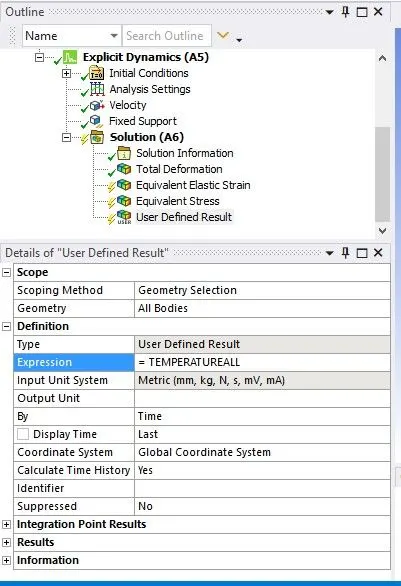
- In the solution request select for the required output like Total deformation and Equivalent Stress also create a user-defined result and for Expression= TEMPERATUREALL to determine the temperature. Click on solve to generate the result
CASE 2: Velocity of the Cutting Tool 15000 mm/s
- All of the above settings of Case 1 are kept similar except only the velocity of the cutting tool is changed to 15000 mm/s in X-component and also in analysis setting the maximum energy error is changed to 1e-7.
RESULT:
TOTAL DEFORMATION
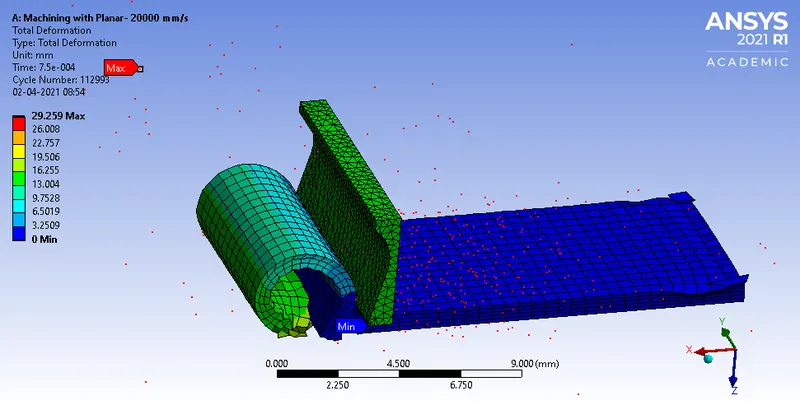
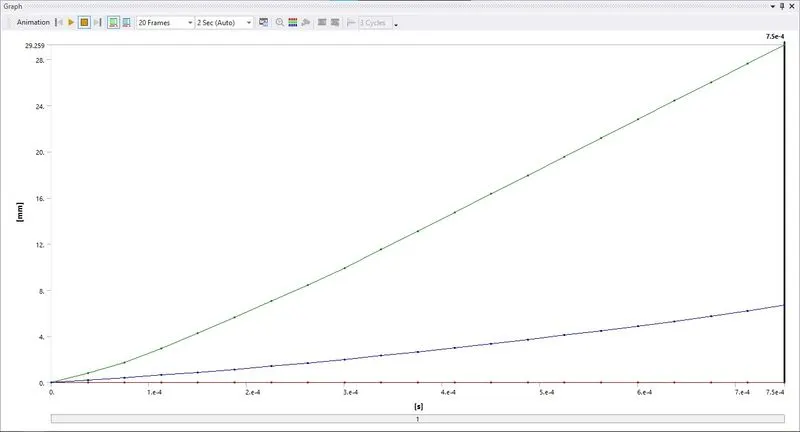
CASE 1: 20000 mm/s
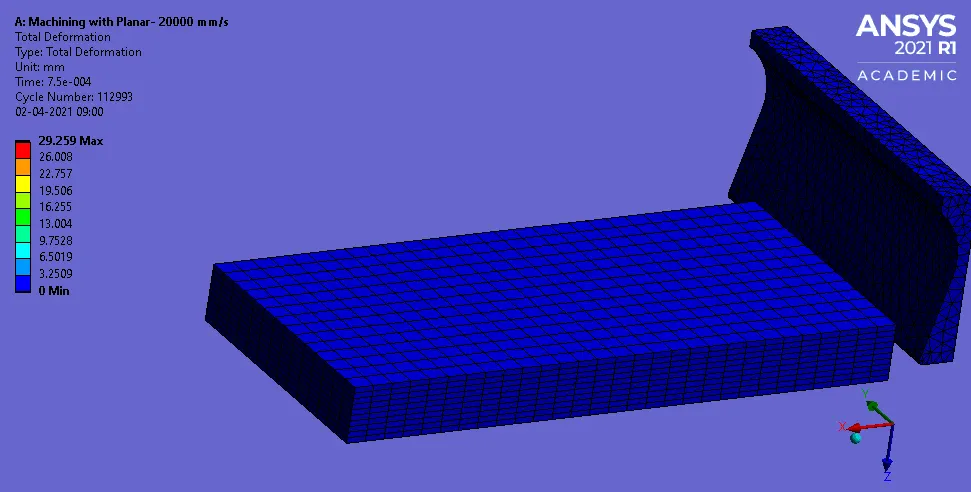
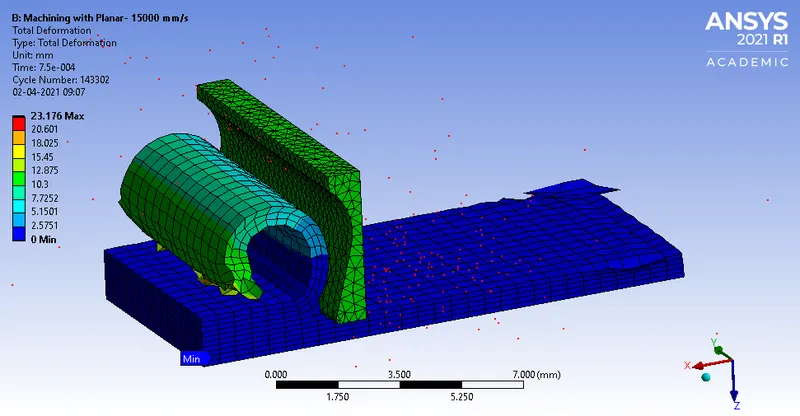
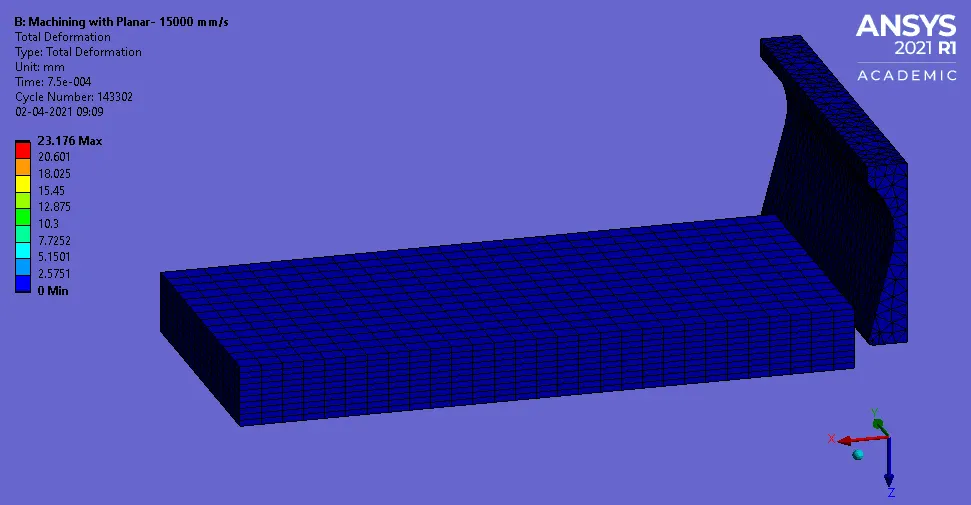
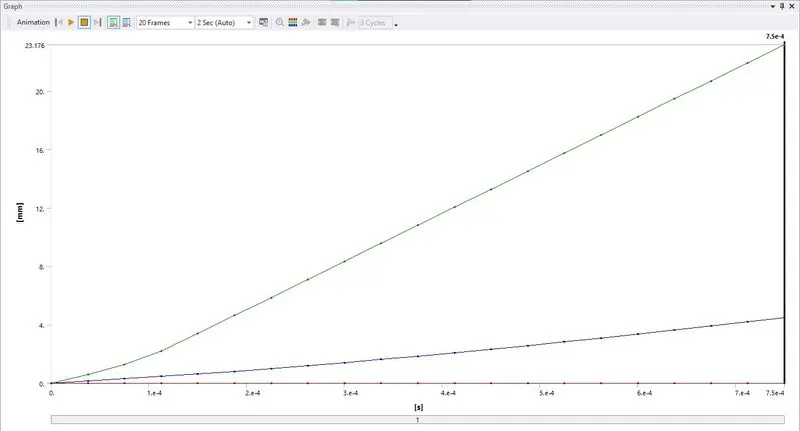
CASE 2: 15000 mm/s
EQUIVALENT STRESS
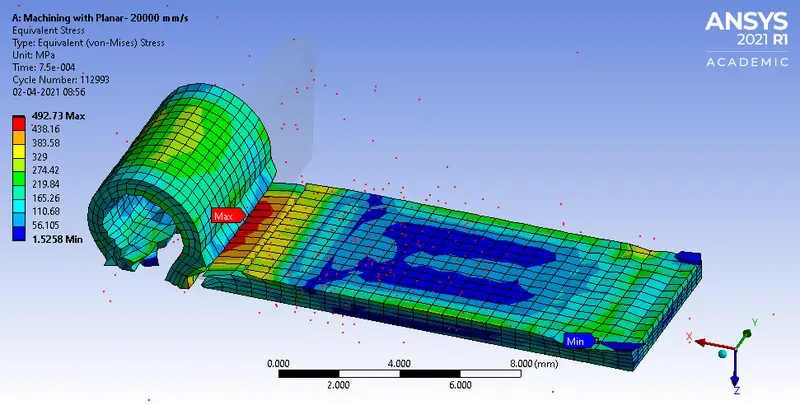
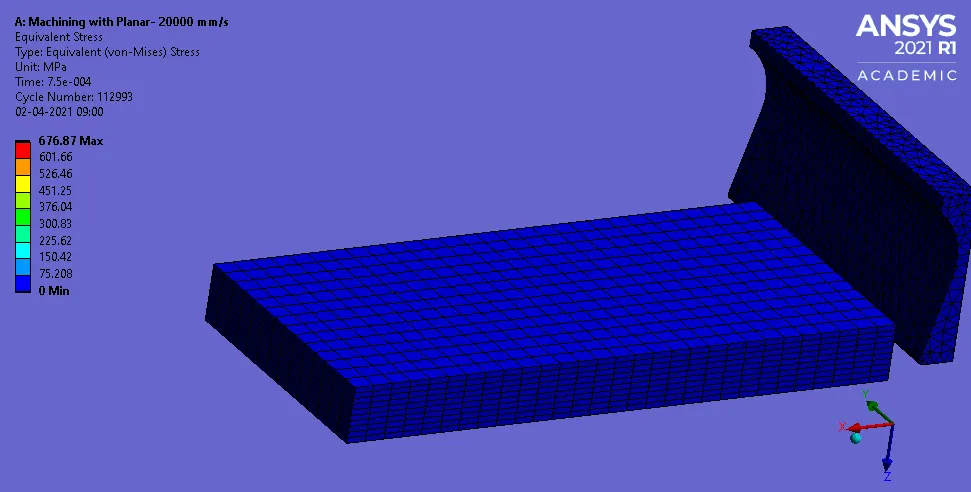
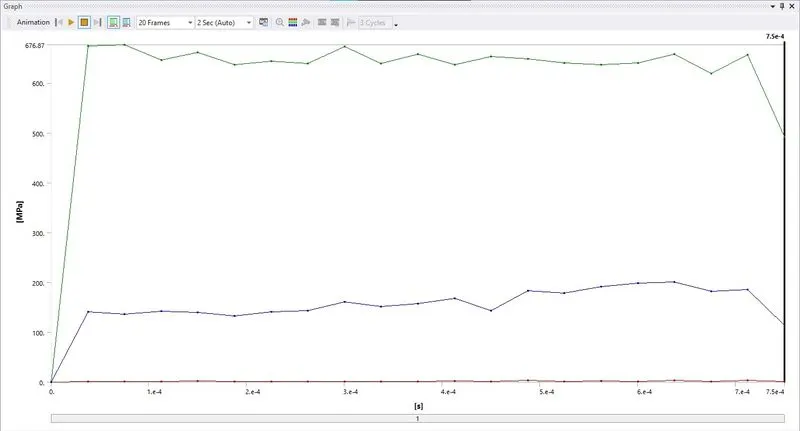
CASE 1: 20000 mm/s
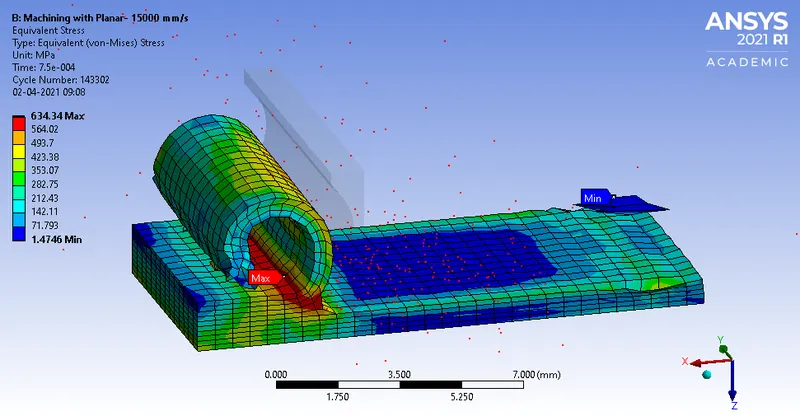
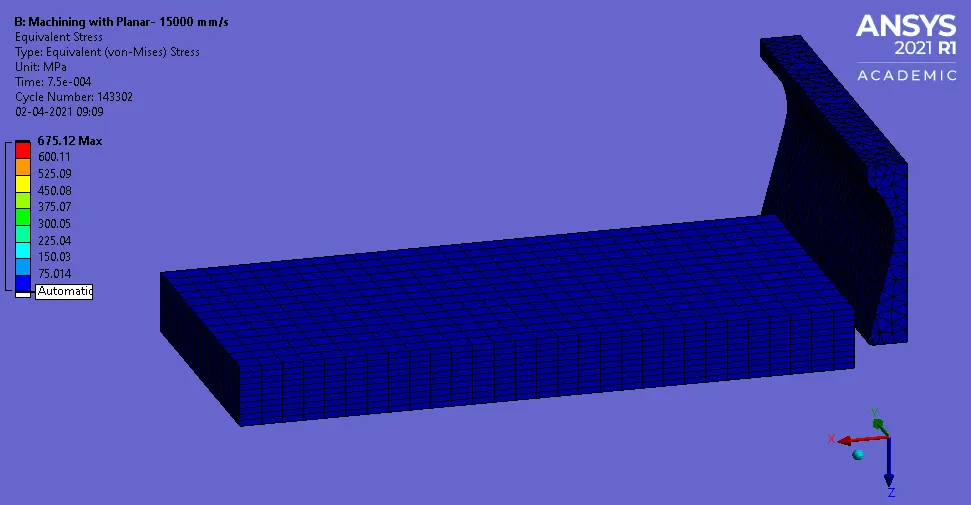
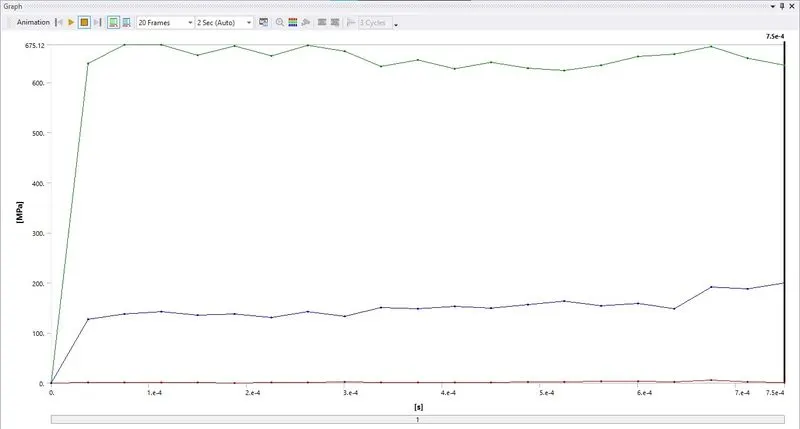
CASE 2: 15000 mm/s
USER DEFINED RESULT: TEMPERATURE
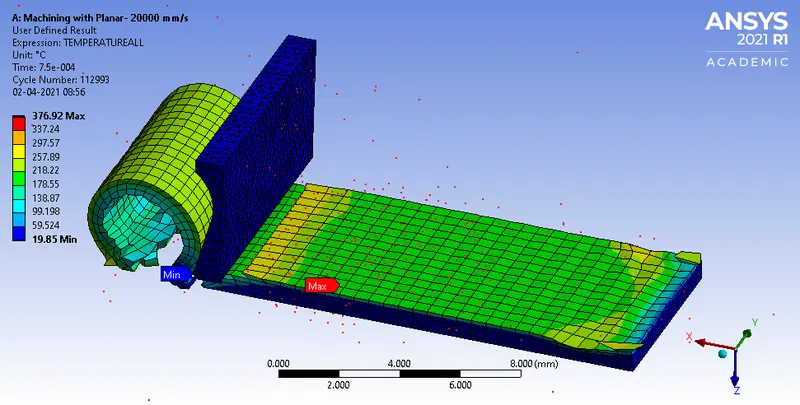
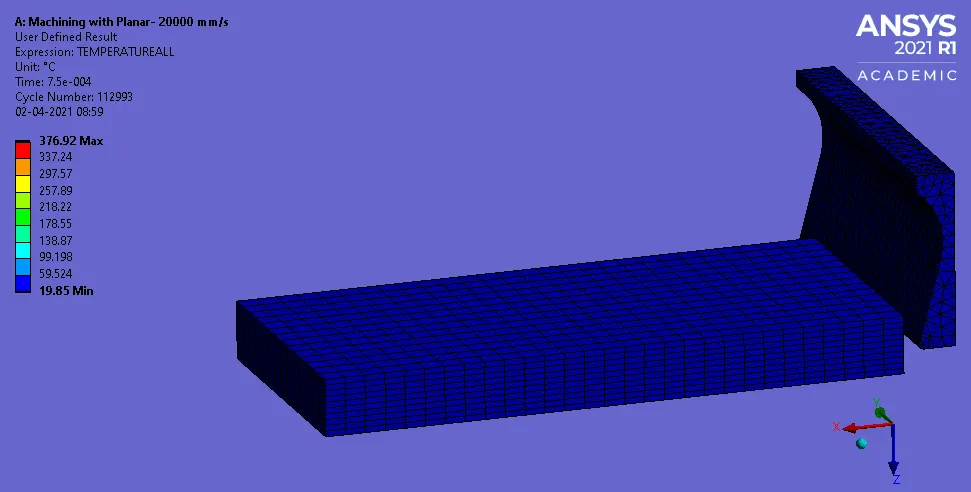
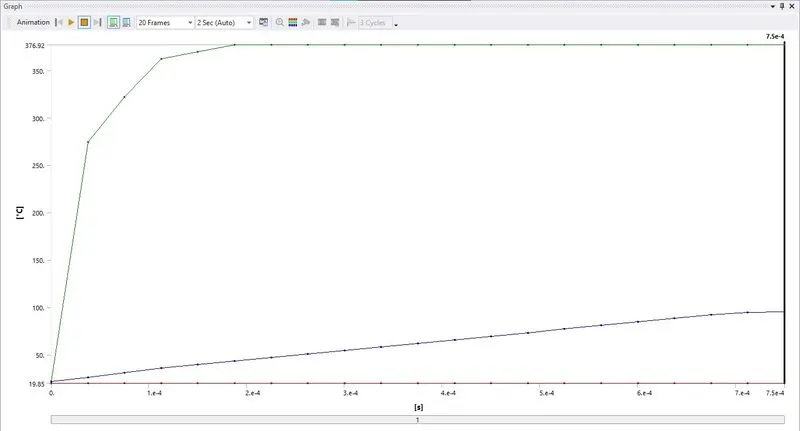
CASE 1: 20000 mm/s
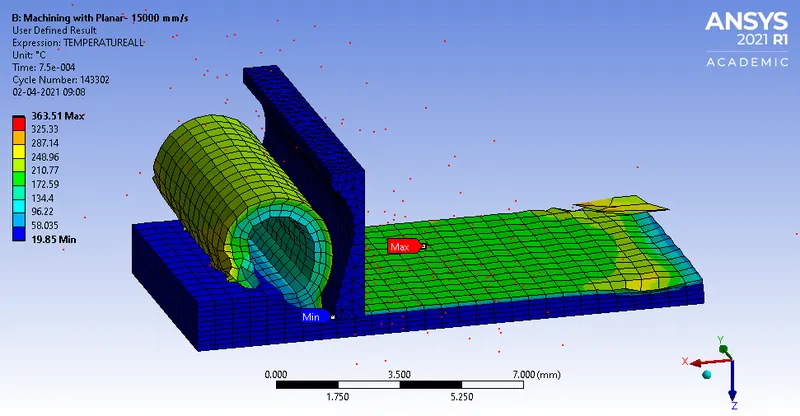
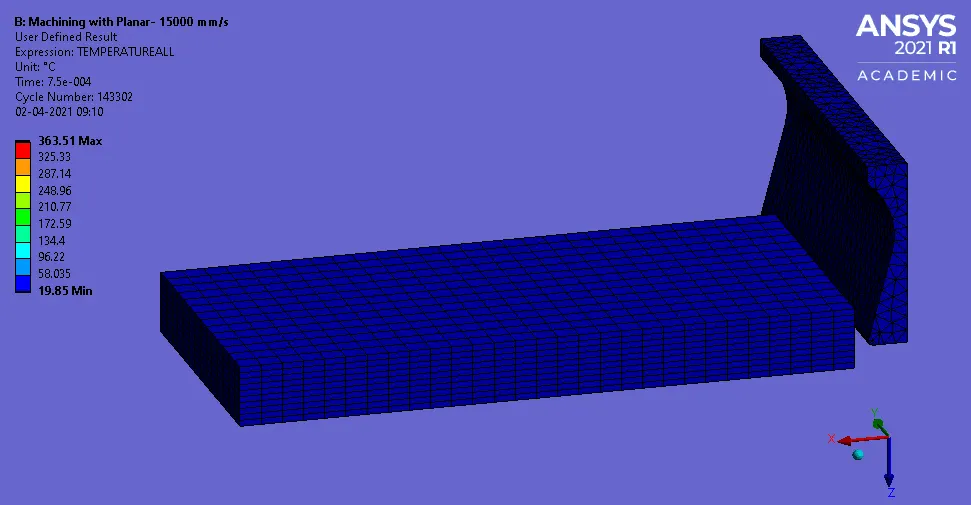
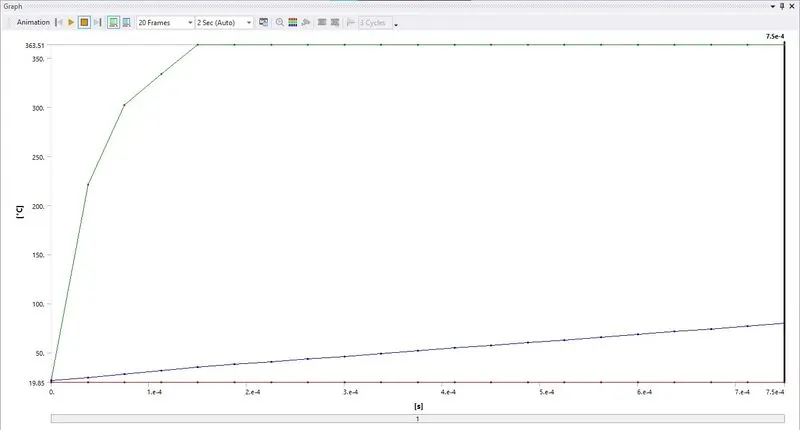
CASE 2: 15000 mm/s
| Velocity of the cutting tool (mm/s) | Total Deformation (mm) | Equivalent Stress (MPa) | Temperature (°C) | ||||||
| Min. | Max. | Average | Min. | Max. | Average | Min. | Max. | Average | |
| 20000 | 0. | 29.259 | 6.7033 | 1.5258 | 492.73 | 113.97 | 19.85 | 376.92 | 95.498 |
| 15000 | 0. | 23.176 | 4.4902 | 1.4746 | 634.34 | 200.08 | 19.85 | 363.51 | 79.846 |
It can be observed from the analysis and the table that for 20000 mm/s velocity of the cutting tool the workpiece experience the highest max total deformation of 29.259 mm and Temperature of 376.92 °C but the lowest max equivalent stress of 492.73 MPa while for 15000 mm/s velocity of the cutting tool the workpiece experience the lowest max total deformation of 23.176 mm and Temperature of 363.51 °C but highest max equivalent stress of 634.34 MPa
CONCLUSION:
So from the analysis, it can be inferred that for high velocity the workpiece experiences high total deformation and temperature but low equivalent stress while reducing the velocity the workpiece experiences low total deformation and temperature but high equivalent stress.
SIMULATION FILE: "https://drive.google.com/file/d/10jHkTSeleovw8QTO8N6_YvUIKqEuW7lE/view?usp=sharing"