Dynamic Explicit analysis of Machining with Planer tool using ANSYS Workbench
AIM: To perform explicit dynamic analysis of a machining operation using planer in ANSYS Workbench.
PROCEDURE:
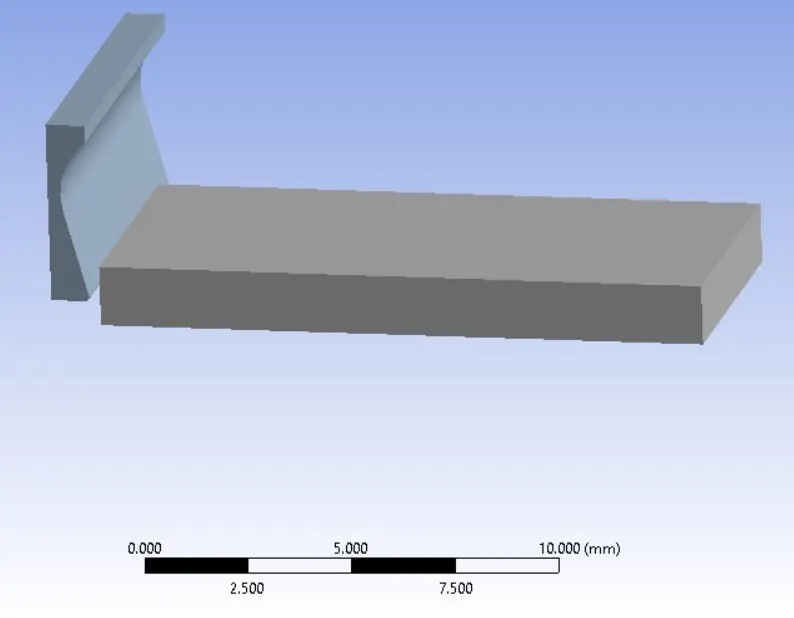
Initially, the machining tool along with workpiece was imported into ANSYS and the geometry is shown below:
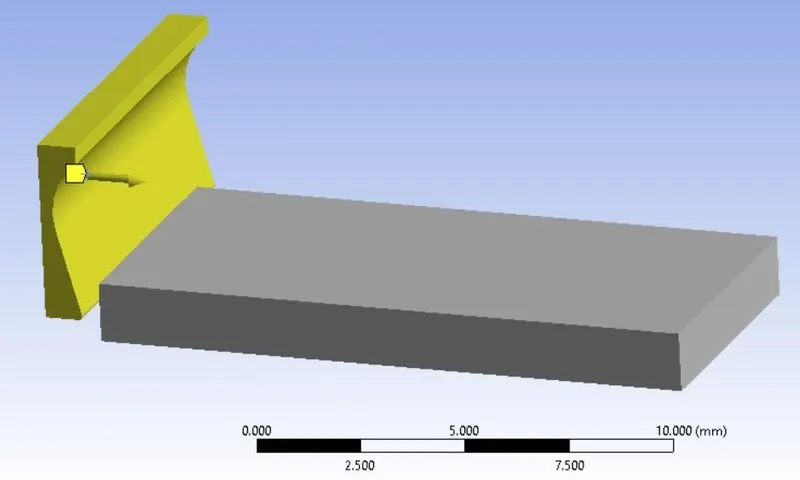
The tool was given a rigid behavior with material structural steel assigned. The workpiece was assigned Steel 1006 material. The tool was given a velocity of 20000 mm/s in x-direction as shown below:
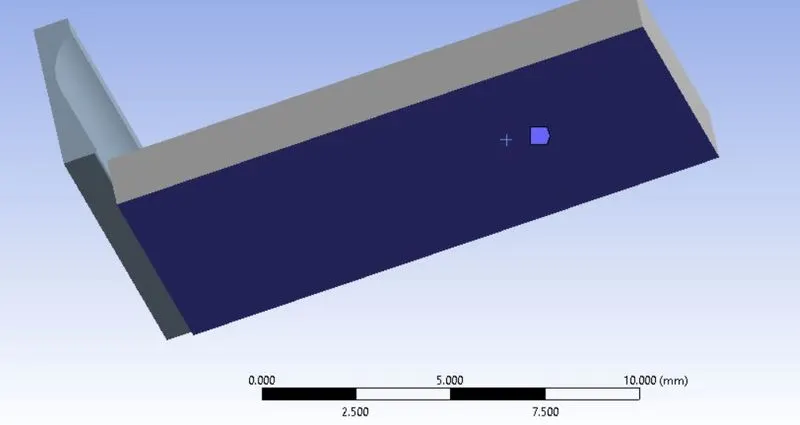
The workpiece was given a fixed support at the bottom as shown below:
The tool was meshed using tetrahedral elements and the workpiece was meshed using hexahedral elements.
The simulation was solved for total deformation, stress and temperature rise.
CASE 1: Tool velocity = 20000 mm/s:
The tool was assigned a velocity of 20000 mm/s and the stress contour is shown below:
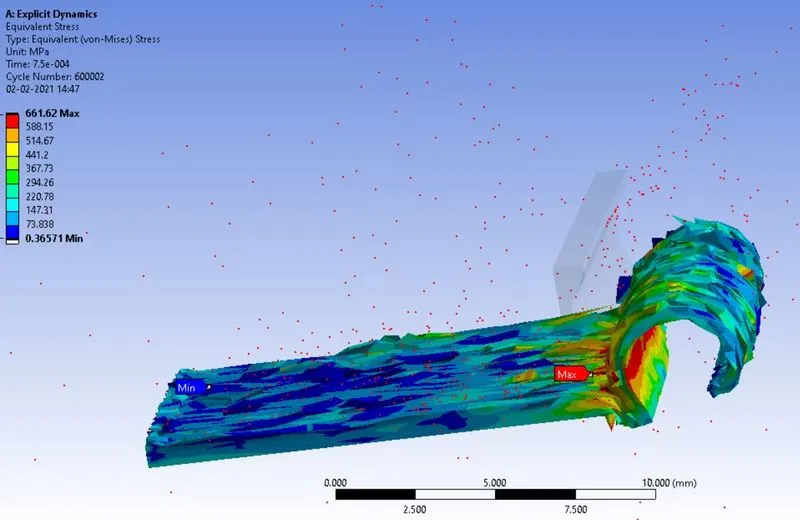
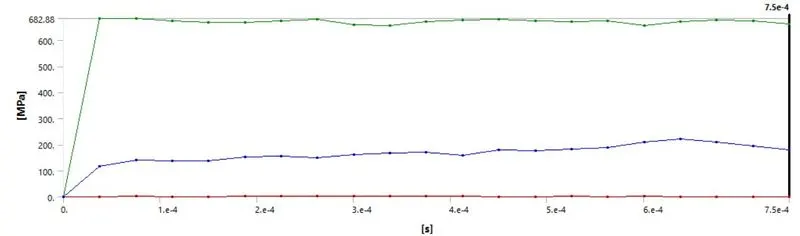
The maximum stress observed is 682.88 MPa and its variation with time is plotted below:
The deformation contour is given below:
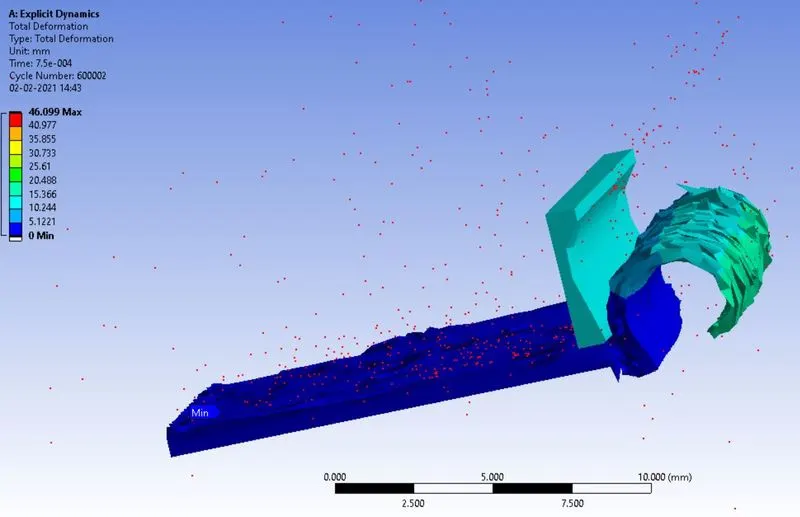
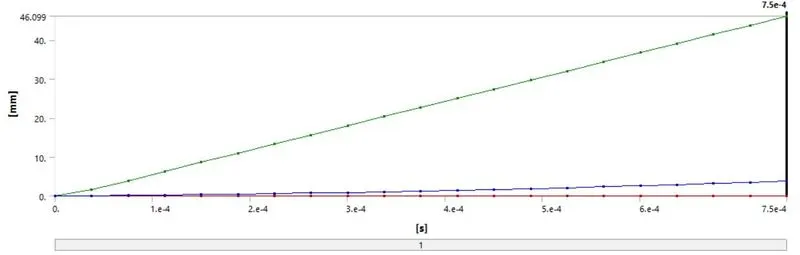
Maximum deformation was observed to be 46.099 mm and its variation with time is given below:
The temperature contour is given below:
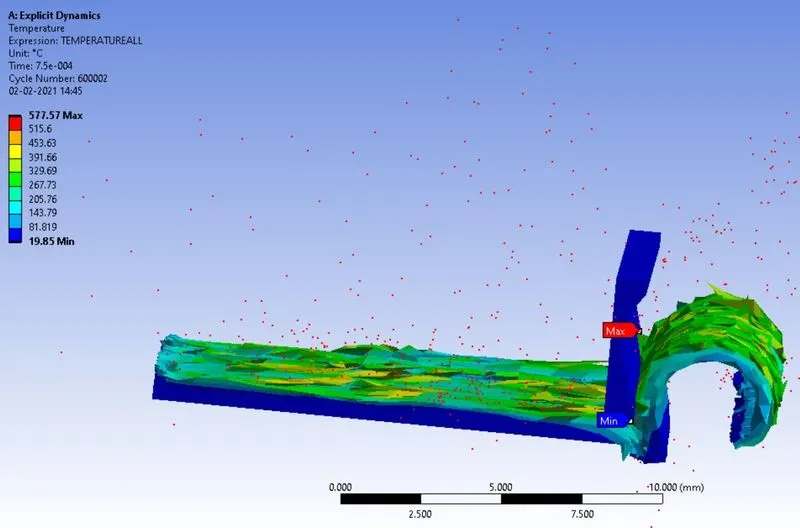
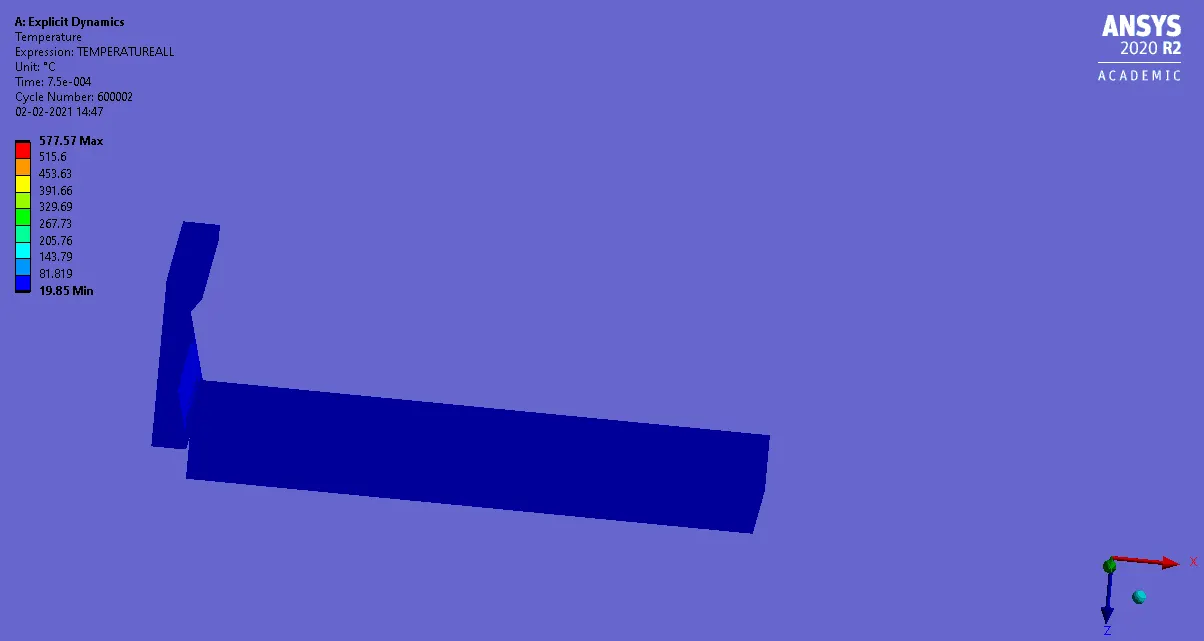
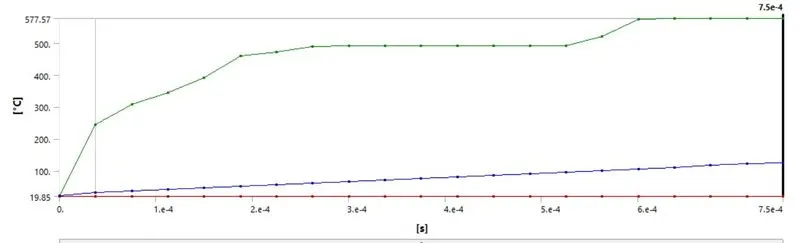
A maximum temperature of 577.57 degrees celsius was observed and its variation with time is given below:
CASE 2: Tool velocity = 15000 mm/s:
The tool velocity was reduced to 15000 mm/s in x-direction and the stress contour is given below:
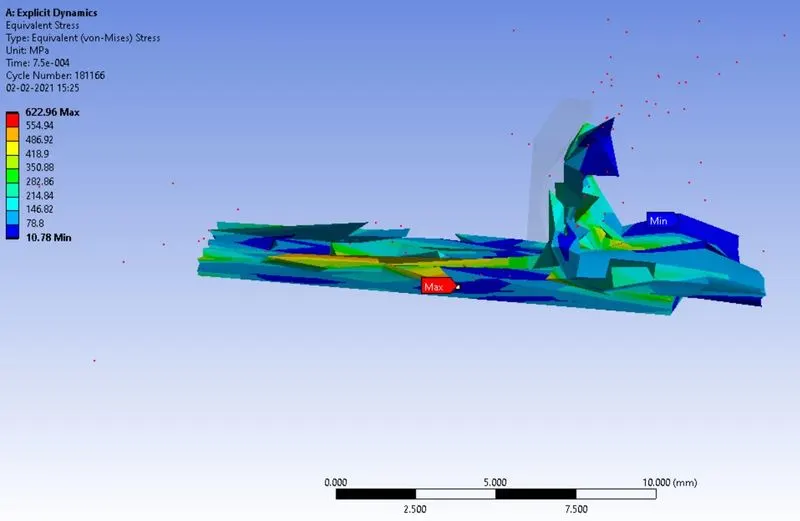
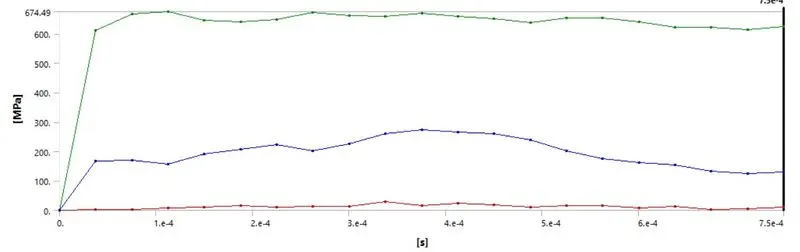
Maximum stress of 674.49 MPa was observed and its variation with time is plotted below:
The deformation contour is shown below:
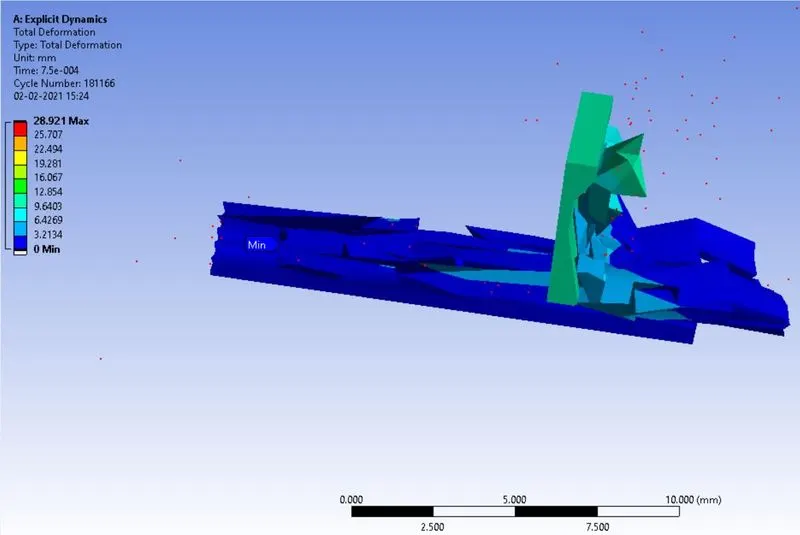
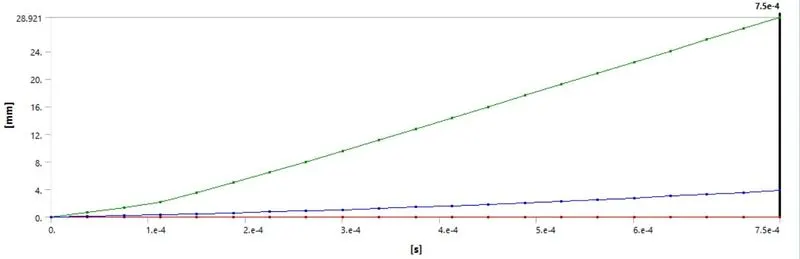
Maximum deformation was observed to be 28.921 mm and its variation with time is given below:
The temperature contour plot is given below:
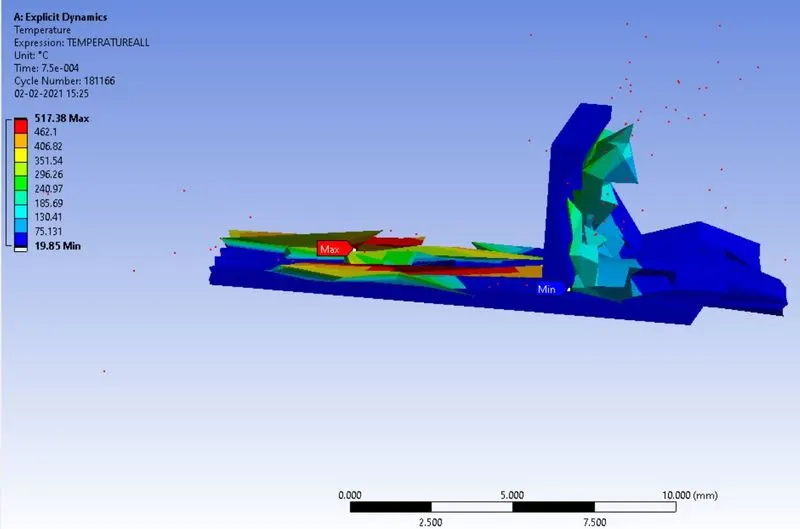
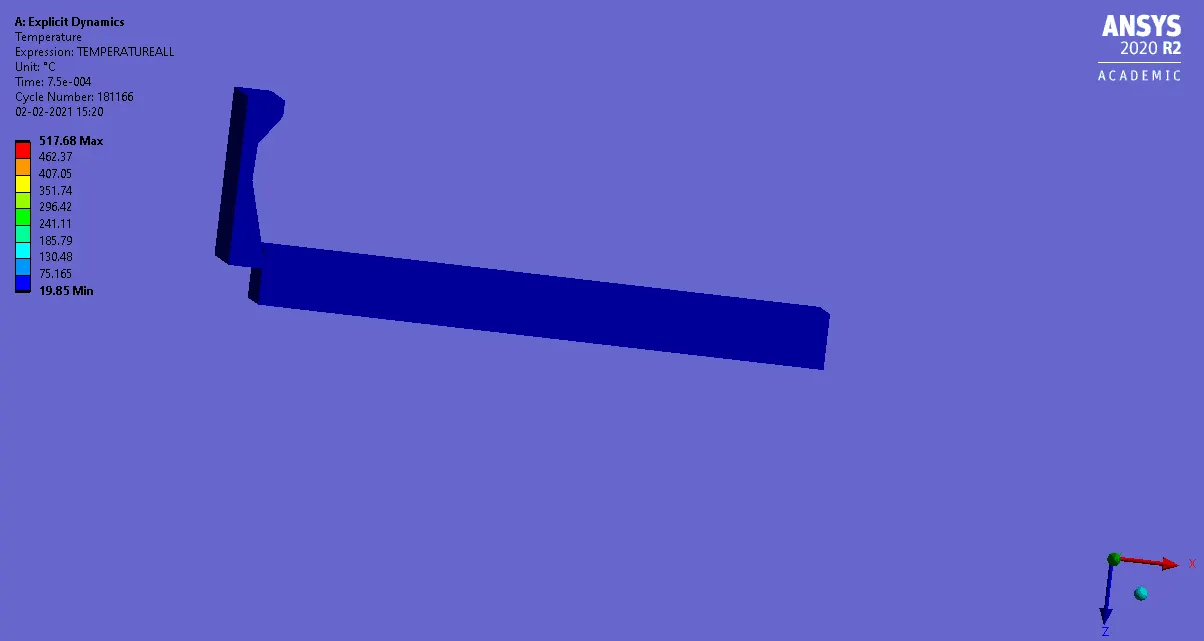
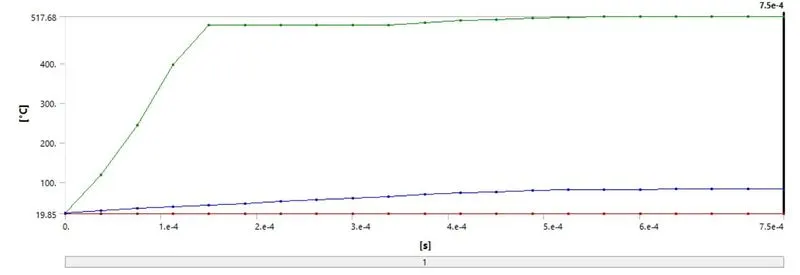
The maximum temperature was observed to be 517.68 degrees Celcius and its variation with time is given below:
The results from the two cases can be summarized below:
|
Tool Velocity |
Max Stress |
Max Deformation |
Max Temperature |
|
20000 mm/s |
682.88 MPa |
46.099 mm |
577.57 C |
|
15000 mm/s |
674.49 MPa |
28.921 mm |
517.68 C |
As can be seen from the above table, a higher velocity of the tool leads to higher forces on the workpiece leading to higher stress when compared to lower tool velocity. Also, the resulting maximum deformation is also higher when tool velocity is higher. The maximum temperature was also higher for higher tool velocity because of the generation of more frictional forces which leads to the generation of higher energies and therefore this leads to higher temperatures at the workpiece.
CONCLUSION: The explicit dynamic analysis of machining using Planar tool was successfully accomplished with different tool velocities and the results were discussed and compared quantitatively.