Week 8 - Universal Joint
OBJECTIVE: To perform transient structural analysis on a universal joint with spring for three different given material and obtained the required result using ANSYS.
CASE 1: STRUCTURAL STEEL
PROCEDURE:
- Open Ansys Workbench and choose transient structural.
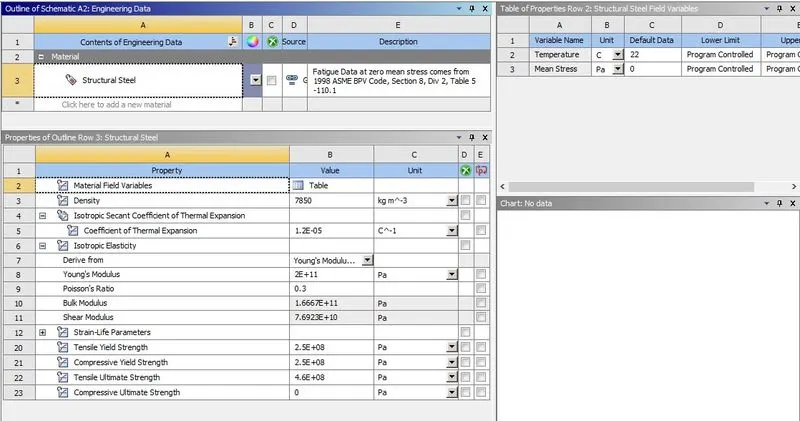
- In the Engineering data, let the material be structural steel.
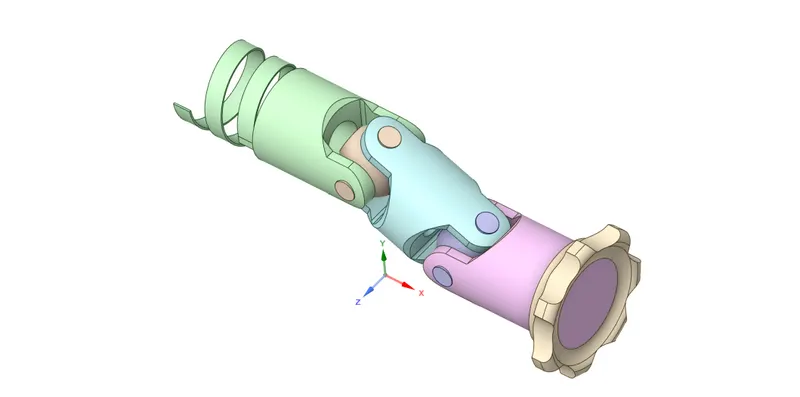
- For the geometry, right-click and import the given "universal_joint3.x_t" and open with space claim.
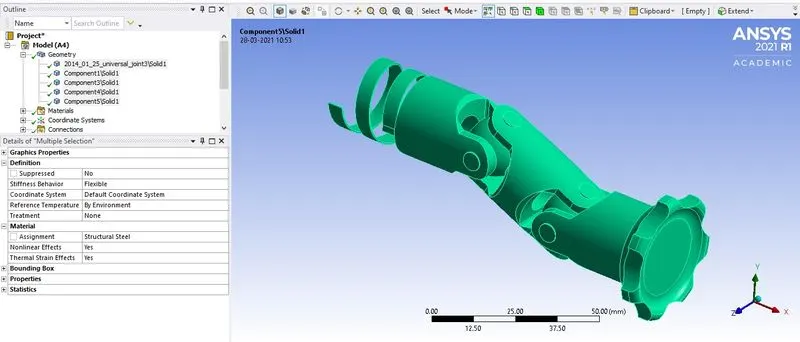
- Now in the workbench goto Model -> Edit, in the model window check the Geometry for the material and assign Structural Steel to all the component
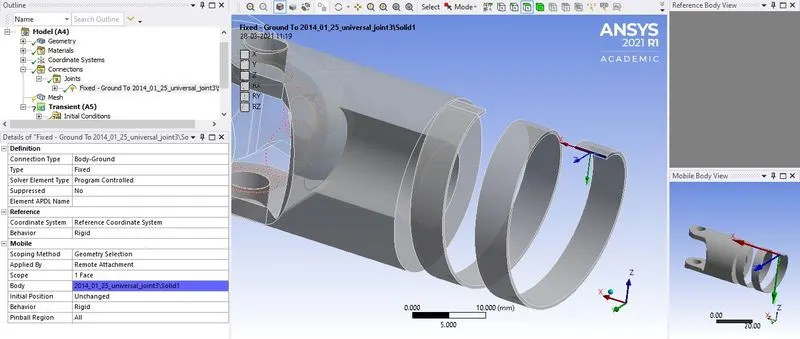
- Delete all the available contacts, instead create joints for required faces like body to ground type fixed joint for the end face of the spring.
- Body to ground, type= revolute joint for the 2 end components and make sure the coordinate orientation is along the direction of rotation.
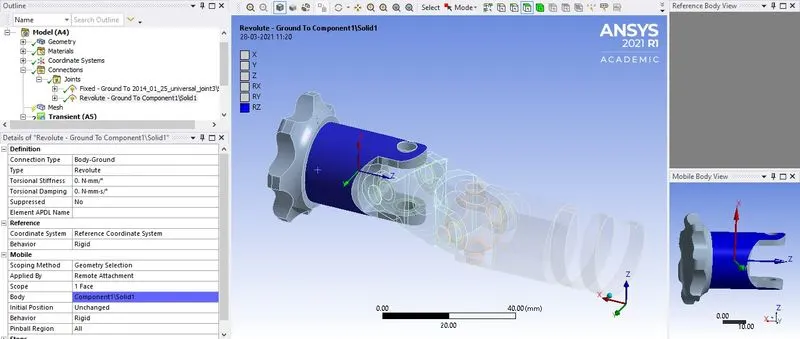
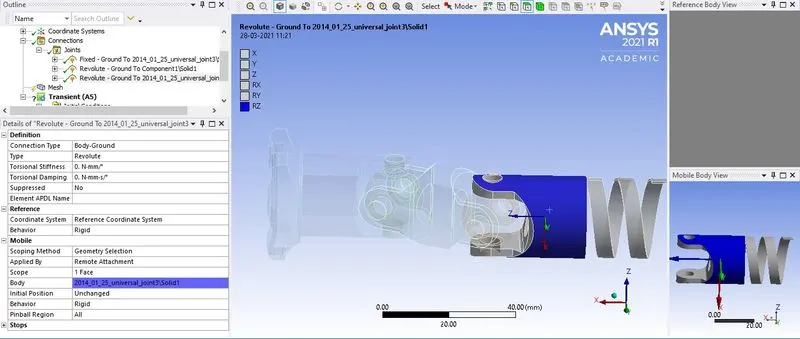
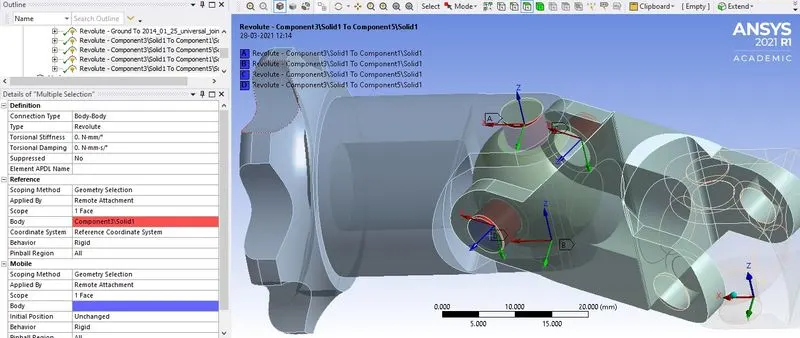
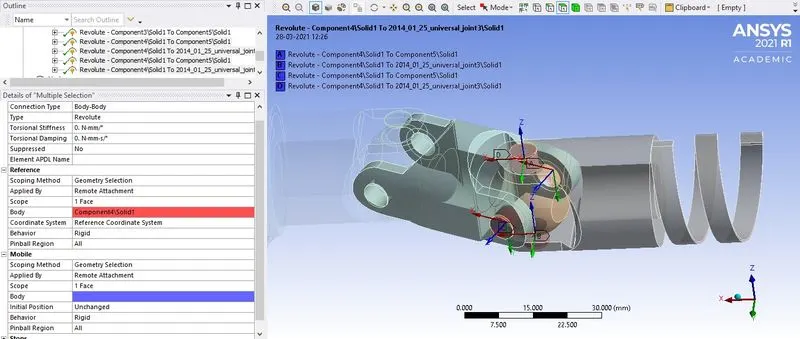
- After that create body to body type= revolute joint for each individual faces of the spider joint's pin which will be the scope of reference and yoke's hole faces as the scope of mobile.
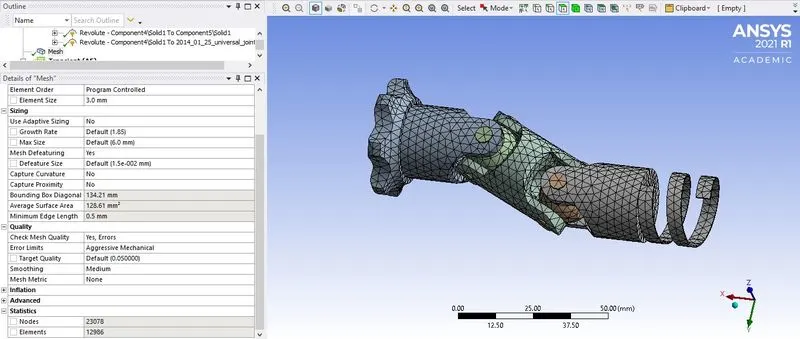
- For mesh, element size= 3 mm, use adaptive sizing= No and Smoothing= Medium. Click on generate mesh.
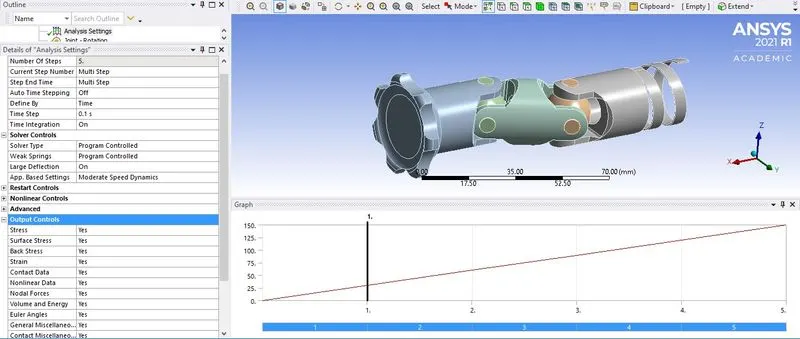
- In the analysis settings, the number of steps= 5 select all the 5 steps turn Auto Time Stepping= Off, Time step= 0.1 s, Weak spring= Program-Controlled, Large Deflection= On and turn all Output Controls to Yes.
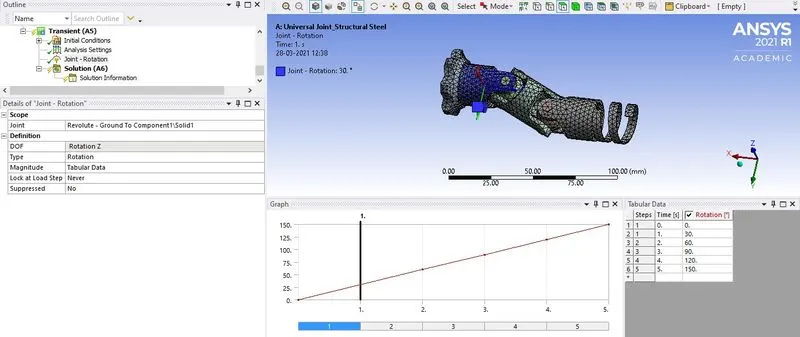
- Apply joint load to Component 1, Joint= Revolute Ground to Component 1, Type= Rotation, Magnitude= Tabular data and provide the rotation data.
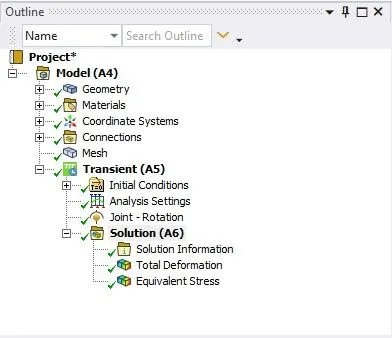
- In the solution request select for the required output like Total deformation and Equivalent Stress. Click on solve to generate the result.
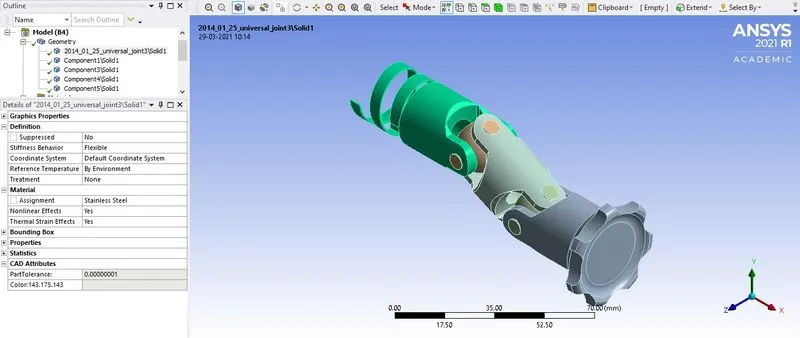
CASE 2: Stainless Steel
- All of the above settings of Case 1 are kept similar except only in material select Stainless Steel.
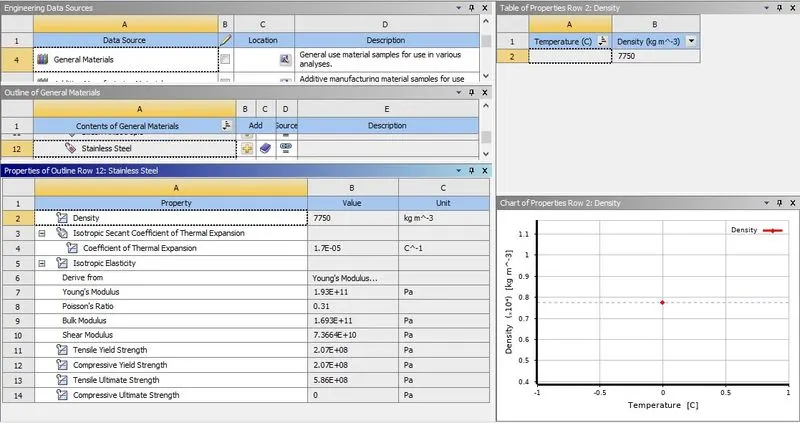
- The stainless steel material is applied to the spring attached component only and the rest of the components are structural steel.
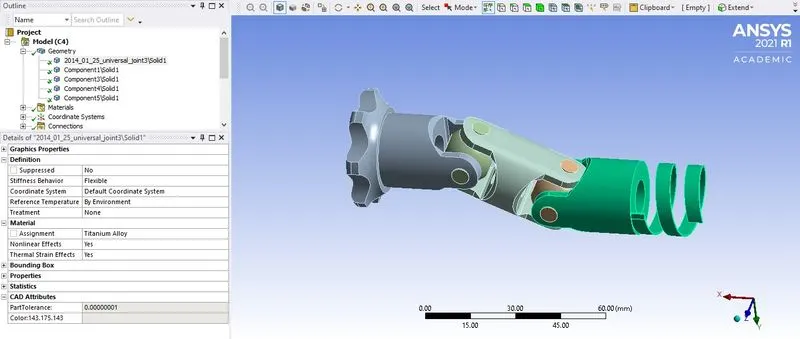
CASE 3: Titanium Alloy
- All of the above settings of Case 1 are kept similar except only in material select Titanium Alloy.
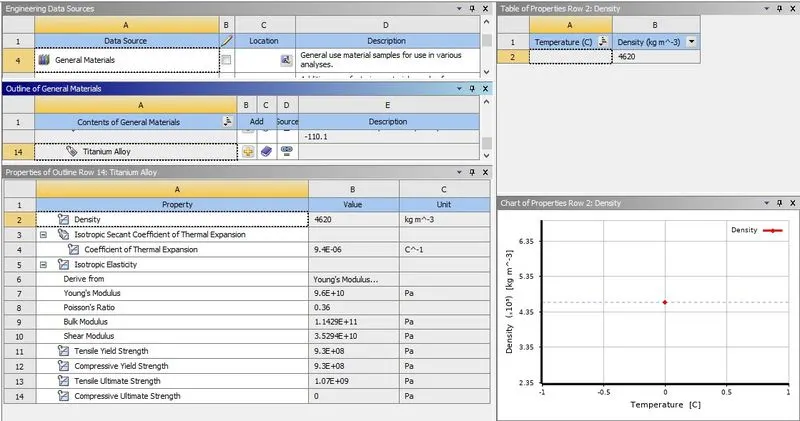
- The Titanium Alloy material is applied to the spring attached component only and the rest of the components are structural steel.
RESULT:
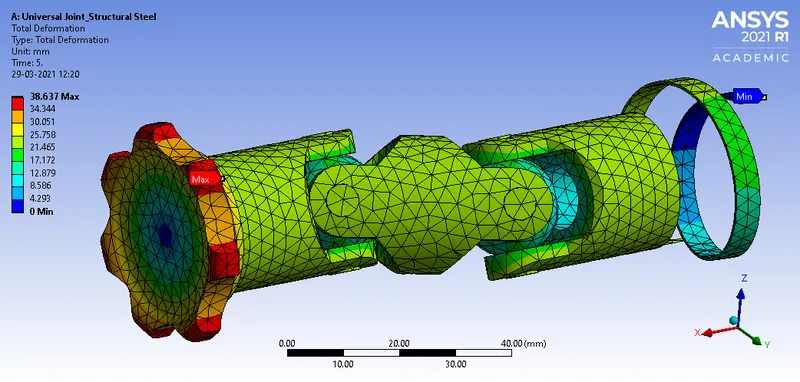
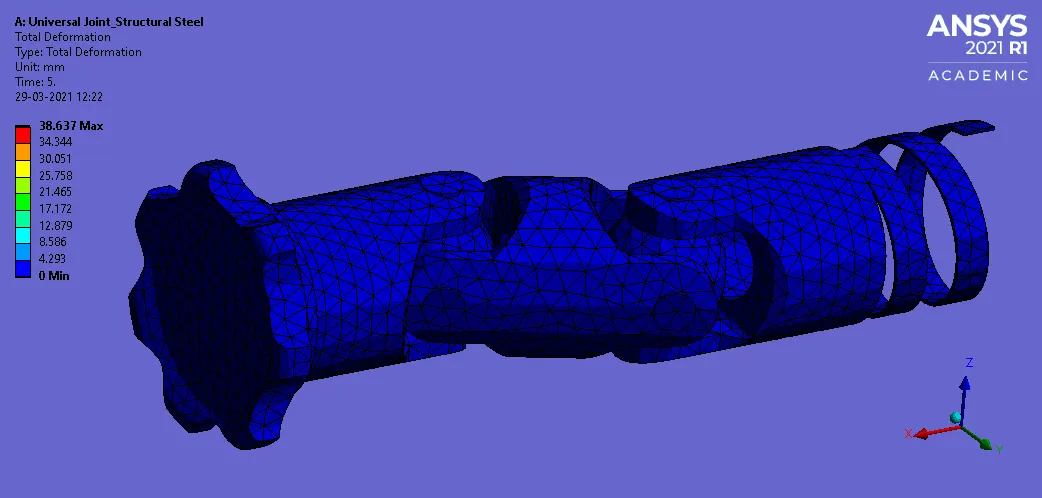
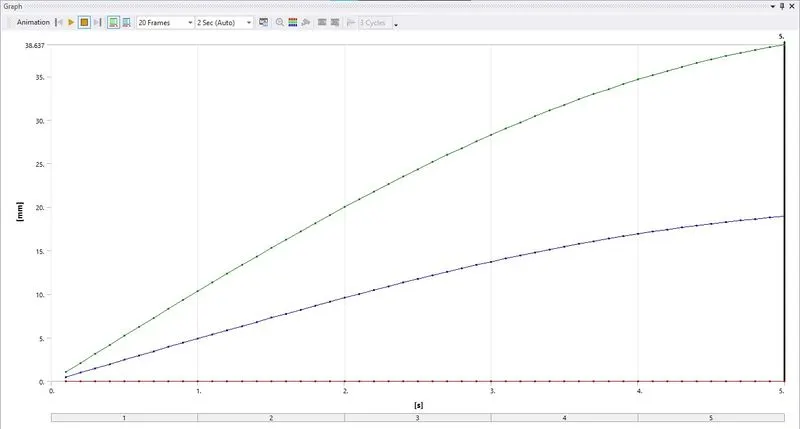
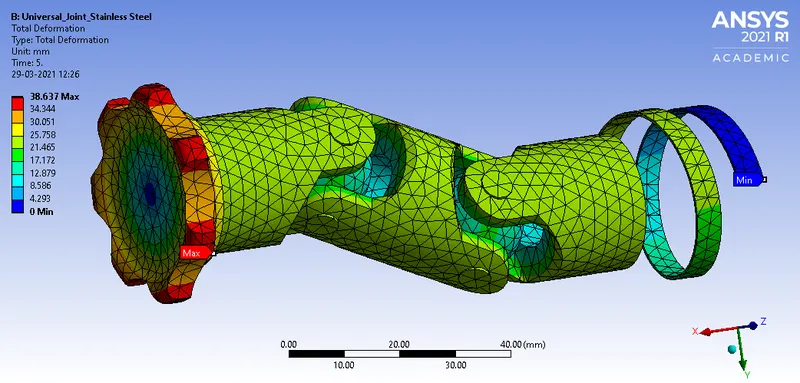
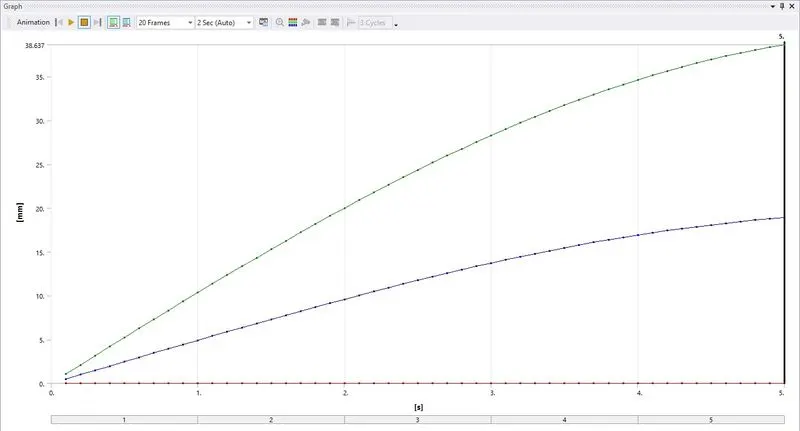
TOTAL DEFORMATION
CASE 1: Structural Steel
CASE 2: Stainless Steel
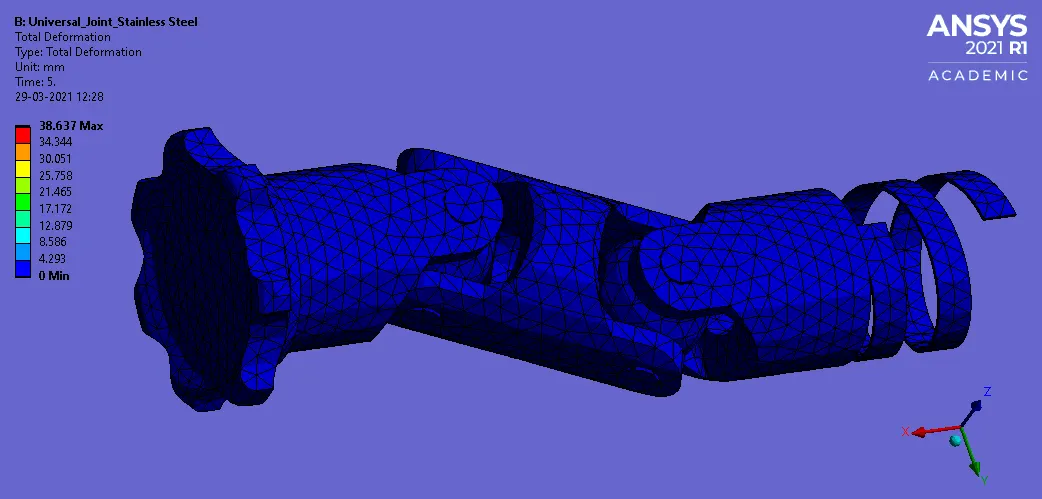
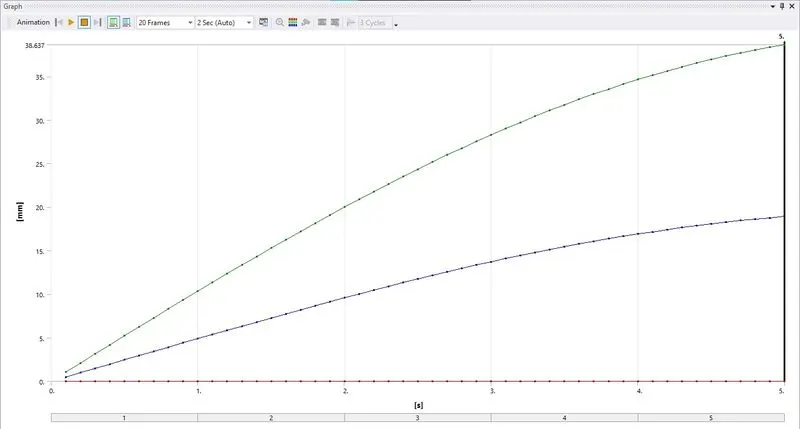
CASE 3: Titanium Alloy
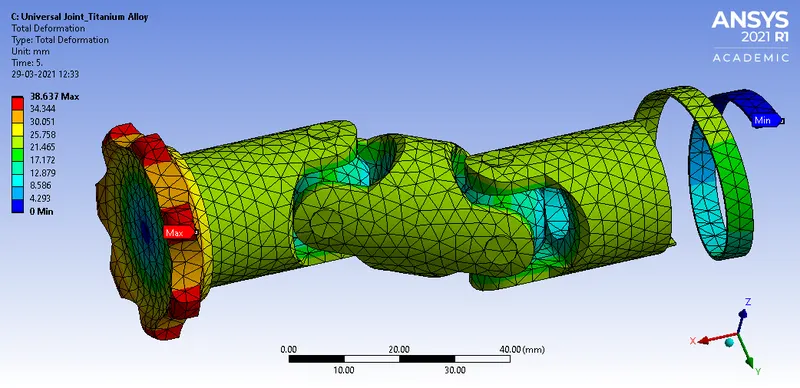
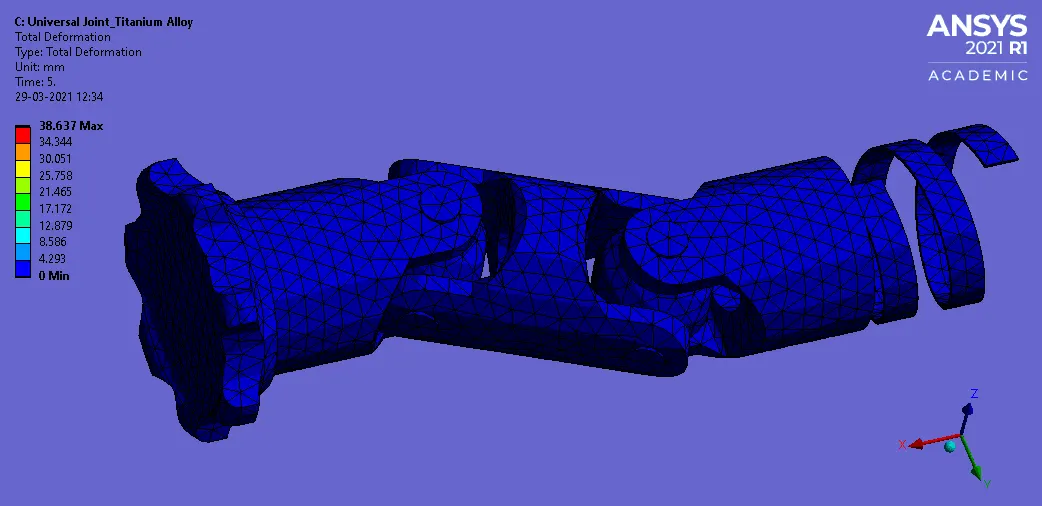
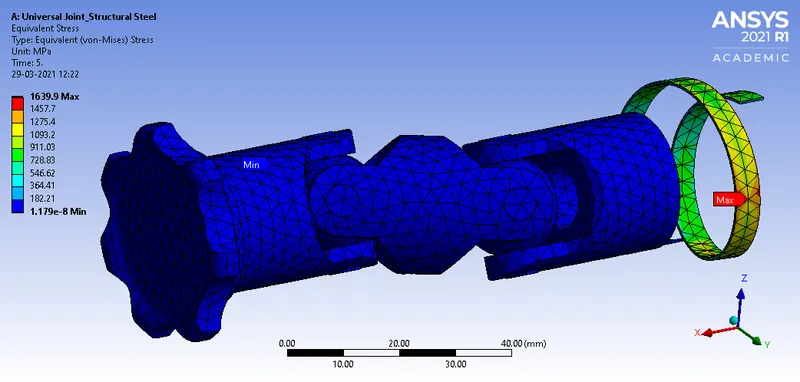
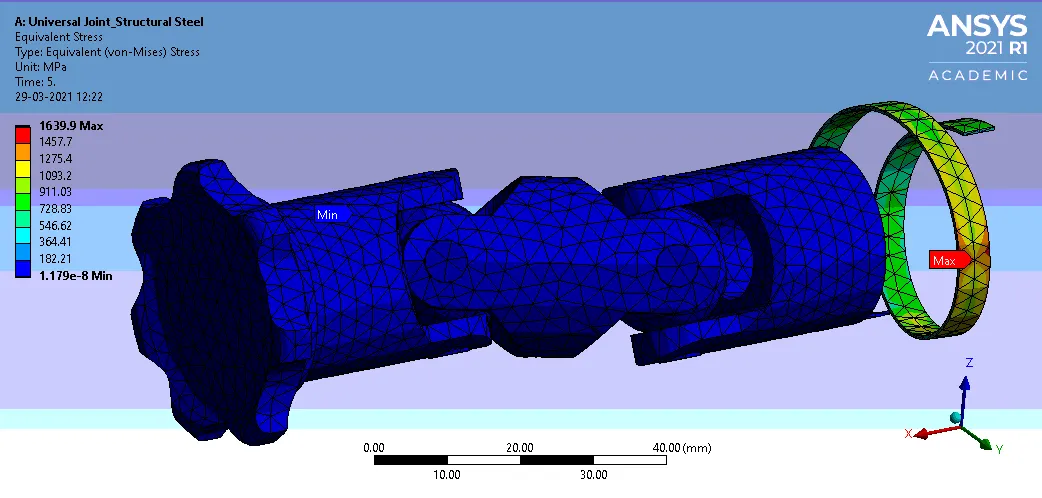
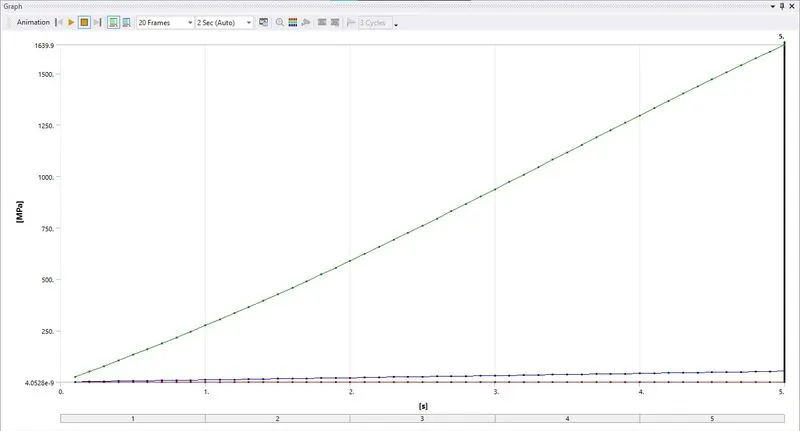
EQUIVALENT STRESS
CASE 1: Structural Steel
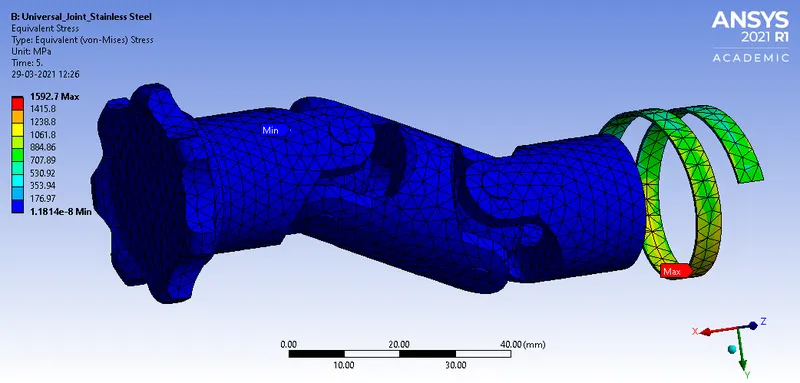
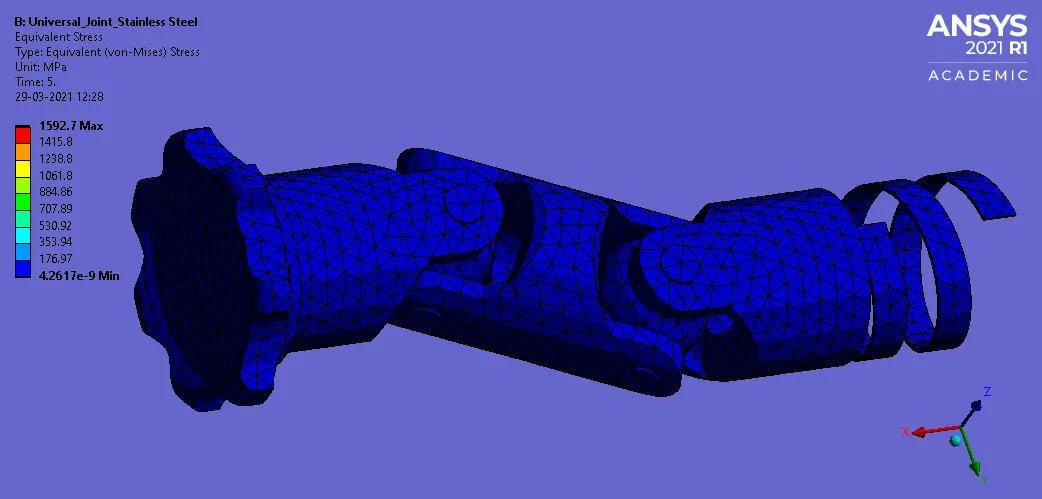
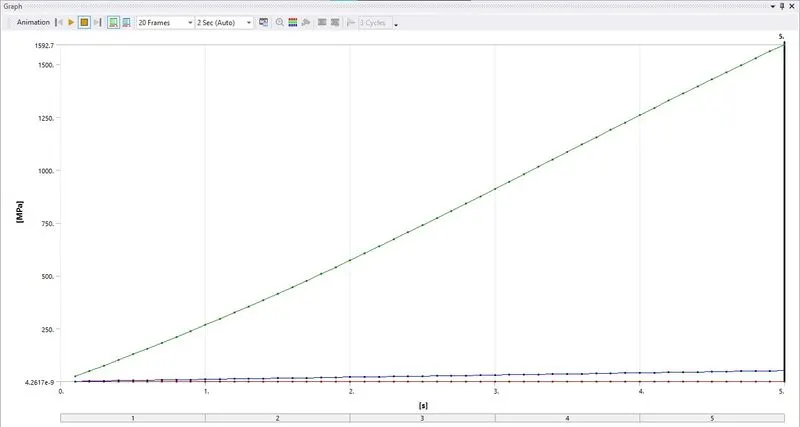
CASE 2: Stainless Steel
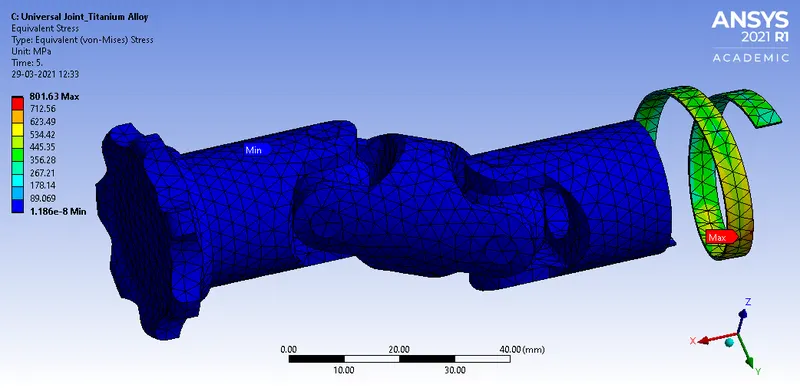
CASE 3: Titanium Alloy
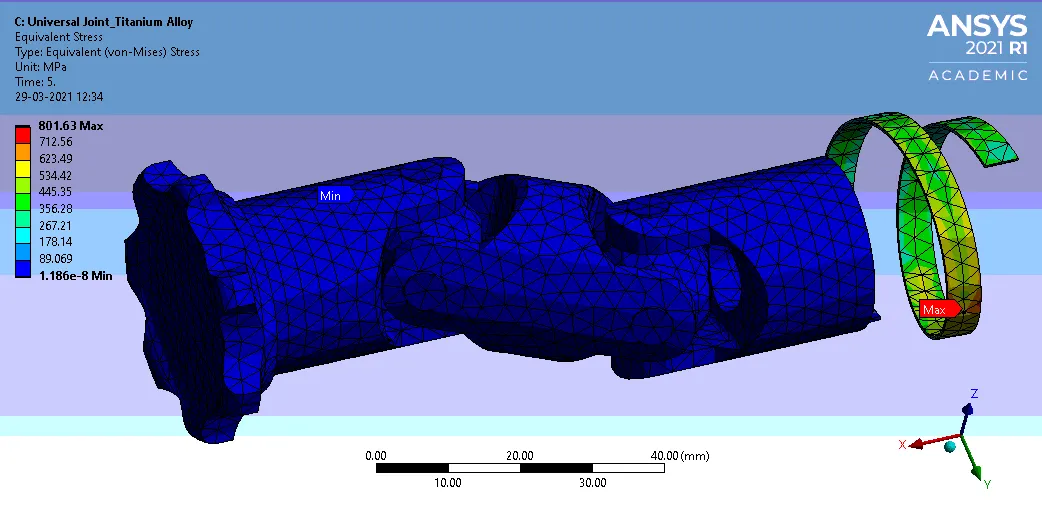
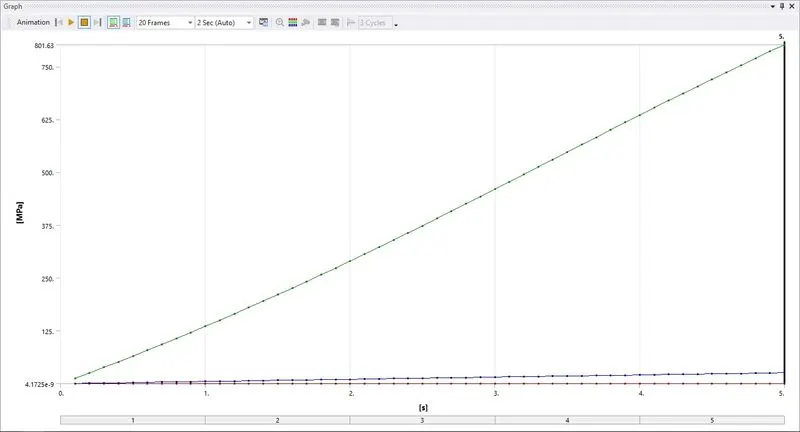
| Total Deformation (mm) | Equivalent Stress (MPa) | |||||
| Min. | Max. | Average | Min. | Max. | Average | |
| Structural Steel | 0. | 38.637 | 18.935 | 1.179e-008 | 1639.9 | 52.761 |
| Stainless Steel | 0. | 38.637 | 18.922 | 1.1814e-008 | 1592.7 | 51.958 |
| Titanium Alloy | 0. | 38.637 | 18.934 | 1.186e-008 | 801.63 | 25.779 |
It can be observed from the analysis and the table that the universal joint experiences the same max total deformation for the 3 different material while for the max Equivalent Stress the structural steel experiences the highest stress of about 1639.9 MPa while Titanium Alloy experience the lowest stress about 801.63 MPa, the stress experienced by the stainless steel is about 1592.7 MPa which is near to structural steel. The three different material experiences a different amount of equivalent stress because of the young's modulus value of those material Structural Steel have the highest value and Titanium have the lowest in comparison to both structural steel and stainless steel.
CONCLUSION:
So from the analysis, it can be inferred that the max total deformation experienced is the same for all the 3 different material while the max equivalent stress is higher in the case of structural steel universal joint and lowest for the titanium alloy universal joint.
SIMULATION FILE: "https://drive.google.com/file/d/16MZDwNgKAH8BWnDEVk0QppT7HYlpWPw-/view?usp=sharing"