Week 8 - Challenge 4 - Coin Holder Design
CENTRE CONSOLE COIN HOLDER
Aim : The main objective here is to create a Coin Holder plastic component from a given Class A Surface and validate the design by doing Draft Analysis on it.
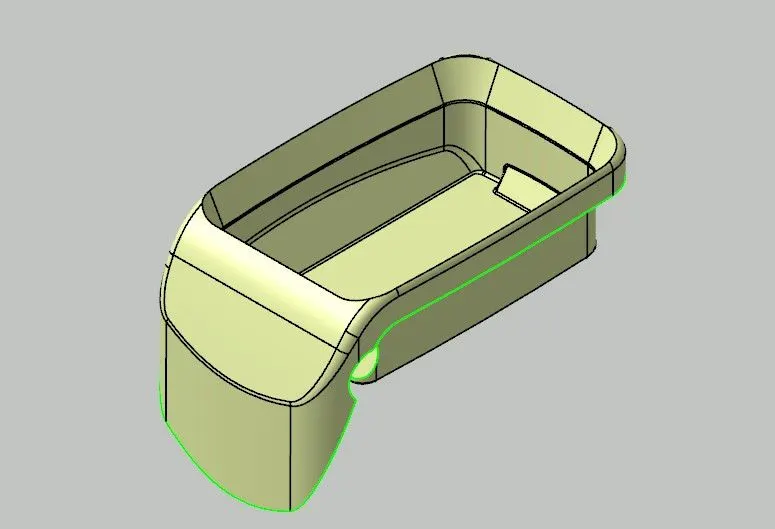
First of all, join all the sub-surfaces and check if no gap is there is between them.
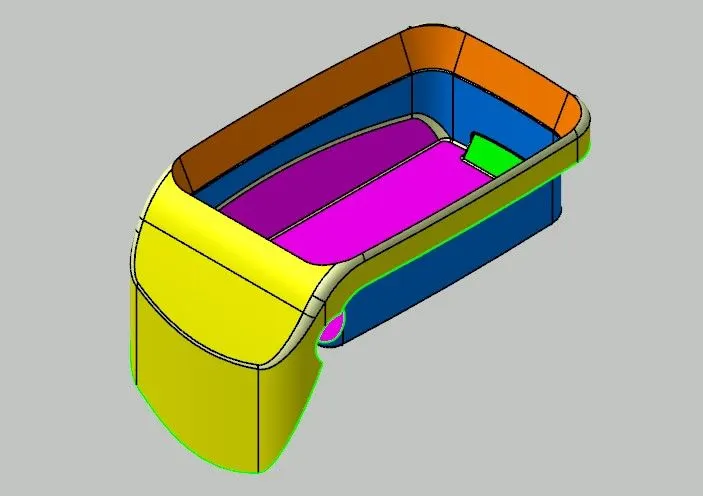
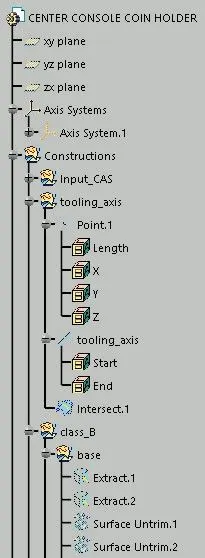
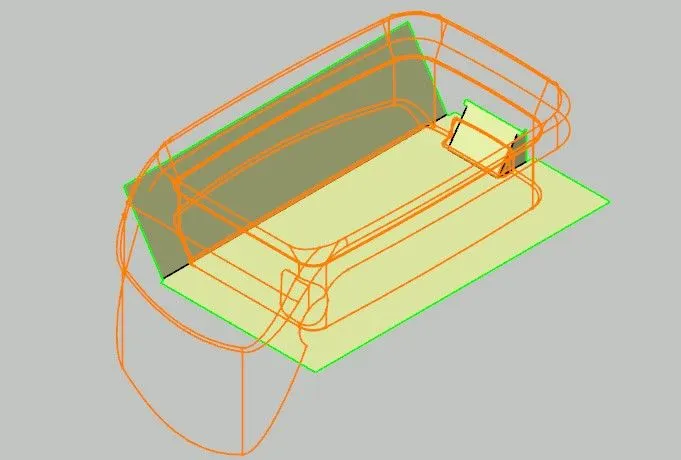
The approach towards the design will be simple. We will create a closed surface and later solidify the component. To start with, lets create a tooling axis first. The CAS is not that complex here. We can see a pink base, which can be our origin for tooling axis to go through.
So, extract the base and take a point in centre of it and add an axis system. Create a line that passes through origin and along an axis kind of normal to surface. This is a dummy tooling axis.
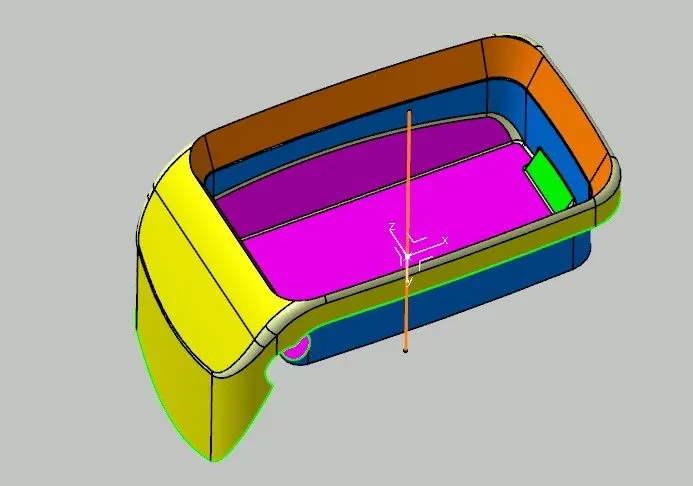
Now to ensure an easy ejection of component from core-cavity blocks, use bisection method for creating a tooling direction. But, here we can see the side walls that can disrupt the ejection are perfectly parallel to the dummy tooling axis from both the side. So, consider this as a final tooling axis and move forward to the draft analysis.
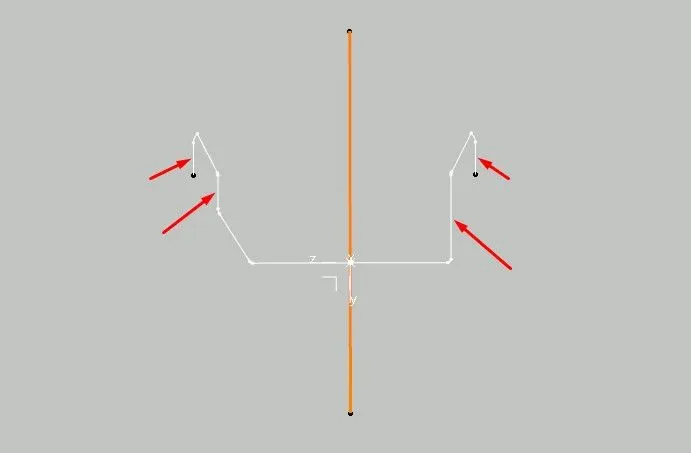
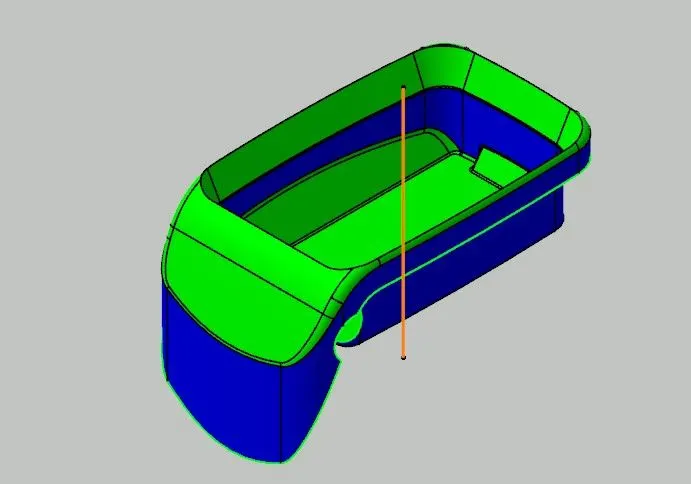
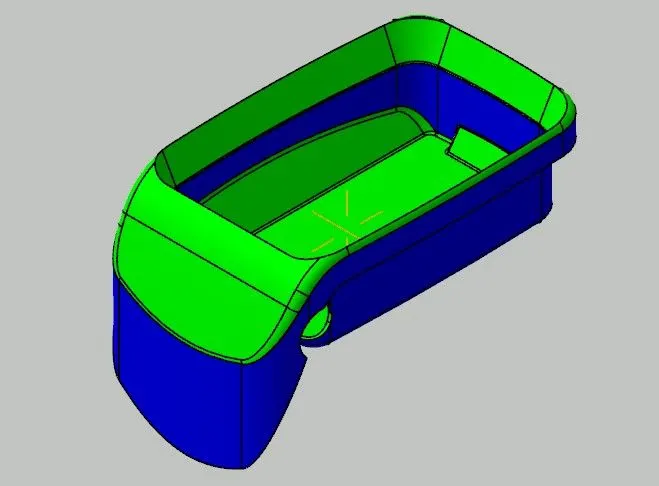
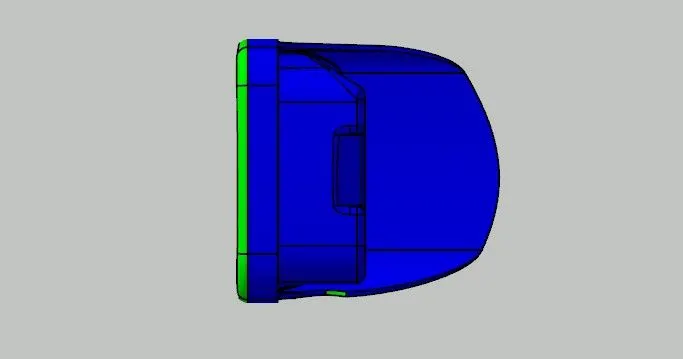
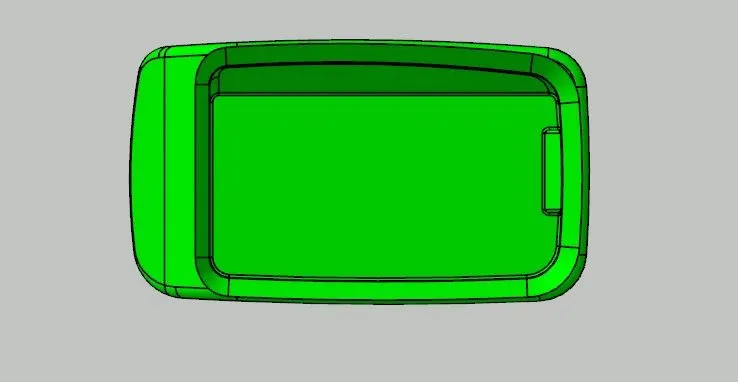
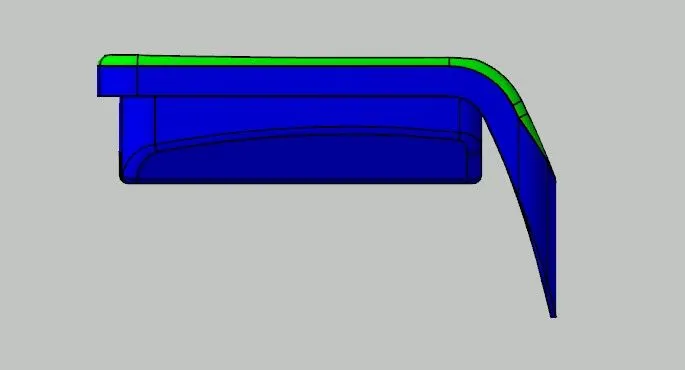
Drag and drop the compass along the tooling axis and analyse the surface. Here, it is all green except the parallel walls that means the draft angle is achieved all over the green surface for the particular tooling axis and there will be no disturbance during the ejection. For blue surface, which shows 0 degree draft, we can ask the CAS team to change the design and provide some draft and our design will be good to go.
Now, let us move further and create Class B surface. For this, neglet the fillet surfaces and focus on other surfaces. Here, first of all start with base surfaces and extract them.
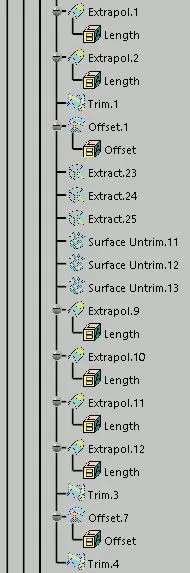
After extracting, to get a uniform shape, untrim them and extrapolate adequately.
Trim the set of surfaces to meet the needed structure and take an offset of required thichness. (Here it is 2.5mm) Make sure the offset direction is correct and the produced surface is towards inner side of the component.
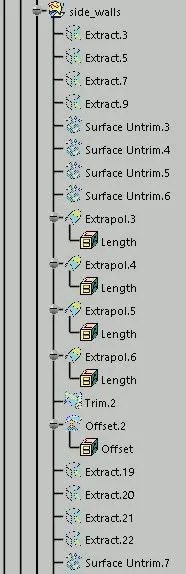
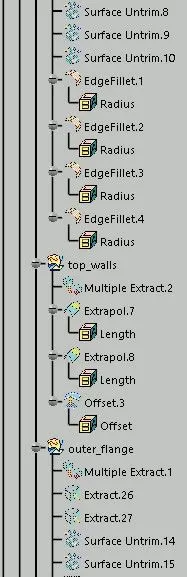
Continue the same process for the side walls, top walls and outer flanges. Later trim them with eachother to get the required shape.
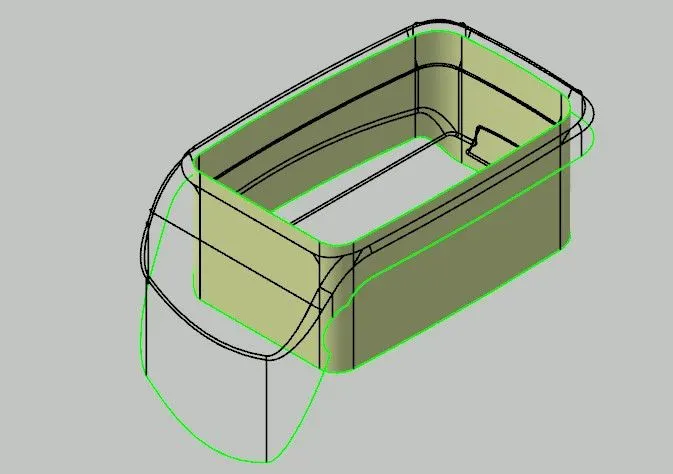
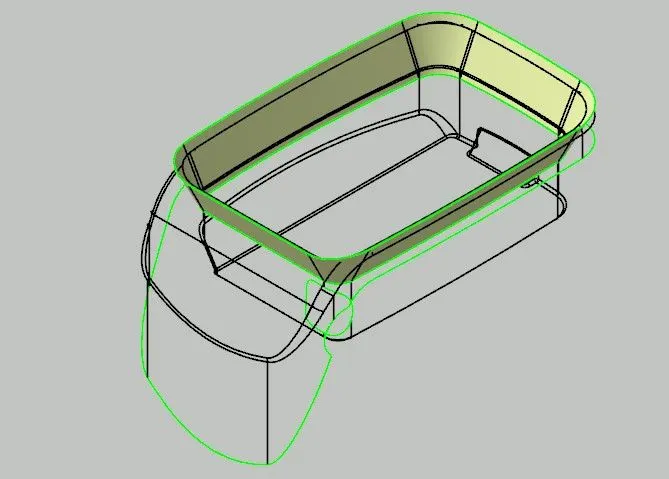
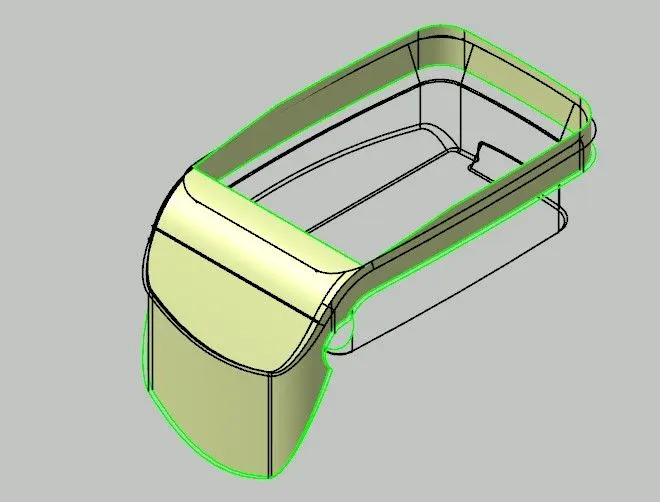
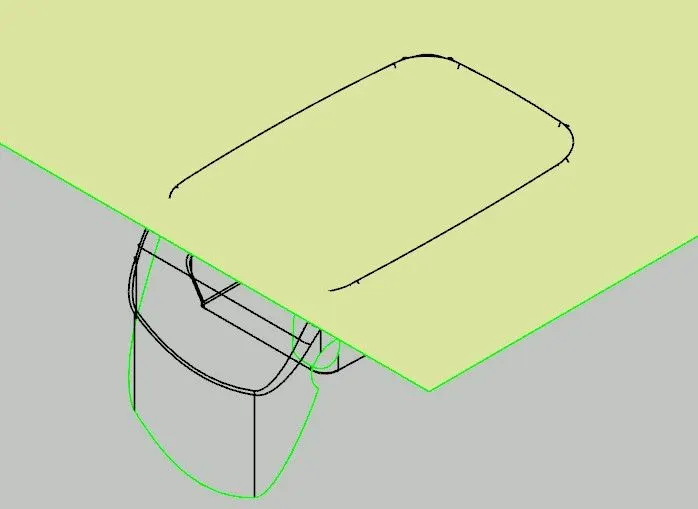
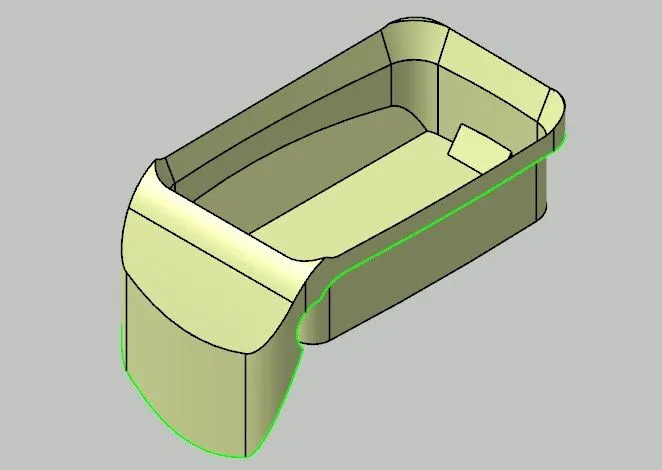
For filleting the edges in Class B surface, if it is difficult to measure the fillet radius in CAS as the profile varies, use a different method. In this method, extract the fillet surfaces and untrim them. Measure the radius value at the edges which will give the correct value. This will give a Class B surface.
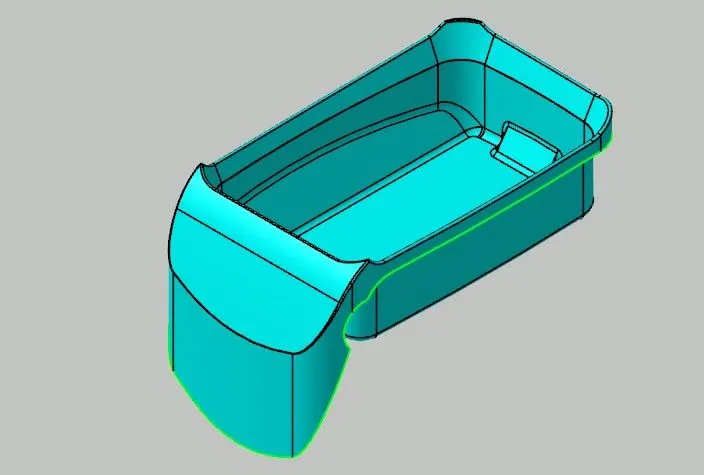
Now, we need to connect both surfaces. It is noticable that the class C surface does not go along the tooling direction. So for this, take open boundaries of CAS and extract the adjacent surfaces from boundary.
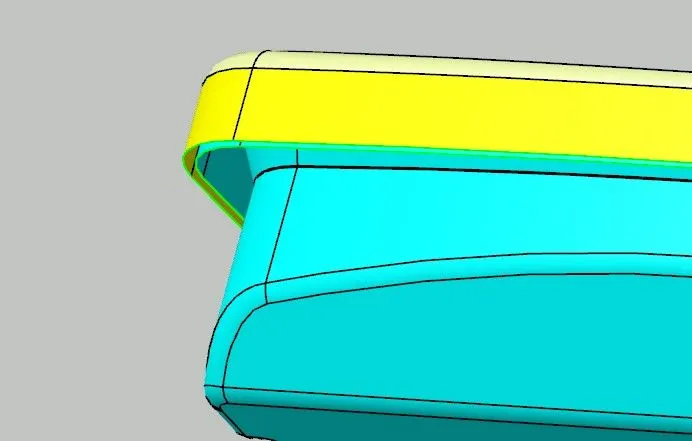
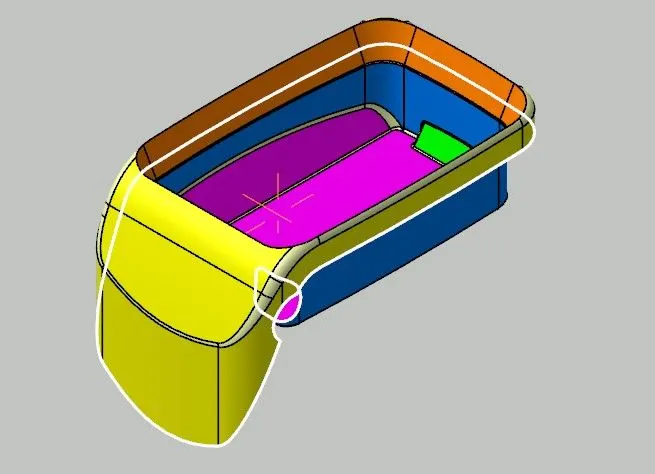
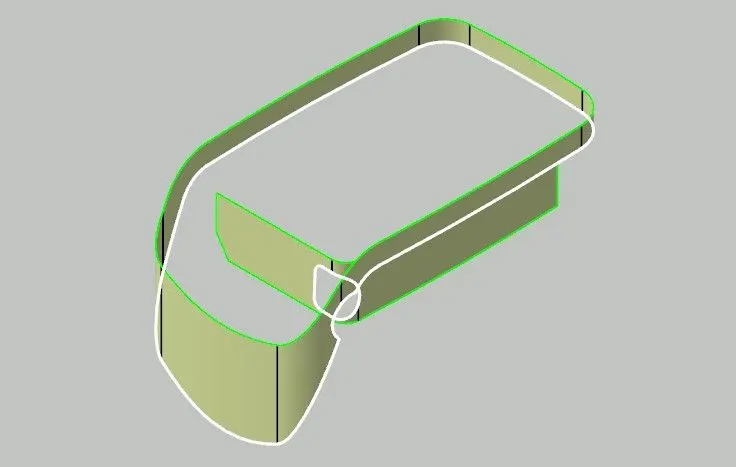
Extend the surface 90 degrees to the CAS by sweep feature. Later join class A and C together.
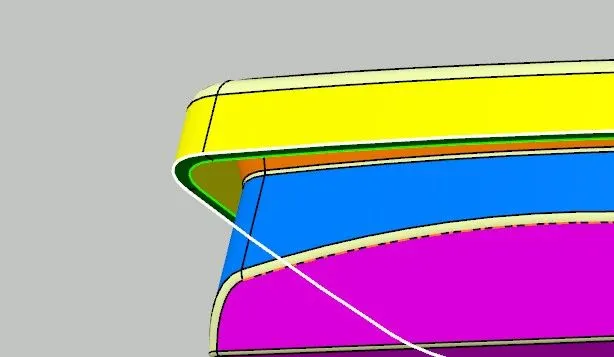
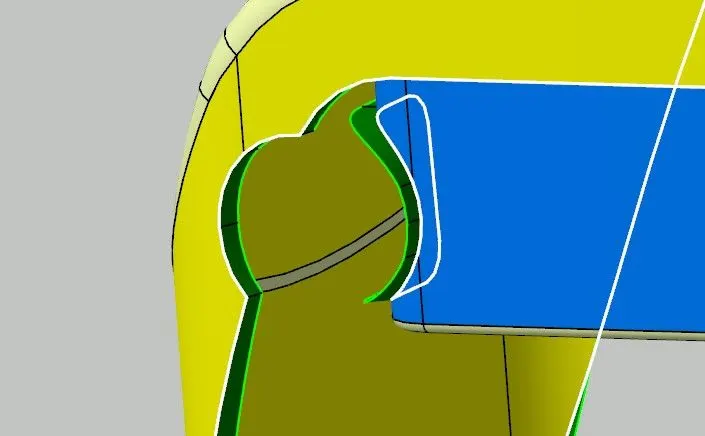
Now, do final trim with class B surface and a closed surface is created.
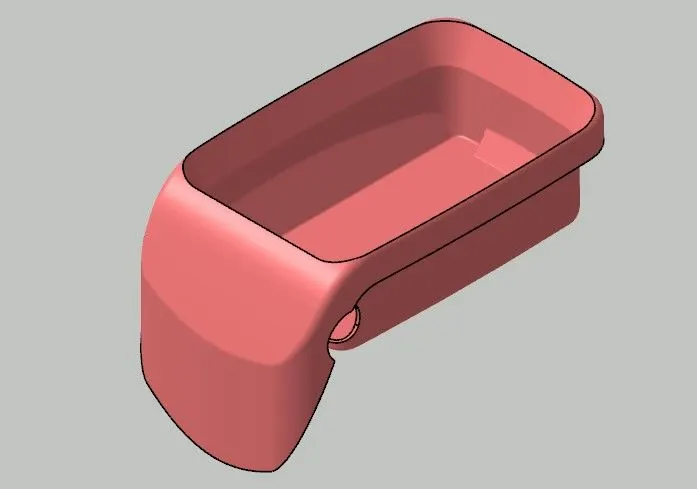
Switch to the part workbench and make the closed surface into solid part which is our final Centre Console Coin Holder plastic Component.
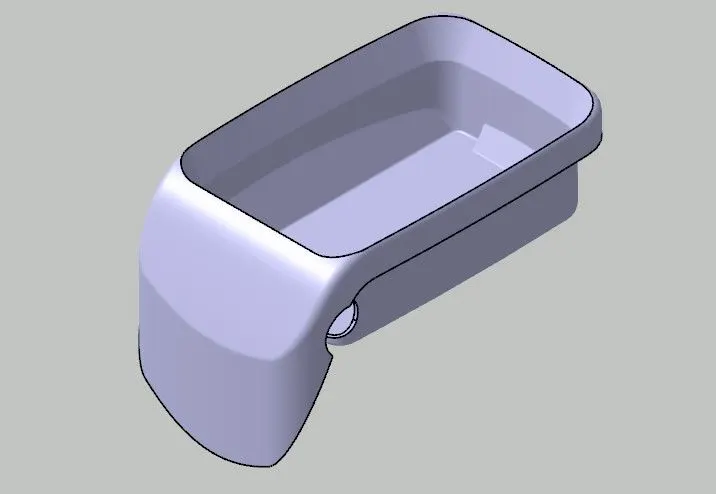
Lets ensure the design by draft analysis. Drag and drop the compass along the tooling axis and click on the component. Here we are getting the same results as before. As the CAS will change, our component design will become perfect automatically.
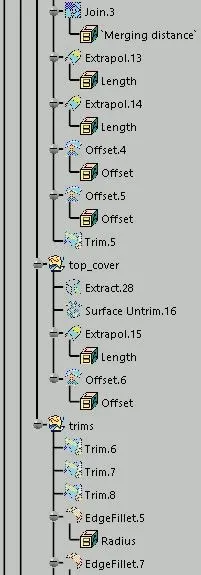
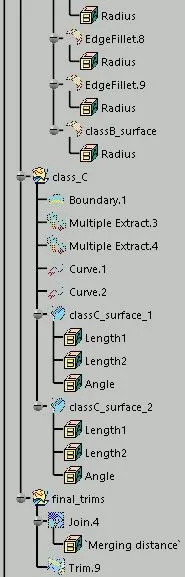
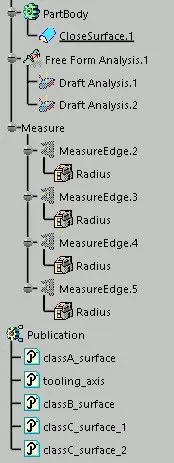
Tree Structure