Week 8 - Challenge 1 - Draft Analysis on a Fan Cover
OBJECTIVE: To perform the draft analysis on a fan cover using CATIA V5
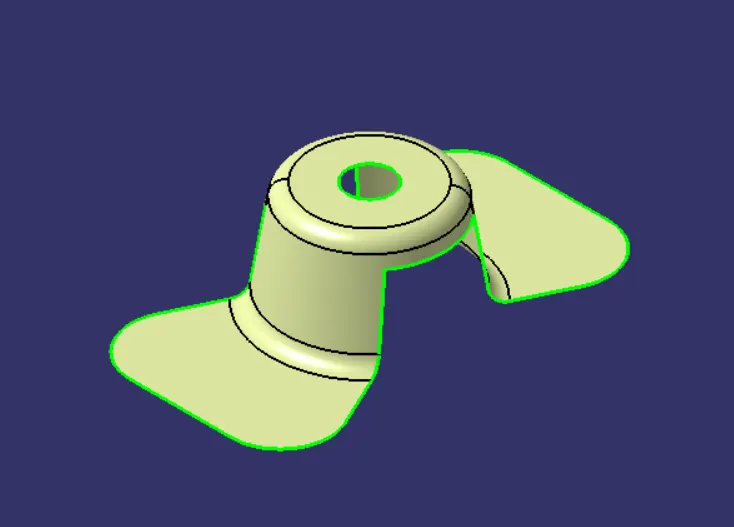
Draft: The draft is providing angles or tapers on product features such as walls, ribs, ports, and screw bores that lie parallel to the direction of the tooling axis. The tooling axis is the direction of mold part ejection.
Why draft is necessary: draft is required on all parts in the direction of mold movements in order to allow parts to release or eject from the mold properly. the draft is the angle at which the part is tapered and allows it to release. as the part cools, it tends to shrink to the core side of the mold. Adding a draft helps the part to release.
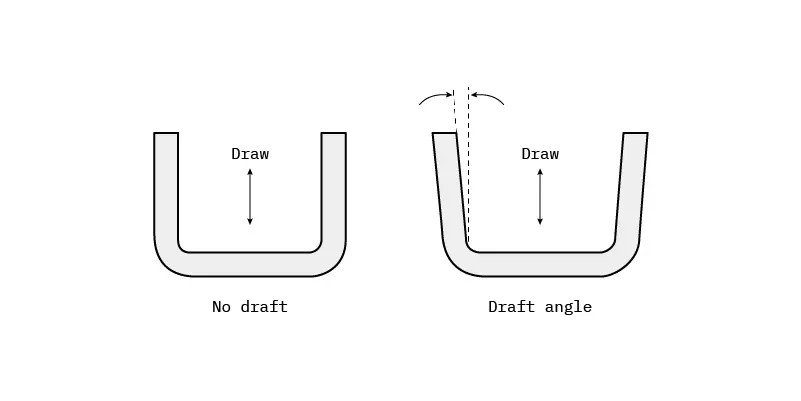
Draft Angle Nominal values:
- 3 degrees is a nominal draft
- 0.5 is a minimum draft which increases the cost of manufacturing.
- 7 degrees for textured faces
Steps involved in the Draft analysis:
step 1:
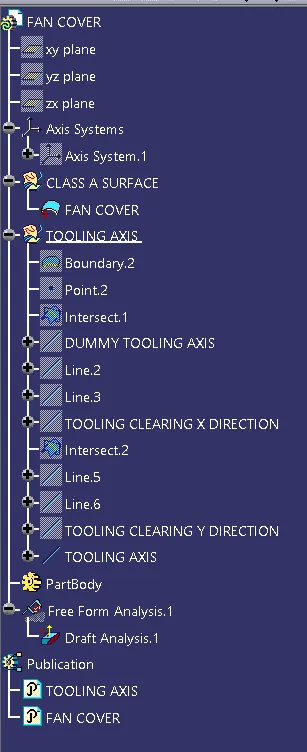
- By using the join command or boundary command check the connectivity of the class A surface.
- ensuring that there is no surface gap between the surfaces. we have to make sure the surface is joined.
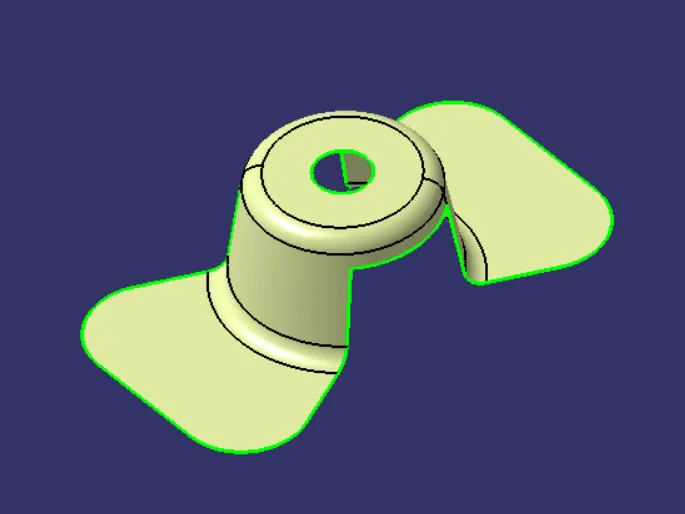
first, the design check is completed. Step 1 is ensuring that there is no gap between two surfaces to check the continuity of the class A or the quality of class A
step 2:
- The tooling axis is the direction in which the mold opens or the core and cavity open visually gone check the best possible tooling direction.
- Now we analyze the best possible tooling direction using the x/y/z planes.
- z is the best possible tooling axis. create a dummy tolling axis along a z-direction to ensure that the faces are positive
step 3:
- create a tolling axis along x and y
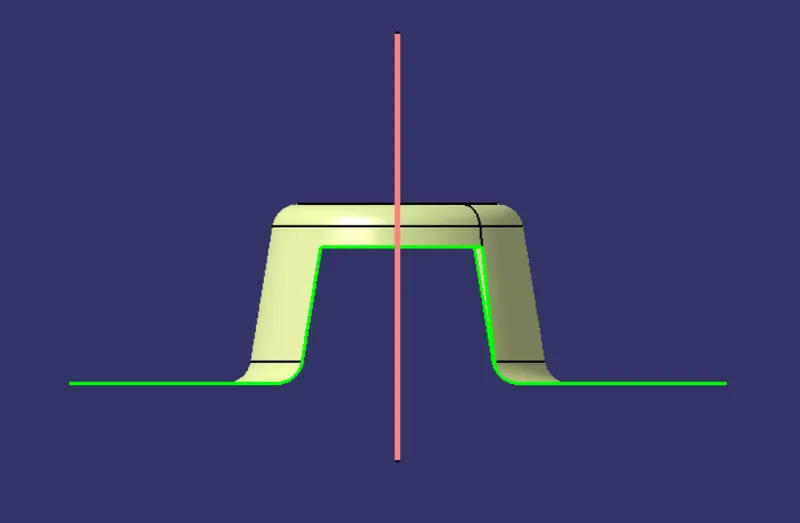
- make an axis system and intersect the zx plane with the class A surface. As the result get 2 lines of zx
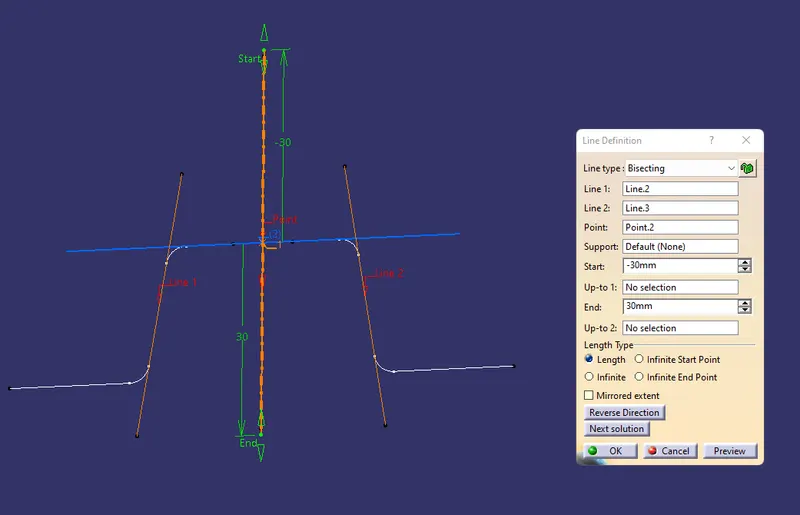
- here we can see in the picture that we have made two lines, now we will bisect the lines and choose the proper direction, here vertical direction. this will be our tooling axis for x-direction
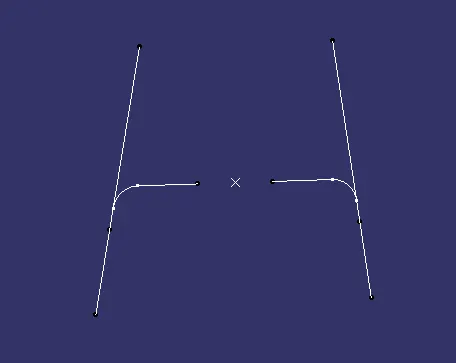
- with the help of reference lines, we are going to create a bisecting line that is on the same plane as the reference lines and created the tooling clearing x-direction.
- similarly, we intersect the yz plane of the axis system with the class A surface. and we repeat the same procedure again to create the tooling clearing y-direction.
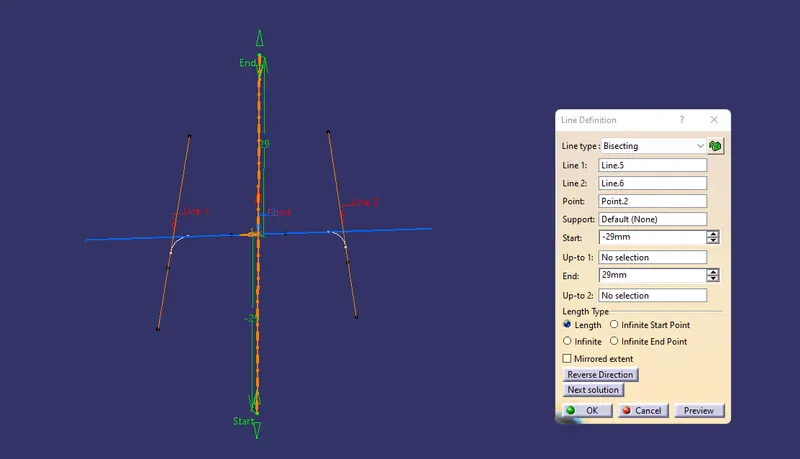
step 4:
when we created the tooling clearing direction in both x and y directions then we use bisecting line to generate the final tooling axis
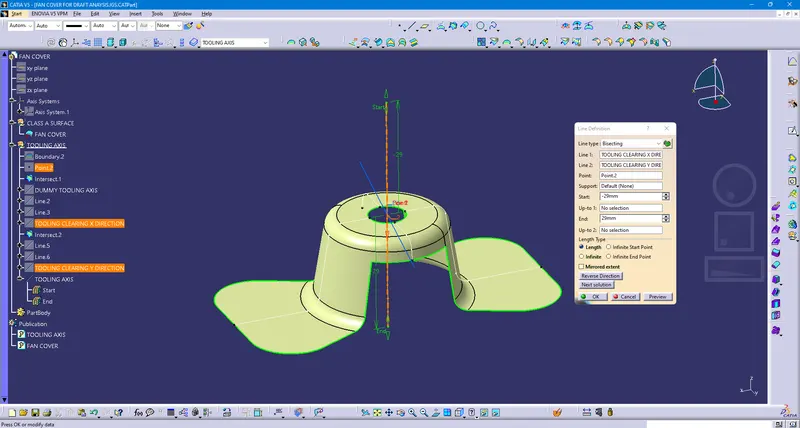
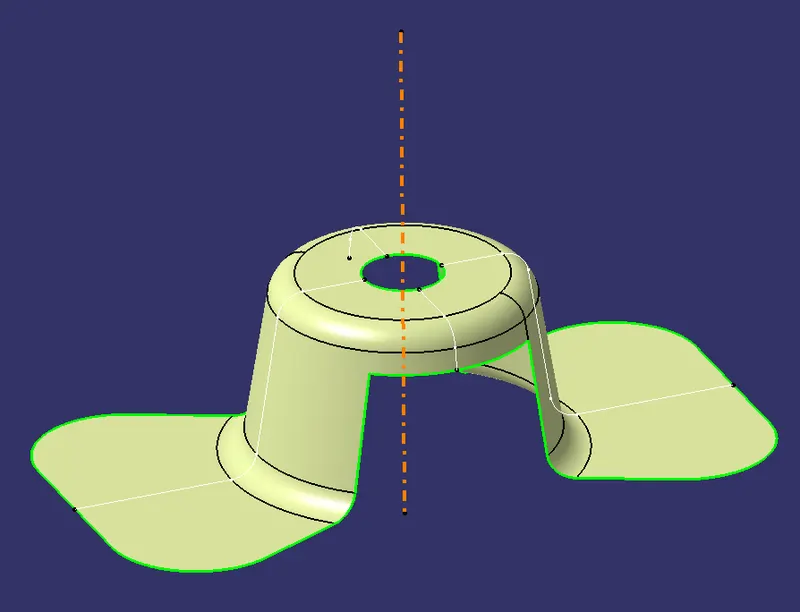
step 5:
publish the tooling line and class-A surface by clicking on tools selecting publication and selecting the tooling axis and class-A surface in the feature tree and selecting ok to publish
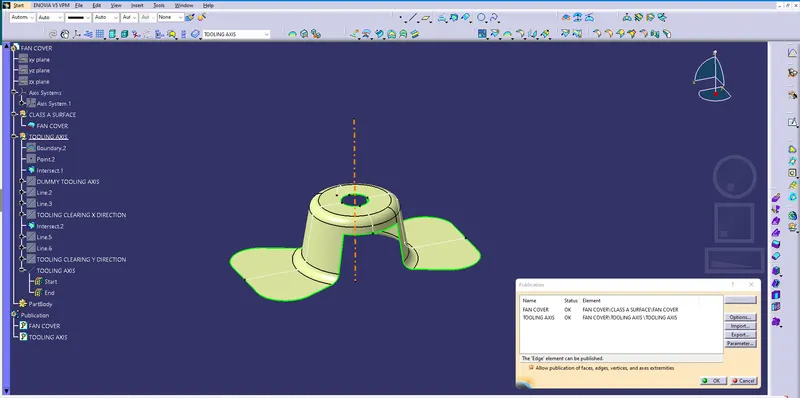
step 6:
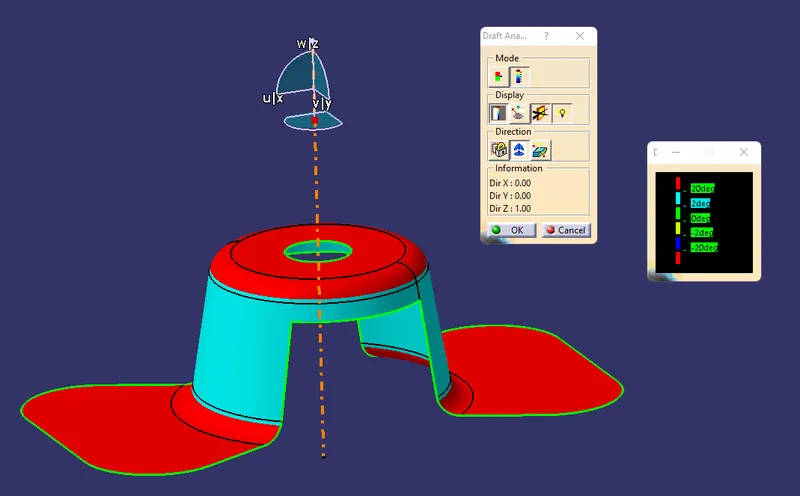
Draft analysis: draft analysis tool to check the draft. using the draft analysis tool identifies the zones using color codes and highlights the areas which deviate from the specified values along a defined draft direction.
- To perform draft analysis set customized reader style
- select the draft analysis tool
- Adjust the draft direction to the molding axis using the compass
- observe the color ranges:
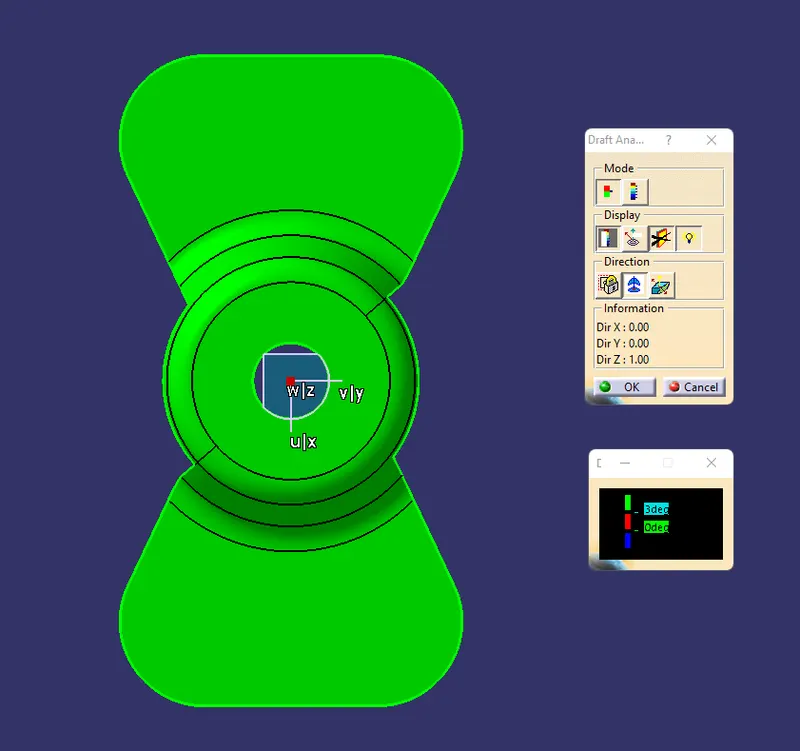
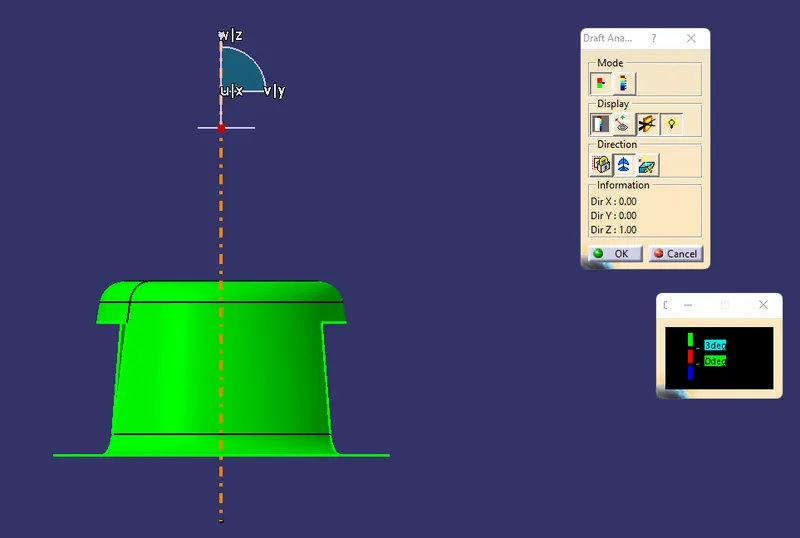
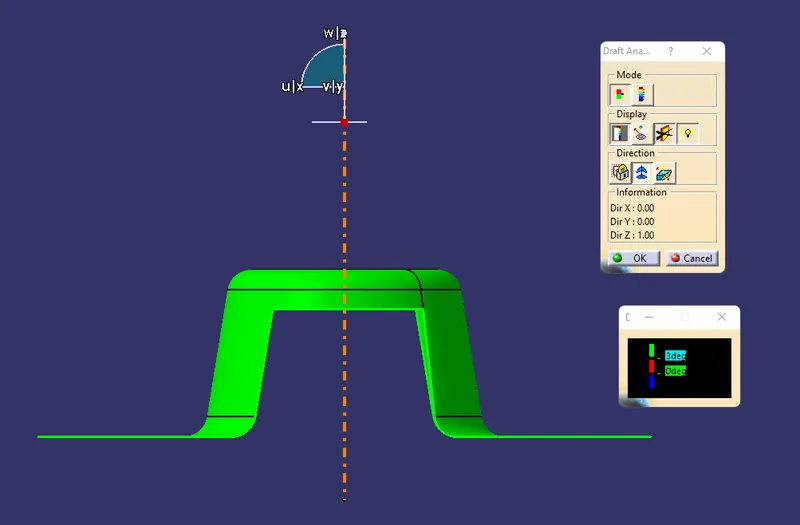
- green: draft value above 3 deg
- Red: below 0 degree
- Blue:0-3 degree
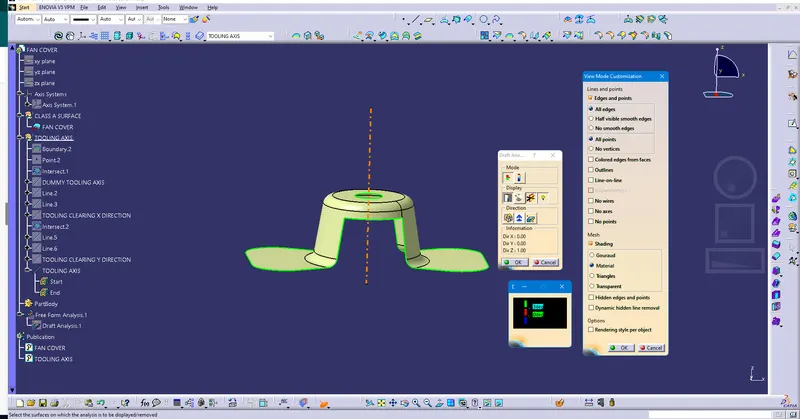
- selecting the compass and drag and drop the compass to the center of the tolling axis select the inverse the drag option to align the direction if needed.
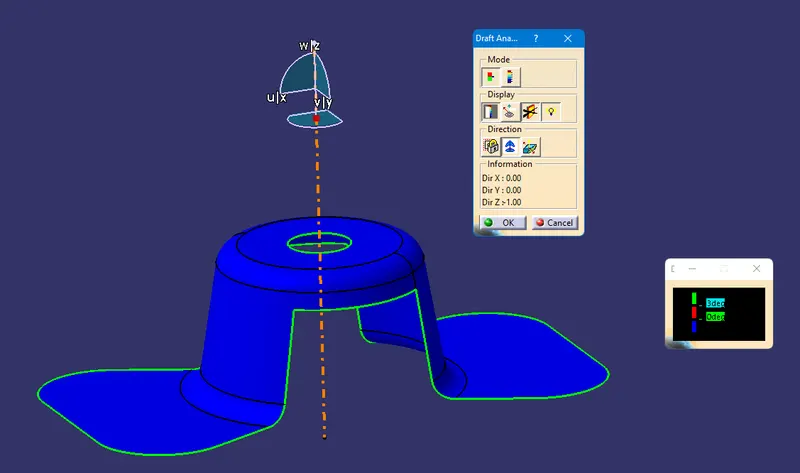
This shows the full analysis mode in the draft analysis
Analysis under the running point.
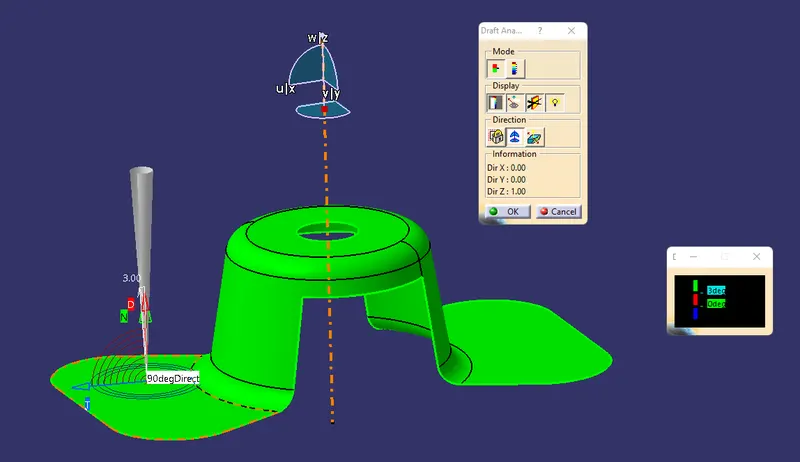
Final analysis result
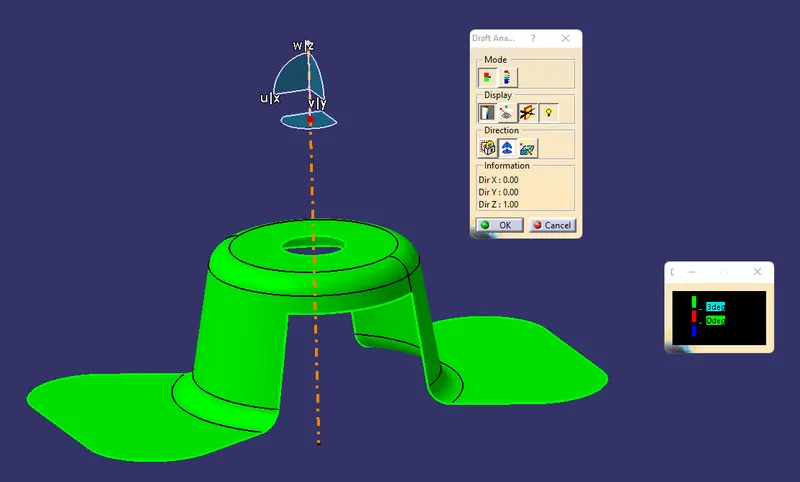
As all surfaces are in green color. This indicates that our component can be easily ejected along the tooling direction. hence, the draft analysis is successfully performed on the fan cover.
ISOMETRIC VIEW
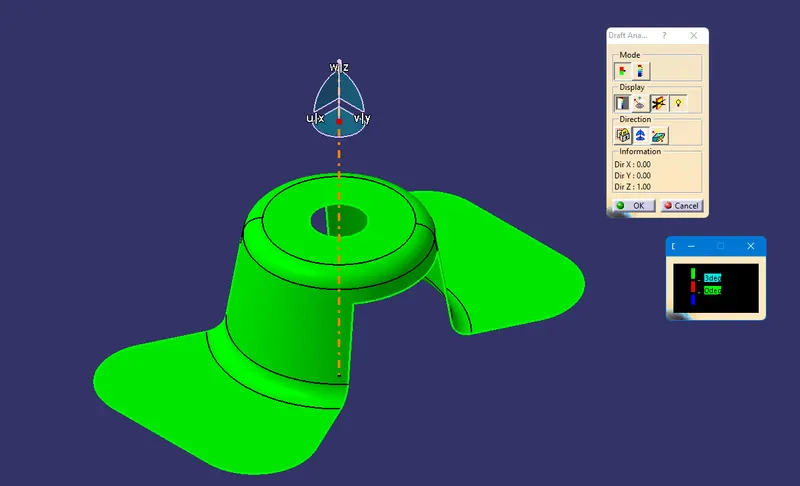
TOP VIEW
FRONT VIEW
SIDE VIEW
Feature tree
 .
.