Week 8:- 3D Finishing - Challenges 1
1. What do you understand by the 3D finish process?
3D finish is process where the design is being completely finish and to be ready for final simulation and 2D detailing.
2. What are the points need to be taken care of while finishing the design?
- Hole concentricity and hole sizes: All parts Hole concentricity should be checked & confirmed for easy assembly while finishing the parts.
- Machining area.
- Nominality : All units dimensions shoild be maintained nominal to facilitate easy assembly of the unit.
- Holes coloring standard : The holes should be coloured according to the standards with different colour for different hole sizes.
- Pneumatic lay-outing : Proper layouting of the pneumatic or cables.
- Gap cheching : To check if there any clash or gaps between the 2 assembled parts.
- Fastener implementation: Fasteners should be implimented in all unit as per the requirement & load on the part. like bolts, washers, screws etc.
- Avoid clash between different parts: Proper gap should be maintained between parts to avoid the clash.
- Mylars splitting as per panel pofile: Mylar splitting should be confirmed while finishing the design (It shuld be split with reference to the panel).
- Proper renaming of parts and assemblies as per the standard.
3. What are rough Locators & what is their use?
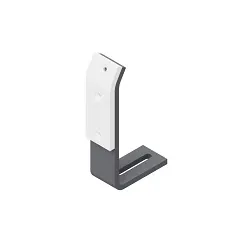
Rough locators are elements that aid the operator to guide / locating the car panels while loading onto the fixture and ensure a fool-proof assembly. Locating refers to the desired location where you want the workpiece to be when it is getting worked on either by a person, team, or robot.
Material used uded for rough locators are MS or similar metal.
4. What are the points you need to consider while designing a rough locator?
Following points need to be considered while designing the rough locators:
- Height of the rough locator should not be more than ergo height of the fixture.
- The entry or top point of the locator should be 10mm - 15mm above the paenl surface.
- Rough locator should have a adjustment in the direction of guiding plane.
- A gap of 2mm should be maintained between the locator and the panel at the time of designing.
- Rough locators can be rod type or flat type depending upon the standards and other conditions.
5. What is the gun study process?
- Welding is predominately used in automobile industries and requirements for fixture that ease the welding process is a continous development. car body in white is a complicated steel structure including 300-500 sheet metal with complex shape are assembled bt means of welding in a high rhytm.the foremost structure taken before starting before starting the design of welding fixture is to arise at spot.
- The location and orientation of the critical units of the fixture including clamp and locator are decided on weld spot distribution.the weld spot for front door inner side panel bracket assembly are located as shown with respect to panel.
- The device used to make spot welding on the panel is called weld gun.
- The gun may differ depending upon the application fixtue wiil be designed by considering weld spot distribution of the panel.
6. What are the points need to consider during the gun study?
Weld gun study is a very time-consuming process, the entire welding cycle time study depends on the number of spots, and the weld gun study
These are a few points which we need to take care of when we perform the gun study
The axis of weld spot along welding direction must be normal to the weld
The gun study should be performed once before the actual simulation
The position of the gun should be manipulated first in case of a collision with other parts.
If the position of the gun cannot be manipulated further, the location of the part must be modified or it can also be modified depending on the situation The entire given weld points must be cleared.
During the gun study, we have to consider client cycle time and we have to maintain the cycle time compared to client requirements.
7. What is pneumatic routing?
Pneumatic routing is a system operated by air, open loop system, generally used for less for compared to hydraulic system.
Pneumatic system is morstly preferred than hydraulic system in BIW welding fixture.
In pneumatic layouting all the pipes shou=wn from the cylinders are connected to valve bank and passes through safety box like structure.
Proper pneumatic lay-outing or routing is very much important to be shown in design, as it helps to describing the best possible way to keep all pneumatic pipes clean and away from welding spatterswhich can cause wear and tear of pneumatic pipes.
8. What is the solenoid valve?
Solenoid valves are electromechanical devices that control the flow of air or process gas. They are mostly used for controlling pneumatic actuators such as cylinders, turbines (pneumatic motors), diaphragms, and tubes.
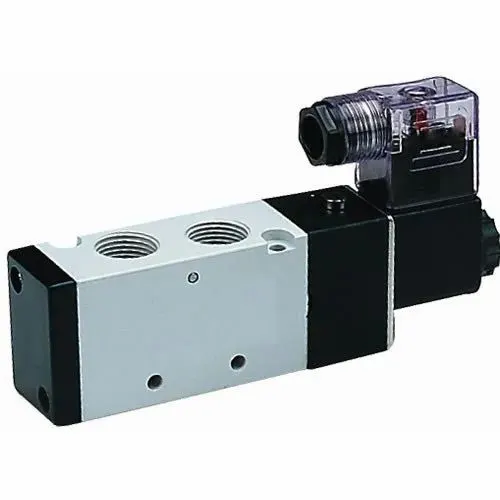
Solenoid valves are used to actuate the air flow in the cylinders as per the sequencethrough manual or PLC operated system.
9. What is the valve bank?
Vlave banks are a system in which n number of solenoid valves are mounted in order to maintain one common inlet and ouylet of air to all the valve.
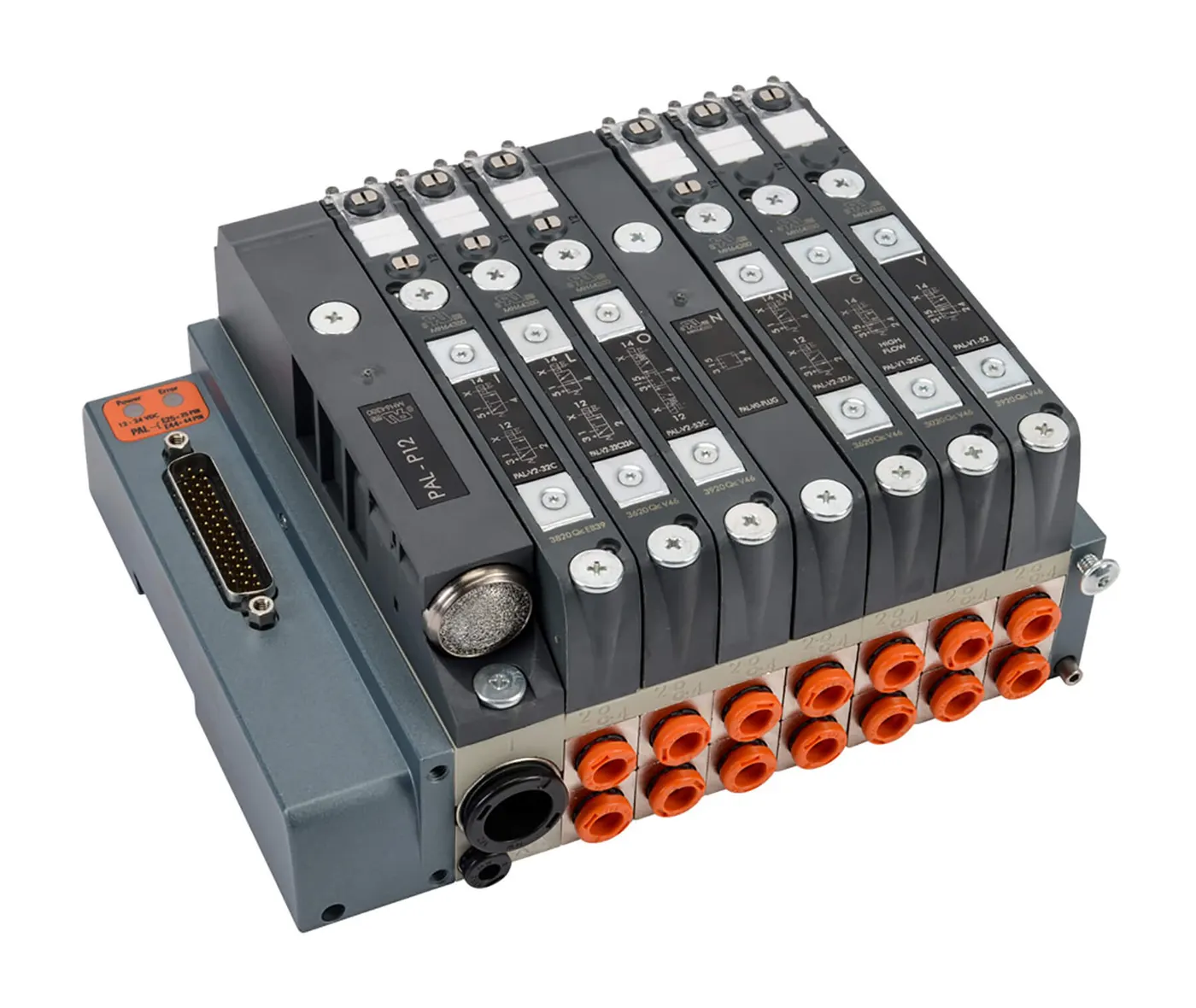
Valve banks are mostly mounted on the fixture sides or on the base depending upon th evarious conditions.
Valve banks are placed in such a way that it can be easily accessable fot maintenance purpose.
Valve banks should be properly covered with sheet structures to avoid any damage.
10. What is sensor & brief about its application in automation?
A Sensor is a device that identifies the progressions in electrical or physical or other quantities and in a way to deliver a yield as an affirmation of progress in the quantity. In simple terms, Industrial Automation Sensors are input devices which provide an output (signal) with respect to a specific physical quantity (input).
In Industrial Automation, sensors play a very important role in making the products intelligent and highly automatic. Machines can detect, process, analyze, and measure different position, height, appearance, length, and any displacement in production sites.
11. What are the types of the sensor?
The following are the various types of sensors used in automation:
-
Temperature Sensors:
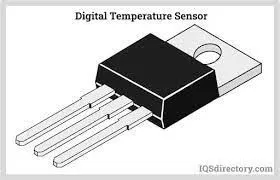
A temperature sensor is a device that collects information concerning the temperature from a resource and changes it to a form that can be understood by another device. These are commonly used category of sensors which detect Temperature or Heat and it also measures the temperature of a medium.
-
Pressure sensors:
The Pressure Sensor is an Instrument that apprehends pressure and changes it into an electric signal where the quantity depends upon the pressure applied. Turned parts for Pressure Sensors and Vaccum Sensors are few of the major pressure sensors used in Industrial automation.
-
MEMS (Micro-electro-mechanical Systems) Sensors :
These MEMS industrial automation sensors convert measured mechanical signals into electrical signals.
Acceleration and Motion MEMS are few important sensors used in industrial automation.
-
Torque Sensors
The torque sensors complete with essential mechanical stops, raise overload capacity and offer additional guard during mounting and operation.
Rotating Torque & Torque Transducers are few important sensors used in industrial automation.
All these above mentioned sensors are increasingly utilised in the automation industry. The recent surge in commercial demonstration of these sensor systems highlights their unique capabilities.
12. What are the fundamental points that need to consider while designing or selection of sensor?
Sensor selection criteria include temperature, size, protection class, and whether the sensor requires a discrete or analog input. Also consider sensor repetition accuracy, sensor response speed, and sensing range. The accurate choice of selecting a sensor depends on the knowledge about the application type, the variable of product and the condition in the operating environment.
- Measuring range
While selecting a sensor (temperature sensor, proximity sensor, accelerometer sensor, etc), the range of measuring should directly correspond with the physical measuring range so that we can obtain the most precise reading and optimal sensor lifespan.
- Environment
We must be aware of environmental conditions while installing a product. Numerous sensors can be affected by the environmental conditions (such as temperature variation, gas, humidity, chemicals, etc.)
- Flexibility
While selecting a sensor, we need to check if it can provide flexibility, like features that can adapt to changing the products.
- Digital lowers costs.
It is always better to use a sensor which gave gives a digital output. It is better to avoid using the analog field devices, even though they minimize the cost because while converting from analog to digital that can produce errors. A digital output equivalent sensors are more worth.
- Accuracy and Precision
Precision and Accuracy does not mean the same thing, though they are often related. Accuracy is the quality or state of being correct or while the precision ability of the devices to notice small changes (As an example, a temperature sensor that measures the normal body as 35.999°C has high precision but low accuracy.) The Accuracy and precision and one of a given product should be appropriate. Too high precision can give a wrong indication that the value is too accurate. Similarly, a sensor with good accuracy will be expensive. The error can affect both precision and accuracy.