Week 8:- 3D Finishing - Challenges 1
1. What do you understand by the 3D finish process?
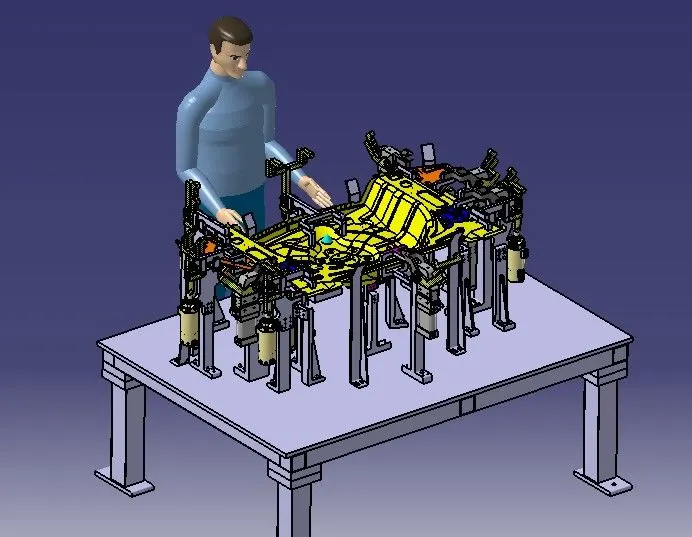
ANS:- 3D finish is a process in which design is finalised and make it ready for 2D detailing. It is like final finshing of design. In this step we have to dcorrect every possible parameters according to standards. 3D finishing is necessary step, as it can reduce the error while manufacturing and assembly of fixture. We mentioned various things like colouring for holes, machining colour, etc. We also need to check gaps and fastening parts. Proper 3D finish will does not make errors while simulation as well.
2. What are the points need to be taken care of while finishing the design?
ANS:- Following are some points we have to consider while 3D finishing:-
a. Nominality of various parts is to be check for easy assembly.
b. Gun study is essential task in 3D finishing. In gun study we place gun point at required locations and ensures there is no obstruction.
c. Holes must be coloured according to their standards. For dovel holes, we give dark blue colour, for treaded part of hole yellow colour is applied and for untreaded part light blue colour is applied.
d. Hole checking:- Hole concentricity is to be check in 3D finishing. Holes sizes also be checked so that there will be proper tapping and fastening of components.
e. Gaps checking:- Places like shimming area we need to maintain gap while machining.
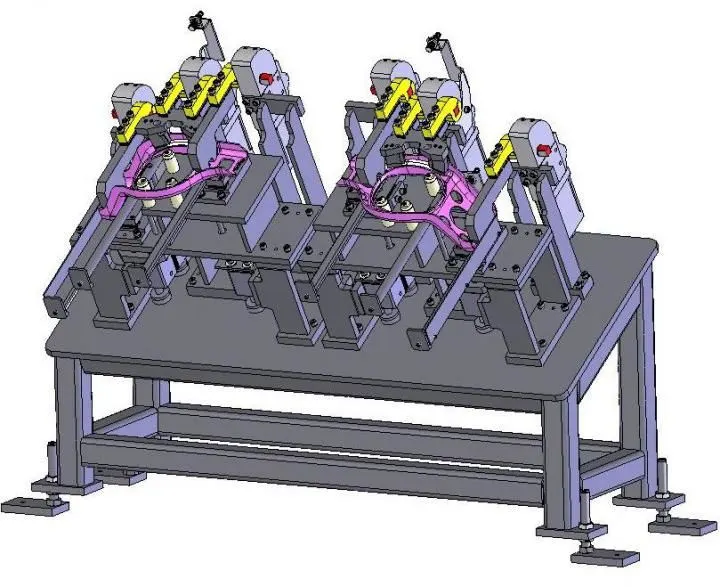
f. Pneumatic Layouting:- We have to denote path for pneumatic hoses for various cylinders and acuators.
g. Mylars splitting:- According profile of panel, we have to split mylers.
h. Fastening implementation:- We have to detail proper fasteners for mating of components.
i. Machining area:- We need to colour machining area, so that operator can easily determine it.
j. Renaming of parts:- We have to rename assemblies with each component according to standards .
3. What are rough Locators & what is their use?
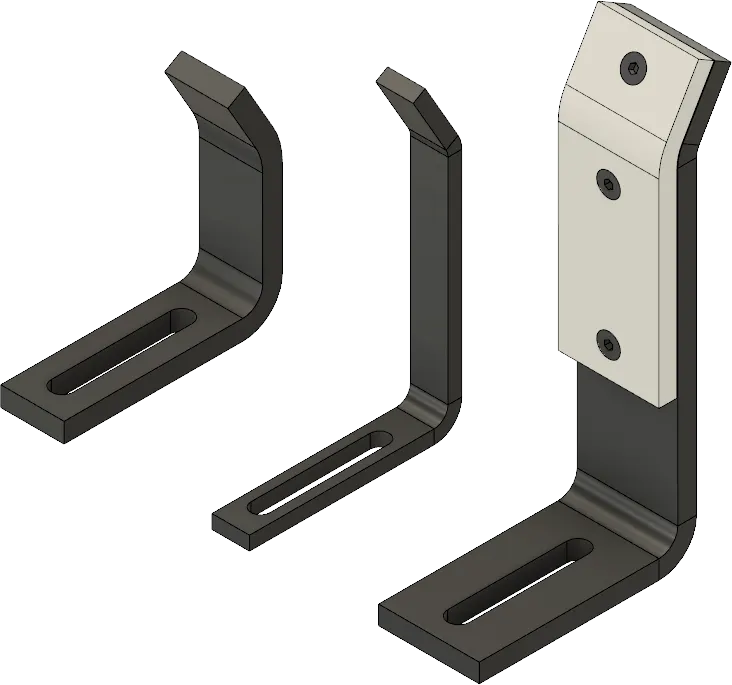
ANS:- Rough locators are used to guide the car panel. It can be also used for maintaining proper POKA-YOKE. Rough locators are basically use where manual loading of panels is implemented. These are design in such a way that it can guide panel from 10 to 15MM above the exact location of panel. Orientation of panel is maintained by using rough locators. It can be of flat type or rod type depending upon use and space constraints. These are simple in design but very useful while proper positioning of car panel. Rough locators are design in 3D finish stage. It is very useful for operator to locate the car panel in proper location and orientation. Without use of the rough locators operator can place car panel in incorrect orientation and it may lead to welding issues or other operation issue while working. Once rough locator is place over base unit it will be easy and fast process for exact positioning of car panel. These are simple in design components so it does not take more space and can fit even congestive areas.
4. What are the points you need to consider while designing a rough locator?
ANS:- Rough locators are used for proper placement of car panel over the fixture. Basically the rough locator guide the panel. Following are the points need to consider while designing a locator:-
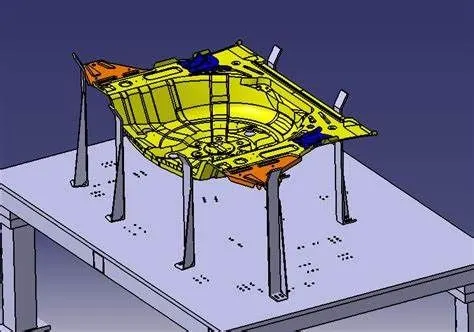
a. Rough locator must guide panel from 10-15MM above the actual level.
b. It must have adjustment in the direction of guiding plane.
c. 2mm gap is to be maintained between rough locator and car panel.
d. It can be of flat type or rod type depending upon space available and use.
e. It should have 5-10mm adjustment in the positive or negative direction of guide plane.
f. It should be designed with entry angle of 30-40 degree.
g. It sholud be designed with 2 slots to mount for easy adjustment.
5. What is the gun study process?
ANS:- Gun study is a study of examining various wedding gun positions according to spots. It is like determining obstruction to weld gun while spotting. It is required step in 3D finish. Gun study is made to ensure the that every spot is possible and there is no obstruction for weld gun. If there is obstruction for any fixture part we can change orientation of that part or we can change the direction of weld gun. It is essential step before the simulation. Combination of guns at each spot is known as guncloud. It is essential that there must be at least 10MM gap between diffferent parts of welding gun and car panel or any other part of fixture.
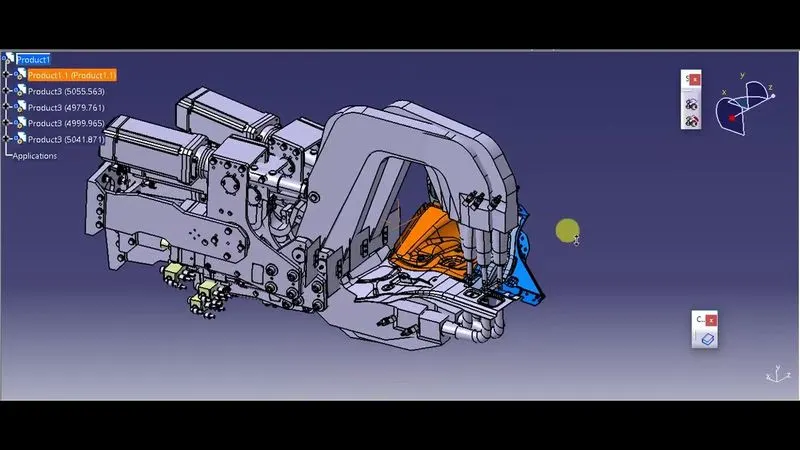
6. What re the points need to consider during the gun study?
ANS:- Gun study is analysing different locations of weld gun for spot welding. Following points need to consider while gun study:-
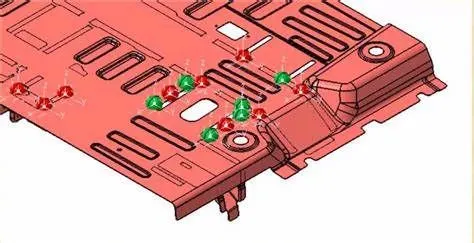
a. Need to avoid obstruction of weld gun to any part of fixture.
b. Feasibility of welding at different weld spots.
c. At least 10 mm gap should be between weld gun and other parts of fixture.
d. If there is obstruction of any part to weld gun, we can change orientation of either weld gun or part of fixture.
7. What is pneumatic routing?
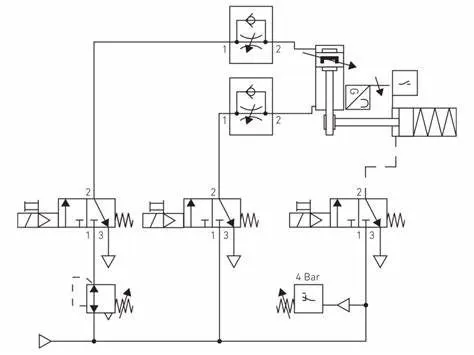
ANS:- Pneumatic system is system operated by air. Pneumatic rounting if representation of pipes and hoses needed for working of pneumatic system. It is also called as pneumatic lay-outing. It is much important to show in design as it describes best possible ways to keep all pneumatic pipes neat. With proper pneumatic routing we can safely fix the route of pipes away from welding spatters, otherwise welding spatters may cause breaking of pneumatic pipes. In pneumatic rounting all pipes from cylinder is connected to valve bank and passes through a safety box structure. In pneumatic routing we can safe guard pipes from fixture parts.
8. What is the solenoid valve?
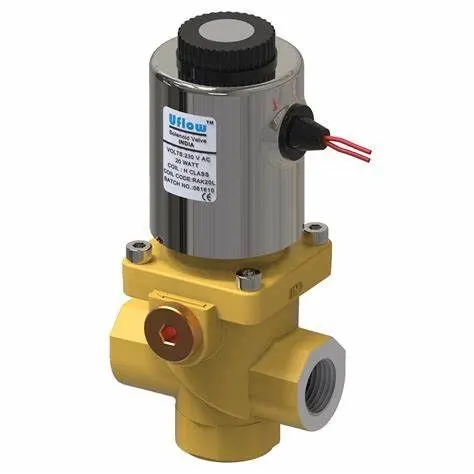
ANS:- Solenoid valve used to actuate the air flow in cylinders. Solenoid valve can be operated manually or with PLC programming. Solenoid valves are mounted over valve bank. One extra valve is always provided in valve bank. It is consider as spare valve and can be use for future operations. Solenoid valves are essential in pneumatic systems.
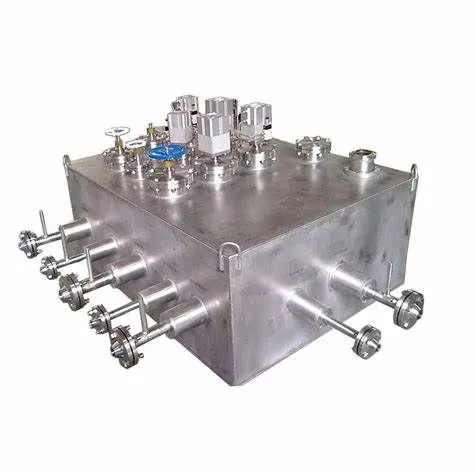
9. What is the valve bank?
ANS:- It is collection of solenoid valves. In valve bank solenoid valves are mounted in order to maintain one common inlet and outlet of air to all the valves. It is mounted on a base plate. It provides ease while actuation of valves from one place. It should be placed such that it can be easily accessible while maintenance. Valve bank is always provided with a extra valve as a spare. It can be use for future considerations. PLC programming or manual operation can be done for operating solenoid valves.
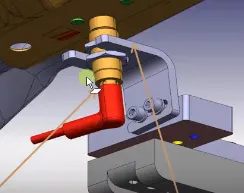
10. What is sensor & brief about its application in automation?
ANS:- This are electronic components use for sensing car panel. Sensors sense the car panle and passses this signal to PLC. PLC processes over this signal and gives command for next operation. It is very useful to achieve better quality and less errors. Sensors is must for speedy working. It is also avoids human errors. It is use to detect proper orientation of panel, missing of panel or part in assembly. Its selc\ection is done by using catalogue according to its application. This are useful in automated systems. It is generally mounrted in 3 way adjustable directions.
11. What are the types of the sensor?
ANS:- Different types of sensors are use accoring to their applications. Following are some types of sensors generally use:-
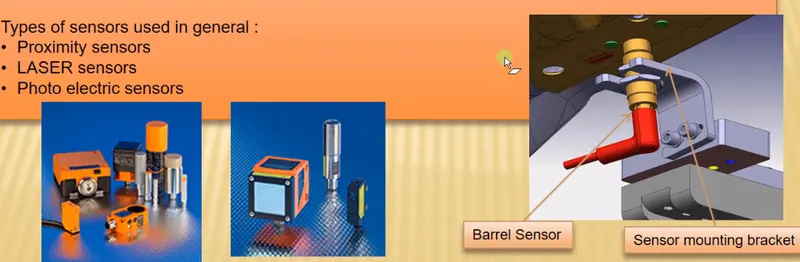
a. Proximity Sensors
b. Laser Sensors
c. Photo electric sensors
12. What are the fundamental points that need to consider while designing or selection of sensor?
ANS:- Following are some points need to consider while selection of sensors:-
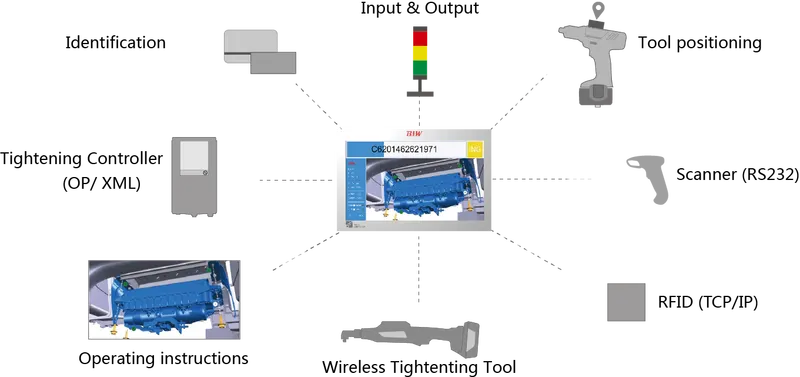
a. Apllication to be done
b. Required type of signal needed
c. Space for mounting
d. Type of object to be sense