Week 2:- BiW Fixture Basics Challenge
1. What is the process of project execution activity?
ANS:- Following are the processes involved in project execution starting from RFQ received till final hand over.
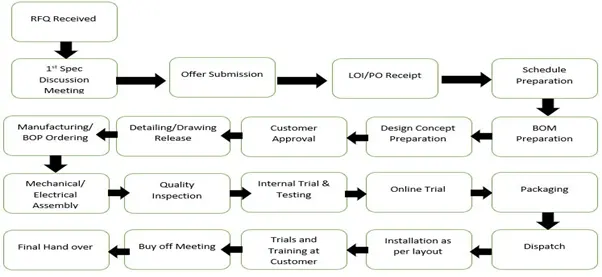
1. RFQ received:- RFQ is enquiry from customer side. It is required for quotation (RFQ). Customer provides their constrains, requirement, etc.
2. 1st spec discussion meeting:- In this meeting details regarding need of customer is shared.
3. Offer submission:- After analysing details we have to submit offer according to customer requirements. Offer price mostly calculated on require time to complete whole project . Then offer is submitted by quotation or proforma invoice.
4. LOI/PO receipt:- PO is purchase order. Technically we have to start work only after PO is received. PO is nearly similar to proforma invoice that we provided.
5. Schedule Preparation:- After receiving PO we have to plan every activity that is going to invole in project completion.
6. BOM preparation:- BOM is bill of material. It is list of all the parts which are going to assemble. We have to prepare BOM.
7. Design Concept Preparation:- According to customer requirement, functionality of components we prepare design concept. We get overview of whole design by preparing design concept.
8. Customer approval:- We share design concept and BOM to customer so that he can relate it with requirement.
9. Detailing/Drawing Release:- After getting approval from customer end we starts our designing and detailing. After completeion we shared all the details with customer.
10. Manufacturing/ BOP ordering:- We start manufacturing according to design that we made.
11. Mechanical/Electrical Assembly:- After receiving manufactured components from vendor or from inhouse manufacturing unit. We start assebly of mechanical as well electrical components.
12. Quality Inspection:- After assebly is done quality inspection is must needed step before dispatch.
13. Internal trail testing:- After passing from quality department and making require changes in components, internal trail has to be taken. We take all types of trails with simulated or actual conditions.
14. Online trail:- It is actual trail of component that we made in required conditions.
15. Packaging:- After completion of testing and trail, we need to pack all components neatly. If packaging is not proper it may damage components.
16. Dispatch:- While dispatching of components material must be handle with care.
17. Installation as per layout:- After reaching at customer end we have to install whole setup.
18. Trails and Training:- Trail and training is neccessary at customer end otherwise misuse of parts may leads malfunctioning.
19. Buy off Meeting:- There will be meeting with customer regarding functioning of components.
20. Final Hand Over:- After customer satisfaction we finally handover components with assembly.
2. What are the types of joining processes?
ANS:- There are two types of joining processes 1. Metallurgical joining 2. Mechanical joining. Spot, fusion and arc weilding generally used while joining panels. Brazing and soldering are mostly use in case of elctrical applications.
Resistance Welding:- In this technique localized current and pressure is used. As the weld time is very low, we get much higher welding speed. There are 3 types of resistance welding as follows.
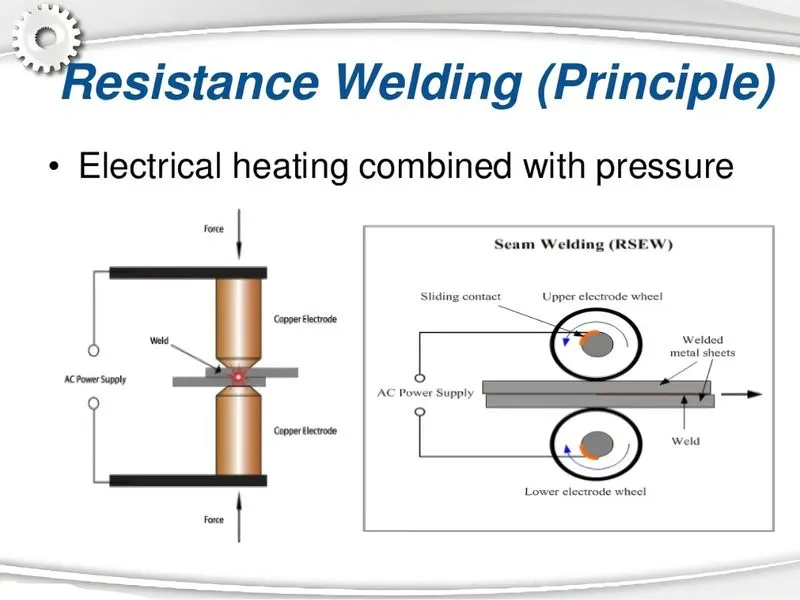
a. Resistance Spot Welding:- In this welding localized pressure and current applied at a point. Electrode have tip of copper- cromium or zirconium.
b. Resistance Projection Welding:- It is same as that of spot welding but the elctrode has shape of the part to be welded. Because of the shape of the electrode sheet metal get fully welded as large as shape is. This method is used to weld nuts.
c. Resistance seam welding:- In this method we use rotary type of electrodes. This technique provides leak proof welding. We can weld sheet metal parts lengthwise.
Arc Welding:- In this process we use cunsumable or non consumable type of electrodes. Weld produced due to arc creation between tip of electrode and workpiece. Folowing are some types of arc welding:-
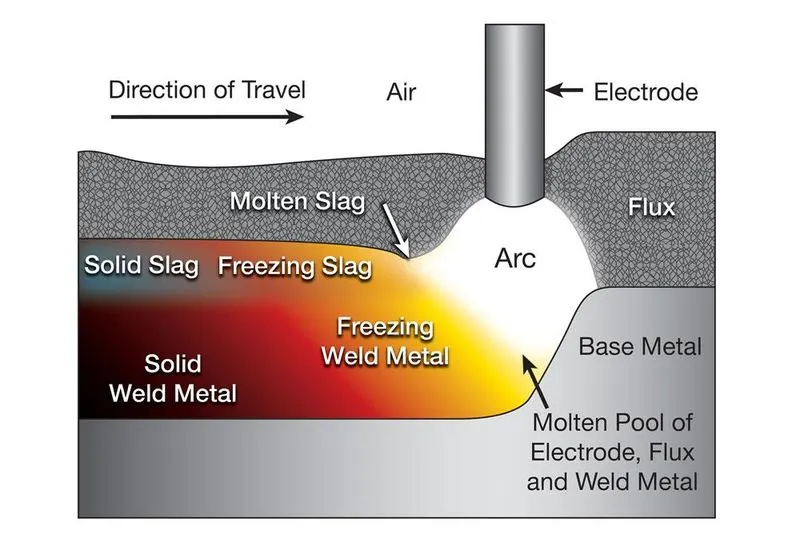
a. Manual metal arc welding:- It is also called as stick welding. Stick is a flux coated electrode. Arc is created between tip of electrode and workpiece while flux acts as a barrier for the oxidation of weld.
b. Gas shielded metal arc welding:- It is also called as metal inert gas welding process. In this process, electrode is of consumable type and has shielding of CO2 gas while welding. Mostly we use carbon dioxide as a inert gas, other gases may be used.
c. Gas shielded tungsten arc welding:- It is also called as tungsten inert gas welding. In this process electride is non- consumable type. Argon gas is used for shielding purpose. Arc is created between tungsten electrode and workpiece while filler is fed in the weld pool.
In certain areas where metallurgical processes are not feasible we use mechanical joining processes which are as follows:-
a. Mechanical Fastenning:- In case of disimilar material, or interchangebility of component we use fasteners. Mechanical fasterners are nuts, bolts or studs. If component have less fatigue life or if material is pre painted we use mechanical fastening. If some material has poor weldability we can use mechanical fastening for joining purpose.
b. Adhesive Bonding:- This type of joining process does not need special treatment on components. There are some plastic agents or epoxies, which helps in joining of materials. Sometimes we have to give heat treatment after applying adhisive agents or solvents.
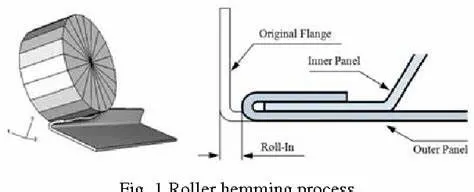
c. Hemming process:- It is like 180 degree bend of sheet metal. In this case edge of sheet metal is bend about its edge touching to primary surface. IN case of seam joints edge of two material is rolled.
d. Self piercieng Rivets:- This is high speed process. It does not need drilling. So it is quick process of joining. Semi tubular rivets are use for joining purpose. In some cases solid rivets are also use. It is a point joining operation.
3. What is Resistance Welding & its application in the automotive sector?
ANS:- Resistance Welding:- In this technique localized current and pressure is used with the tip of elctrode for welding. We place workpieces to be welded one above other and apply pressure and current with the help of elctrodes at a point placing both workpieces between two electrodes. Heat is generally developed at the interface between two sheet metal workpieces. As the weld time is very low, we get much higher welding speed. There are 3 types of resistance welding as follows.
a. Resistance Spot Welding:- In this welding localized pressure and current applied at a point. Electrode have tip of copper- cromium or zirconium. Weld is created as a spot between two sheet metal workpieces. It cannot be used where leakproof aplication is required. When we apply pressure and current at a spot with electrodes, molten pool is created causing welding of material. It is highly used in automation and robotic techniques. typical BIW contains nearly 5000 welds. Due to such high number strength and durability of panels is highly depends on resistance spot welding.
Applications:- This method is used in any sheet metal parts where arm of spot welding does not coincide with sheet metal.
b. Resistance Projection Welding:- It is same as that of spot welding but the elctrode has shape of the part to be welded. This method is highly used in sheets having embossements. We have design special elctrode of workpiece shapes, so cost of projection welding is high than spot welding. Because of the shape of the electrode sheet metal get fully welded as large as shape is.
Applications:- This method is used to weld nuts.
c. Resistance seam welding:- In this method we use rotary wheels type of electrodes. Resistance seam welding is used in joining continuos sheet metal parts. This technique provides leak proof welding. We can weld sheet metal parts lengthwise. The current and pressure is localized by the periphery of circular electrodes.
Applications:- This method is used in welding of containers and heat exchangers.
4. What is fusion welding & types of fusion welding with its application in the automotive sector?
ANS:- In fusion welding, fusion of metals to be join is happened with the help of localized heat. We need to add filler material for joining of molten weld pool. Sometimes consumable elctrodes itself can be used as filler or we use external filler in some cases. Permananet joints are obtained. But if proper shielding of weld zone is not maintain it can cause oxidation and may create porosity. Following are some type sof fusion welding that we use in BIW:-
a. Gas Welding:- In this method weld pool is created with the help of high heat causing by burning of fuel gas with oxygen. Most commonly use fuel gas is oxyacetylene. We can obtained 3 types of flames by controlling amount of fuel gas and oxygen. It is simple process compared to others.
Neutral gas:- In this flame acetylene and oxygen is burned in a same amount. The inner cone of flame gives 2/3 of heat whereas outer cone gives 1/3 of flame.
Reducing flame:- The excess amount of fuel gas i.e. acetylene is used. It gives reducing flame. As we provide less oxygen compared to fuel, acetylene combustion is incomplete in this case of flame.
Oxidizing flame:- The excess amount of oxygen is provided while burning of fuel gas. It gives oxidizing flame. It is helpful in case of brass welding.
b. Arc Welding:- In this process we use cunsumable type of electrodes. It is also called as stick welding. Stick is a flux coated electrode. Arc is created between tip of electrode and workpiece while flux acts as a barrier for the oxidation of weld. Workpiece gets melts and elctrode also acts as a filler material.
c. Gas shielded metal arc welding:- It is also called as metal inert gas welding process. In this process, electrode is of consumable type and has shielding of CO2 gas while welding. Mostly we use carbon dioxide as a inert gas, other gases may be used. Spool of elctrode is mounted over welding machine. That spool rotates atomatically as the welding progresses so welding speed is higher in this method. As welding spool has large length of elctrode rolled automated welding is possible in this case.
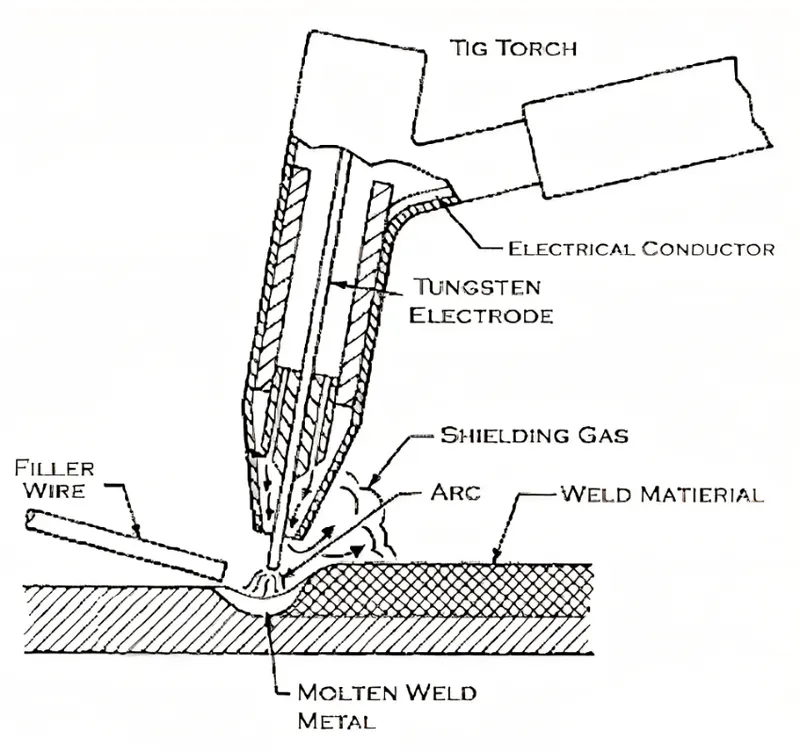
d. Gas shielded tungsten arc welding:- It is also called as tungsten inert gas welding. In this process electride is non- consumable type. Argon gas is used for shielding purpose. Arc is created between tungsten electrode and workpiece while filler is fed in the weld pool. It is slow process compared to MIG as co-ordination between both hands of welder is must while processing. But in this method we can adjust amount of filler to be added instantly. Also elctrode need to be sharped time to time for better heat.
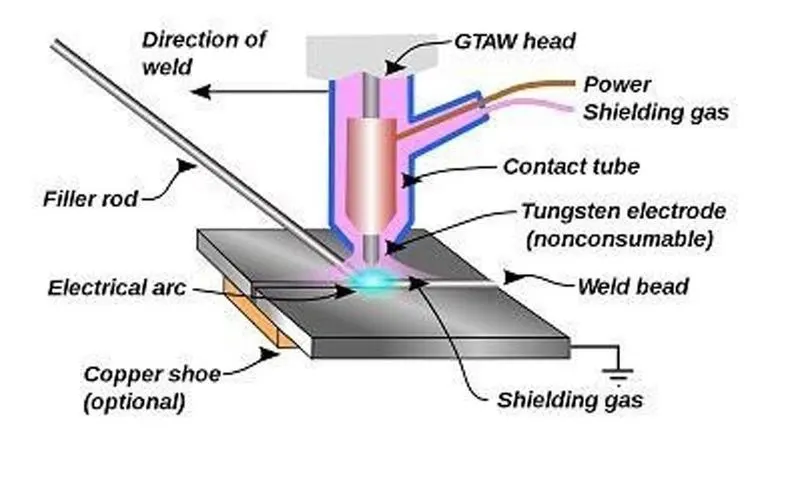
Applications:- Fusion welding processes are widely use in BIW for strong weld requirements. We can also weld higher thickness materials with this technique.
5. What is the 3-2-1 principle?
ANS:- The best and most cost effective method for part holding is 3-2-1 principle. It is used for designing fixture for panels in BIW. For better holding of panel with correct orientation and accuracy fixture design must be accurate with less tolerances. A workpiece can freely rotate or translate in space. So it is must to hold it firmly with correct position and orientation. Every workpiece has 12 degrees of freedom to move in space. So we need to restricts those degrees of freedom. It is done with the help of 3-2-1 principle. Steps involved in this principle is as follows:-
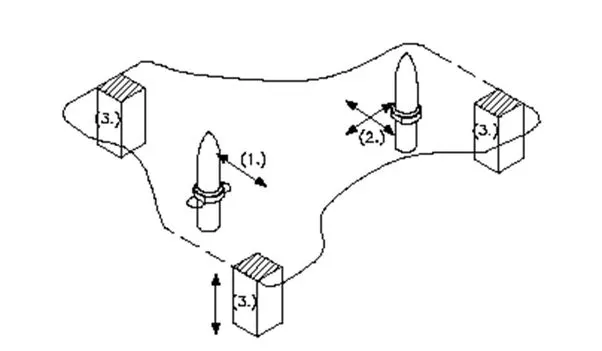
(3)= Minimum 3 locators must needed underneath of panel to fixed it in a plane. Three locators acts as a supports. Workpiece is mounted over this locators. This three locators restricts 4 rotational and 1 translation degrees of freedom.
(2)= Then we need to installed a round pin in a round hole in a perpendicular direction to the previously established plane. This pin will restrict 4 translational motions i.e. 4 degrees of freedom.
(1)= A round locating pin is inserted in a sloted hole. It will restricts 2 rotational i.e. 2 degrees of freedom of workpiece.
6. Define Body coordinate system?
ANS:- The body coordinate system is widely use in BIW industry. This system is used for drawing of body parts, products and process design. In general it is also known as car line and body line. Body coordinate system consists of points lines and planes to define the position of points in space either in 2D or 3D.
X= Longitudinal direction co-ordinate called as fore and aft (F/A) or front o line (FOL)
Y= Transverse direction co-ordinate called as cross car (C/C) or center o line (COL)
X= Vertical direction co-ordinate called as up and down (U/D) or bottom o line (BOL)
The origin of body coordinate system is defined at the front centre of the car. The (OX) coordinate system define the length of the car. The (OY) coordinate system defines the width of the car. While the (OZ) coordinate system define the length of the car.
7. Elaborate Body plane system & its essentials.
ANS:- body planes are the 3 imaginary reference planes in an automobile car. This planes are very useful in defining GD and T for all car components in BIW domain. The measurement pf body parts from body planes are also called body line measurements. The body planes are the 3 imaginary planes located at the driver position or engine compartment depending on the customer requirements. This body planes are also described as follows:-
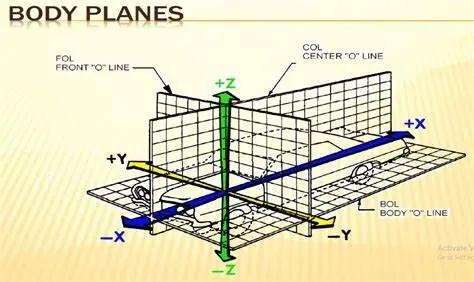
(1)FOL that is Front O Line:- The measurement along FOL is a longitudinal measurement that is a X axis measurement. It is also called as front aft (F/A).
(2)COL that is center O line:- The measurement along COL is the transverse measurement that is Y axis measurement. It is also called as cross car (C/C).
(3)BOL that is bottom O line:- the measurement along BOL is vertical measurement that is Z axis measurement. It is also called as up and down (U/D)
Advantages of body line dimensions are as follows:-
1. It creates standardised system of dimensioning in car.
2. It ensures smoothness in assembly design.
3. Due to body plan system we can define exact dimension of every part in the car with respect to fix origin.
4. While designing all products like fixtures, turn tables we have to carried out design with refernce to bodyline measurement.
5. It also helps in quality check.