NACA 23012 performance analysis
In this article/project, an airfoil's performance will be evaluated at various angle of attacks in both subsonic and supersonic range.
Selection of Airfoil

Ansys Simulation
Model
- Extract the coordinates of the airfoil from Airfoiltools.com and then import these into SpaceClaim
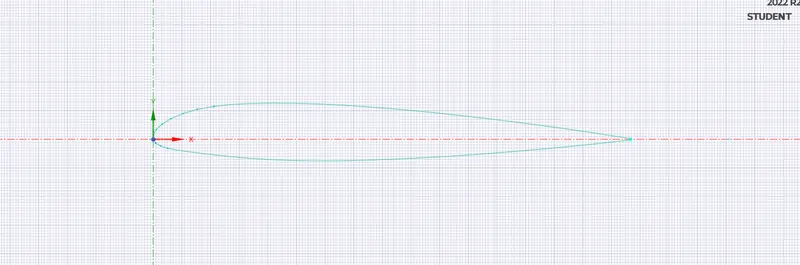
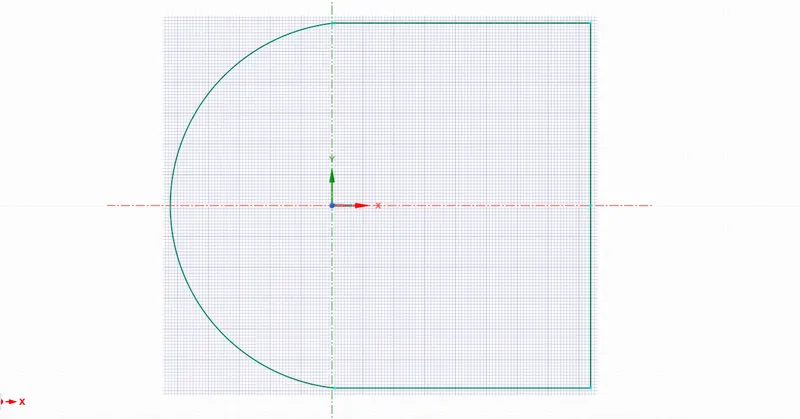
- Create a wind tunnel around it.
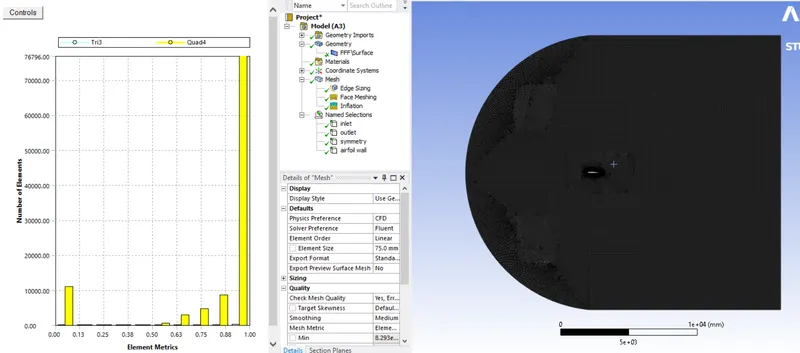
Mesh
Set-up
- Pressure based (Subsonic) and Density based (Supersonic)
- Viscous model - K-Omega SST
- Material - Air (For supersonic, change density calculation method to ideal gas)
- BC:
Inlet - Velocity inlet (subsonic) - 200 m/s
- Far field Pressure inlet (supersonic) - Mach = 2
Outlet - Pressure outlet
Operating pressure for super sonic = 0 - Methods - Coupled (Subsonic)
- Implicit AUSM (Supersonic)
Results
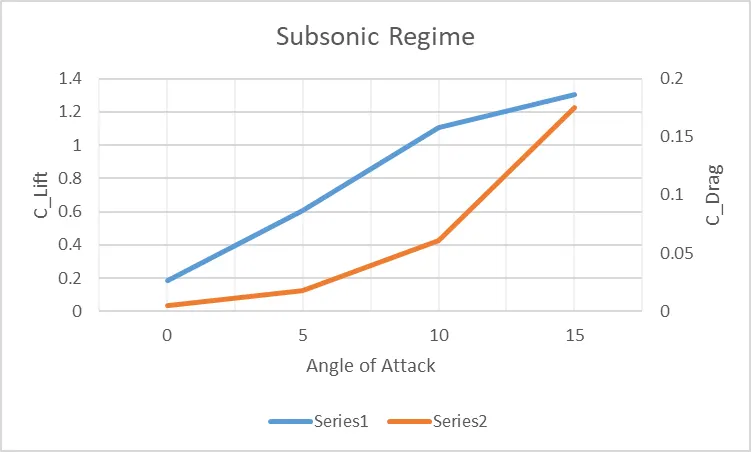
For Subsonic Regim, Angle of attack = 0 degrees
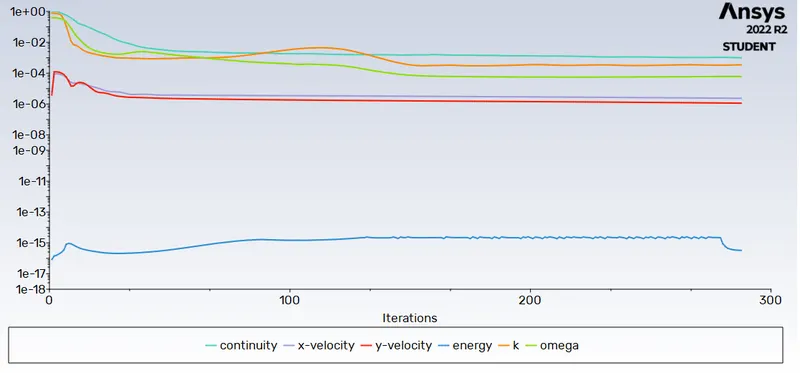
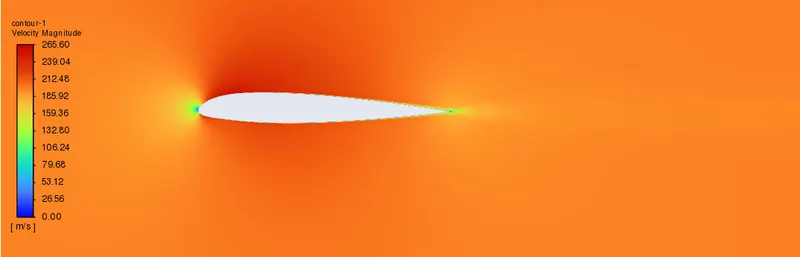
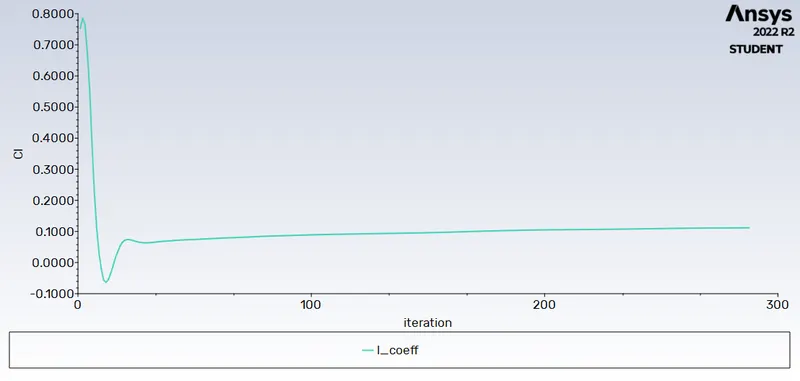
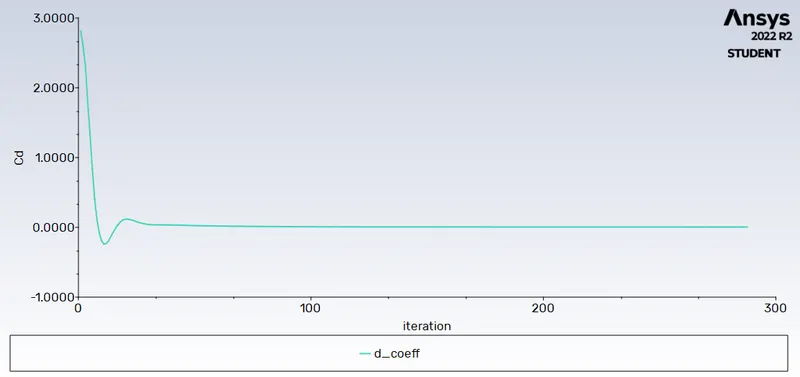
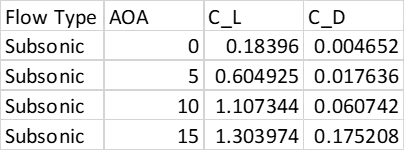
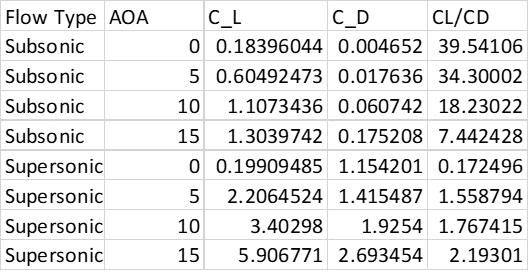
The Coeffecient of Lift and Drag values at various angle of attacks is given in the below table.
For SuperSonic Regime, Angle of attack = 0 degrees and 10 degrees
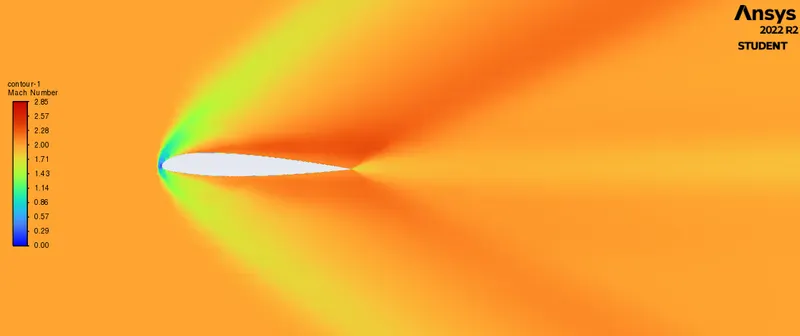
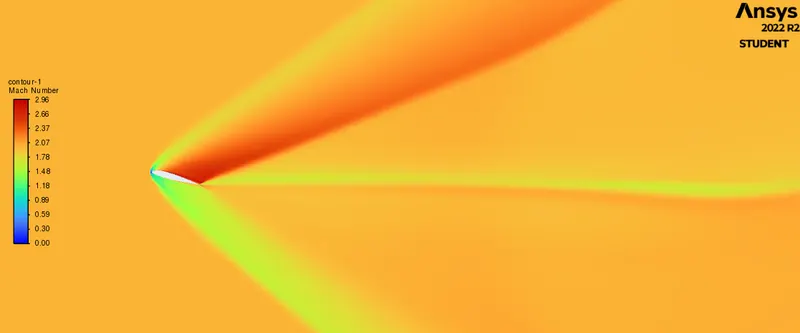
Shock waves can be clearly seen in the above Mach number contour.
The Coeffecient of Lift and Drag values at various angle of attacks is summerised in the below table.
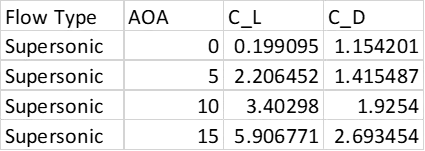
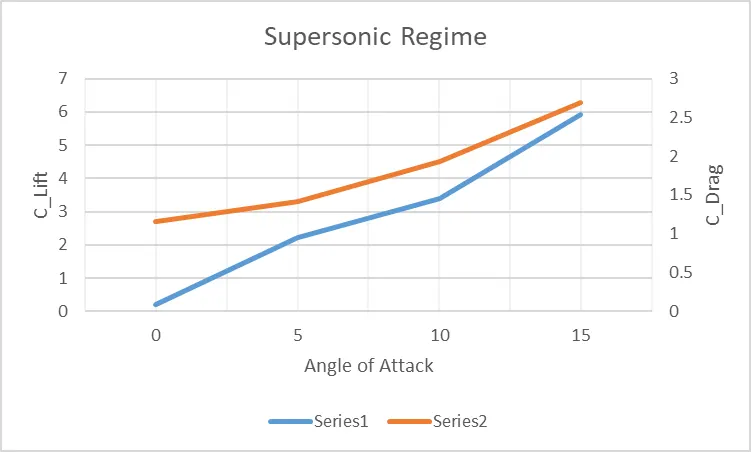
High Coeffecient of Lift value can often mislead the reader to think that it is good. But one must always also compare the ratio of CL/CD. The higher the ratio, the better the performance.
Conclusion
Clearly, using supersonic flow doens't make any sense. Also, NACA23012 is recommended only for Subsonic flows.