Week 7-Long Piston With Cam
Aim: To perform a transient analysis on a piston and cam mechanism model with
- Frictionless contact
- Fractional contact with a coefficient of friction as 0.1
- Frictional contact with a coefficient of friction as 0.2
Software used:
Ansys Workbench 2020 R2
Procedure:
- To simulate this challenge we are using 'Transient structural'. Add the 'Transient structural' to the interface.
- Then load the model into geometry and then open the mechanical model to set up the simulation.
- First, keep stiffness behaviour of barrel cam and barrel as 'Rigid body'.
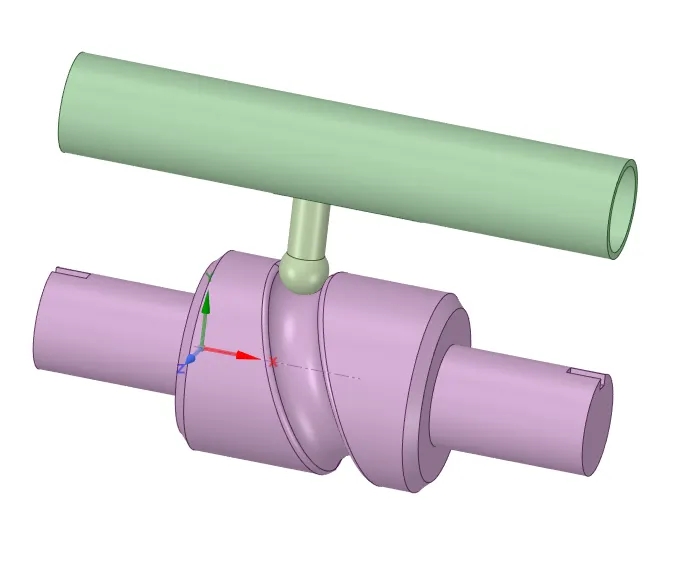
- For case -1: Define the contacts as frictionless.
- For case - 2: Define the contacts as frictional with a coefficient of friction of 0.1.
- For case - 3: Define the contacts as frictional with a coefficient of friction of 0.2.
- Then add apply the 'Body-Ground - Revolute joint', Body-ground - fixed joint and Body-Body Translation joint to the Barrel cam, Barrel and Shaft respectively.
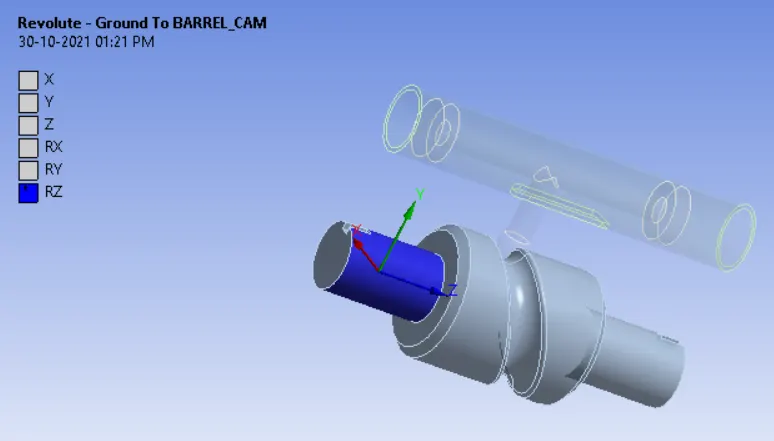
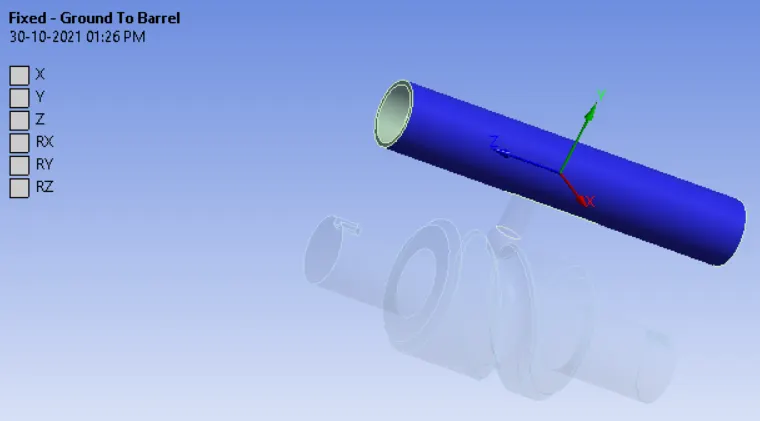
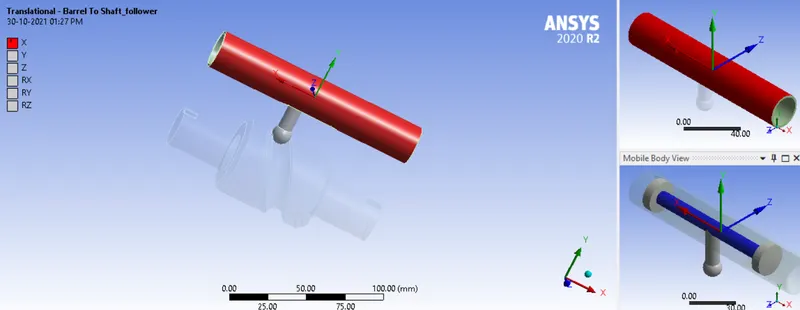
- Then generate the mesh at the contact position of the shaft and barrel cam by applying the face sizing - element size as 3 mm.
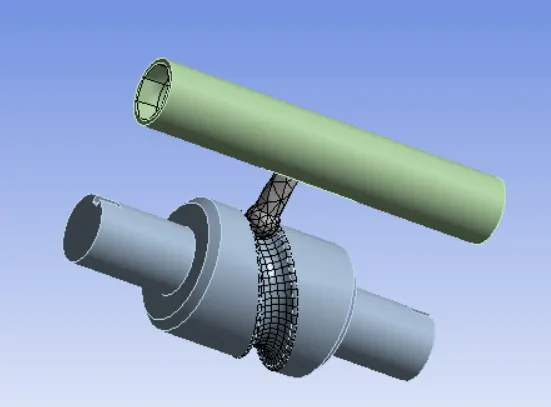
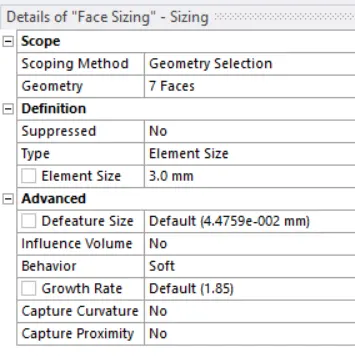
- Next, in the analysis settings, will run this model in 9 steps.
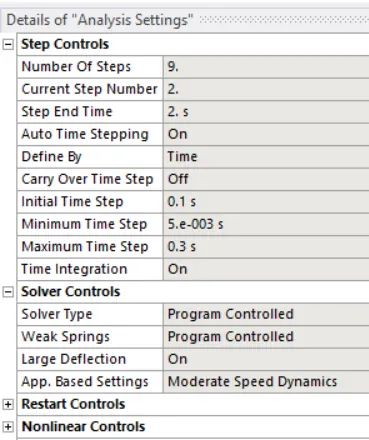
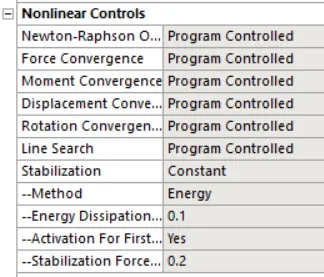
- Then apply the revolute joint to the barrel cam.
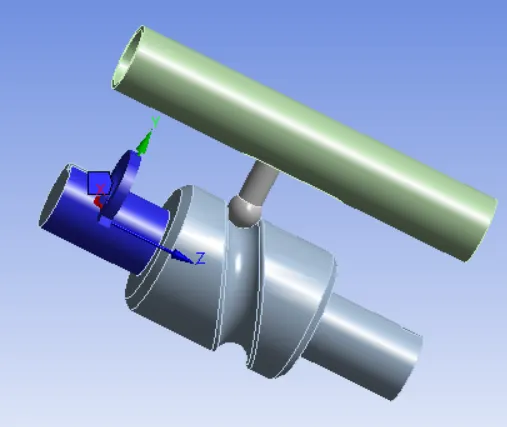
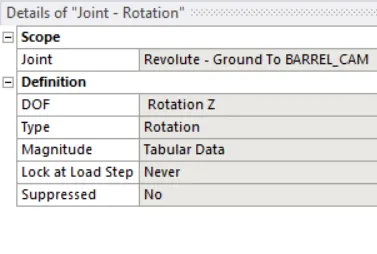
- To Calculate the Directional deformation, Equivalent elastic stress and Equivalent elastic strain, run the simulation.
Results:
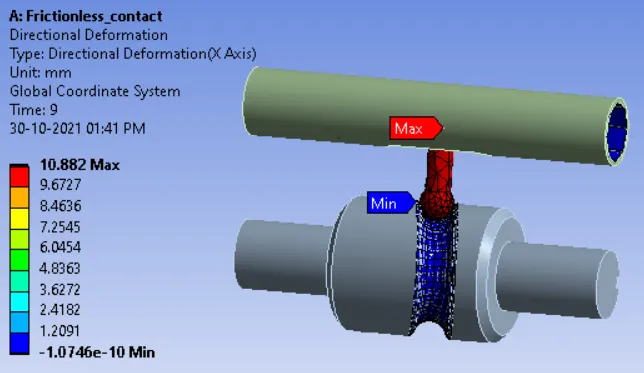
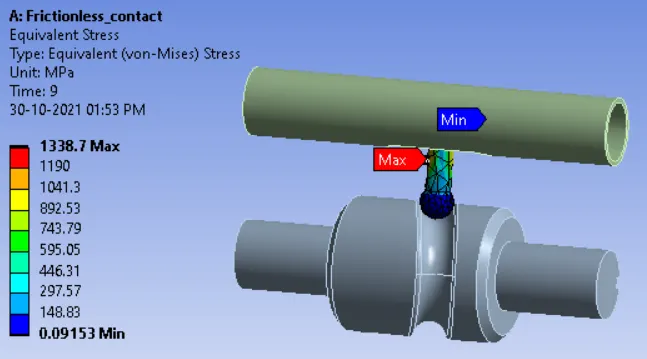
Case -1:
- Directional Deformation
- Equivalent Stress
- Equivalent Elastic strain
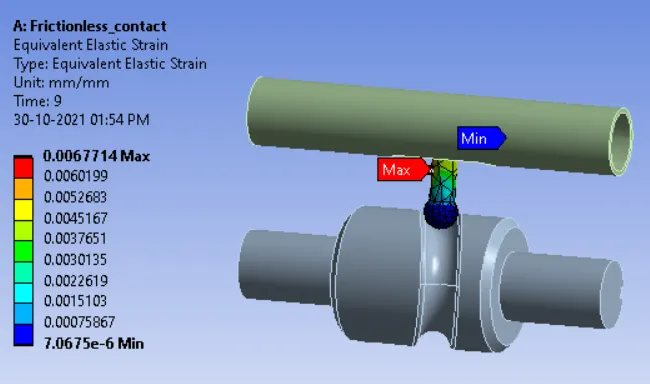
Case -2:
- Directional Deformation
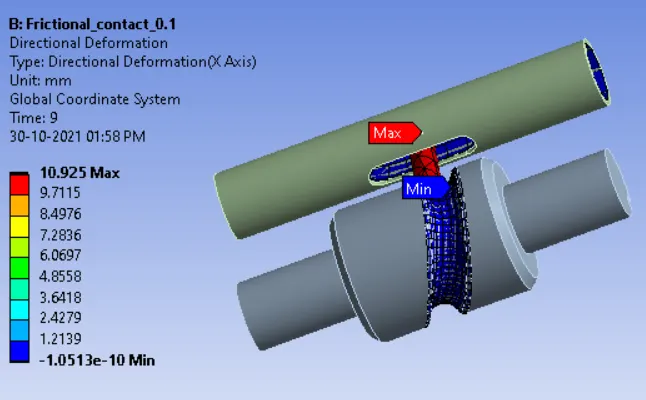
- Equivalent Stress
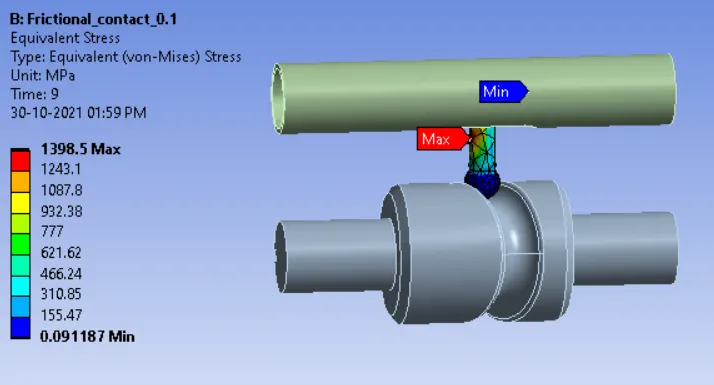
- Equivalent Elastic strain
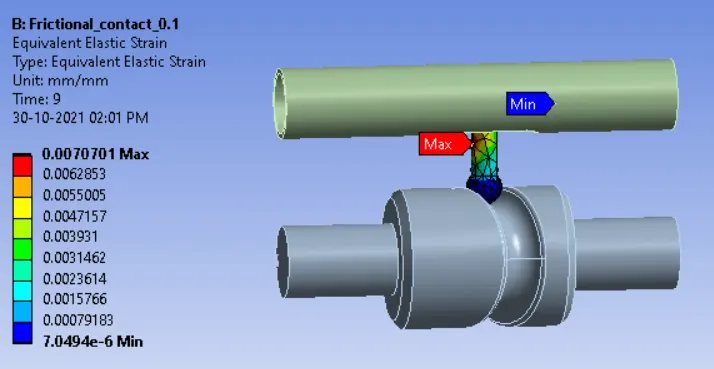
Case -3:
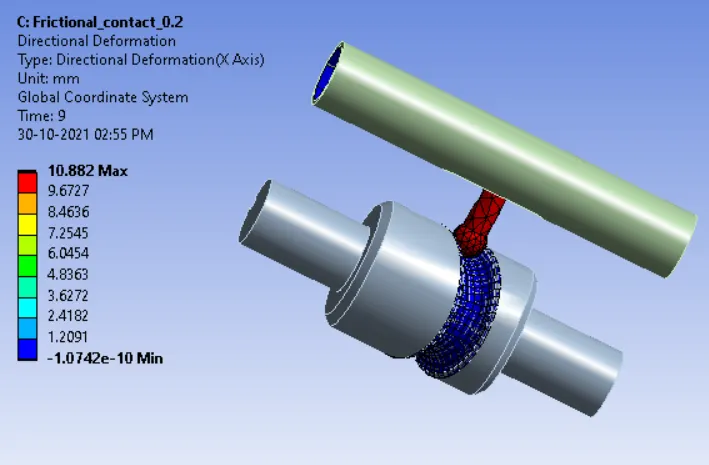
- Directional Deformation
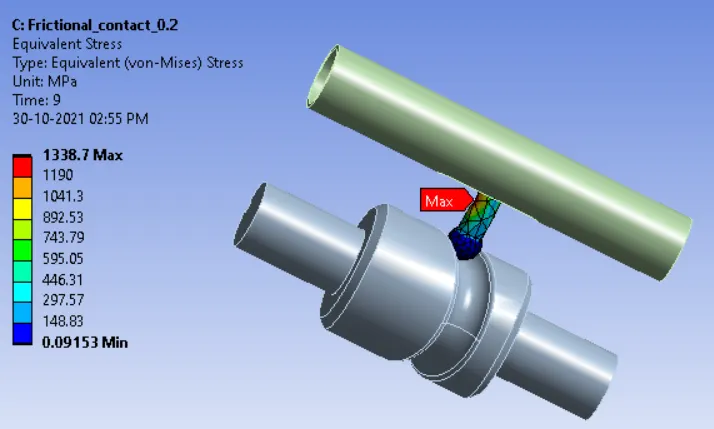
- Equivalent Stress
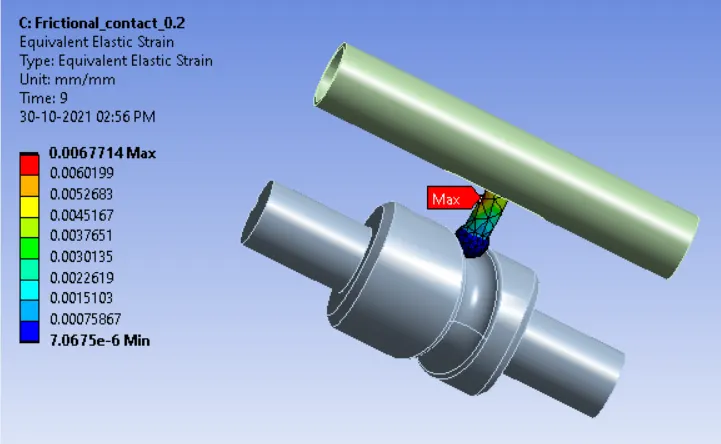
- Equivalent Elastic strain
Conclusion:
|
Max. Directional Deformation (mm) |
Max. Equivalent Elastic stress (MPa) |
Max. Equivalent Elastic strain |
|
| Case -1 (Frictionless) | 10.882 | 1338.7 | 0.0067714 |
| Case -2 (`mu = 0.1`) | 10.925 | 1398.5 | 0.0070701 |
| Case -3 (`mu=0.2`) | 10.882 | 1338.7 | 0.0067714 |
- Here we can observe that the results for Frictionless and with a coefficient of friction of 0.2 have the same results.