Week 7-Long Piston With Cam
Long Piston with CAM:
Aim:
To perform transient analysis on a piston and cam mechanism that has been provided.
Objective:
For this challenge, you will have to perform a transient analysis on a piston and cam mechanism model that has been provided to you. You need to run the analysis with Frictionless contact, Frictional with 0.1 and 0.2 as the frictional contact for a total of 3 cases. Find out the Equivalent Stress, Directional Deformation and Equivalent Elastic Strain and compare them for all the three cases. Give an inference as to why the results vary between cases.
Procedure:
- Firstly open ANSYS workbench software.
- Select transient structural from analysis system.
- And then import the geometry from the system files.
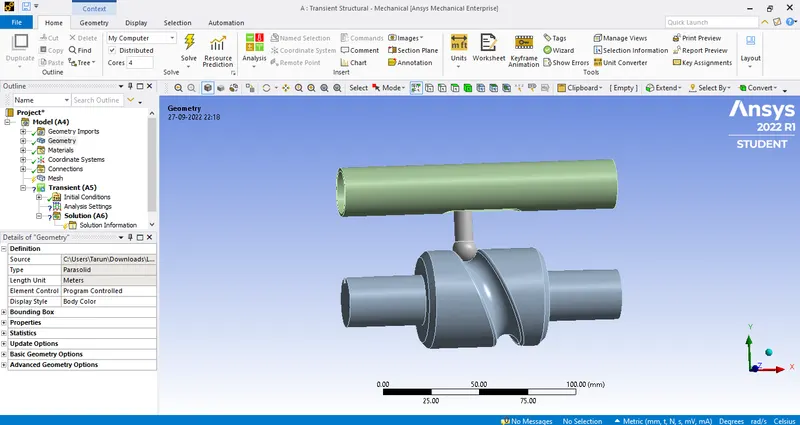
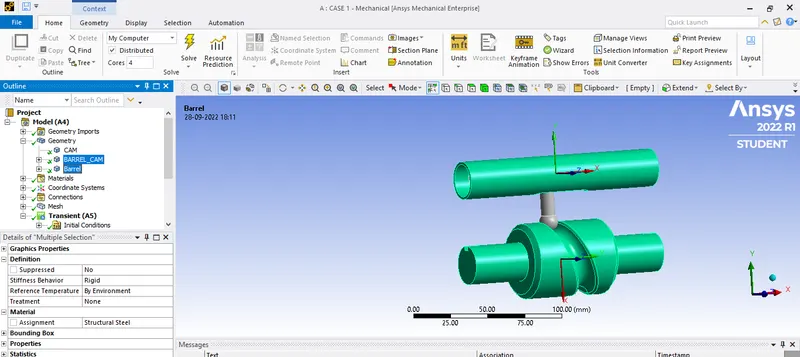
- After that name the parts as per our convenience.
- For Barrel cam and Barrel select the stiffness behaviour as Rigid.
- And for the CAM assign it to default.
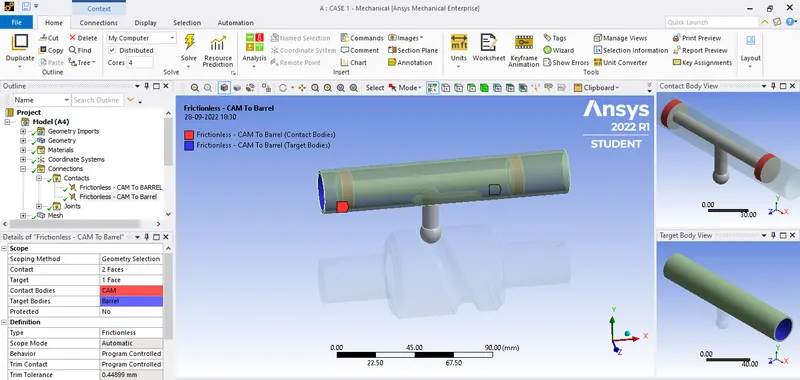
- And in contacts create Frictionless contacts for the model as follows.
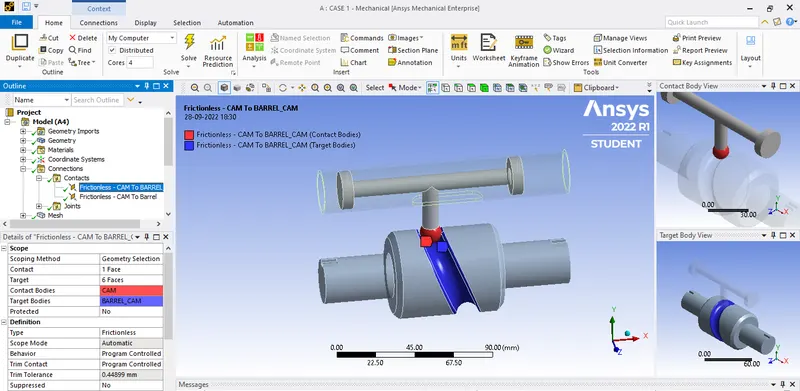
- After that we need to create a fixed joint body-grounded for the barrel a in the image.
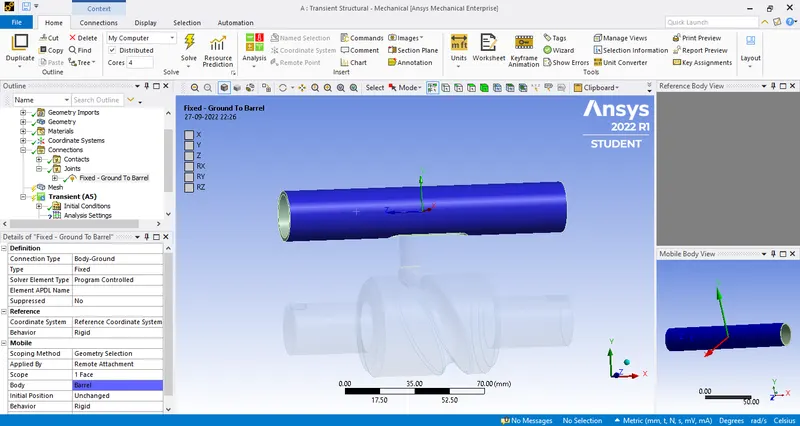
- After that create a revolute joint Body-grounded for Barrel cam as in the image.
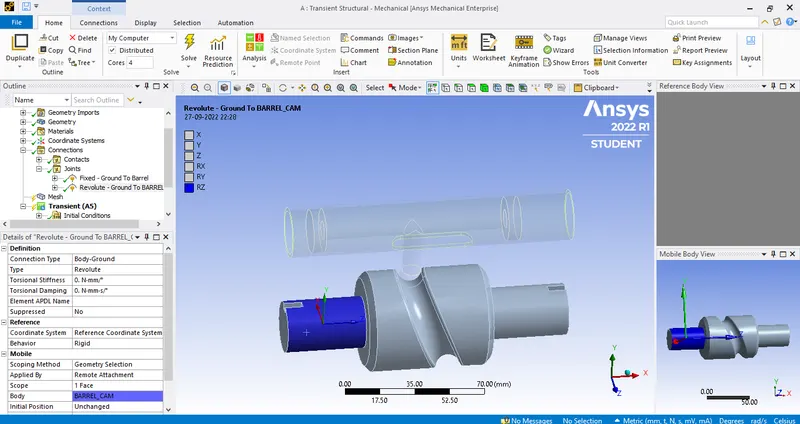
- After that create a translational joint body-body for barrel to CAM as in the image.
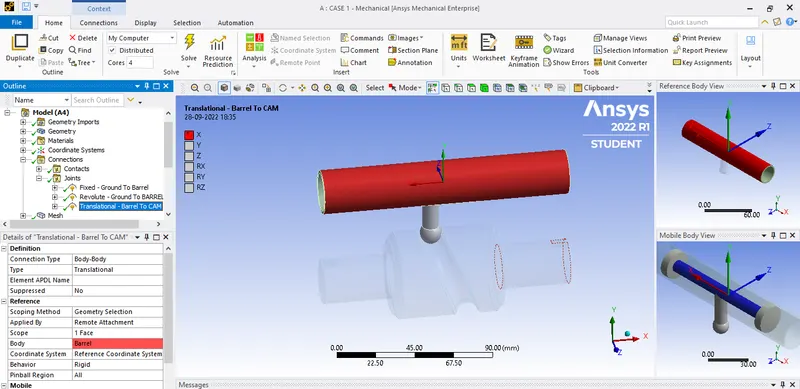
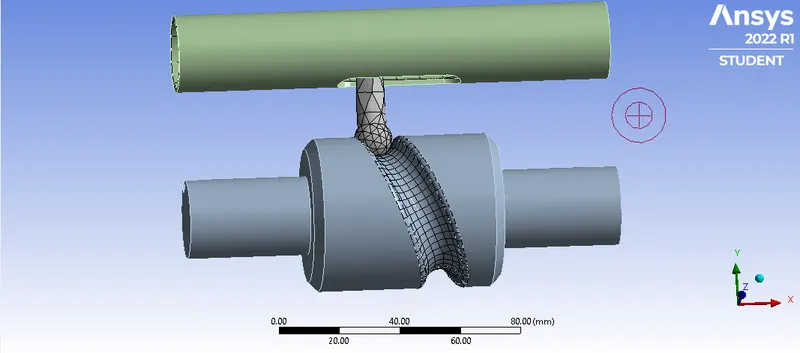
- After that we proceed for meshing for that we need to create a face sizing of 3mm.
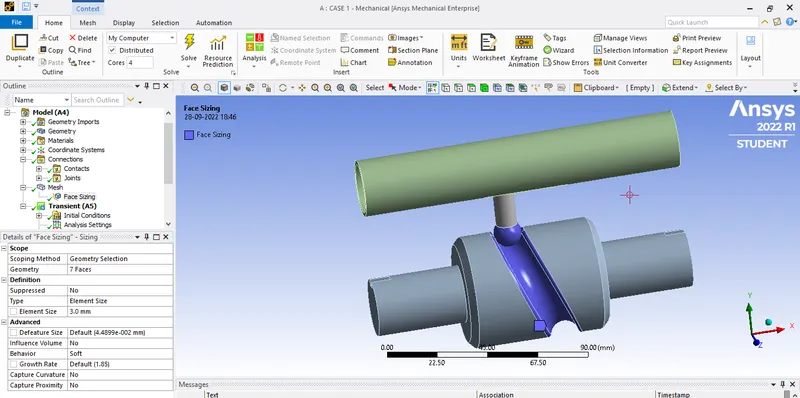
- The mesh generated image is as follows.
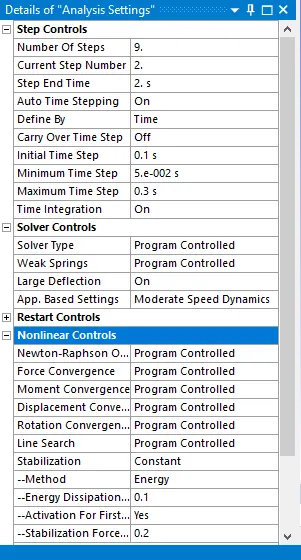
- And after that in analysis settings we assign the no of steps for simulation as 9 as in the image.
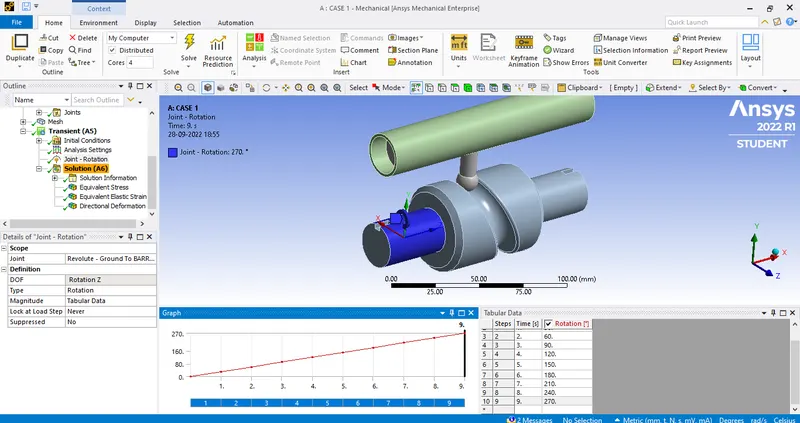
- And then insert a joint rotation for the barrel along the roatation Z- direction with the value mentioned from tabular data.
- After all that we need to get the solution for
- Equivalent stress
- Equivalent elastic strain
- Directional Deformation
Results:
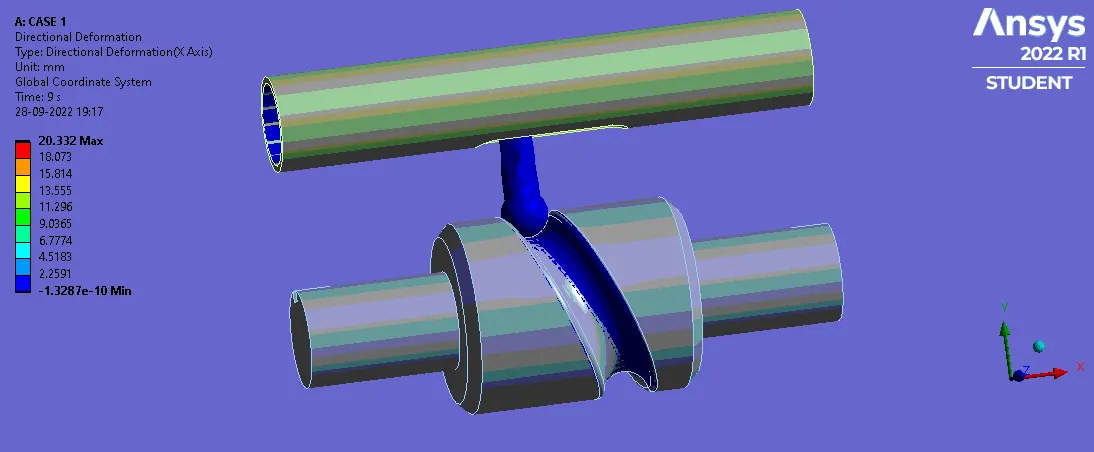
CASE 1(Frictional less Contact):
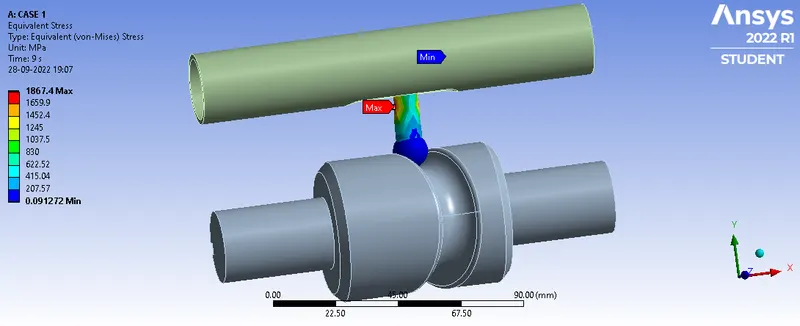
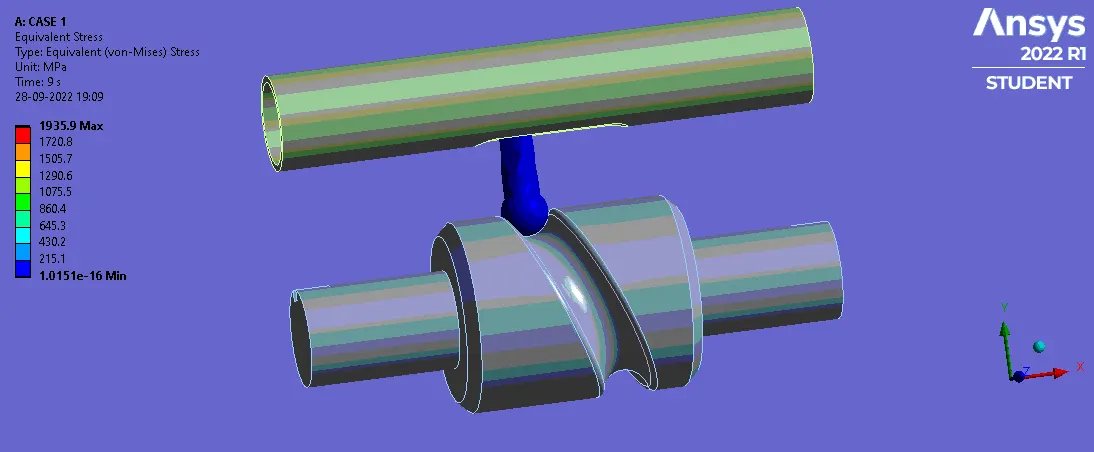
Equivalent stress:
Maximum- 1867.4 mpa
Minimum- 0.091272 mpa
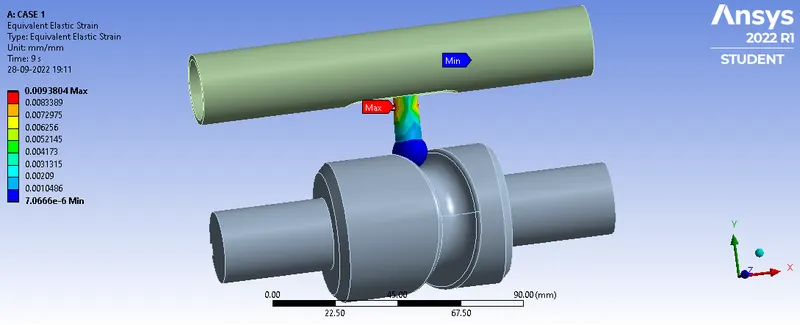
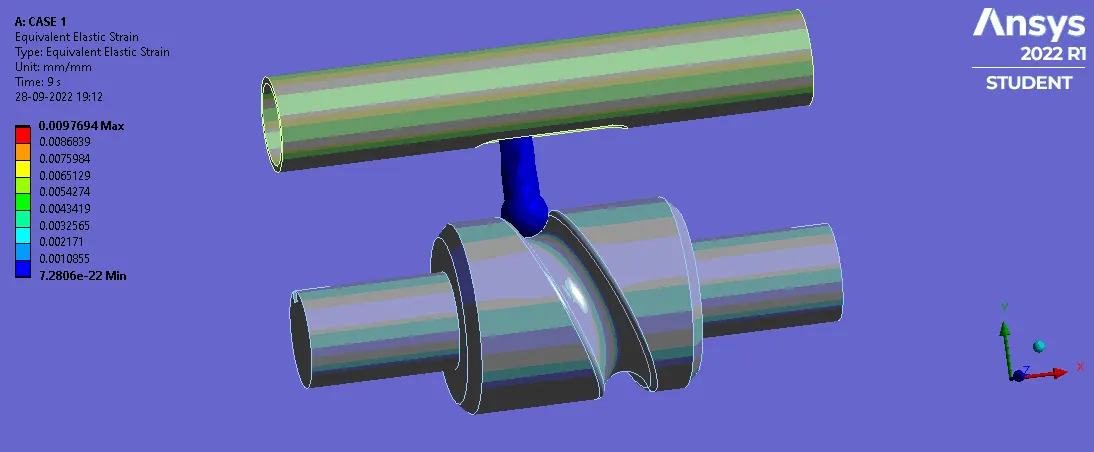
Equiavalent Elastic strain:
Maximum- 0.0093804 mm/mm
Minimum- 7.0666e-6 mm/mm
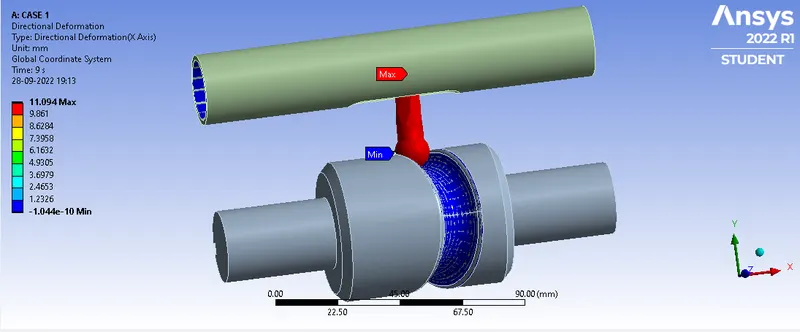
Directional Deformation:
Maximum- 11.094 mm
Minimum- -1.044e-10 mm
CASE 2(Frictional Coefficient-0.1):
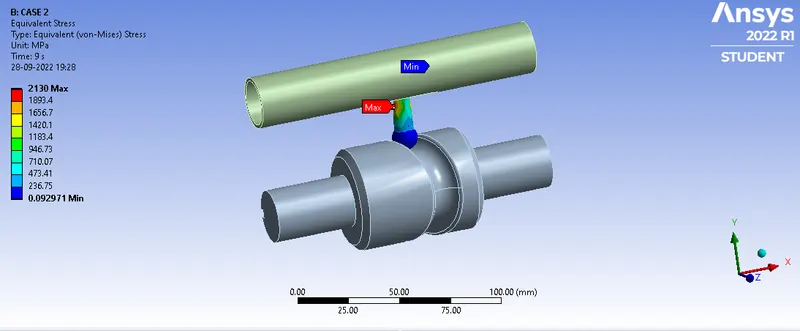
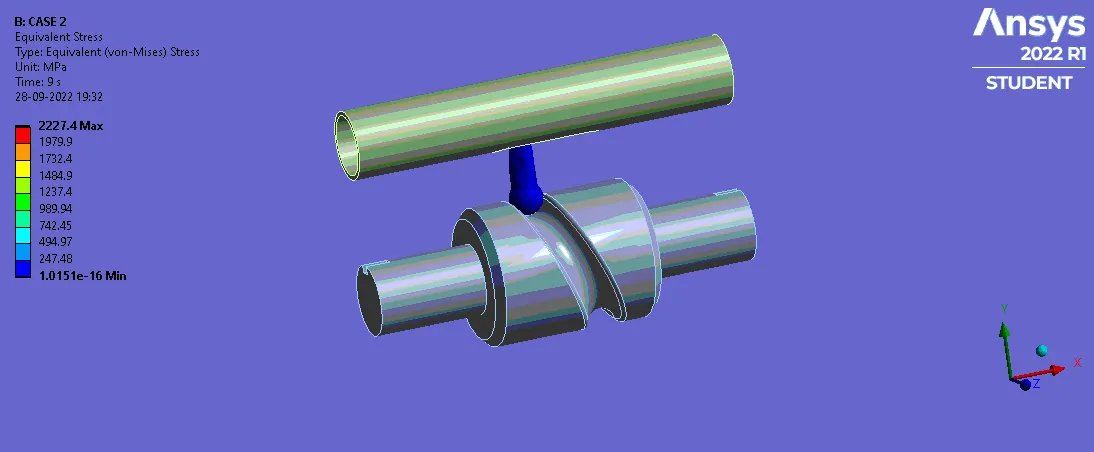
Equivalent stress:
Maximum- 2130 mpa
Minimum- 0.092971 mpa
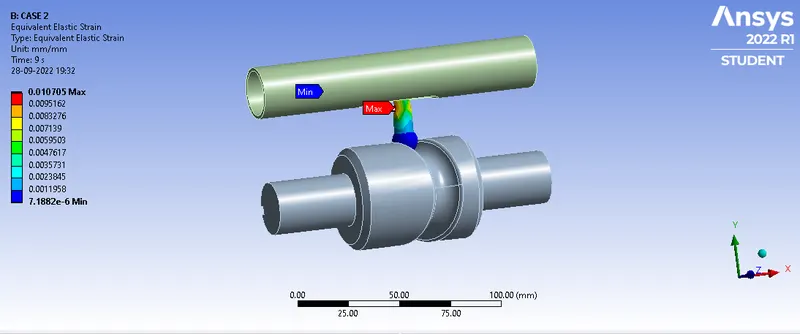
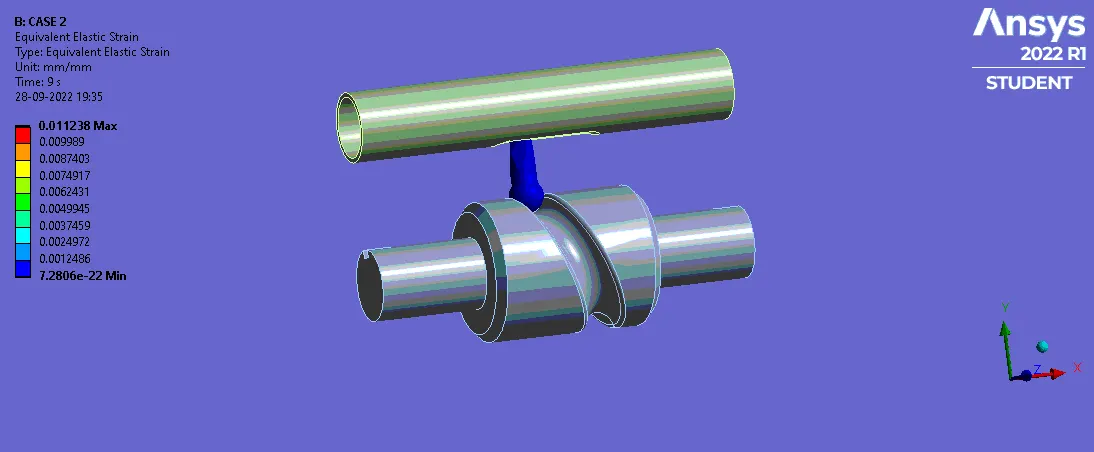
Equivalent Elastic strain:
MAximum- 0.010705 mm/mm
Minimum- 7.1882e-6 mm/mm
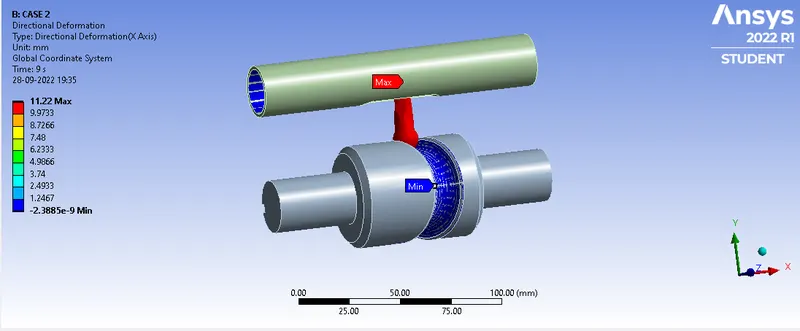
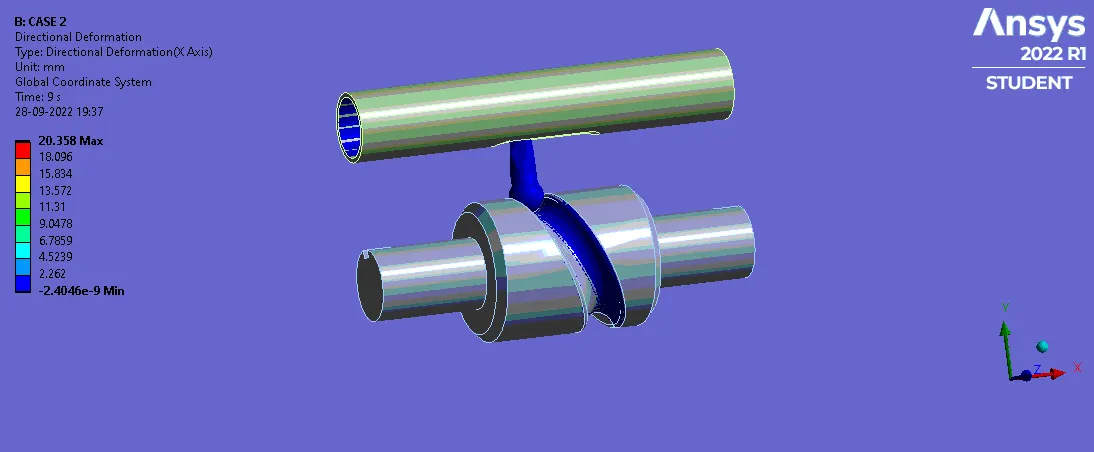
Directional deformation:
Maximum- 11.22 mm
Minimum- -2.3885e-9 mm
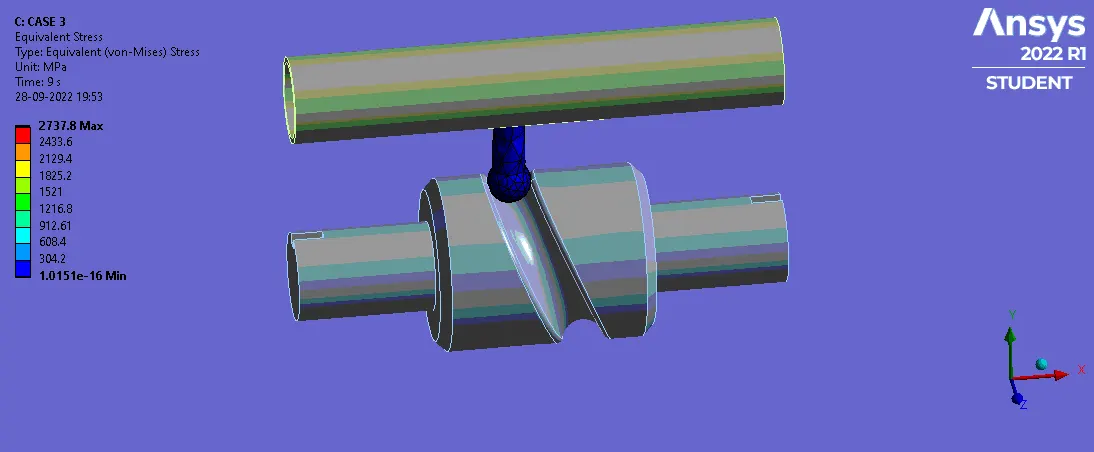
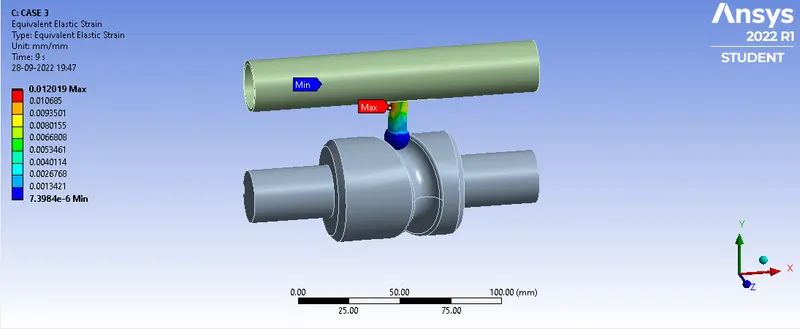
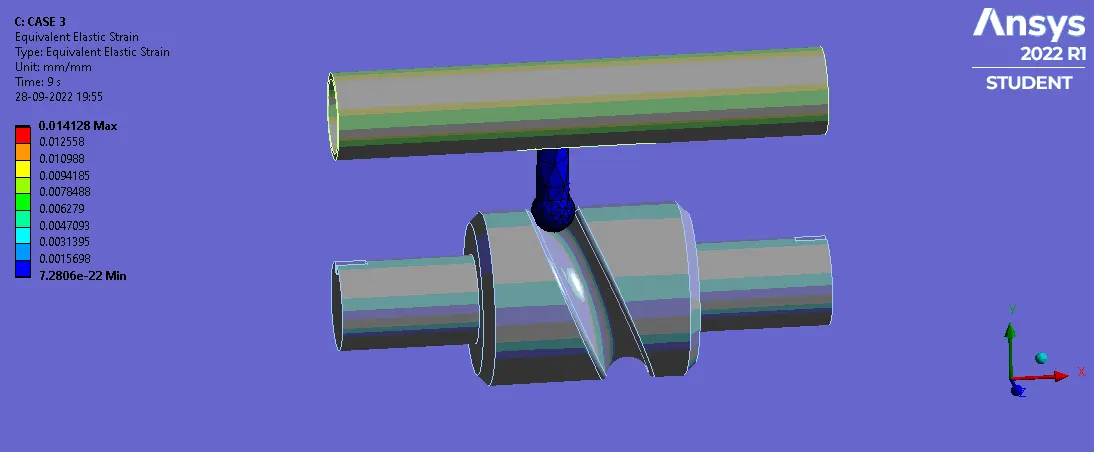
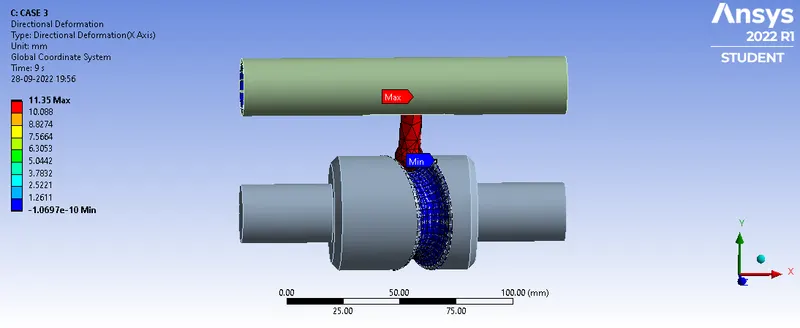
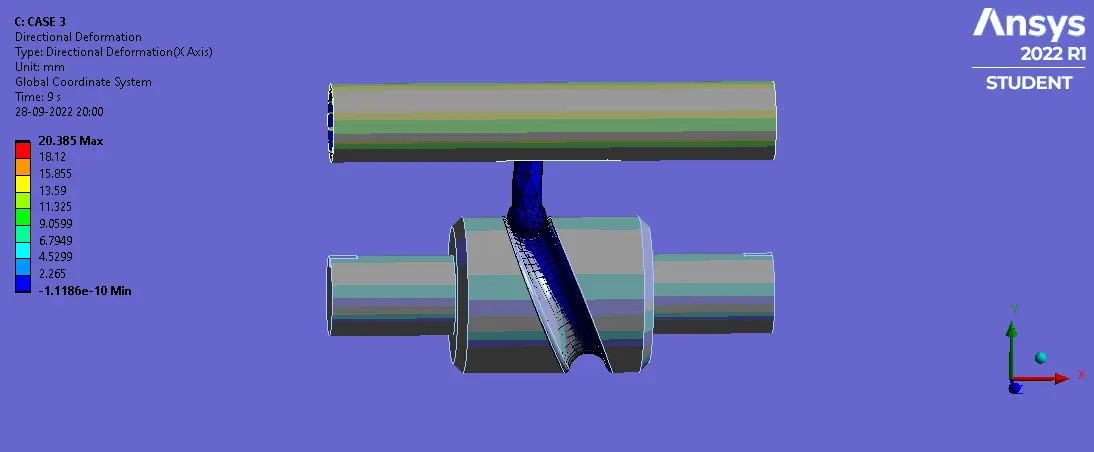
CASE 3(Frictional contact-0.2):
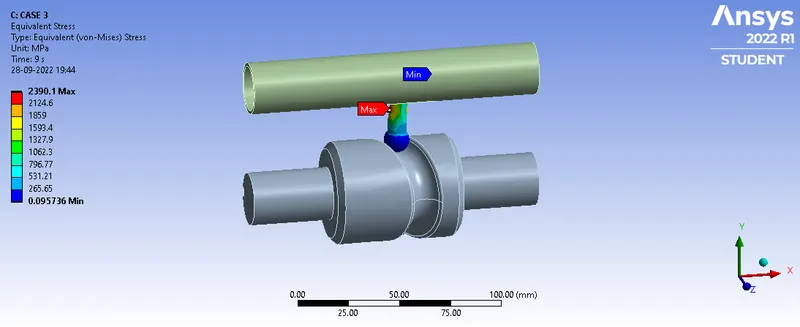
Equiavelent stress:
Maximum- 2390.1 mpa
Minimum- 0.095736 mpa
Equivalent Elastic strain:
Maximum- 0.012019 mm/mm
Minimum- 7.3984e-6 mm/mm
Directional Deformation:
Maximum- 11.35 mm
Minimum- -1.0697e-10 mm
Tabular Data:
Equivalent stress(mpa) Equiavalent Elastic strain(mm/mm) Directional Deformation(mm)
Maximum Minimum Maximum Minimum Maximum Minimum
CASE 1 1867.4 0.091272 0.0093804 7.0666e-6 11.094 -1.044e-10
CASE 2 2130 0.092971 0.010705 7.1882e-6 11.22 -2.3885e-9
CASE 3 2390.1 0.095736 0.012019 7.3984e-6 11.35 -1.0697e-10
Conclusion:
From the above tabular data we can understand that maximum equivalent stress for frictionless conatct is 1867.4 mpa and minimum is 0.091272 mpa.Based upon the tabular data it is observed that if the frictional coefficirnt increases the maximum stress is also increasing gradually.Finally, the equivalent elastic strain and directional deformation are same with slight difference in values.