Week 7- Base Unit Design Challenges 2
AIM: To design a base unit with allweldments for the givenn car panel and to design the complexe fixture assembly with all the required units.
Abstract: In this project the base unit is designed for the fixture having all the other units like pin unit, clamp unit, rest unit etc. the base unit is designed considering all the fundamentals of the design.
Introduction:
Base Unit: Base unit is the unit designed to mount all the other units (clamp unit, pin unit, rest unit etc..) of the tool, also other parts necessary for a tool like pneumatic valve box, trunking cable path will also be mounted on to a base unit.
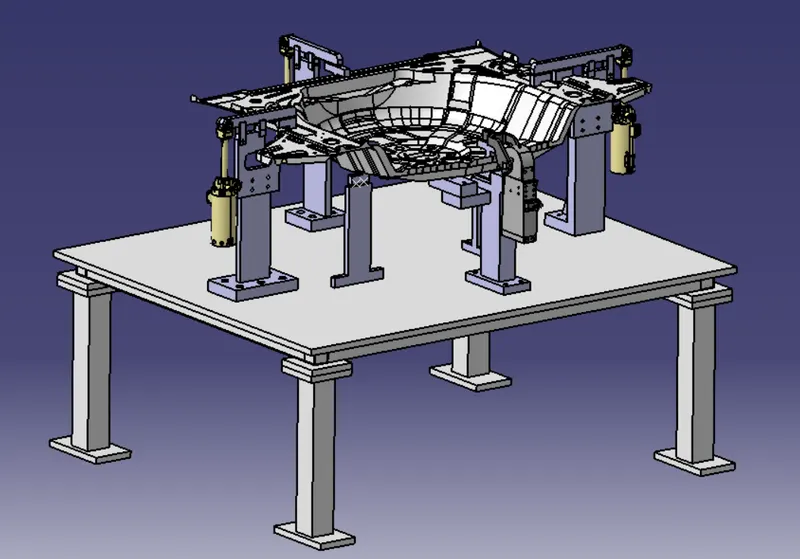
The base structure 50x50x2xL Square tubing is used and the pedastal Support is provided with 80x80x5xL square tubing.
Typical parts of Base units :-
Base plate:- Base plate is a machined plate of 25 to 40mm thickness made of steel and aluminium , on which the holes are drilled to mount the individual units like clamp unit, pin unit,etc., of a tool.
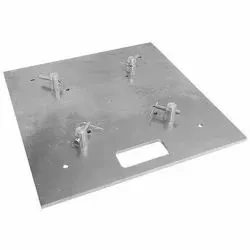
Pedestal: A pedestal is a part which connects the base plate to the floor plate. A pedestal is a standard part in general , and in some cases it can be a welded frame integrated with the base plate.
- A standar pedestal can be of different height and different sizes.
- Depends on the size of the base plate, the number of pedestal varies for load distribution.
- A pedestal are of different types with different inclinations.
Trunking channel: A trunking channel is a duct which accomodates all the pneumatic and electrical hoses and wires for the units of the tool.
Valve Box: Valve box is a standard part which will accomodates the pneumatic valves for the units.
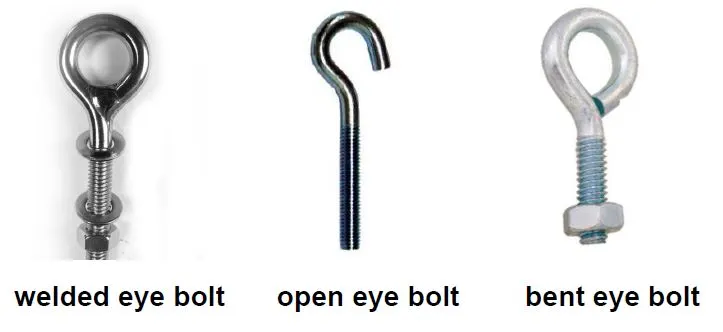
Eye Bolt: Eye bolts are used for the transporting of the tool, using lift hooks, Fork lift holes will also be provided in some cases for transporting purpose.
Floor Plate: Flooe plate is grouted to the floor with fixed bolt on the ground. Floor plates are also called as foundation plates.
- There will be a clearance of 10mm maintained between the pedestal base plate and the floor plate.
- This clearance will be used by levelling screws, for levelling the entire tool.
- Weld bars are be used to weld the positions permanently, After levelling is done.
- A weld bar is a plate along the sides of the base plate of the pedestal.
Weld bars: These bars are used to position the fixture. Weld bar is steel plate placed along side of base plate of pedestal.
Design Methodology:
The points need to account while designing a Base Unit as below:
- Working Height: it is depend upon type of operation whether it is manual welding or robotic welding height of base unit decided. For manual welding fixture working height must be 850 to 1100mm for ease in welding operation for the operator.
- Selection of Eyebolt depend upon weight of fixture. According to the weight of fixture tapping for eyebolt is provided on base plate like M24 or M20. Generally four eyebolt are provided on base plate.
- Depending on no of units, sizes and weight base are designed. base designed are made up of square or rectangular tubes or c channels with machined plate.
- Generally four dowel holes are provide at four corner of base plate with its coordinates displayed on aluminium plate
- Base unit is designed in such a way that there is mon possibility of deflection vibration.
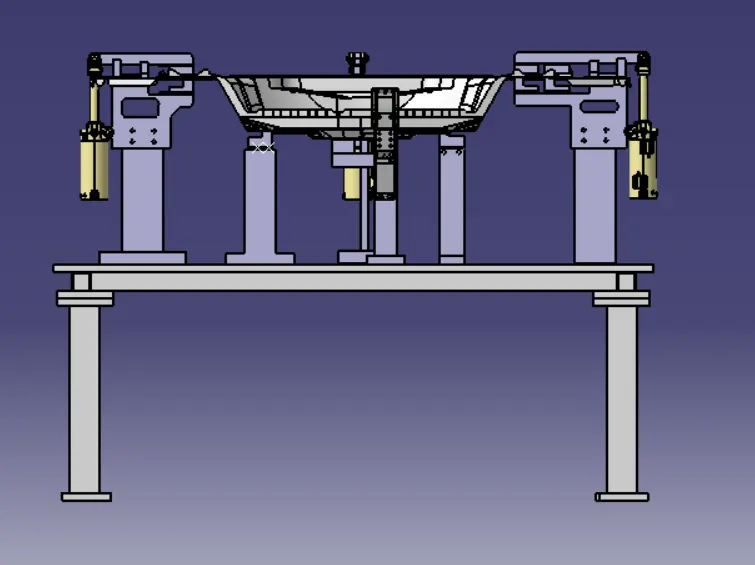
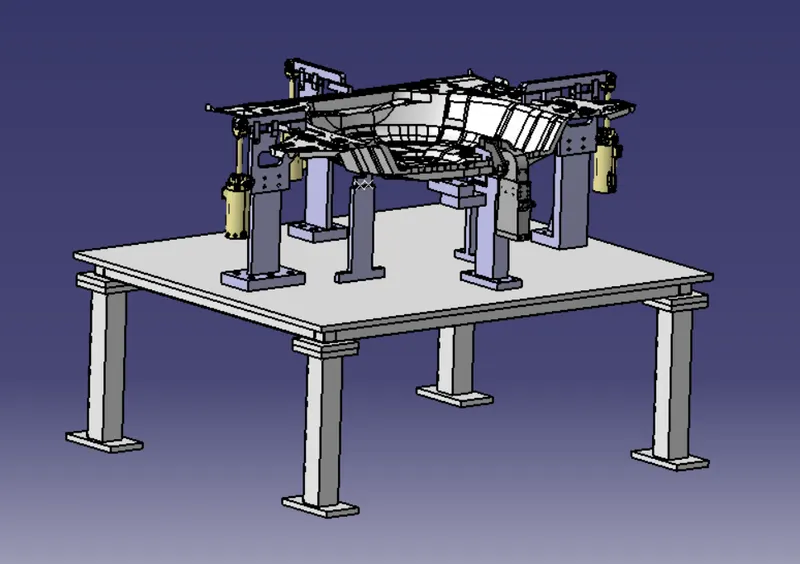
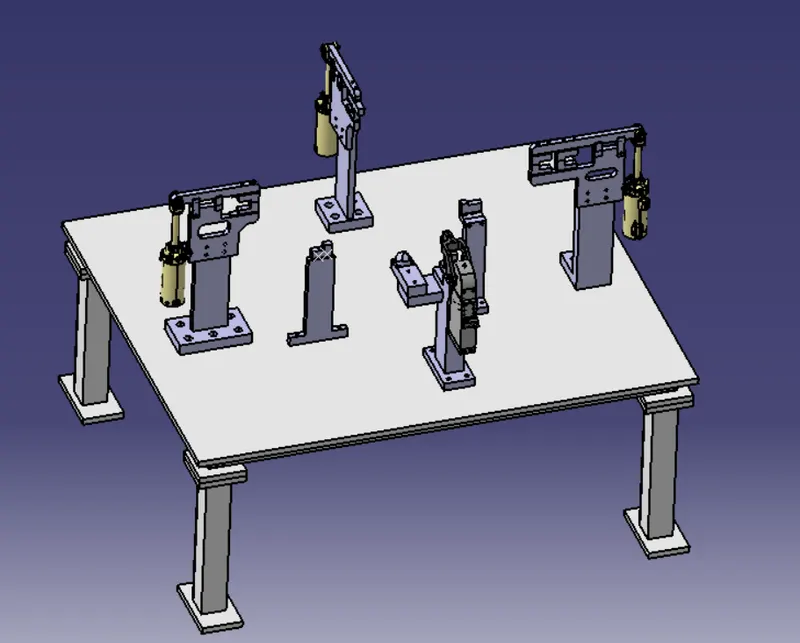
IMAGE OF THE DESIGN:
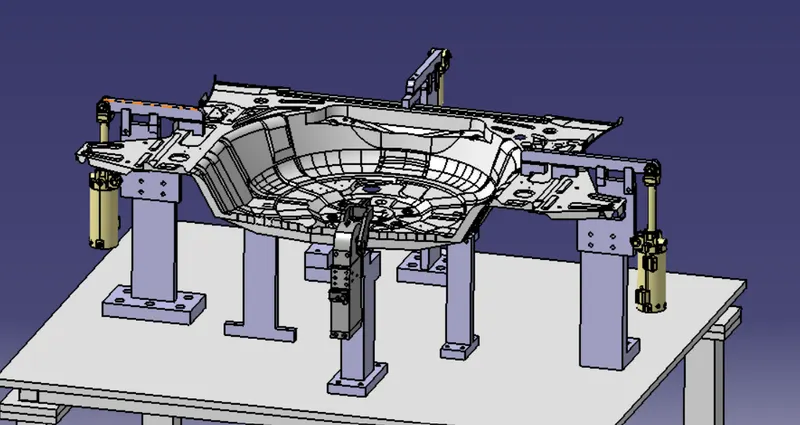
CONCLUSION :- Base Unit Design has been successfully created, considering the design rules as mentioned in the given data.