Week 6: Conjugate Heat Transfer Simulation
OBJECTIVE:
In this challenge, we familiarise ourselves with the tools and the know-how of setting up a CHT problem in Converge. We will set up a simple thick pipe flow that is heated through an external flux as fluid moves through it.
Once the case is set, we will perform a grid dependence test to establish whether grid size affects the outlet temperature.
The Reynolds number for the case has been set to 7000.
GEOMETRY:
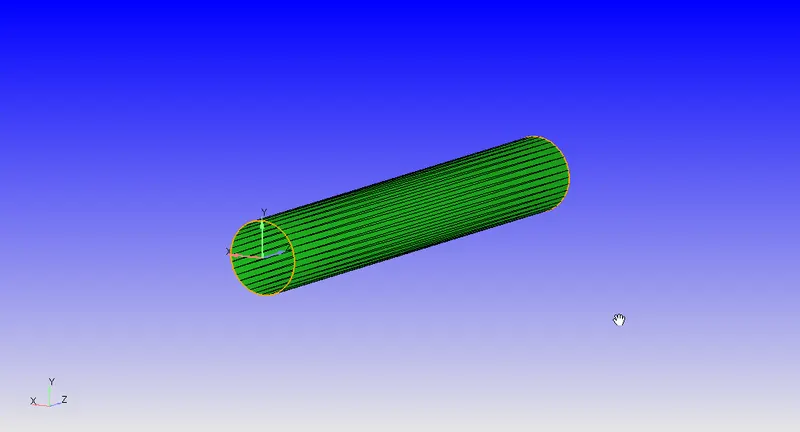
To set up this case we will create our geometry - First, we will create a pipe with 0.2m length along the positive z-axis and 0.015m radius and then delete the terminal faces creating a hollow pipe:
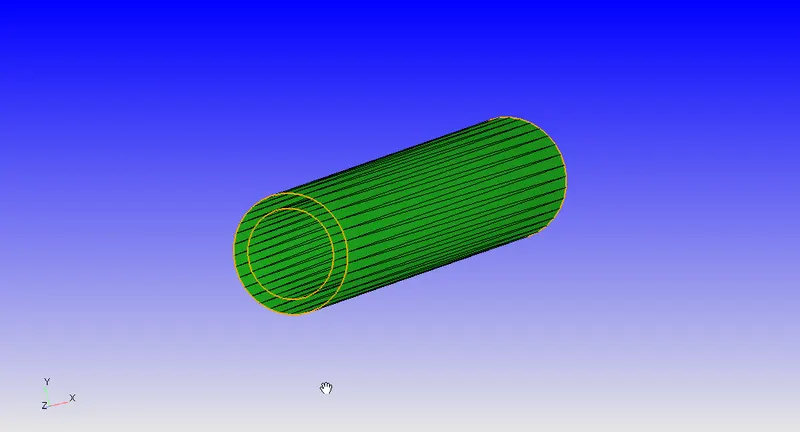
Next, we create another hollow pipe with 0.02m radius and same length:
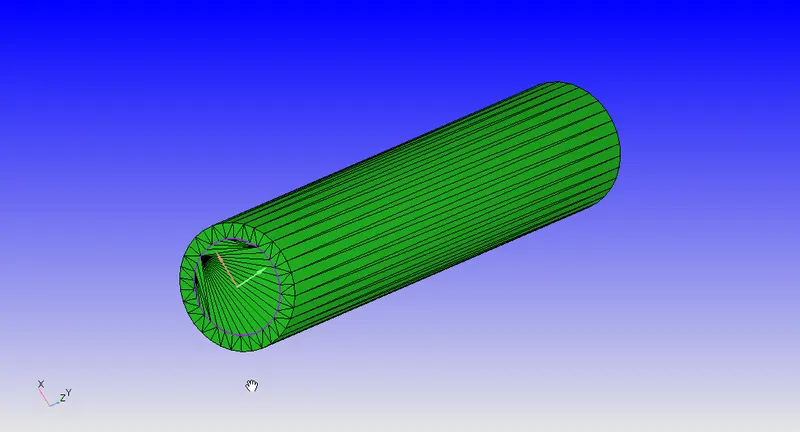
We will patch the open regions into two faces - pipe opening and thickness rim:
BOUNDARY FLAGGING:
Moving on, we flag the boundaries as follows:
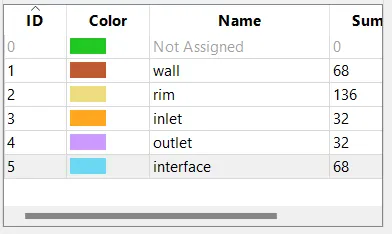
Boundary View:
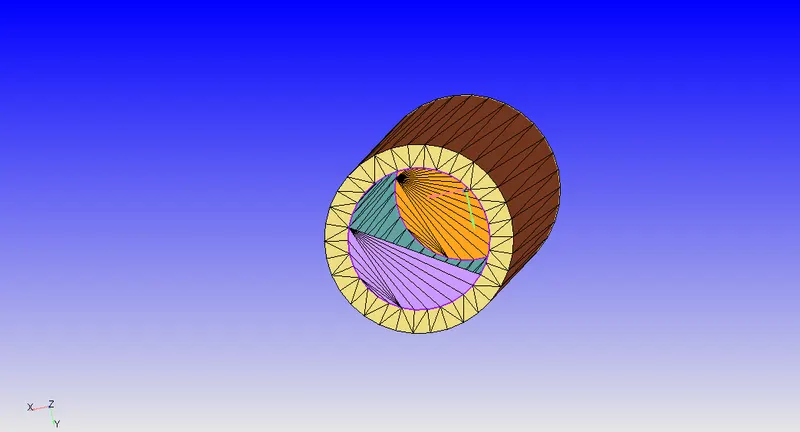
BOUNDARY CONDITIONS:
The boundary conditions are as follows:
Inlet:
The Reynolds number is 7000, the inlet velocity comes out to be 3.66 m/s for air at 300K.
The species is set to be air.
Wall and Rims:
Wall and rims are set as slip boundaries.
Interface:
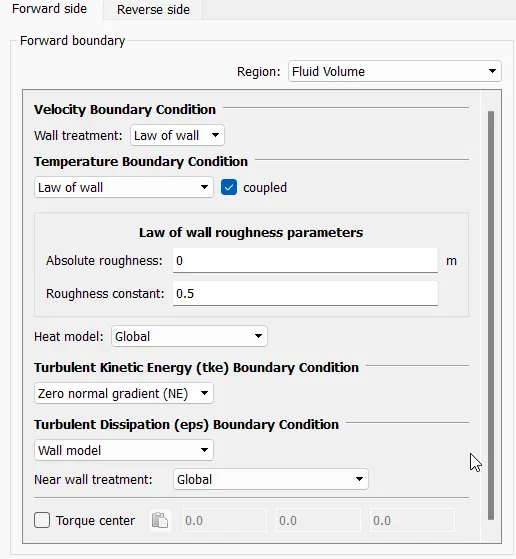
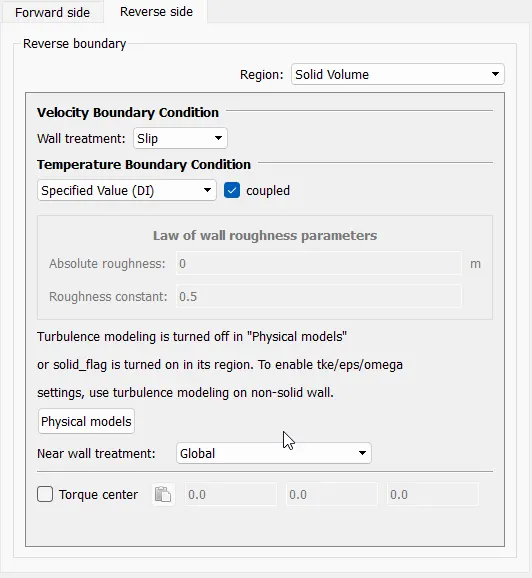
Outlet:
Pressure Outlet at 1 Bar.
INITIAL CONDITIONS:
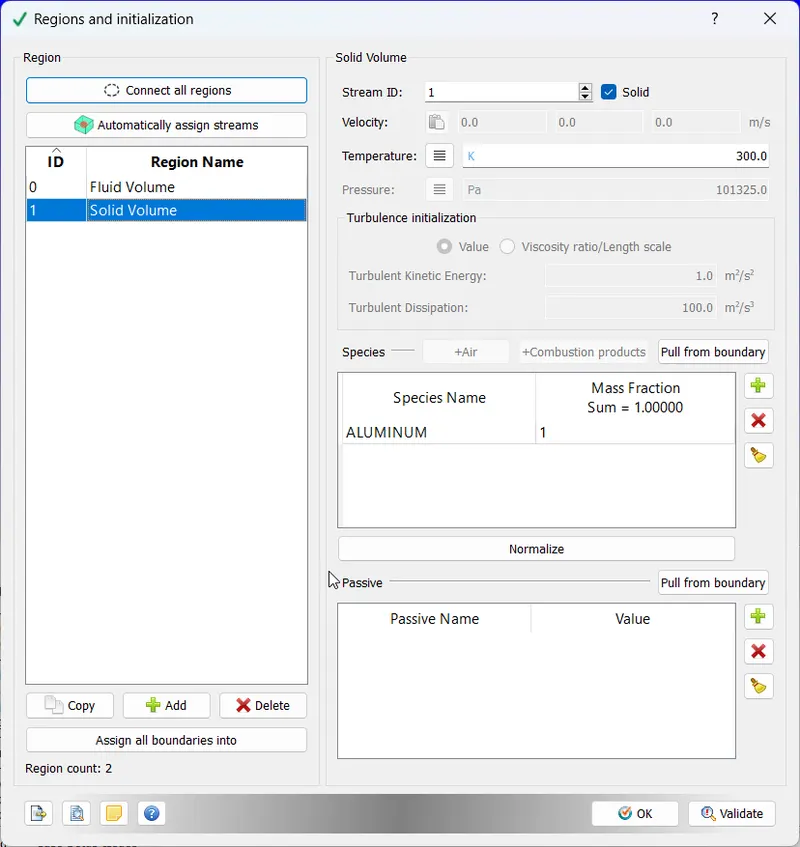
We are using two regions in this case; a solid Region which comprises the Pipe with species Aluminium and a Fluid region with air:
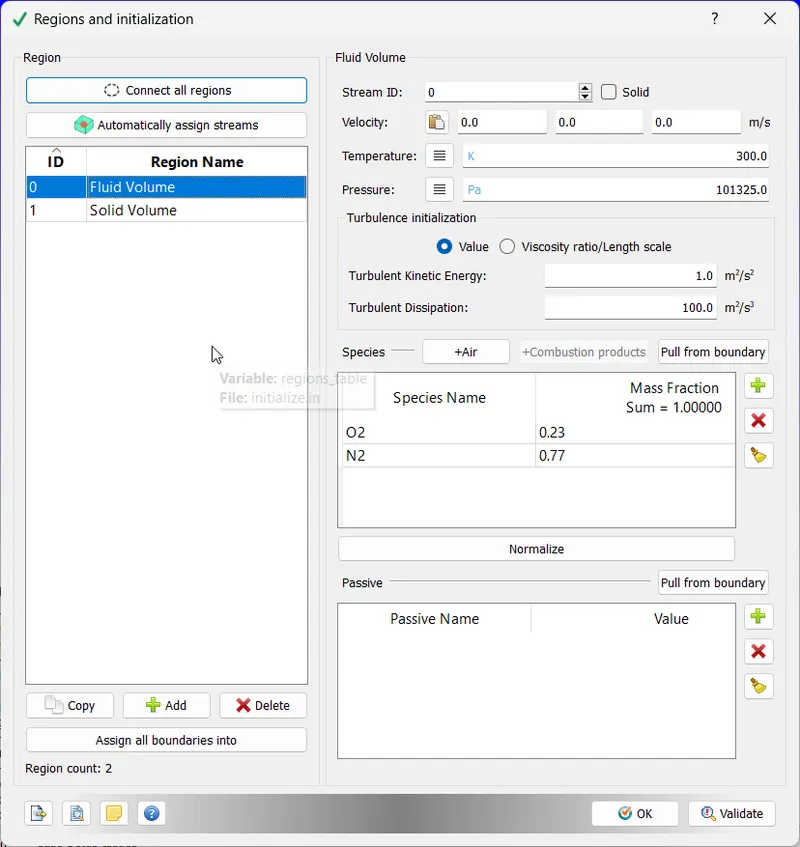
PHYSICAL MODELS:
We are using two models:
K-Epsilon model for turbulence with default values
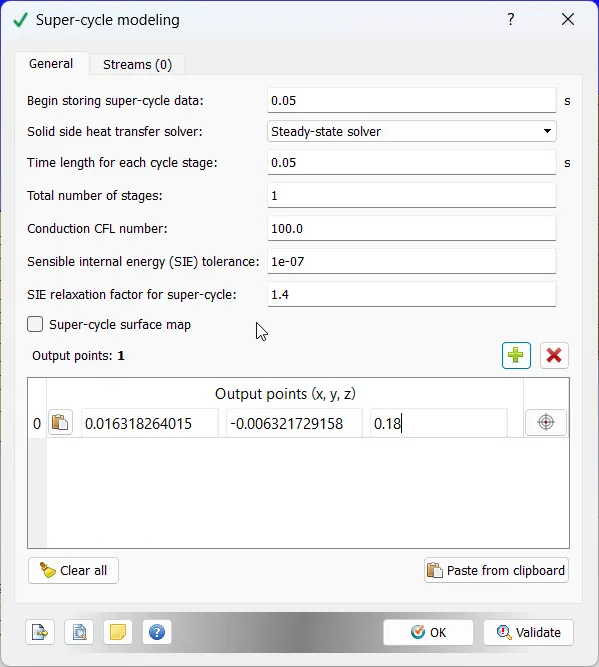
Super Cycling for solving fluid and solid domains efficiently with the following values:
SIMULATION PARAMETERS:
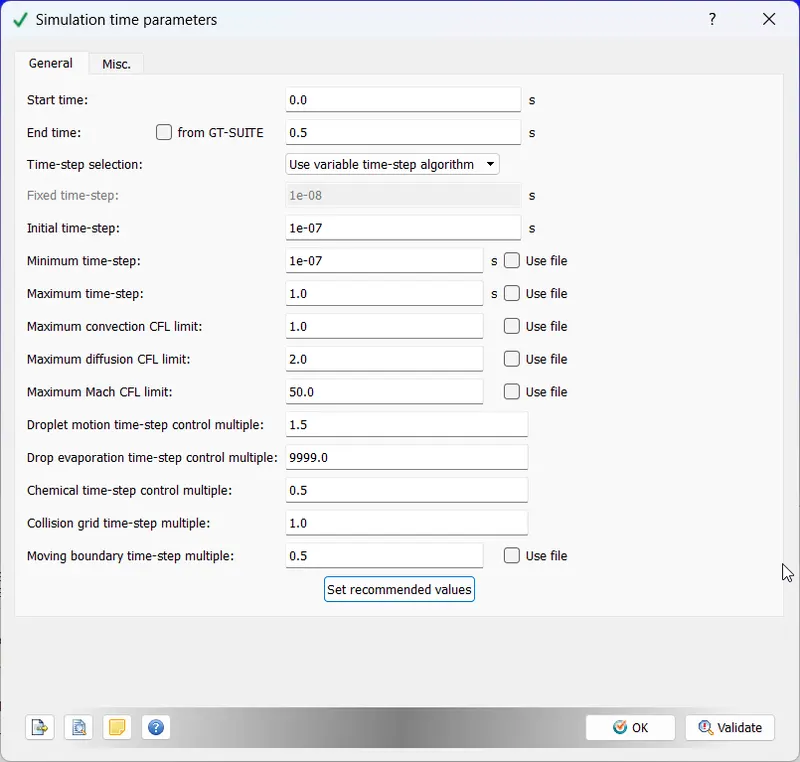
We are using a density-based transient solver with the below specs:
MESHING:
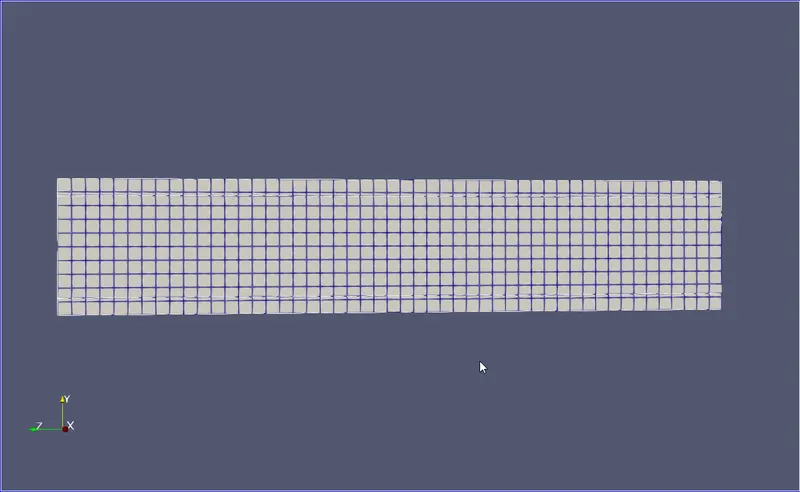
We will be running 3 cases for grid dependence:
4mm:
3mm:
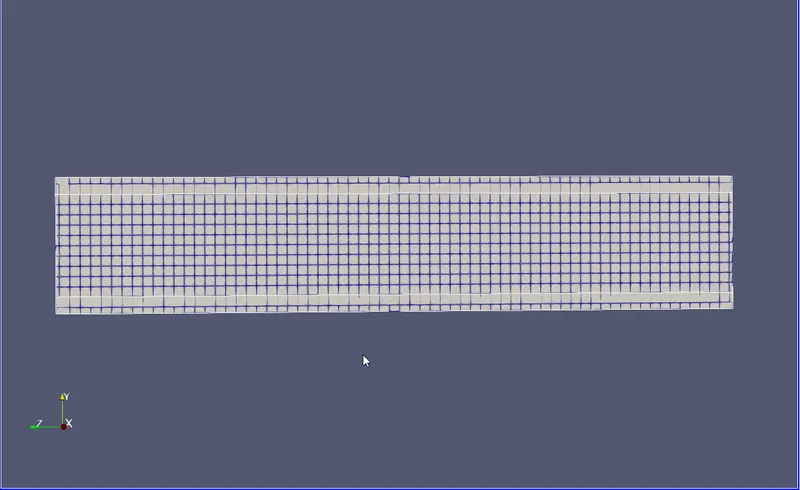
2mm:
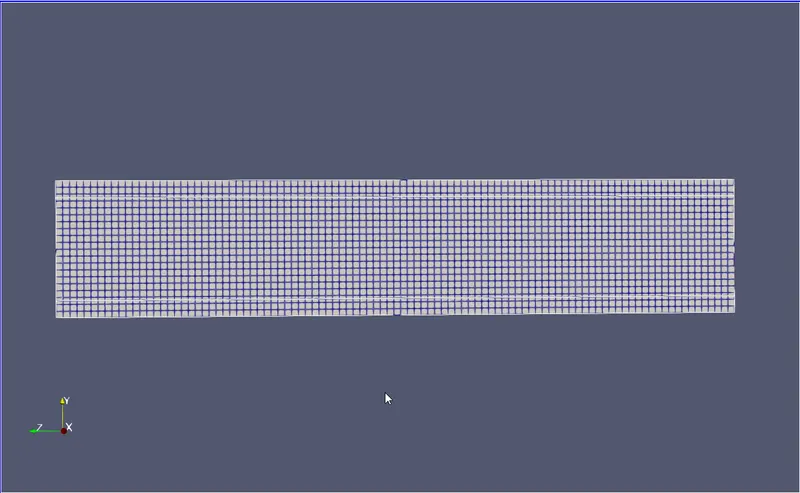
RESULTS:
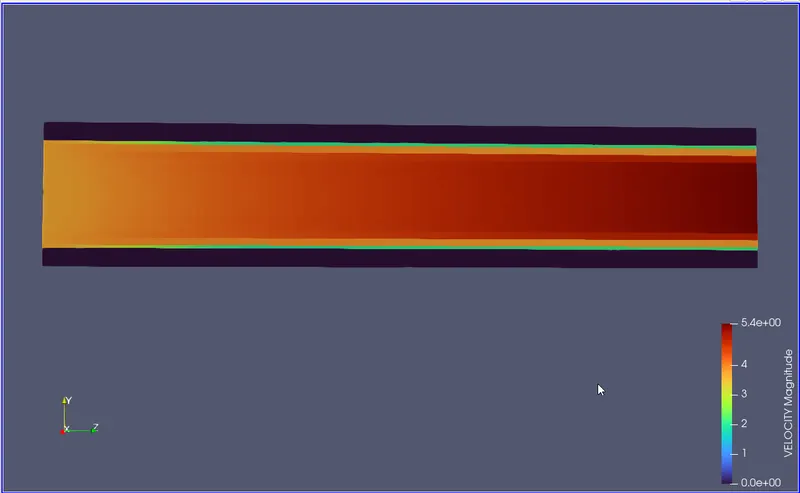
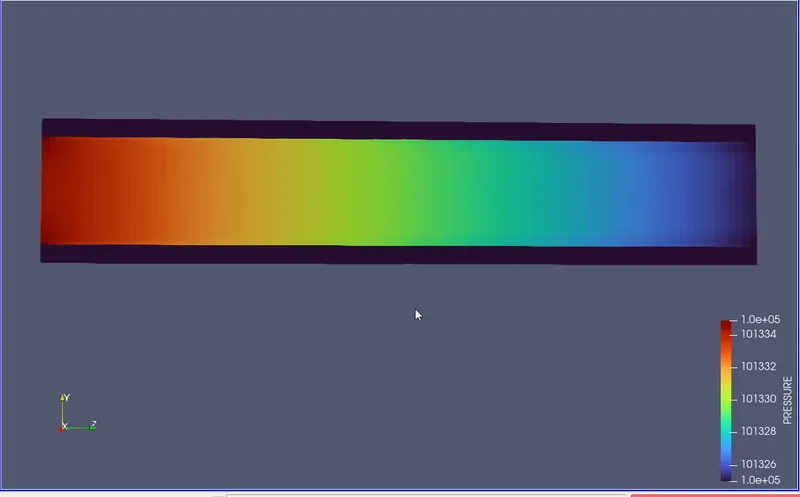
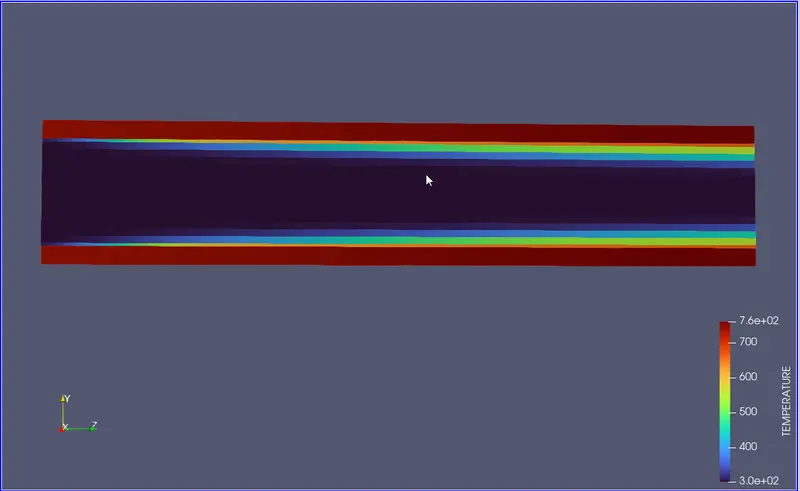
These are the results from the 2mm Mesh size:
Velocity Contour:
Pressure Contour:
Temperature Contour:
OUTLET TEMPERATURE COMPARISON:
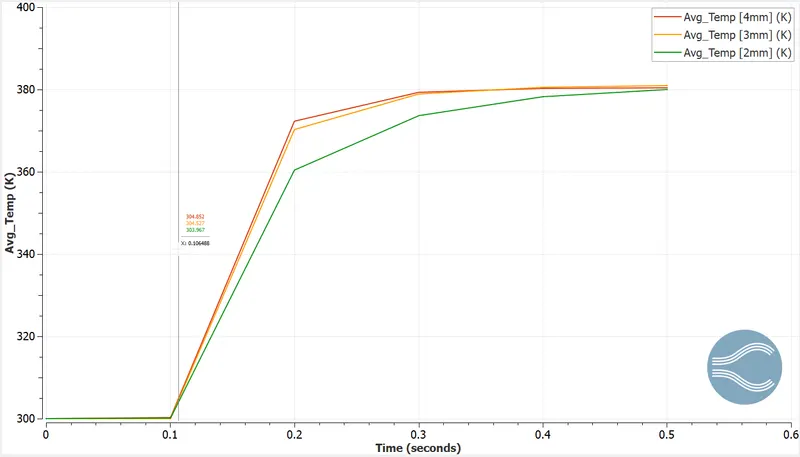
The above graph depicts the outlet temperature in all three simulations with different grid sizes.
As evident from the graph, the outlet temperature in all cases converges to a similar value hence the grid size doesn't affect the outlet temperature to a great extent. Therefore, it is not worth the computational expense of a finer mesh.
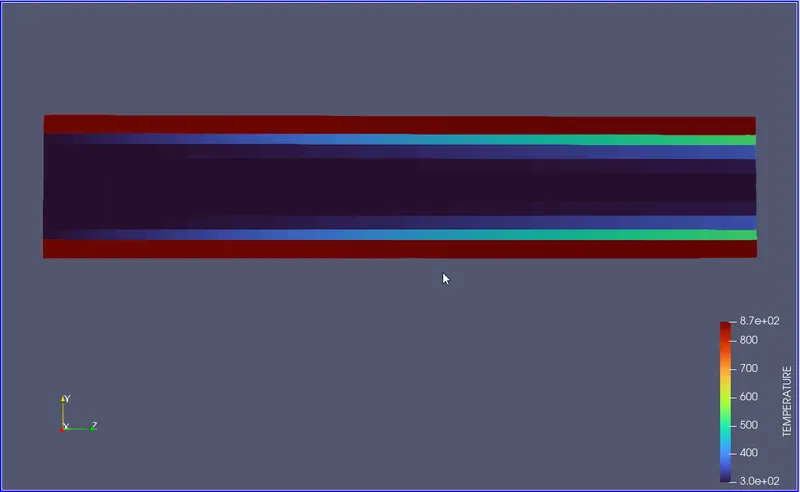
However, the results are more resolved in the finer mesh, as seen in these two examples:
2mm Temperature Contour:
4mm Temperature Contour:
CONCLUSION:
- Grid size doesn't affect the end result but can be useful in observing the contours with more resolution showing a better temperature distribution throughout the pipe.
- For the same purpose, instead of refining the entire mesh, Adaptive Mesh refinement and wall functions can be used.