Week 6 - CHT Analysis on a Graphics card
Aim
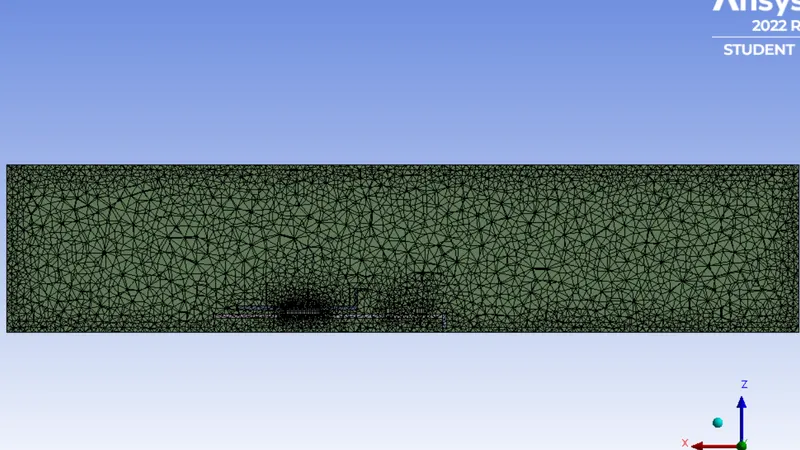
To perform a steady state conjugate heat transfer analysis on a model of a graphics card by using appropriate materials . Then the simulation is run with the best possible mesh with combination of coasrse and refined in different regions.
Introduction
CHT (Conjugate Heat Transfer)
The CHT Analysis type allows for the simulation of heat transfer between solid and fluid domains by exchanging thermal energy at the interface between them.Typical applications of this analysis exists as, but are not limited to, the simulation of heat exchangers, cooling of electronic equipment,and general-purpose cooling and heating systems.
Graphics card
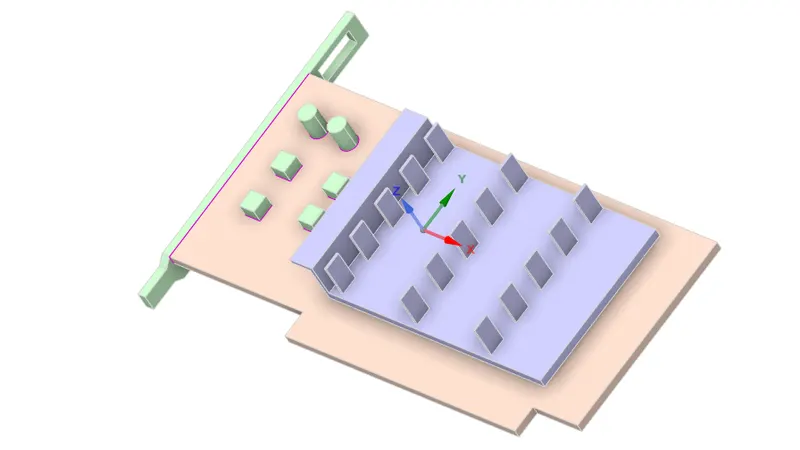
This is an expasion card which generates a feed of output images to a display device ,Most graphics card are not limited to simplr display output.Their integrated graphics processor can perform additional processing i.e removing this taskfrom yhe central processor of the computer.It cosists of basically 3 main parts
1.Processor
This is where the main function takes place i.e this is the C.P.U of the graphic card
2.Fins
When the Processor is running it generates heat,this heat has to to be dissipated to the atmosphere .If the the heat is trapped within the sytem the entire unit will be damaged .The fins help in increasing the surface area of the processor so that the heat gets dissipated faster .
3.Base
This part supports the processor.Since the processor generates heat while working the base has to withstand the heat made by the processor .So, the material used is FR 4 but in this case the material used here is wood.
Objectives and results
Material properties & Meshing
1.Processor - Silicon
Density = 2329 kg/m^3
Specific heat = 1300 J/kg.K
Thermal conductivity = 2.55 W/m.K
2.Base - Wood
Density = 700 kg/m^3
Specific heat = 2310 J/kg.K
Thermal conductivity = 0.173 W/m.K
3.Fins - Aluminium
Density = 2719 kg/m^3
Specific heat = 871 J/kg.K
Thermal conductivity = 202.4 W/m.K
4.Enclosure - Air
Density = 1.225 kg/m^3
specific heat = 1006.43 J/kg.K
Thermal conductivity = 0.0242 W/m.K
1.Base Mesh
v=5m/s
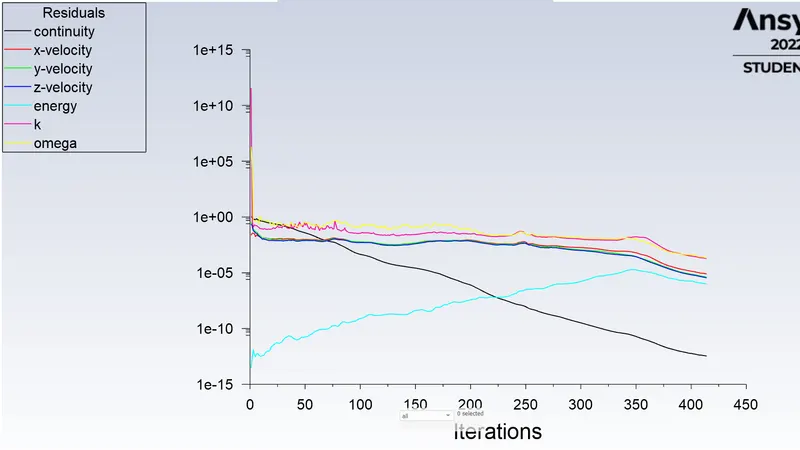
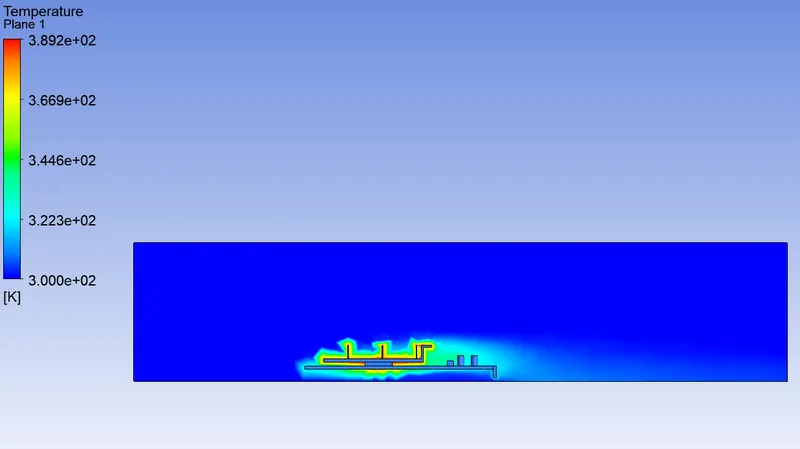
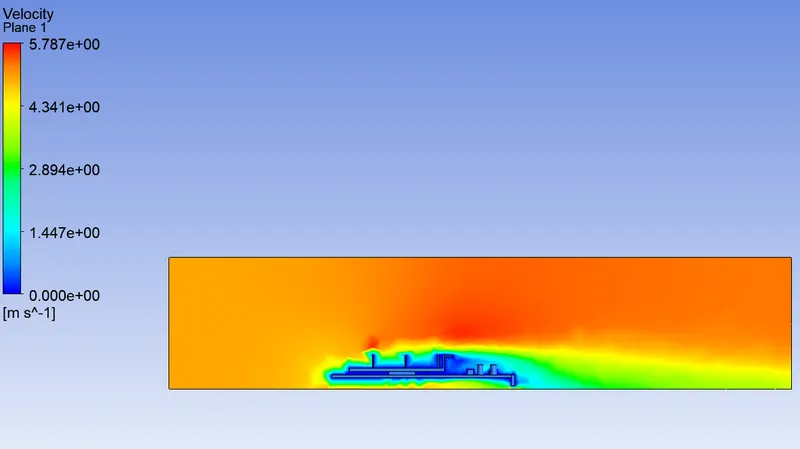
2.Refined mesh
Total number of elements 505818
Total number of nodes 95316
Body sizing of processor 0.5mm
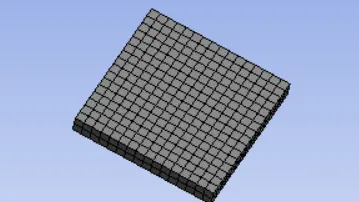
Body sizing of Base 2 mm
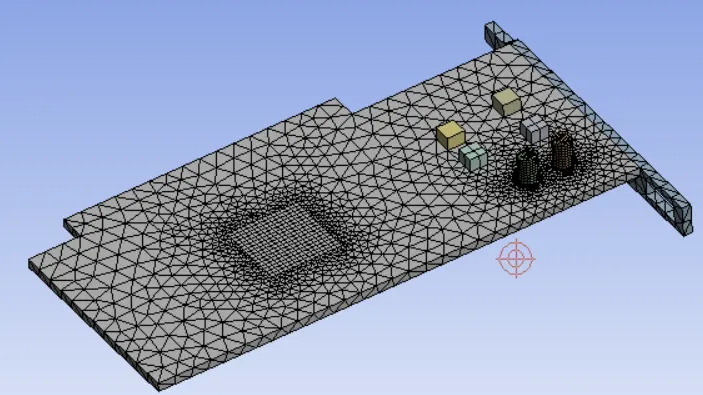
Body sizing of Fins 2 mm
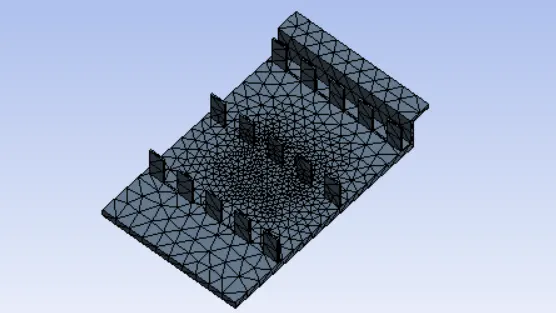
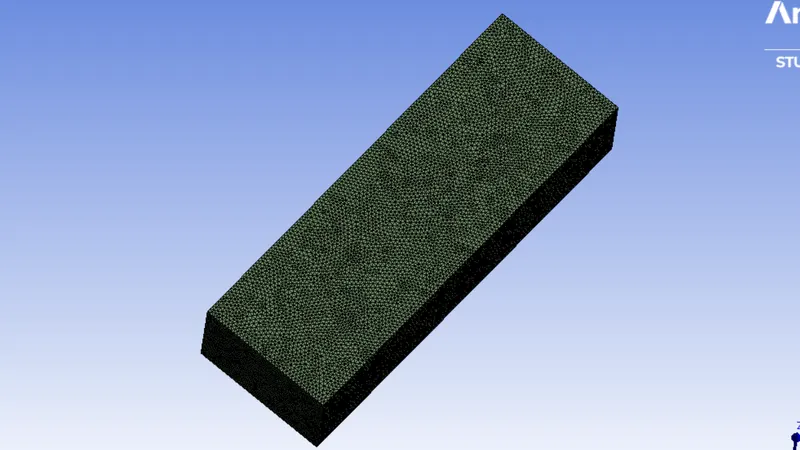
Meshing 1.6 mm
v=1m/s
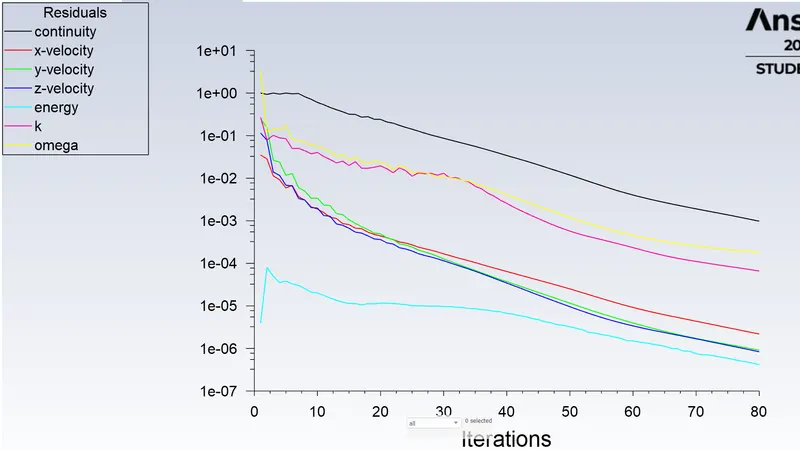
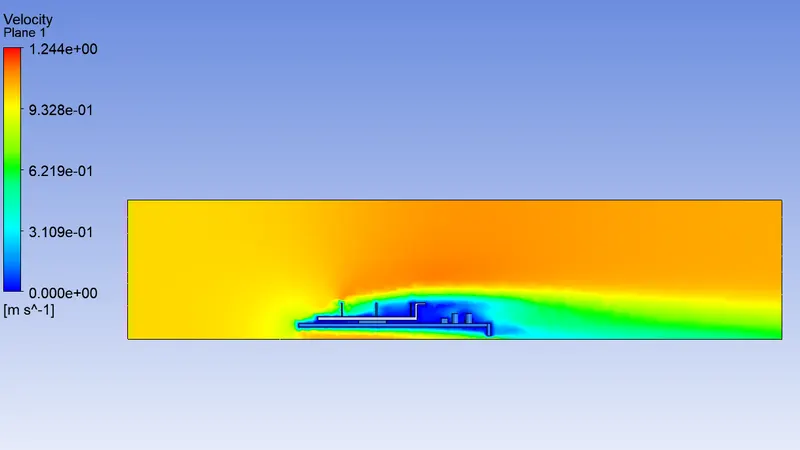
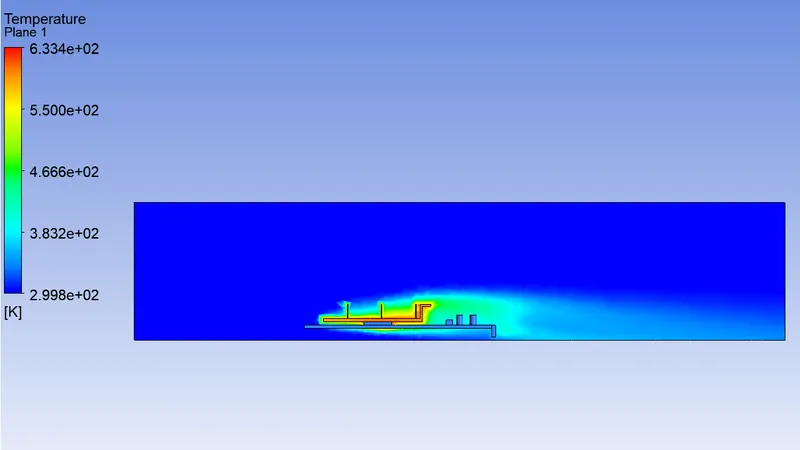
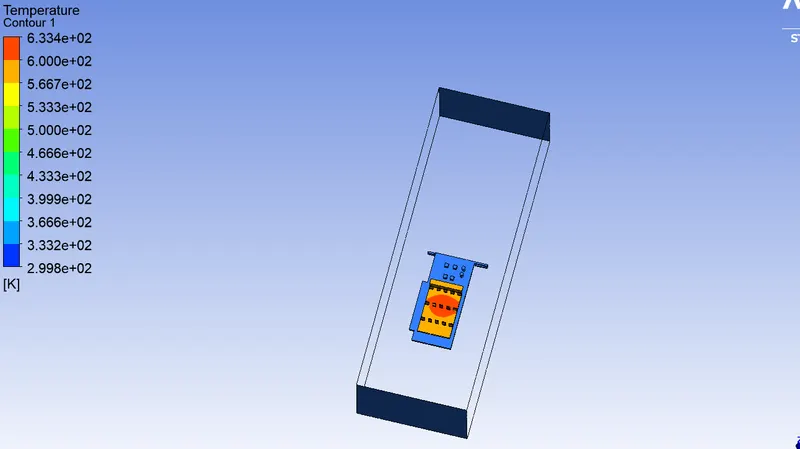
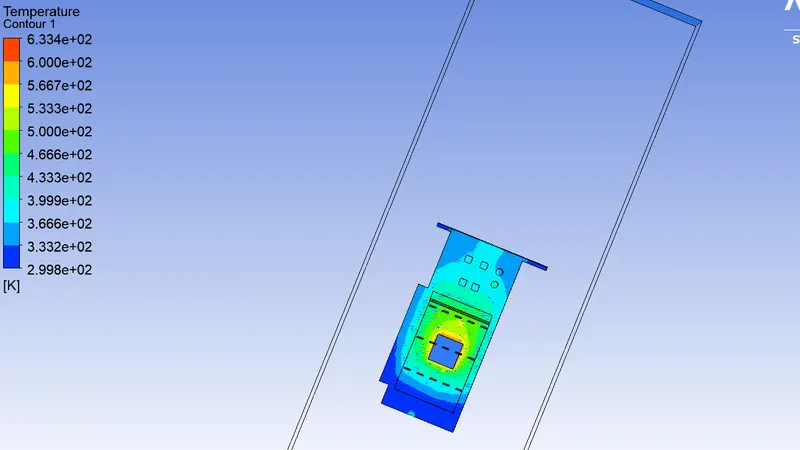
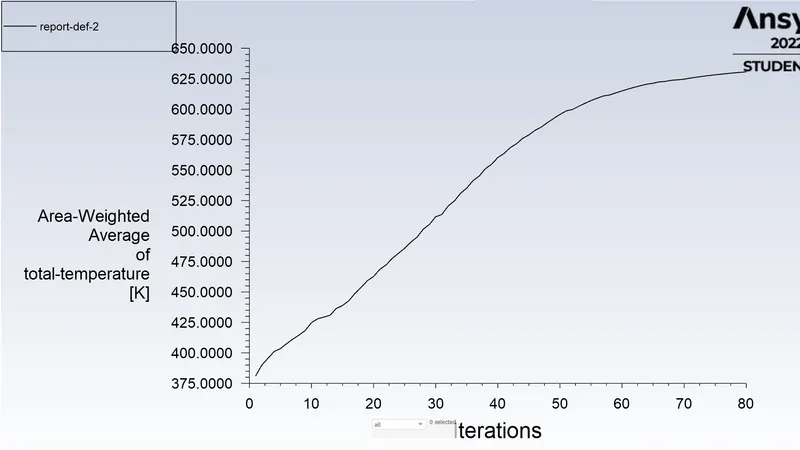
Maximum temperature = 630.65 K
Heat transfer coefficient = -8.771 W/m^2.K
v=3m/s
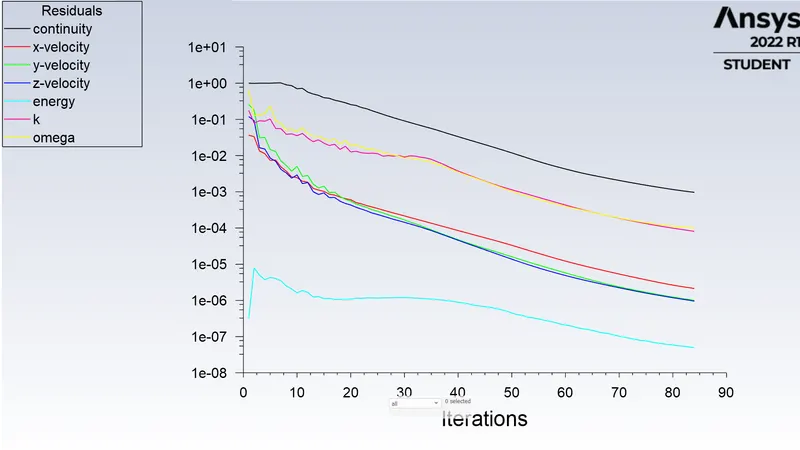
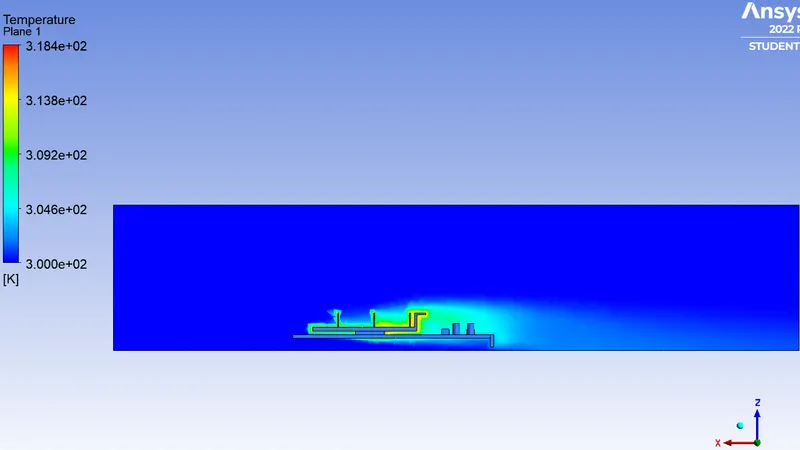
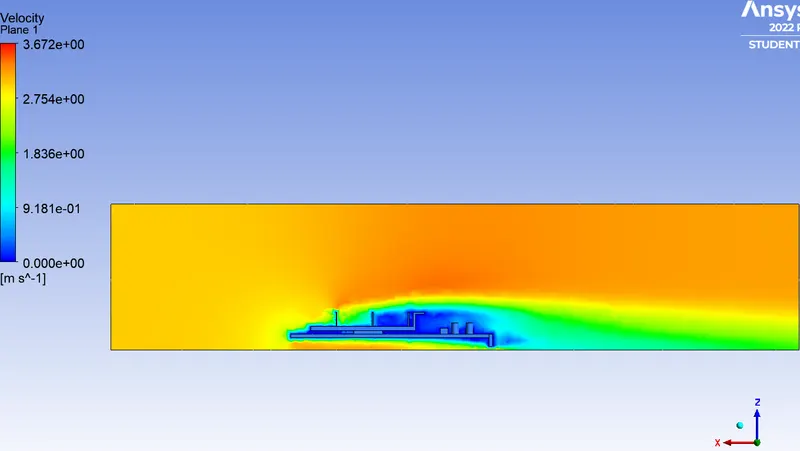
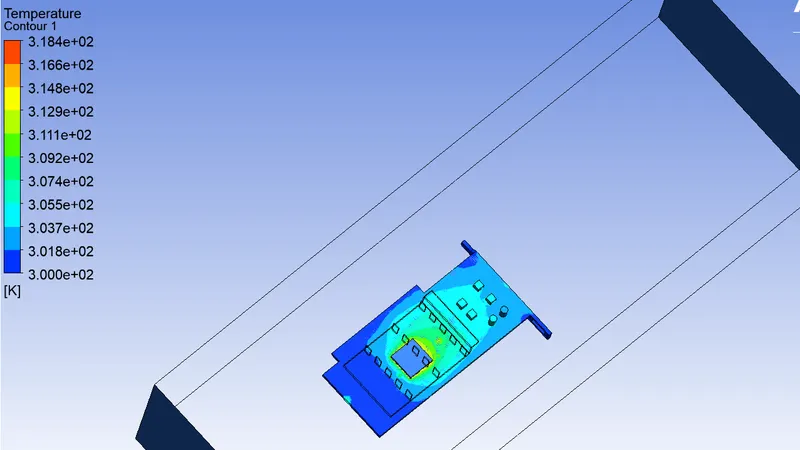
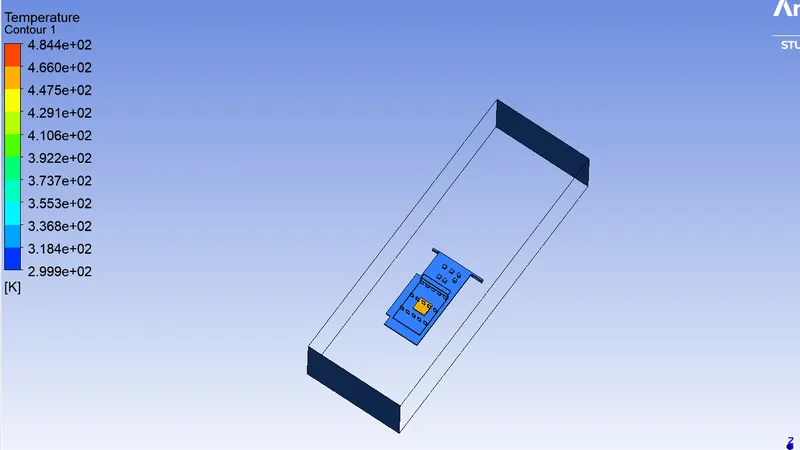
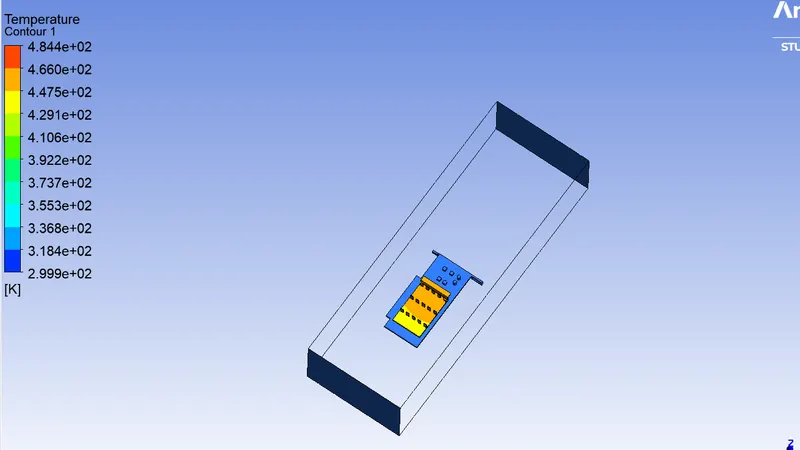
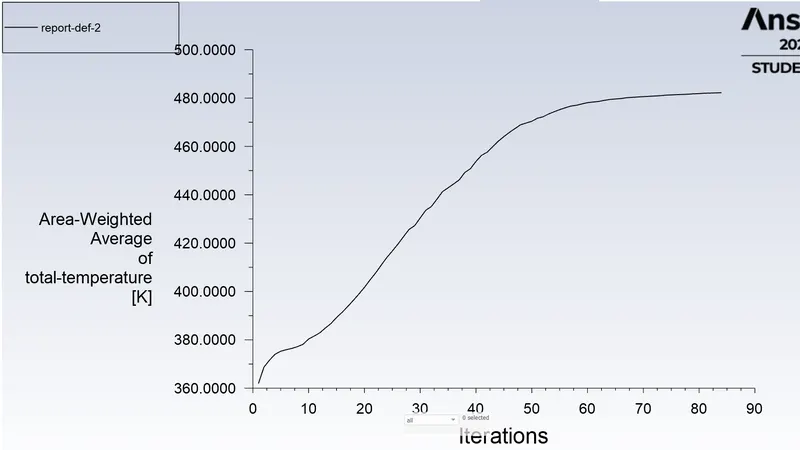
Maximum temperature = 482.21 K
Heat transfer coefficient = .17.8862 W/m^2.K
v=5m/s
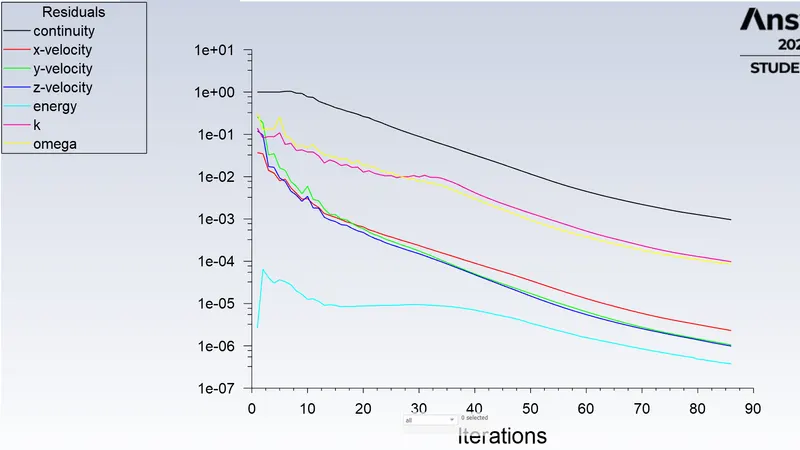
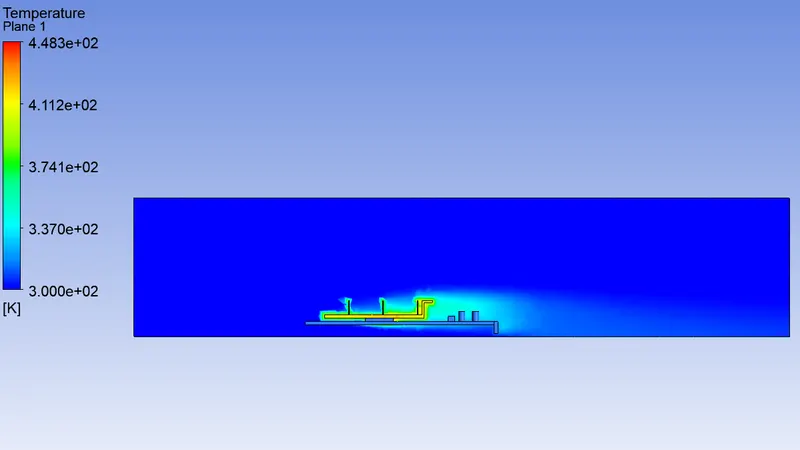
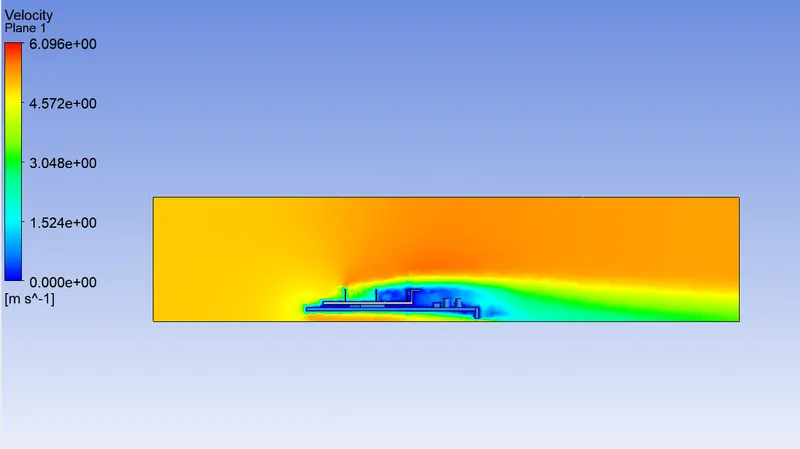
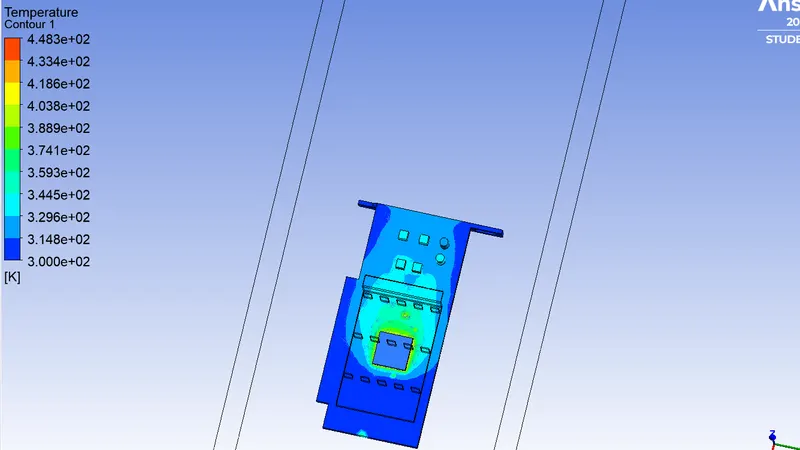
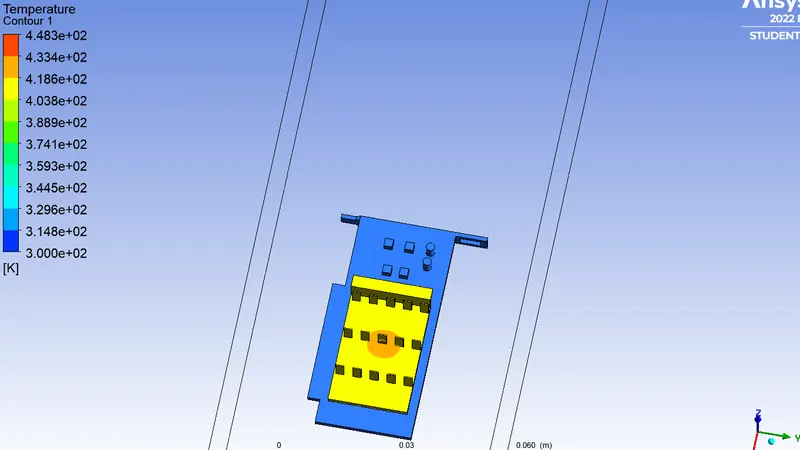
Maximum temperature = 445.98 K
Heat transfer coefficient = -26.96 W/m^2 K
Conclusion
The resulting plots were obtained with the values of heat transfer coefficient and maximum temperature at the processor.The plots of 'potential hotspots' are also available for all the 3 cases.From the values u can see that the temperature decreases as the velocity is increasing so ids the heat transfer coefficient.This is because the heat is being transfered to the air sourrounding it.