Week 5 Sphere pressing on a plate
Objective:
The objective of this problem is to study plastic deformation on a metal sheet when it is hit by a spherical object. Both the objects are considered to of structural steel however, the plate material is considered as non-linear. The sphere presses 4 mm into the sheet metal and then retracts, this deformation has been captured in this simulation.
Analysis of sphere pressing over flat plate:
1. Geometry creation:
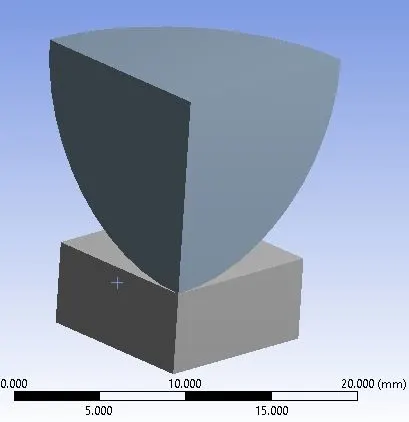
Since the assembly is symmetric in x & y directions, only a quarter of the model was originally used for analysis. The geometry was imported from the model of sphere pressing over flat plate provided here.
2. Symmetry creation:
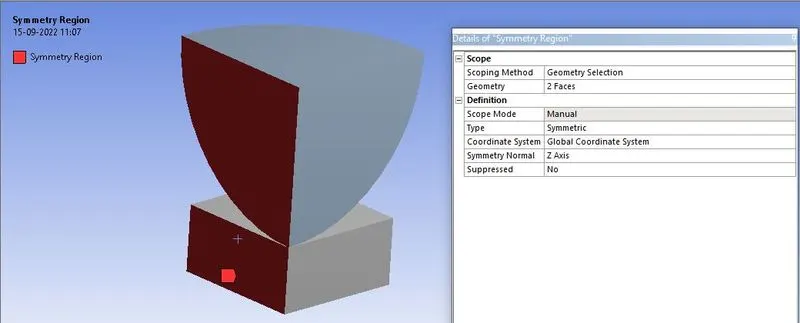
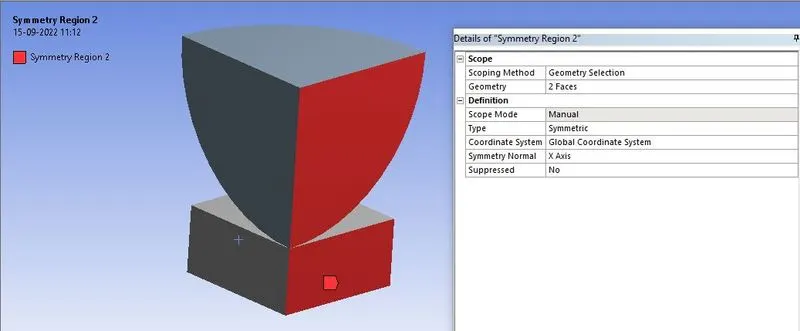
As already stated, the model is symmetric around 2 axes. To get accurate results, symmetric condtions are created to simulate the results for entirety of the assembly.
3. Connections:
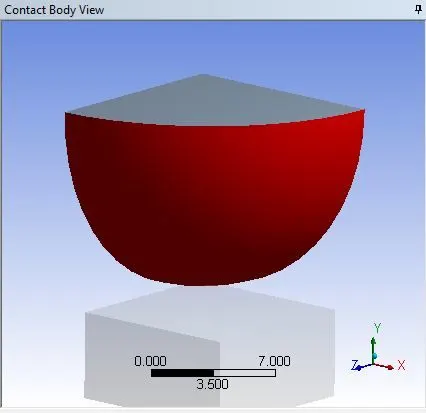
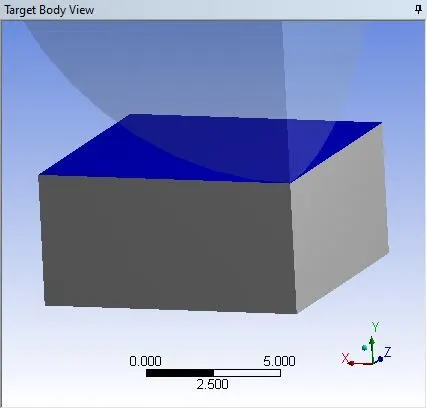
The default contact was not present in the imported model geometry hence, a new manual contact had to be created with sphere outer surface as the contact body and plate top surface as target body. The formulation is kept as augmented lagrange and interface treatment kept as 'add offset, no ramped effects'.
4. Meshing:
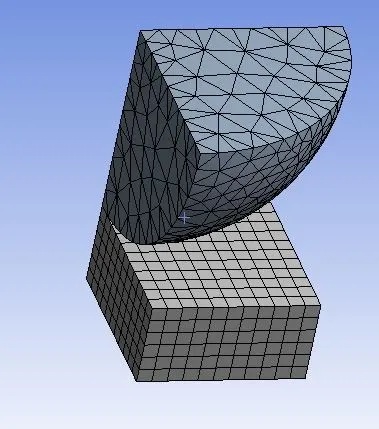
The mesh aplied to the model was an automated mesh to limit the no. of elements in the model under the student version of the software.
5. Analysis settings:
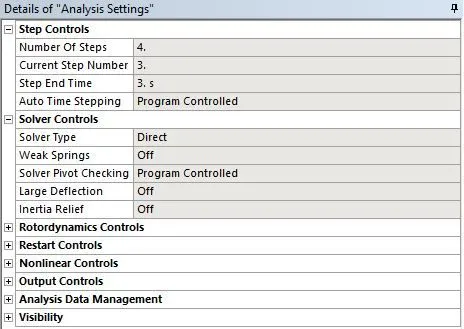
To simulate the indention and retraction of the sphere on the plate, the analysis is done in 4 steps. The solver type used was the drect solver and the 4 steps were used to press and retract the sphere onto and away from the plate.
6. Loads & Boundary condition:
There were 2 loads applid on the model,
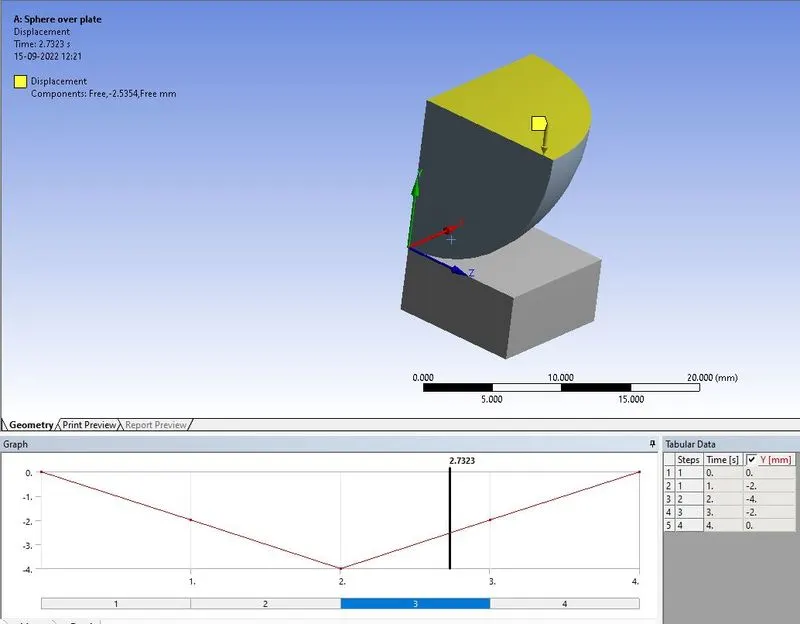
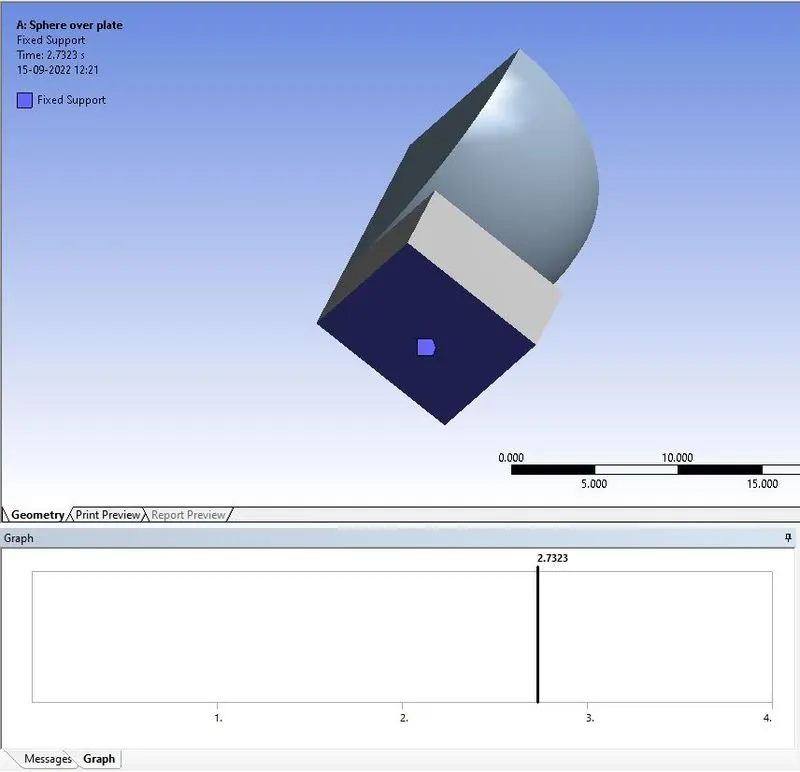
- The displacemement load that pushed the sphere down by 4 mm and then retracted it back to it's original position.
- To prevent the plate from moving, a fixed displacement condition was applied to the bottom of the plate to prevent it from moving.
7. Results and postiprocessing:
The problem statement requires us to capture plastic deformation in the plate, this has been done by way of studying directional deformation in y axis and the equivalent plastic strain in the sheet/plate. The progression of plastic strain & deformation has been shown in videos upladed named, "Plastic strain" and "Sphere pressing" respectively.
Equivalent stress:
The equivalent stress in the setup is shown in the mage attached below,
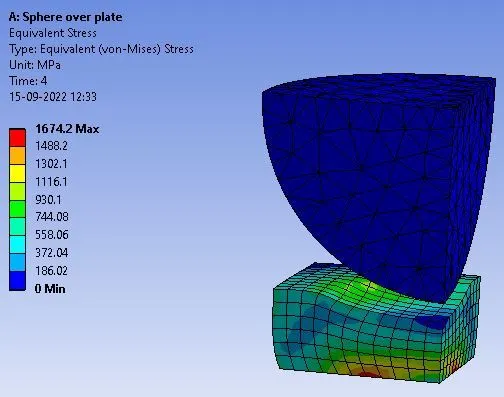
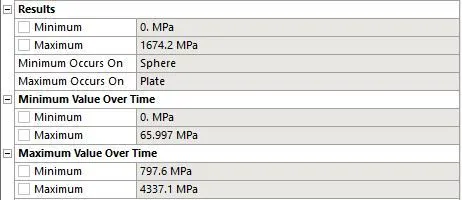
Max stress occurs in the plate as expected. The sphere also undegoes some stress, albeit under eleastic conditions and recovers it's shape after retracting fromt the plate. However, the stresses in the plate are in the plastic region and result in permanent deformation of the plate.
Equivalent strain
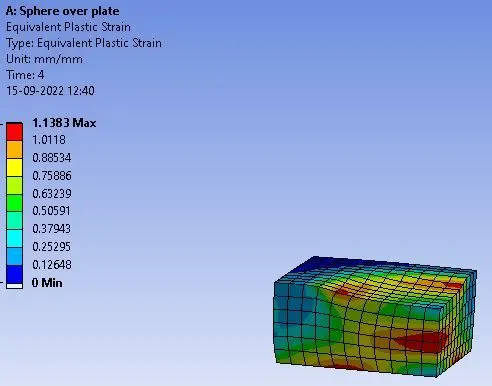
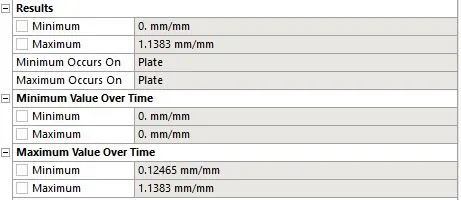
The strain contours are in concurrence with stress results, in it the strain in the plate is permanent and results in permanent deformation of the plate. Minimum deformation of 0 mm can be seen however, it is for the area not under the stress of sphere pressing on it.
Directional deformation:
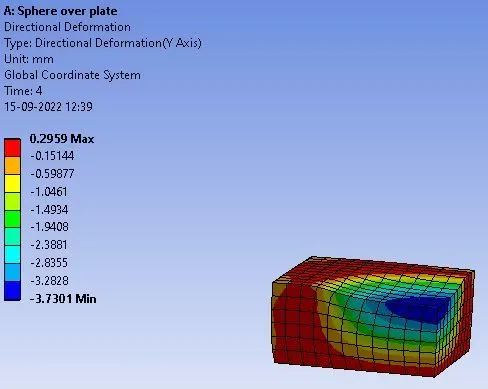
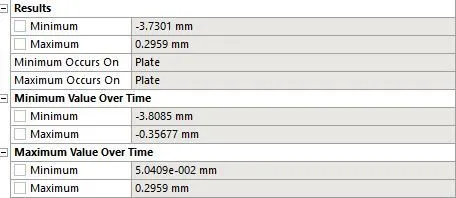
Since the deformation is in negative y axis, it can be observed that maximum deformation occurs in the location under force of sphere. This also captures the plastic deformation of the plate under the load of the sphere.