Week 5 - Rayleigh Taylor Instability
Rayleigh Taylor Instability
AIM: To conduct the Rayleigh Taylor CFD simulation
OBJECTIVE: -
- What are some practical CFD models that have been based on the mathematical analysis of Rayleigh Taylor waves? In your own words, explain how these mathematical models have been adapted for CFD calculations.
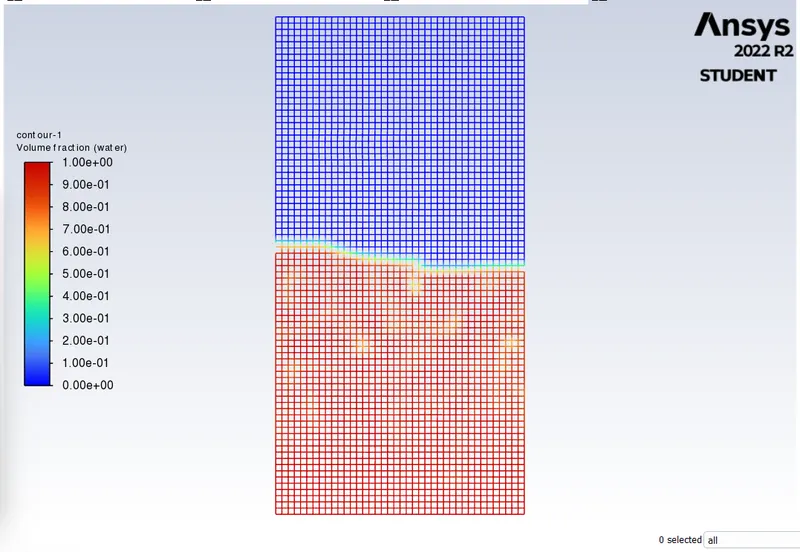
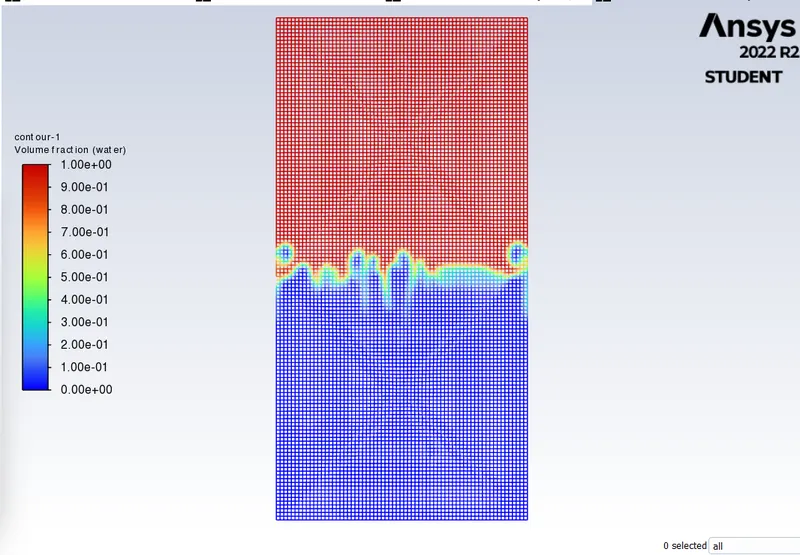
- Perform the Rayleigh Taylor instability simulation for 2 different mesh sizes with the base mesh being 0.5 mm. Compare the results by showing the animations( Attach them from your google drive). Observe the differences in the animation and explain the effect of mesh size on simulation. Also, explain why a steady-state approach might not be suitable for these types of simulation.[ Choose Air and Water for this simulation]
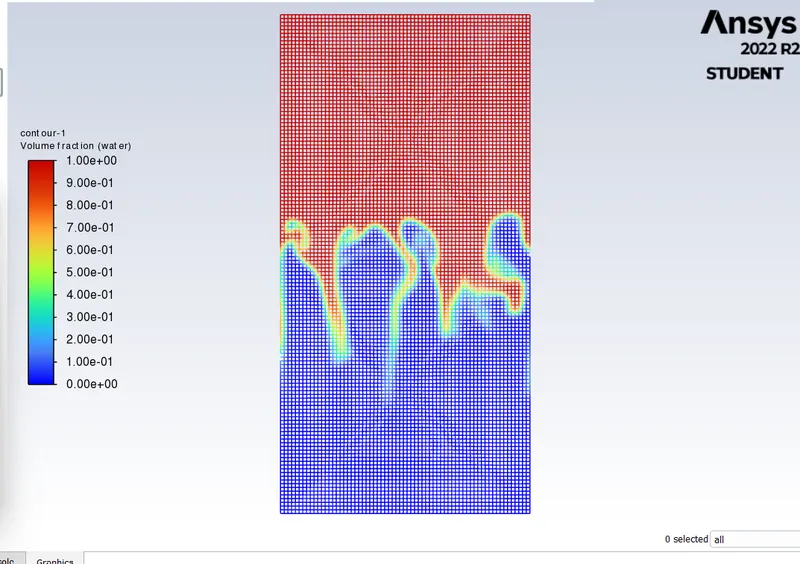
- Run one more simulation with water and user-defined material(density = 400 kg/m3, viscosity = 0.001 kg/m-s) for refined mesh.
- Define the Atwood Number. Find out the Atwood number for both the cases and explain how the variation in Atwood number in the above two cases affects the behavior of the instability.
Theory:-
The theory of the Rayleigh-Taylor instability of accelerated fluid layers is systematically developed from basic fluid equations. Starting with the classical potential flow theory for moving contact surfaces, the discussion extends to various fluid systems describing inhomogeneous, viscous, compressible, and isobaric flows. Thereby an overview on the major stability issues under a broad variety of physical conditions can be given. In particular, the stability analysis is addressed to layered materials in plane and spherical geometries under various dynamical conditions, to inhomogeneous media with variable gradients and different boundary conditions, to viscous boundary layers, compressible atmospheres, and to stationary ablation fronts in laser-driven plasma experiments. The stability theory is further extended to the nonlinear stage of the Rayleigh-Taylor instability and to a discussion of bubble dynamics in two and three dimensions for closed and open bubble domains. For this purpose simple flow models are studied that can describe essential features of bubble rise and bubble growth in buoyancy-driven mixing layers.
Solution and Result :-
In this project, we consider 3 different cases in which 2 cases are based on the type of MESHING and the other is with user-defined materials.
We consider 2 materials air and water placing one above the other and see the effect of gravity acting on them.
Geometry :-
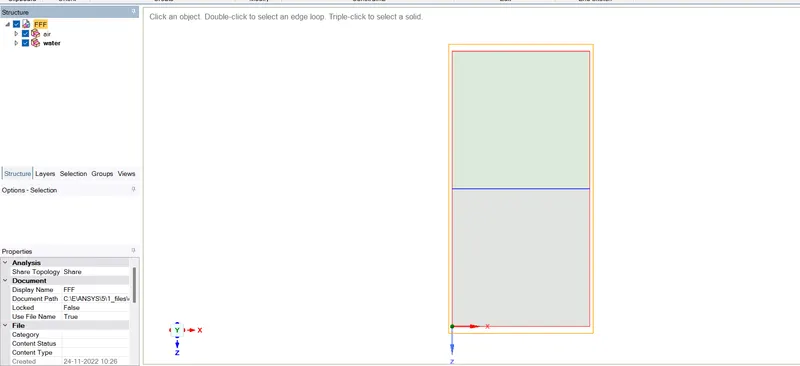
For our project, we consider a simple 2D geometry of which
- We draw 2 squares one above the other with a length of 0.02 m.
- Then naming the below square as air and above square as water in 2 different components.
- And share the topology for a perfect intersection between both surfaces.
STEP 2: Meshing
CASE 1:
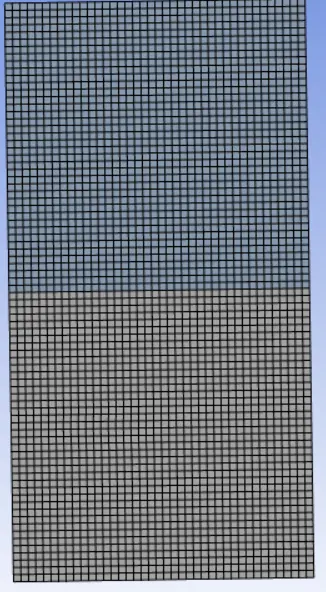
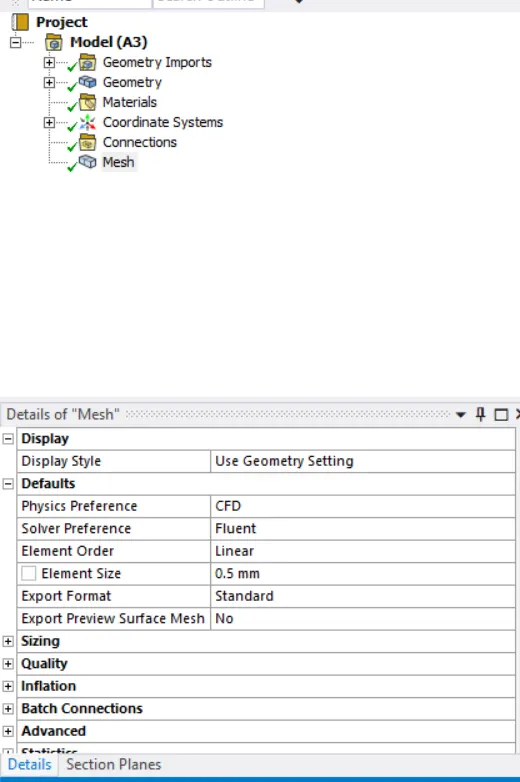
There is not much change to the fundamental mesh as it is a 2D object
Overall Element size: 0.5mm
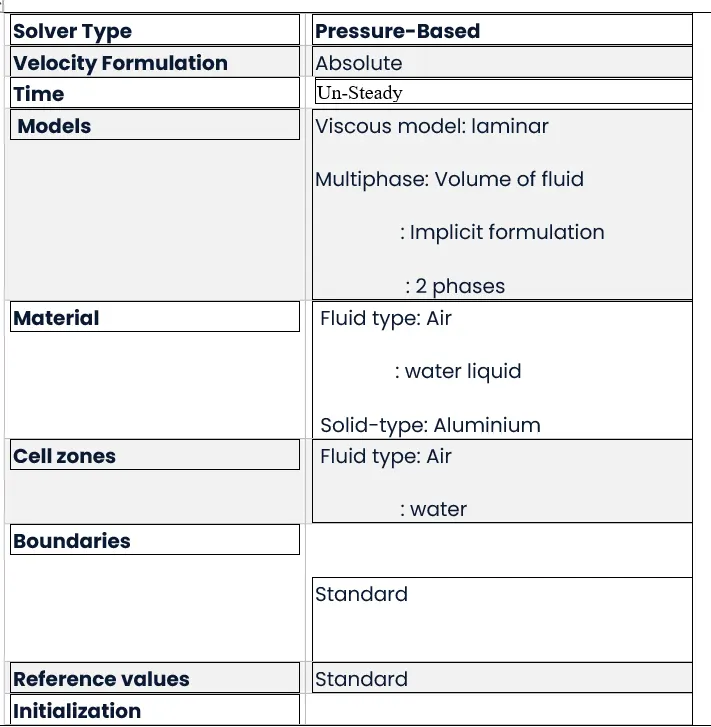
SETUP :-
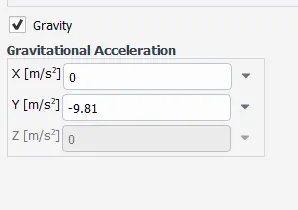
Gravity :-
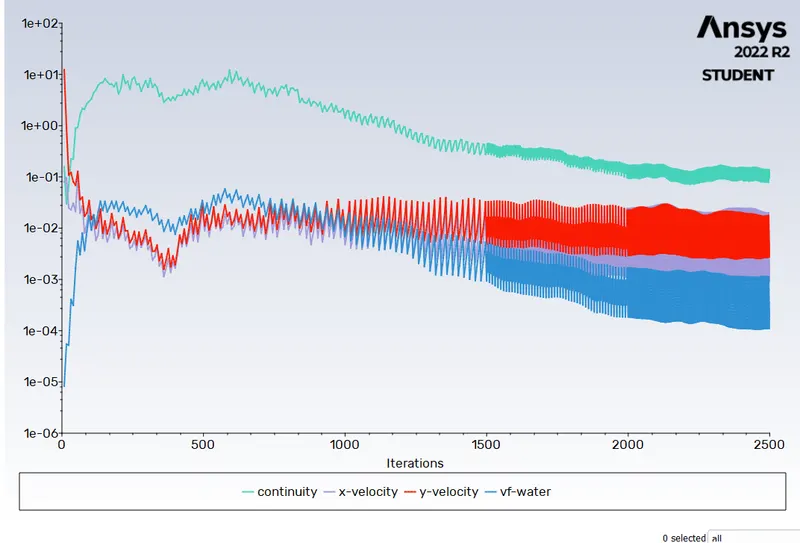
Residuals :-
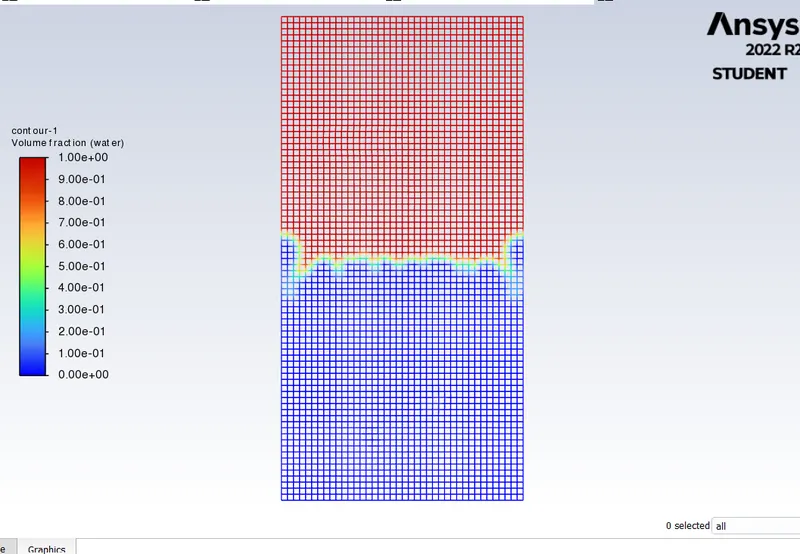
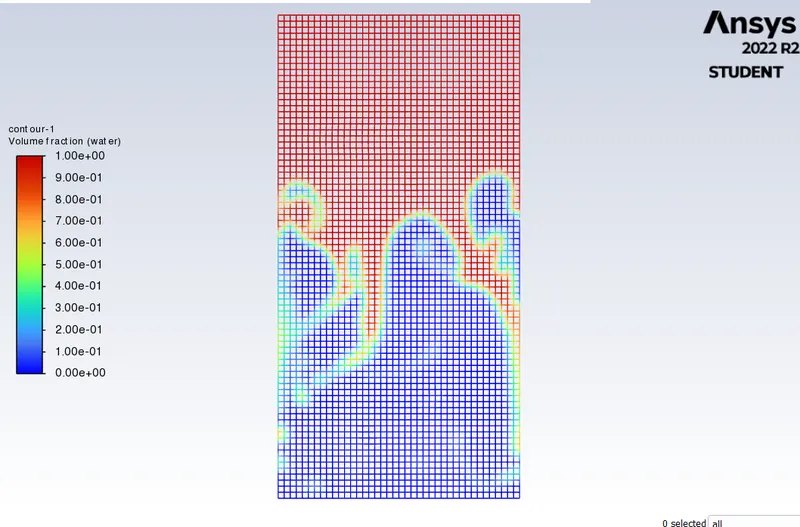
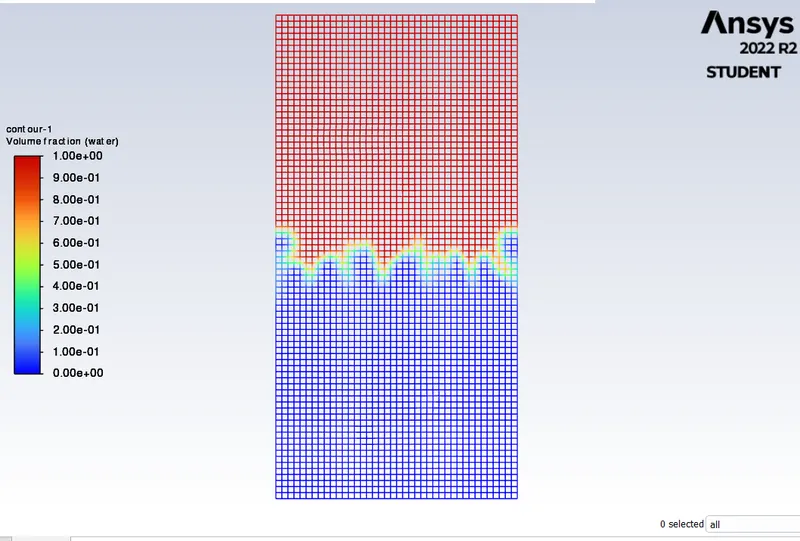
Result :-
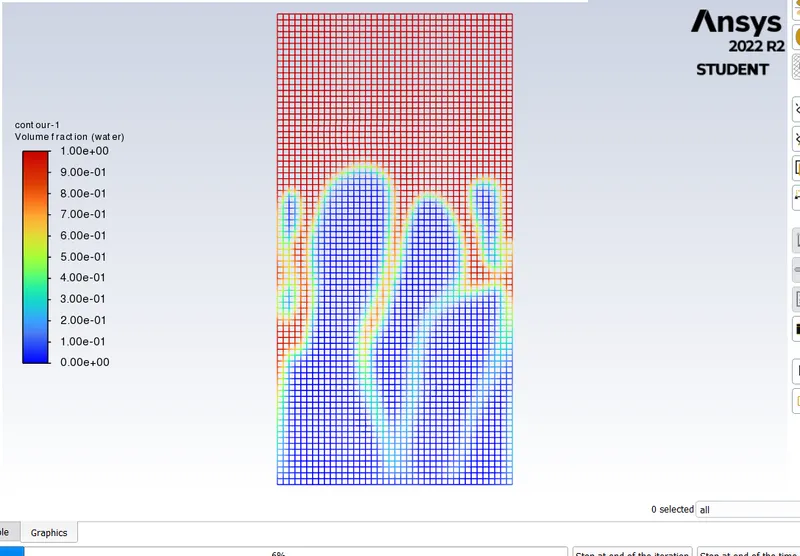
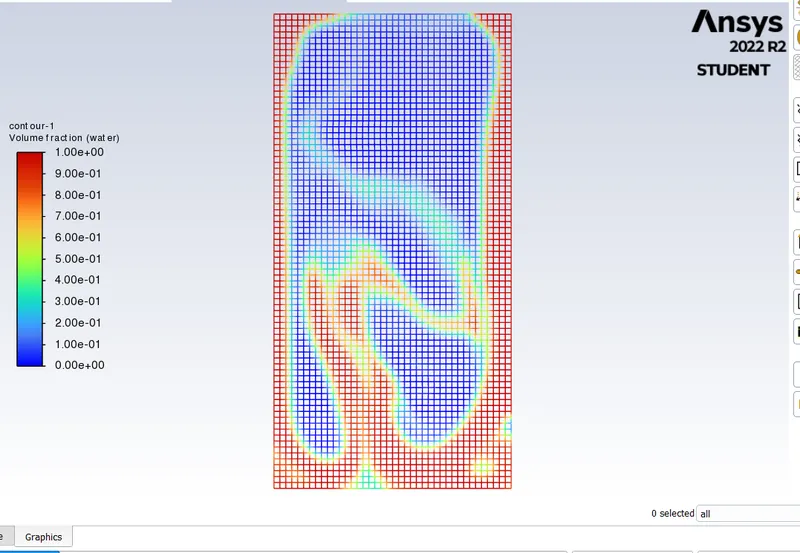
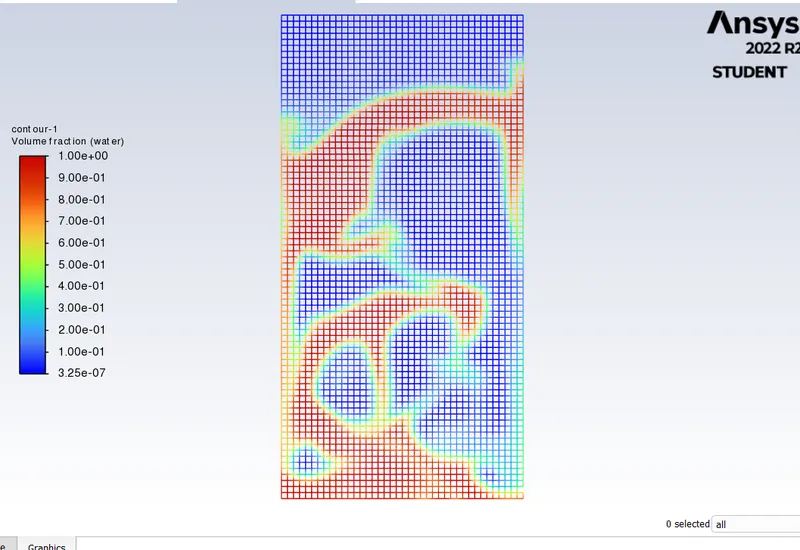
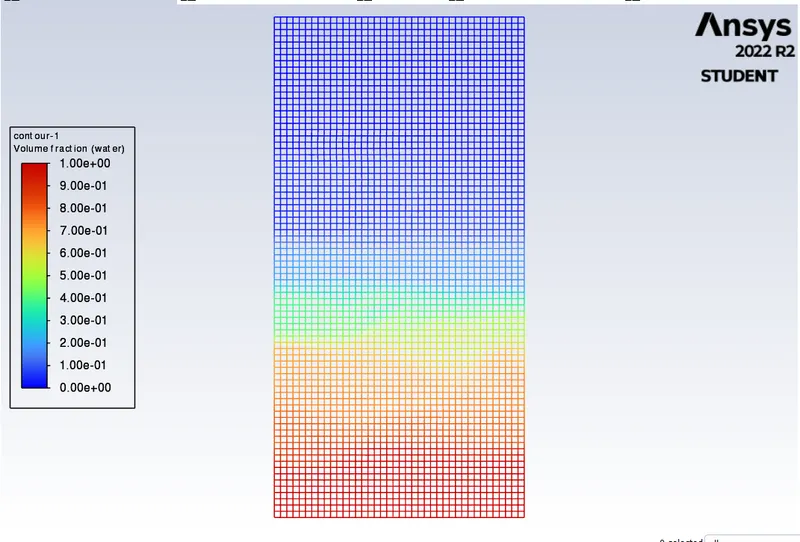
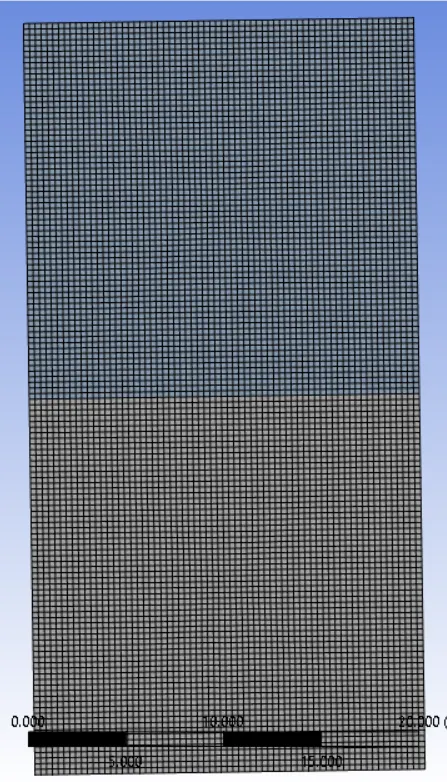
Refind Mesh
Set Up :-
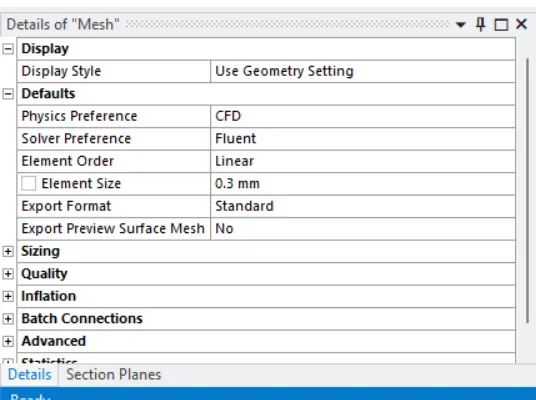
Mesh :-
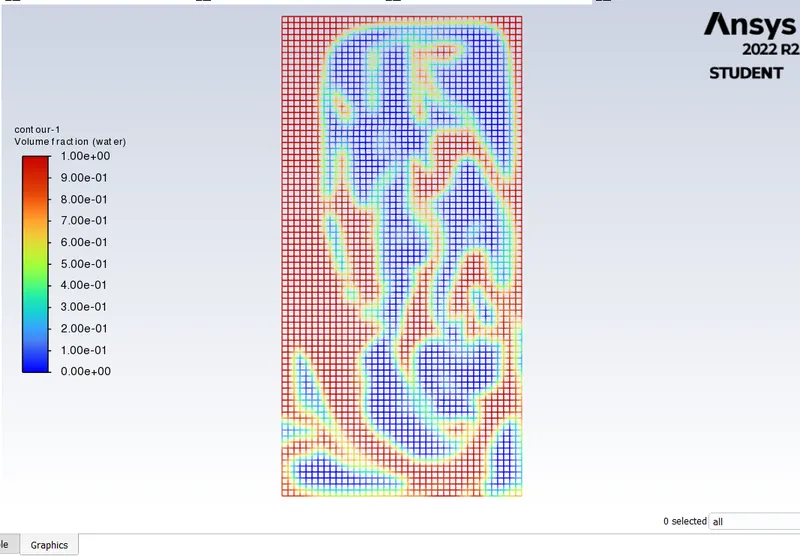
Result :-
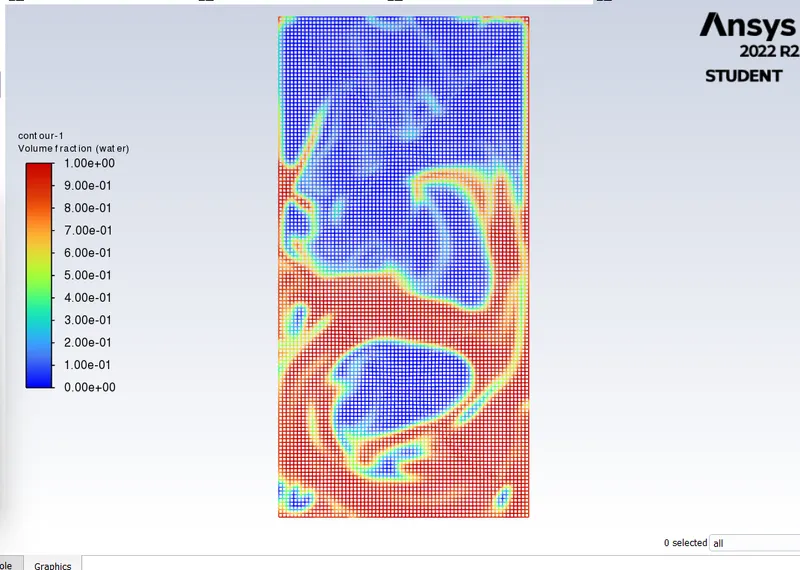
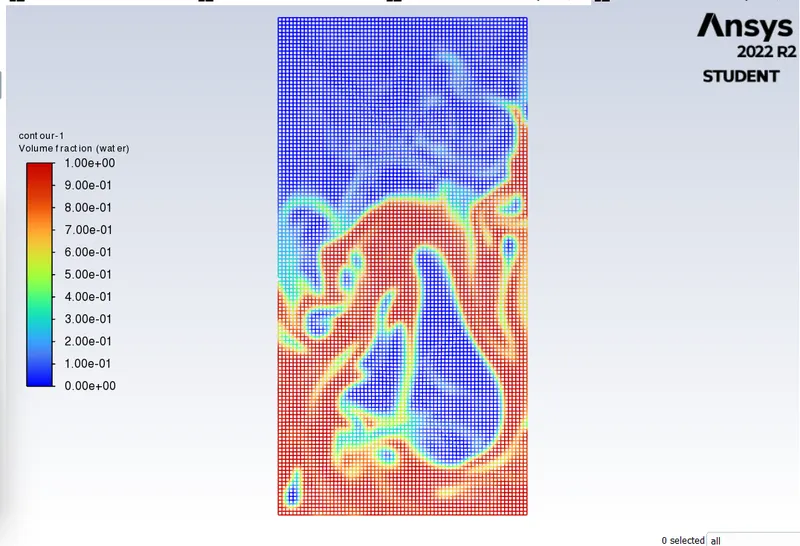
Set Up:-
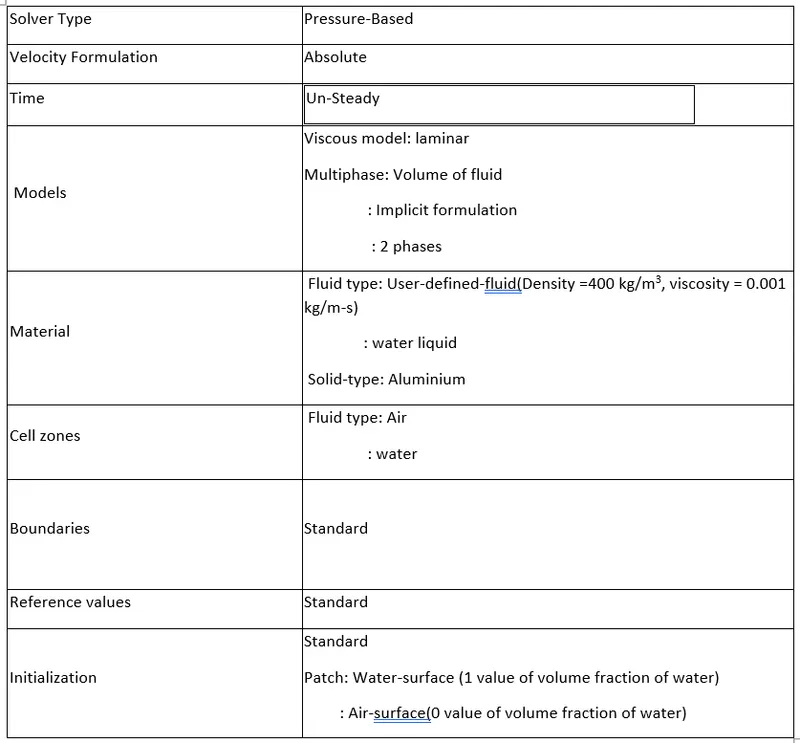
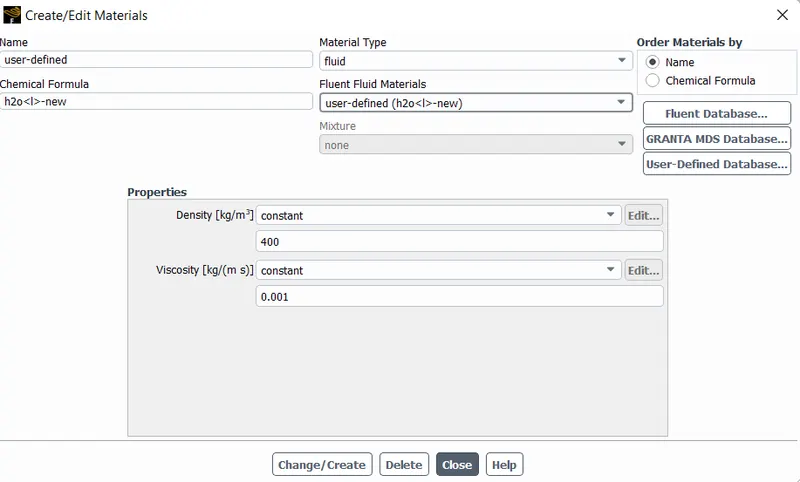
Residuals :-
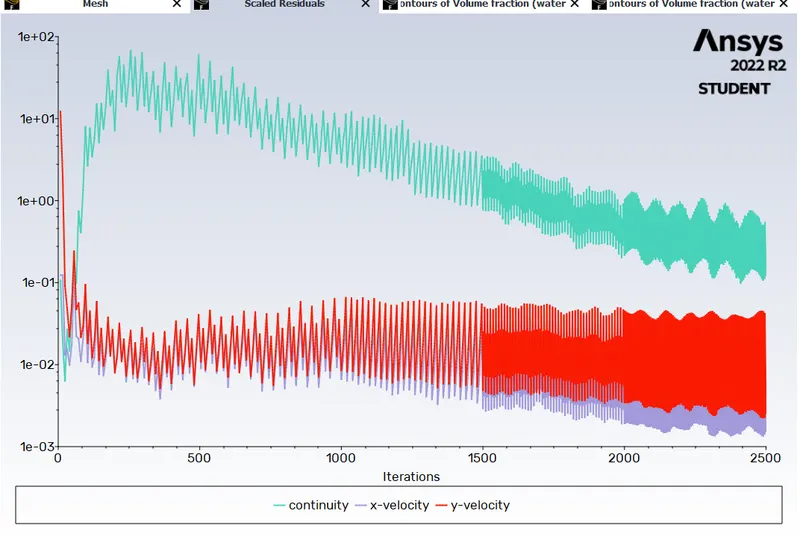
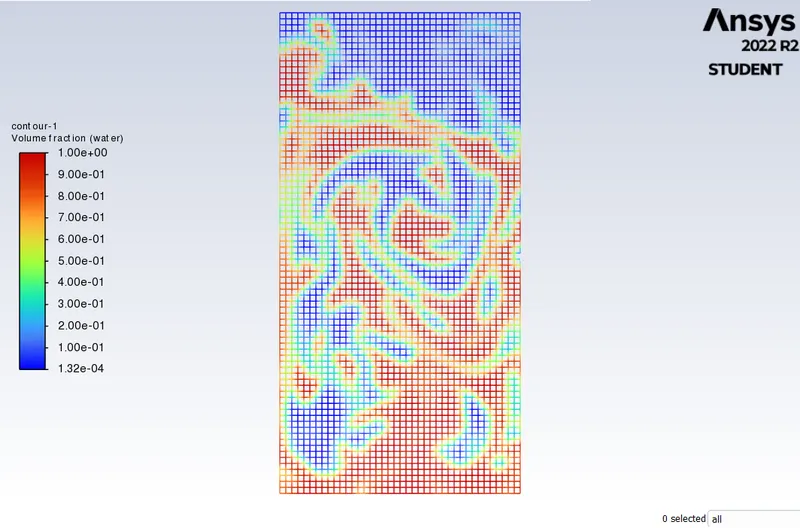
Result :-