Week 5 - Rayleigh Taylor Instability
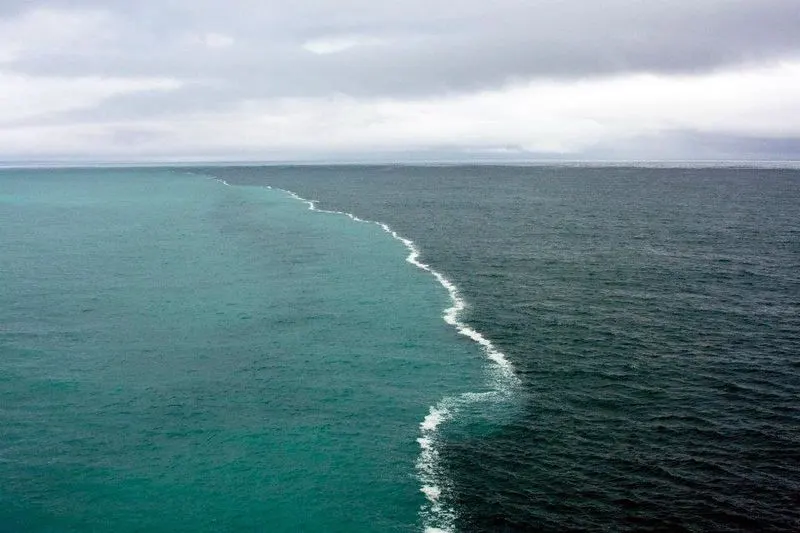
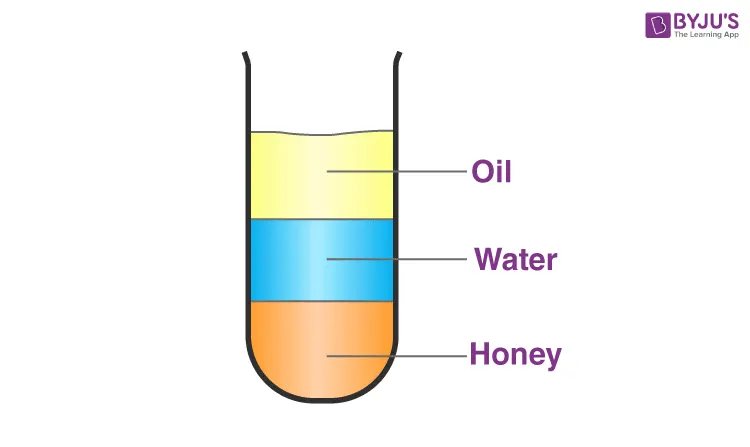
- Rayleigh Taylor Instability: It is an instability of an two liquid interfaces of two different densities of liquids,when this two different densities fluid meets & starts interfacing each other than the stability over that point of interface is called as RT Instability. some pratical examples for CFD models are water of different denisities meeting each other, oil mixing with water, paint mixing with water/liquid, medicine disolving in water. etc.

- AIM :Perform the Rayleigh Taylor instability simulation for 2 different mesh sizes with the base mesh being 0.5 mm.
- procedure : Solving & Modelling approach
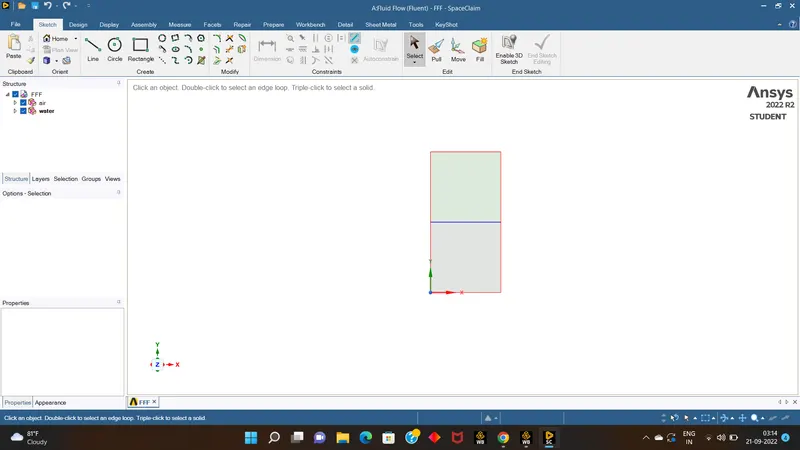
- firsit open the geometry & create the geometry of two surfaces of air & water medium,
- than on coping the two surfaces do the share prep over the workbench so we can see a single edge will be shared between two surfaces.
- than exit fro the geometry & open meshing
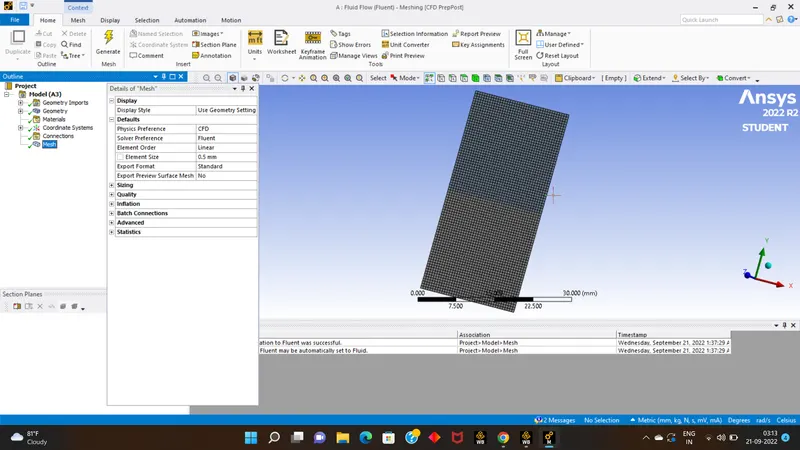
- firist initially generate mesh over the 2 surfaces, than give the elements size to the mesh as to be performed by the aim ,as 0.5mm & generate the meshing over the surfaces.
- than close the meshing surfaces and open the setup part with double precession with 4 parallel setups.
- than go for seting up model with transient mode ,enable gravity & set it as 9.81.
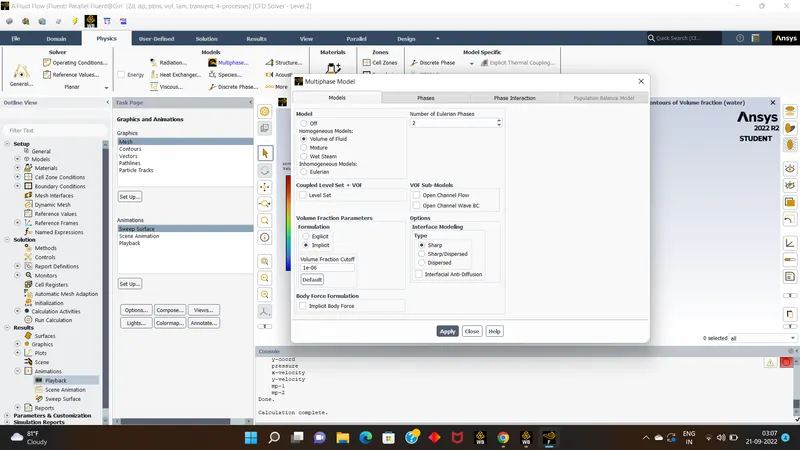
- than for multiphase model> enable the option volume of the fluid,with Implict Formulation.
- than for setting up materials,select materials as air & water-liquid.
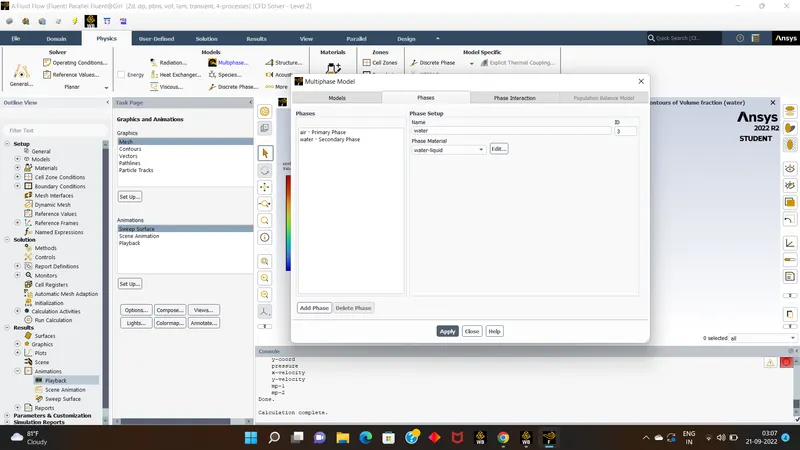
- Than go for phases & rename the phases as air ,water & assign the appropirate material to respective phases.
- Than go for initalization .
- After initalization go for patch,select the phase as water & varieble as volume fraction, set the value 1 for water phase & 0 for air phase.
- and finally Run the calculation part. for the time step size of 0.005 & number of time step is 500.
- than wait for a few minutes till the calculation gets complete.
- And these were the results obtained.
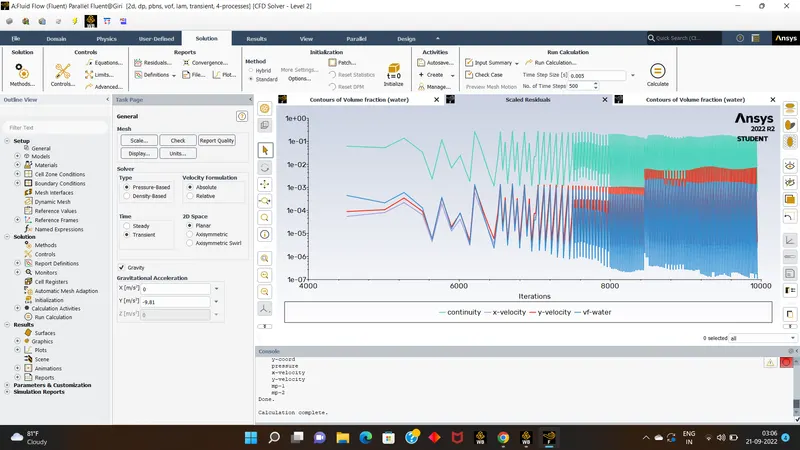
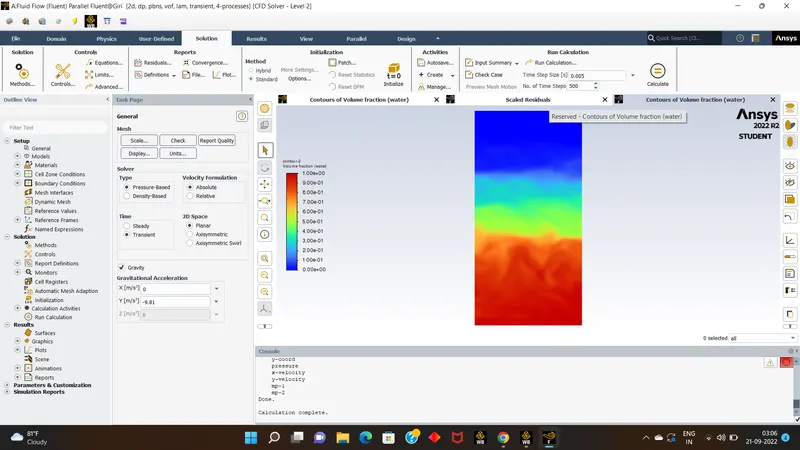
- Reults: we can observe the the changes in the instability of two liquids after some time of a calculation & finally we can see the final result of the two liquids after changing there interfaces.
- now we look for different mesh size i.e element length 1mm.
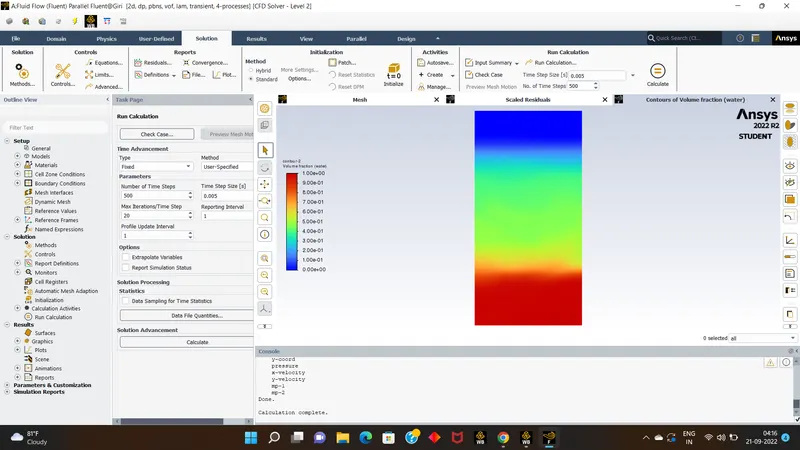
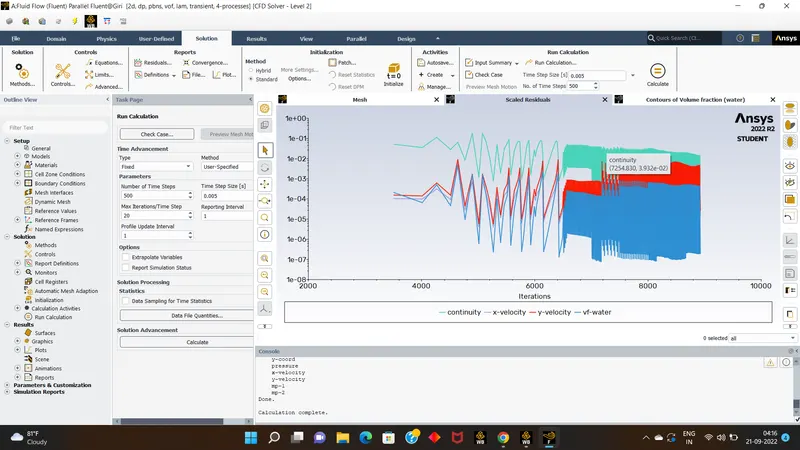
- on comparing both we can say that the finer mesh has less instability & more the mesh element for the surface has more instability.
- when we done with user defined material we didnt see any changes at the interface.it may be because of equal densities of two liquids.
- ATWOOD NUMBER: It is a dimensionless number used in the study of hydrodynamic instabilites in density stratified flows. It is a dimensionless density ratio defined as
A=(ρ1-ρ2)/(ρ1+ρ2)