Week 5 - Rayleigh Taylor Instability
Rayleigh Taylor instability
"It is the instability of dense fluid above a lower density fluid in constant gravitational field is known as rayleigh taylor instability first observed by rayleigh"
Examples of Rayleigh taylor instability includes behaviour of water suspended on water,less denser fluid accelerating in more denser fluid etc
The simplest case in which rayleigh taylor instability arises is for two semi-infinite incompressible and inviscid fluids like heavier fluid with density `rho2` and fluid `rho1`
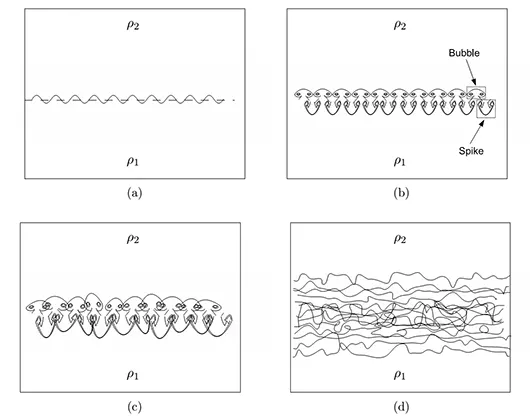
This figure represents the evolution of the Rayleigh–Taylor instability from small wavelength perturbations at the interface
(a) which grow into the ubiquitous mushroom shaped spikes (fluid structures of heavy into light fluid) and bubbles (fluid structures of light into heavy fluid)
(b) and these fluid structures interact due to bubble merging and competition
(c) eventually developing into a mixing region
(d) Here ρ2 represents the heavy fluid and ρ1 represents the light fluid. Gravity is acting downward and the system is RT unstable.
Procedure for the simulation
1)Setting the geometry in spaceclaim
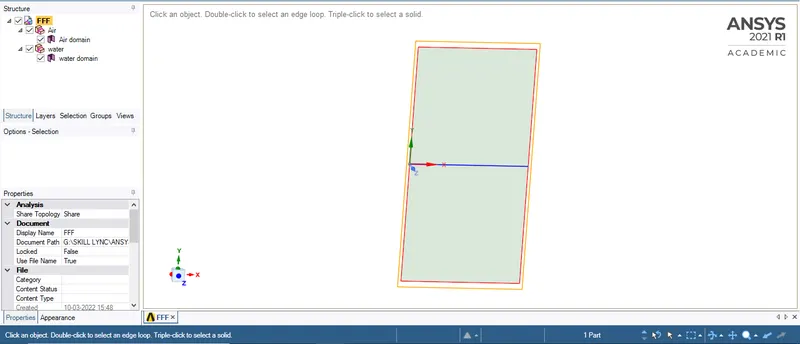
The dimension of the surface is 20 mm X 20 mm.
Here two surfaces are created and named as water and air,the topology is selected as share for the conformal mesh,one single blue line is shared between two surfaces.
2)Creating the mesh of appropriate element size
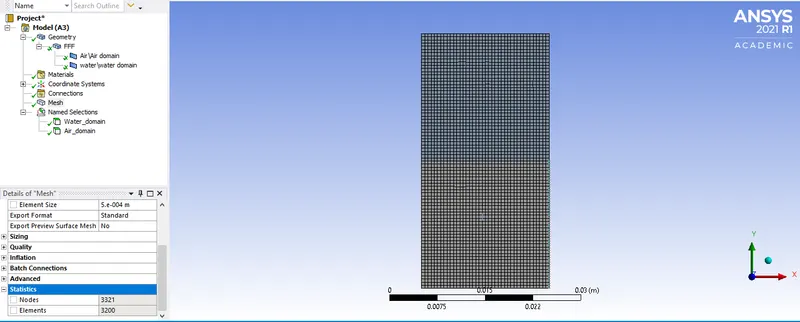
Here the mesh is created of element size 0.5mm,total number of cell count are 3200.
3)Setting up the physics for the simulation and select the solution method
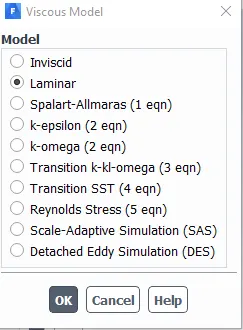
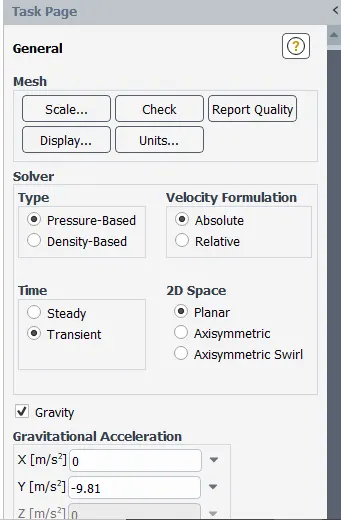
The transient simulation is selected here
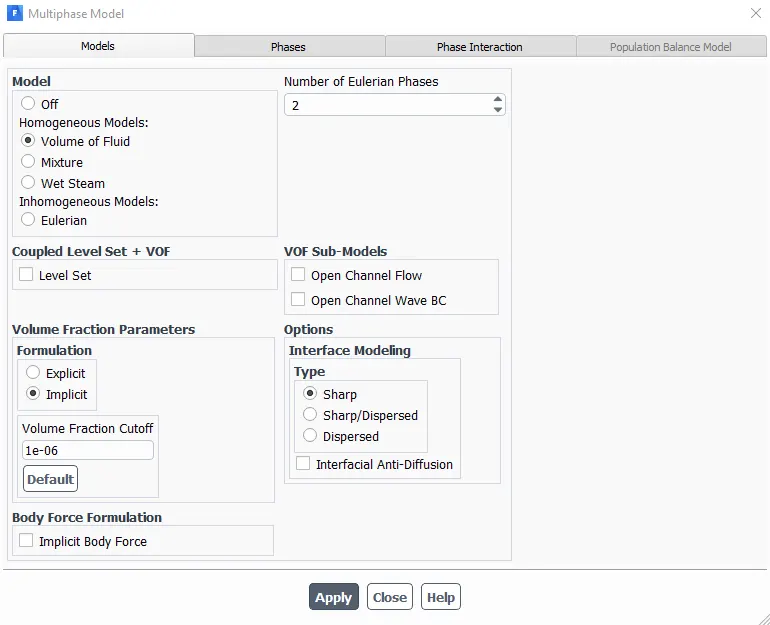
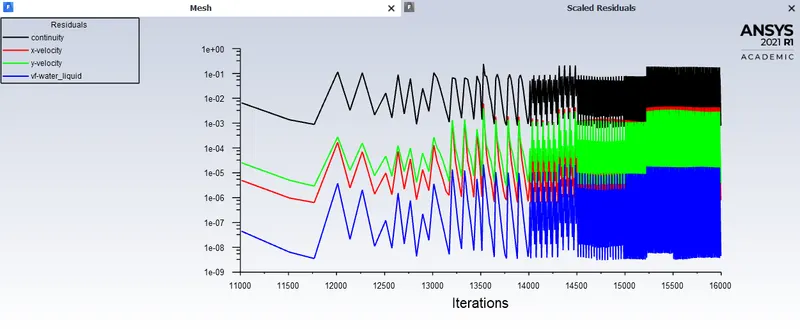
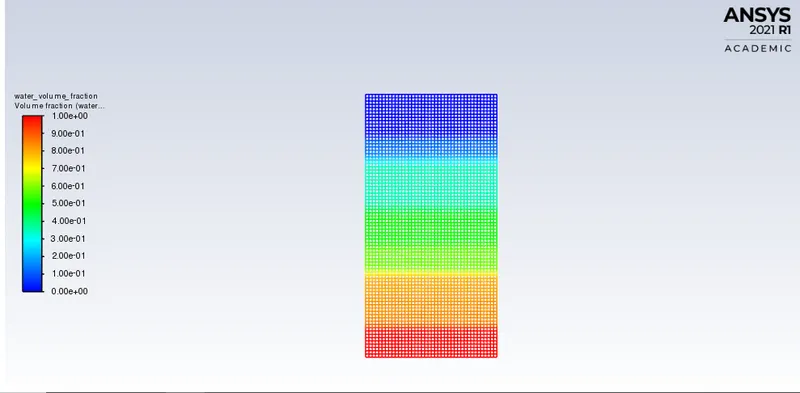
Simulation for the mesh size 0.3 mm
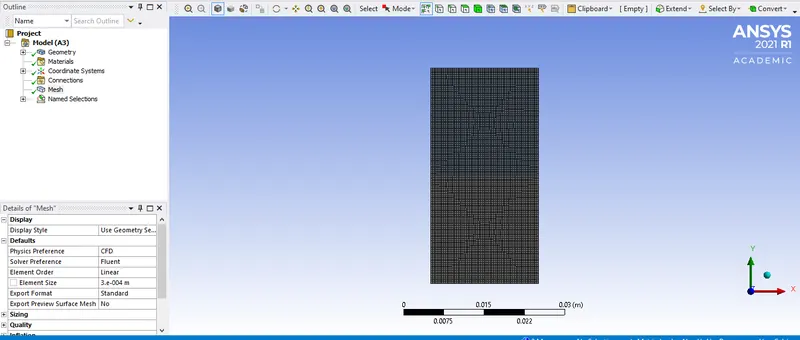
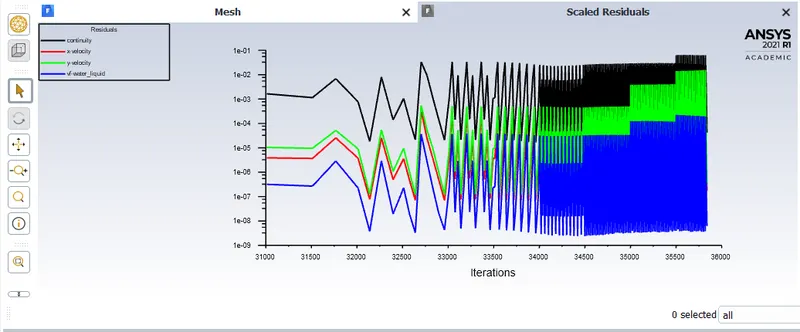
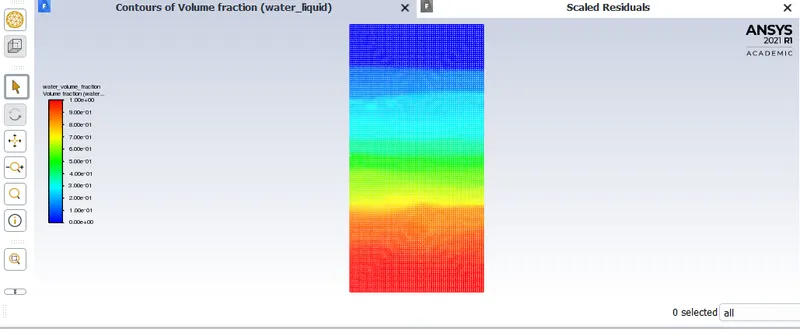
youtube link for the animation
SIMULATION FOR THE USER DEFINED MATERIAL
`rho=400 (kg)/m^3`
`mu=0.001 (kg)/(ms)`
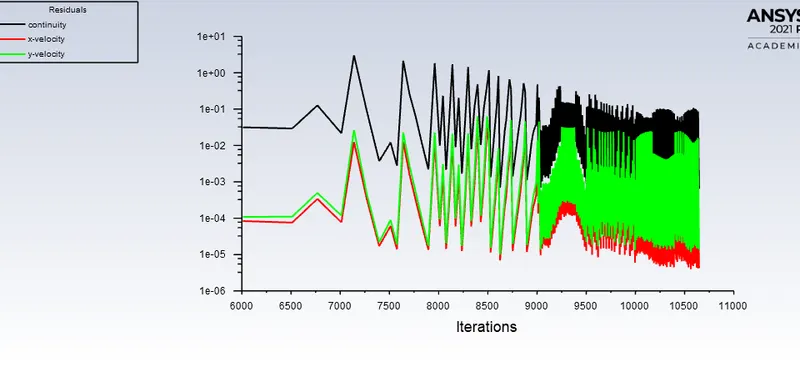
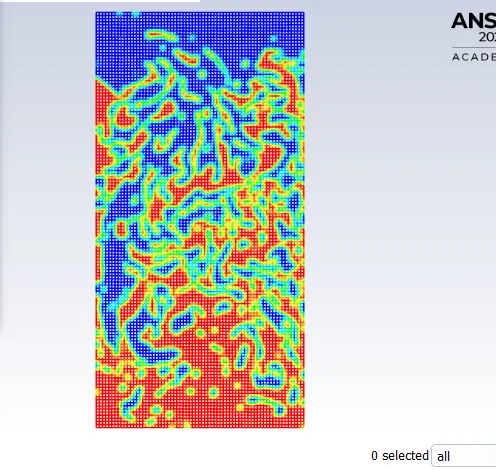
Due to high viscosity of the fluid the growth of the rayleigh taylor instability is slow,and we can see that in below animation
Atwood number: It is the dimensionless number in hydro-dynamics used for the study of hydrodynamic instabilities in density stratified flow,it is a dimensionless density ratio defined as
`A=(rhoh-rhol)/(rhoh+rhol)`
where `rhoh`is density of the heavier fluid
`rhol`is density of the lighter fluid
Atwood number for case 1
A1=(998-1.225)/(998+1.225)=0.9975
A2=(998-400)/(998+400)=0.4275
higher the atwood number the growth of instability is fast. mixing is better for higher Atwood number.