Rayleigh Taylor Instability
OBJECTIVE
To perform the Rayleigh Taylor instability simulation for 2 different mesh sizes with the base mesh being 0.5 mm with air-water mixture and a userdefined material-water mixture for the refined mesh.
THEORY
The Rayleigh-Taylor instability or RT instability is the instability of an interface between two fluids of different densities which occurs when the lighter fluid is pushing the heavier fluid. Examples include, the behaviour of water suspended on top of oil in the gravity of Earth, mushroom clouds like those from a volcanic eruption, and atmospheric nuclear explosion, supernova explosions in which expanding gases accelerated into denser shell gas, instabilities in plasma fusion reactors and inertial confinement fusion.
Water suspended on top of oil is an everyday example of Rayleigh Taylor instability and it may be modelled by two completely plane-parallel layers of immiscible fluid, the denser on top of the less denser and both subjected to the Earth's gravity. The equilibrium is unstable to any perturbations or disturbances of the interface: if a parcel of heaviest fluid is displaced downwards with an equal volume of lighter fluid displaced upwards, the potential energy of the configuration is lower than the initial state. Thus, the disturbance will grow and lead to a further release of potential energy, as the more the denser material move down under the effective gravitational field, the less dense material is further displaced upwards.
This was setup as studied by lord Rayleigh. The important insight by GI Taylor was his realisation that, this situation is equal to the situation when the fluids are accelerated, with the less than fluid accelerates into more denser fluid. This occurs deep underwater on the surface of the expanding bubble and in a nuclear explosion.
Types of instability and some practical cfd models that have been based on the mathematical analysis of Rayleigh Taylor waves
- Ritchmyer- Meshkov instability: arises when a shock wave interacts with an interface separating two different fluids. It combines compressible phenomena, such as shock interaction and refraction with hydrodynamic instability, including non-linear growth and subsequent transition to turbulence, across a wide range of Mach numbers
- Plateau-Rayleigh instability: often just called Rayleigh instability, explains why and how a falling stream of fluid breaks up into smaller packets with the same volume but the lesser surface area.
- Kelvin-Helmholtz instability: can occur when there is velocity shear in a single continuous fluid or when there is a velocity difference across the interface between two fluids. An example is wind blowing over the water surface.
ATWOOD NUMBER (A)
The Atwood number is a dimensionless number in fluid dynamics used in the study of hydrodynamic instabilities in density stratified flows. It is a dimensionless density ratio which is defined as
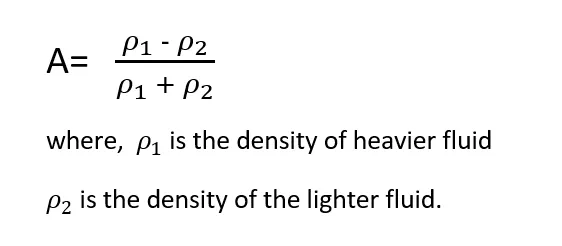
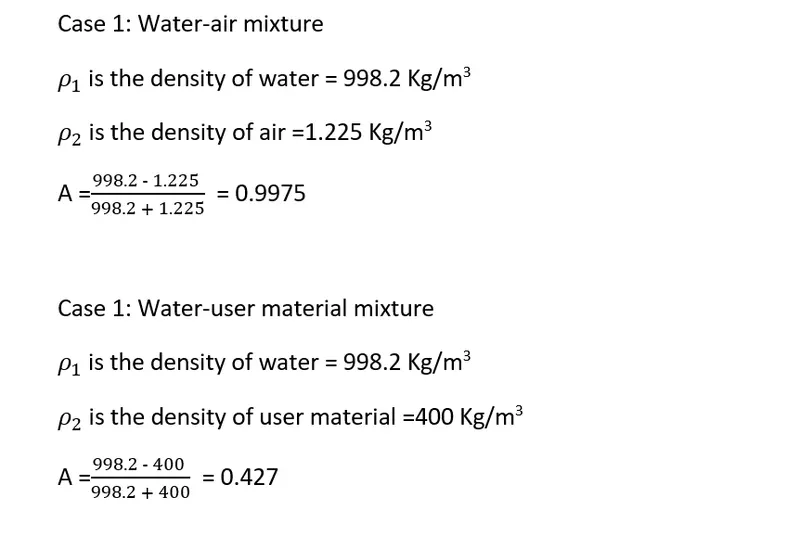
When A is very close to 0, RT instability flows take the form of 'symmetric' fingers of fluid.
When A is very close to 1, the much lighter fluid, 'below' the heavier fluid, takes the form of larger bubble-like plumes.
PROCEDURE/WORKFLOW
- GEOMETRY
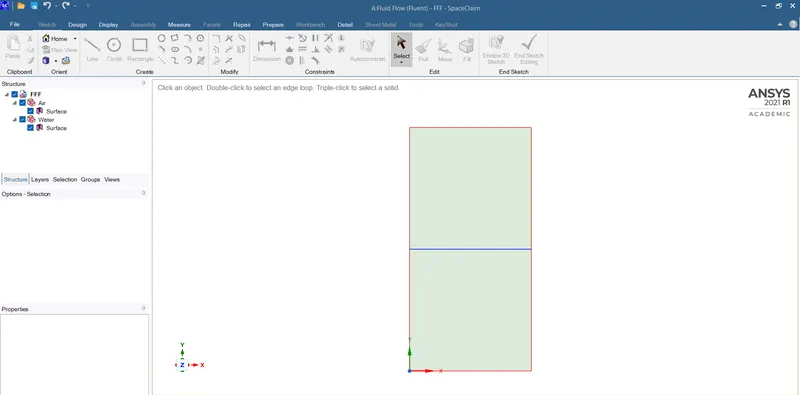
- Draw a square of 20*20mm in the XY plane of spaceclaim and pull it to make a surface.
- Move the surface to a new component and rename as air.
- Draw another square of 20*20 mm in the XY plane itself, but above the previous square and pull to make a surface, move it to a new component and rename as water.
- Make sure that the share topology is enabled.
- MESHING
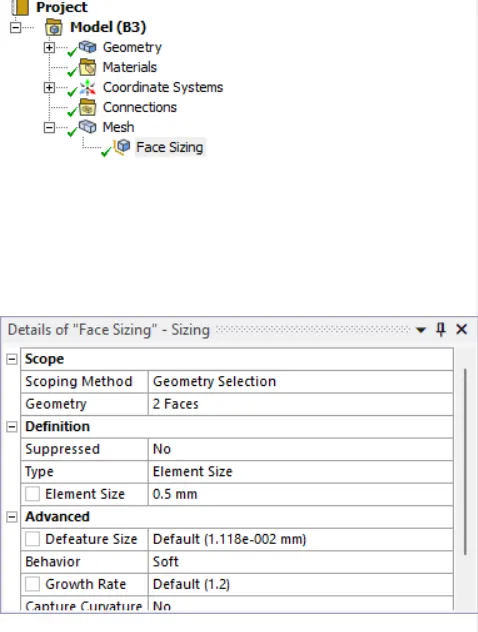
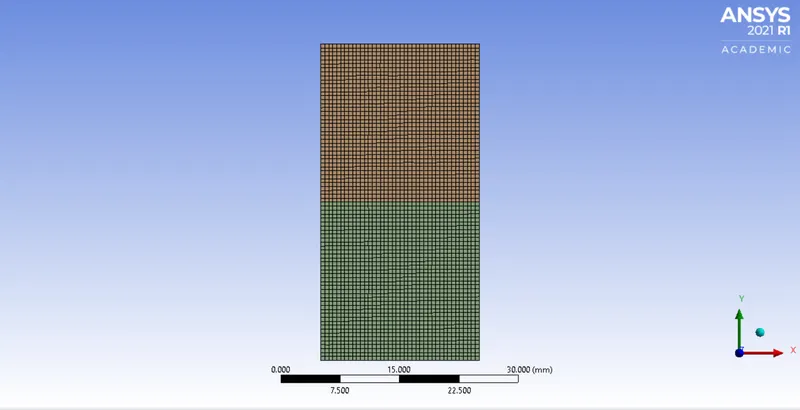
- Insert sizing->select both the faces->provide element size
- SETUP
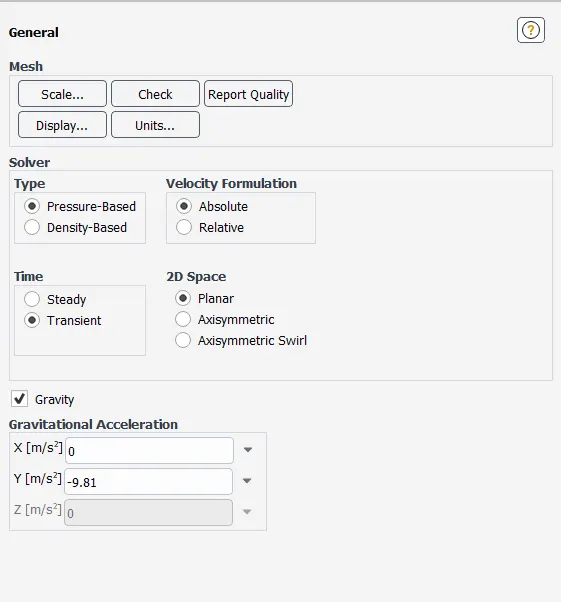
- Double precision-parallel
- Transient simulation
- Enable gravity (y=-9.81 m/s^2)
-
- Setting up Physics
- Viscous-laminar flow
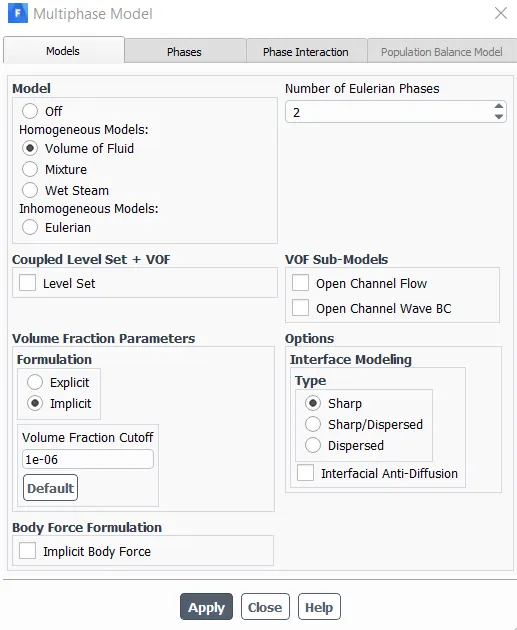
- Multiphase model->volume of fluids->Eulerian phases-2 ->use implicit model
- Setting up Physics
-
- Materials
- One material is air.
- Fluent data base-select water-copy-close
- Materials
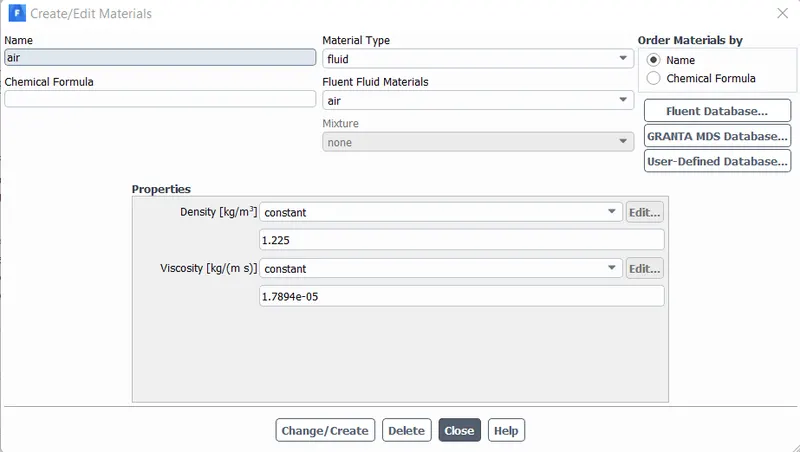
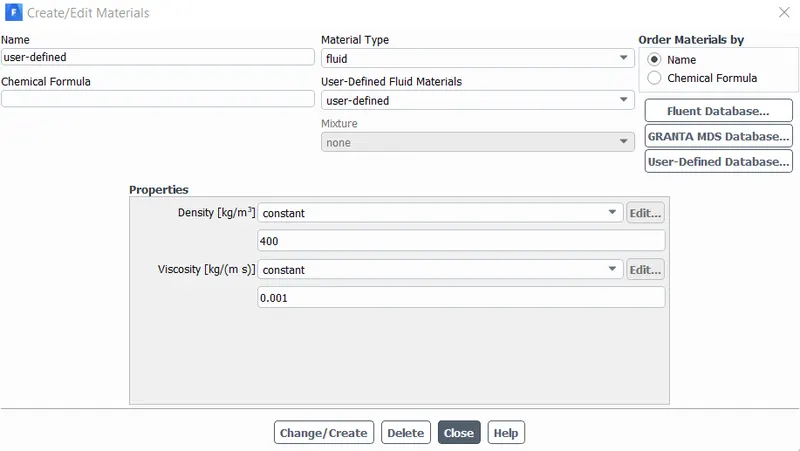
- For the final case of user-defined material, select any material from fluent data base, rename it, change the properties as density =400Kg/m^3 and viscosity as 0.001 Kg/m-s
-
- Phases
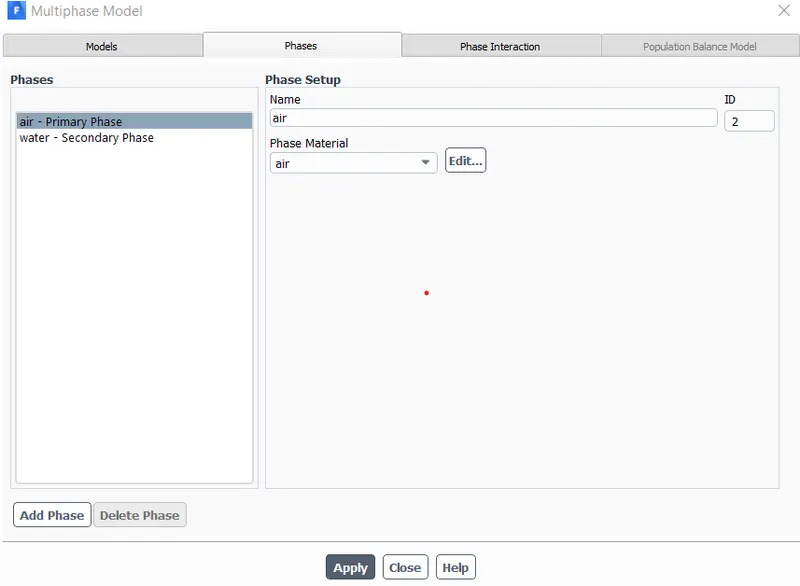
- Multiphase->phase 1->rename (air)->phase 2->rename (water)->select materials(air/water) from dropdown simultaneously
- Phases
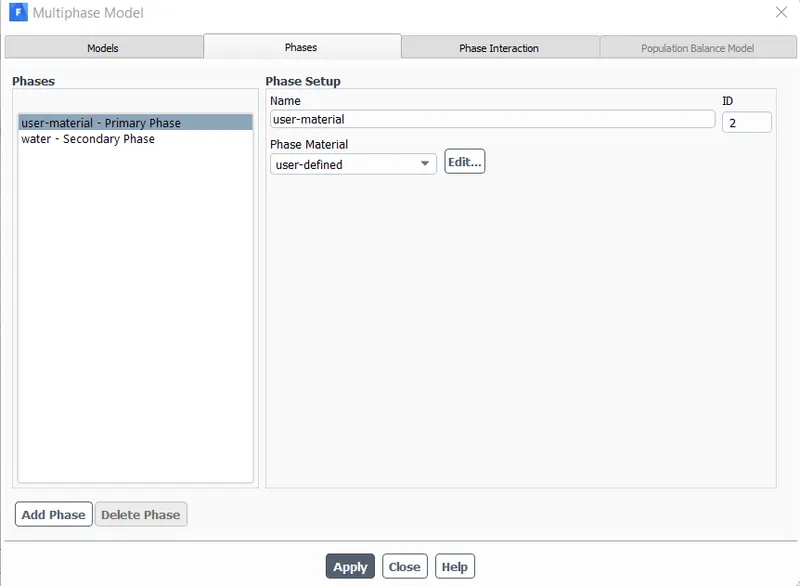
- For the final case of user-defined material, rename phase 1 as user-material and select the user material from the drop-down.
- SOLUTION
- Hybrid Initialization
- Patch
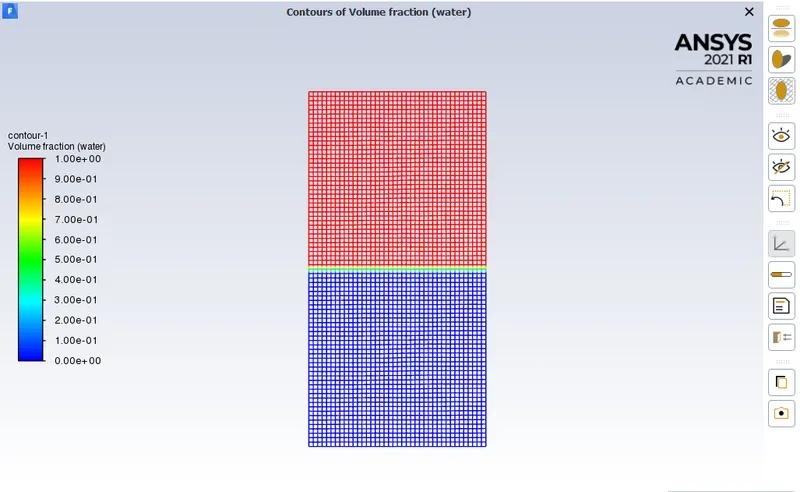
- Phase->water->volume fraction->select water surface->value =1-> patch
- Phase->water->volume fraction->select air surface->value =0-> patch
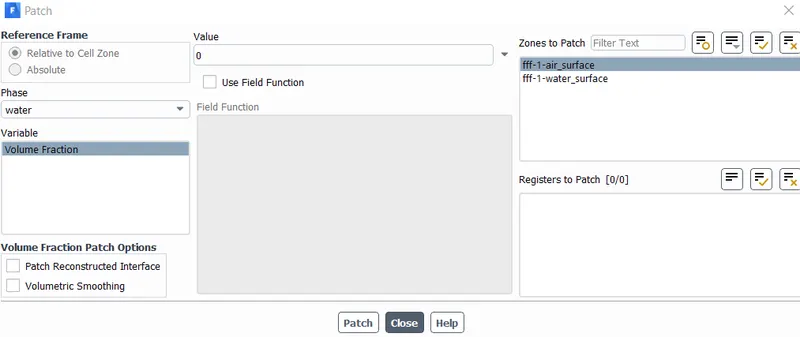
- For user defined material, Phase->water->volume fraction->select air surface ->value =0-> patch
-
- Creating contours
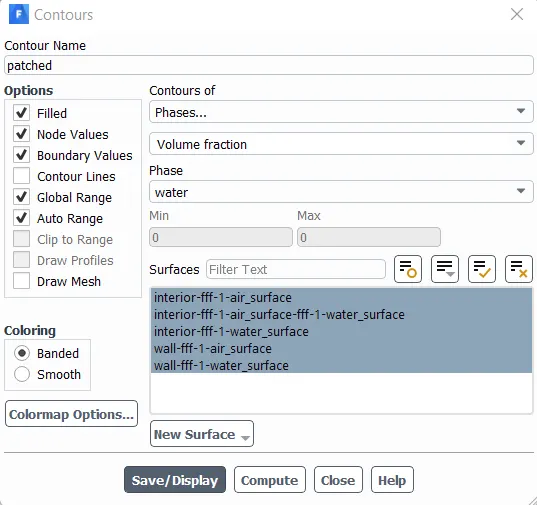
- Post-processing->contour->phases->volume fraction->water->select all->save and display
- Creating contours
-
- Provide appropriate time steps and run the simulation
- Creating movie
- Enable autosave

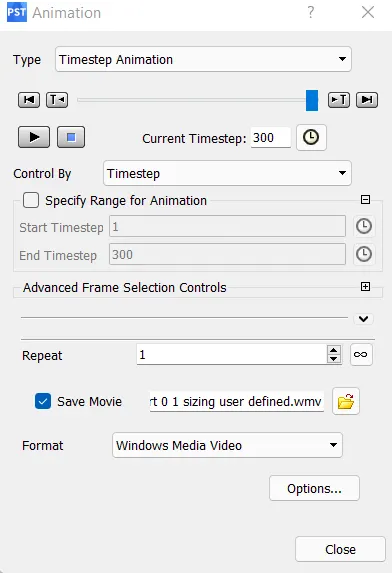
- Results->save->provide directory->play
RESULTS and PLOTS
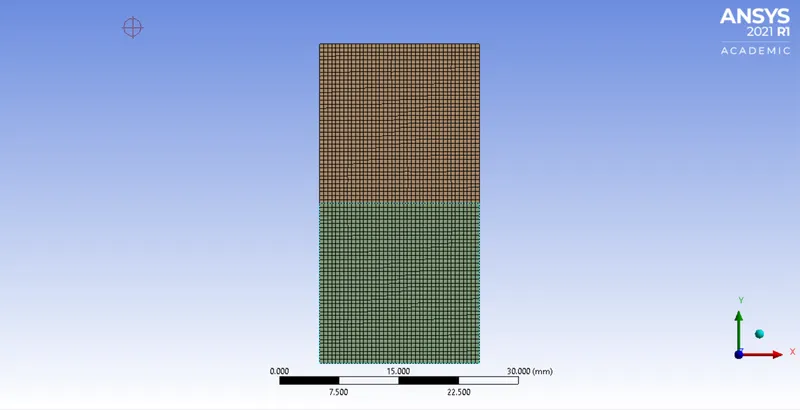
- base mesh
| material | air-water |
| element size | 0.5 |
| no: of elements | 3200 |
| timestep | 0.005 |
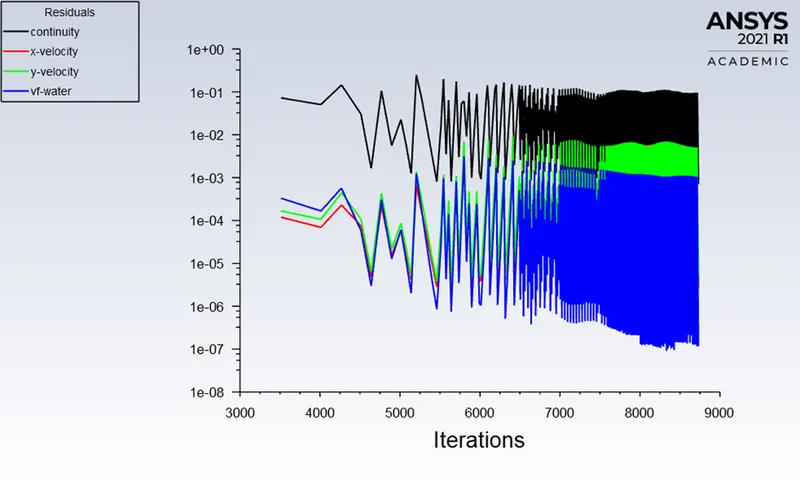
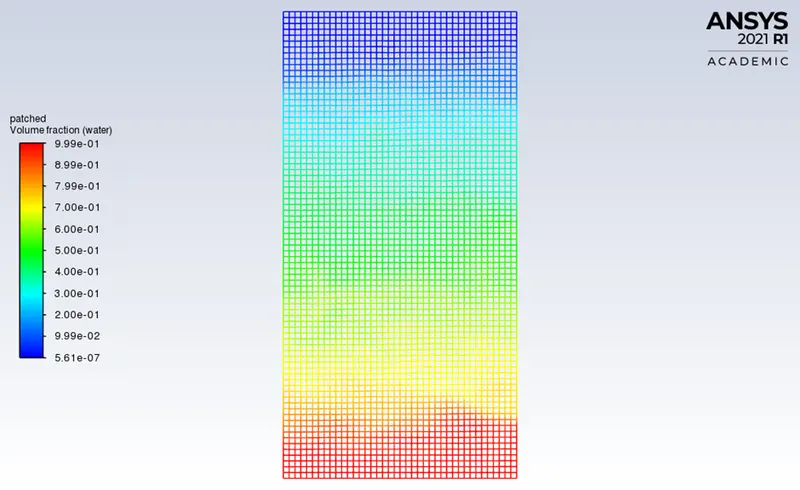
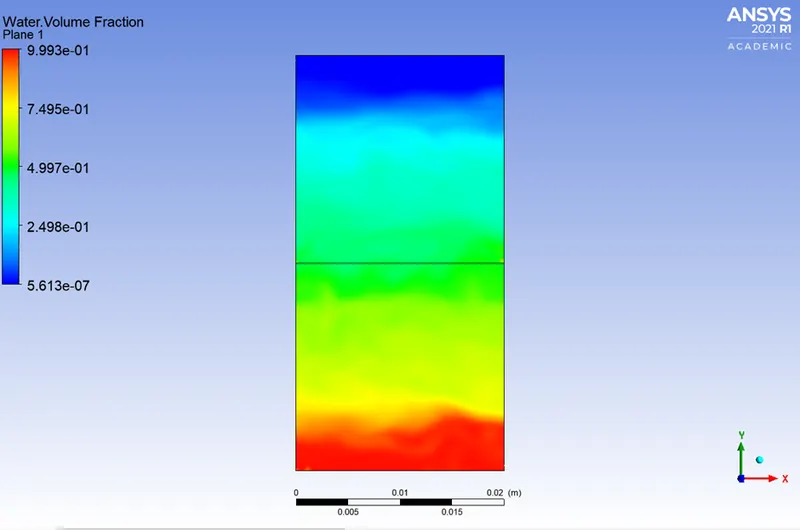
link: https://youtu.be/QxQS6SwQW-A
- first mesh refinement
| material | air-water |
| element size | 0.3 |
| no: of elements | 8978 |
| timestep | 0.005 |
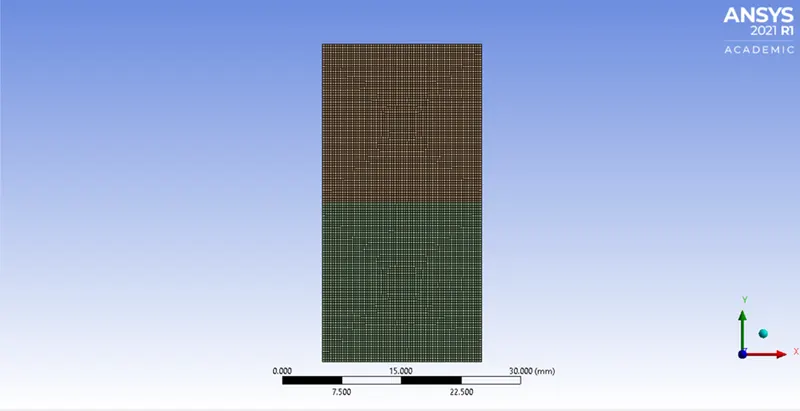
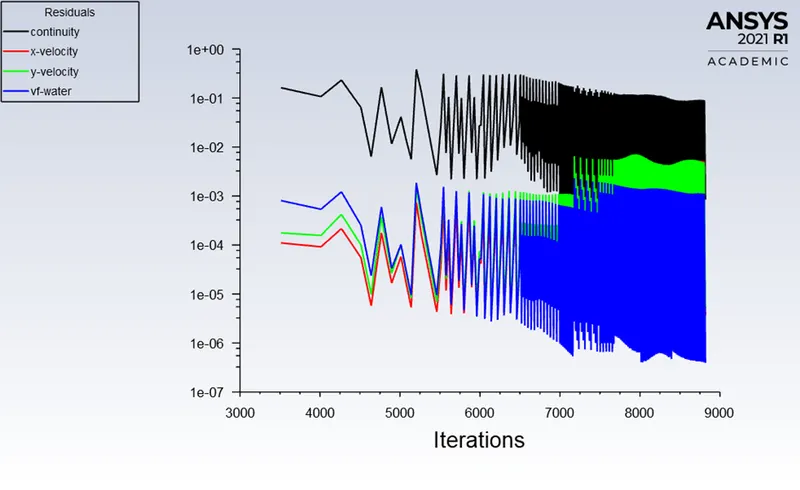
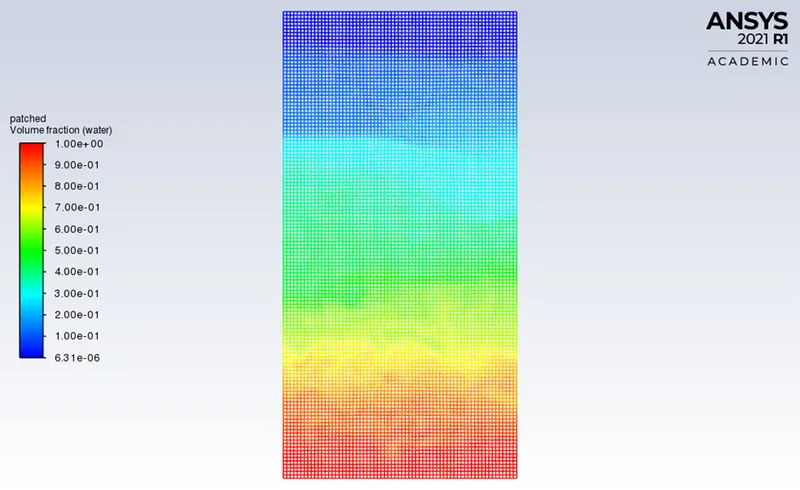
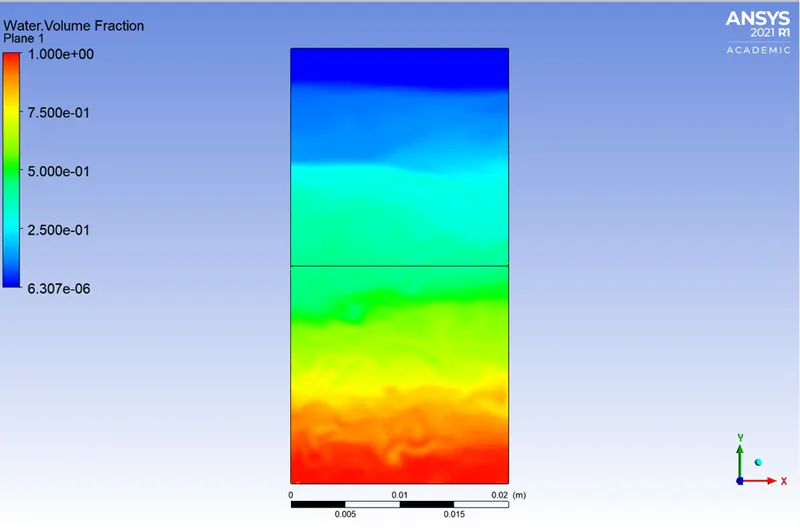
link:https://youtu.be/03mUMo0oR7Y
- second mesh refinement
| material | air-water |
| element size | 0.1 |
| no: of elements | 80,000 |
| timestep | 0.0025 |
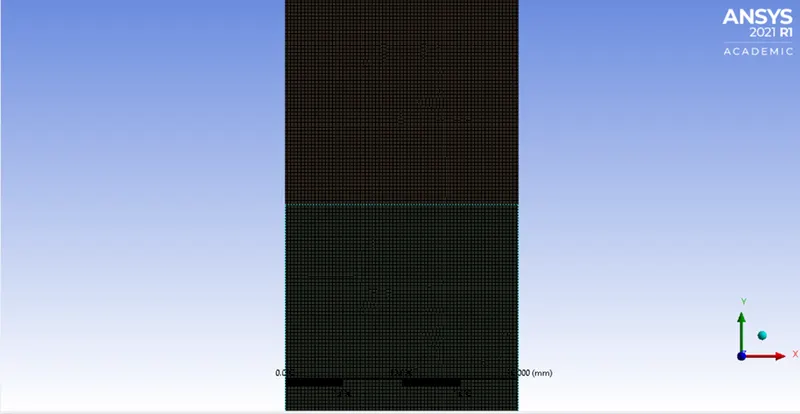
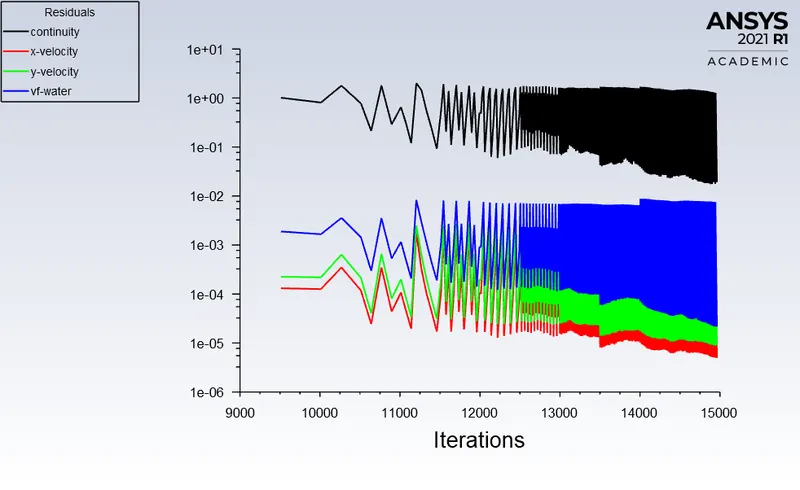
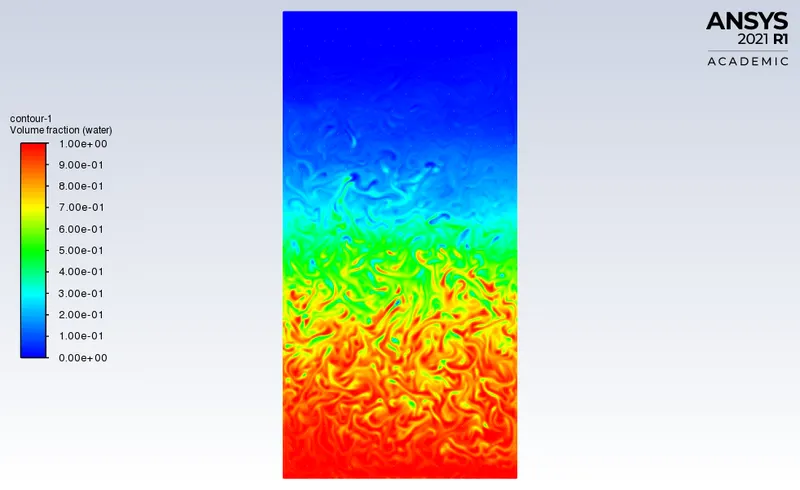
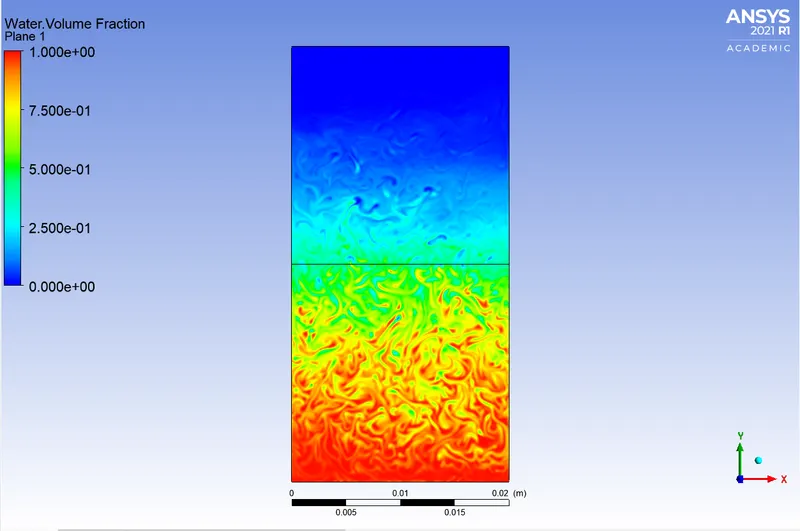
link: https://youtu.be/b-uKBBWa1Bk
- user-defined material
| material | user materal-water |
| element size | 0.1 |
| no: of elements | 80,000 |
| timestep | 0.0025 |
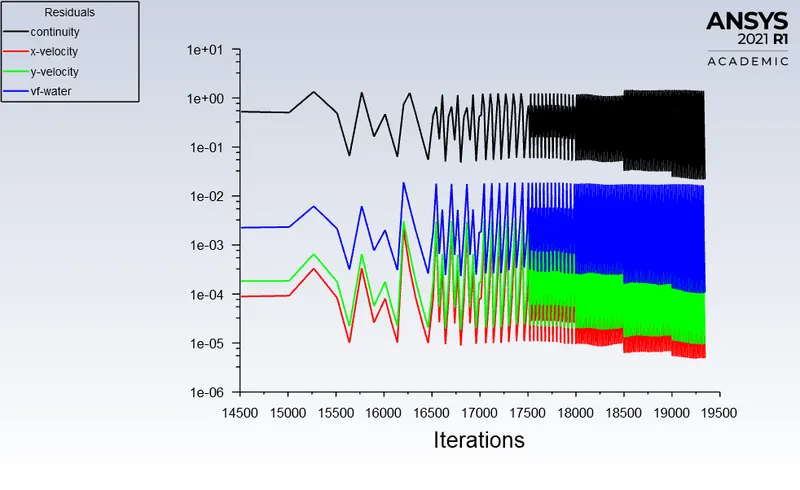
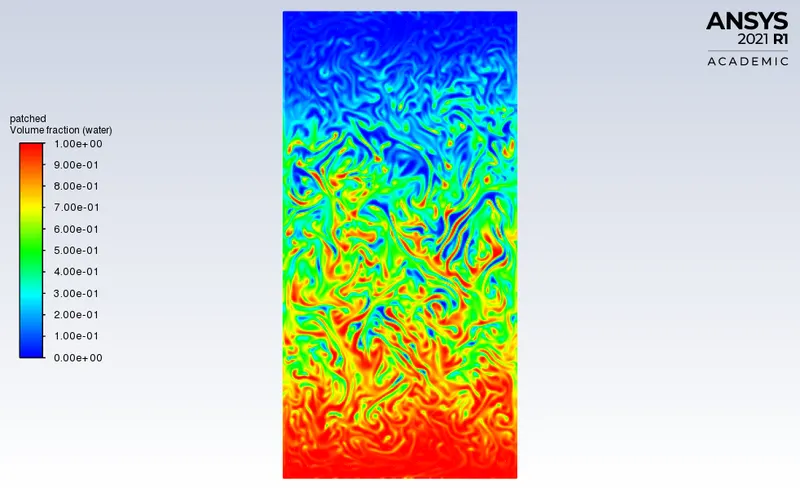
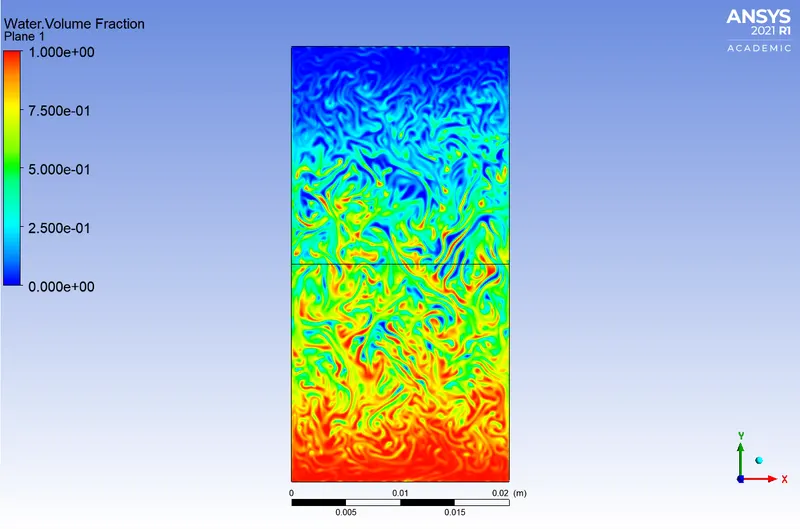
link: https://youtu.be/7Gvo1MP0LeA
CONCLUSION
- The simulation starts with the state of hydrostatic equilibrium and RT instability is observed at the interface when a lower density fluid pushes the higher density fluid due to which formation of shock waves at the interface takes place. Formation of air bubbles starts taking place which compresses the heavy fluid around it due to which the shock waves of multidimensional fashion generates and it gets more stronger as it moves upward.
- It is observed that, the more refined the mesh is, the more the simulation results gets smoother about the irregularities that take place at the interface of the two fluids.