Week 5 - Rayleigh Taylor Instability
Aim:
- To state some practical CFD models that have been based on the mathematical analysis of Rayleigh Taylor waves
- To perform the Rayleigh Taylor instability simulation for 2 different mesh sizes with the base mesh being 0.5 mm(Air and Water).
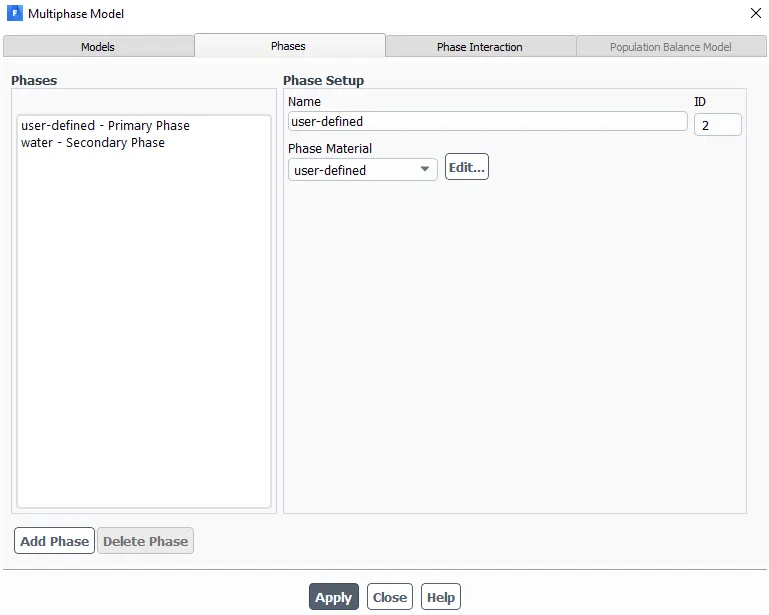
- To run one more simulation with water and user-defined material(density = 400 kg/m3, viscosity = 0.001 kg/m-s) for refined mesh.
- To define the Atwood Number & to find out the Atwood number for both the cases and explain how the variation in Atwood number in the above two cases affects the behavior of the instability.
RT instability:
The Rayleigh–Taylor instability, or RT instability (after Lord Rayleigh and G. I. Taylor), is an instability of an interface between two fluids of different densities which occurs when the lighter fluid is pushing the heavier fluid.
Examples include:
- The behavior of water suspended above oil in the gravity of Earth
- Mushroom clouds like those from volcanic eruptions and atmospheric nuclear explosions
- Supernova explosions in which expanding core gas is accelerated into denser shell gas
- Instabilities in plasma fusion reactors and inertial confinement fusion.
Other examples:
- RTI occurs at very large scales; e.g., interstellar gas, pushed out of the galactic plane by magnetic fields and cosmic rays, becomes RT-unstable if driven beyond its natural scale height (Zweibel 1991). It also occurs at very small scales; e.g., snapping shrimp, which produce most of the ambient noise in subtropical shallow waters throughout the world, produce their sound through collapse of a cavitation bubble, generated by a water jet formed from rapid claw closure; the bubble is destroyed through a Rayleigh-Taylor instability (Versluis et al. 2000). Similarly, RTI limits the driving pressure in the collapse of acoustically forced bubbles in sonoluminescence phenomena (Lin et al. 2002).
- RTI has a profound effect on Earth's climate. Winds off the coasts of Greenland and Iceland drive evaporation of the ocean surface making the upper layers saltier and heavier. This generates descending plumes that drive the abyssal ocean circulation, which in turn acts as a heat pump transporting warm equatorial waters up north. Without ocean overturning from RTI, northern Europe would likely face drastic drops in temperature (Calvin 1998).
- RTI plays a crucial role in all known forms of fusion, whether confinement be magnetic (Bateman 1979), inertial (Petrasso 1994) or gravitational (Burrows 2000). Regarding gravitational fusion, much work over recent years points to RTI as the dominant acceleration mechanism for thermonuclear flames in type Ia supernovae (Zingale et al. 2005, Schmidt 2006).
- More examples: https://blogs.egu.eu/divisions/gd/2021/02/17/rayleigh-taylor-instability-in-geodynamics/
Baseline simulation:
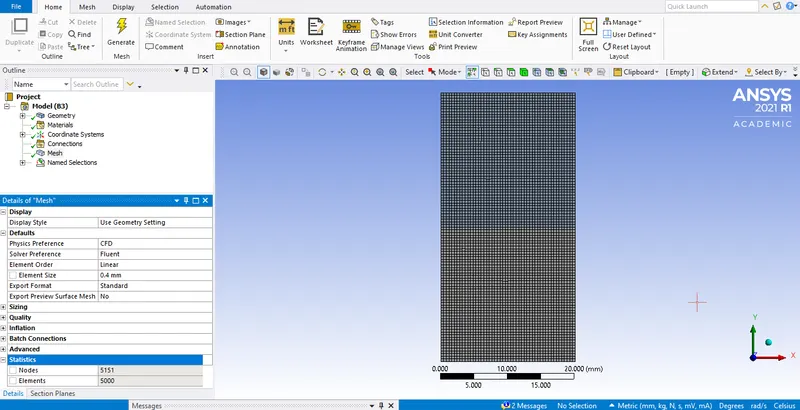
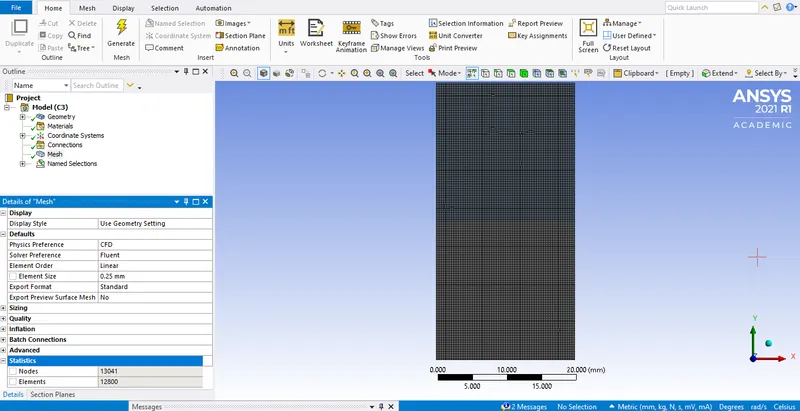
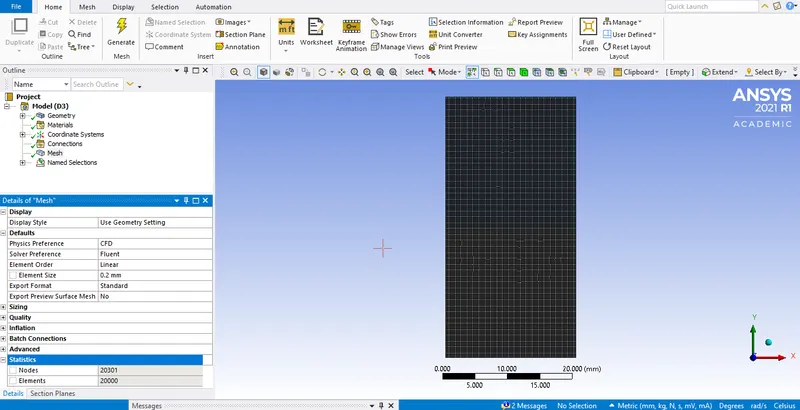
Mesh size = 0.05mm
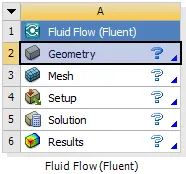
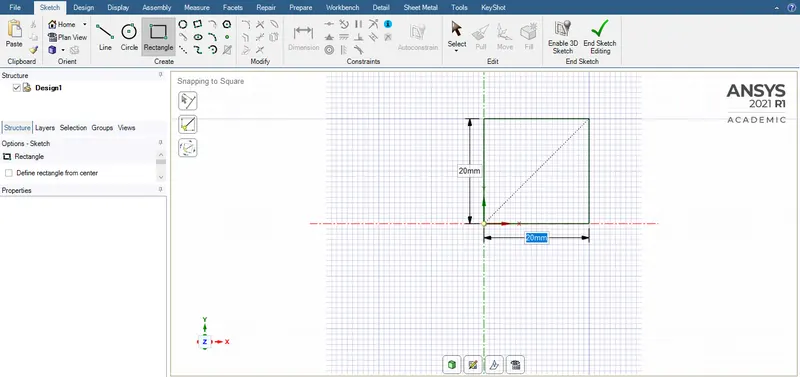
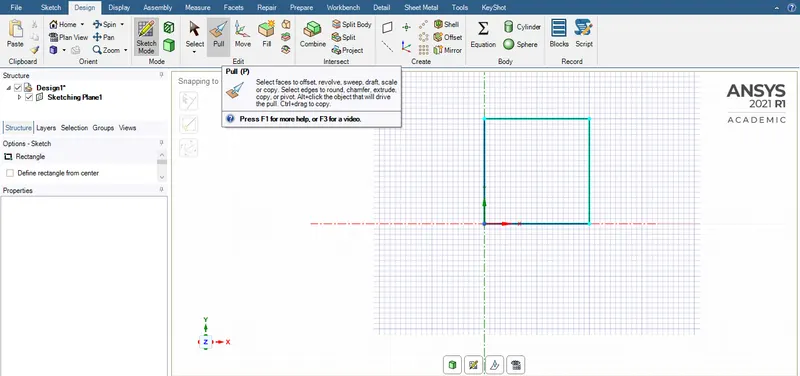
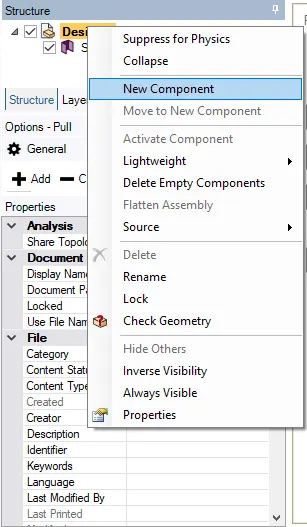
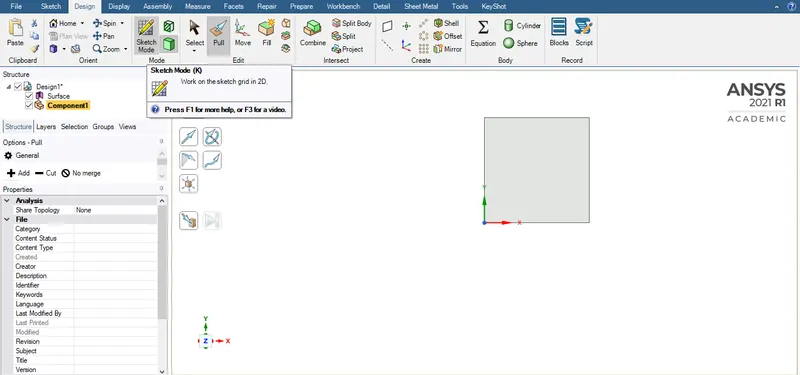
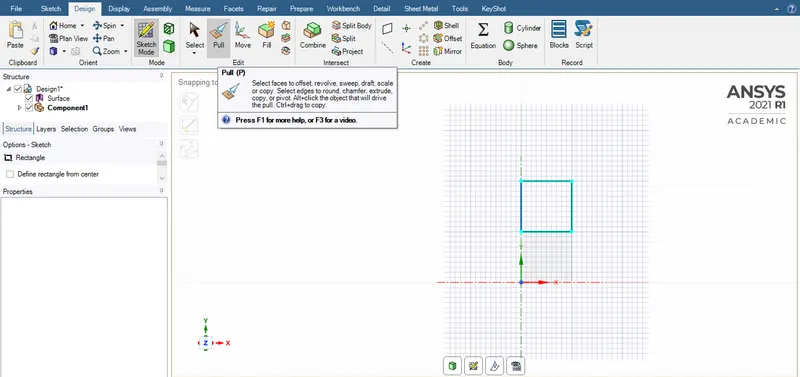
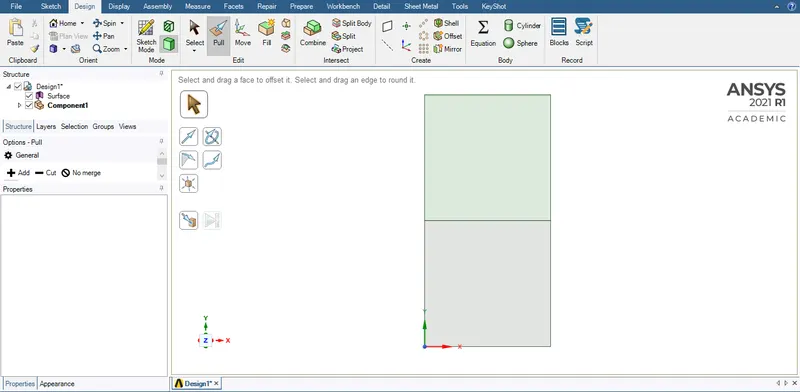
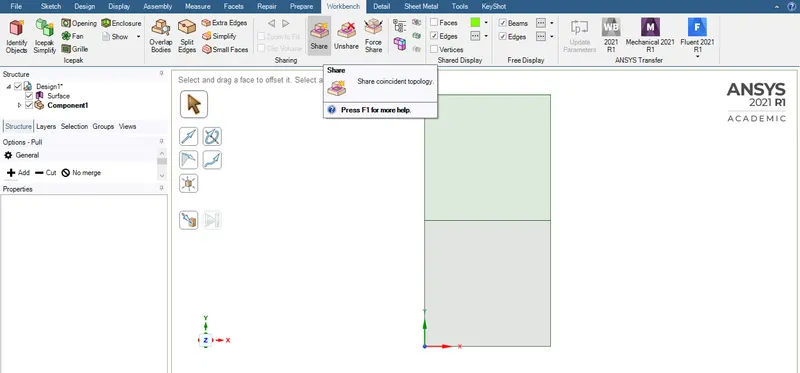
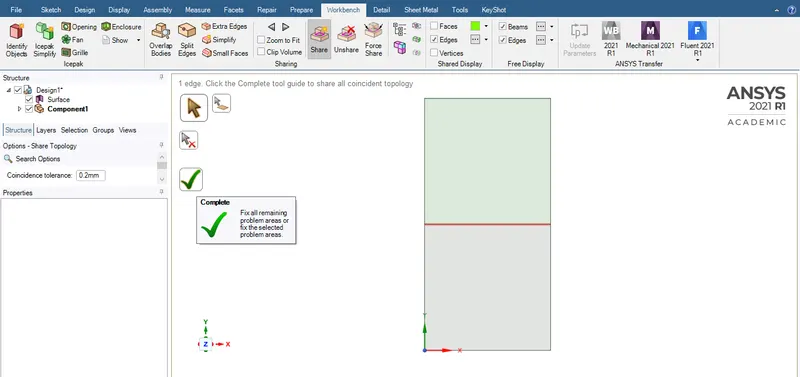
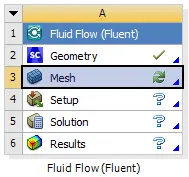
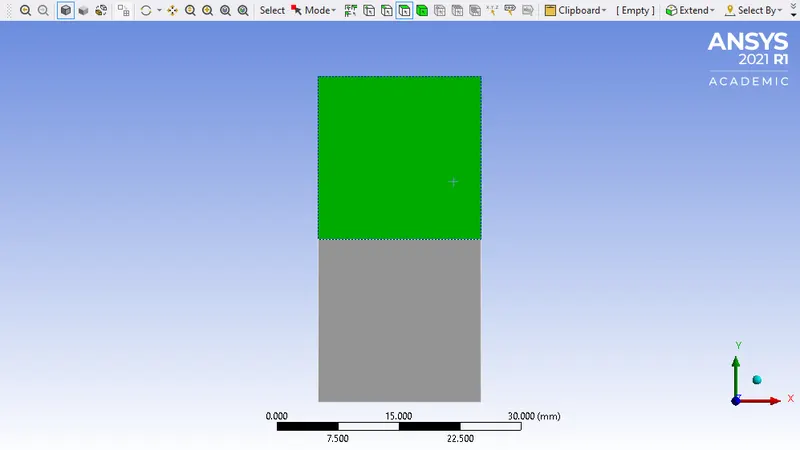
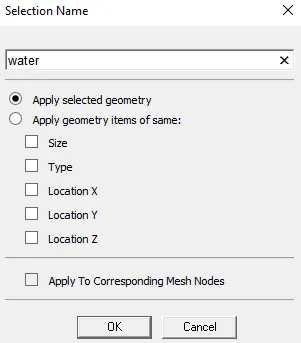
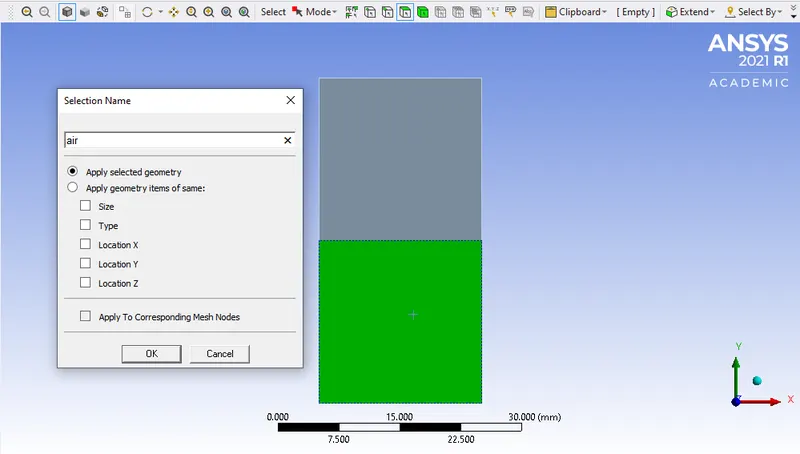
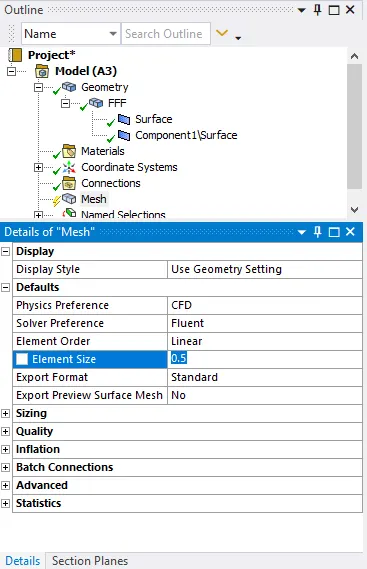
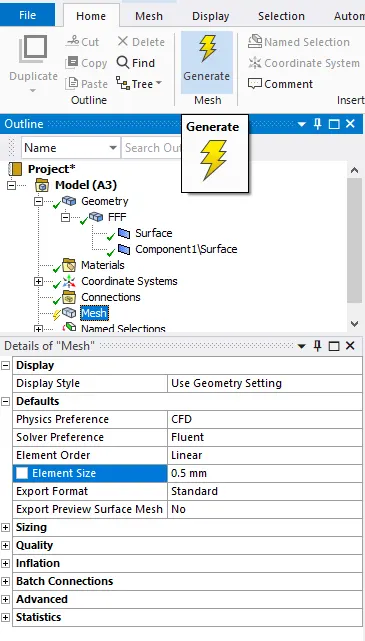
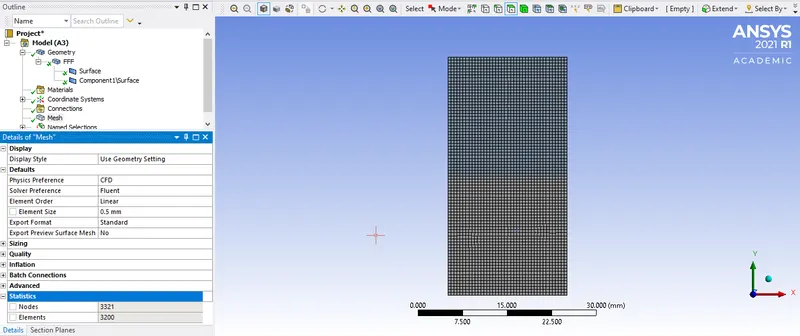
Update the mesh and close the window.
Open setup
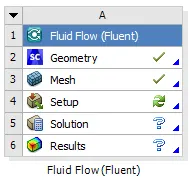
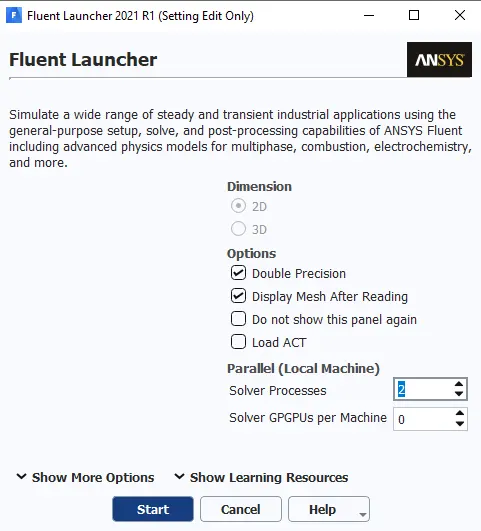
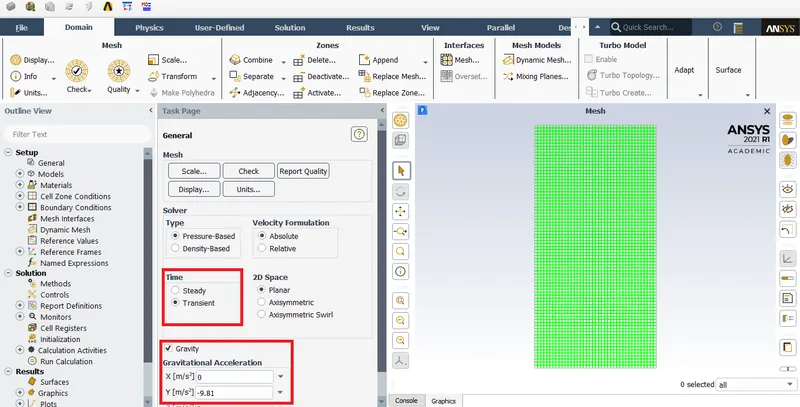
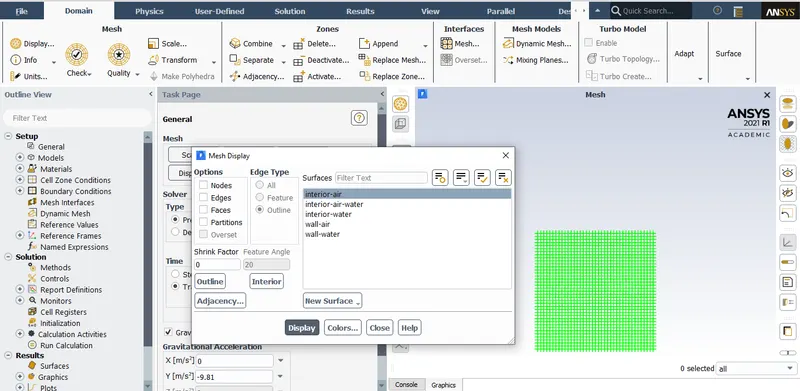
Check the components by displaying each component one by one.
Sometimes the less denser medium(air) could sit on top of the more denser medium(water).
This error can come to exist when the plane in which the geometry has been drawn gets mixed up.
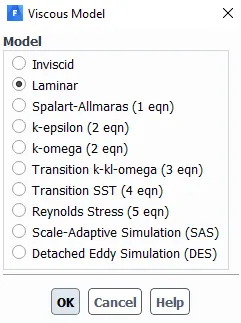
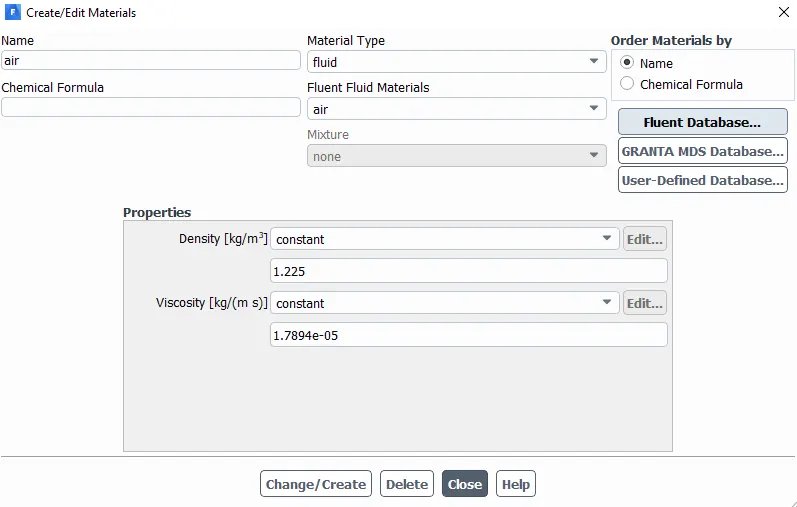
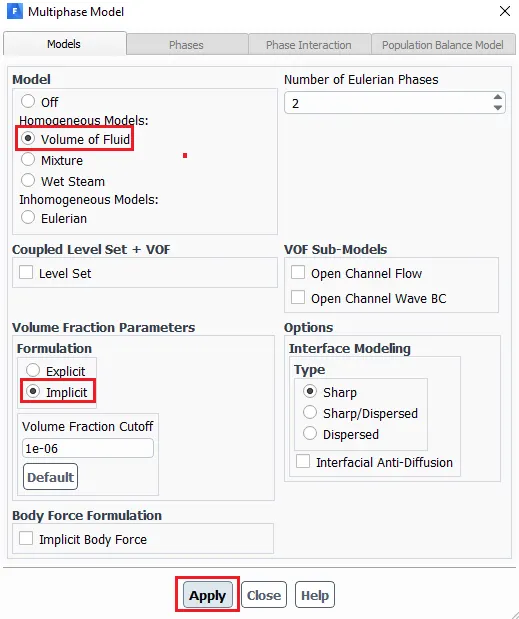
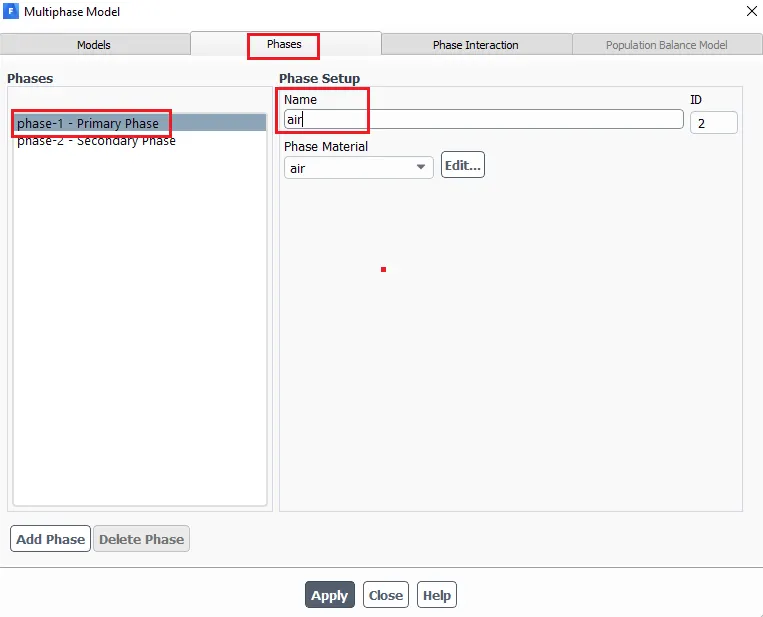
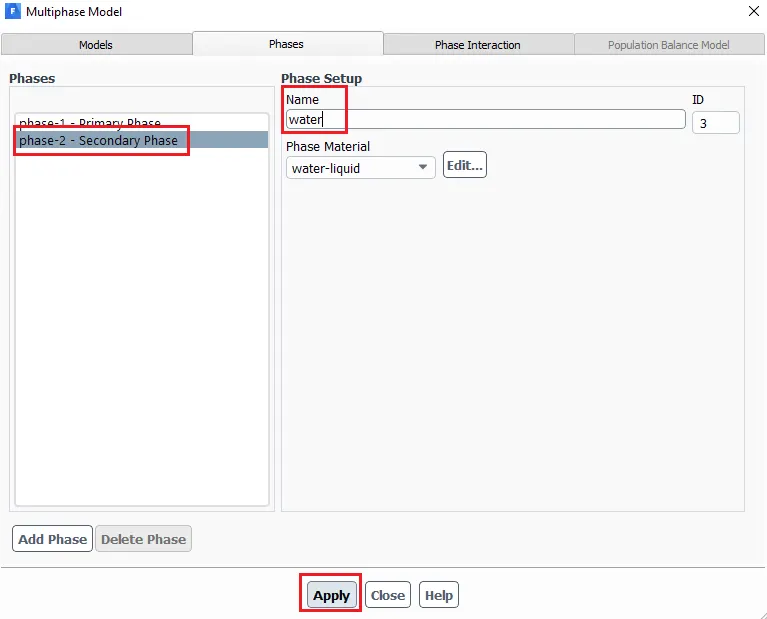
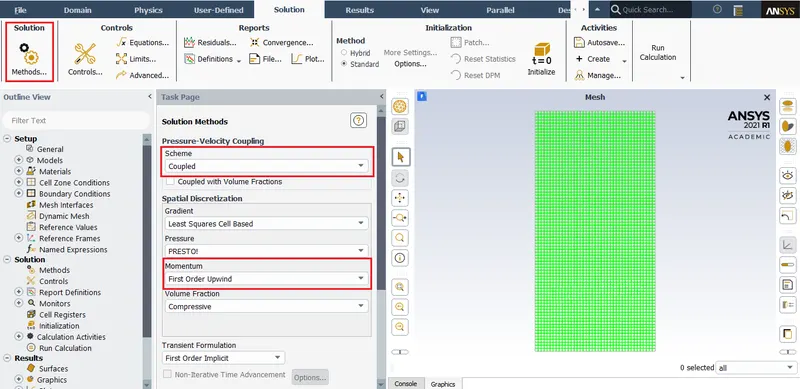
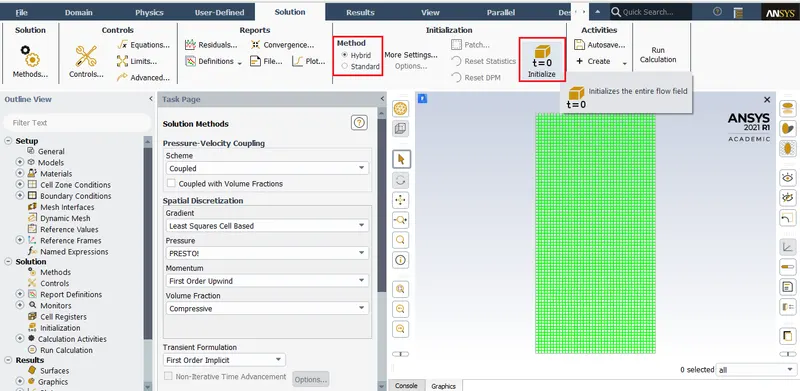

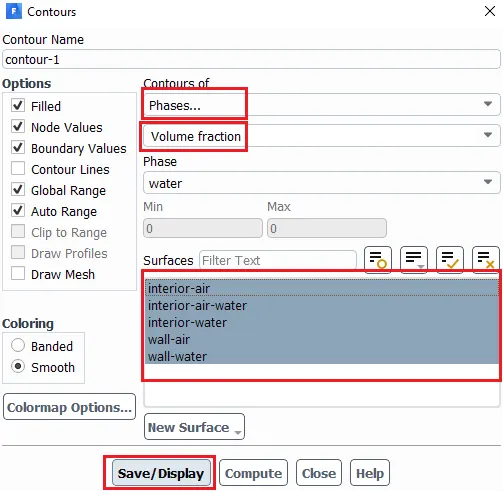
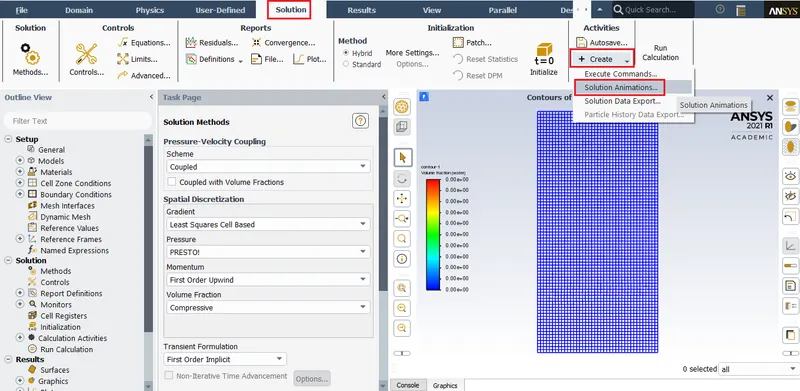
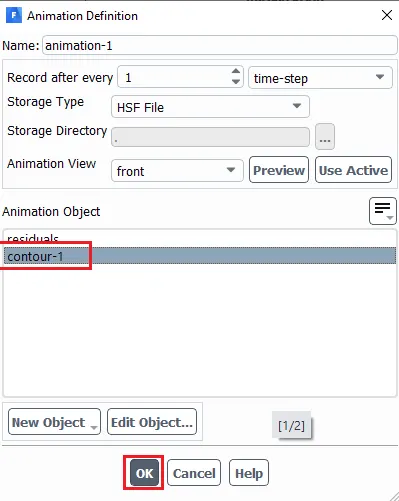
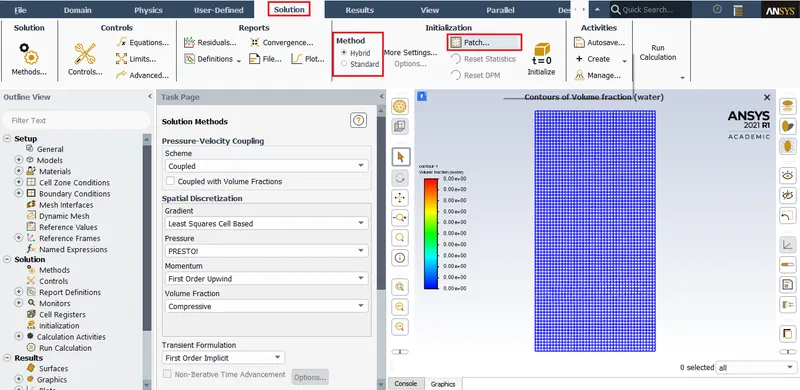
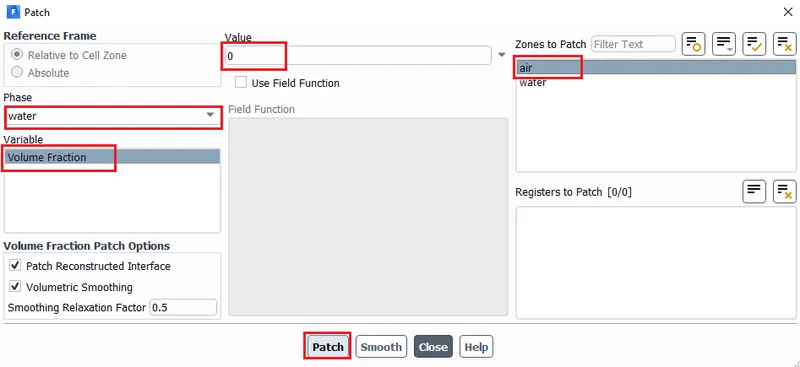
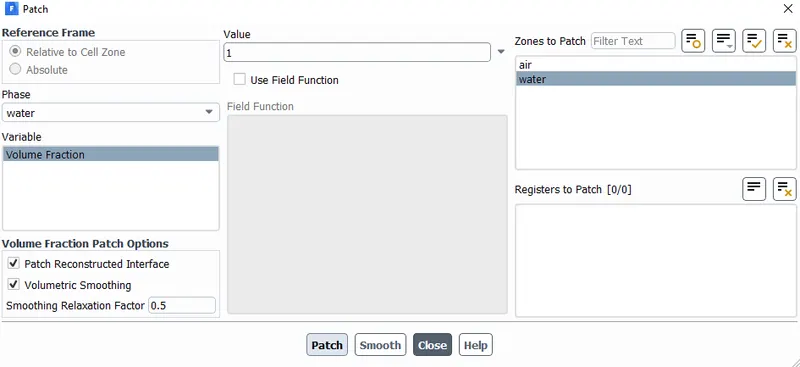
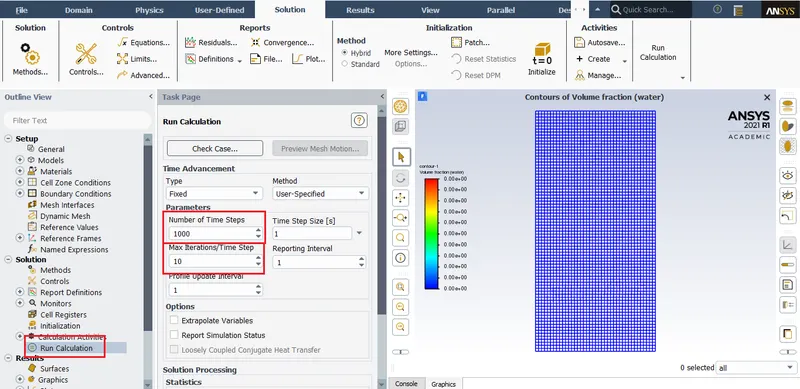
Hit calculate.
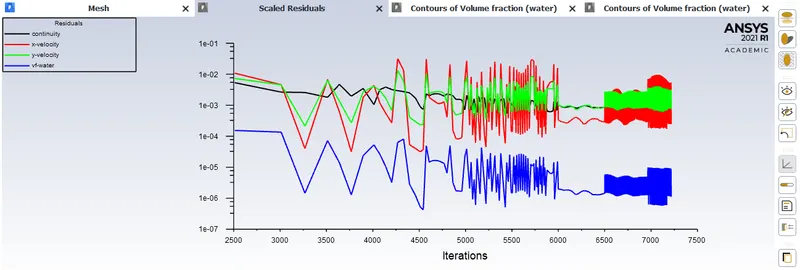
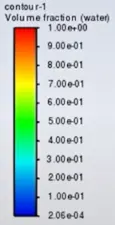
Initial
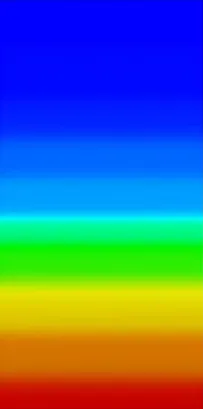
Final
Mesh 0.4mm:
Mesh 0.25mm:
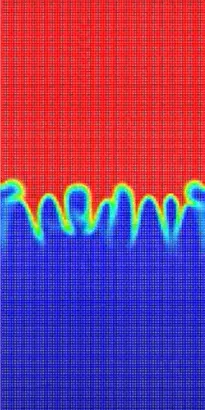
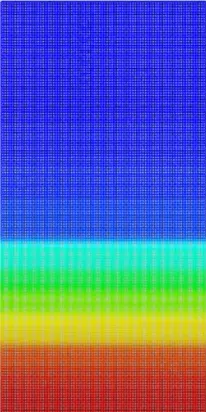
Mesh 0.2mm:
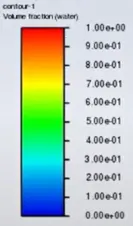
Mesh 0.1mm:
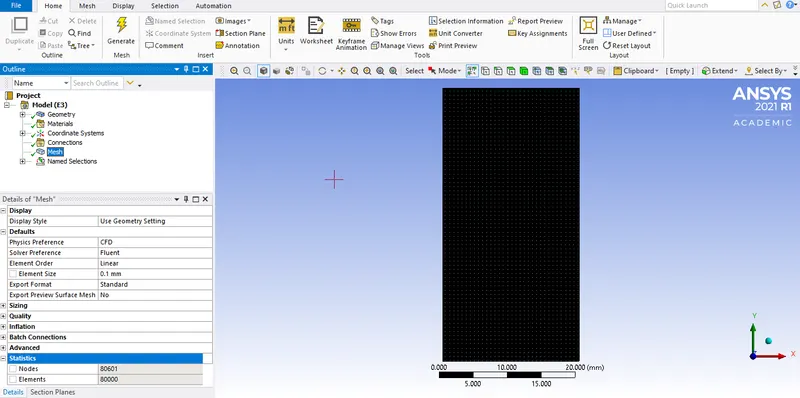
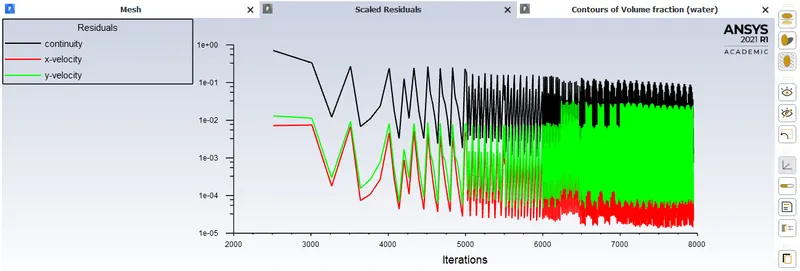
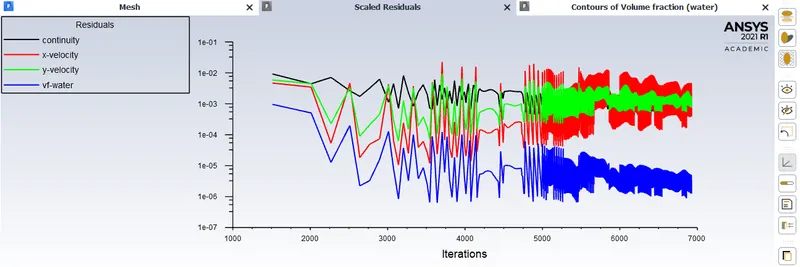
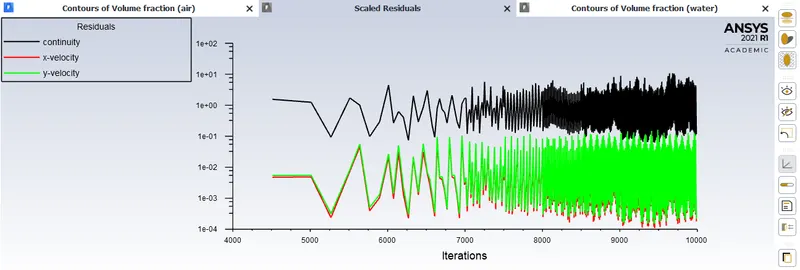
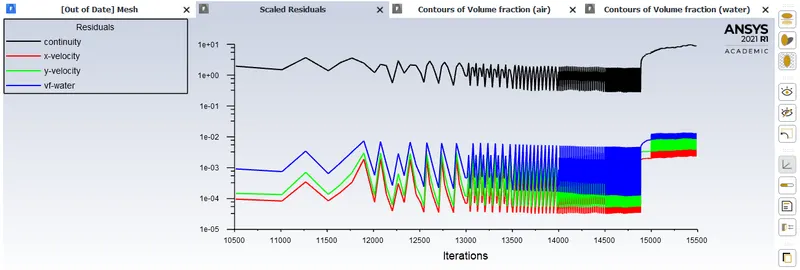
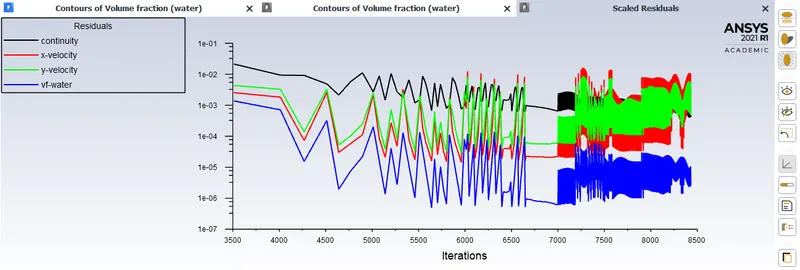
ERROR:
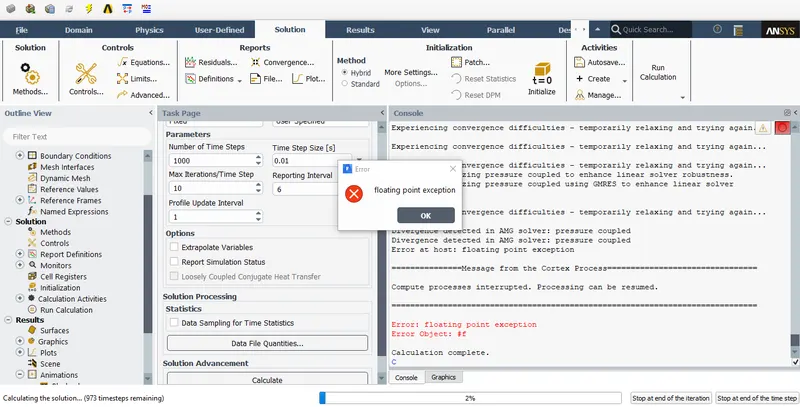
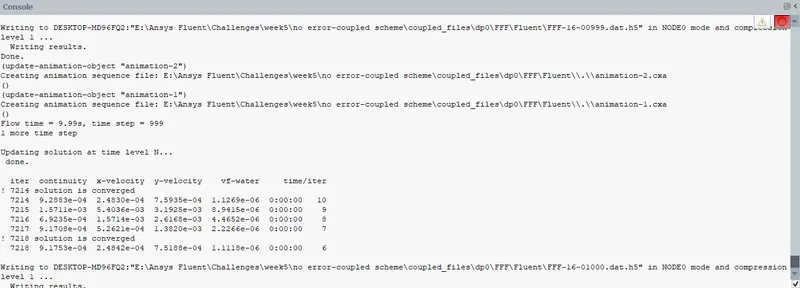
This will result in incomplete simulation & termination of calculation errlier than the intended time step.
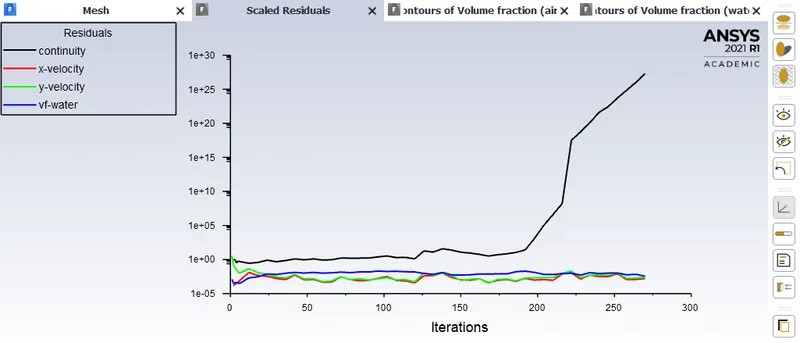
Reducing the time step will decrease the value of CFL number.
No error result:
Since this is a very fine mesh size it's computationally expensive and hence takes a lot of time for simulation to complete.
Hence the mesh size of 0.2 is used to simulate the setup involving a fluid of density `400(kg)/m^3` & dynamic viscosity of `0.001(kg)/(ms)`
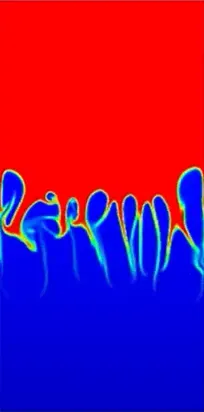
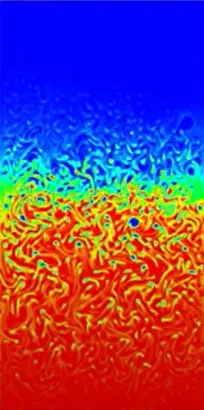
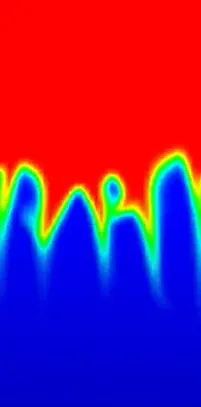
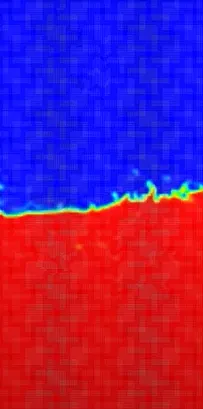
This image attached above shows that the simulation must be run for longer before both the fluid mediums seperate completely.
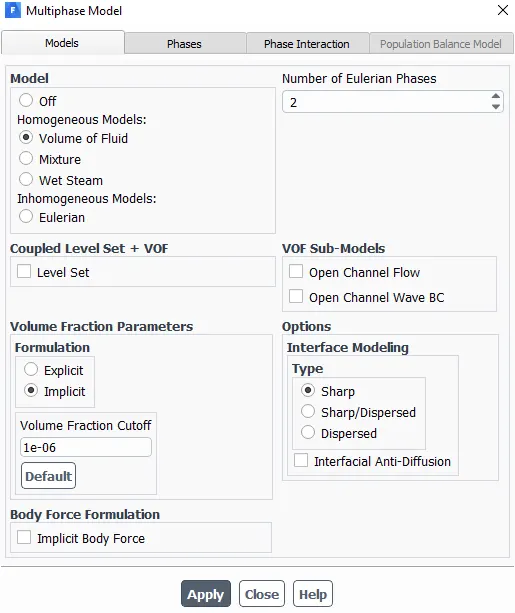
If we increase the number of time steps it will for sure generate a high quality animation but will take a lot of time since the mesh size is 0.1mm(also the time step increment is 0.001).
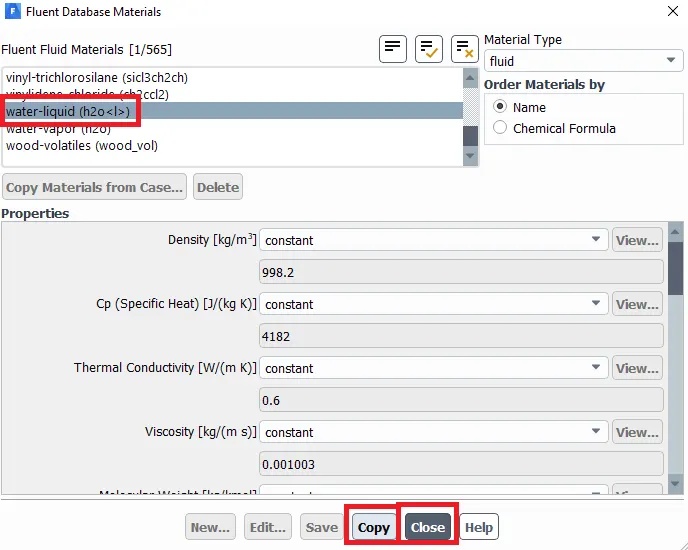
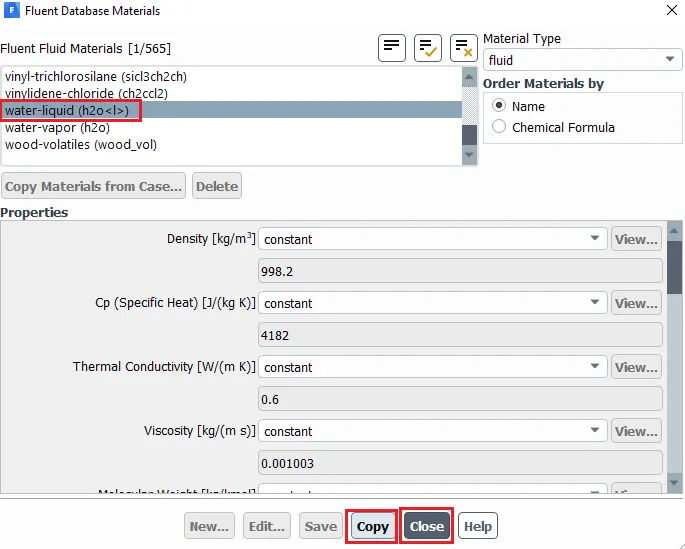
Simulation with water and user-defined material(density = 400 kg/m3, viscosity = 0.001 kg/m-s) for refined mesh.
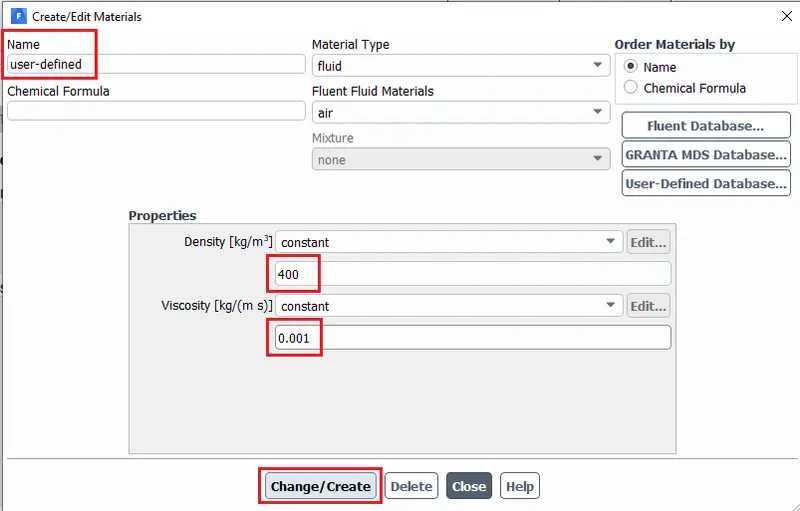
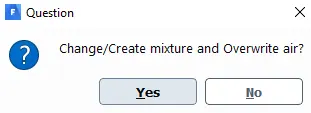
Click on 'Fluent database'
Causes for error:
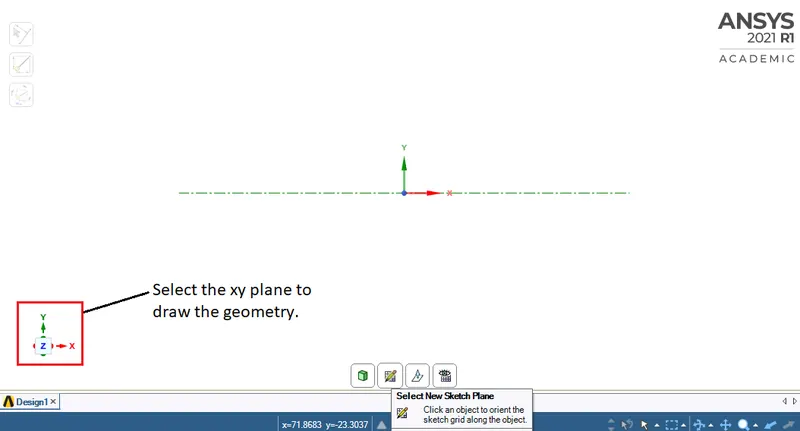
1) Plane in which the geometry is present.
Make sure you draw the geometry in the xy plane failing which there will be mismatch between the components of the geometry in the setup phase.
When the geometry was present in the xz plane, in the setup instead of the denser medium that needed to be present in the top layer (for rayleigh-taylor instability) the less denser medium had appeared on top of the denser mesium.
2) To avoid floating point exception:
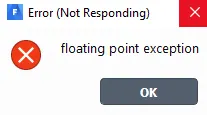
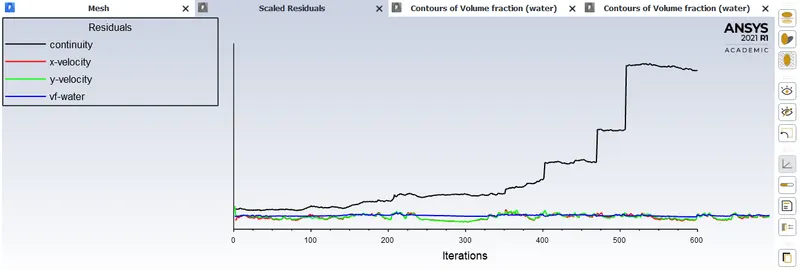
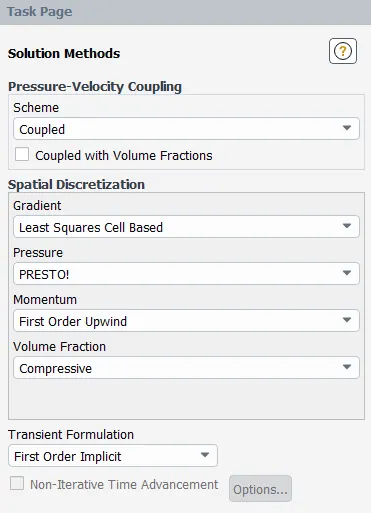
a. Use 'Coupled' scheme instead of the default 'SIMPLE' scheme.
b. Use 'first order upwind scheme' for momentum equation.
c. Use a small time step to keep the CFL number at less than 250, beyond a CFL value of 250 the system throws a floating point exception
The Atwood number:
The Atwood number (A) is a dimensionless number in fluid dynamics used in the study of hydrodynamic instabilities in density stratified flows. It is a dimensionless density ratio defined as
`A=(rho_1-rho_2)/(rho_1+rho_2)`
where,
`rho_1` = Density of heavier fluid`((kg)/m^3)`
`rho_2` = Density of lighter fluid`((kg)/m^3)`
- The Atwood number is used in the study of Rayleigh Taylor instability.
-
The Rayleigh–Taylor instability, is an instability of an interface between two fluids of different densities, which occurs when the lighter fluid is pushing the heavier fluid.For example, when the water is suspended above oil in the gravity.
-
For Atwood number closer to 1,means the lighter fluid below the heavier fluid takes the form of larger bubble-like plumes.
Atwood number for air and water:
`rho_1`= Density of water = `998.2(kg)/m^3`
ρ2">`rho_2`= Density of air = `1.225(kg)/m^3`
Atwood number = `(998.2-1.225)/(998.2+1.225)` = 0.9974
Atwood number for user defined material and water:
`rho_1`= Density of water = `998.2(kg)/m^3`
ρ2">`rho_2`= Density of user defined material = `400(kg)/m^3`
Atwood number = `(998.2-400)/(998.2+400)`= 0.4277
Effect of Atwood number on RT instability:
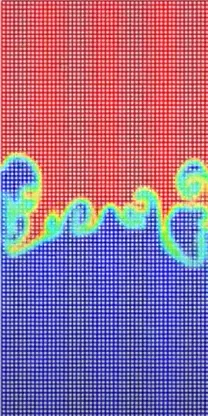
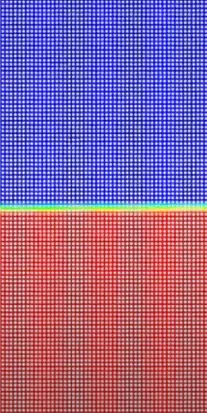
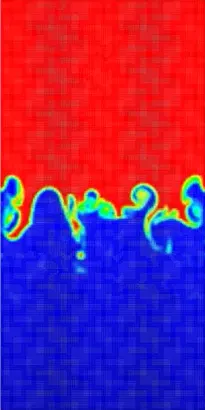
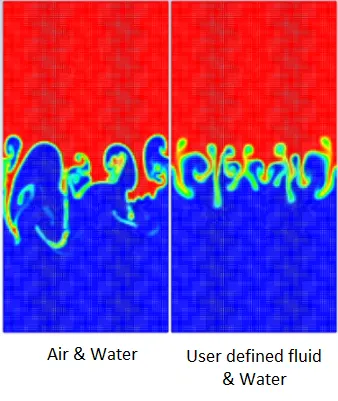
The above pattern shows the distinction between how the instability starts to happen depending on the density of the low density medium.
The first image shows the initial stage of the animation for the high Atwood number simulation while the image on the right shows the animation for a lower Atwood number.
The lower atwood number shows the formation of uniform finger like structures due to the instability.
Conculsion:
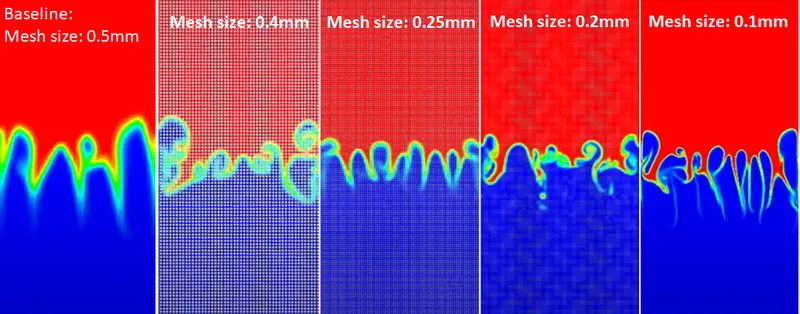
From left to right for the same setup but different mesh sizes the instability pattern gets clear as the size of mesh gets finer.
As the mesh gets finer the computational cost gets higher, it is hence important to keep the mesh at a reasonable size.
Referances:
http://www.scholarpedia.org/article/Rayleigh-Taylor_instability_and_mixing
https://blogs.egu.eu/divisions/gd/2021/02/17/rayleigh-taylor-instability-in-geodynamics/
https://skill-lync.com/knowledgebase/what-are-the-types-of-dimensionless-numbers
https://skill-lync.com/knowledgebase/how-to-overcome-floating-point-exception-error
https://drive.google.com/file/d/1VXN0nFz_Sliw0v4lHIHahEANqky7feXg/view?usp=sharing