Week 5: Prandtl Meyer Shock problem
OBJECTIVE:
This project deals with the Prandtl-Meyer Expansion Fan Problem. There are two objects of interest from a conceptual perspective:
- Shock Waves
- Boundary Conditions in Supersonic flow
Practically, we will be simulating the problem and determining how Sub-Grid Scaling(SGS) will affect the case.
THEORY:
Shock Waves:
Shock waves are propagating disturbances in a medium that travel faster than the local speed of sound in that medium. They are characterised by an abrupt change in pressure, density and temperature of the medium.
Boundary condition in Supersonic Flow:
As the flow is supersonic, the flow moves faster than the information can propagate through the medium since the pressure, density, temperature, and volume almost change instantly. Therefore, Supersonic outlets are said to have zero gradient boundary conditions, i.e. Neumann Boundary Condition, since the values at the outlet are calculated by resolving the flow before it.
GEOMETRY:
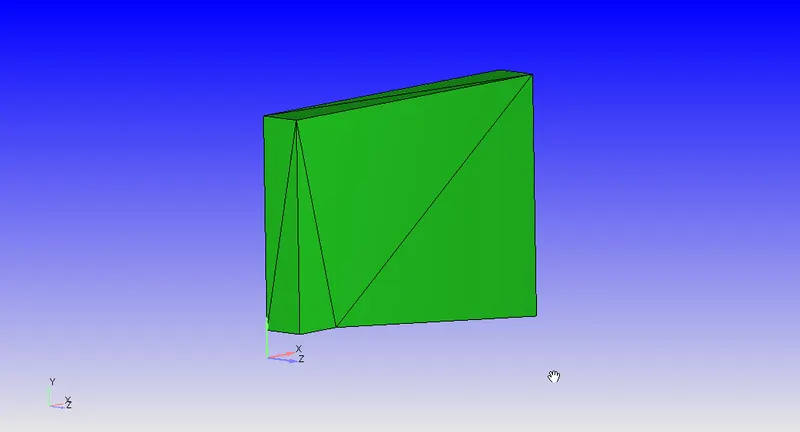
We have the following model:
BOUNDARY FLAGGING:
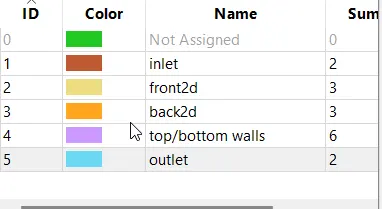
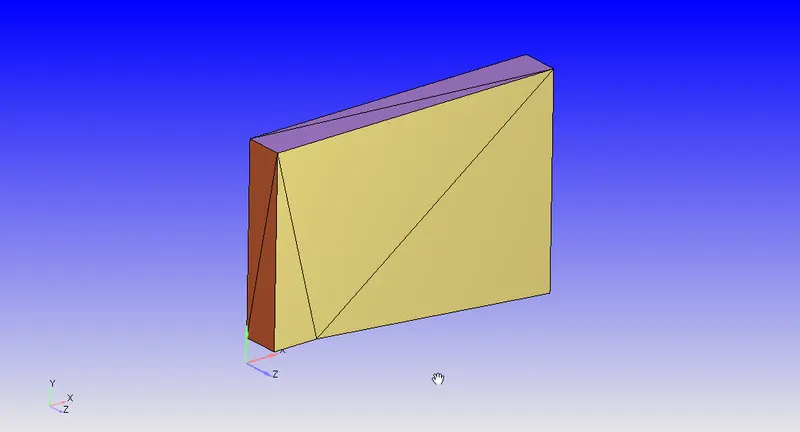
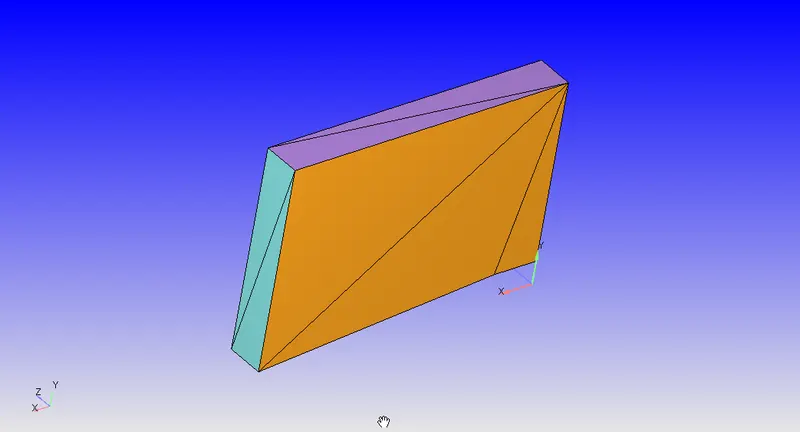
This is a 2D study; hence two faces will be 2D boundaries with an inlet, outlet and walls on top and bottom:
Front:
Flipped Back
BOUNDARY CONDITIONS:
Inlet:
We have a supersonic inlet condition such that Mach Number = 2:
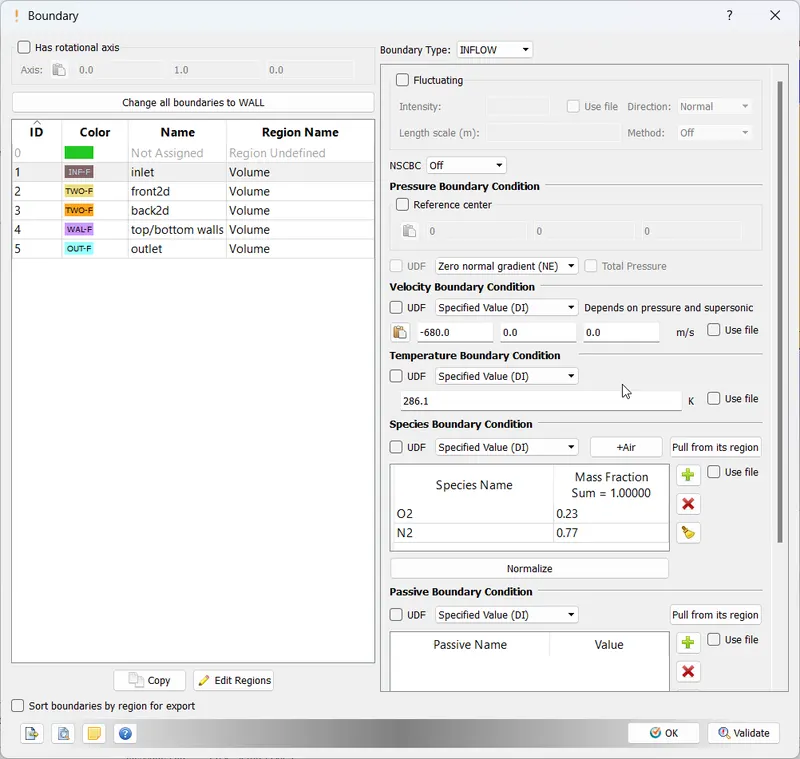
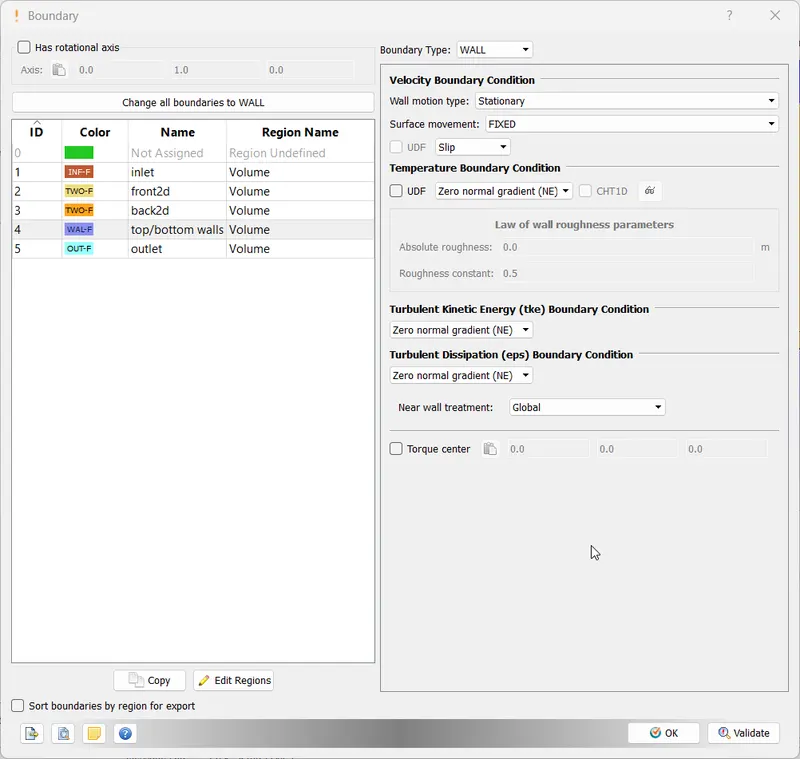
followed by two 2D boundaries and then a slip wall boundary condition for our top and bottom walls:
Finally, we have an outlet with Neumann Boundary condition:
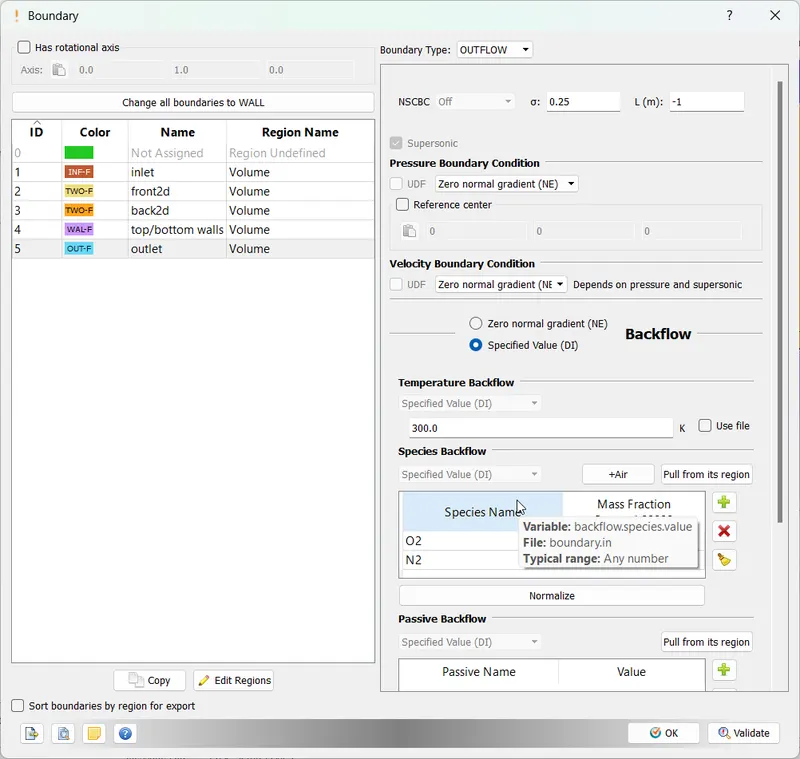
Neumann Boundary Condition:
The Neumann Boundary Condition specifies the property at the boundary of the flow and generally assigns it to be a constant or zero. It is also called the boundary condition of the second kind.
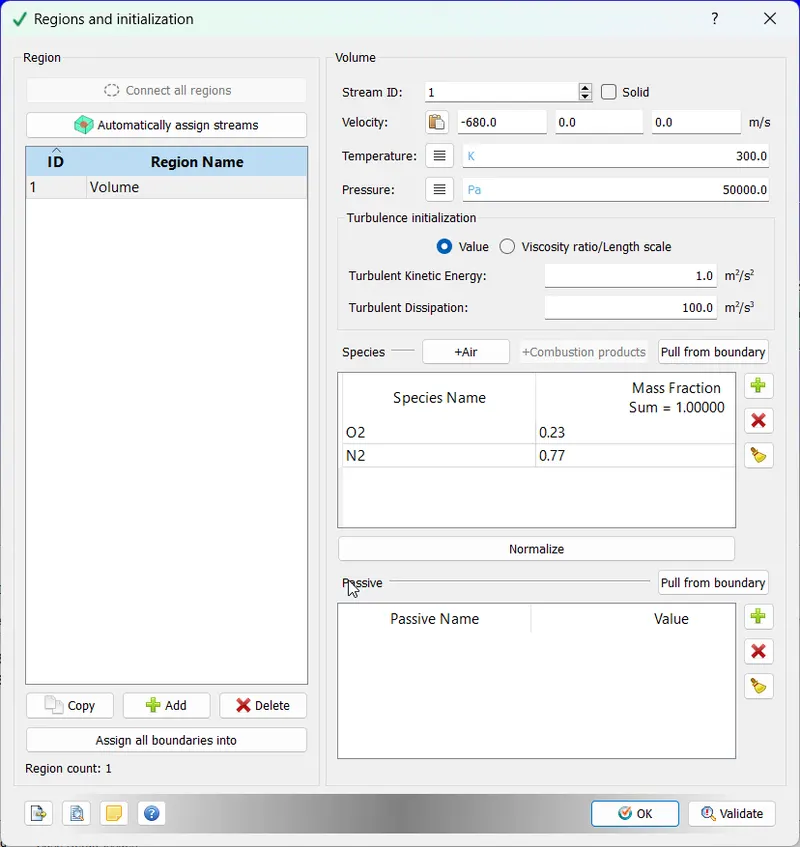
INITIAL CONDITIONS:
SIMULATION PARAMETERS:
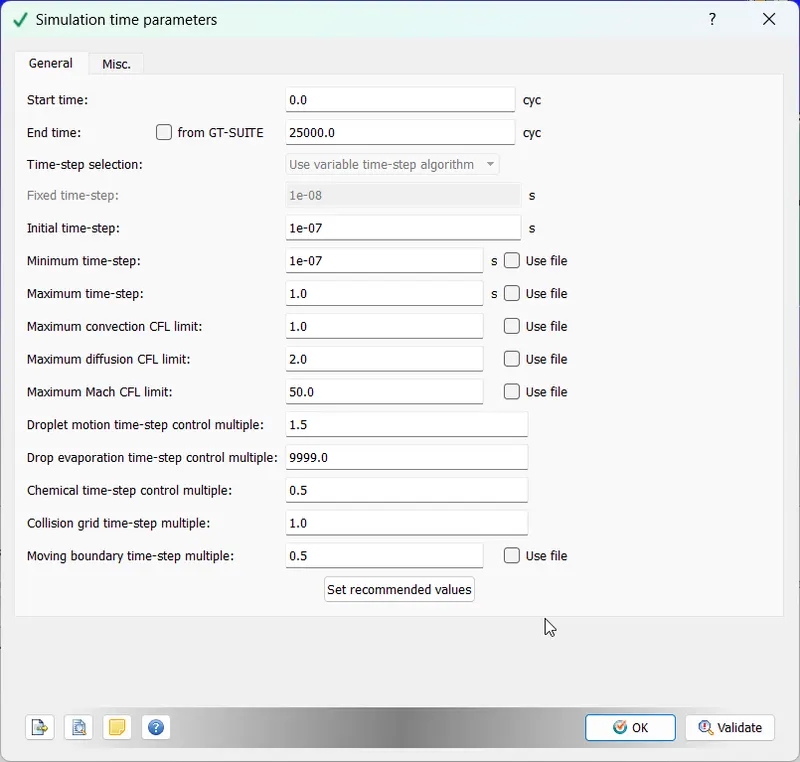
We are using a steady-state density-based solver with the following time parameters:
The turbulence model being used is the RANS K-epsilon RNG model with default values.
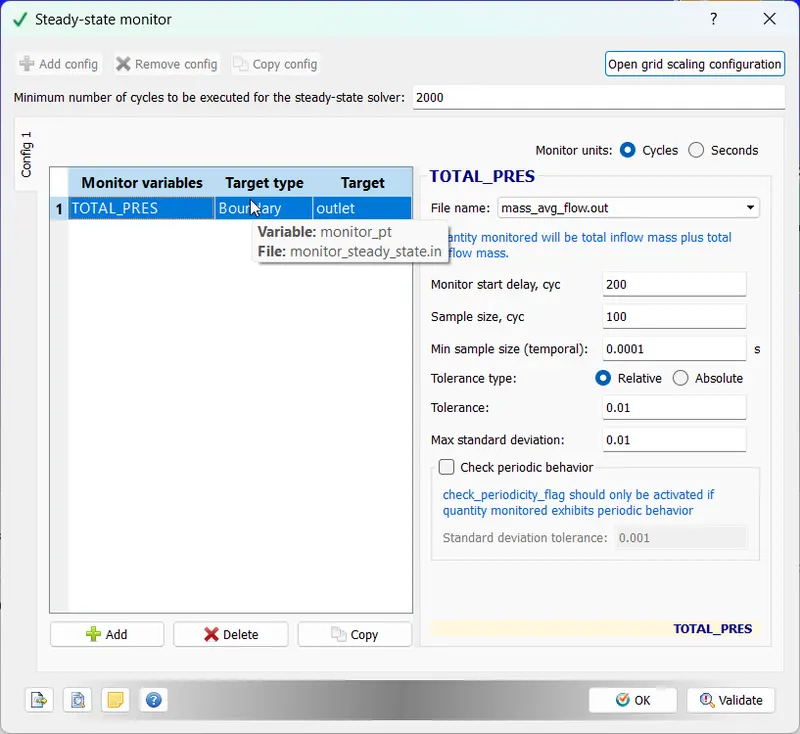
CONVERGENCE CRITERIA:
MESH PARAMETERS:
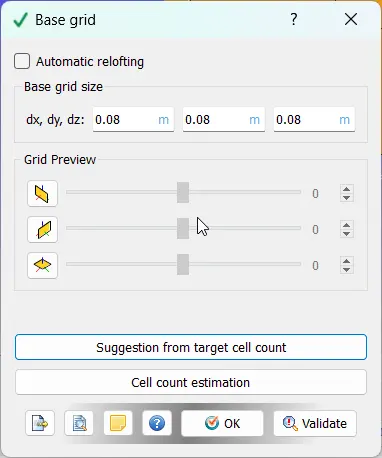
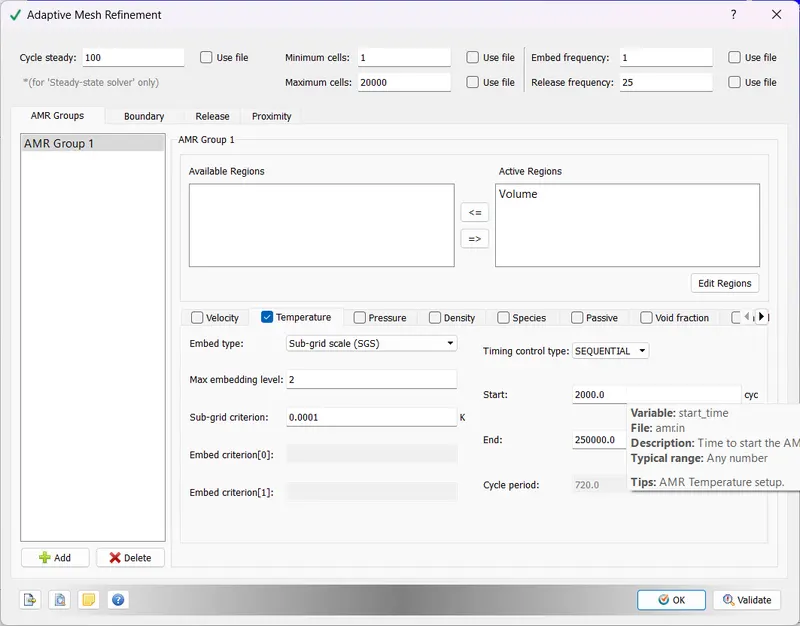
These are the base mesh parameters; we will also be using an adaptive mesh refinement with different SGS parameters to capture the effect it has on the simulation:
RESULTS:
SGS = 0.01:
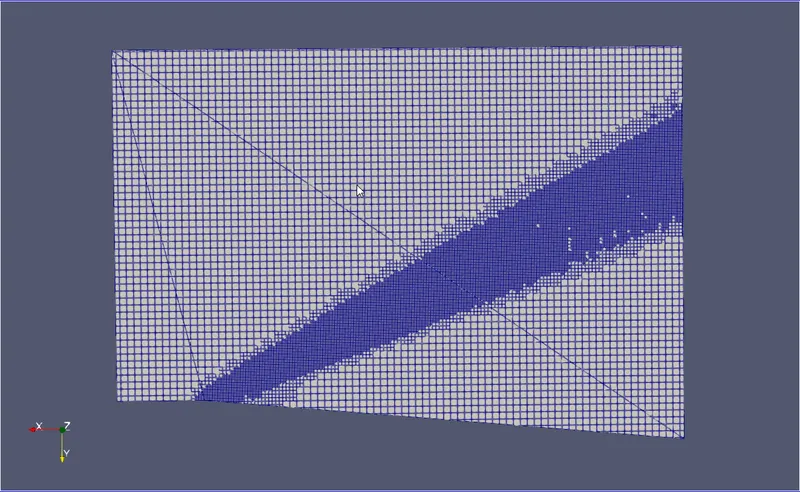
MESH WITH AMR:
PRESSURE CONTOUR:
Animation:
VELOCITY CONTOUR:
Animation:
TEMPERATURE CONTOUR:
Animation:
SGS Parameter = 0.001K:
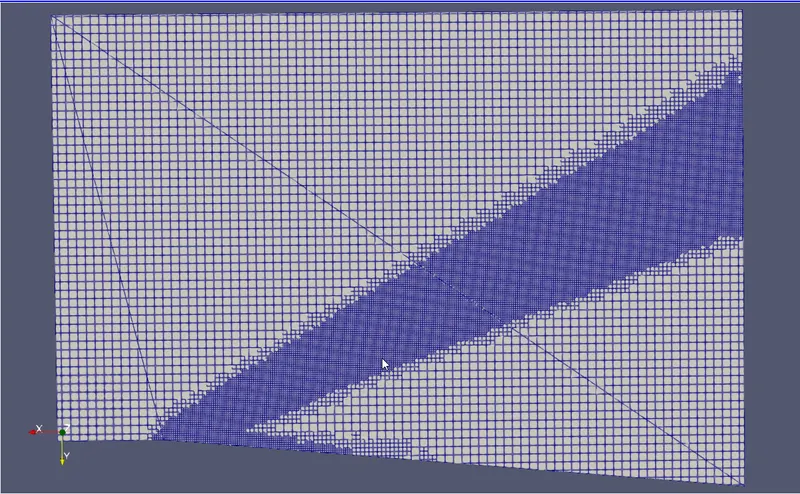
MESH WITH AMR:
PRESSURE CONTOUR:
Animation:
VELOCITY CONTOUR:
Animation:
TEMPERATURE CONTOUR:
Animation:
SGS Parameter = 0.0001K:
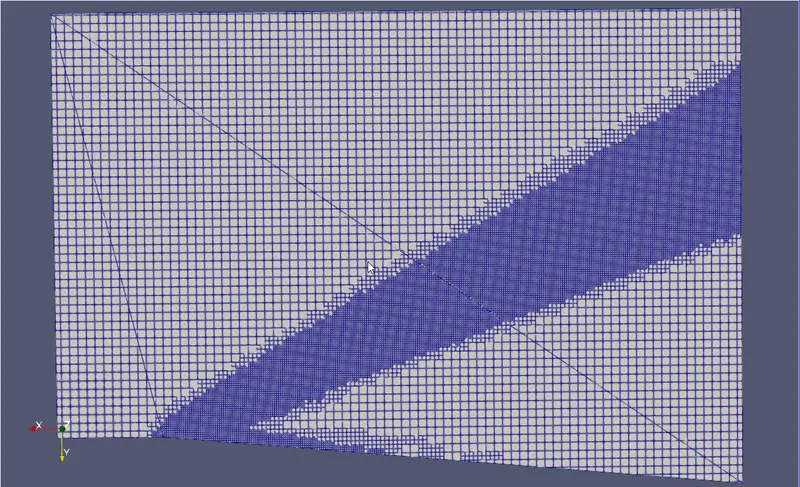
MESH WITH AMR:
PRESSURE CONTOUR:
Animation:
VELOCITY CONTOUR:
Animation:
TEMPERATURE PROFILE:
Animation:
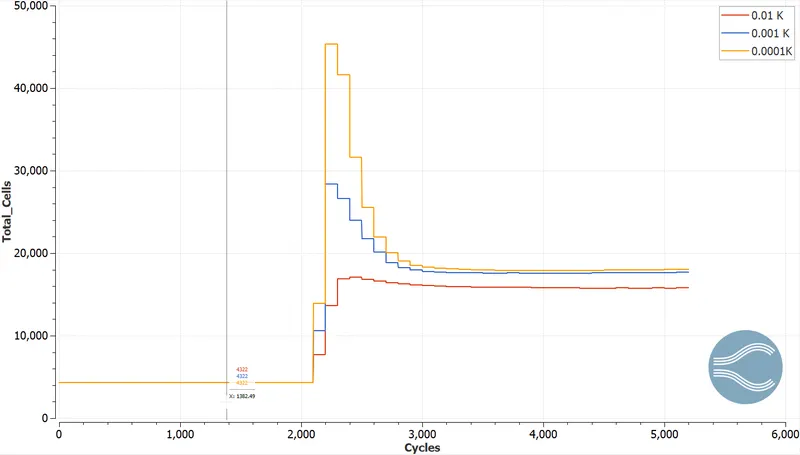
SGS PARAMETER and CELL COUNT:
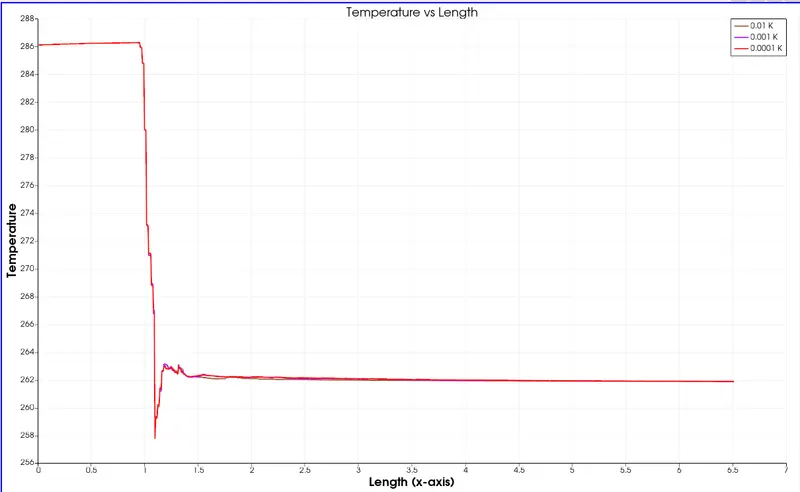
SGS PARAMETER AND SHOCK LOCATION:
CONCLUSION:
Effect of SGS Parameter on Cell Count:
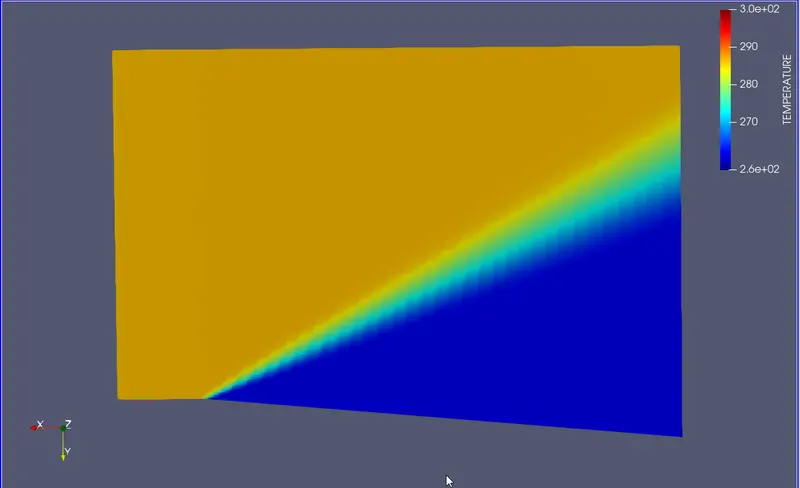
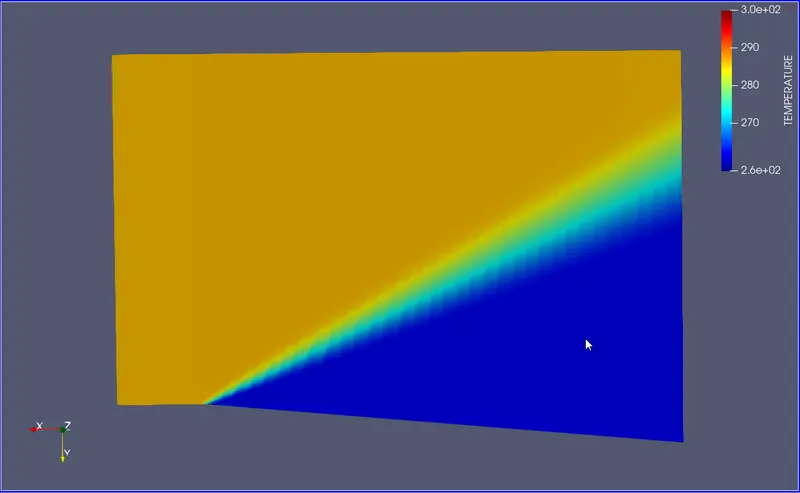
As evident from the plots, the lower the SGS parameter is, the higher the Cell Count. The insufficient sub-grid criterion captures even the finer variations in temperature and resolves the mesh accordingly.
This is evident from the mesh, the lower SGS parameter mesh has a coarser mesh compared to the mesh with a higher SGS parameter, and the size of the expansion fan is broader. Further, the higher SGS parameter meshes also capture the temperature changes near the bottom wall beyond the shock point.
Effect of SGS Parameter on Shock Location:
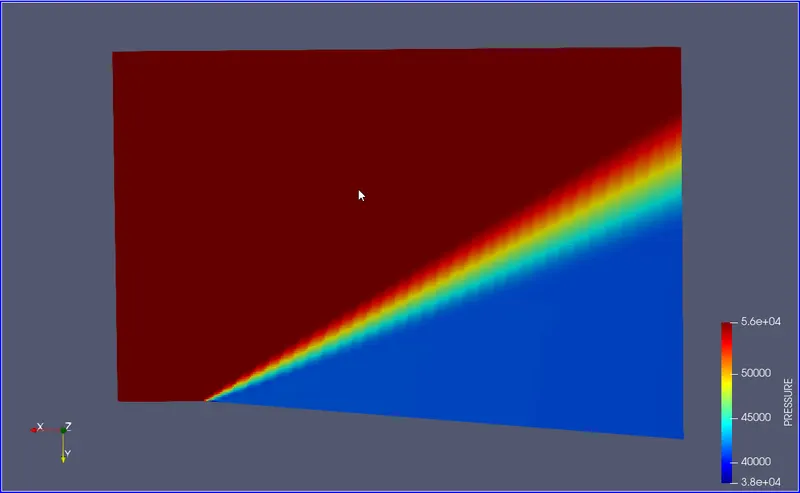
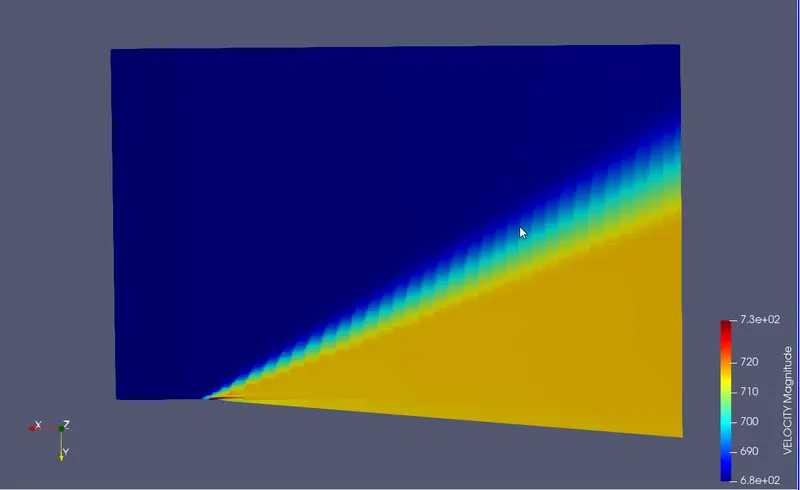
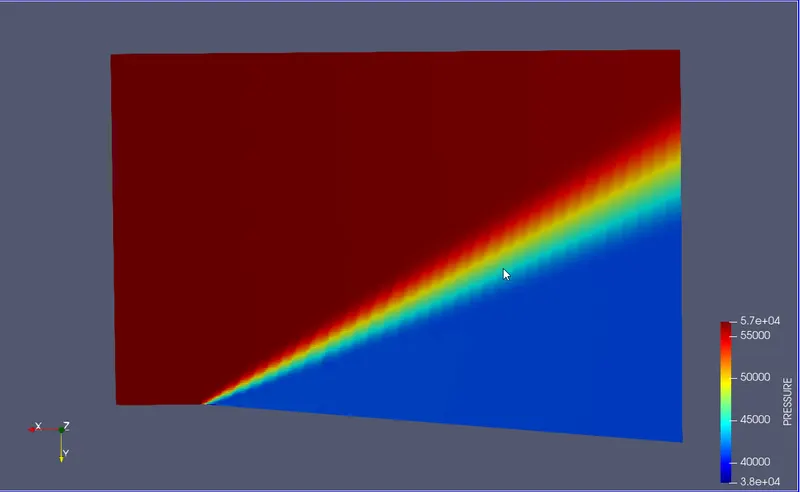
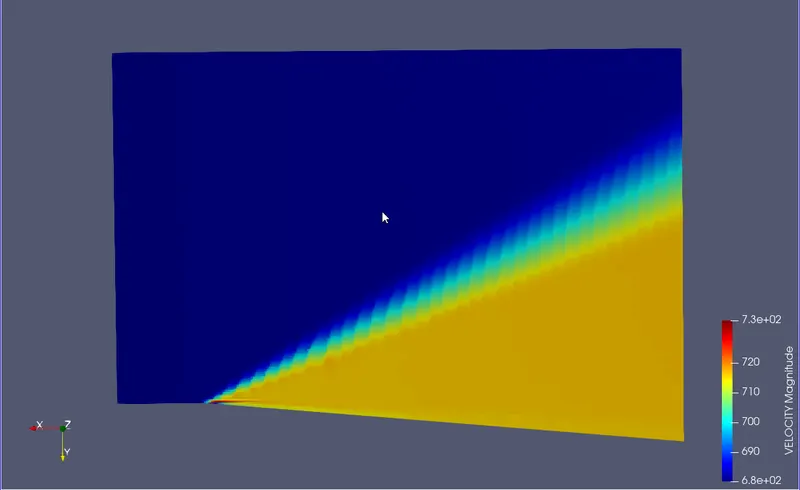
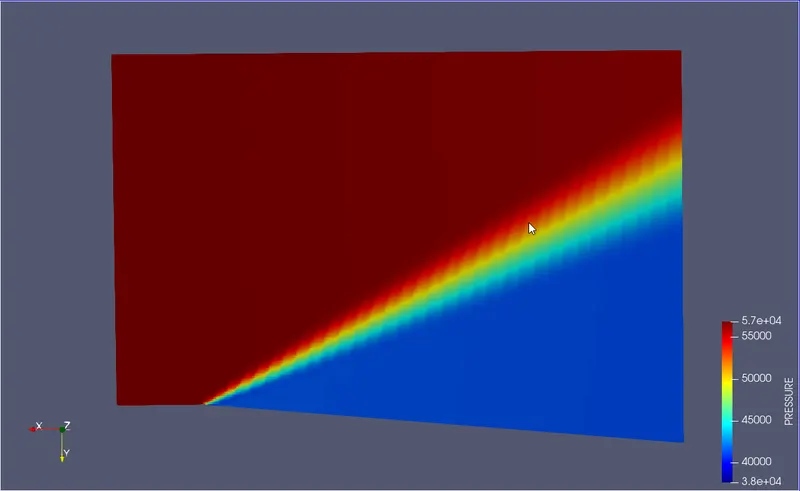
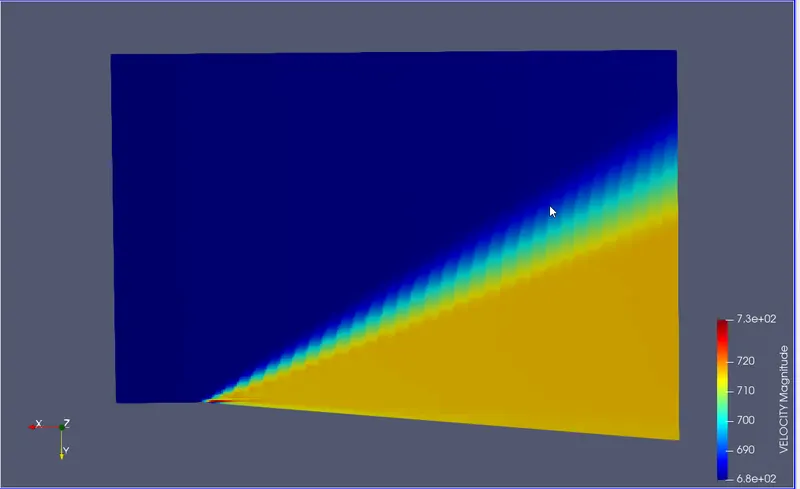
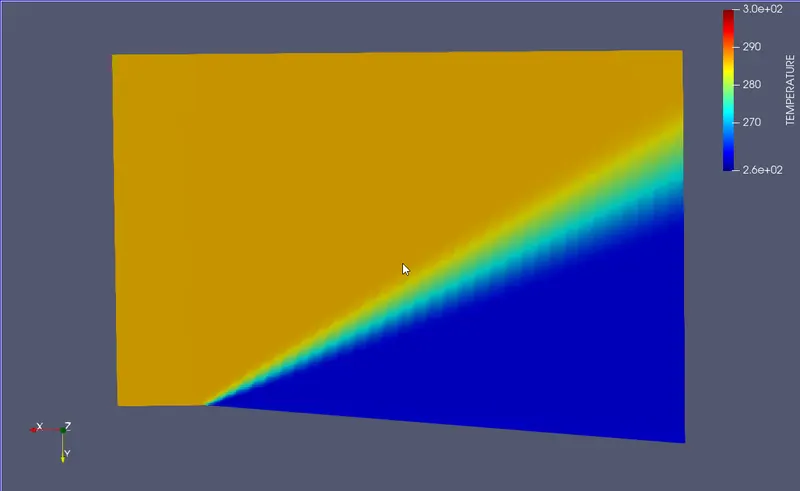
There is no noticeable or physically worthy difference in shock location from the plots except for a minimal change in the width of the expansion fan.
From these two points, we can conclude that we can optimise the SGS parameter to gain accurate results and save computational time and load since the benefits from mesh refinement are negligible beyond a point.
Prandtl-Meyer Expansion Fan:
We observe the formation of the Prandtl-Meyer Expansion form, formed when a supersonic flow bends over a convex corner. As shown in the videos, a series of Mach Waves are formed, diverging from the corner as seen from the colour fringes in the shock region.