Week 5 Challenge : Surface wrap on Automotive Assembly
Aim:
To perform surface wrap on automotive assembly consisting of engine, gearbox and transmission after performing necessary geometrical error rectifications.
Procedure:
First we have to import the engine ansa file, then perform the cleanup operation. Since this is a complex geometry with so many errors it is not feasible to perform surface meshing by deleting all the errors, hence we will perform surface wrap operation. This geometry consists of many unwanted parts like unwanted tubes and parts which are removed. Then ensure that to close all the holes, or else we will get distorted mesh around the hole part. Now we will save this file, then we will open the gearbox ansa file and perform the important cleanup only on the surface then we will do with the transmission ansa file. Then we will merge all the ansa file.
Now we will perform the surface wrap operation. So go to the elements and select the wrap option and select the constant length. Before that ensure to delete all the unnecessary PIDs. Then in wrapping operation we will select the PIDs already there, and perform the wrap operation with constant length of 5 mm . Hence we will get the desired wrap mesh.
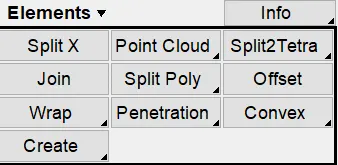
We have to select wrap option from the elements and we have to give a constant length of 5 mm. Then assign the 96 PIDs to the wrap elements.
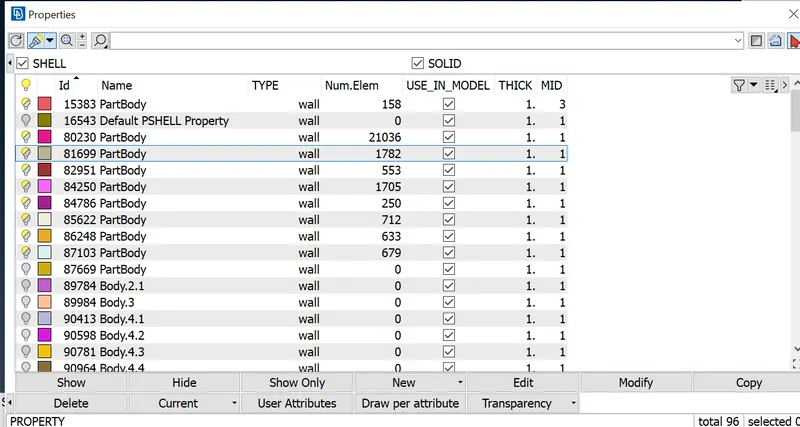
The above figure shows the 96 PIDs which are generated.
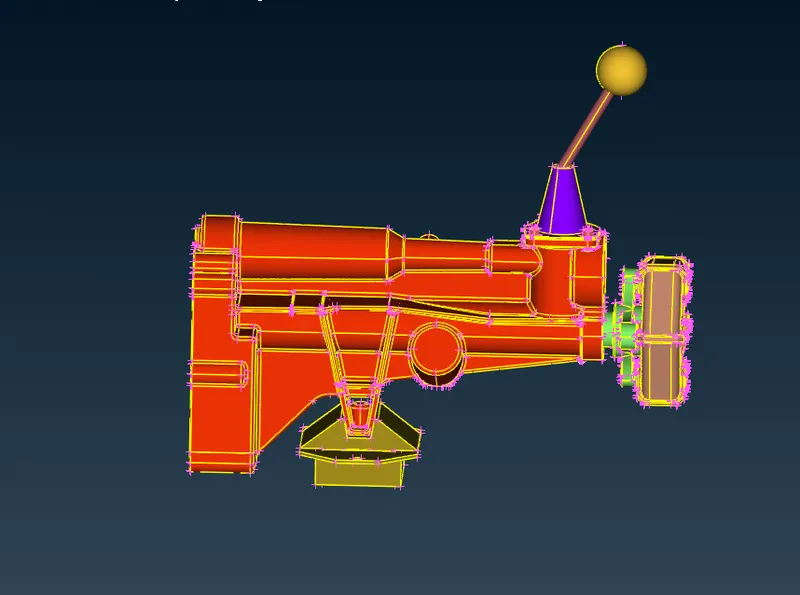
The above figure the gearbox after the cleanup.
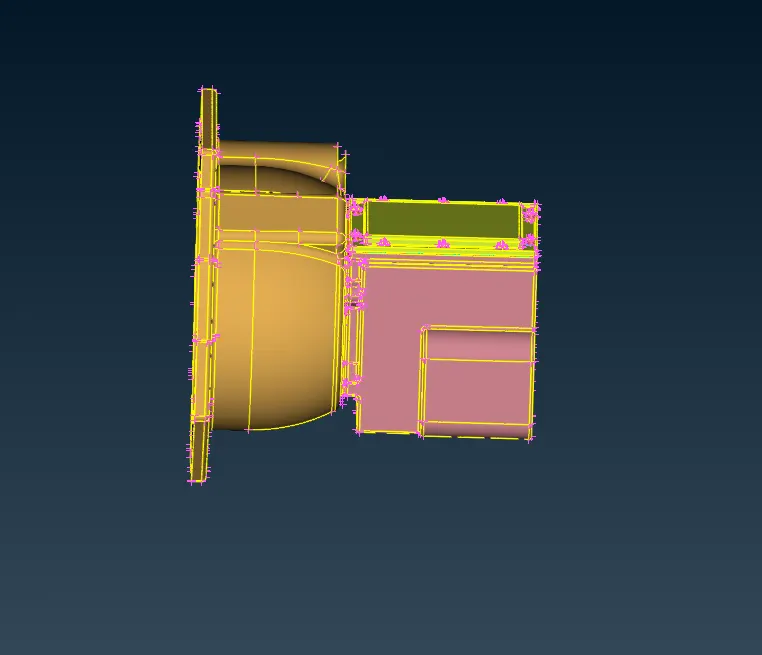
The above figure shows the transmisson box after the cleanup.
Learning outcome:
To study about the surface wrap operation to be performed on a complex geometry by merging different geometries of engine, gearbox and transmisson.
Result:
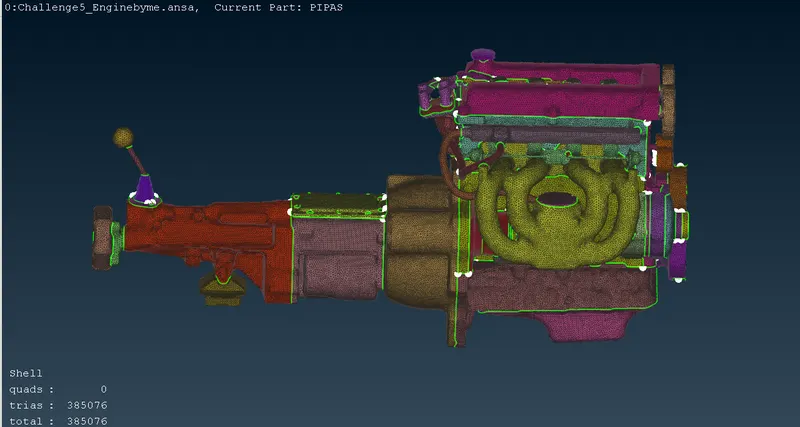
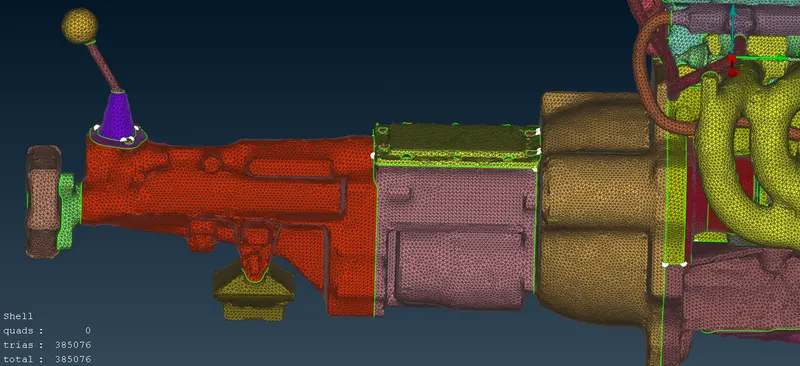
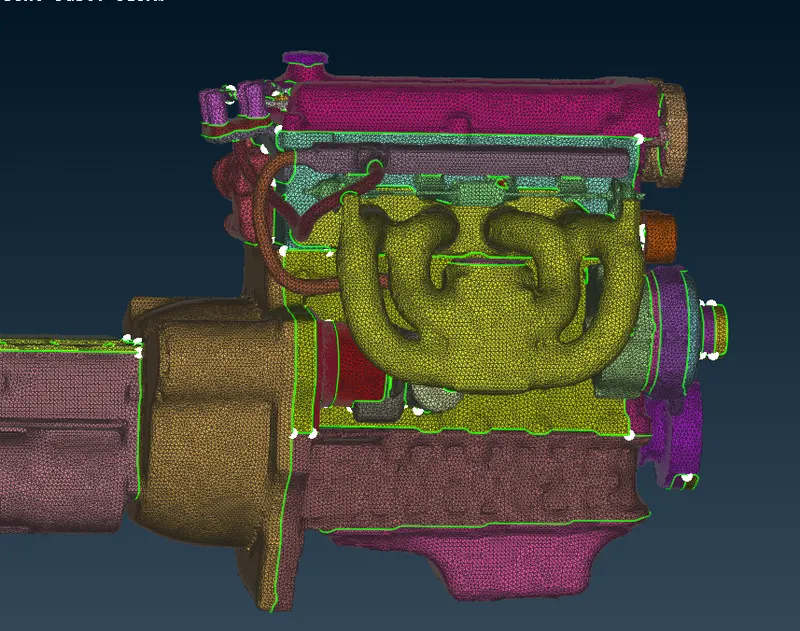
So the results obtained with the constant mesh element of 5 mm is shown above with surface wrap operation.
Conclusion:
So the surface wrap is performed on complex automotive assembly and saved the time instead of doing surface mesh where we have to delete all the geometric errors. Surface wrap is ideal option to perform external analysis for complex parts.