Week 5 Challenge : Surface wrap on Automotive Assembly
Aim
Perform a basic topological cleanup on the given transmission, gearbox and engine components and conduct a surface wrap over the assembly using a 3mm target length.
Learning Outcomes
- Conduct basic topological cleanup and identify components that may interfere with surface wrap.
- Perform surface wrap with a constant target length sizing.
- Analyse the resulting surface wrap and evaluate its quality and readiness for volume meshing.
Procedure
The three components provided for the surface wrap were:
- Engine
- Transmission box
- Gearbox
A step-by-step cleanup was conducted over the individual components before merging them into an assembly. All internal structures within the components' casing were ignored for this study as the surface wrap will not reach the internal regions when all the outer ports are closed.
Engine
The given engine component was opened using ANSA v23 as shown below.
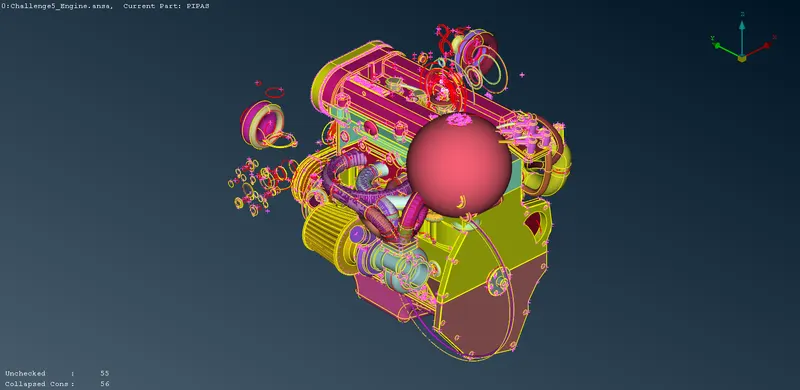
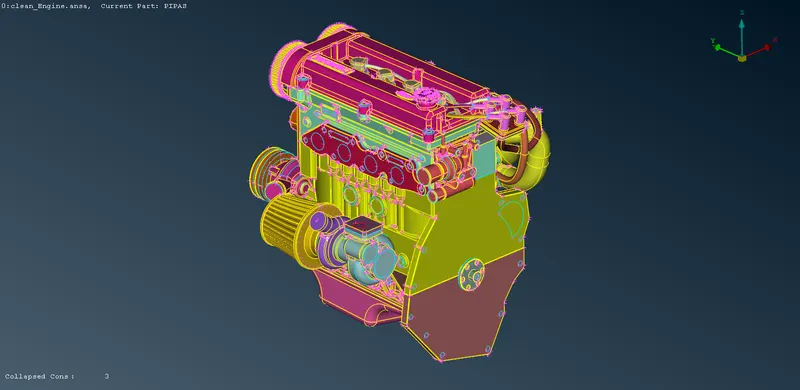
A number of floating entities outside the engine casing can be seen in the image above. All these surfaces are not required for the external flow simulation and hence were deleted. The image below shows the cleaned engine component with all the floating components deleted.
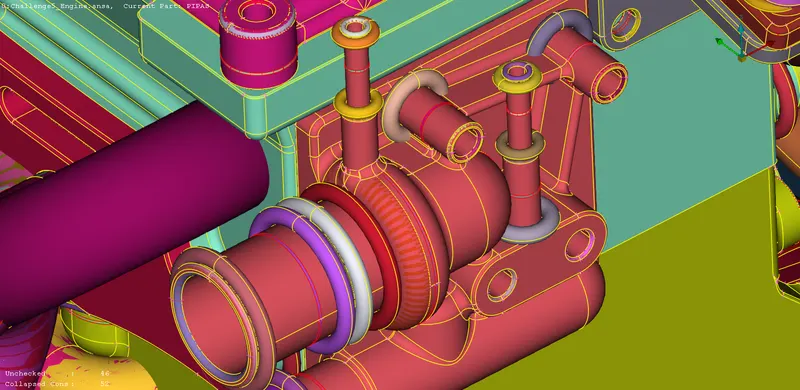
A number of ring-like structures were observed on the surfaces of the engine component which were believed to be created to aid the design of the model as shown below. These structures are no more required for the simulation and should be deleted prior to the meshing. Additionally, various open ports can also be seen that need to be closed before the meshing.
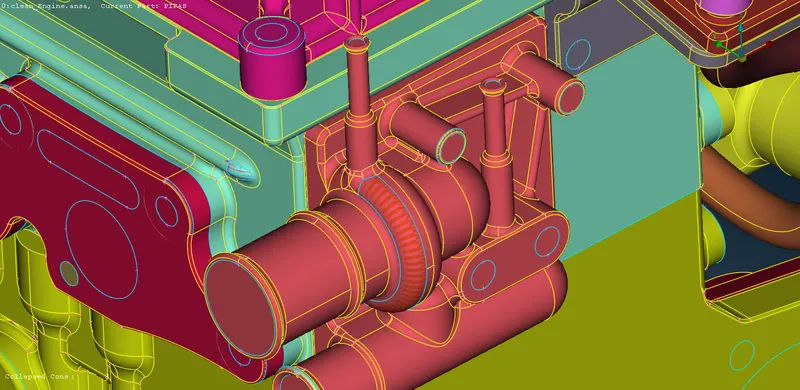
The image below shows the surfaces on the engine after the deletion of the rings and the various ports closed. Closing these ports resulted in the formation of triple CONS over the model. These triple CONS are not of much concern as a surface wrapping would be performed which will only consider the surfaces on the outside of the model and hence the volumes inside the triple CONS will add no hindrance.
A number of convoluted and penetrating tubes were observed in the engine model as shown below. These tubes display an unrealistic case where they penetrate each other and hence were decided to be deleted.
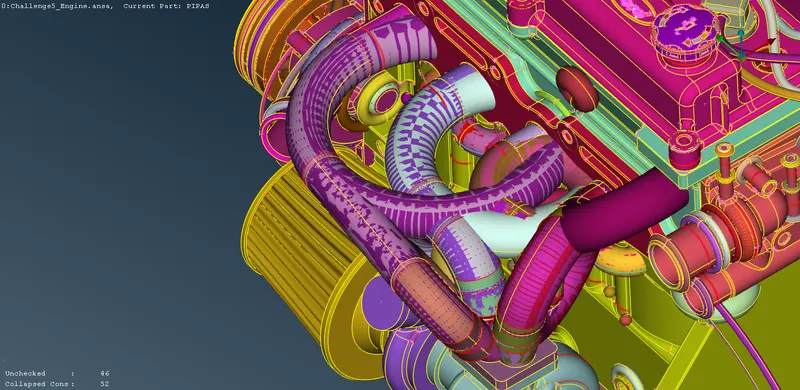
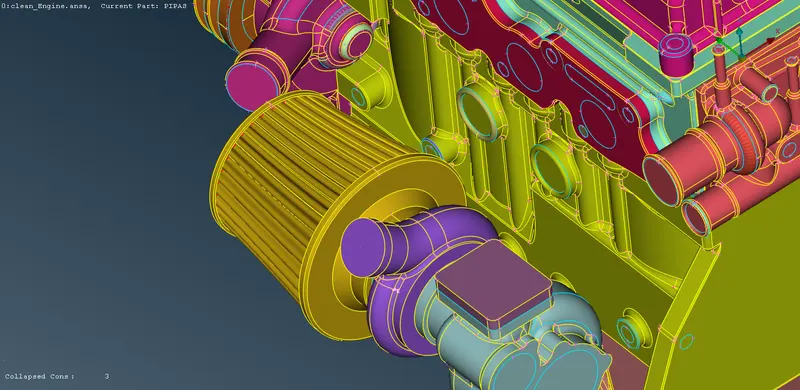
Post deletion, the respective open ports were closed and the faces with poor geometry were cleaned as shown in the image below.
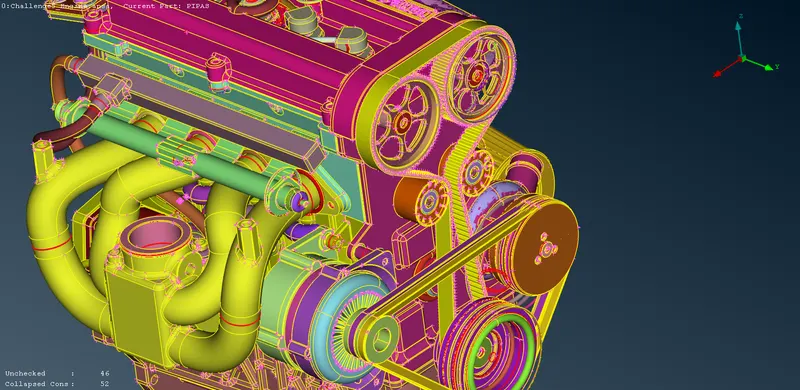
Thin belt structures were observed on the various gears of the engine as shown below. These thin belts will be very difficult for the surface wrap to properly capture using the 3mm target length and hence were decided to be deleted.
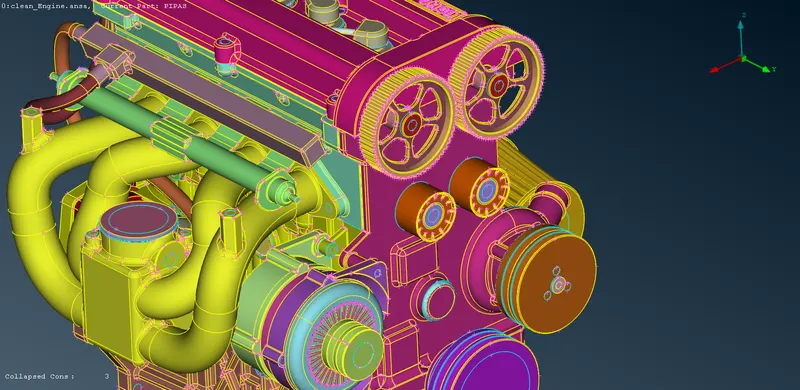
The engine with the belts removed and surface cleaned is shown in the image below.
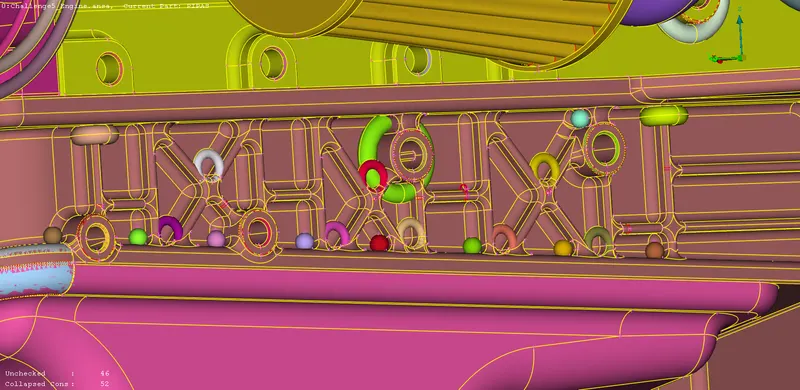
Multiple spheres and rings were observed all over the model as shown as an example in the image below. All these surfaces need to be removed before the meshing.
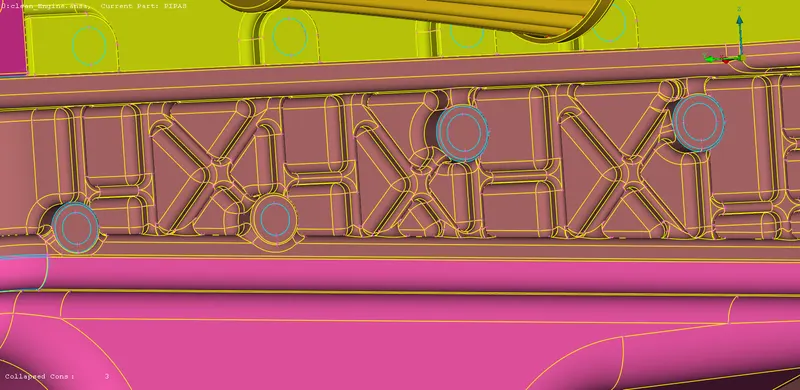
The resulting cleaned surfaces of the engine can be seen in the image below.
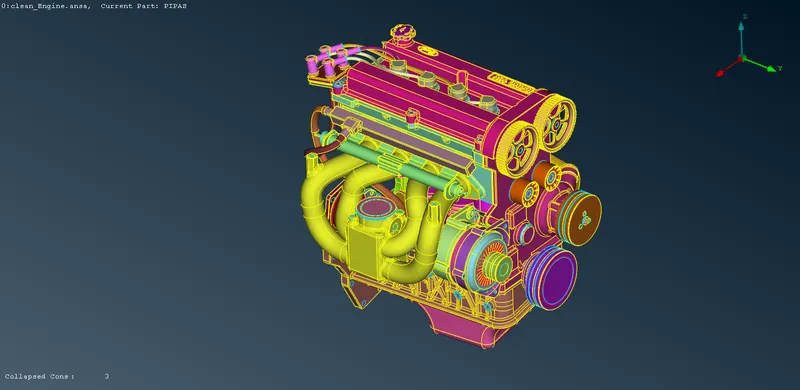
The final surfacewrap-ready engine component can be seen in the images below.
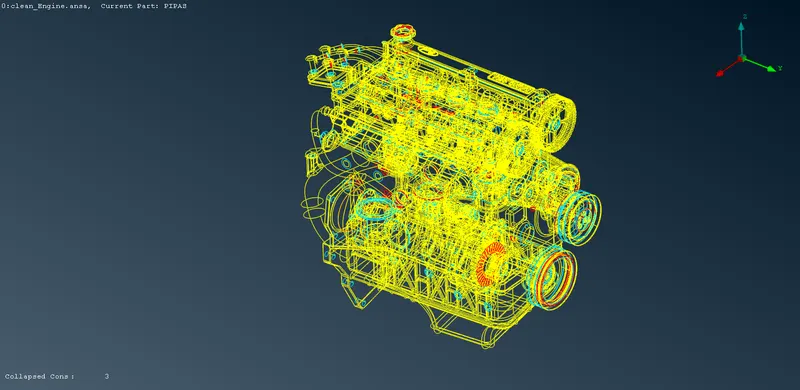
The wireframe view shows the presence of single CONS and collapsed CONS on the model which were observed to be on faces within engine casing and/or are very small cracks well under 1mm. The surface wrap with a 3mm target length will wrap over these surfaces and hence were chosen to ignore these defects and deem the engine component ready for the assembly and wrap.
Transmission box
The given transmission component was opened using ANSA v23 as shown below.
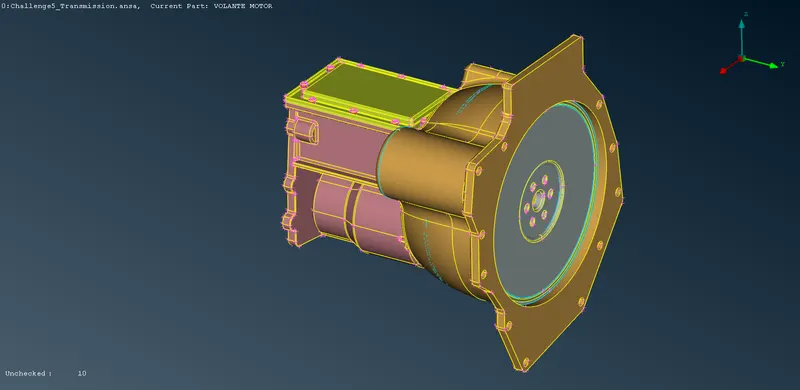
The majority of the surfaces on the transmission model were seen to be clean and with no floating bodies. The holes in the various sections need to be closed as shown in the image below.
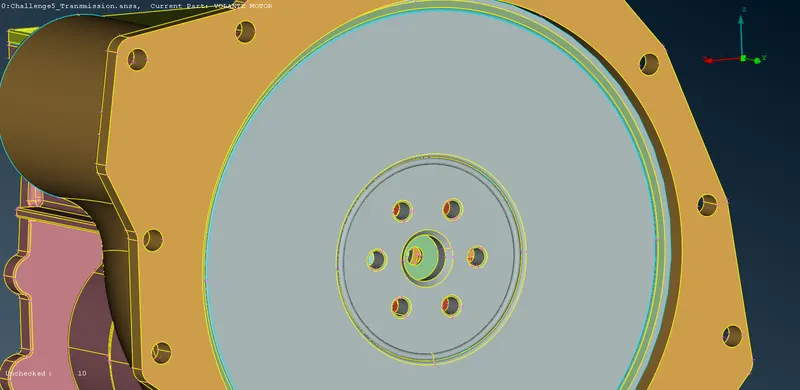
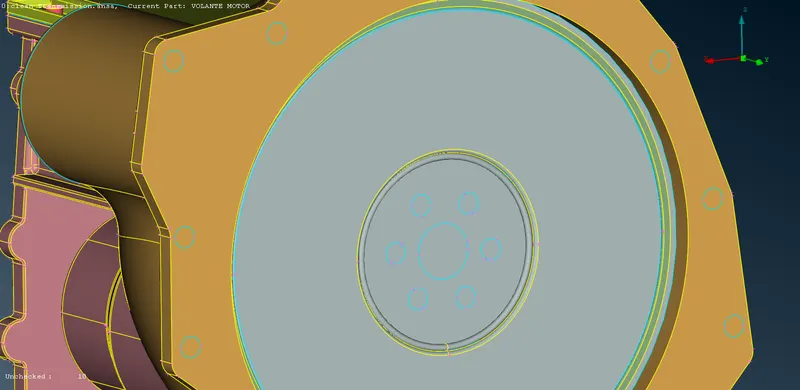
The image below shows the transmission model with all the open ports closed. The holes for the bolts were also closed since the surface wrap target length of 3mm is too large to properly capture these holes.
The image below shows the cavities in the bolts which are seen to be too small to be captured by the surface wrap and hence need to be closed.
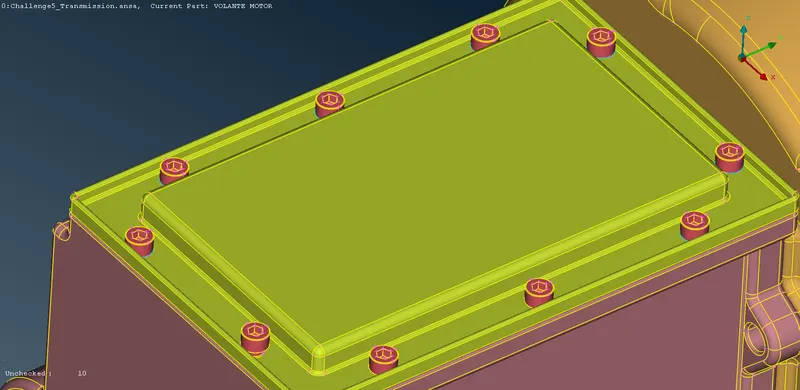
The patched bolts can be seen in the image below. The surface wrap will now have an easier time capturing these surfaces.
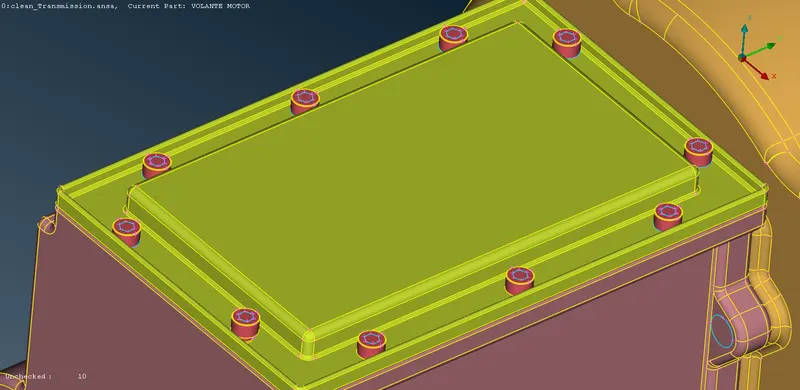
The final surfacewrap-ready transmission component can be seen in the images below.
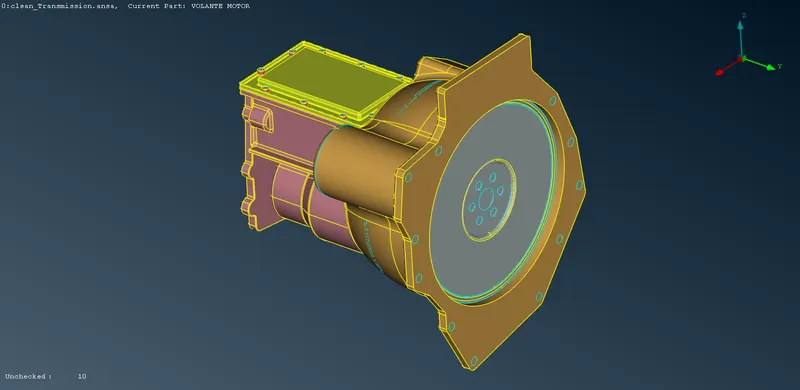
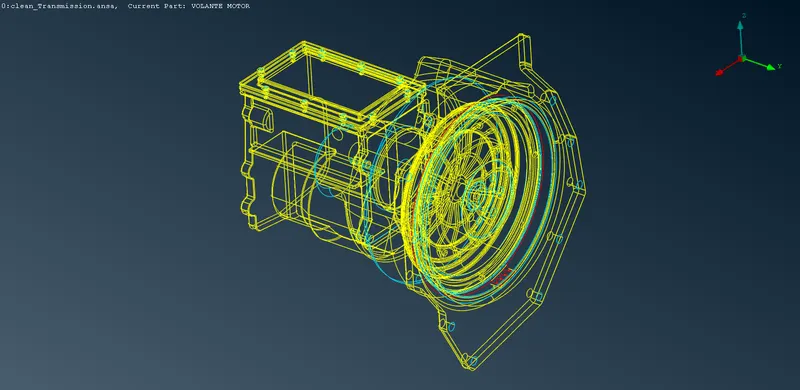
Similar to the engine component, triple and single CONS were observed over the model and were ignored for the reasons stated previously.
Gearbox
The given gearbox component was opened using ANSA v23 as shown below.
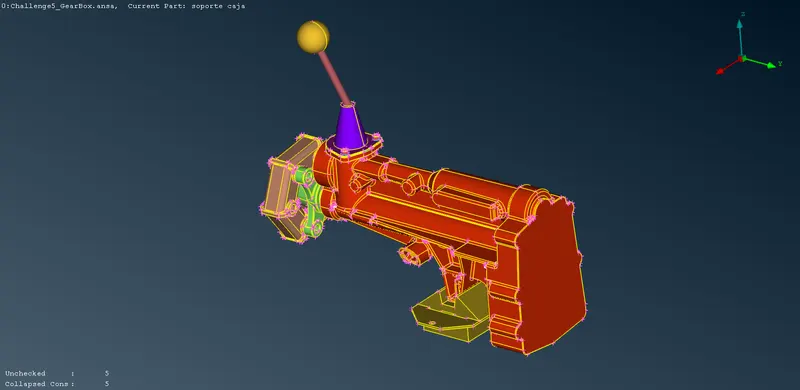
The majority of the surfaces on the transmission model were seen to be clean and with no floating bodies. The holes in the various sections need to be closed as shown in the image below.
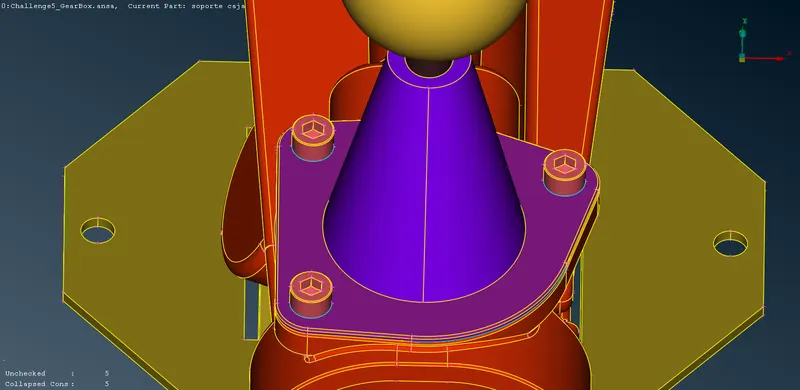
The image below shows the cleaned gearbox with all the holes closed.
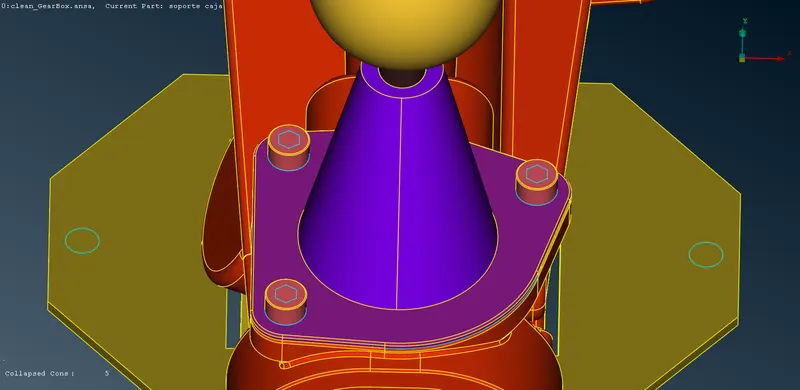
The final surfacewrap-ready transmission component can be seen in the images below.
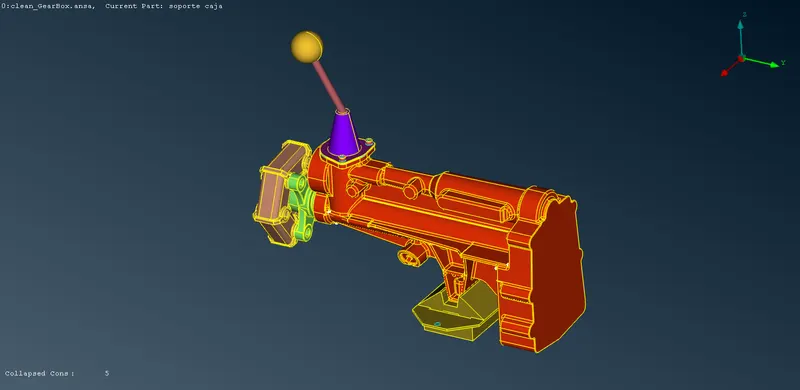
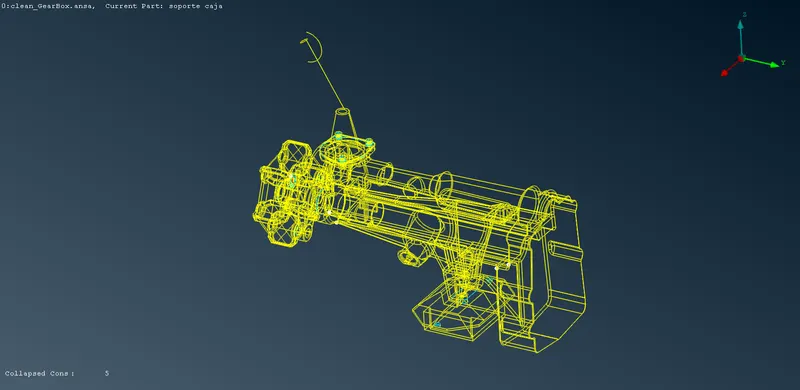
Similar to the engine and transmission components, triple/single CONS and collapsed CONS were observed over the model and were ignored for the reasons stated previously.
Assembly and Surface wrap
With all the individual components cleaned and ready for the wrap, the merge tool was used to combine them into an assembly as shown below.
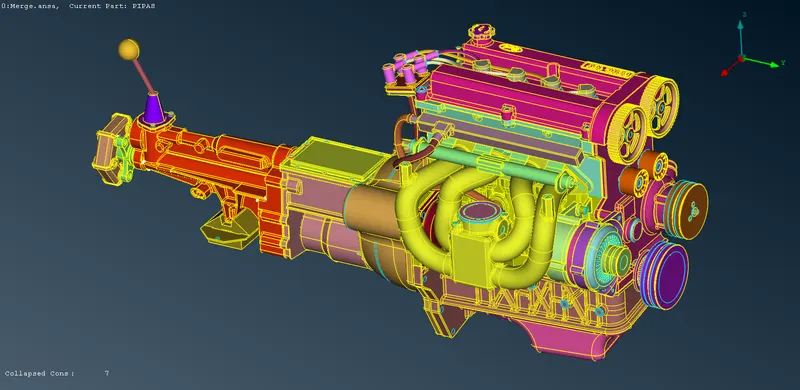
A final manual inspection was done on the model to check for unrequired surfaces and holes in the model. The compress tool was then used to delete the unused PIDs from the model and setup the surface wrap. The surface wrap was then conducted on all the PIDs on the model with a target sizing of 3mm.
Results
The surface-wrapped assembly of the engine, transmission and gearbox can be seen below.
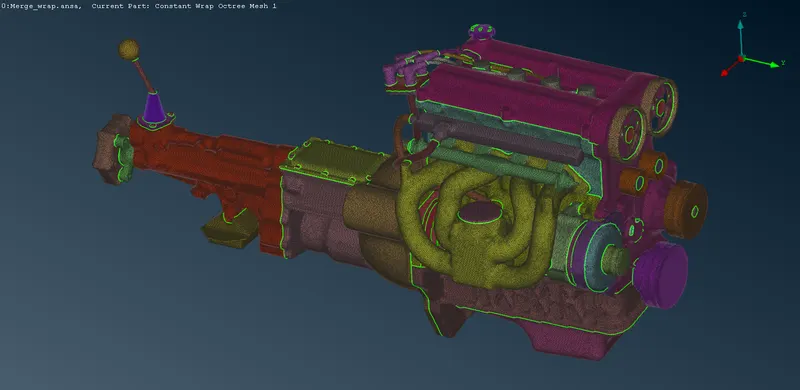
A close-up view of the various regions of the mesh shown below, reveals the capability of the surface wrap to capture the curvature and details of the body.
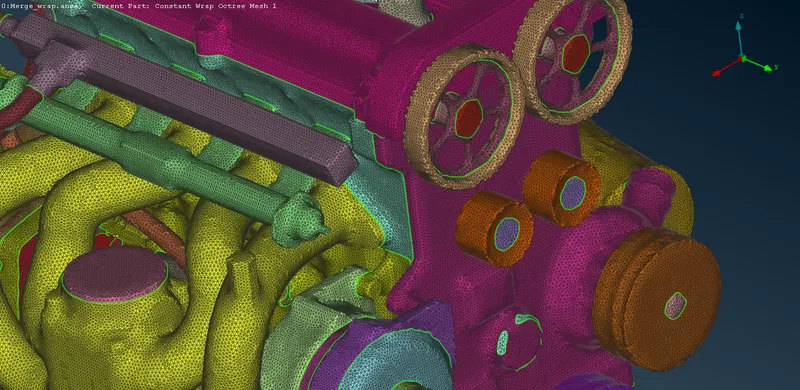
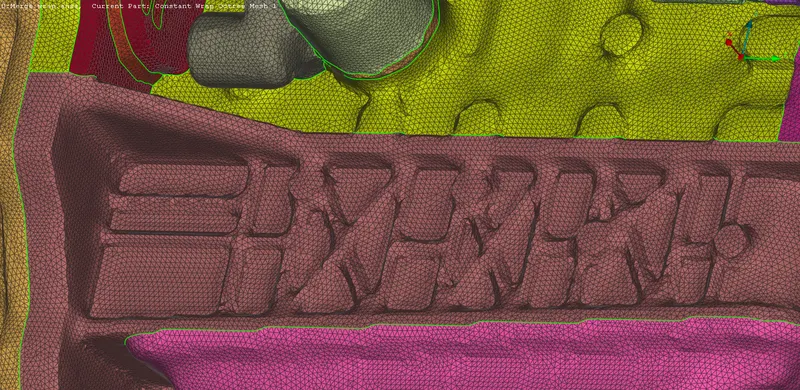
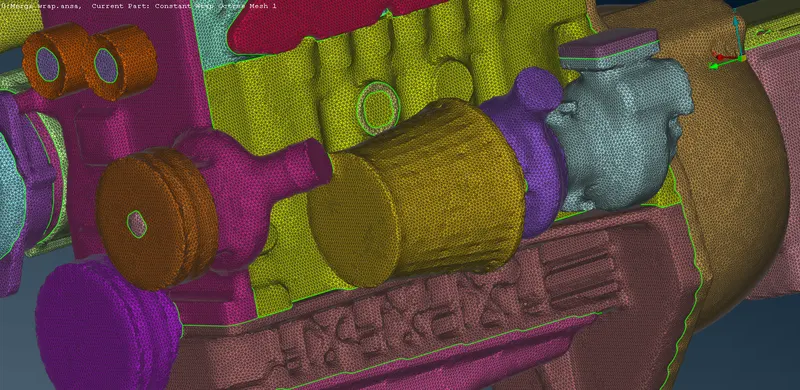
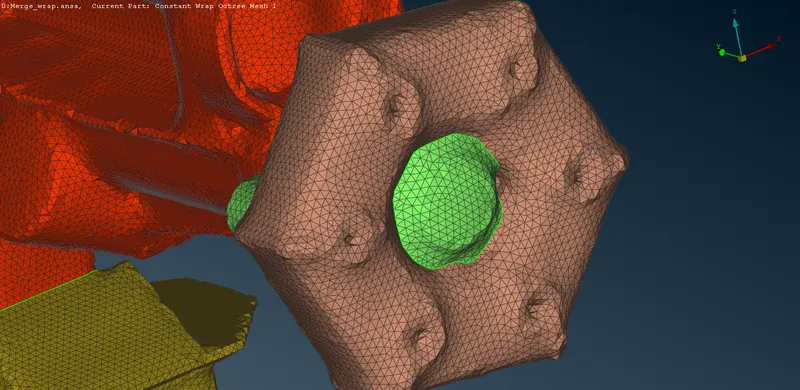
From the images above it can be seen that the 3mm target length is able to capture the major details of the geometry well but fails to capture the intricate curvatures and finer details of the model. Decreasing the target length may better enable the surface wrap to capture these details but will however increase the mesh size and the computational cost. The decision to use a lower target length should be taken based on the regions of interest, computational budget and desired fidelity.
A final visual check was performed by slicing sections of the surface mesh to see if there were any leaks in the surface wrap to capture any of the internal regions of the model as shown below.
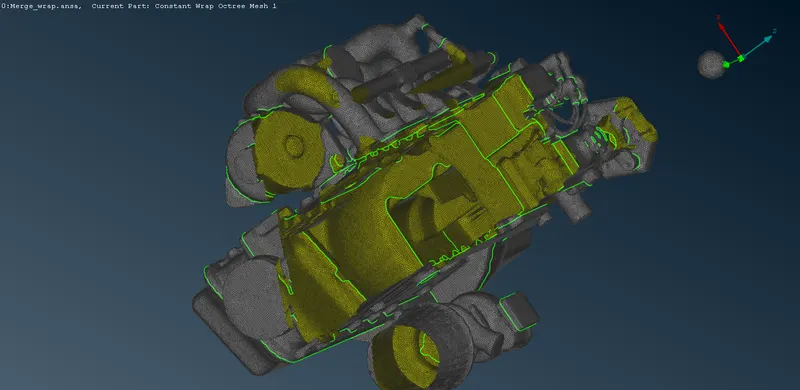
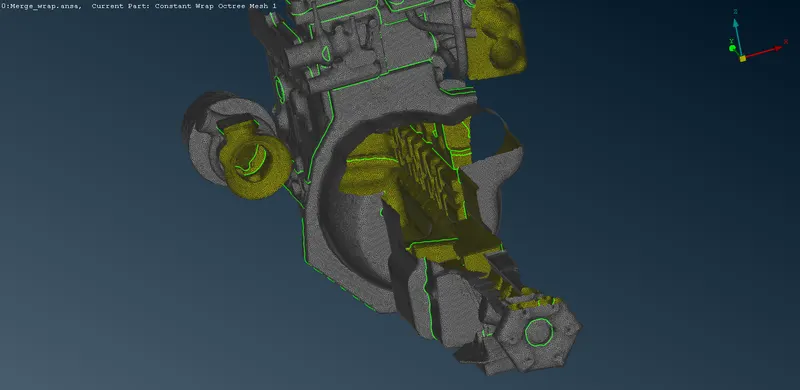
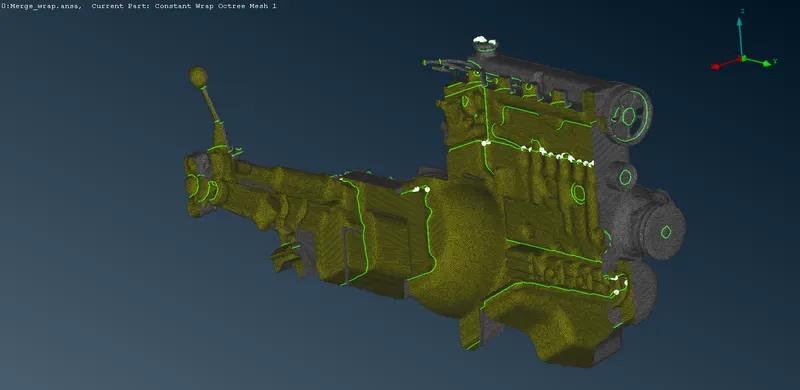
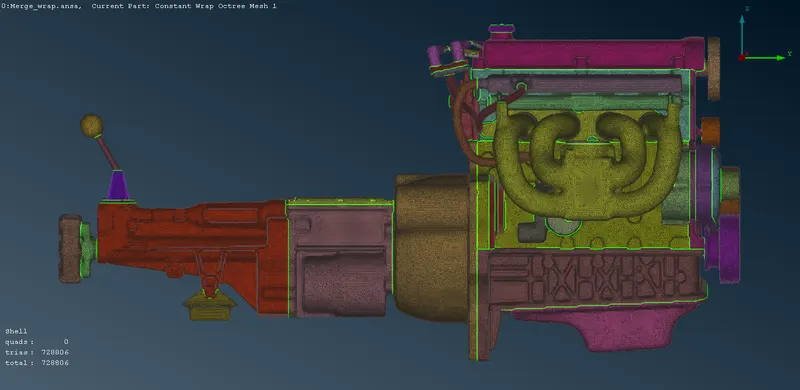
The above images show a clean outer surface wrap of the model with no internal regions meshed. The surface wrap can now be deemed ready for volume meshing with 728k surface elements as shown below.
Drive Link to the surface wrapped assembly:
https://drive.google.com/file/d/1s83s9BIxmuAGUXeQYm-6MW2W2N8CNS9v/view?usp=sharing
Conclusion
A basic topological cleanup was performed on the given transmission, engine and gearbox components and assembled together for a surface wrap. The surface wrap was conducted using a target length of 3mm to obtain the surface mesh on the assembly. Visual checks and inspections were conducted to check if the surface wrap did not leak into the internal regions of the body. The resulting mesh was seen to capture the major features of the body well but failed to capture the intricate curvatures and finer details of the model. Decreasing the target length may improve the capture of these details on the body but will lead to increased computational costs.