Structural analysis of Wire Bending using different materials in ANSYS Workbench
AIM: To perform structural analysis of wire bending of copper, aluminium and magnesium alloy wires using ANSYS workbench.
PROCEDURE:
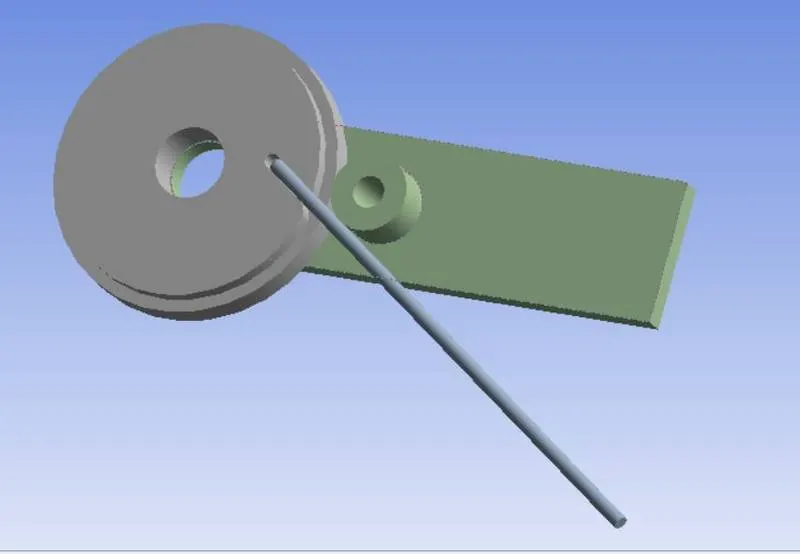
Initially, the wire bending machine geometry is imported into ANSYS. It consists of wire, wheel and lever as shown below:
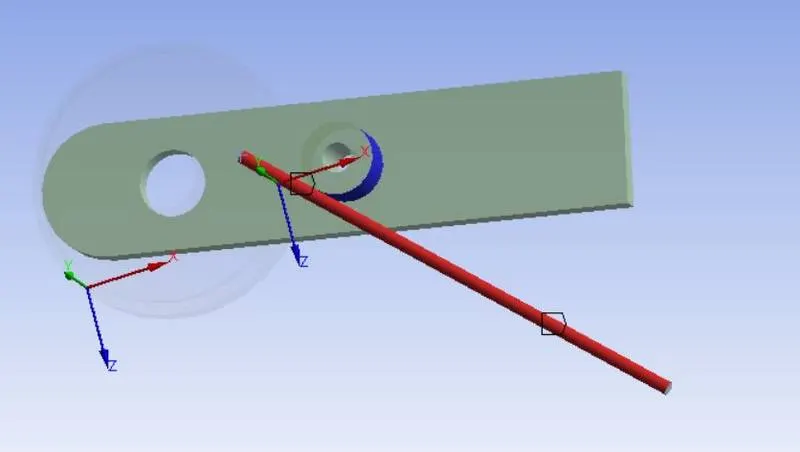
Materials Aluminium, Copper and Aluminium are imported for the purpose of this simulation. Frictional contacts are created between lever and wire as shown below:
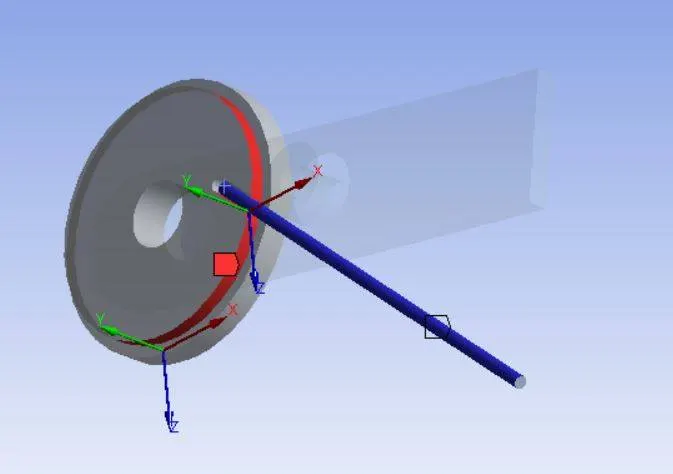
Another frictional contact is made between wheel and wire as shown below:
The contact properties are given below:
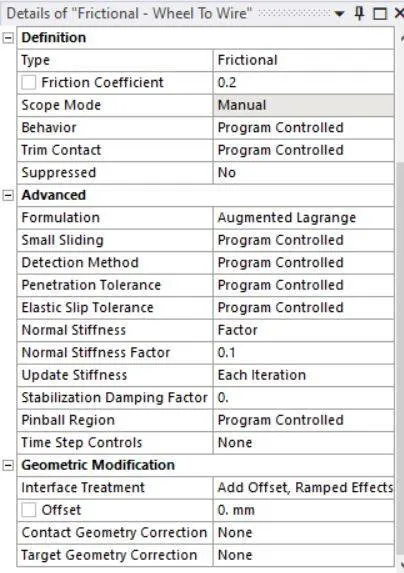
Frictional coefficient of 0.2 is given with Augmented Lagrange formulation. A revolute joint is created for the lever's rotation as given below:
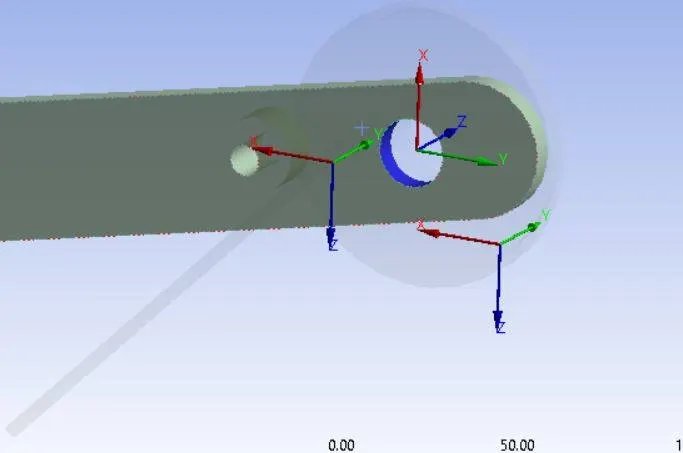
The meshing is shown below:
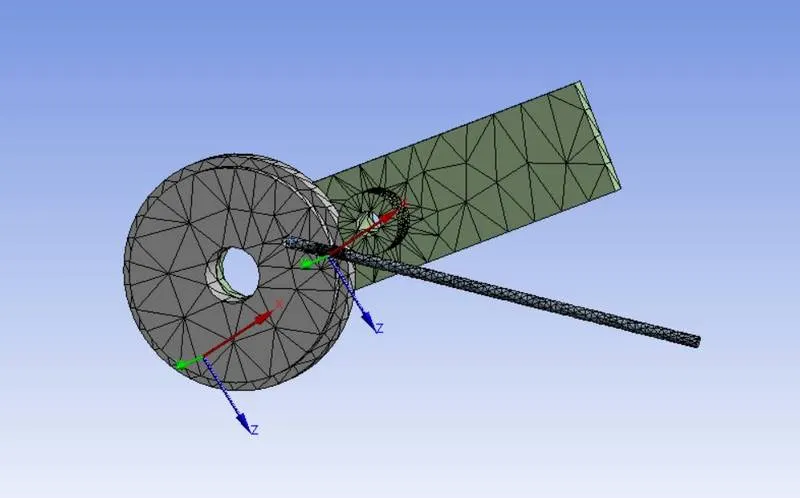
The meshing is done using tetrahedral elements. A fixed support is created for the wheel as shown below:
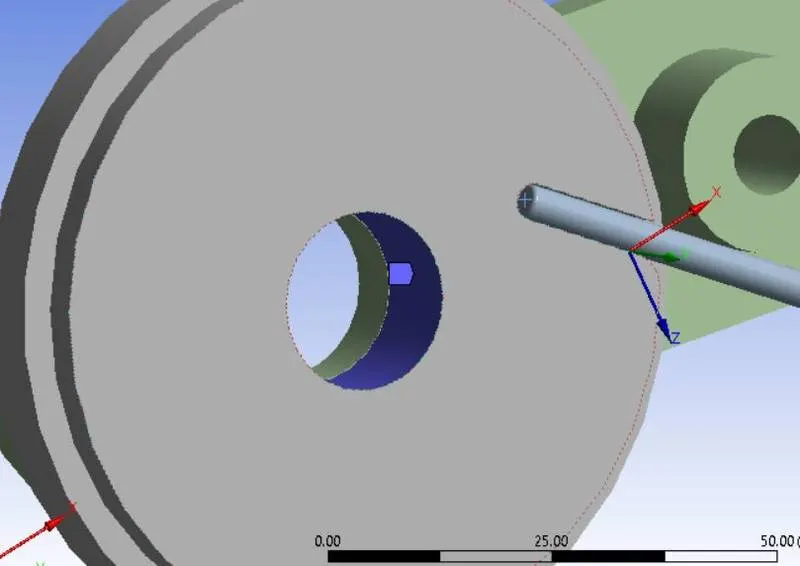
Another fixed support is created for the head of the wire as shown below:
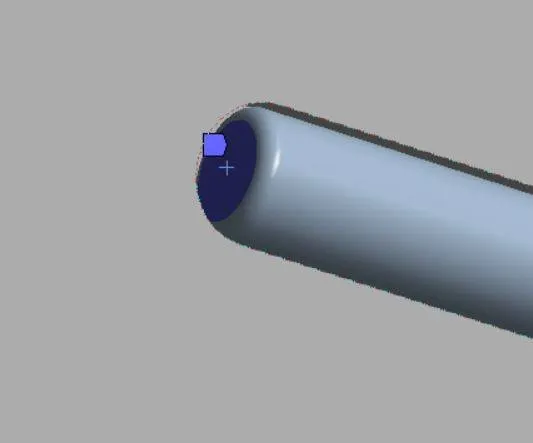
The revolute joint is given rotation load as shown below:
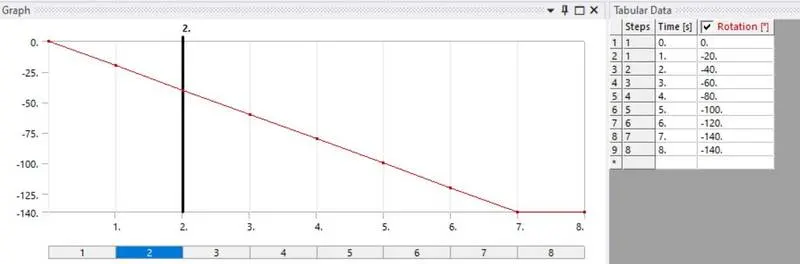
CASE 1: Wire Material = Copper:
Wire material is changed to copper while the wheel and the lever are assigned Structural Steel. The problem is then solved and the stress contour is given below:
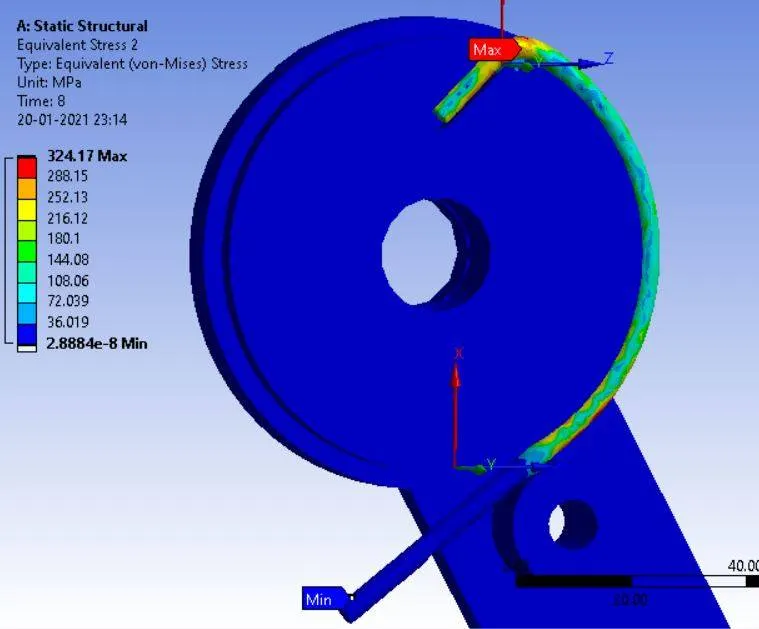
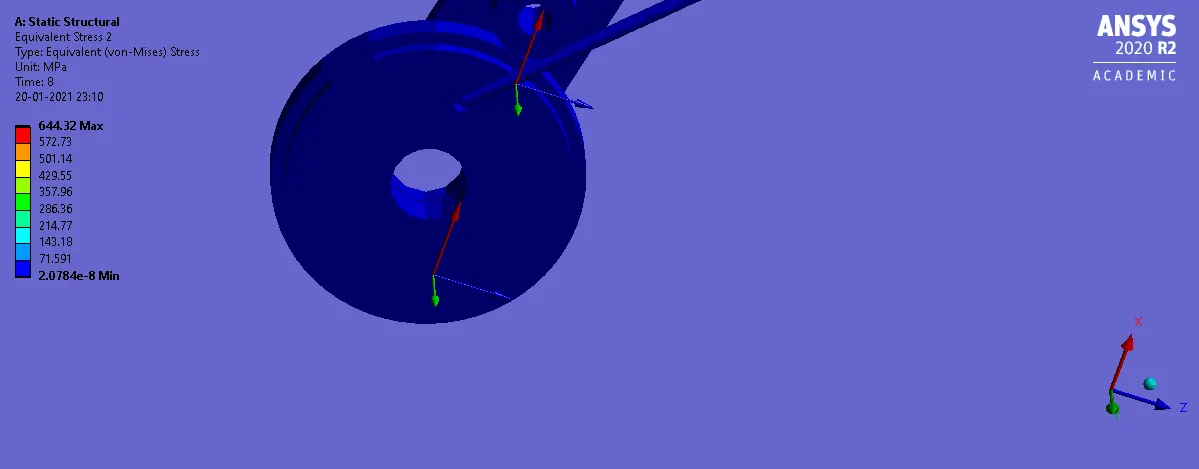
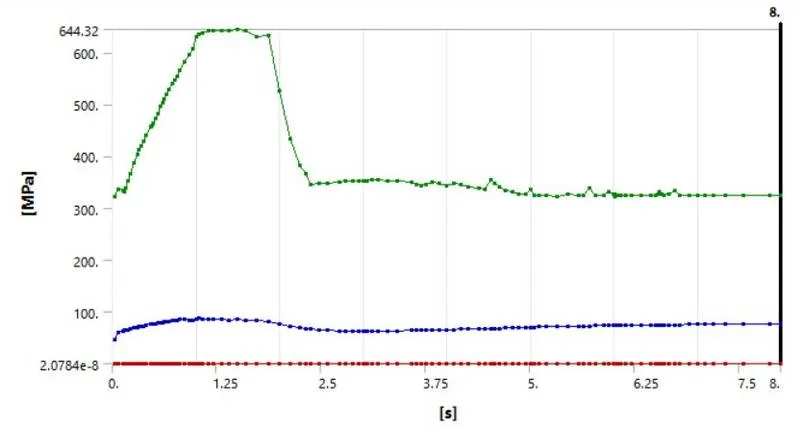
The maximum stress is observed to be 644.32 MPa. The stress variation with time is shown below:
The strain contour is given below:
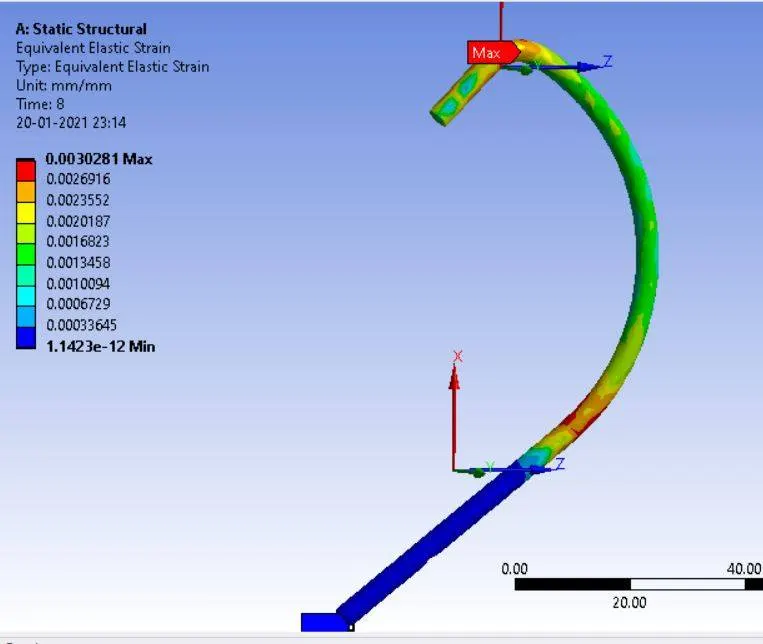
Maximum strain reaches 5.926 e-3 and the variation of strain with time is plotted below:
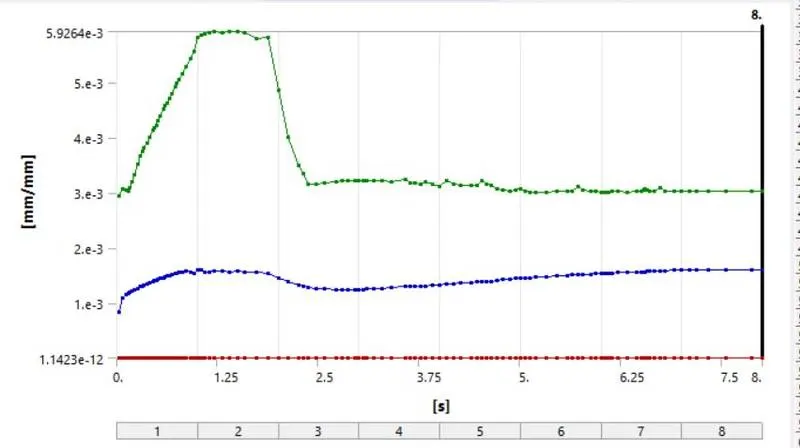
Case 2: Wire Material = Aluminium:
The wire material is changed to Aluminium and the simulation is solved. The stress contour is given below:
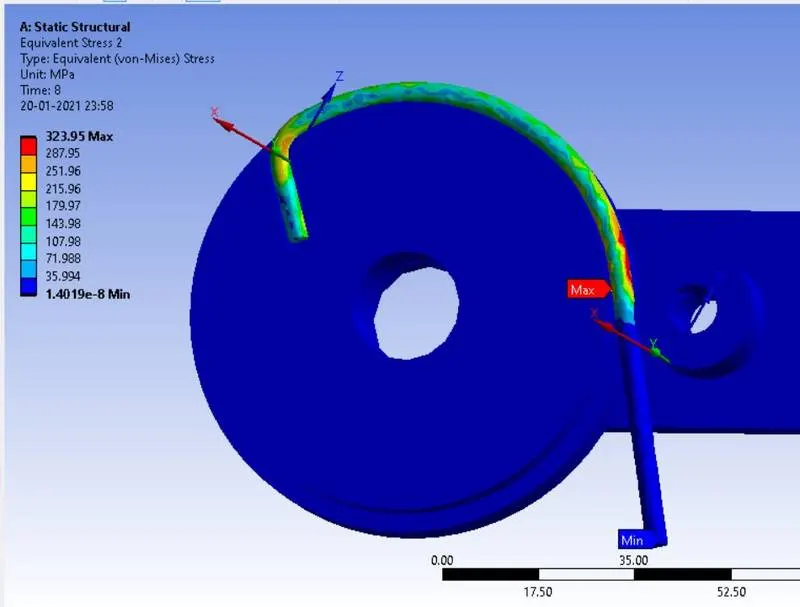
The stress maximum is 448.27 MPa. The stress variation with time is plotted below:
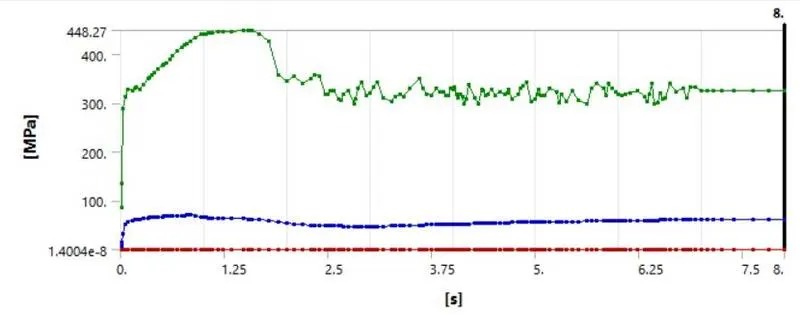
The strain contour is given below:
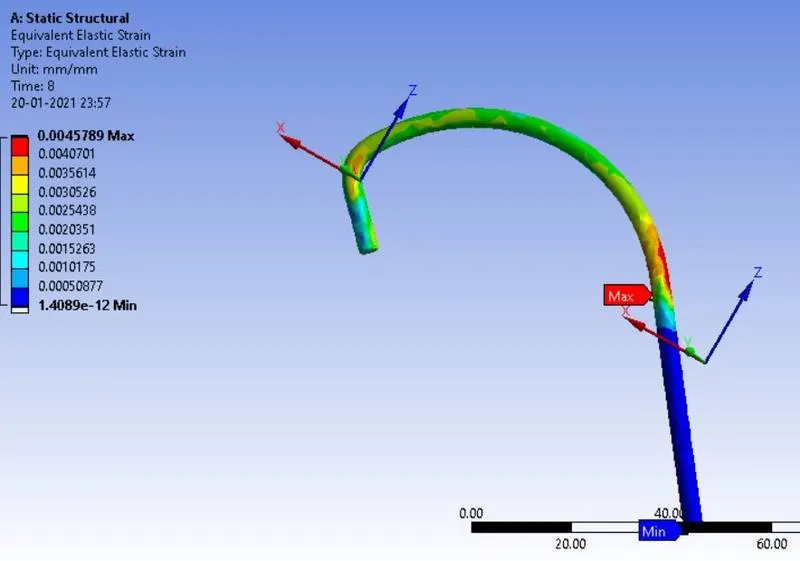
The maximum strain is 6.37 e-3 and the variation with time is plotted below:
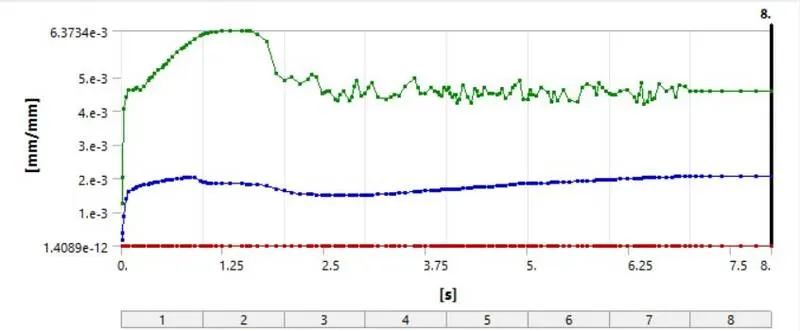
Case 3: Wire Material = Magnesium:
The wire material was changed to magnesium and the simulation was solved. The stress contour is given below:
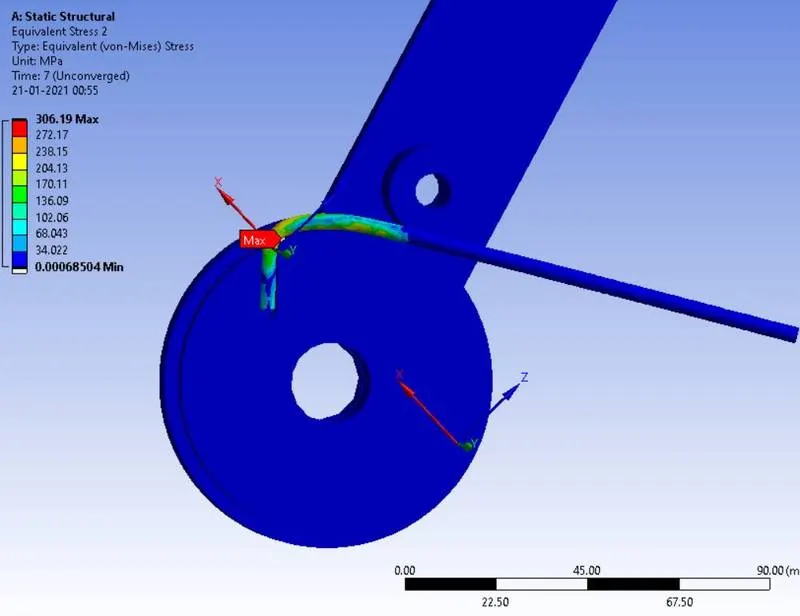
Maximum stress was 498.65 MPa. The stress variation with time is given below:
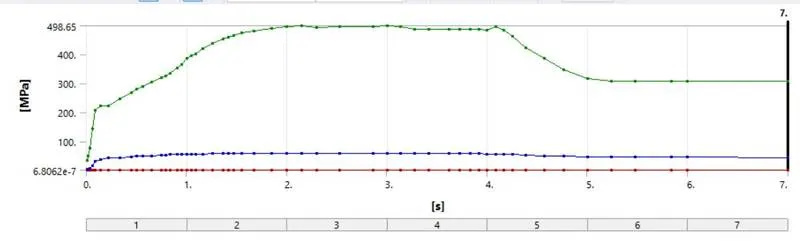
The strain contour is given below:
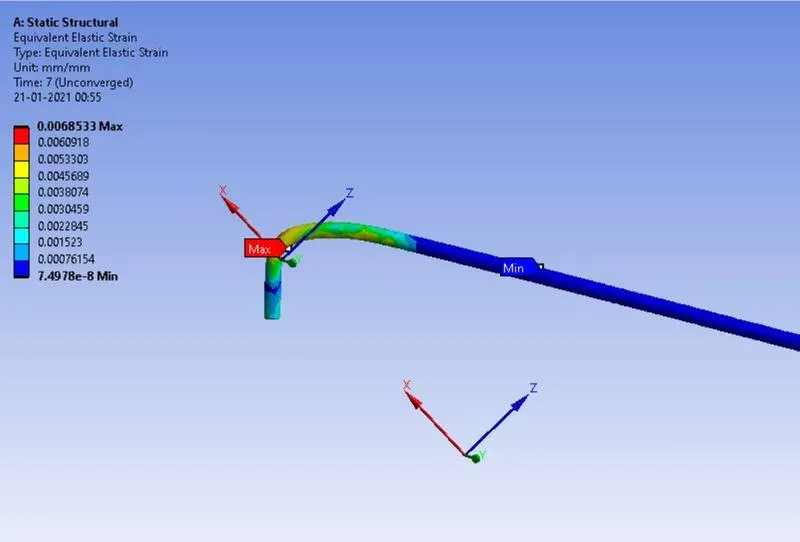
Maximum strain was 1.1122 e-2. The strain variation with time is given below:
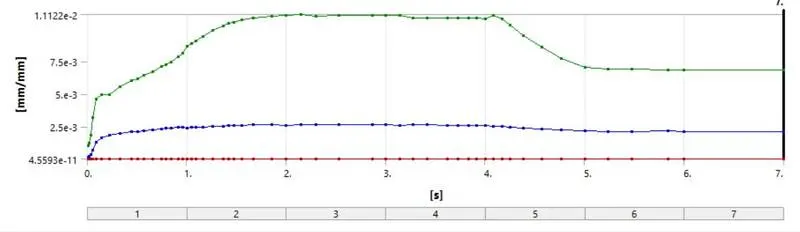
|
Wire Material |
Maximum Stress |
Maximum Strain |
|
Copper |
644.32 MPa |
5.92 e-3 |
|
Aluminium |
448.27 MPa |
6.373 e-3 |
|
Magnesium |
498.65 MPa |
1.1122 e-2 |
Copper had the highest stress whereas aluminium had the lowest stress. Whereas maximum strain value was achieved by Magnesium and lowest strain by Copper. Therefore for easiest wire bending, Magnesium has the best response with the highest strain.
CONCLUSION: The structural analysis of wire bending was successfully conducted in ANSYS Workbench using three different materials and the results were discussed quantitatively.