Week 4 -Wire Bending Challenge
Wire Bending Challenge:
Aim:
To perform an analysis to simulate the bending of wire using the materials as copper alloy(NL),Aluminium alloy(NL) and Magnesium alloy(NL) for the wire to find the equivalent stress and equivalent strain.
Objective:
for this challenge, you will have to perform an analysis to simulate the bending of a wire in ANSYS. You will have to use Copper Alloy (Non Linear), Aluminium Alloy (Non-Linear), and Magnesium Alloy (Non-Linear) for the wire alone. You need to find out the Equivalent stress and Equivalent strain on the wire alone. Compare the results and submit a well-formatted report on this.
Procedure:
- Firstly open ANSYS workbench software.
- Select static structural from analysis system.
- In the engineering data copper alloy(NL) is selected fron Non-linear general materials.
- And then import the geometry from the system files.
- After importing the model the image is as follows.
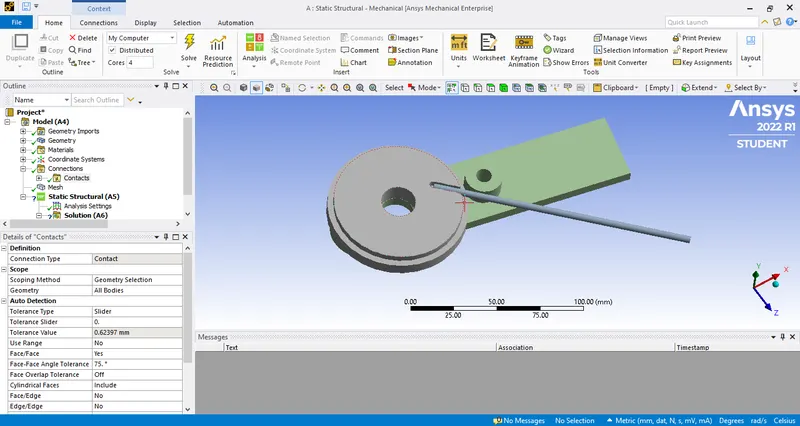
- And after that in connections assign the frictional contact to the wire and lever.
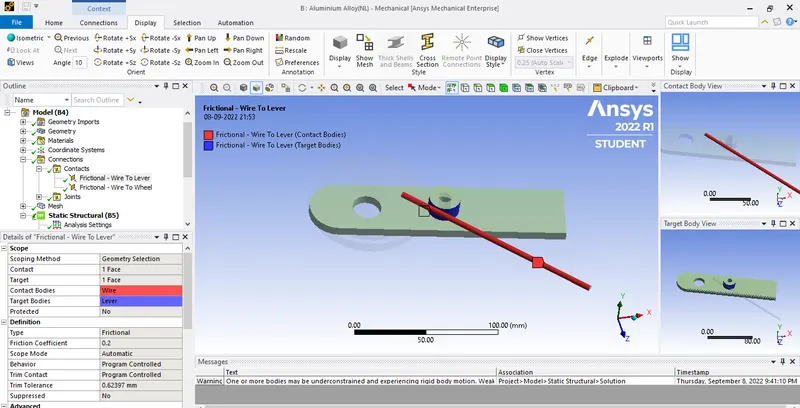
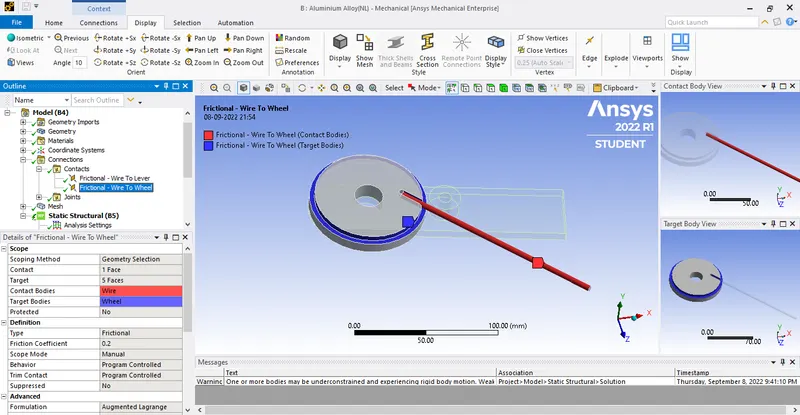
- And then create a revolute joint for which the connection type as Body-ground.
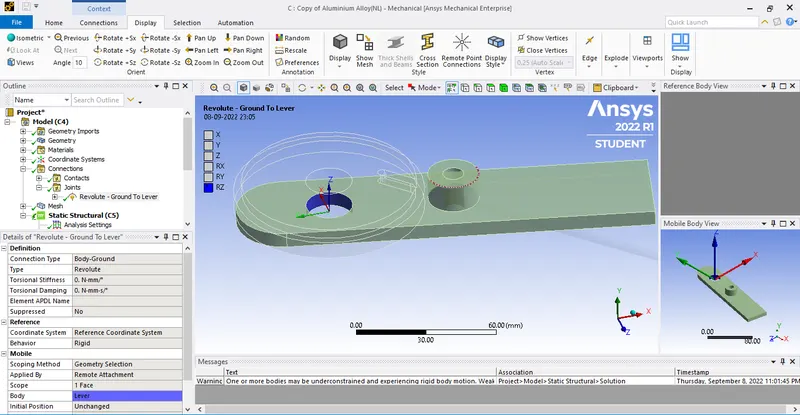
- After that create a co-ordinate system at the cornered of the wheel at which the wire bends.
- Apply co-ordinate system for offset X and offset Z direction as 3mm and -3mm.
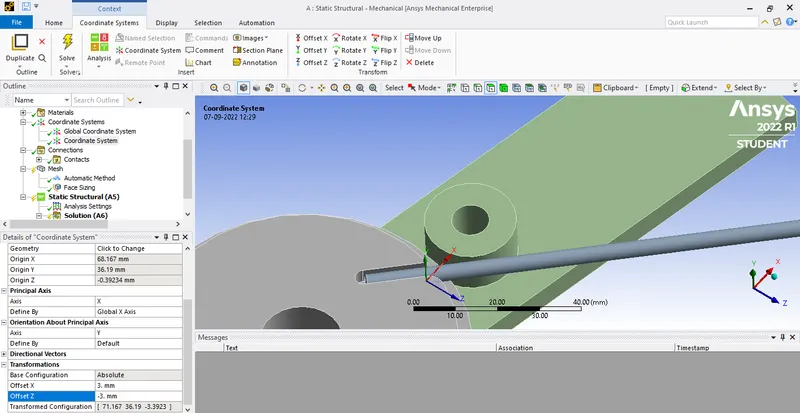
- Then we proceed for meshing .
- assign the mesh method as Tetreahedrons.
- For all the geometry assign the mesh size as 2.2mm.
- And body sizing of 3mm is assigned to the rod.
- And at the area where the wire tends to bend we need to assign the type as 'Sphere of influence' of 7m radius and element sixe as 0.8mm.
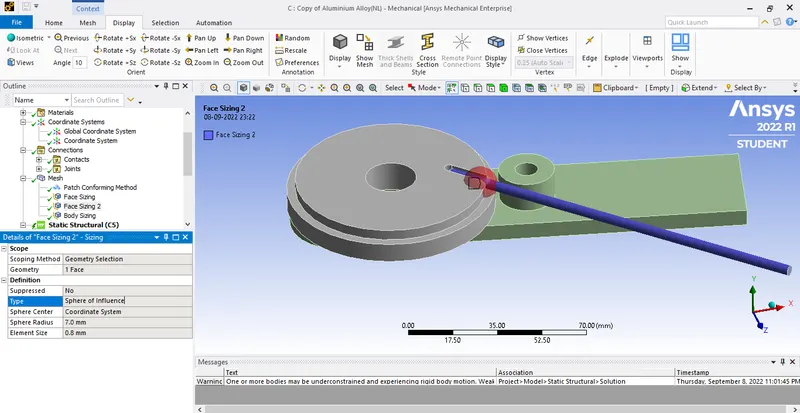
- And in analysis settings assign the no of steps as 8.
- For the 1 step assign the data as follows.
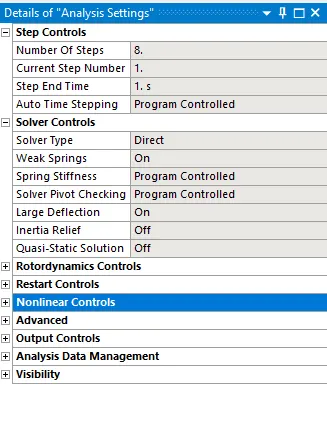
- For the steps 2 to 8 assign the data as follows.
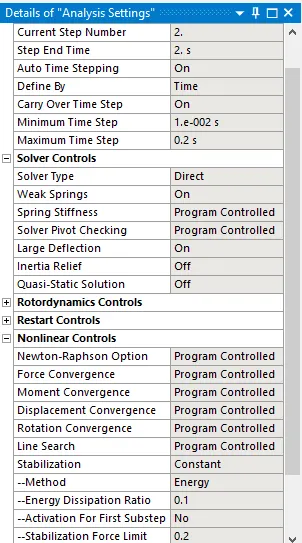
- assign the fixed support to the wheel as follows.
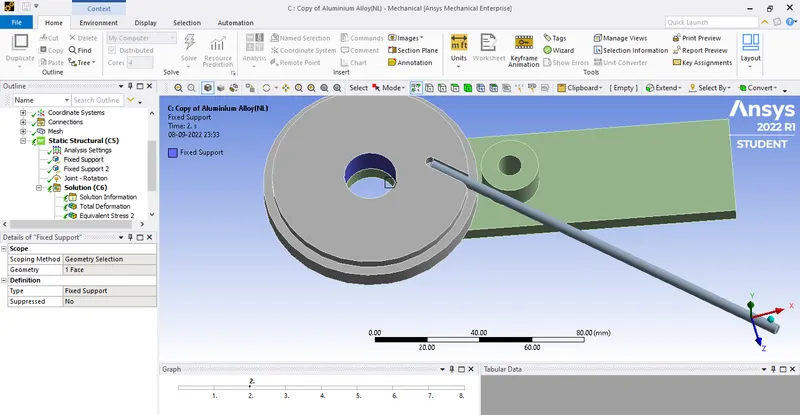
- Assign another fixed support at the end of the wire which is connected to the wheel.
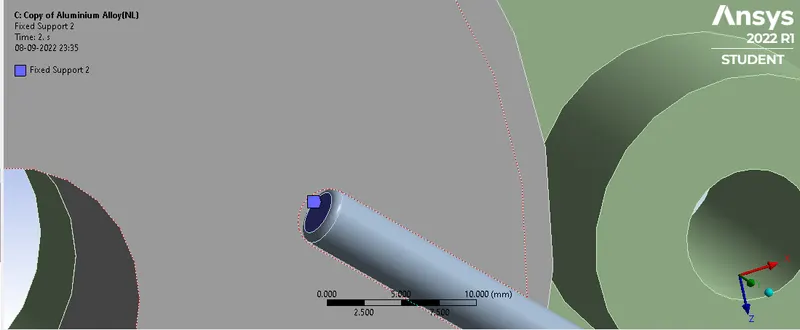
- Assign the rotation to the wheel which is taken from the tabular data as follows.
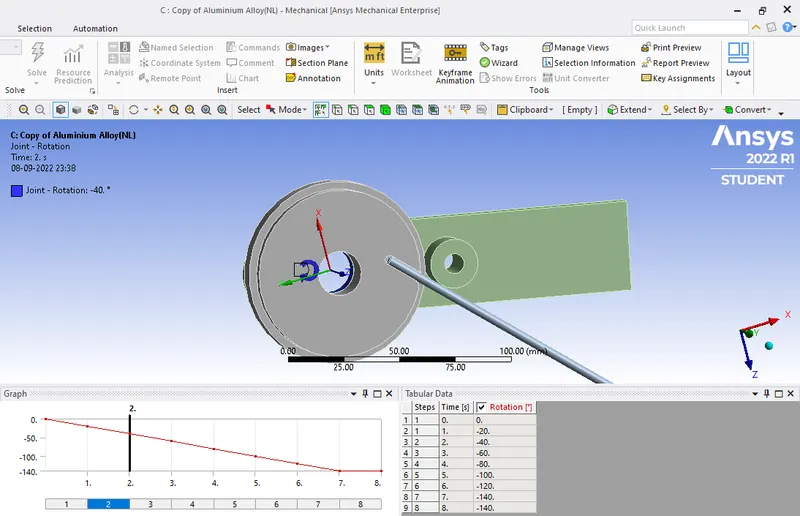
- And finally we need to find out the equivalent stress and equivalent strain of the wire.
Results:
Copper Alloy(NL):
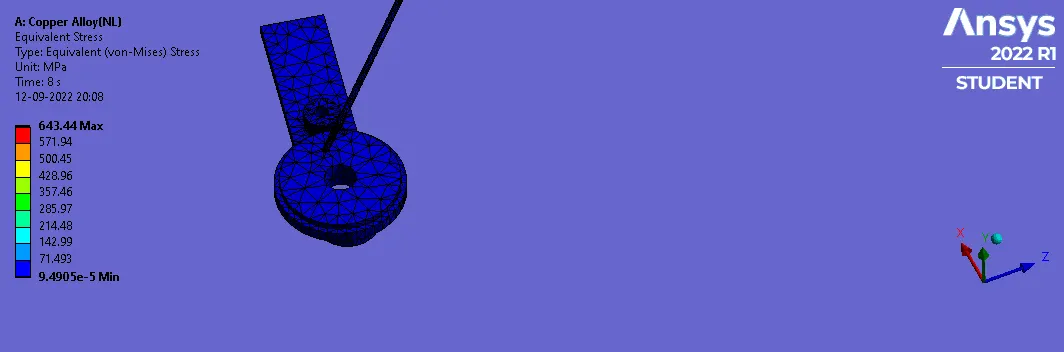
Equiavalent stress(mpa):
Maximum-349.47
Minimum-0.0018963
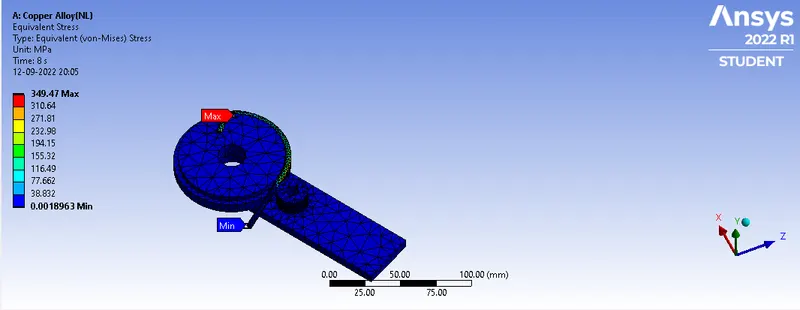
Gif:
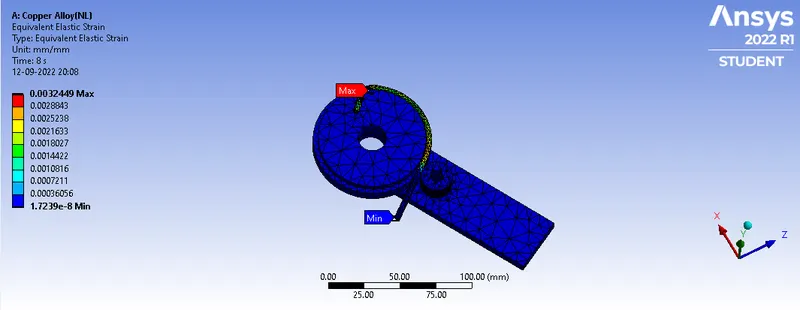
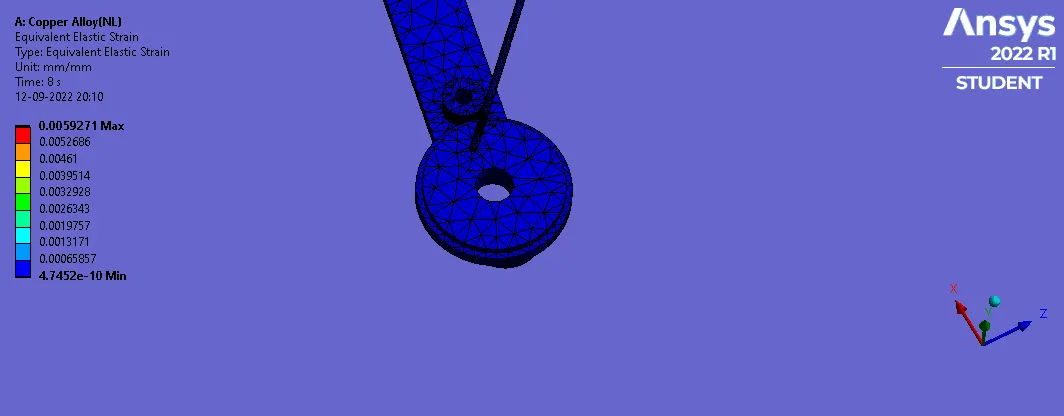
Equivalent Elastic strain(mm/mm):
Maximum-0.0032449
Minimum-1.7239e-8
Gif:
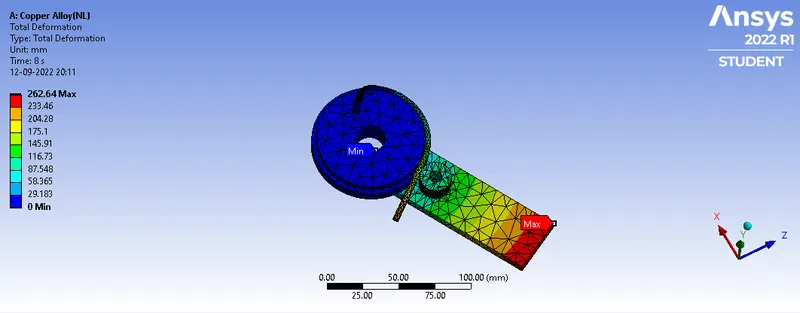
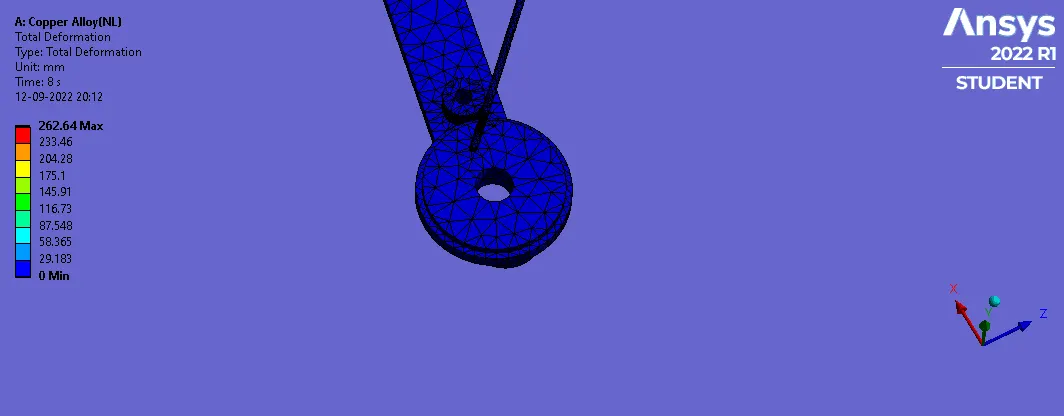
Total Deformation(mm):
Maximum-262.64
Minimum-0
Gif:
Aluminium Alloy(NL):
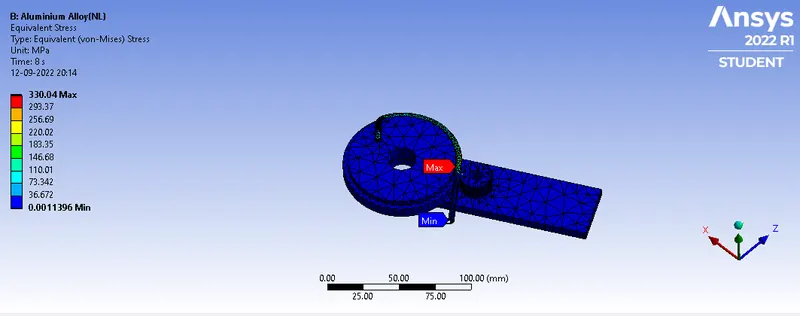
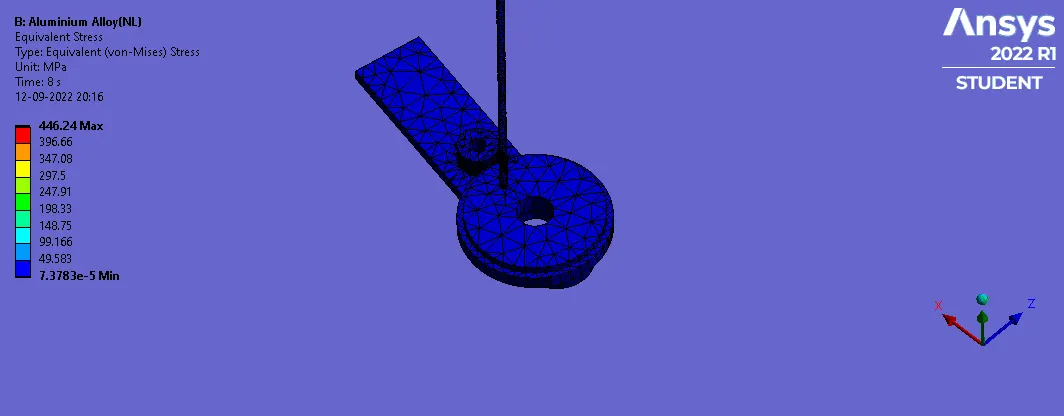
Equivent stress(mpa):
Maximum-330.04
Minimum-0.0011396
Gif:
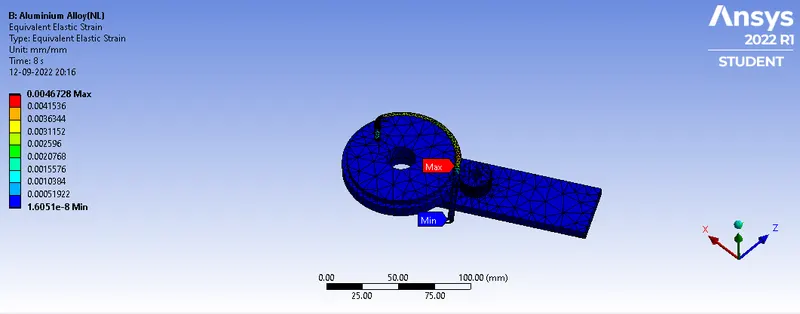
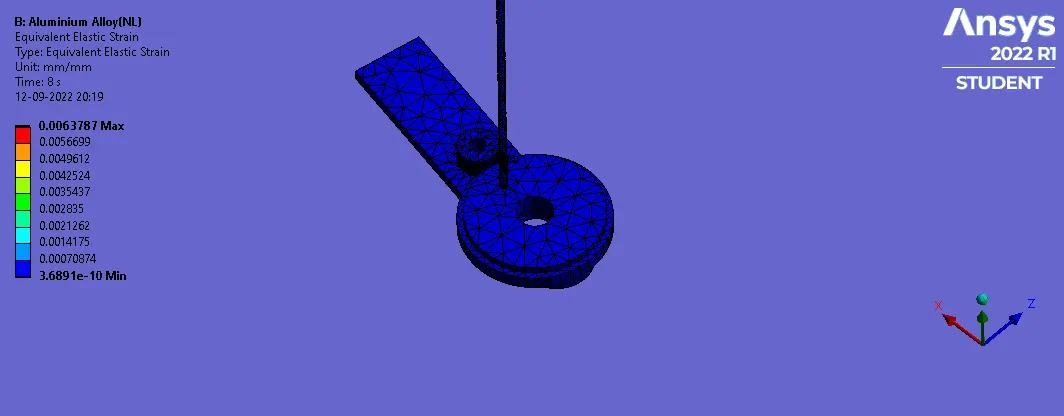
Equivent Elastic strain(mm/mm):
Maximum-0.0046728
Minimum-1.6051e-8
Gif:
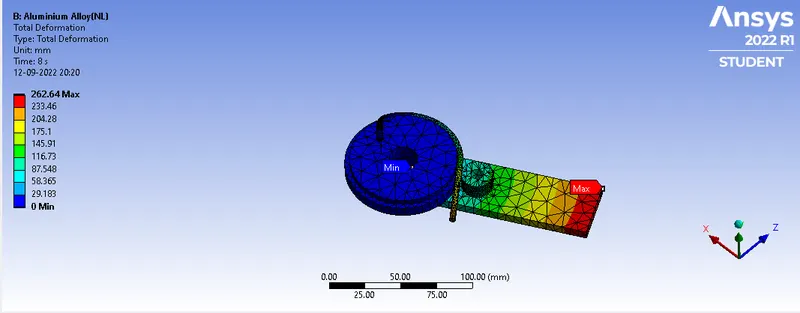
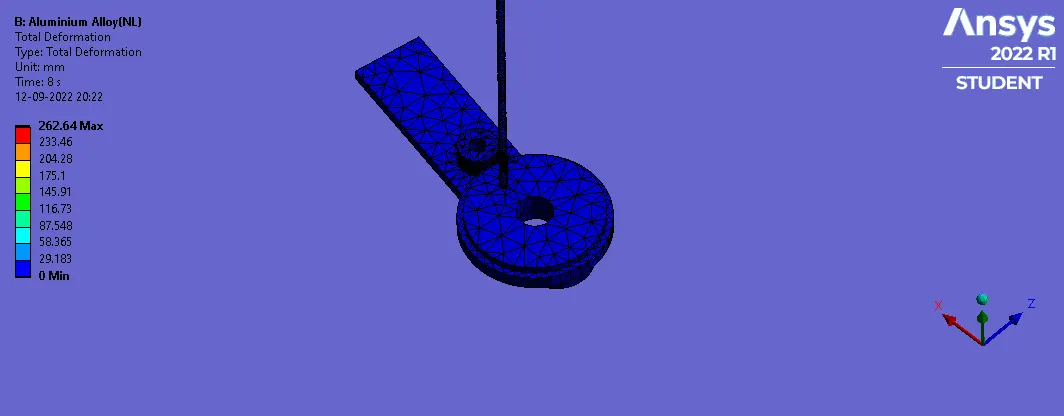
Total Deformation(mm):
Maximum-262.64
Minimum-0
Gif:
Magnesium Alloy(NL):
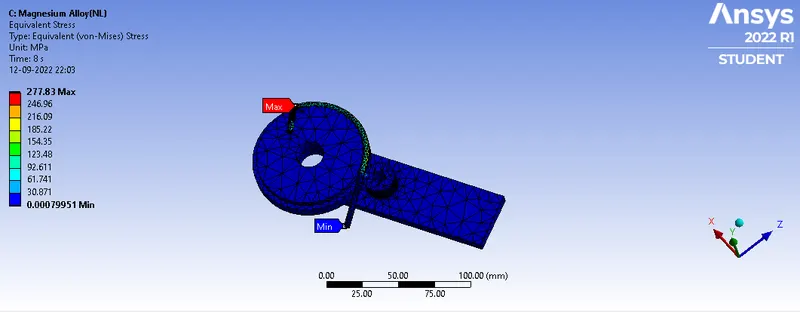
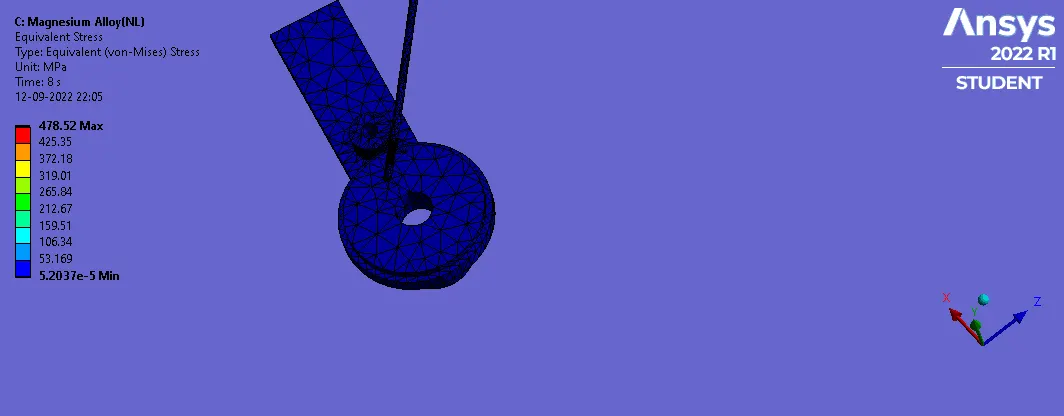
Equivalent Stress(mpa):
Maximum-277.83
Minimum-0.00079951
Gif:
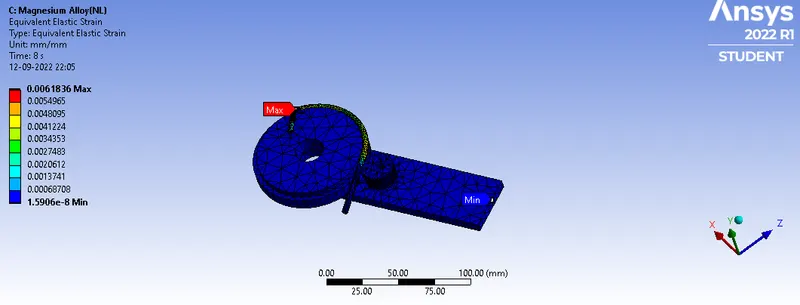
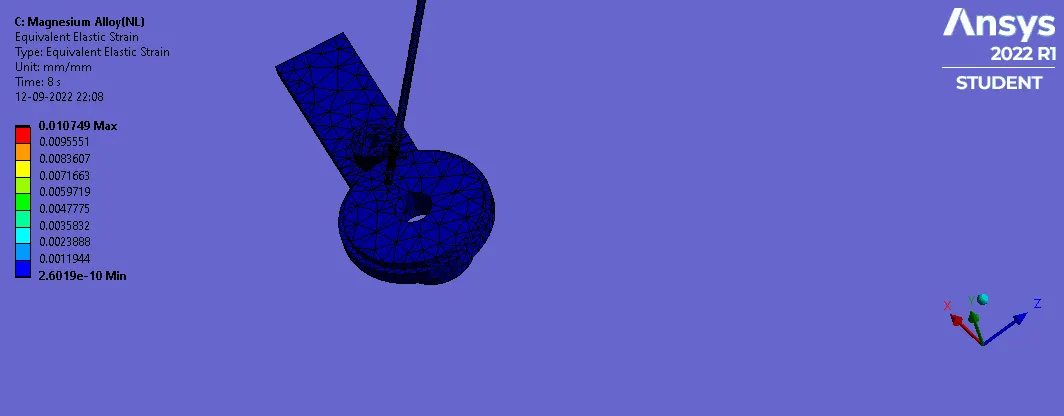
Equivalent Elastic Strain(mm/mm):
Maximum-0.0061836
Minimum-1.5906e-8
Gif:
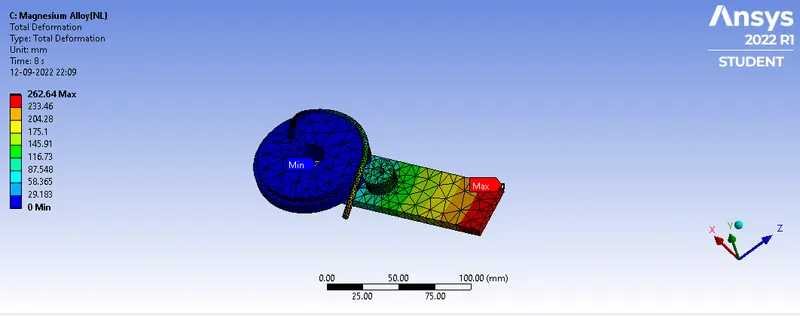
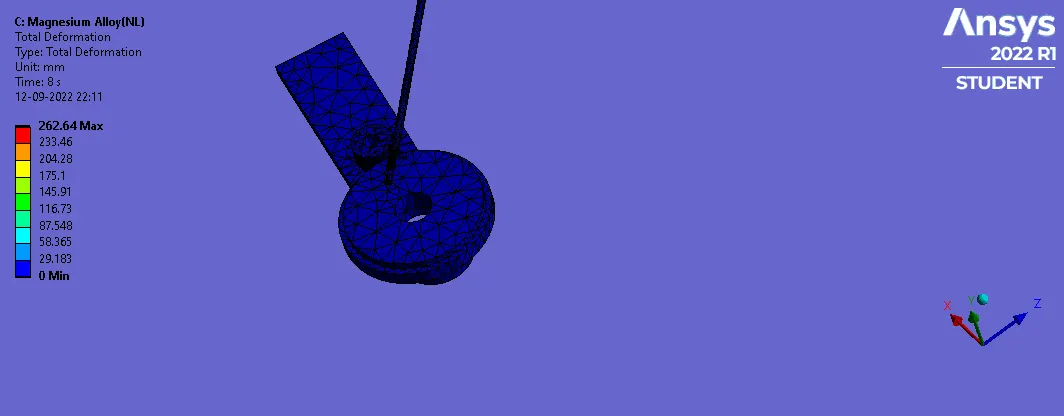
Total Deformation(mm):
Maximum-262.64
Minimum-0
Gif:
Comparision:
Copper Alloy(mpa) Aluminium Alloy(mm/mm) Magnesium alloy(mm)
Max Min Max Min Max Min
Equivalent stress 342.47 0.0018963 330.04 0.0011396 277.83 0.00079951
Equivalent strain 0.0032449 1.7239e-8 0.0046728 1.6051e-8 0.0061836 1.5906e-8
Total Deformation 262.64 0 262.64 0 262.64 0
Conclusion:
From the above tabular data or comparision results magnesium alloy having the less stress comapred to other materials it has less stress due to less youngs modulus.Threrore magnesium alloy is the preferable material compared to copper and aluminium.