Week - 4 - Crash Box Simulation
- Aim: To simulate a crash test for a crash box with different thickness and compare the results.
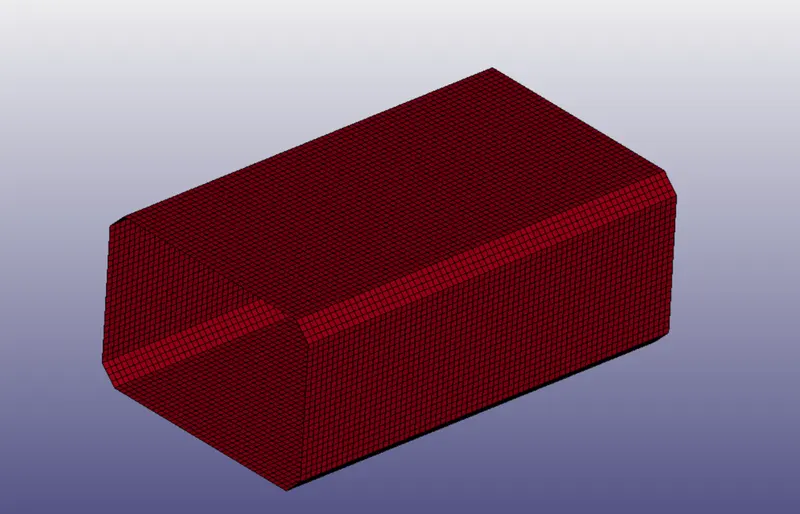
- Procedure: Import the .k file. As seen below, a meshed model of simplified crash box is provided.
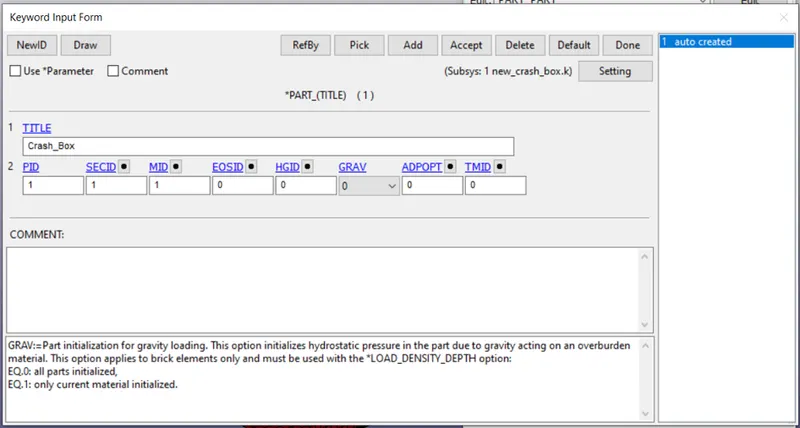
In the Keyword Manager, it is seen that the Part has no material and section defined. We need to create material and section card and update the material and section id accordingly.
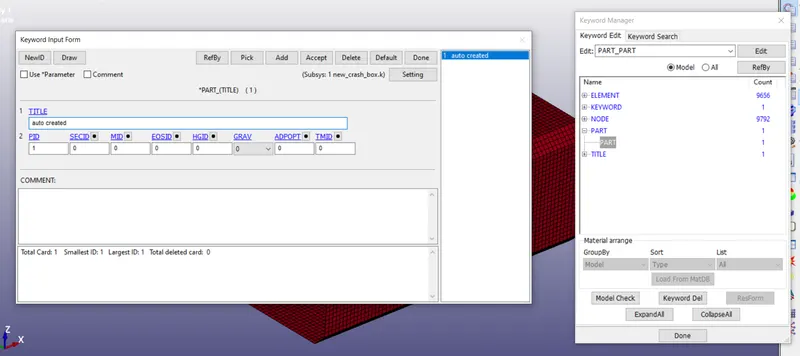
To create material card, go to Model and Part > Keyword manager > Mat. The material selected is Mat_Piecewise_Linear_Plasticity(024). The unit system used is gm-mm-ms. Properties of steel are used for the material card. Similarly, section card is created to assign thickness and type of element formulation. Underintegrated element scheme is used for this analysis.
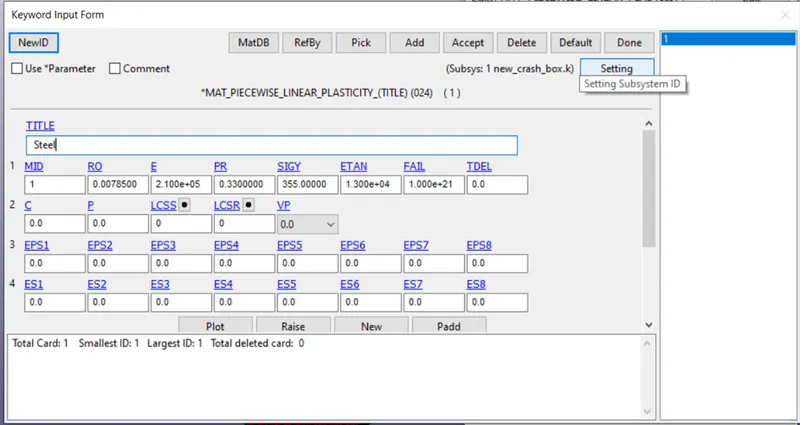
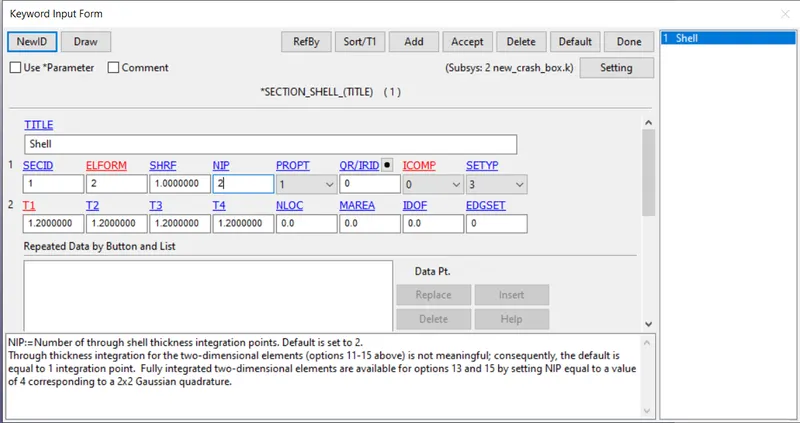
Update the Material Id and the Section Id in the Part keyword.
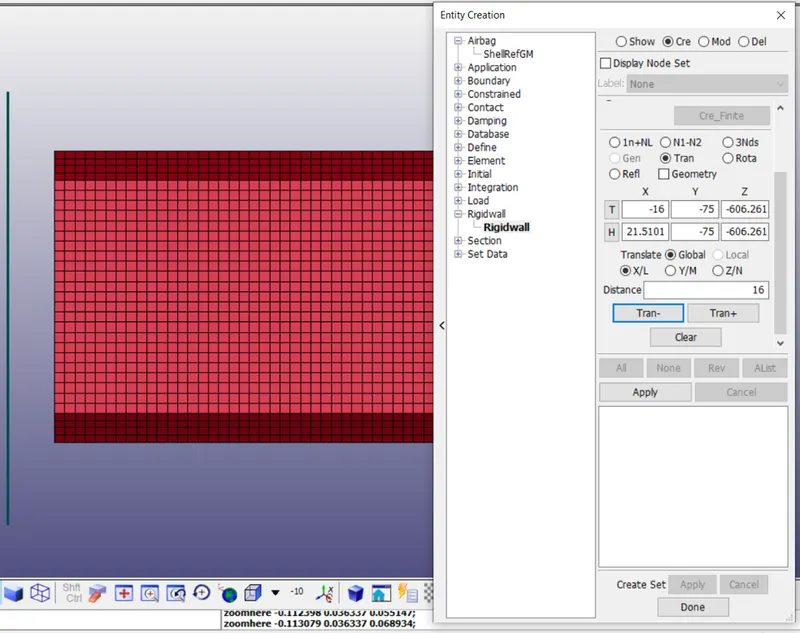
Create a Rigidwall a few millimeters away from the end of the Crash Box. To create a Rigidwall, go to Model and Part > Keyword Mananger > Create Entity > Rigidwall.
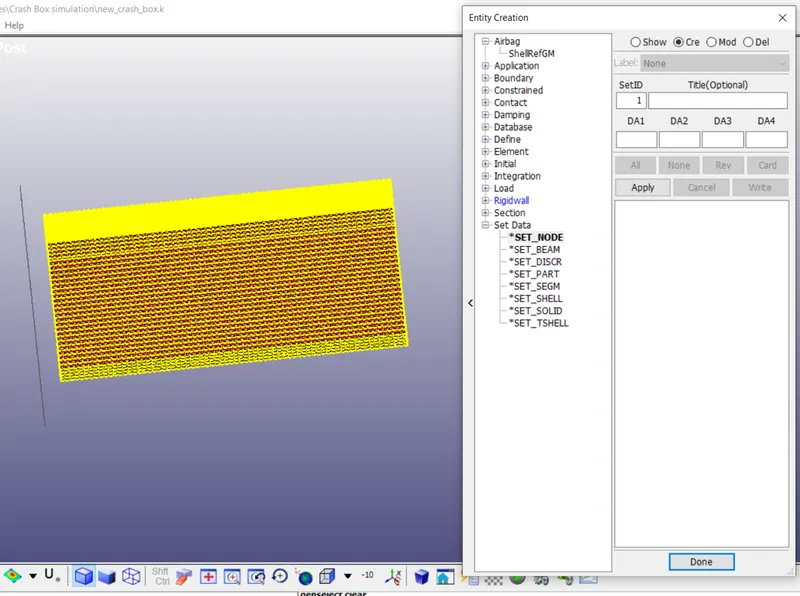
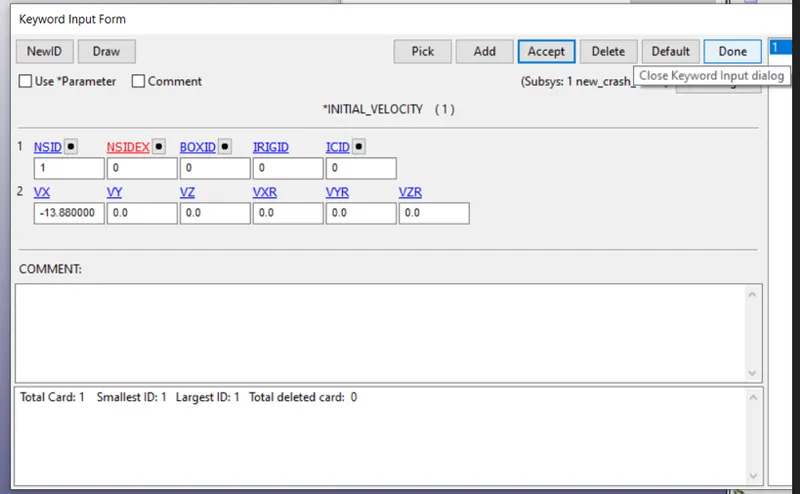
Similarly, using Create Entity option, create a Node set using nodes of the Crash Box and apply initial velocity of 15 kmph using INITIAL_VELOCITY card.
Give the Hourglass control method and request Hourglass energy in the energy balance using Control_Energy keyword. Also, we have to find the cross section force at the middle of the Crash tube. For that, create a cross section approximately at the middle portion of the crash tube. To create cross section, go to Keyword Manager > Create Entity > Database > Cross Section and create a cross section as shown below.
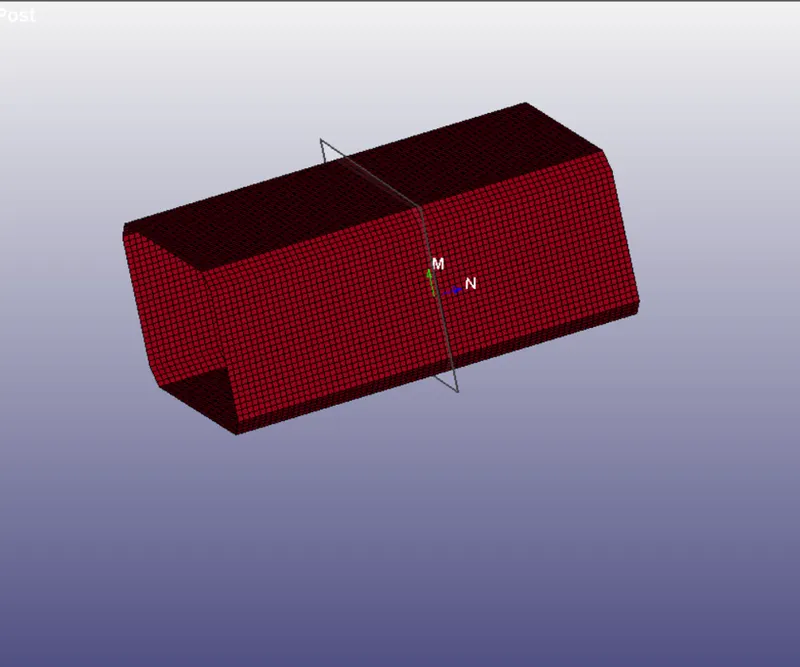
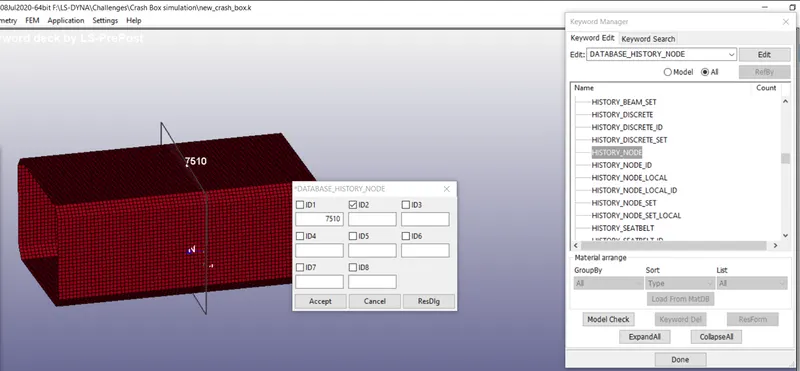
Also, we have to find out acceleration of a node at the middle of the crash tube. For that, we can request the accleration of a node approximately at the centre using NODOUT option from ASCII options. First, we input the node id for acceleration calculation using DATABASE_HISTORY_NODE option.
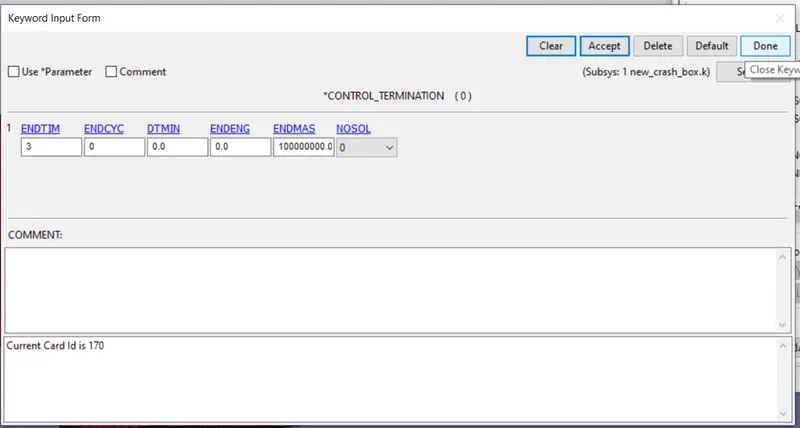
The most important keyword that is now left to define is the the CONTROL_TERMINATION to define the end time of the simulation. End time of 3 ms is defined.
Request the output files using DATABASE_BINARY_D3PLOT and the ASCII_options Keyword. Time interval of 0.05 ms between the output generation is defined. Using ASCII_option, request ofr GLSTAT, NODOUT, RCFORC etc.
Using CONTROL_CONTACT keyword, define CONTACT_AUTOMATIC_SINGLE_SURFACE contact for the crash box as it may come in self contact after crushing.
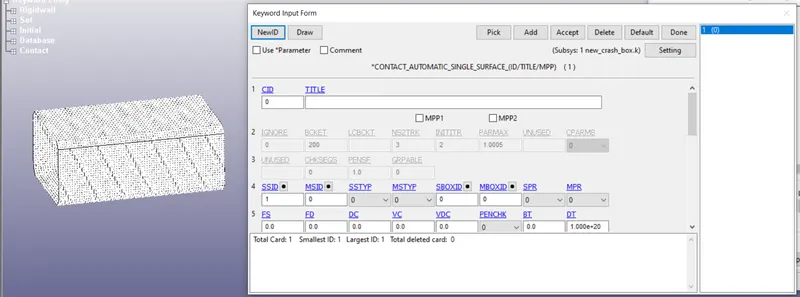
Save the .k file and run the simulation.
- Results:
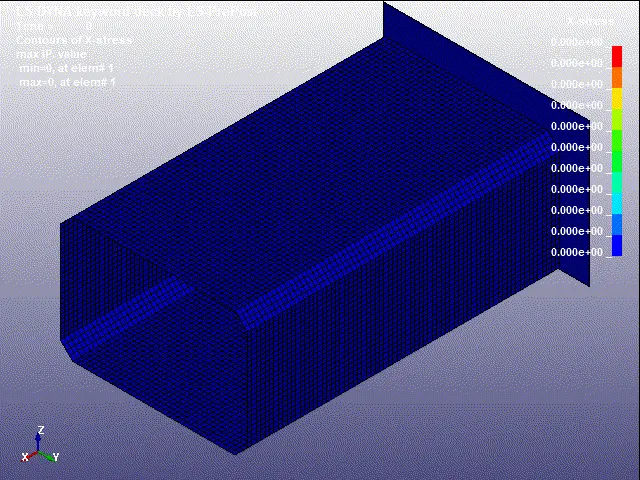
Max compressive stress of 396.5 g/mm.ms2 is observed in the x direction after impact. The crash box rebounds after impact.
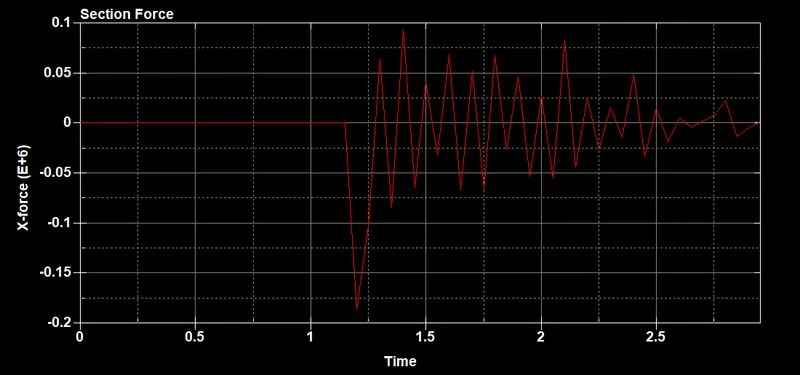
Max cross - sectional force of -1.8 e5 g.mm/ms2 is observed after impact.
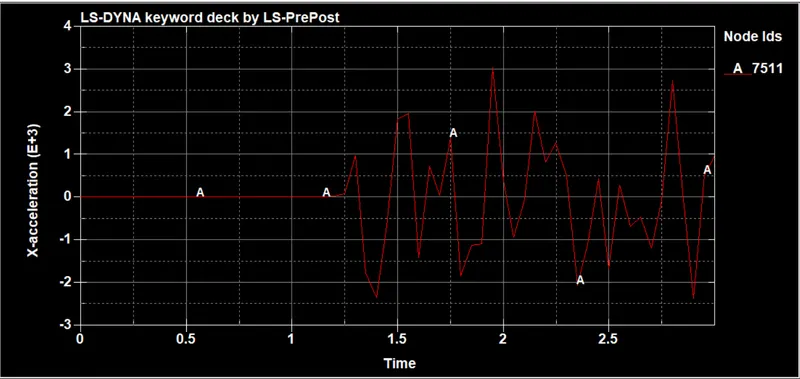
Peak value of accelration observed at a node in the middle is 3.03e3 mm/ms2
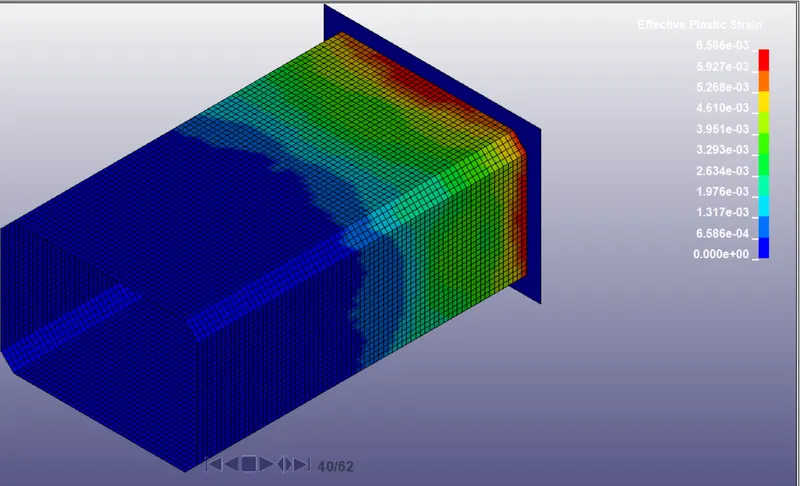
Max. effective plastic strain of 6.58 e-3 is observed.
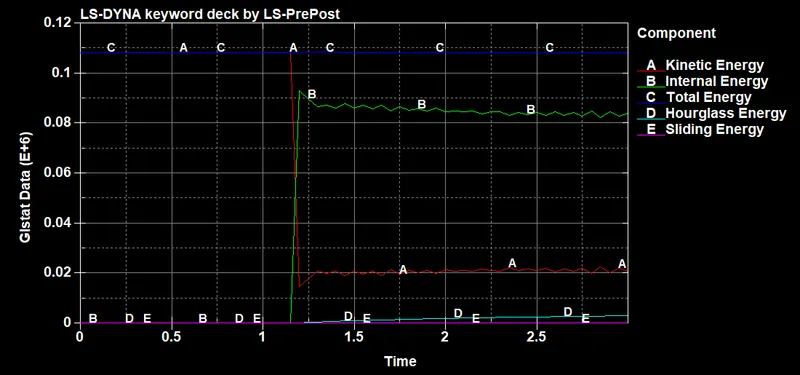
The total energy in the system is almost constant. Kinetic energy is maximum (1.15e5 g.mm/ms2 ) before impact & internal energy is zero. After impact, kinetic energy drops and is converted into internal energy as observed. Sliding energy observed is zero.
The thickness of the shell elements is increased to 1.5 mm and the results ae noted as follows:
Max compressive stress of 378 g/mm.ms2 is observed in the x direction after impact, which is slightly lower than the previous case with thickness 1.2mm. This is due to increased stiffness as area of cross section is slightly increased with increased thickness.
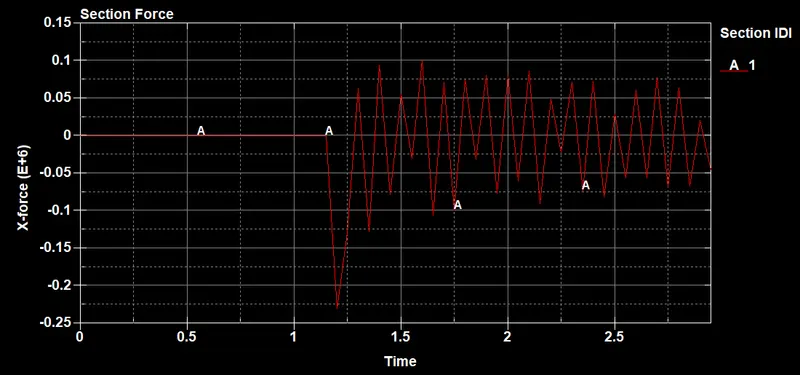
Max cross - sectional force of -2.31 e5 g.mm/ms2 is observed after impact.
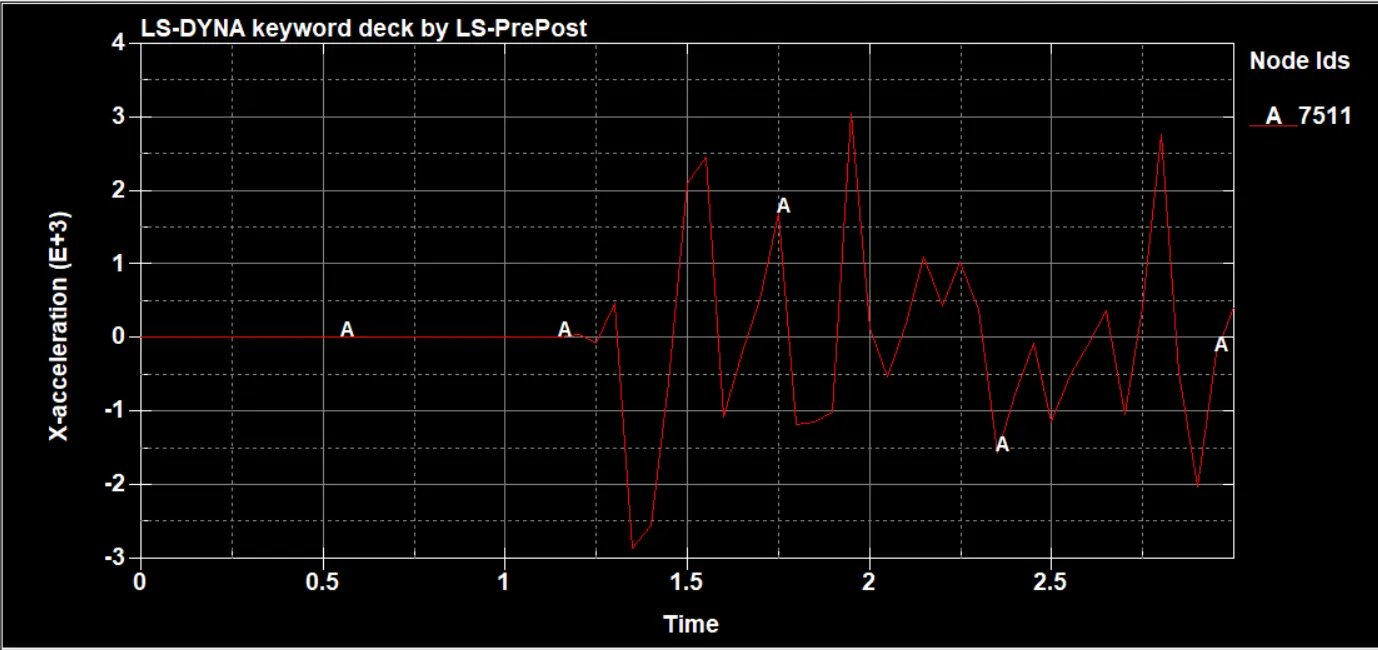
Peak value of accelration observed at a node in the middle is 3.06e3 mm/ms2
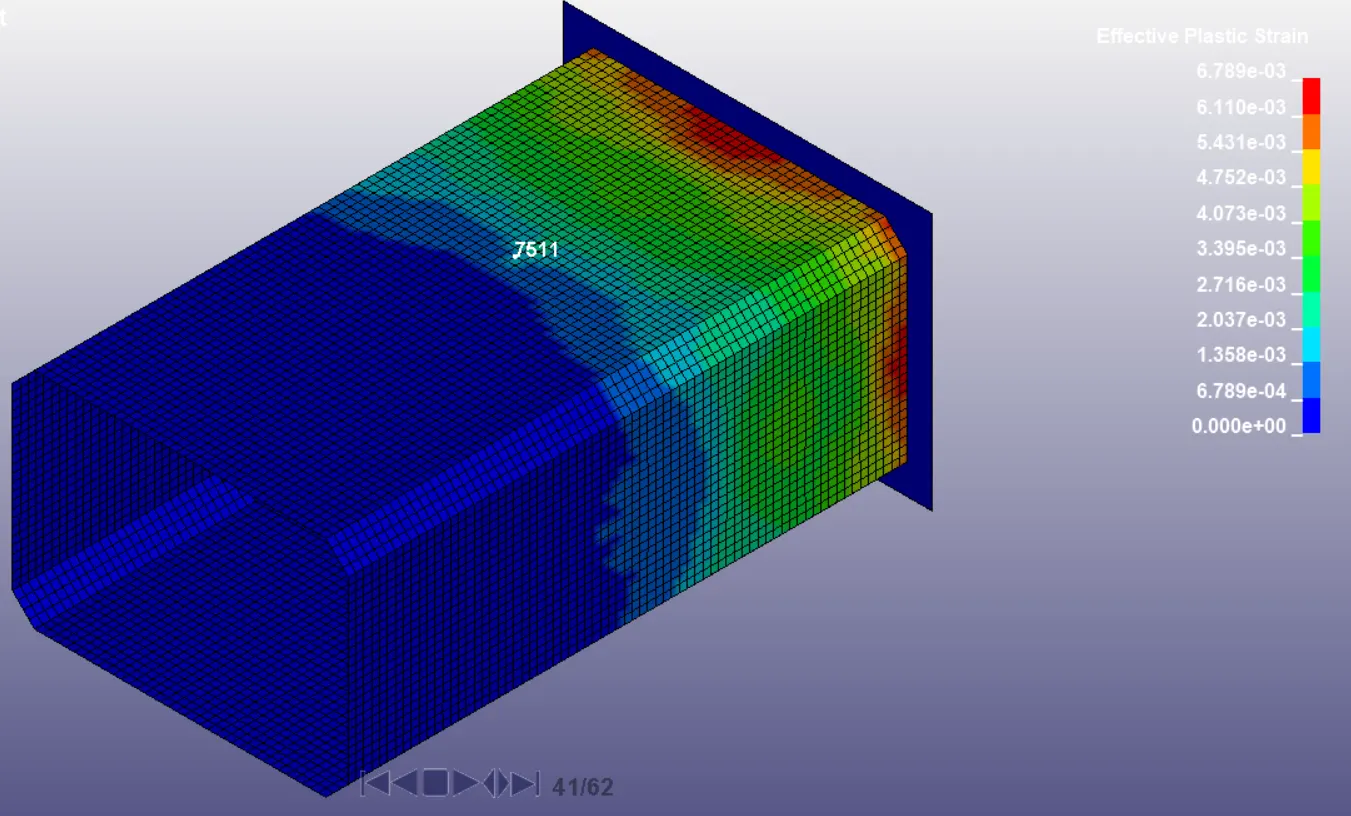
Max. effective plastic strain of 6.78 e-3 is observed.
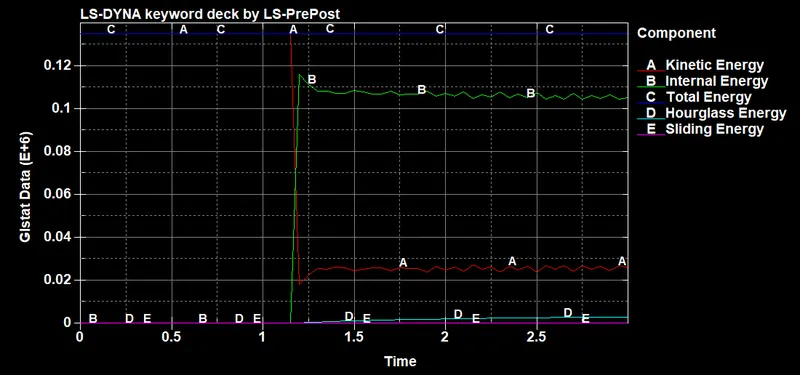
The total energy in the system is almost constant. Kinetic energy is maximum (1.35e5 g.mm/ms2 ) before impact & internal energy is zero. The kinetic energy is more than previous case as with increased thickness, the total mas of the system is increased. After impact, kinetic energy drops and is converted into internal energy due to deformation as observed. Sliding energy observed is zero.
- Conclusion: Thus, the given model is succesfully simulated for the given conditions and the results are compared.