Week 4 - CHT Analysis on Exhaust port
AIM:
To perform the CHT Analysis on the exhaust port of an engine. To understand how the heat transfer varies with the velocity of the fluid flow in the medium of study. To choose the appropriate turbulence model using the Y+ calculation. Have to analytically find out the solution of the equation.
THEORY:
CHT ANALYSIS:
Conjugate Heat Transfer (CHT) is a type of heat transfer analysis between both solids and fluids. CHT involves both convection (between fluids) and conduction (between solids) heat transfer, as well as both forced and natural convection. So in CHT analysis, we have to consider both the convection in the fluid medium and conduction in the solid medium to analyze how the heat transfer happens. This will provide the data in that medium which we can able to vary in accordance with its application.
Fluid & Solid Interactions:
The temperature field and the heat flux are continuous at the fluid/solid interface. But the temperature field can rapidly vary in a fluid in motion which is close to the solid and the fluid temperature is close to the solid temperature. In far from the interface the fluid temperature is close to the inlet fluid temperature. The distance where the fluid temperature varies from the solid temperature to the fluid bulk temperature is called the thermal boundary layer. The thermal boundary layer size and the momentum boundary layer relative size are reflected by Prandtl number. If the thermal boundary layer and momentum boundary layer thickness is same then the prandtl number is equal to one.
Significance of Prandtl Number and Nusselt Number in CHT Analysis:
PRANDTL NUMBER:
Prandtl number is a dimensionless number and is defined as the ratio of momentum diffusivity to the thermal diffusivity.

Prandtl number signifies which temperature dominates the flow regime either the inlet, fluid temperature or wall, body or surface temperature. The inlet, fluid temperature depends upon the fluid flow which is provided by momentum diffusivity and the surface temperature is provided by thermal diffusivity. If the prandtl number is one then then thermal boundary layer and the momentum boundary layer is of same size.
NUSSELT NUMBER:
Nusselt number is the ratio of Convection to Conductive heat transfer at a boundary in a fluid.

Nusselt number signifies and also provides us the result of which field dominates the flow, either convective or conductive.
If the nusselt number is equal to one, then it represents heat transfer by pure conduction
If the nusselt number is between one to 10, then it is a characteristic of Laminar flow
If the nusselt number is between 10-1000, then it is of more convection with turbulent flow.
CHT APPLICATIONS:
- To analyze the effective heat transfer in the heat exchanger
- To analyze the effectiveness of heat transfer in the electrical and electronic components for Forced Convection and Natural Convection.
- To understand the radiative heat transfer in the components where the fluid medium is mainly air.
INTRODUCTION:
We are going to analyze the geometry in the following set of cases
Case I: Random meshing (Automatic Meshing)
Case II: Meshing Refinement is Done and Inflation Layer is added to the exhaust pipe inner boundary First Layer Thickness
PROCEDURE:
Geometry Study:
Exhaust port is assembled to the exhaust manifold of the engine head. It takes out the burnt fumes out of the cylinder after the combustion stroke. The temperature of the exhaust port will be high due to the temperature of the exhaust gas as well as the temperature of the engine.
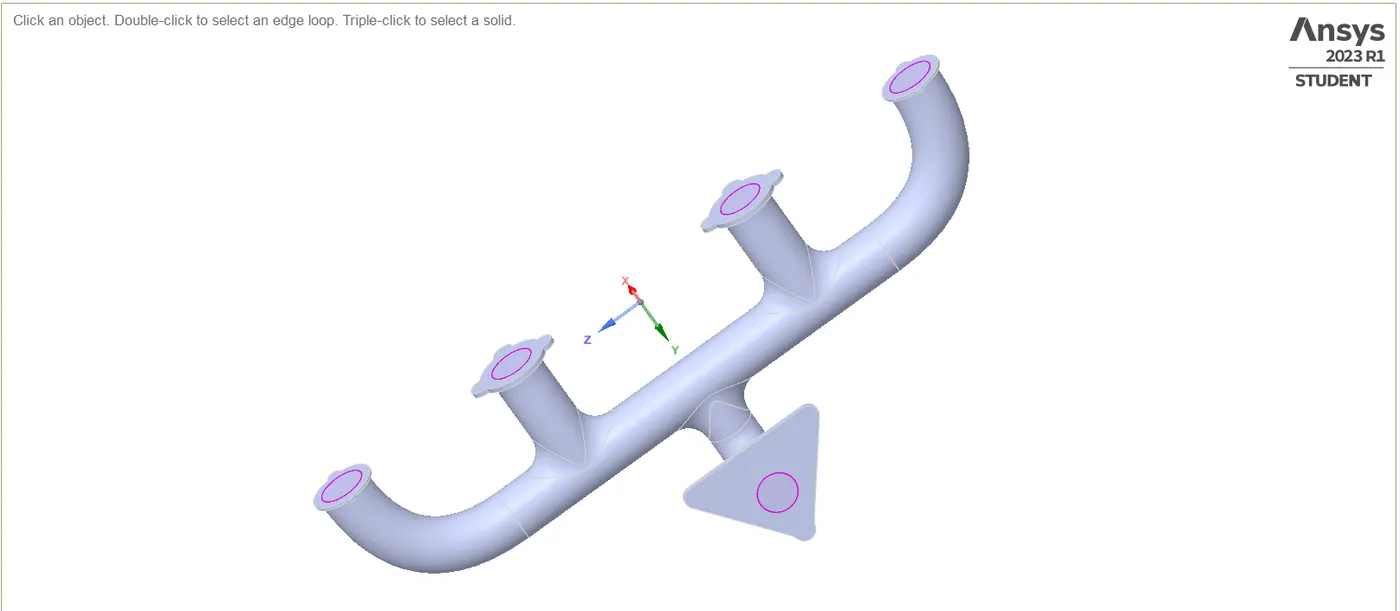
Initial setup of geometry is done in space claim. The geometry is properly repaired using the Repair Edge Option. The fluid volume is extracted using the Extract Volume Option. And the topology is shared between the Solid and Fluid Medium which is highlighted as Pink circles. Then the new component is created with both the solid and fluid volume.
MESHING:
CASE I:
Geometry is imported in the meshing interface and automatic meshing is applied.
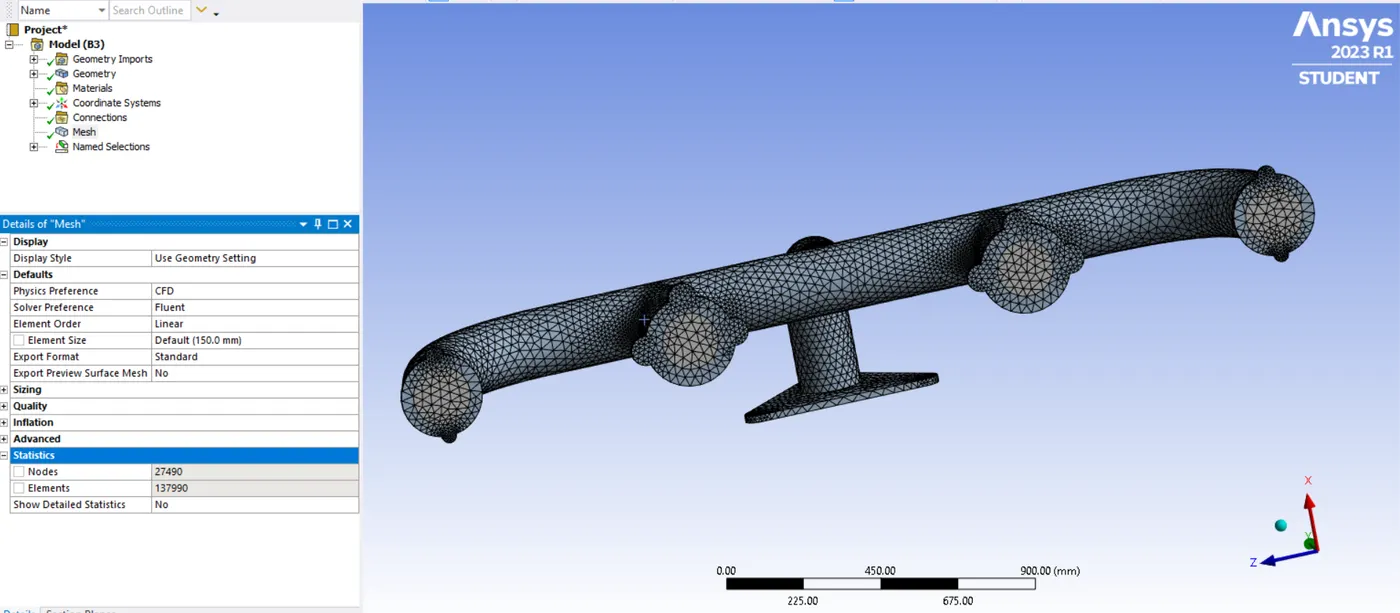
Number of Element - 137990
CASE II :
Meshing Refinement is done in the case II.
Face Sizing Option is provided for the Outer Wall with 18mm
First Layer thickness is provided with 3mm.
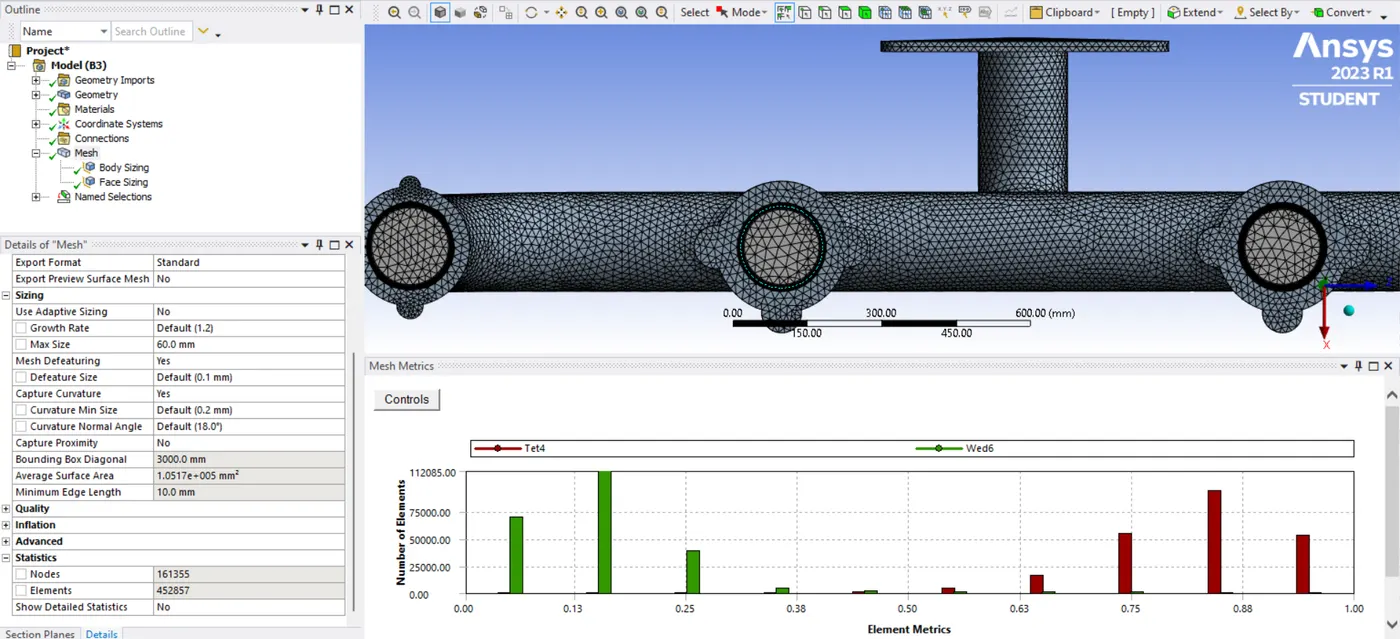
Number of element - 452857
METHOD SELECTION:
We had the reynolds number of 56820 which is considered as the High Reynolds number turbulence model. For that we have to use the Standard k-E model as our turbulence model. Y+ range will vary between 30 to 100 for this model.
Turbulence Model : K- Epsilon Model
Solver : Pressure Based Solver
Time : Steady
Method : Coupled
Inlet Velocity : 5m/s
Temperature : 700K
Materials : Air for Fluid & Aluminum for Solid
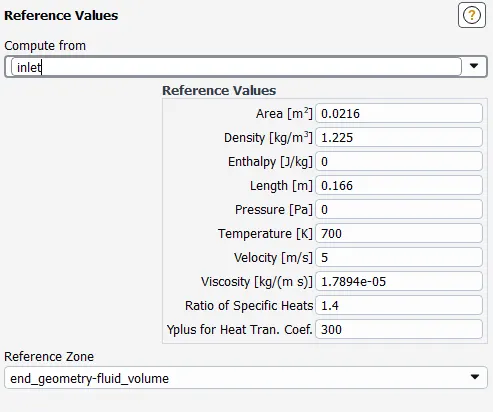
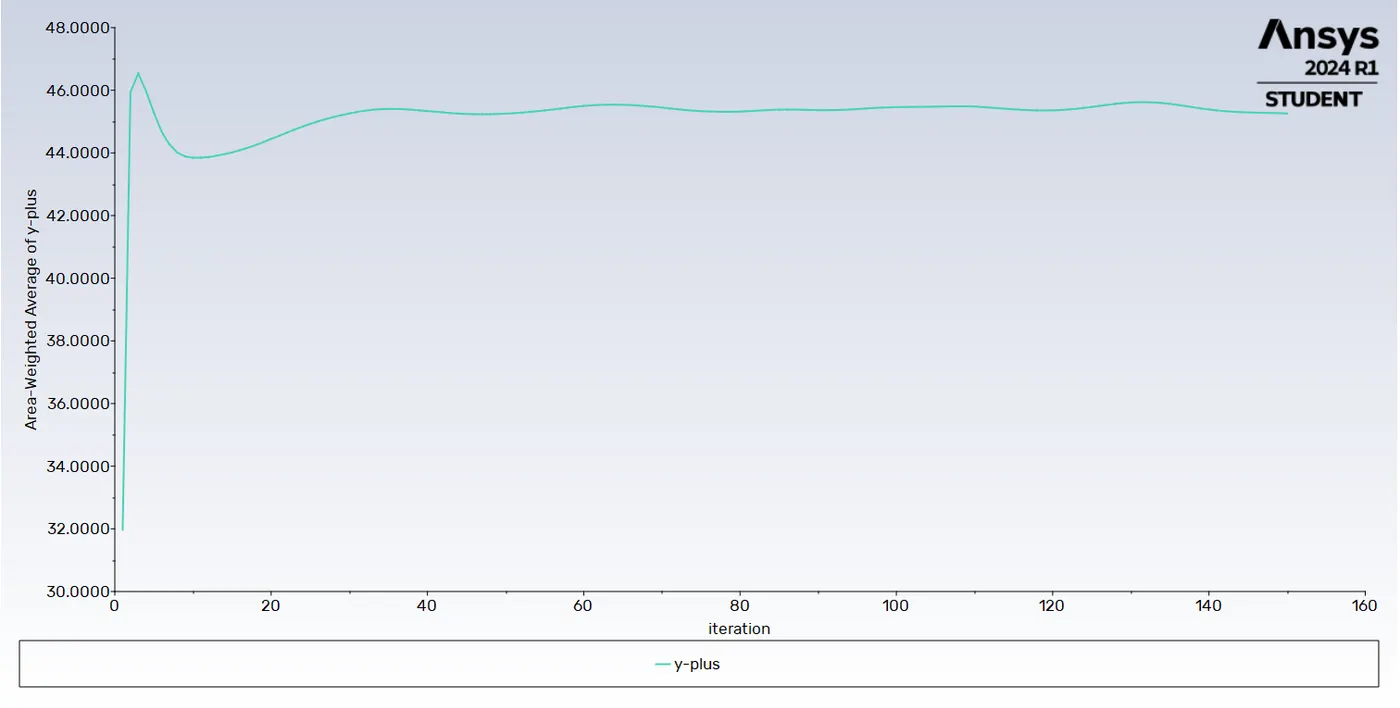
Y+ Calculation:
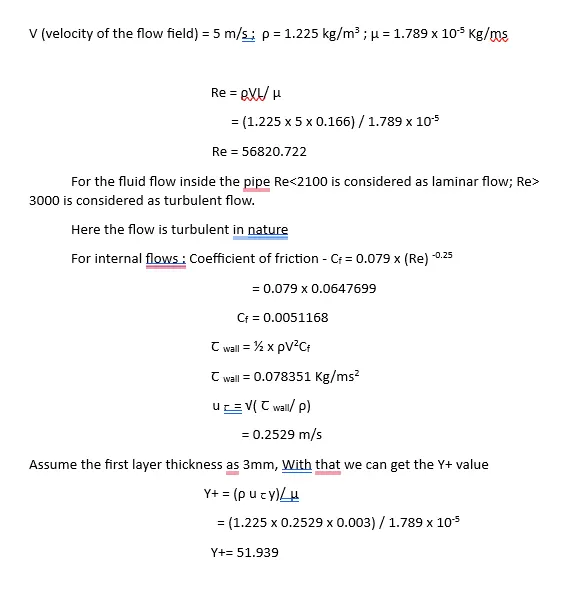
By choosing the 3mm as the first layer thickness, we got Y+ values of 51, for that we are choosing K-Epsilon model which will be perfect for our simulation.
PLOTS:
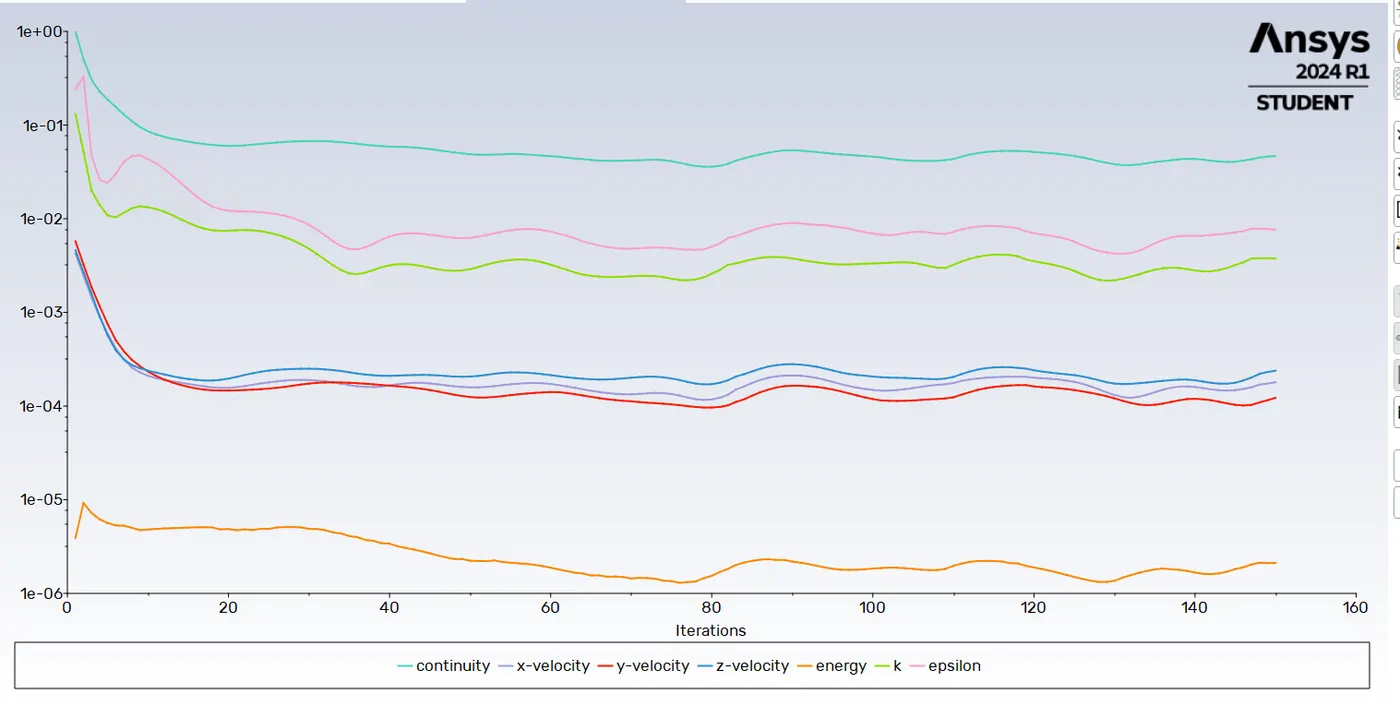
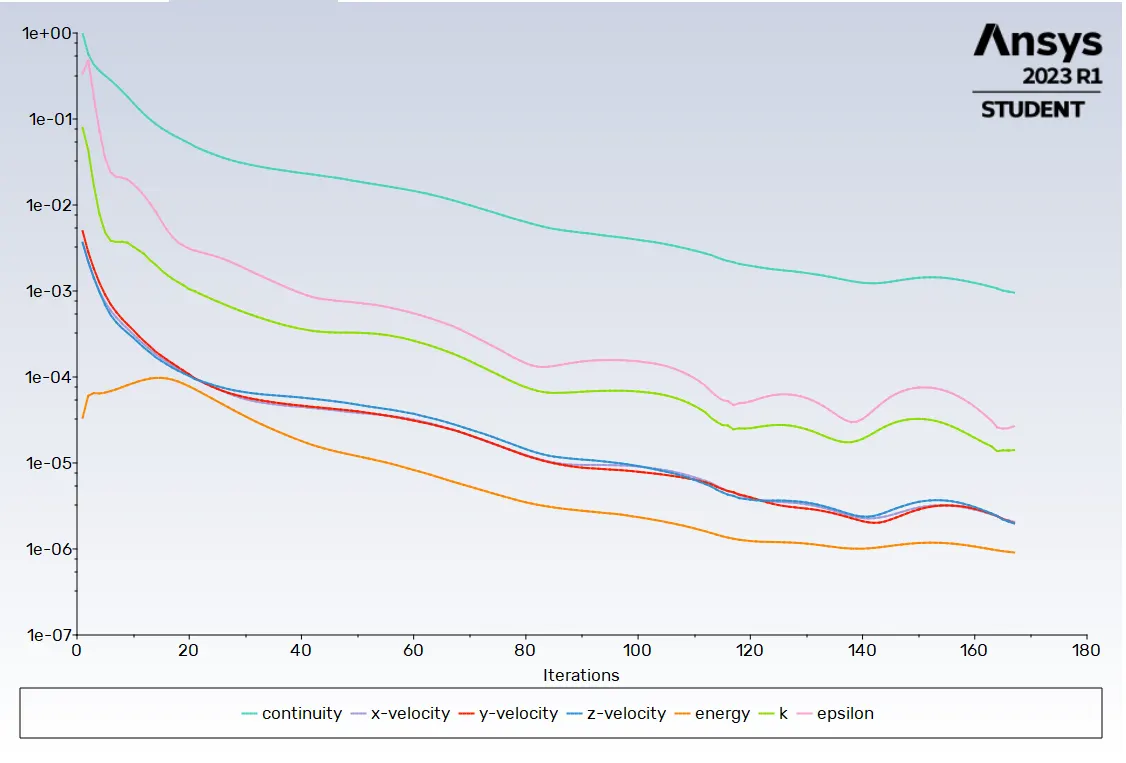
Residuals:
CASE I:
CASE II:
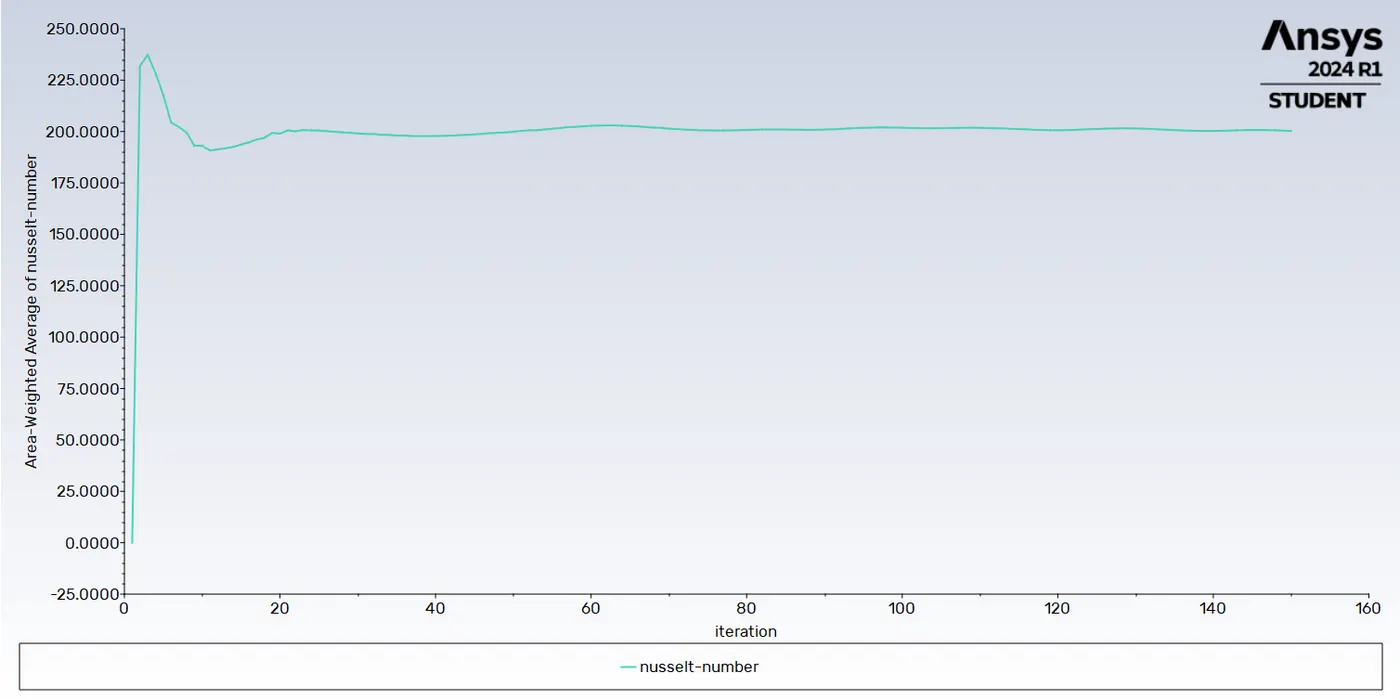
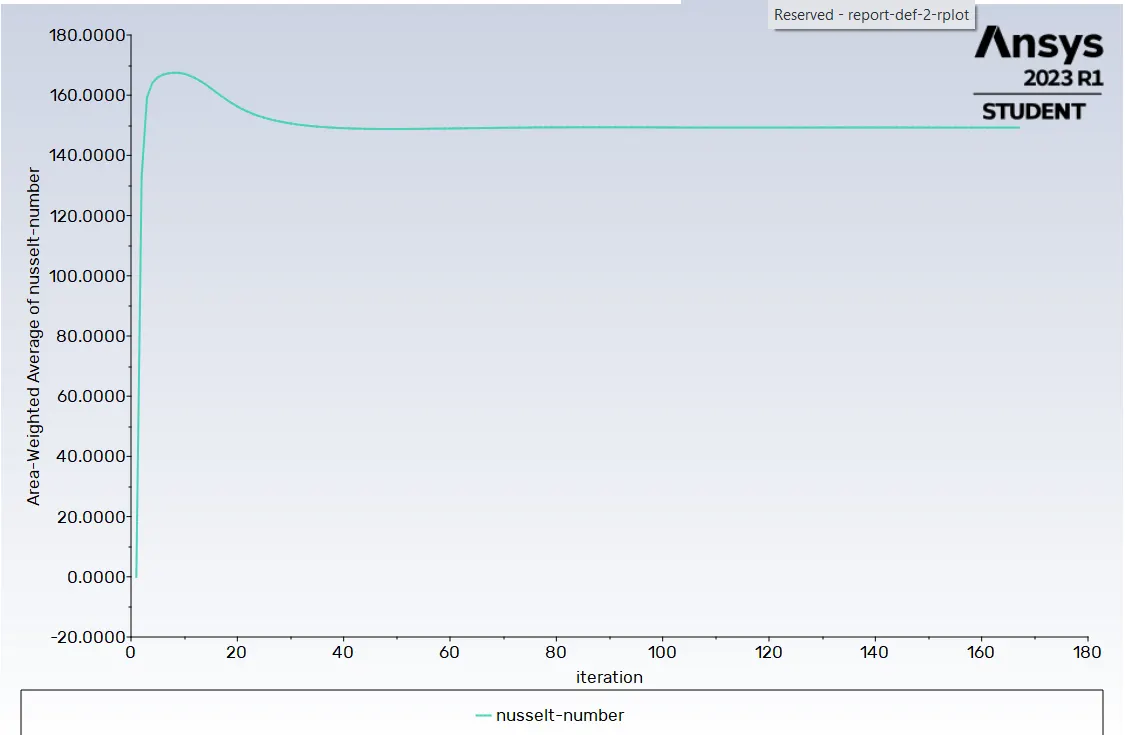
Nusselt Number:
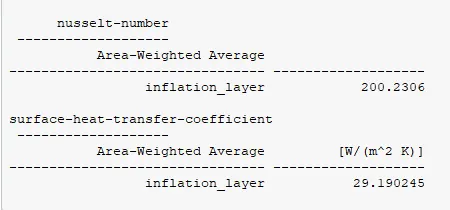
CASE I:
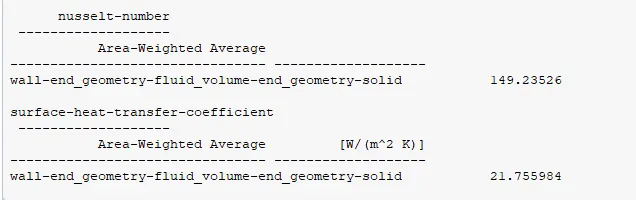
CASE II:
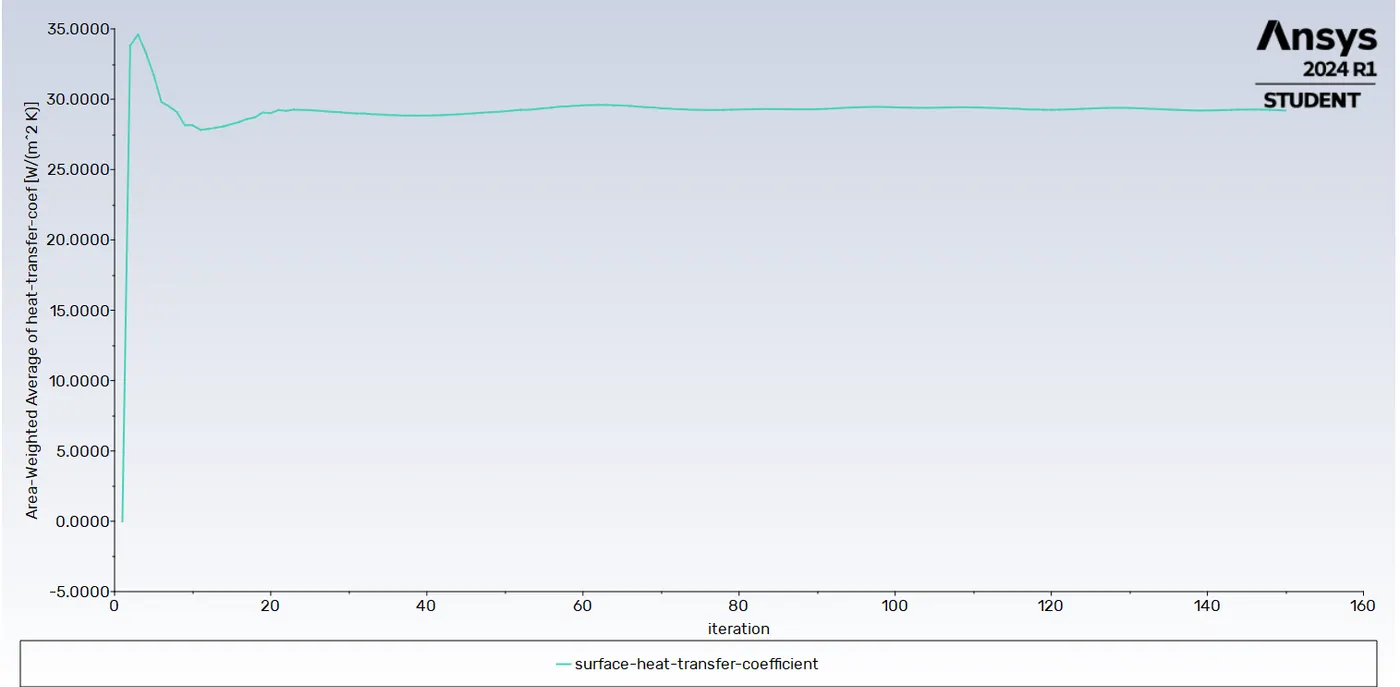
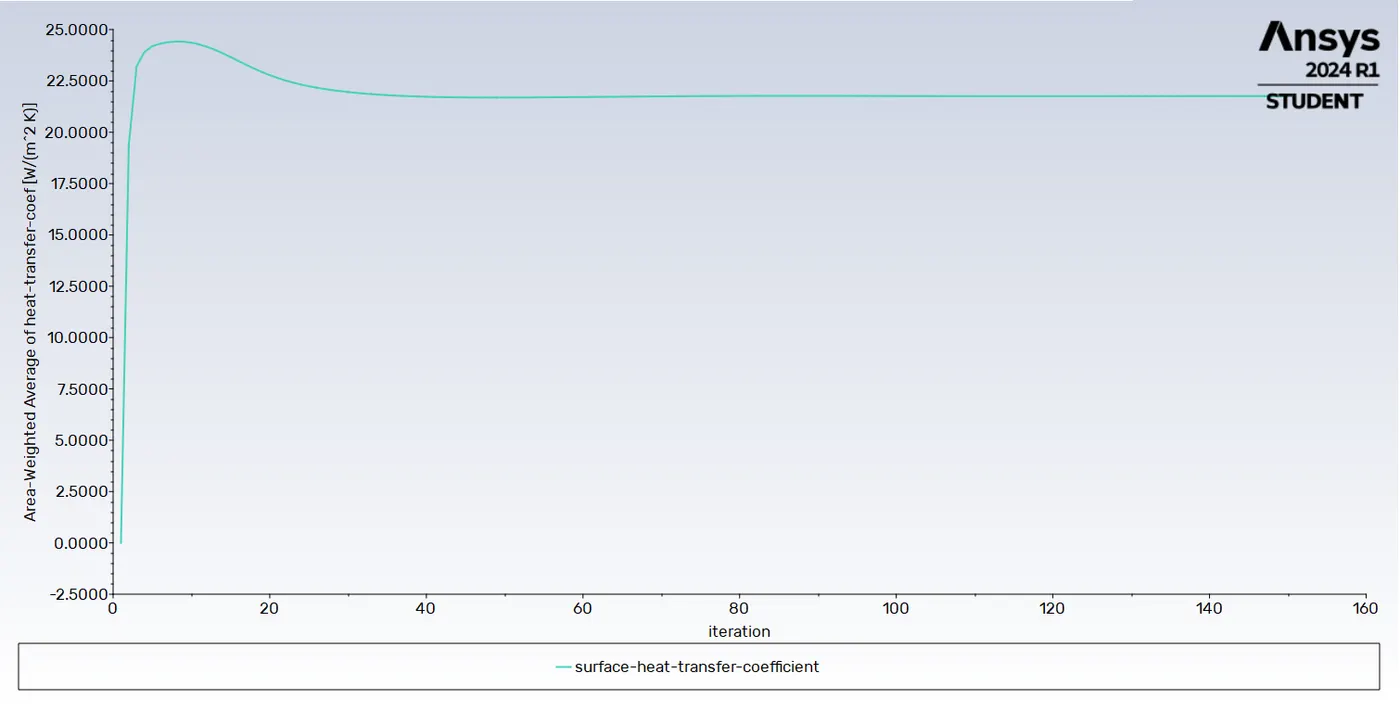
SURFACE HEAT TRANSFER COEFFICIENT:
CASE I:
CASE II:
Y - PLUS:
CASE II:
CASE I:
CASE II:
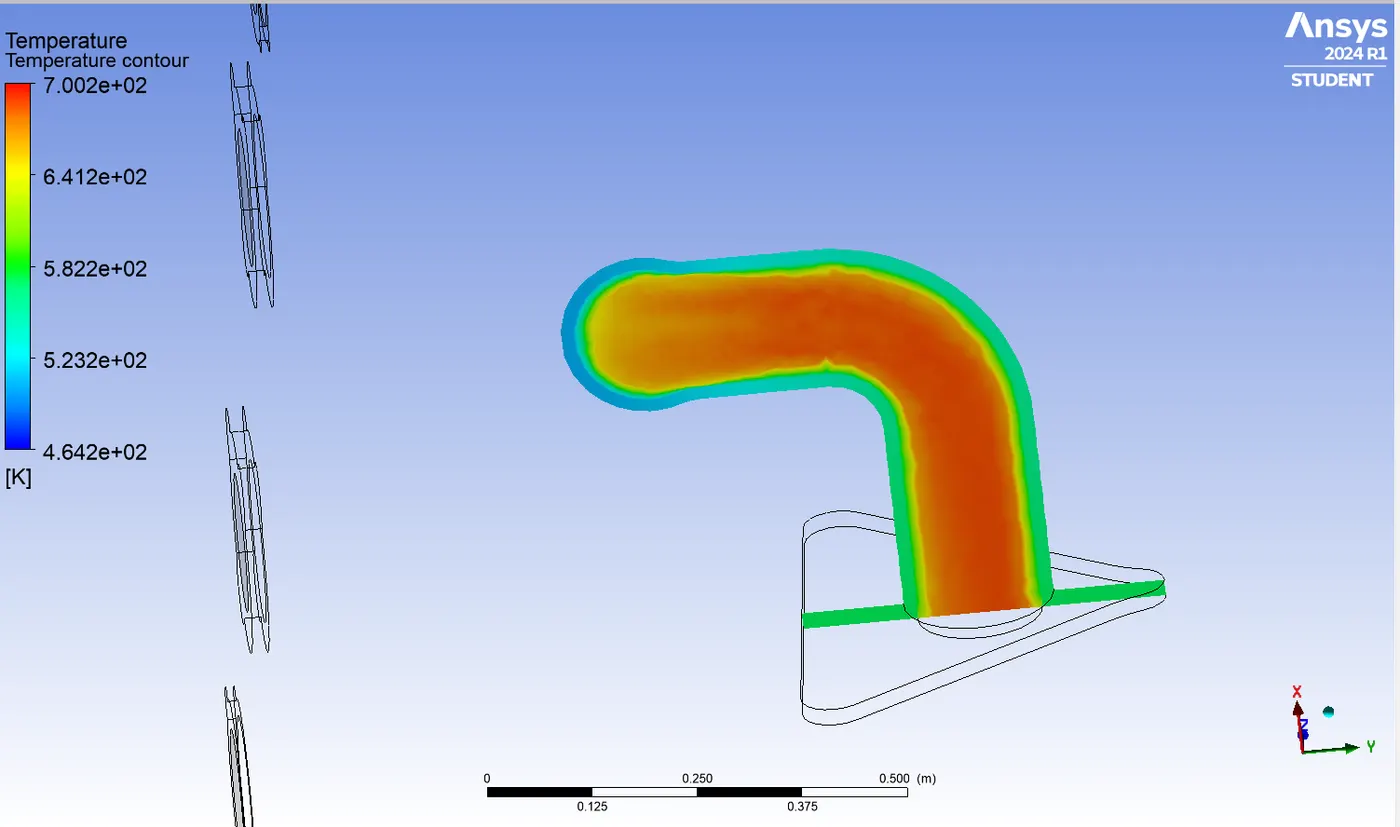
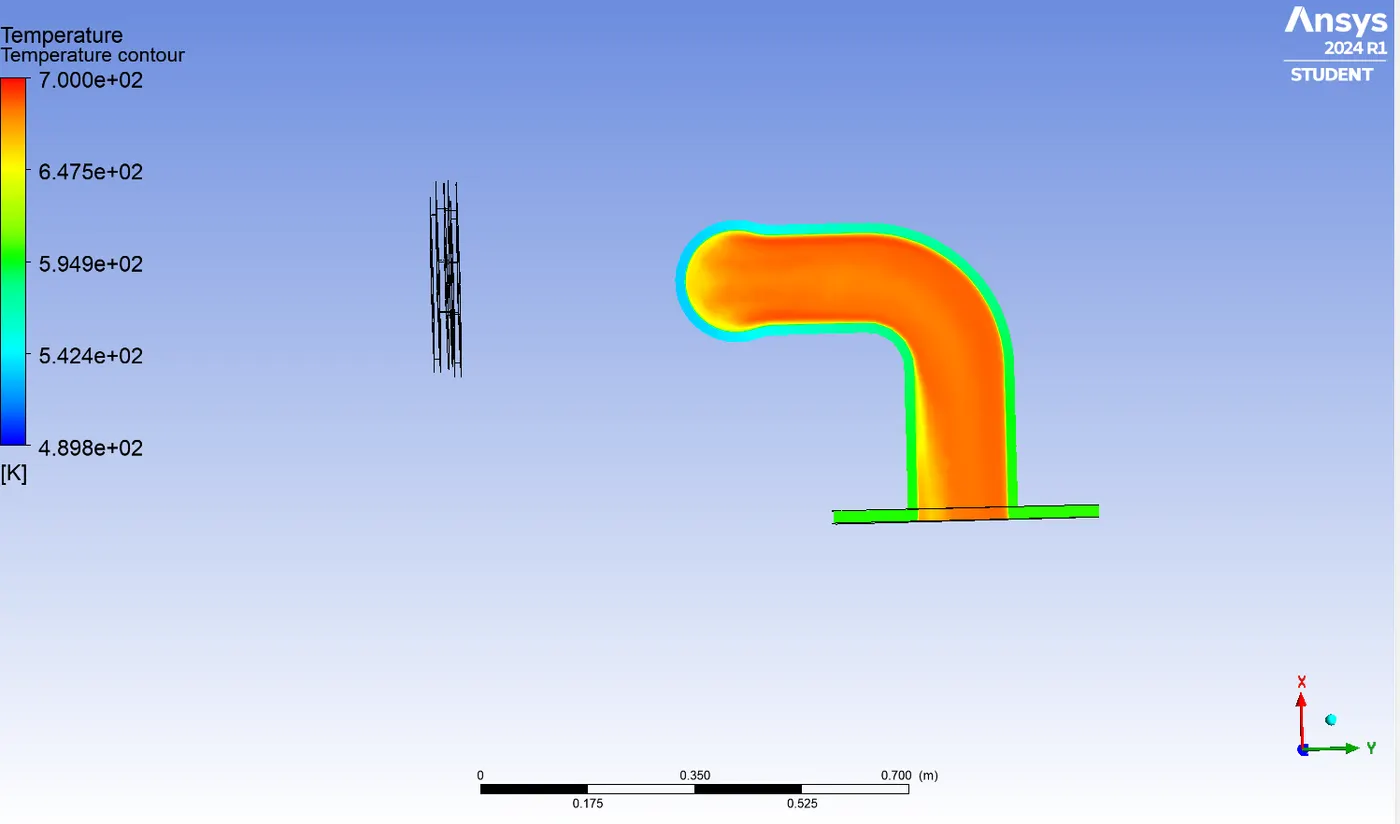
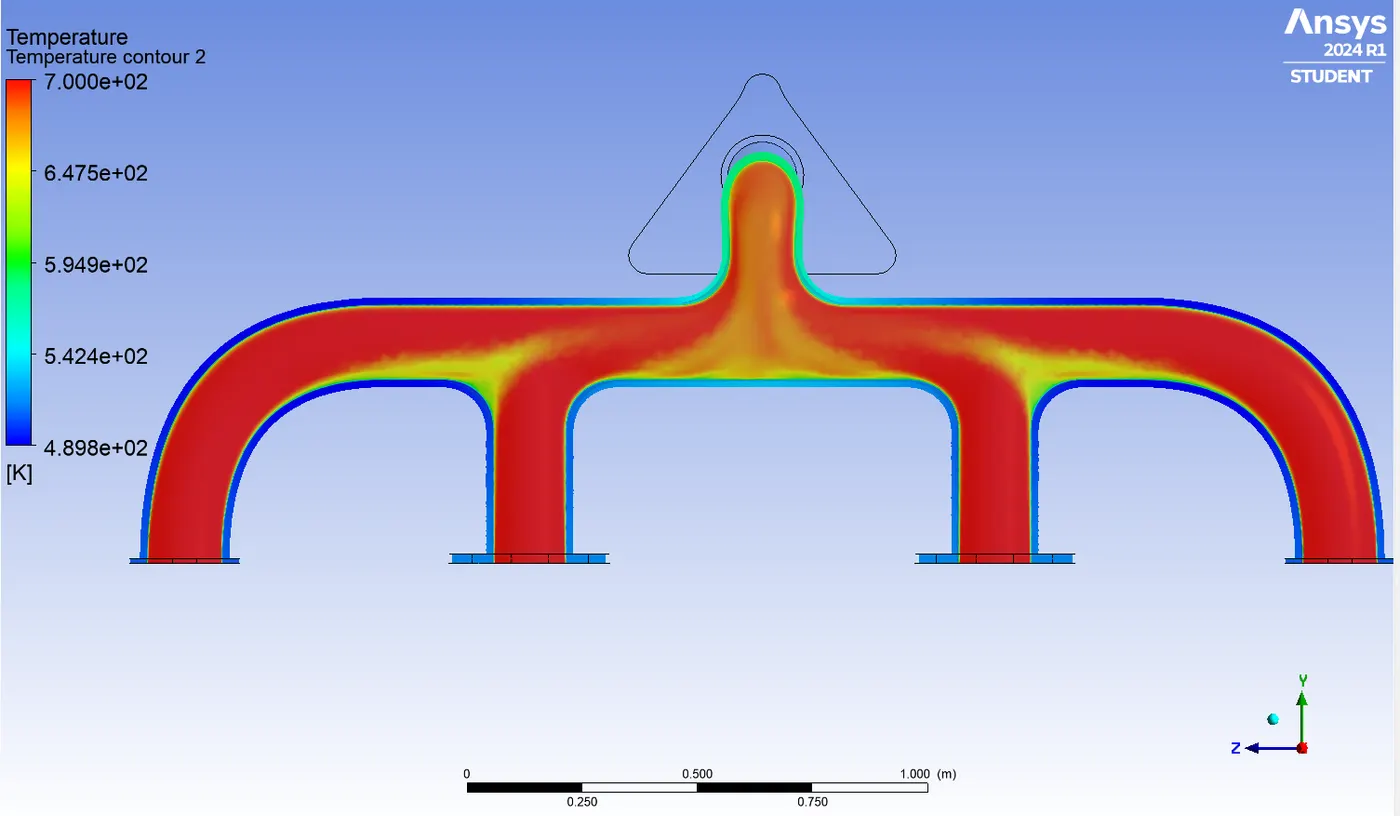
Temperature Contour:
CASE I:
CASE II:
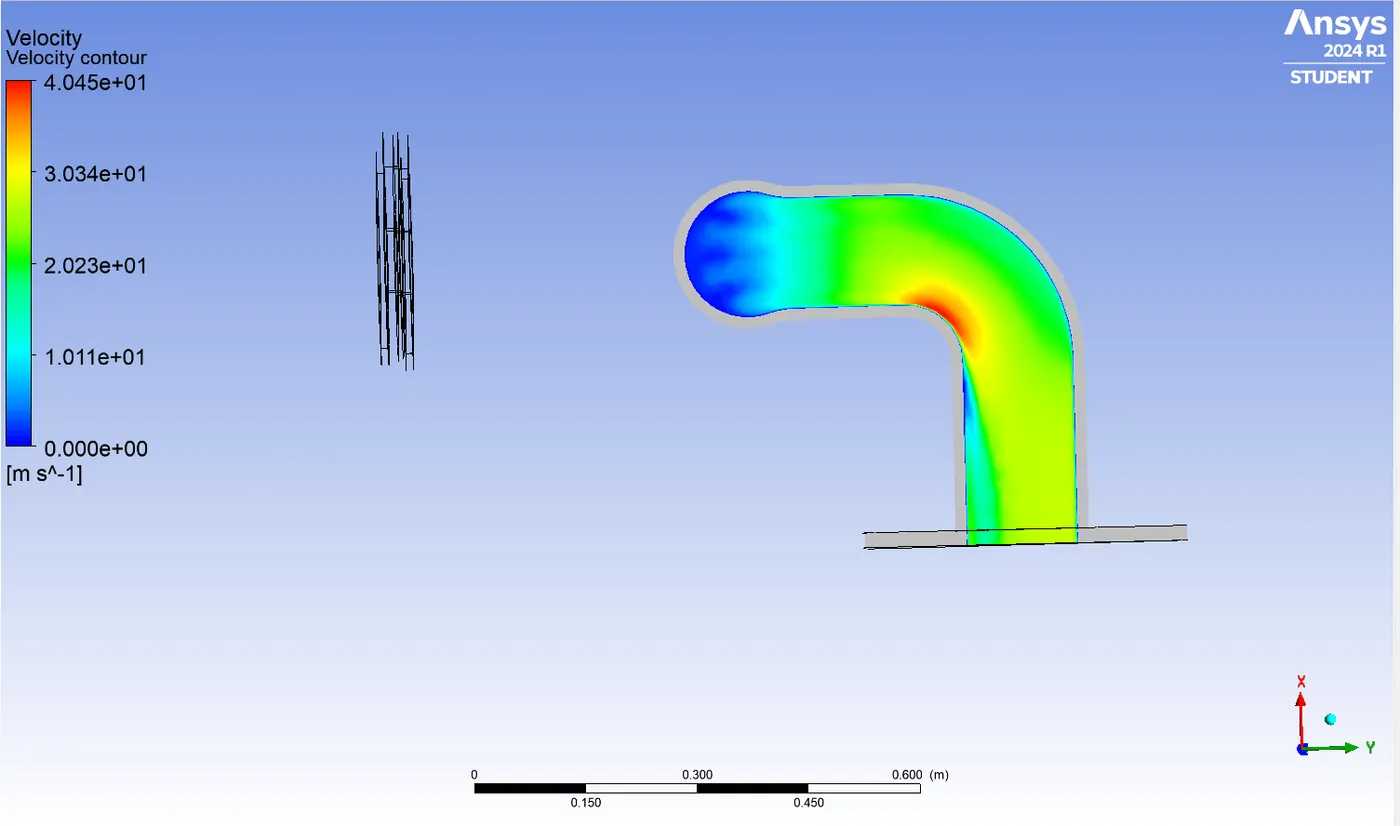
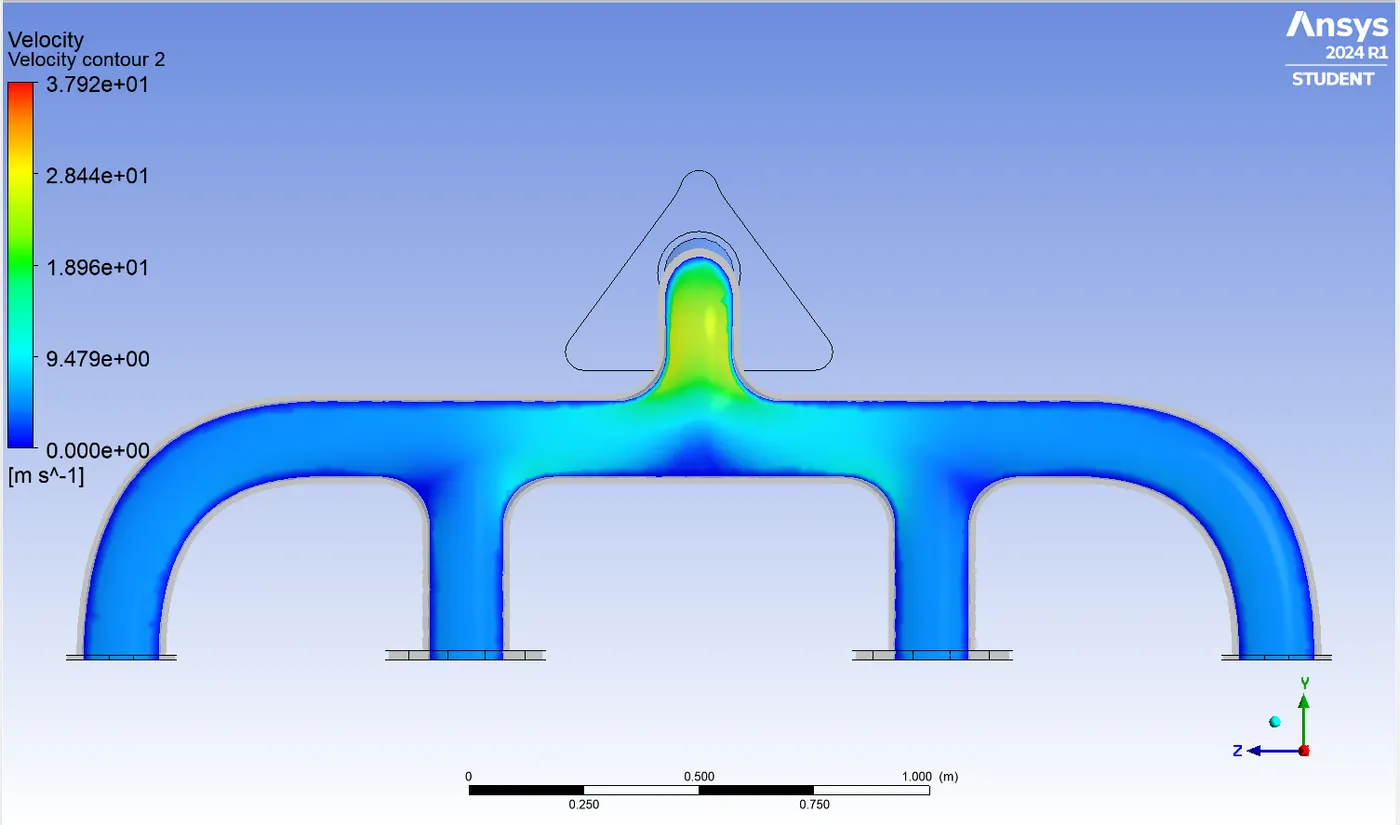
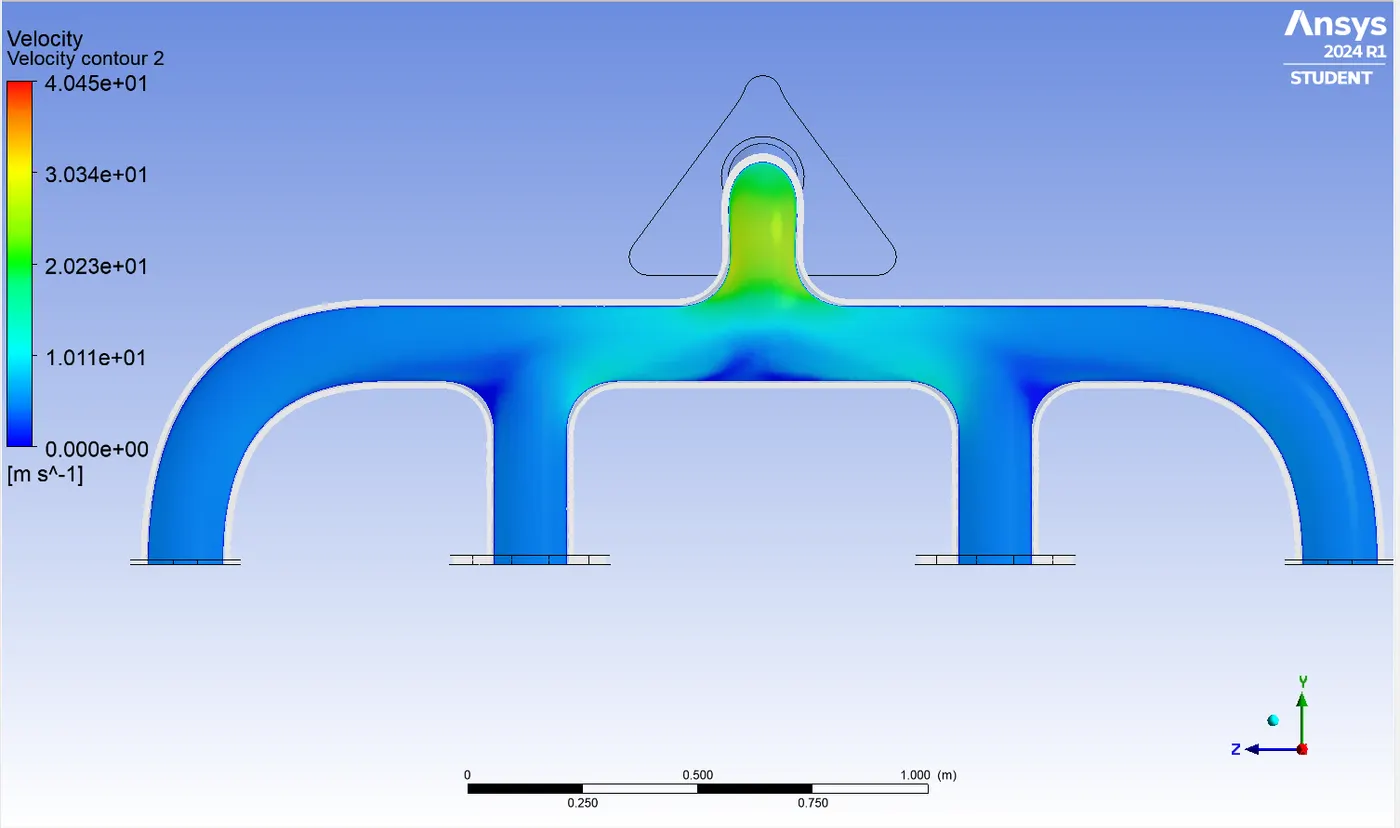
Velocity contour:
CASE I:
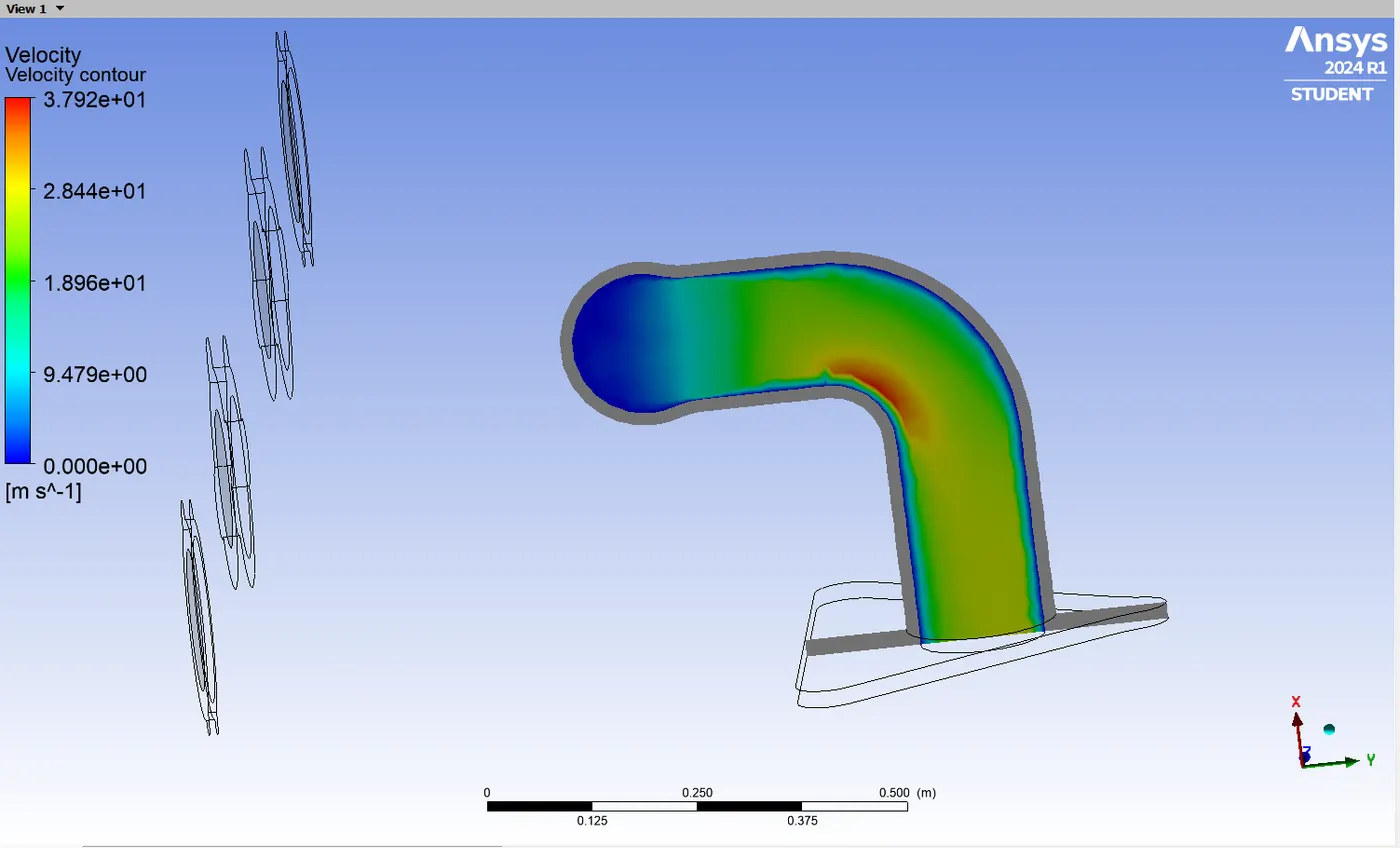
CASE II:
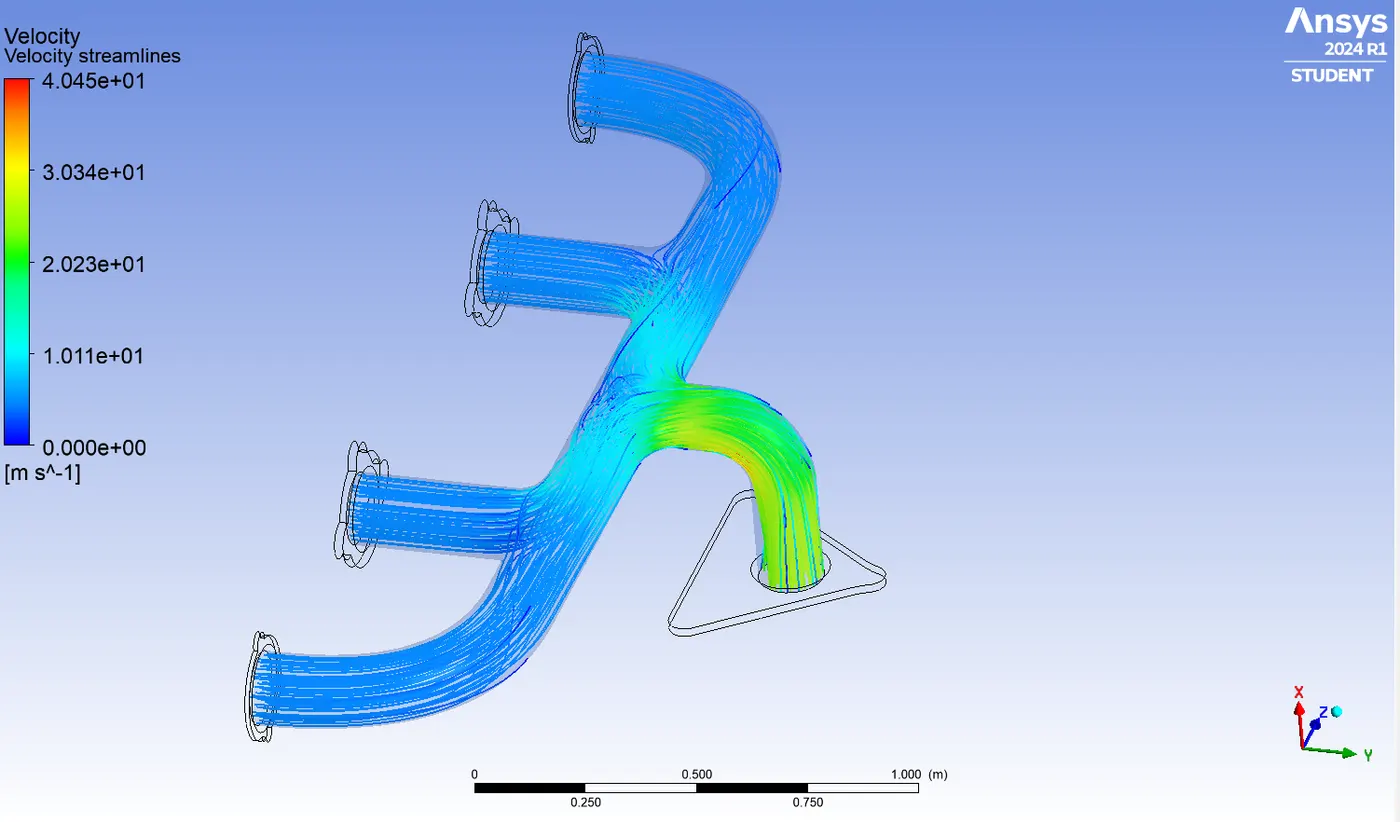
Velocity Streamlines:
CASE I:
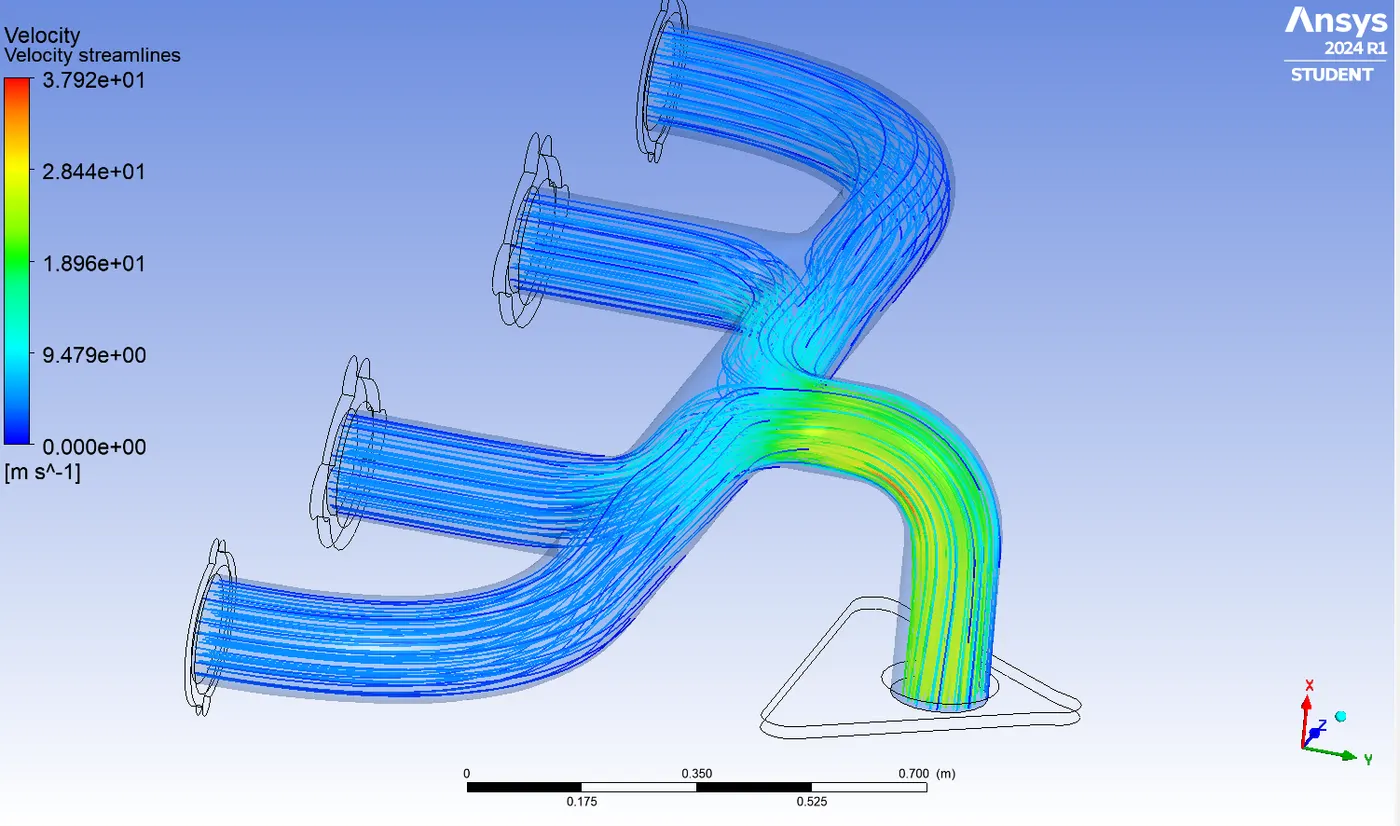
CASE II:
Temperature contour:
CASE I:
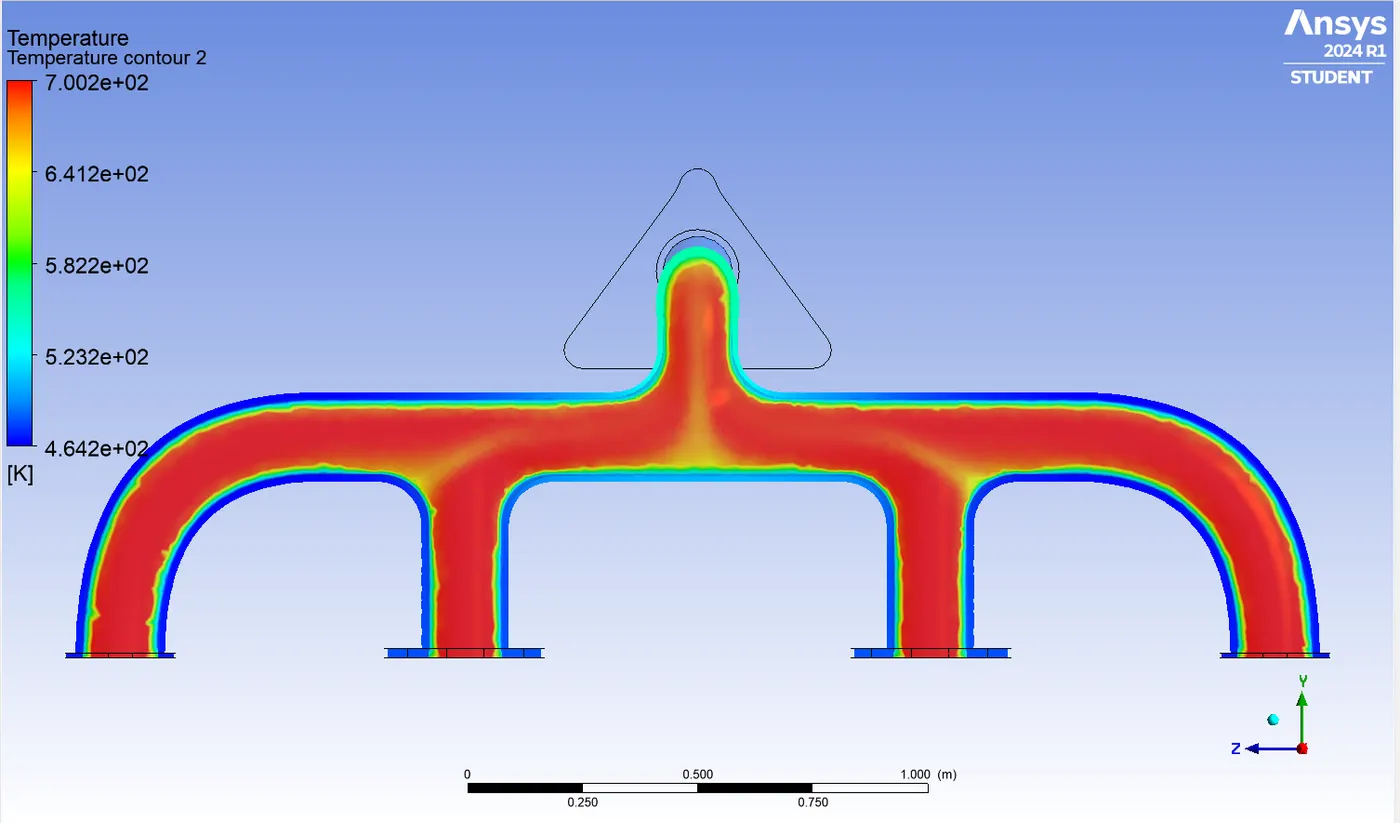
CASE II
Velocity Contour:
CASE I:
CASE II:
ANALYTICAL CALCULATION:
Nusselt Number:
Prandtl number for air is 0.71
Nu = 0.023Re0.8Pr0.4
=0.023 x (67915.39^0.8) x (0.71^0.4)
=147.068
Calculation of Heat transfer Coefficient:
Nu = hL/K
h = NuK/L
= (147.068 x 0.0242) / 0.166
h=21.44 w/m^3K.
| Nusselt Number | HTC | Error % in HTC | |
| CASE I | 200.23 | 29.19 | 36 |
| CASE II | 149.23 | 21.75 | 1.4 |
RESULTS:
Thus the CHT is analyzed for the given exhaust port problem.The analysis results are compared with the analytical solution which will predict the simulation results are right.
LEARNING OUTCOMES:
- Knowledge about the Conjugate Heat Transfer and its basic principles and ideologies behinds its uses.
- Understanding the concept of Nusselt Number and Prandtl Number
- Analysing of fluid and solid interface problem in ansys fluent.