Week 4 - CHT Analysis on Exhaust port
The aim, Introduction, Theory-
We set our aim to study the Conjugate Heat Trasnfer analysis. If we go literally we can know that there is involvement of two bodies. CHT aims at the study of interaction between a fluid and a solid body. The fluid may flow inside the solid body or around it. In case of solids often conduction is prevelant compared to covection in fluids. It is empirical that heat flux is goverened by Fourier's law. Heat transfer in fluid can be either due to viscous effects, density or energy.
CHT simulation can be done in many day to day applications of engineering systems and natural phenomenon. We can use CHT in food processing indsutry or automobile industry or even nuclear industry. We can simulate flow around heat exchangers or cooling towers for better efficiency. CHT has a wide range of applications in many engineering fields.
Solving & Modelling approach-
We are supposed to do a CHT simulations that means the fluid will be interacting with the solid and also there is some amount of heat trasnfer that is oocuring between the solid and fluid. We assume that the inlet fluid has a large heat which means the fluid will heat up the pipe from the inside to some extent.
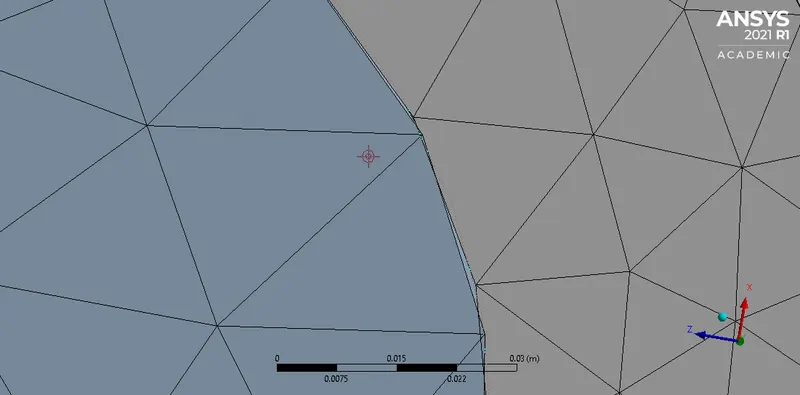
Fig.1- Non conformal mesh
When we load the geometry and generate the mesh we will get something known as non-conformal mesh. This phenomenon happens as we have defined the solid and fluid as two different entities. In order to perform a CHT simulation we need something known as Conformal mesh in order to capture smooth transfer of heat. in order to get a conformal mesh in this case we have to do modifications in the Spaceclaim.
In sapceclaim we hare the topology of the two parts. which gives us the following conformal mesh. Conformal mesh creates interface which coincides fluid with the solid part.
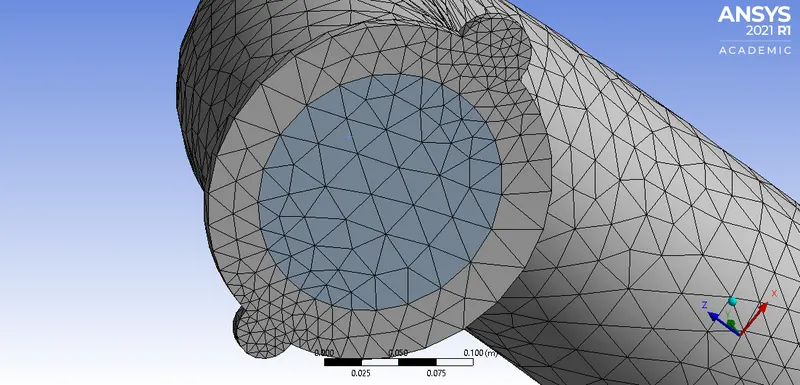 Fig.2- Conformal mesh
Pre-processing and solver setting-
The geometry consists of 4 inlets from where the gases are getting in. The walls will be convective in nature in the simulation. We will use a steady state pressure based solver and also solve the energy equations. We will have a k-Epsilon turbulence model with the fluid material as air and the solid part as the aluminium.
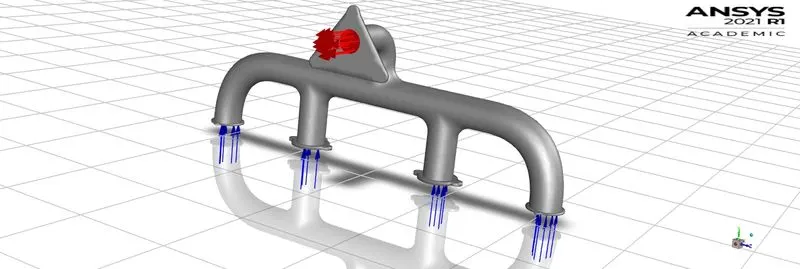
Fig.3- Geometry of the Exhaust port
Results-
Upon running a baseline simulation we get the following plots.
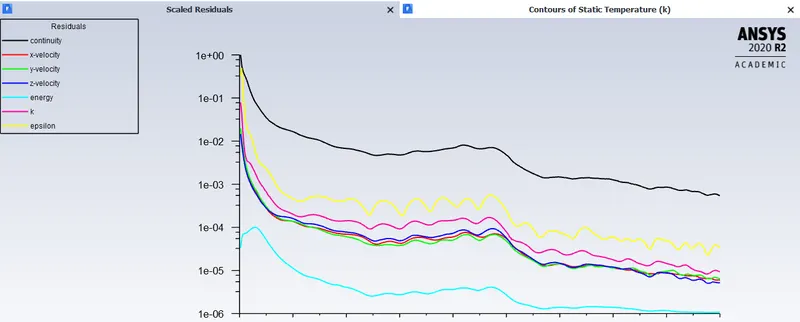
Fig.4- Scaled residuals for baseline mesh
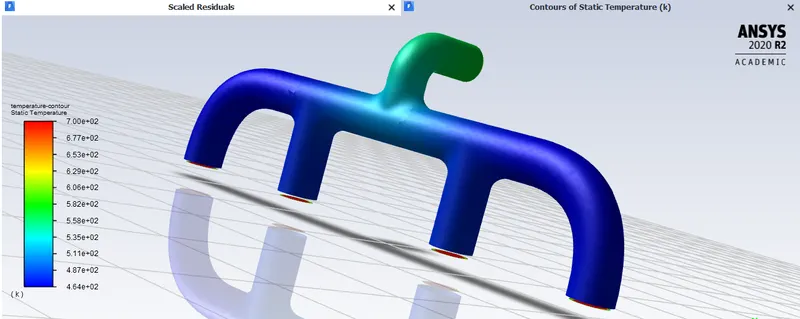
Fig.5- Temperature distribution for a baseline mesh
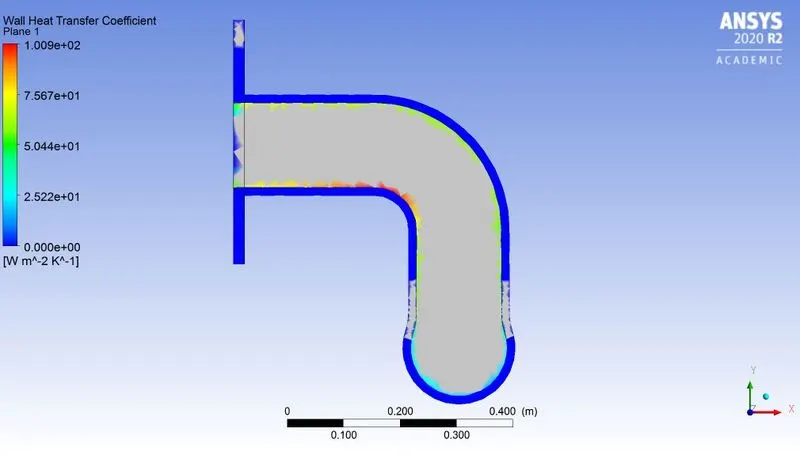
Fig.6- Wall heat transfer coefficient
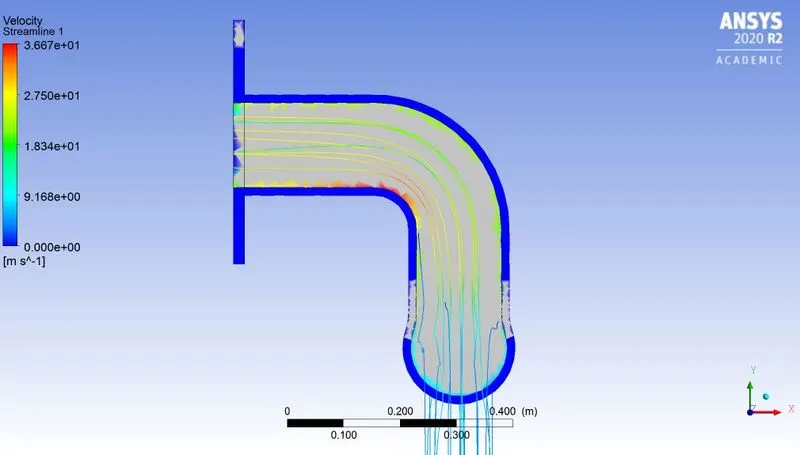
Fig.7- Wall heat transfer coefficient with velocity lines
Observeing the above visualization we can understand that the wall heat transfer coefficient is the most near the bend of the wall. If you picture the geometry of the exhaust port we know that there are 4 inlets with approximately same inlet diameter and the inlet velocities are also the same. Observing fig.5 we know all the velocities are meeting at the outlet of the exhaust port.
After refinement of the mesh by adding inflation layer and increasing the cell counts to nearly 370000 and again calculating the parameters. We have the below contours
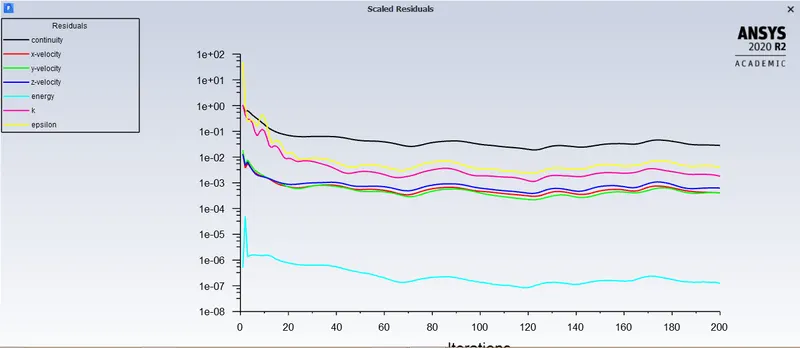
Fig.8- Reducing residuals after mesh refinement
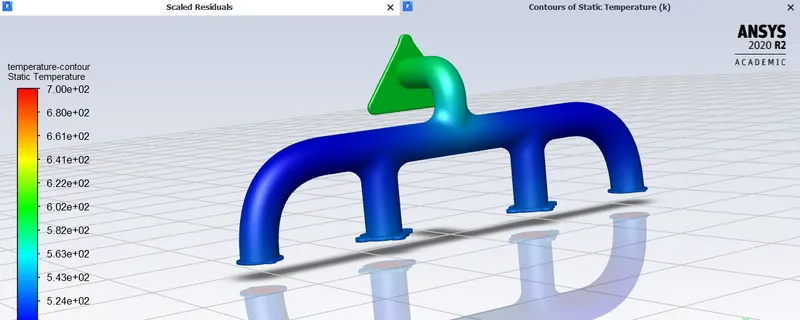
Fig.9- Countour after mesh refinement
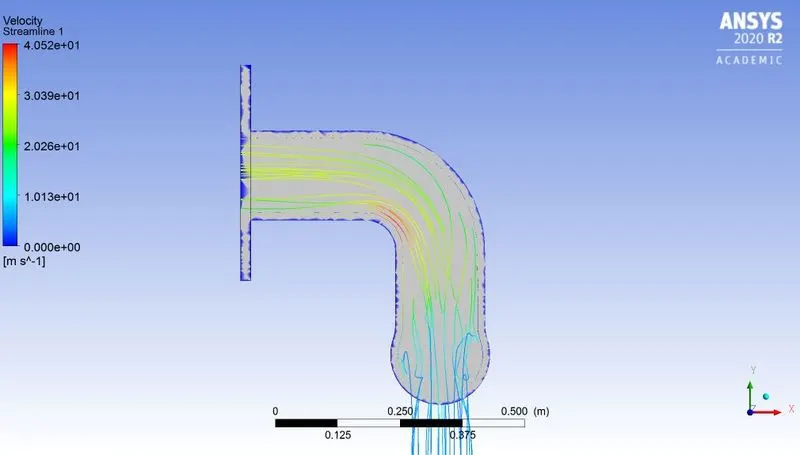
Fig.10- Post-processing after mesh refinement
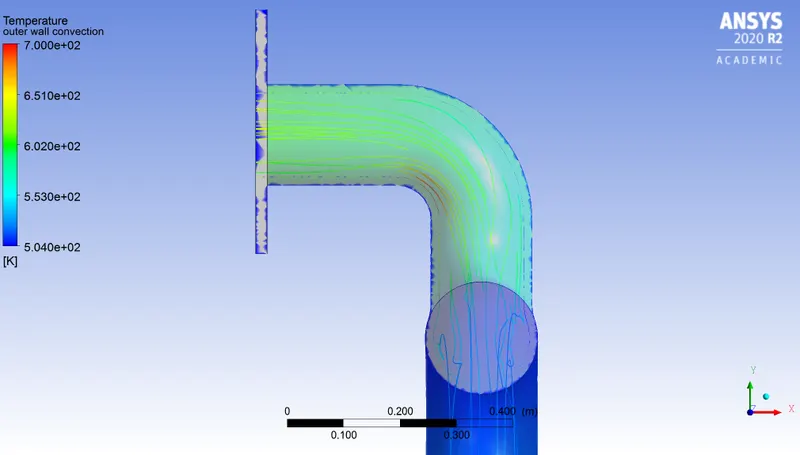
Fig.11- Post-processineg contours
Conclusion-
We have simulated flow through a exhaust port. We can certainly observe and understand the convective heating of the pipe is the most neat the output or we can say when the input velocities meet and are about to get out of the port. This phenomenon can be explained due to the addition of 4 input velocity vectors and the law of conservation of momentum. We can also observe the maximum heating is near the bend due to molecular friction.