Comparing of HEV and EV reference model in MATLAB for WOT drive cycle.
Question 1:- What is the difference between mapped and dynamic model of engine, motor and generator? How can you change model type?
Answer:- Powertrain Blockset provides two types of combustion engine models: mapped and dynamic. Mapped engines represent macro engine behavior as a set of lookup tables (brake torque, fuel flow, air mass flow, exhaust temperature, efficiency, and emissions) as functions of commanded load and measured engine speed. Dynamic engines decompose engine behavior into individual component models that account for engine dynamics, most notably intake airflow and turbocharger dynamics.
You can switch between engine model types based on your application. Dynamic engine models are suitable for designing control, estimator, and diagnostic algorithms that depend on dynamic subsystem states, for example, in closed-loop AFR control algorithm development. Mapped engine models are suitable for analysis and design activities that do not require engine subsystem dynamic characteristics, for example, in engine and transmission powertrain matching analysis for fuel economy, emissions, and performance tradeoffs.
For additional reference, https://in.mathworks.com/products/powertrain.html
https://in.mathworks.com/help/autoblks/ug/internal-combustion-mapped-and-core-engine-models.html

In order to change the model type, In the engine blockset right click- Click on Variant - Label Model Active Choice - Change between Mapped and Dynamics.

Question 2:- How does the model calculate miles per gallon? Which factors are considered to model fuel flow?
Answer :- The general label for Hybrid Vehicle is shown in the figure.
The label for plug-in hybrid electric vehicles displays fuel economy for both modes of operation.The left-hand fuel economy box on the label displays the fuel economy when operating on electricity. This is described in miles per gallon of gasoline-equivalent (MPGe). Think of this as being similar to MPG, but instead of presenting miles per gallon of the vehicle’s fuel type, it represents the number of miles the vehicle can go using a quantity of fuel with the same energy content as a gallon of gasoline. The right-hand fuel economy box displays the fuel economy when the battery is emptied and the vehicle is using gasoline. This is described in miles per gallon (MPG).
Both of these values represent the combined city and highway value. Combined fuel economy is a weighted average of City and Highway MPG values that is calculated by weighting the City value by 55% and the Highway value by 45%. Some form of the miles per gallon metric has been on vehicle labels since 1977.
For more reference https://www.epa.gov/fueleconomy/plug-hybrid-electric-vehicle-learn-more-about-new-label
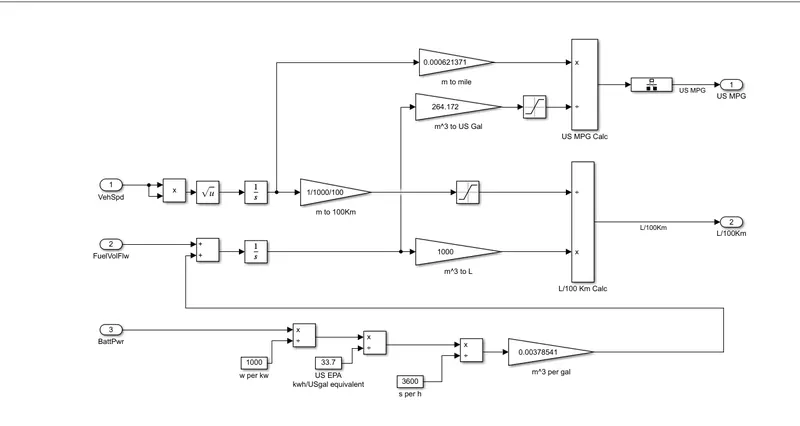
As per US EPA regulations , 33.7 kwh power of battery is equivalent to one gallon of gasoline. And then by using the below blockset the fuel economy interms of mpg is calculated. The necessary conversions are mentioned in the simulink blockset itself.
Question 3:- Run the HEV ReferenceApplication with WOT drive cycle. Change the grade and wind velocity in the environment block. Comment on the results.
Answer :- 1. Open HEV reference application.
2. Change the Drive Cycle Source to WOT drive cycle.
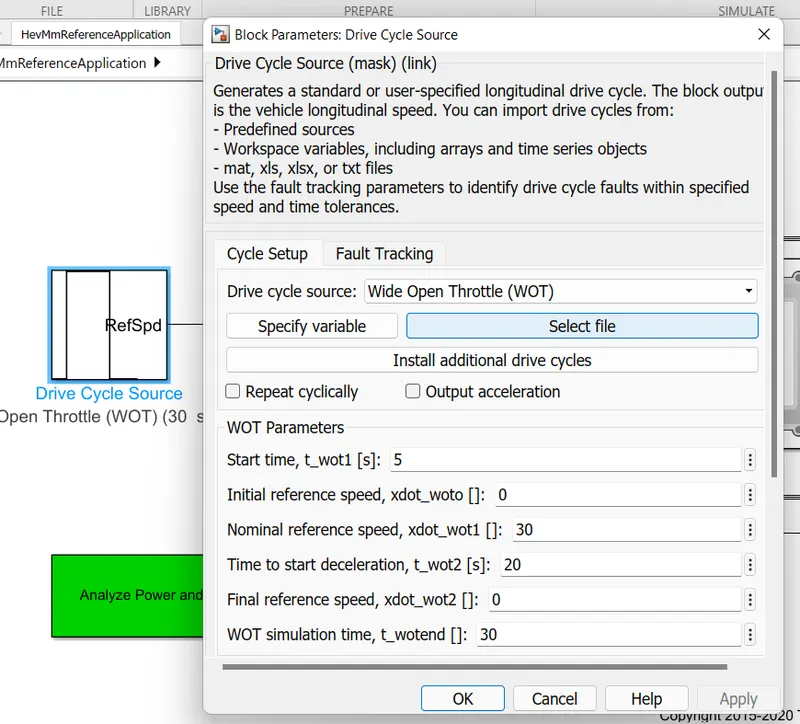
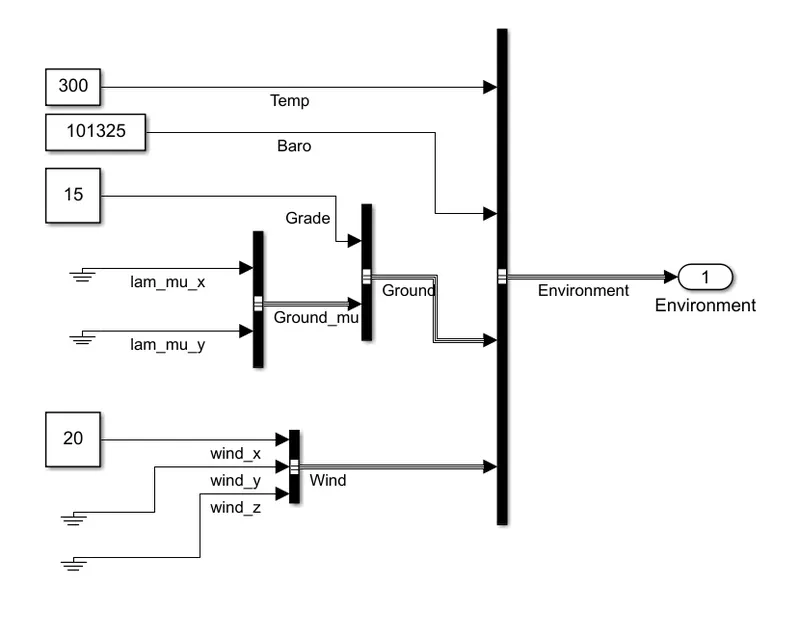
3. Give the grade and Wind velocity.
4. Run the simulation for 50 seconds as the WOT cycle is for 30 seconds.
Results and Observations :-
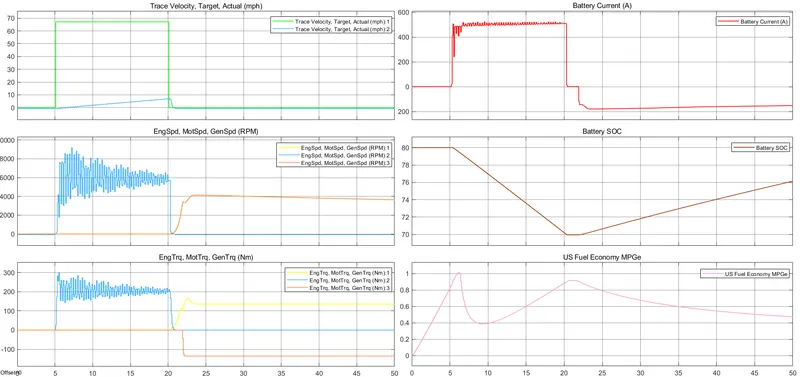
Question 4:- Keeping all other parameters same, compare the simulated results of hybrid and pure electric powertrains.
Answer :- 1. Open Ev reference Application.
2. Give WOT as drive cycle for this model.
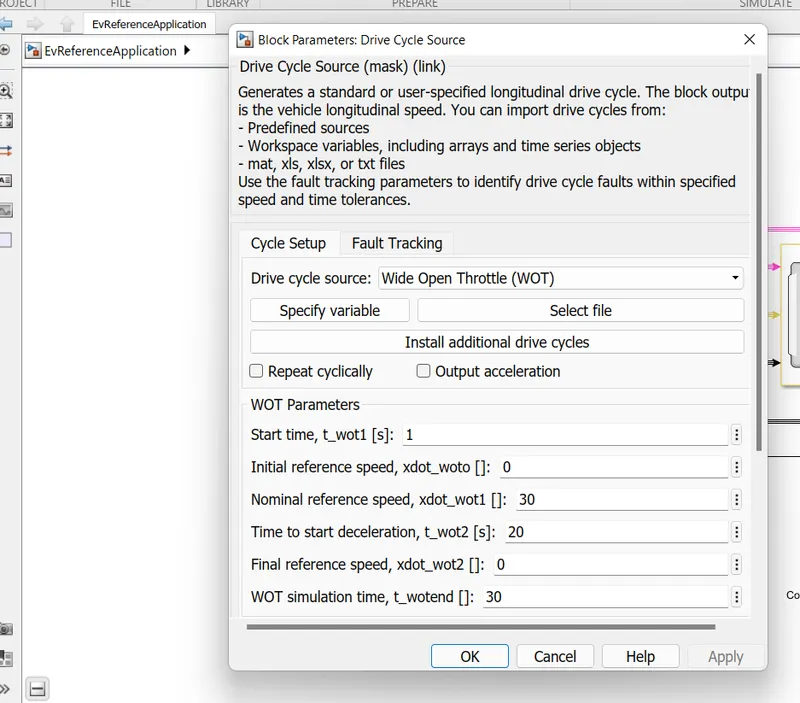
3. Give the grade and wind velocity as the HEV reference application.
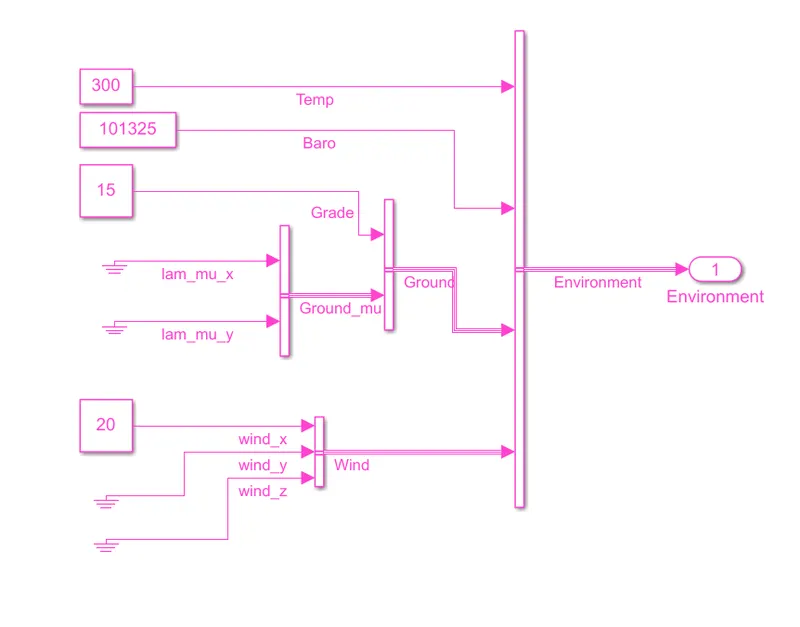
4 . Give the simulation to 50sec same as previous HEV application. Run the simulation.
Results and Observations:-
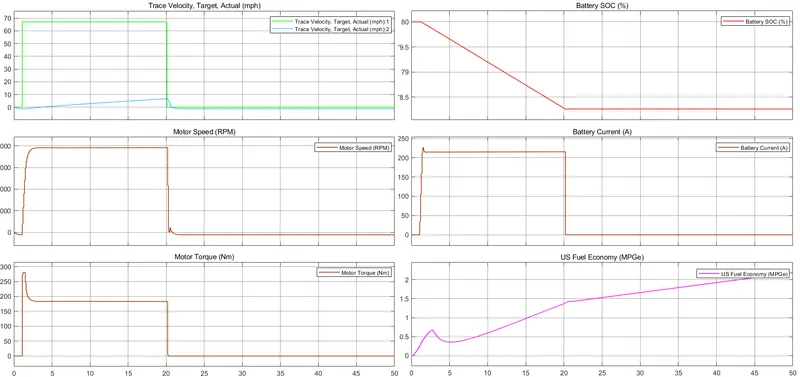
By comparing the HEV and EV graphs it is conclude that
1. The trace velocity is same, as the given drive cycle and time constrains are same for both HEV and EV reference.
2. The battery current drawn during Electric drive is more in HEV than EV, as HEV's are heavier than EV's.
3. The battery SOC depleted is less in EV than HEV because, EV's are generally equipped with high capacity than HEV's.
4. The MPE equivalent is more in EV than HEV.
5. The motor in EV alone can produce 300 Nm torque as in HEV but with motor speed at 4000rpm only. But engine it goes upto 8000rpm. This is because of Torque-speed characterstics of motor gives an advantage of instant torque at low speeds than IC engine.