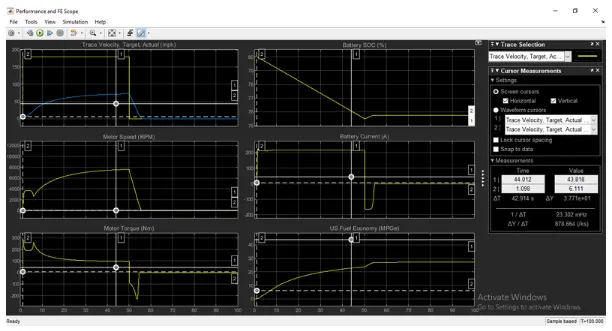
Week-4 Challenge WOT Condition Part-2
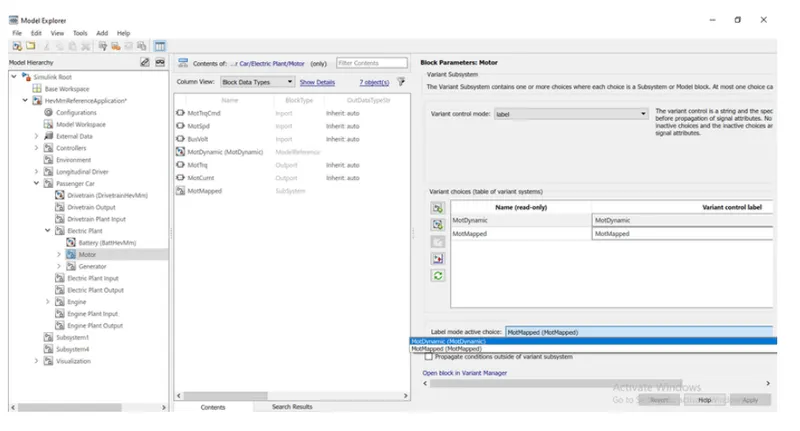
1)What is the difference between mapped and dynamic model of engine, motor and generator? How can you change model type?
Aim:- To find the difference between mapped and dynamic model of engine, motor and generator.
Procedure:-
Maped Model Engine: Mapped model of an engine represent macro engine behavior as a set of lookup tables (brake torque, fuel flow, air mass flow, exhaust temperature, efficiency, and emissions) as functions of commanded load and measured engine speed.
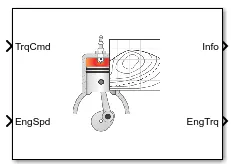
Mapped SI Engine
Dynamic Model Engine: Dynamic Model of an Engine performs a real-time simulation of components that actually takes place in an original system to generate an output and also the dynamic model of an engine decomposes engine behavior into individual component models that account for engine dynamics, most notably intake airflow and turbocharger dynamics.
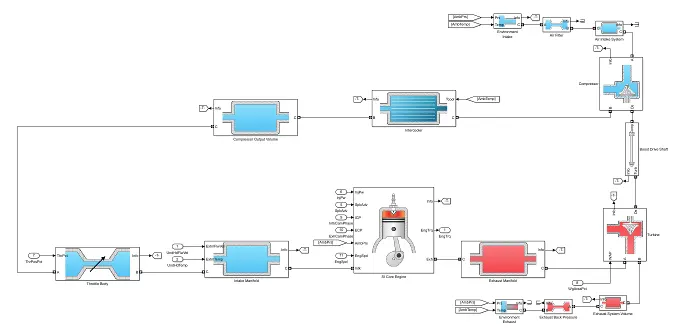
Dynamic Model Engine
Mapped Model Generator: The behavoiur of the Macro generator can be represented as a set of lookup tables of generator efficiency, motor torque, etc.
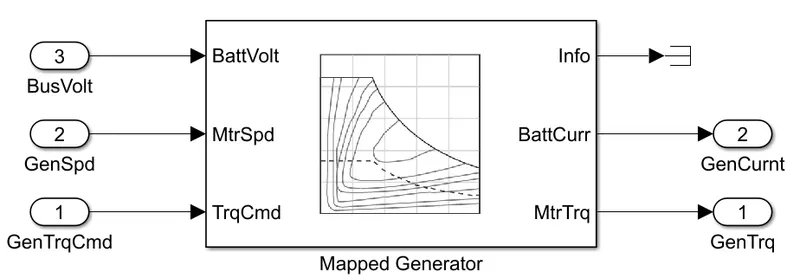
Dynamic Model Generator: Dynamic Model of a generator performs a real-time simulation of components that actually takes place in an original system to generate an output and also the dynamic model of a generator decomposes generator behavior into individual component models.
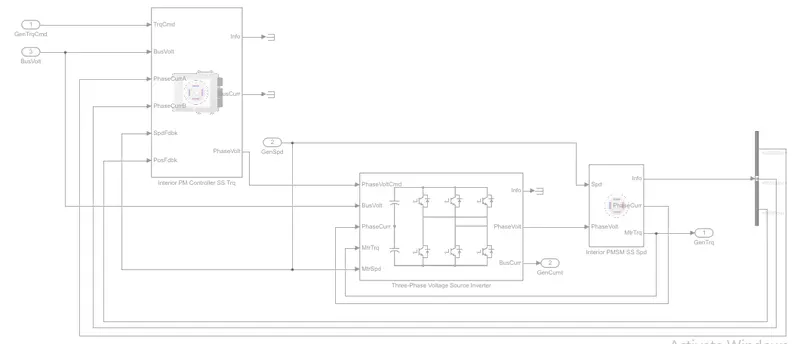
Dynamic Model Motor
Now we can changes the model types:-
At first, we have to open the powertrain blockset module in Matlab documentation for the required vehicle.
Then we have to click on passenger car or vehicle block and have to select the electric plant.
Next, we have to Right-click on Engine/motor/generator on the vehicle model and have to select subsystem & model reference.
In subsystem & model reference we have to select the option convert to the variant subsystem.
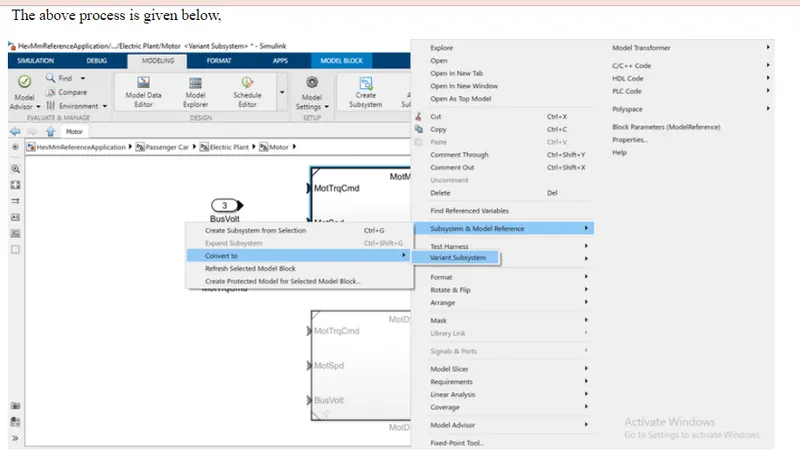
- Then by using model explorer we can change the model type. The following process is shown below.
2)How does the model calculate miles per gallon? Which factors are considered to model fuel flow?
Miles Per Gallon: Miles per gallon(mpg) are commonly used in the United States, the United Kingdom, and Canada (alongside L/100 km). Kilometers per liter (km/L) are more commonly used elsewhere in the Americas, Asia, parts of Africa, and Oceania. When the mpg unit is used, it is necessary to identify the type of gallon used: the imperial gallon is 4.54609 liters, and the U.S. gallon is 3.785 liters. When using a measure expressed as distance per fuel unit, a higher number means more efficient, while a lower number means less efficient
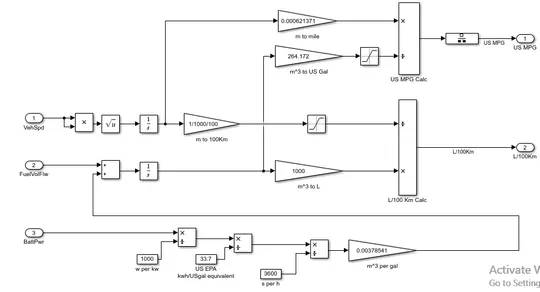
Calculating Miles per Gallon:-
The inputs from the vehicle speed i.e the distance we found (in meters) are taken into the calculation and it is converted to the miles by multiplying with 0.000621371.
- Then the inputs from fuel flow (Battery energy + Fuel energy) which is in `m^3` are converted into equivalent US Gallons by multiplying with 264.172.
- Then the two inputs Miles covered and equivalent US Gallon are further divided and the final result is got in Miles/Gallon.
- Fuel Economy: The fuel economy of an automobile relates to distance by a vehicle and the amount of fuel consumed. Consumption can be expressed in terms of the volume of fuel to travel a distance, or the distance traveled per unit volume of fuel consumed. Different methods are used to approximate the actual performance of the vehicle.The energy in the fuel is required to overcome various losses (like wind resistance, tire drag, and others parameters) encountered while propelling the vehicle, and in providing power to vehicle systems such as ignition or air conditioning. Driver's behavior can affect fuel economy such as sudden acceleration and heavy braking waste energy.
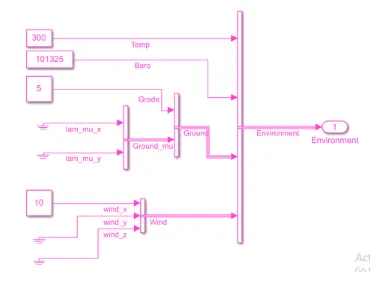
3) Run the HEV ReferenceApplication with WOT drive cycle. Change the grade and wind velocity in the environment block. Comment on the results.
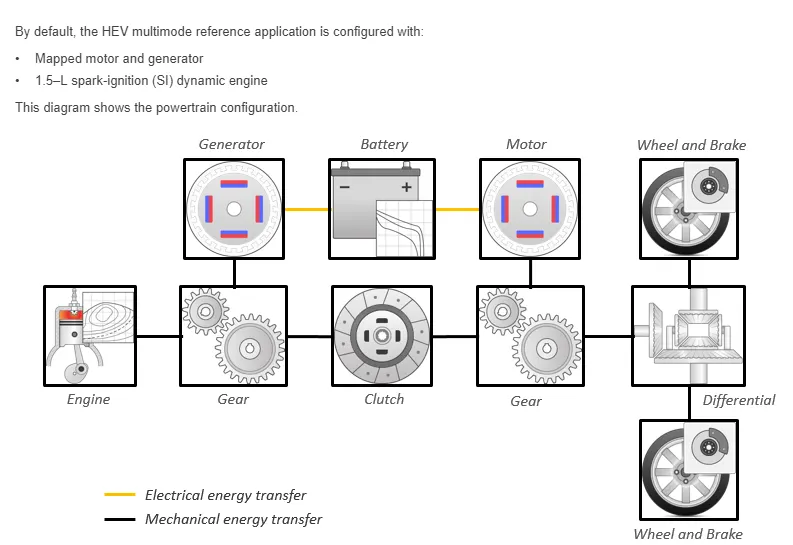
Architecture: -
Simulation model:-
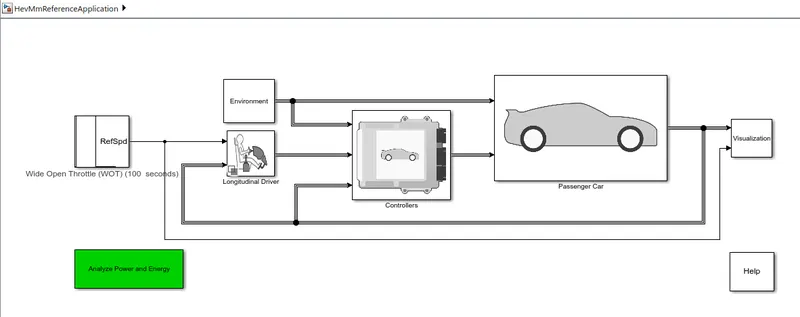
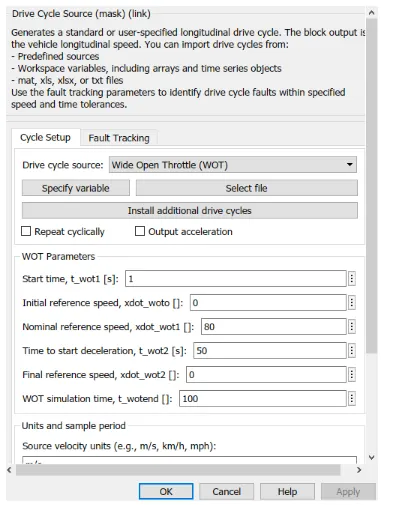
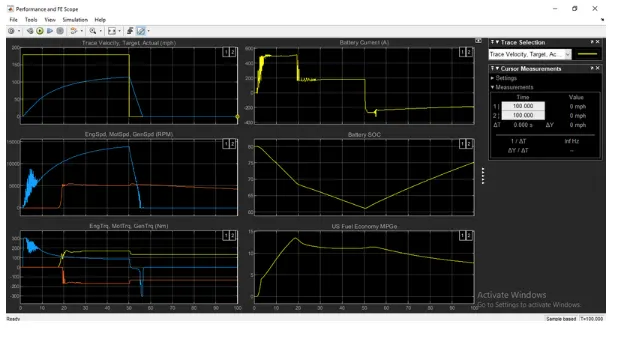
The simulation is done for Hybrid Electric Vehicle with Wide Open Throttle Drive Cycle.
The Total Cycle Time = 120 seconds.
The Top speed of this cycle = 100 mph.
Time to start deceleration = 60 seconds.
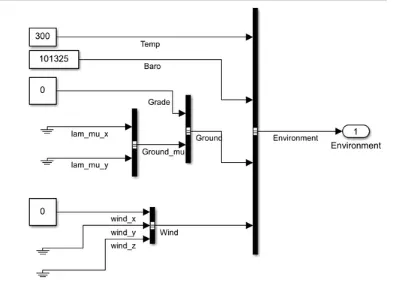
The Grade angle = 0 degrees.
The wind velocity = 0 m/s
Result:-
Case2:-
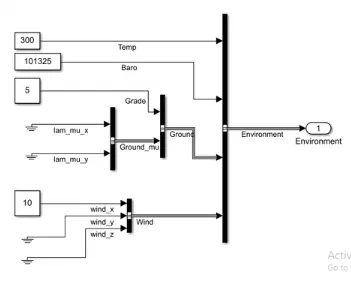
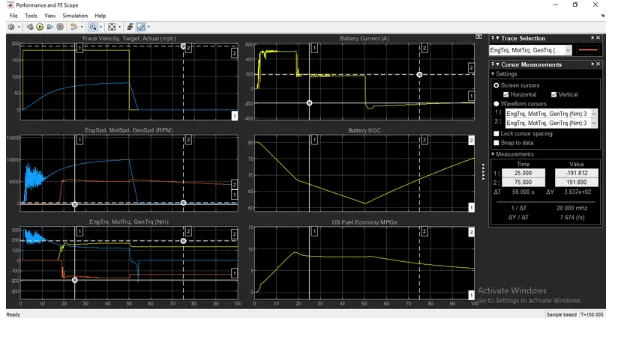
we can give the Grade angle is 10 deggres and wind velocity to the envirenment blocks reamaing all parameters are same.
The Total Cycle Time = 120 seconds.
The Top speed of this cycle = 100 mph.
Time to start deceleration = 60 seconds.
The Grade angle = 10 degrees.
The wind velocity = 10 m/s
Result:-
4) Keeping all other parameters same, compare the simulated results of hybrid and pure electric powertrains.
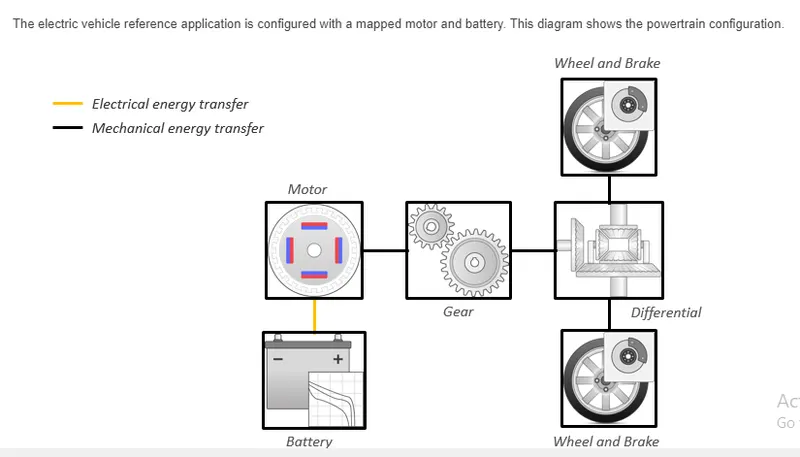
Architecture:-
Simulation model:-
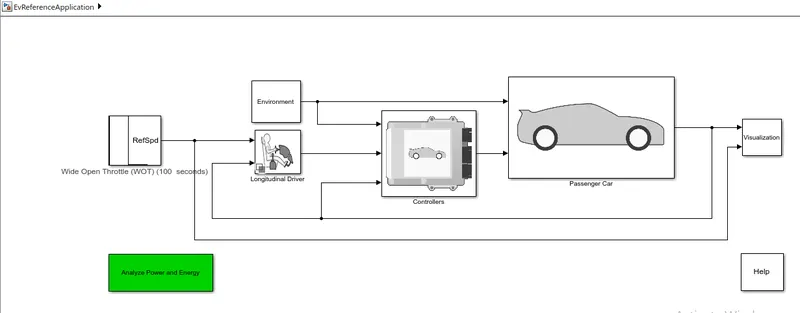
Case1:-
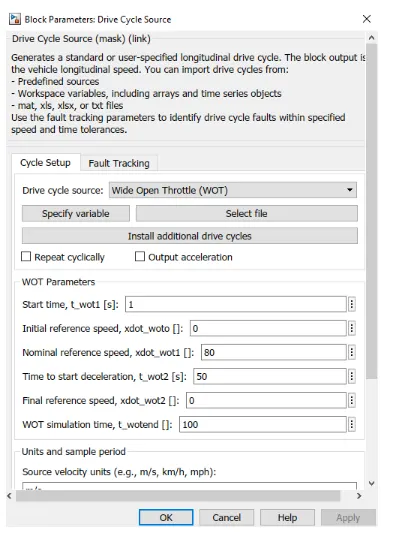
The Total Cycle Time = 120 seconds.
The Top speed of this cycle = 100 mph.
Time to start deceleration = 60 seconds.
The Grade angle = 0 degrees.
The wind velocity = 0 m/s
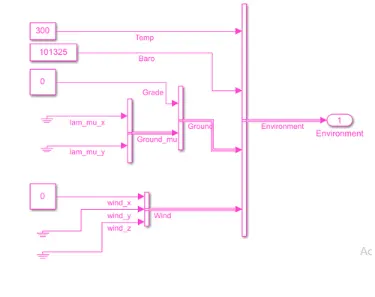
Result:-
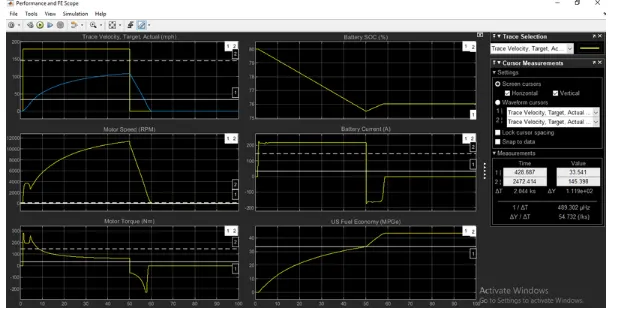
Case2:-
The Total Cycle Time = 120 seconds.
The Top speed of this cycle = 100 mph.
Time to start deceleration = 60 seconds.
The Grade angle = 10 degrees.
The wind velocity = 10 m/s
Result:-