Week-4 Challenge WOT Condition Part-2
- The main difference of Mapped and dynamic models are:
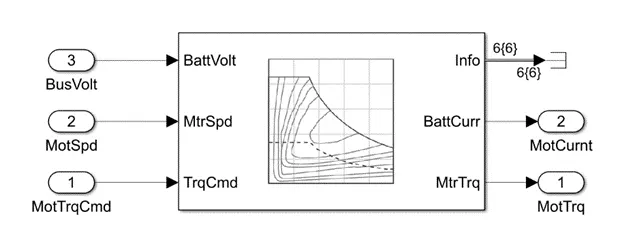
Mapped Model of Engine: Mapped Model uses a set of steady-state lookup table to characterize engine performance. The tables provide overall engine characteristics, including actual torque, fuel flow rate, BSFC, and engine-out exhaust emissions. It is mainly used when you have engine data. This is used for quasi steady-state engine simulations.
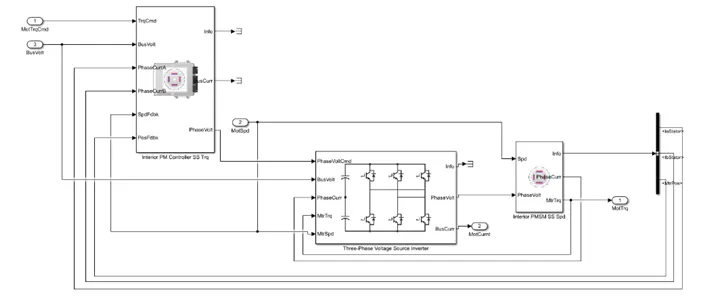
Dynamic Model of Engine: Model decomposes the engine behaviour into engine characteristics that are separated into lower-level components. By combining components in this way, the models capture the dynamic effects. It is mainly used when you need a more detailed dynamic model and have component-level data. This is used to analyse the impact of individual engine components on the overall performance.
Mapped Engine Model
Dynamic Engine Model
Mapped & Dynamic Engine Model
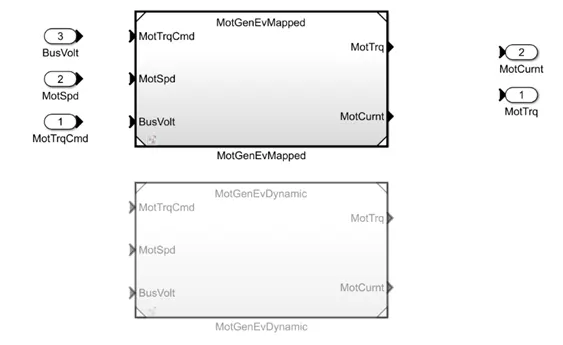
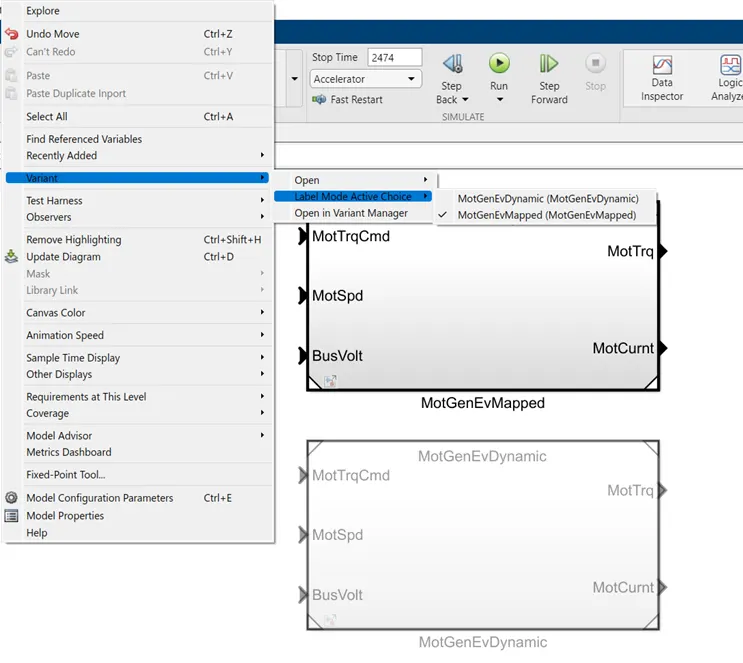
To Change model Type:
- First we have to go inside the Vehicle block of the model where the motor/engine/generator is designed.
- Then right click and select variant.
- On the variant option we should go inside the “label mode active choice’ option and select the mode which we want.
- The model calculate miles per gallon Inside the visualization block. Inside that block there is a Performance calculations block connected to the scope with the input data of Vehicle speed and battery power. With this data, inside the performance calculations block the miles per gallon data is calculated comparing vehicle speed by battery power left.
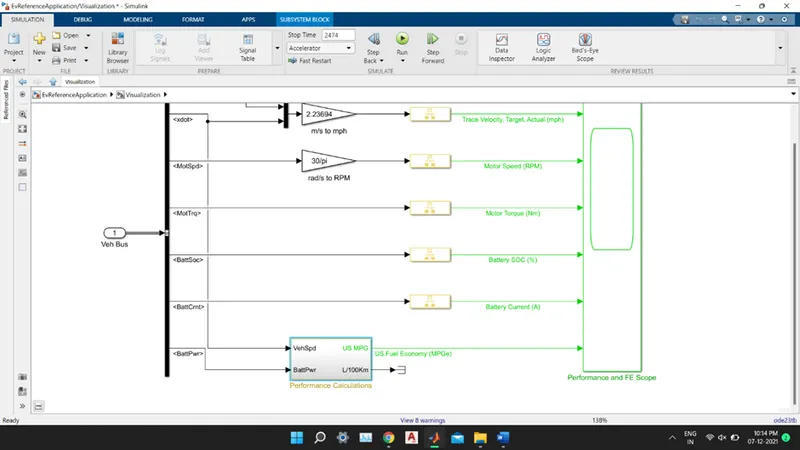
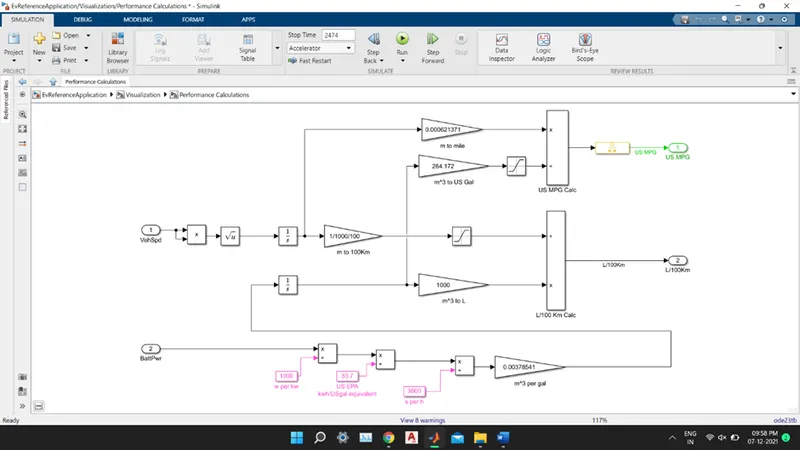
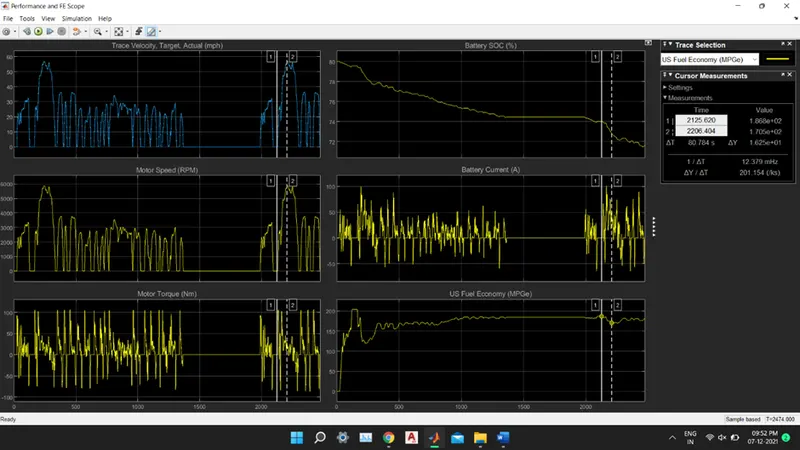
The factors considered to model fuel flow:
- Vehicle speed is multiplied by itself by product block and square rooted it by sqrt block. then it is integrated to get the distance in meters which is then converted to miles.
- Battery power is divided by 1000 to convert to kW and then divided by 33.7 to get energy at kWh and then divided by 3600 to convert it to kWs unit. This is then multiplied with 0.00378541 to get m^3 per second unit. This unit is the passed through an integrator to get m^3 volume value. This volume is then converted to gallons by passing through a gain block and multiplying it with 264.172.
- Finally we get the MPG value by dividing the miles value by gallons value.
- The HEV Reference Application is simulated with WOT drive cycle by changing the drive cycle mode
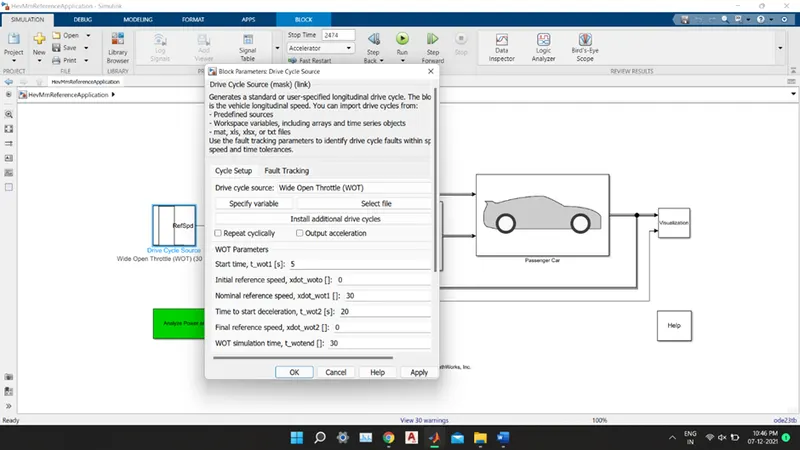
The result of the simulation is:
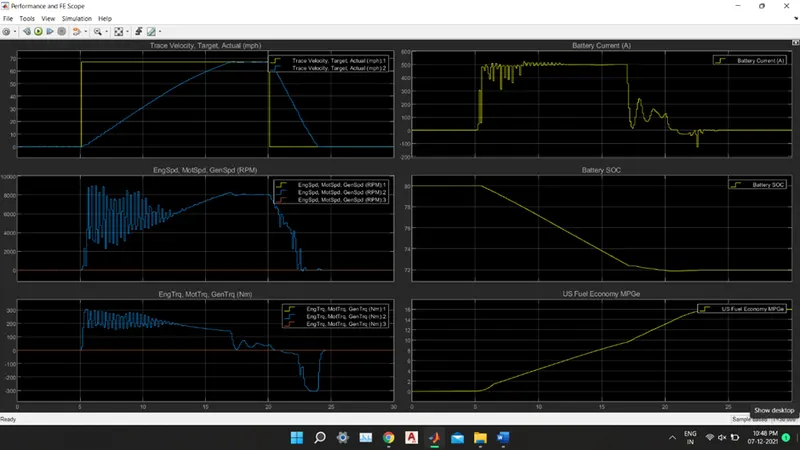
Result:
- Velocity of the vehicle reaches a maximum value of 70mph.
- Battery SOC value decreases to 72%
- We get a fuel economy of 16MPG.
Case2: Changing the value of Grade and Wind Speed.
The grade value is increased to 7 and wind speed is increased to 30.
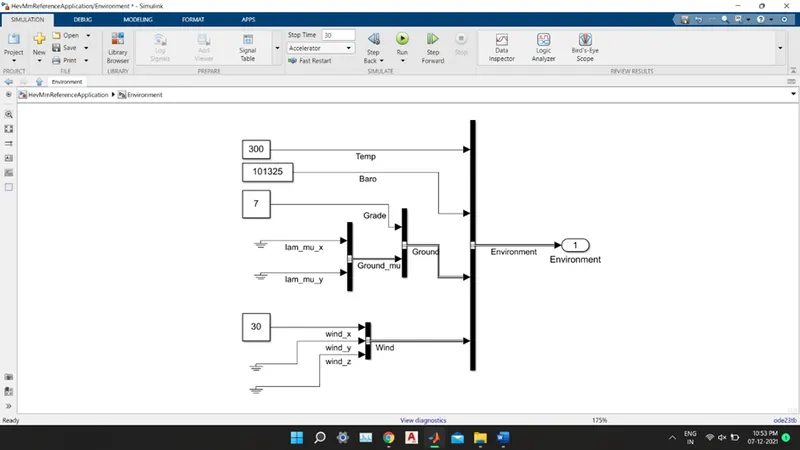
The output of the simulation:
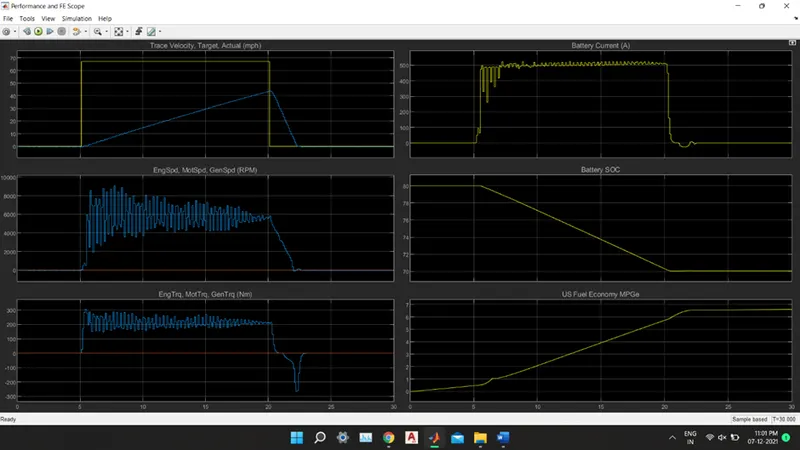
Result:
- Velocity of the vehicle reaches a maximum value of 45mph.
- Battery SOC value decreases to 70%
- We get a fuel economy of 6.5MPG.
From the above two cases we can observe that the Maximum speed of the vehicle have decreased tremendously as the is a grade introduced and there is aerodynamic force opposing the vehicle as there is a wind acting on the vehicle.
Also, the SOC value have depleted more as more power is drawn from the battery to overcome this extra power required by the aerodynamic force and the grade.
And the milage have decreased as the forces acting on the vehicle have increased.
- Keeping all other parameters same, the simulated results of hybrid and pure electric powertrains.
The Conditions are: WOT Drive cycle and Zero grade and zero wind velocity with all other parameters remain the default values.
Result of the HEV Model:
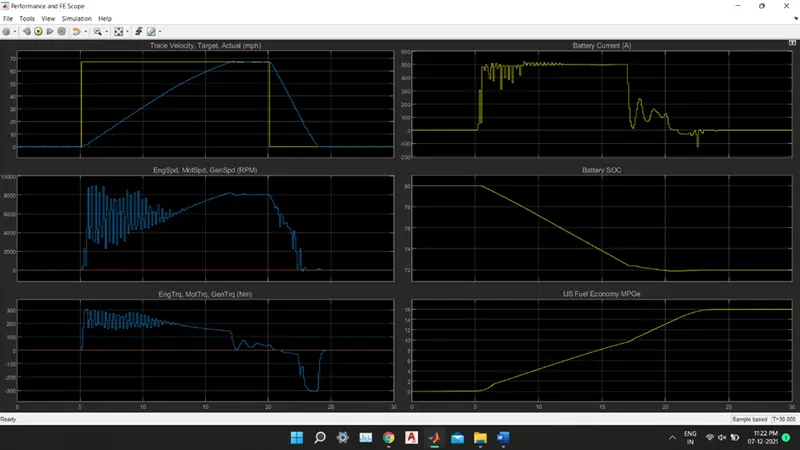
Result of the EV Model:
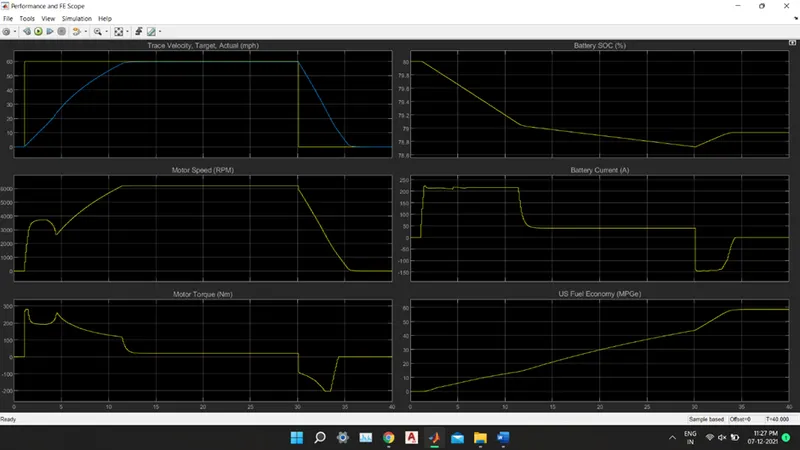
From the Results we can conclude that:
- HEV Model reaches better top speed than the EV model. Though the EV model shows better initial acceleration at WOT drive.
- EV model shows better SOC depletion rate than the HEV model.
- EV model’s fuel economy is shows it is way lot better than that of HEV model.