Study of EV & HEV architectures using MATLAB’s Powertrain Blockset.
Aim- Study of EV & HEV architectures using MATLAB’s Powertrain Blockset.
Objectives-
- To understand the difference and change the model type between mapped and dynamic model of engine, motor and generator.
- To calculate the fuel economy of EV/HEV.
- To simulate and compare the HEV Reference Application in the Powertrain Blockset with WOT drive cycle with different environmental factors (grade & wind velocity).
- To compare the simulated results of hybrid powertrains with pure electric powertrains.
Theory-
A Hybrid-Electric Vehicle is a vehicle with at least two propulsive power sources. One source is electric motor powered by batteries and the other source can be a bunch of other technologies including ICE, Fuel cell, super-capacitors, flywheels or even battery hybrids as well. But most commonly Internal Combustion Engine is used in many commercial projects, like Toyota Prius, Honda Civic etc.
Types of hybrid powertrain structures-
Series Hybrid-
Present EVs have the challenge of a limited driving range due to the shortage of energy storage in the on-board batteries. So series-hybrid was developed in order to extend the drive range of the vehicle by adding an engine to the system to charge the on-board batteries.
In a series hybrid system, the engine drives an electric generator instead of directly providing traction power to the wheels. The electric motor only provides tractive power to the wheels. The generator both charges the battery and powers the electric motor that propels the vehicle.
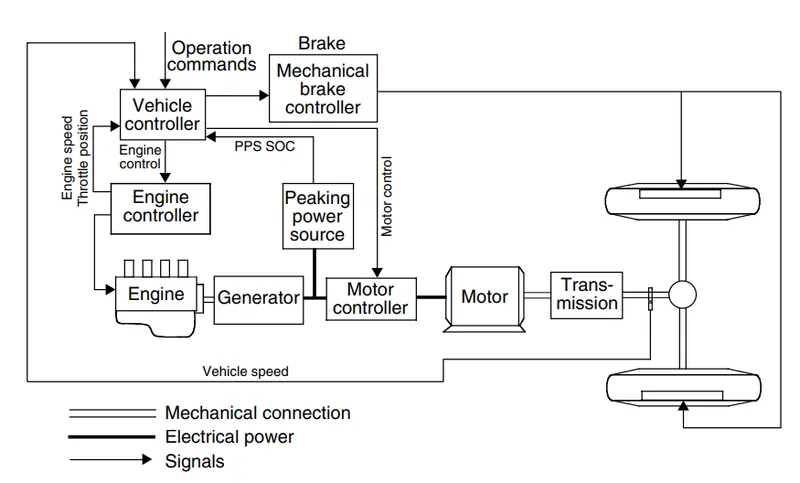
Advantages of Series-Hybrid Electric Vehicles-
- There is no mechanical link between engine and the wheels. The generator group can be located everywhere.
- There are no conventional mechanical transmission elements (gearbox, transmission shafts). Separate electric wheel motors can be implemented easily.
- The engine can operate in a narrow RPM range (its most efficient range), even as the car changes speed.
- Series hybrids are relatively the most efficient during stop-and-go city driving.
Disadvantages of Series-Hybrid Electric Vehicles-
- The size, cost and weight of the powertrain can be excessive as the generator, traction motor and engine are designed to handle full power of the vehicle.
- In long-distance highway driving conditions, the total efficiency of S-HEV is lower to a conventional powertrain due to various energy conversions from engine to generator and to motor.
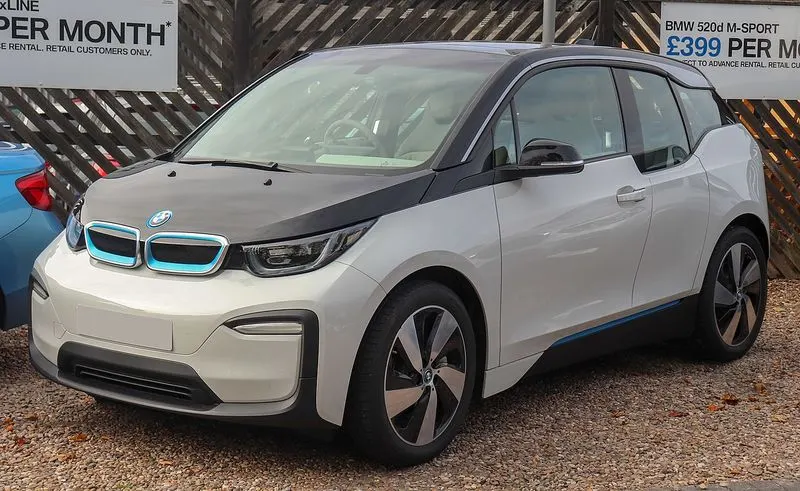
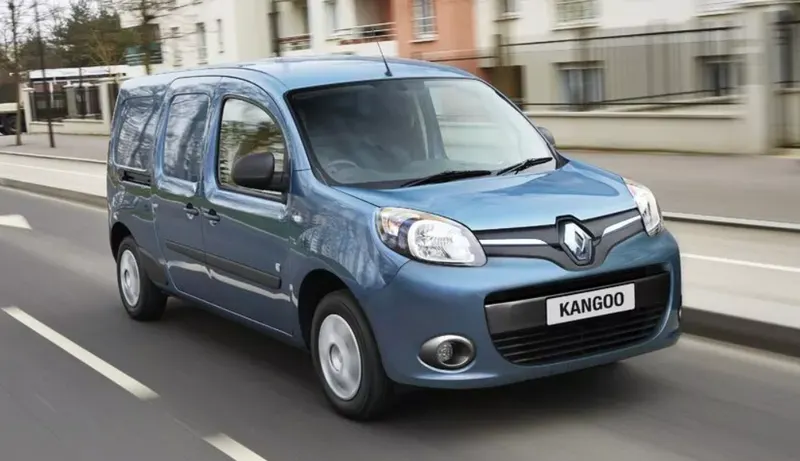
Examples of Series-HEV-
BMW i3, Renault Kangoo.
Parallel Hybrid-
The parallel hybrid drivetrain allows both the engine and traction motor to supply their mechanical power in parallel directly to the wheels. The major advantages of parallel configuration over a series configuration are-
- Generator is not required.
- The traction motor is smaller.
- Multi-conversion of the power from the engine to the driven wheels is not necessary.
Hence, the overall efficiency can be higher. However, the control of the parallel hybrid drive train is more complex due to the mechanical coupling between the engine and the wheels. It also regenerates braking energy using regenerative braking technology.
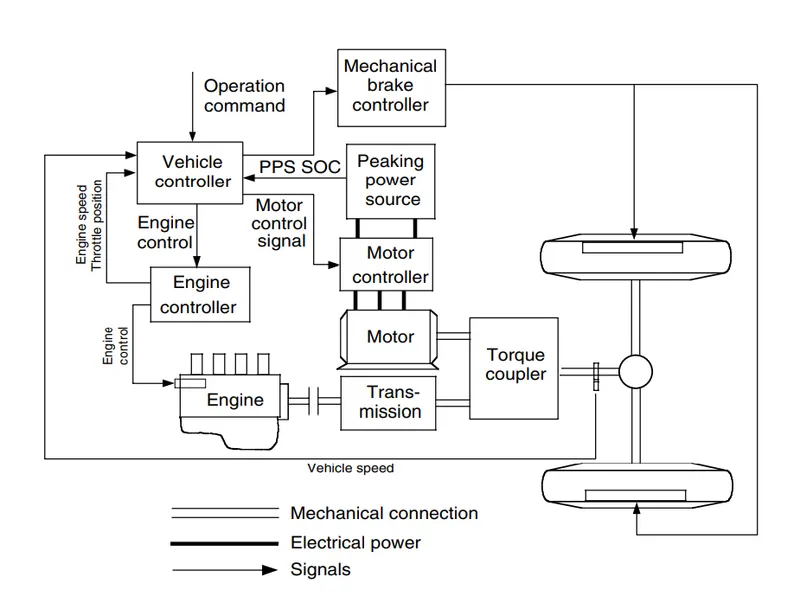
Advantages of Parallel- Hybrid Electric Vehicle-
- Total efficiency is higher during cruising and long-distance highway driving.
- Large flexibility to switch between electric and engine power.
- Compared to series hybrids, the electric motor can be designed less powerful than the ICE, as it is assisting traction.
Disadvantages of Parallel- Hybrid Electric Vehicle-
- Rather complicated system.
- The ICE doesn’t operate in a narrow or constant RPM range, thus efficiency drops at low rotation speed.
- As the ICE is not decoupled from the wheels, the battery cannot be charged at standstill.
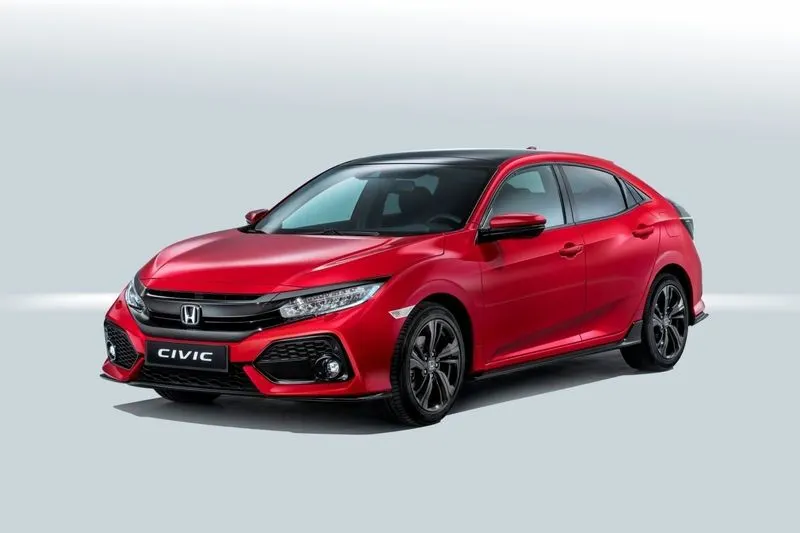
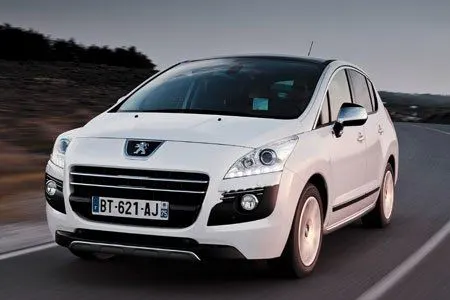
Examples of Parallel-HEV-
Honda Civic, Peugeot 3008 hybrid.
Series Parallel Hybrid-
A series hybrid becomes a series-parallel hybrid by adding a power split device like a clutch between the two electric machines. With the inclusion of a clutch this architecture behaves as series hybrid when the clutch is open and vehicle is operating at low speeds whereas when vehicle is at high speeds, the clutch is closed and thus the drivetrain works as parallel hybrid. But the main disadvantage that this architecture poses is of flexibility of packaging of transmission components.
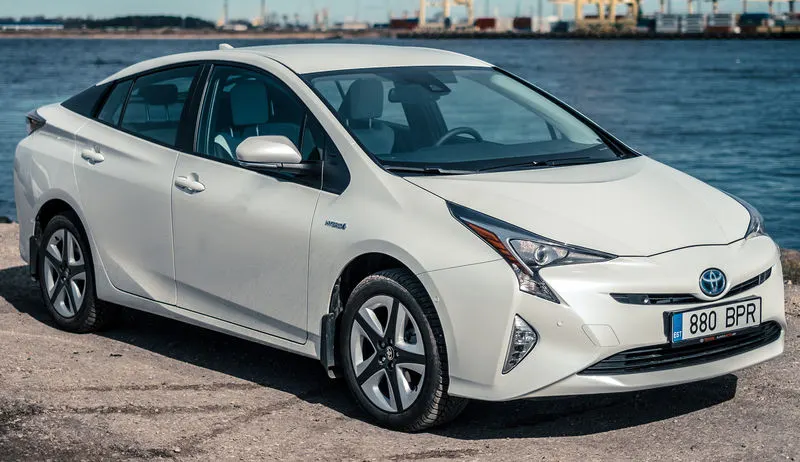
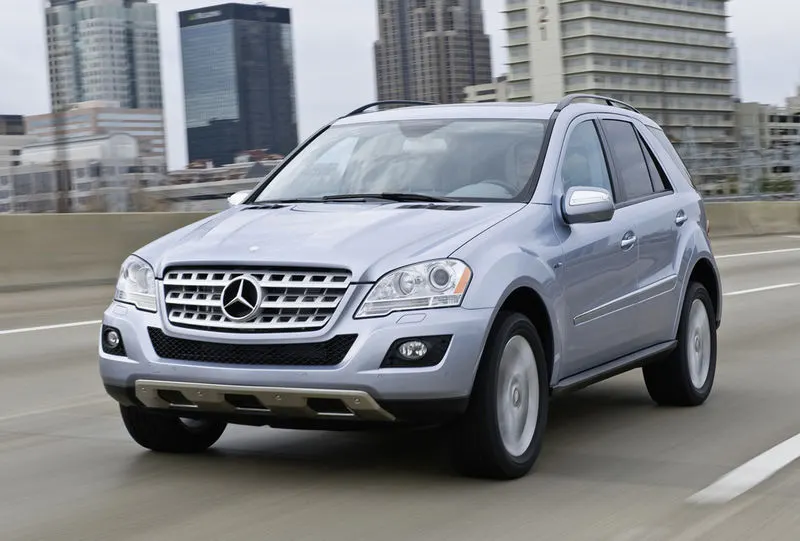
Examples of Series-Parallel HEV-
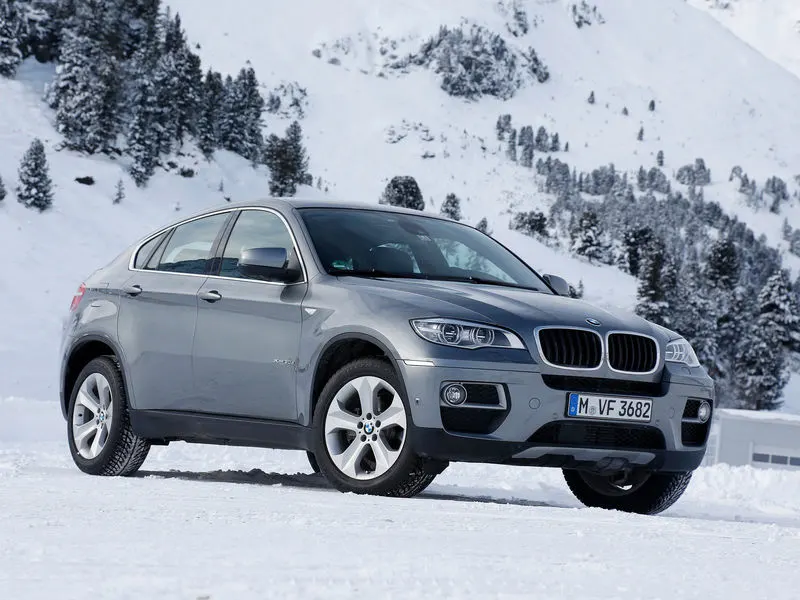
Toyota Prius, Mercedes ML 450 hybrid, BMW X6 ActiveHybrid.
Complex Hybrid-
It is an architecture that doesn’t fit in the above categories, it is almost identical to the series-parallel hybrid but the only difference being is of bi-directional power flow of motor. Its major disadvantage is its complexity in manufacturing.
MATLAB EV/HEV reference application-
It is a reference project provided by MATLAB which contains a full electric/hybrid vehicle model. This can be used for powertrain matching, component sizing, for developing control algorithms and HIL testing as well.
To create and open a working copy of the conventional vehicle reference application project, enter
autoblkEvStart
autoblkHevStart 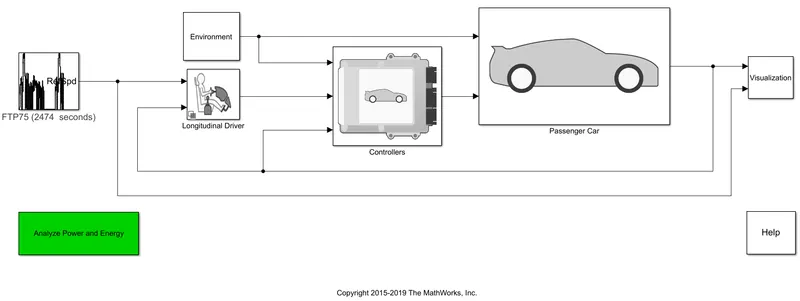
Mapped and Dynamic Models-
Engine Models-
The Powertrain Blockset provides two types of engine models: mapped and dynamic.
Mapped engines represent engine behaviour as a set of lookup tables which are pre-fed into the system (brake torque, fuel flow, air mass flow, exhaust temperature, efficiency, and emissions) as functions of commanded load and measured engine speed.
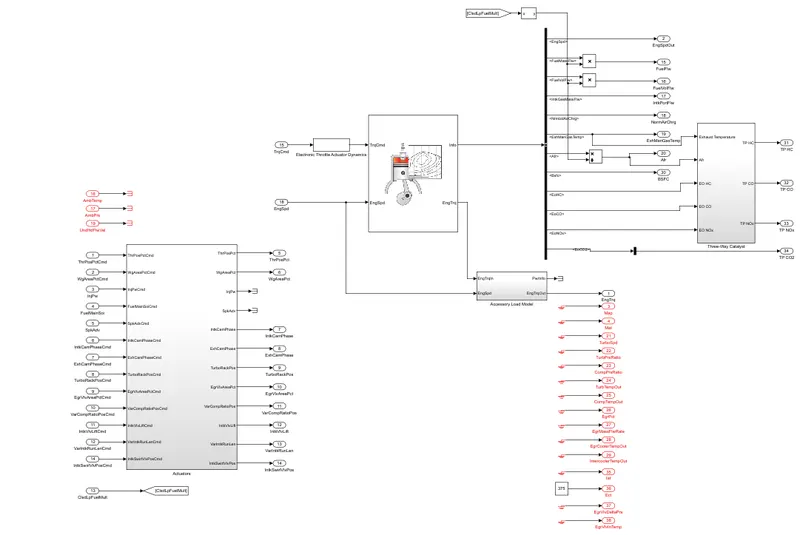
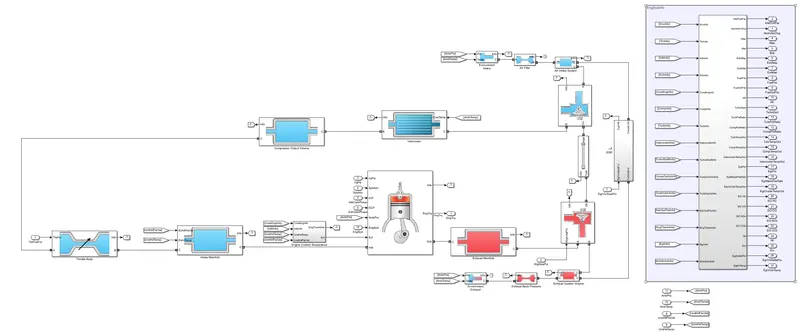
Dynamic engines models engine behaviour into individual component models that account for engine dynamics, most notably intake airflow and turbocharger dynamics.
Motor Models-
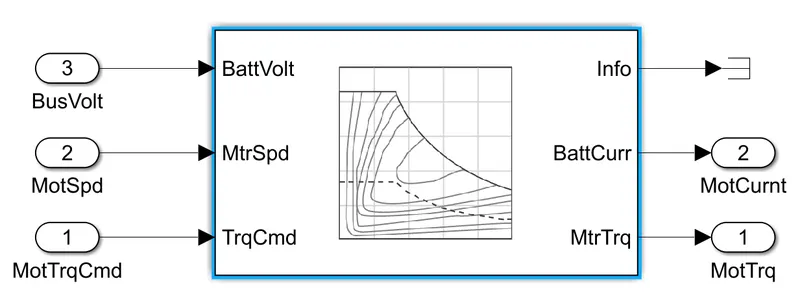
Mapped motor represents a motor working in torque-control mode. The output torque tracks the torque reference demand and implements the motor speed based on the lookup table.
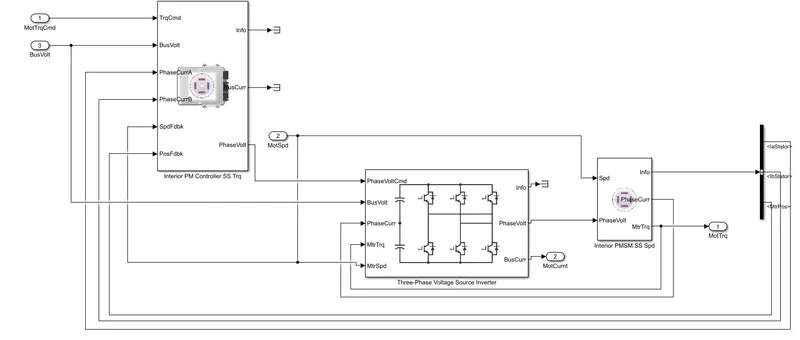
Dynamic motor represents a 3-phase interior permanent magnet synchronous motor. It uses 3-phase input voltage sources for controlling speed and torque of the motor.
Generator Models-
Mapped generator is exactly similar to a mapped motor with lookup tables.
Dynamic generator represents a more accurate representation involving user to input parameters just like the dynamic motor.
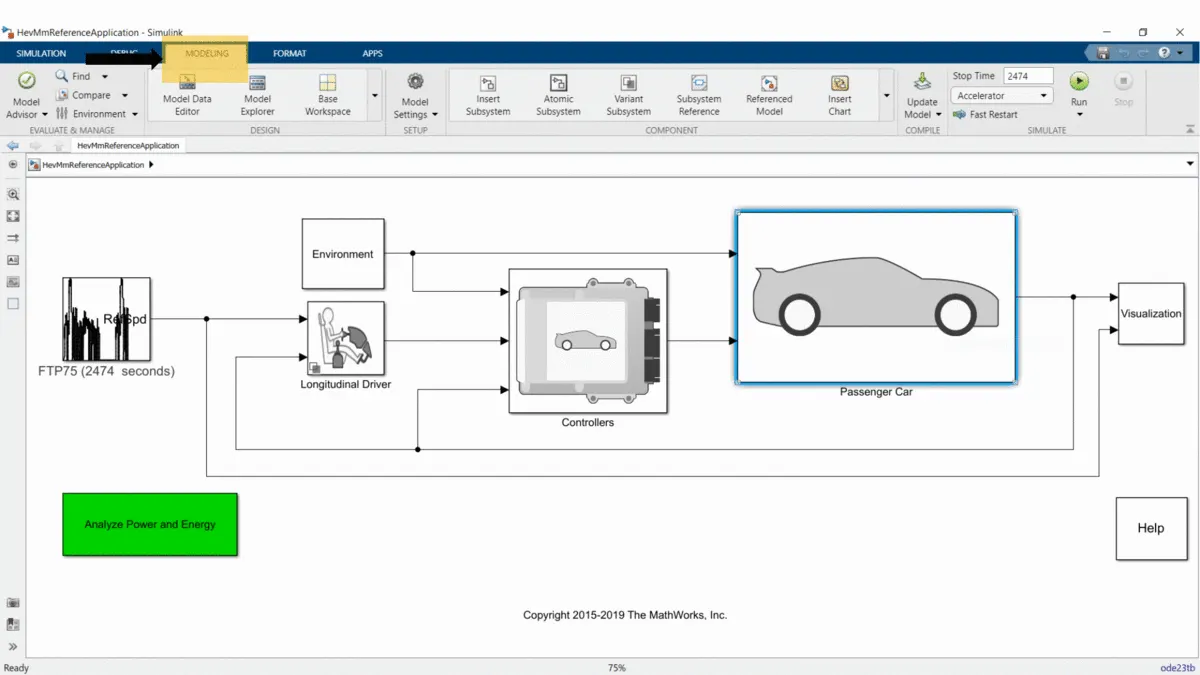
In order to switch between mapped models and dynamic models we can do so by using Variant manager.
Modelling >> Design >> System Design >> Variant manager
Fuel Economy –
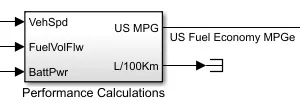
The fuel economy is modelled using the performance calculations block in the reference application.
MPG-
In Conventional IC engine vehicles MPG stands for miles per gallon, and is used to show how far your vehicle is able to travel for every gallon (4.55 litres) of fuel it uses. So higher a car's MPG, the more fuel efficient it is.
MPGe-
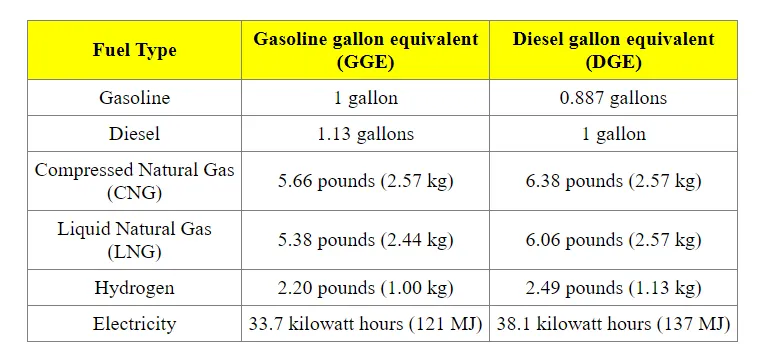
MPGe stands for “miles per gallon of gasoline-equivalent.” It’s an energy efficiency metric that was introduced by the Environmental Protection Agency (EPA) in 2010 to compare the amount of energy consumed by alternative fuel vehicles to that of conventional fuel vehicles.
According to EPA, burning of one gallon gasoline produces 115,000 BTUs and to generate the same amount of heat we will need 33.7 kWh electricity.
`1"MPGe" ≈ 1 "mi""/"33.7 "kWh"`
FOR HEV-
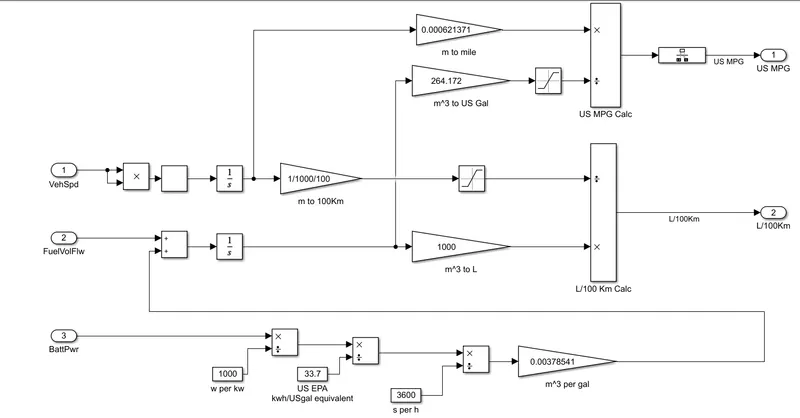
- The battery power is converted into kW/h by dividing by 1000.
- The battery power in kW/h is then converted into Gasoline gallons equivalent/sec by dividing by 33.7
- Then the US gallon/sec is converted to US gallons/h by dividing it with 3600.
- Now the battery power transformed into US gallons/h is again multiplied by 0.00378541 to get the volume in m^3 per gallons and then it is added to fuel flow.
- The total fuel flow rate is then integrated and we get the volume of the fuel used in m^3 which is then converted into litres and US gallons.
- Likewise, the speed of the vehicle is integrated to get the distance travelled and multiplied with 0.000621371 to convert m to miles.
- Finally the distance travelled is divided with total equivalent volume of fuel.
FOR EV-
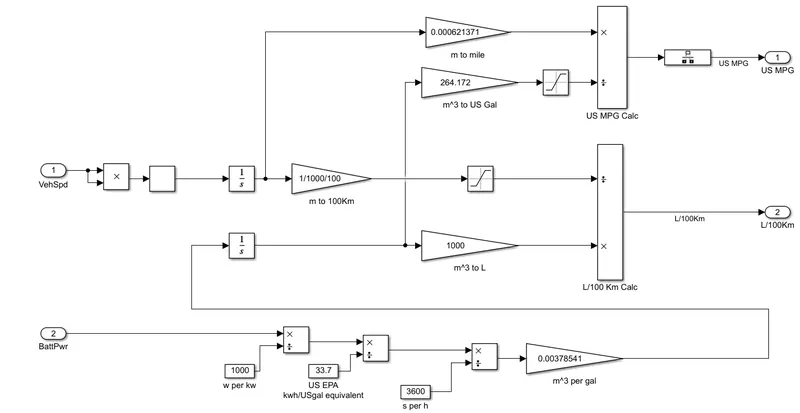
MPGe for pure EV is implemented the same way it was implemented for HEV the only difference being is that Fuel flow is not in case of pure EV.
The fuel flow is modelled is by considering the type of engine (SI or CI), fuel mass flow dynamics, Engine rotational speed, Fuel injector slope, Fuel injector pulse-width, Number of engine cylinders, Specific gravity of fuel, Volumetric fuel flow, Crankshaft revolutions per power stroke.
For Example-
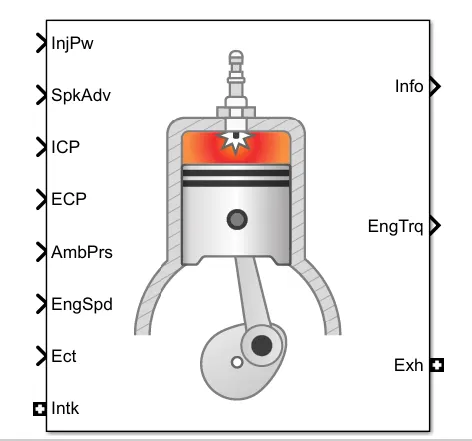
The Dynamic Engine model uses the fuel injector characteristics and pulse width to calculate the fuel mass flow.
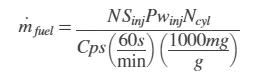
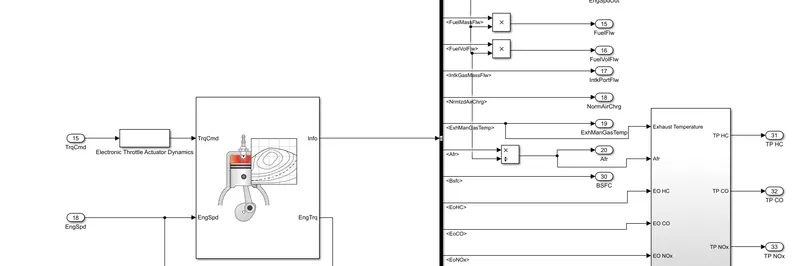
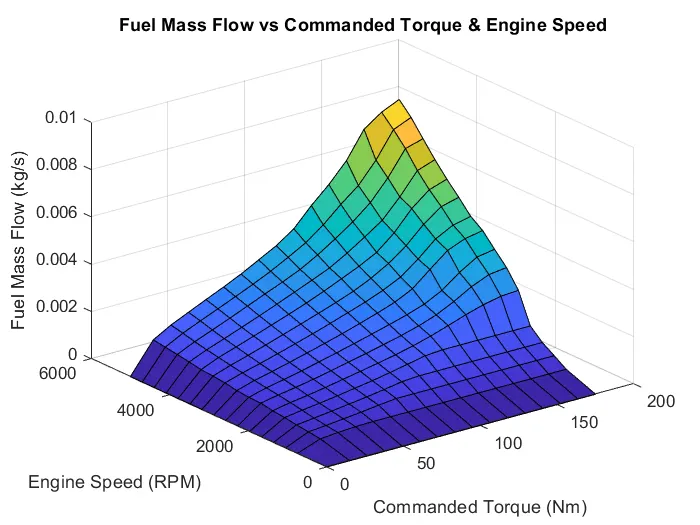
While the Mapped Engine uses mapped fuel flow data.
Effect of environmental factors on performance-
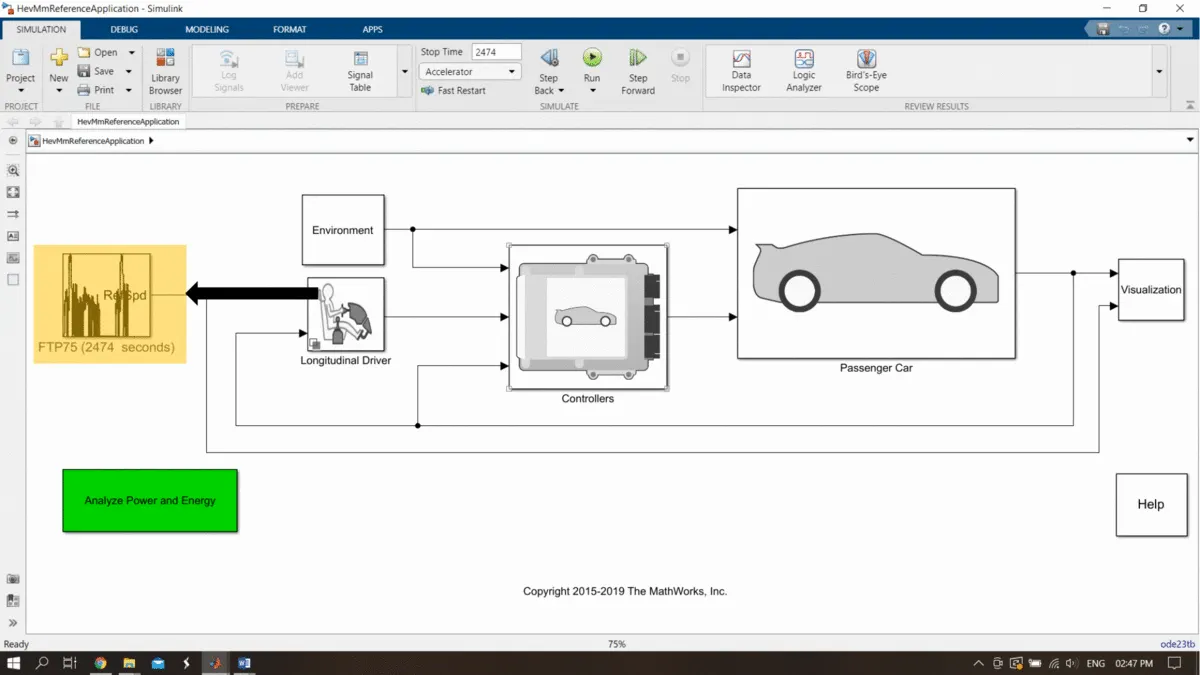
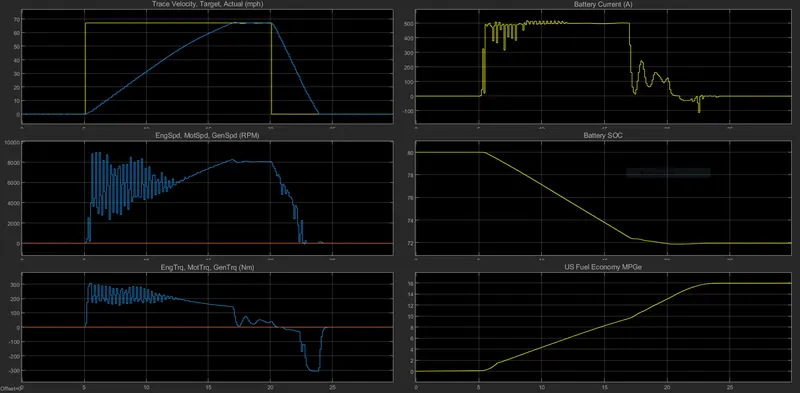
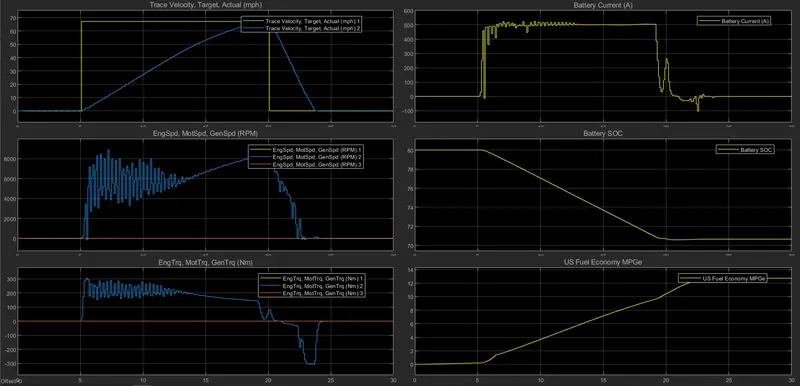
The gradebility is changed to 2% and the wind velocity is chnaged to 5m/s.
Without Changing-
With Changed Values-
|
Property |
Without Changing |
With changed values |
|
Actual velocity |
0 to 67.1 mph |
0 to 67.1 mph |
|
Battery current |
-112 A to 500 A |
-102 to 500 A |
|
Generator speed |
Constant (Zero) |
Constant (Zero) |
|
Motor speed |
-10 to 9000 RPM |
-21 to 8867 RPM |
|
Engine Speed |
Constant (Zero) |
Constant (Zero) |
|
Motor torque |
-300 to 300 Nm |
-300 to 300 Nm |
|
Engine torque |
Constant (Zero) |
Constant (Zero) |
|
Generator torque |
Constant (Zero) |
Constant (Zero) |
|
SOC |
80 % to 71 % |
80% to 70% |
|
Fuel Economy |
0 to 16 gallons for 30 sec |
0 to 12 gallons for 30 sec |
- Trace Velocity reaches the maximum waypoint actual graph indicating that the battery power was sufficient to overcome the given gradeability and wind speed.
- The battery current is increasing when the vehicle is accelerating and is constant when the acceleration is constant and when the vehicle is decelerating the battery current is negative indicating that regenerative braking is taking place.
- The battery gets discharged while accelerating from SOC 80 to 70% and gets charged by a very small amount while decelerating.
- As only battery power was able to successfully encounter the drive cycle we get to see only motor speed and torque while engine/generator RPMs remains constant throughout the drive cycle.
- MPGe was reduced when vehicle encountered increased grade and wind velocity.
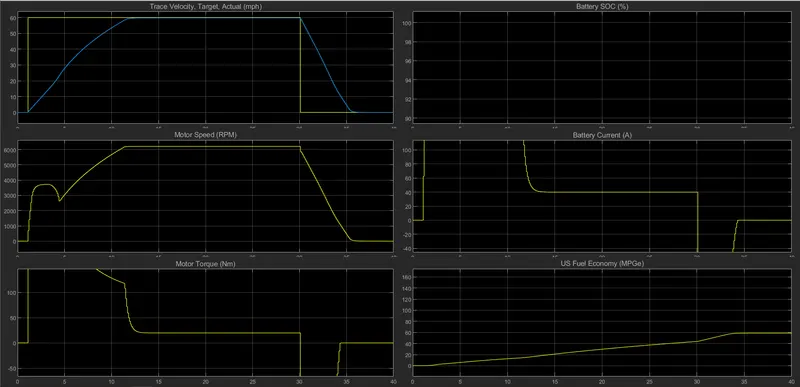
With Changed Values for pure EV-
The gradebility was changed to 2% and wind velocity was changed to 5m/s.
|
HEV |
EV |
|
|
Maximum speed (mph) |
67.1 |
59.9 |
|
Maximum Current (A) |
500 |
224 |
|
SOC |
80 to 70 |
80 to 78.7 |
|
MPGe |
12 |
58 |
- EVs achieve lower maximum speed than HEVs.
- Fuel economy of EV is more than HEVs.
References-
- Singh, K.V., Bansal, H.O. & Singh, D. A comprehensive review on hybrid electric vehicles: architectures and components. J. Mod. Transport. 27, 77–107 (2019). https://doi.org/10.1007/s40534-019-0184-3
- (n.d.). NPTEL. https://nptel.ac.in/content/storage2/courses/108103009/download/M3.pdf
- Plug-in hybrid electric vehicle - Learn more about the new label | US EPA. (2021, January 20). US EPA. https://www.epa.gov/fueleconomy/plug-hybrid-electric-vehicle-learn-more-about-new-label
- Understanding MPG and MPGe. (n.d.). Professor Robert B. Laughlin, Department of Physics, Stanford University. https://large.stanford.edu/courses/2016/ph240/kountz2/
- I. Husain, Electric and Hybrid Electric Vehicles, CRC Press, 2003
- M. Ehsani, Modern Electric, Hybrid Electric and Fuel Cell Vehicles:Fundamentals, Theory and Design, CRC Press, 2005
- F. Wang, X. Yin, H. Luo and Y. Huang, "A Series Regenerative Braking Control Strategy Based on Hybrid-Power," 2012 International Conference on Computer Distributed Control and Intelligent Environmental Monitoring, Zhangjiajie, China, 2012, pp. 65-69, doi: 10.1109/CDCIEM.2012.22.
- Hybrid Electrical Vehicles. (2011, June 6). Wroclow University of technology Department of Automobile Engineering. https://www.ae.pwr.wroc.pl/filez/20110606092353_HEV.pdf