Week-4 : Basic Calibration of Single cylinder CI-Engine
Aim:
To do a basic calibration study of single cylinder CI - Engine.
Objectives:
- Compare and note down differences of the SI vs CI engine.
- Obseve the performance metrics such as the BSFC, Exhaust temperature and A/F ratios of the CI engine.
- Change the MFB 50 and observe impact of performance.
Theory:
The major differences between the SI and CI engines have been documented briefly as follows:
Homogenous mixture
In spark ignition engines, the air and fuel mixture is formed inside the carburetor which happens just before entering the cylinder. The energy from the explosion of the fuel-air mixture is generated at the end of the compression stroke. A slightly richer than stochiometric ratio is required for maximum flame speed.
Heterogenous mixture
In direct ignition engines, hetrogenous mixture is formed when the fuel is added in the air inside the cylinder. The combustion in heterogenous mixture take place in lean mixture composition.
Combustion in SI engine
In the first stage, the growth and development of self-propagating flame takes place, which is referred as ignition lag. This is a chemical process depending upon temperature, pressure and nature of fuel. The second stage is concerned with the spread of flame inside the combsution chamber. The starting point resembles the rise in pressure on indicator diagram. The rate of heat release depends on the turbulent intensity and mixture composition. Lastly, the point of maximum pressure and rate of combustion becomes lower due to flame velocity.
Combustion in CI engine
The first stage is known as preparatory stage or ignition delay, which is counted from the start of ignition to the point where the pressure separates from combustion. The delay period is divided in two parts: physical delay and chemical delay. The physical delay is the time between the beginning of ignition and attaining of chemical reaction. During chemical delay, the reaction starts slowly and accelerates until ignition takes place. In the second stage temperature and pressure is very high, hence the fuel droplets burn faster when injected in this phase. This is the period of control combustion and ends at maximum cycle temperature. In the third stage, unburnt hydrocarbons are left in the combustion chamber. These products start burning when it comes in contact with oxygen for a certain period, this is known as burning period.
The important concepts of the engine performance have been summarized here:
BSFC
Brake specific fuel consumption abbriviated BSFC ans is also known as pwer-specific fuel consumption, is a type of comparison ratio which looks at an engine's fuel efficiency in terms of how much fuel the car uses versus how much power it produces. Mathematically, it is represented as fuel consumption divided my power.
Exhaust temperature
This temperature is important for the management and diagnosis of the exhaust gas aftertreatment system, as well as for the protection of components that maybe sensitive to thermal loads.
For diesel engine, aftertreatment components which depend on the exhaust gas temperature include diesel particulate filter and Selective catalytic reduction for NOx pollutant.
Air-fuel ratio
For the complete combustion of the fuel and air inside the engine cylinder, they should be present in certain quantity respectively. Air-fuel ratio is defined as the ratio between the mass of the air and mass fuel used by the engine when it is operating.
The ideal ratio, for a complete combustion is called stiochiometric air-fuel ratio. When the air is higher than the fuel in the mixture, they are called as lean mixtures. In the opposite case, where the amount of fuel is higher than that of the air, such mixtures are called rich. For diesel engine, the stochiometric ratio is 14.5:1.
Simulation setup:
The one cylinder DI engine model considered for the current study is depicted as follows
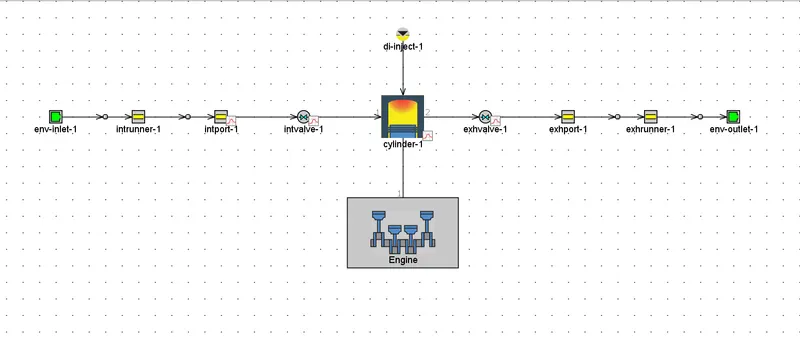
The intial and boundary conditions for the DI engine model have been chosen as follows
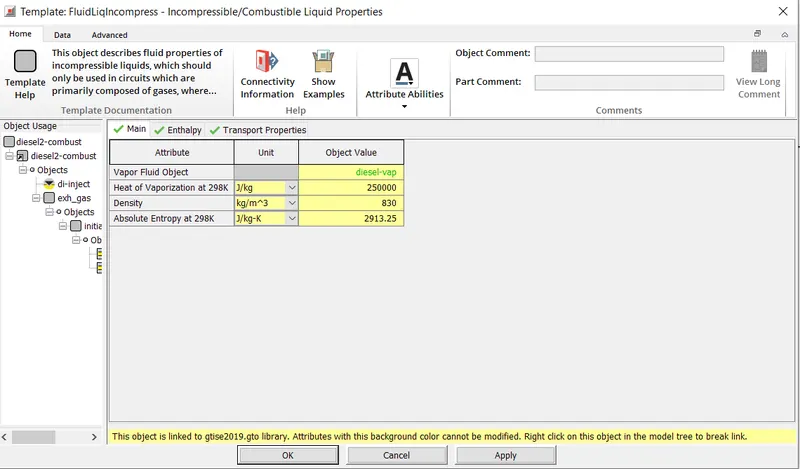
Fuel description
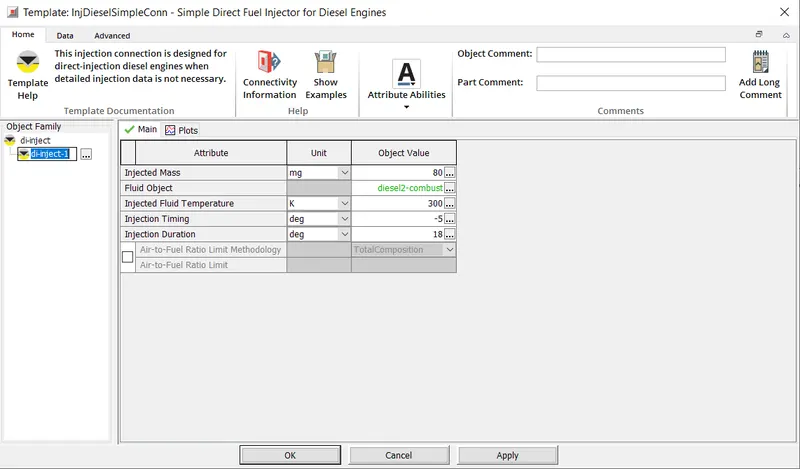
Injection duration
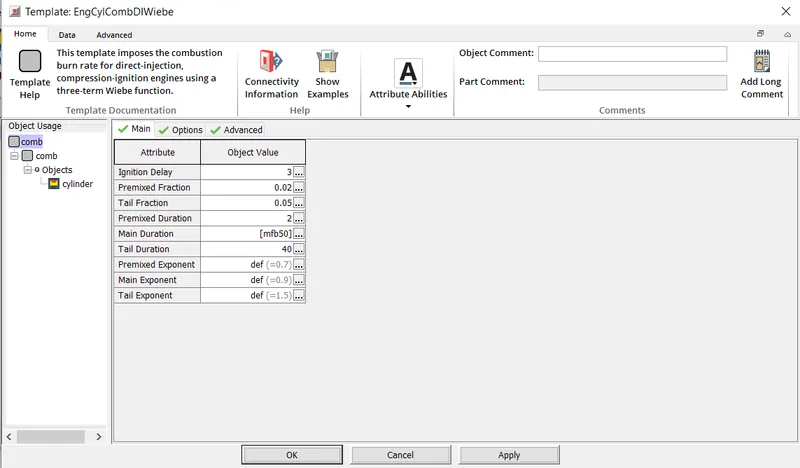
Non-predictive combustion model
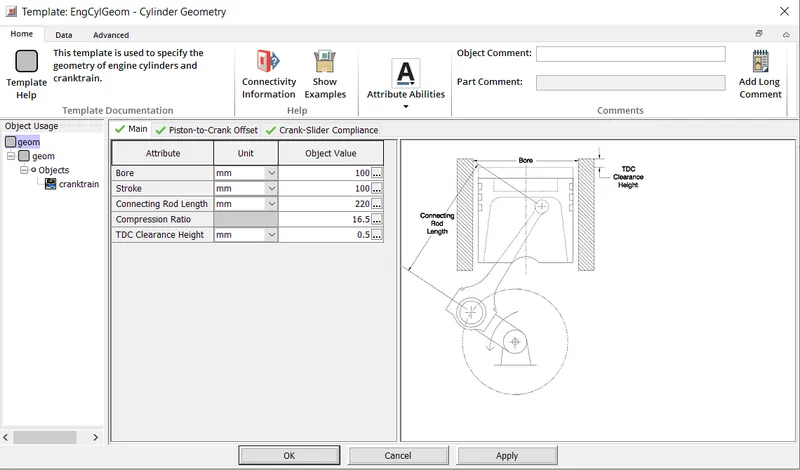
Dimensions of the engine cylinder
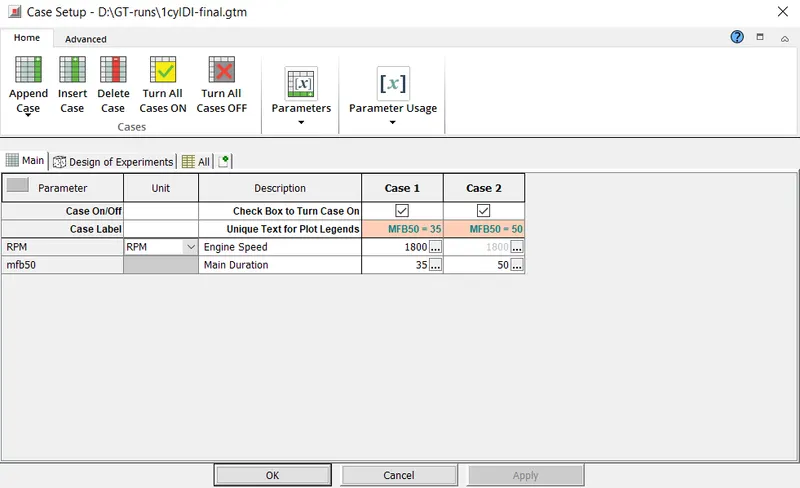
The rpm of the engine crankshaft and the mass fraction burned are chosen as the parameters for this study. Two cases are chosen with varying mass fraction burned at the same engine rpm.
Simulation results:
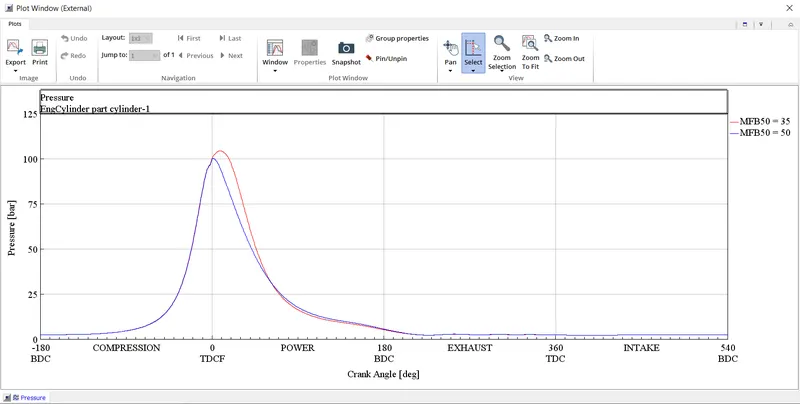
The pressure variation inside the cylinder with the crank angle for both cases
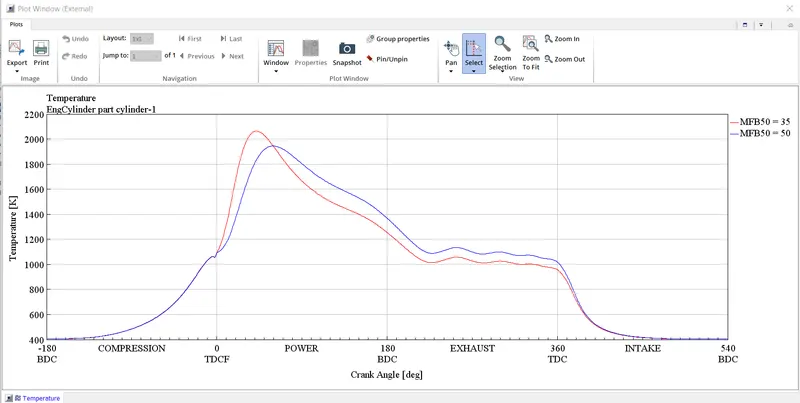
Temperature variation with the crank angle for both cases
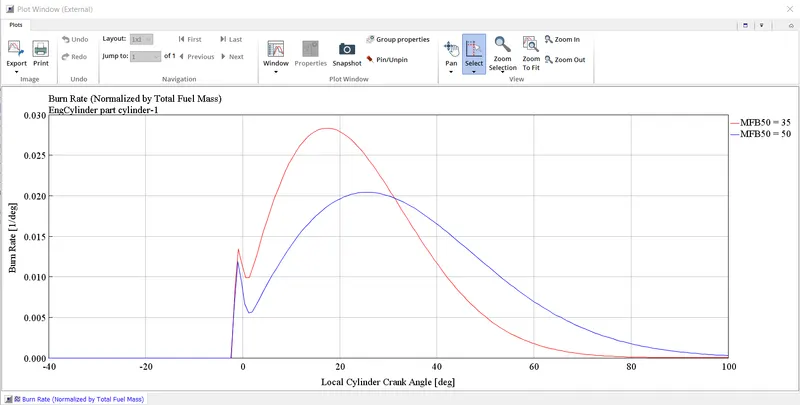
Normalised burn rate
Engine performance table comparision
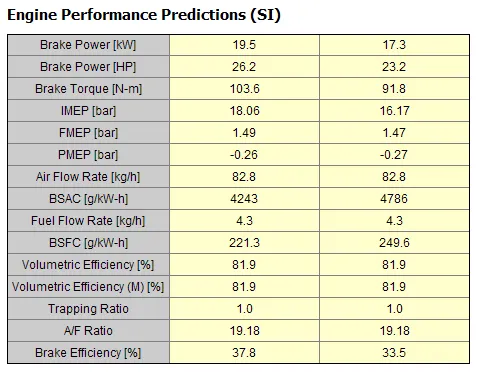
From these results we can conclude that burn rate has decreased due to the increase in the burn duration. Peak pressure and temperature also reduces with the increase in the duration as the fuel is not burning violently. This further shows that the lower burn rate corresponds with lower brake power and torque and increased BSFC.