Basic Calibration of Single cylinder CI-Engine in GT-SUITE
PART I:
| Attribute | SI Engine | CI Engine | |
|---|---|---|---|
| Charge Ignition | : | By spark | Self-ignition on compression |
| Thermodynamic cycle | : | Otto cycle | Diesel cycle |
| Thermal efficiency | : | Low | High |
| Fuel | : | Slow-burning fuels are used: Petrol, LPG, methanol, ethanol, bioethanol, CNG, Hydrogen | Fast burning fuels are used: Diesel, Bio-diesel |
| Engine speeds | : | High speeds, 1000-8000 RPM | Lower speeds, 1000-4000 RPM |
| Compression ratio | : | 9:1 to 12:1 | 14:1 to 22:1 |
| In-cylinder pressures | : | Lower | Higher |
| Weight | : | Lighter | Heavier |
| Fuel efficiency | : | Lower | Higher |
| Noise & vibrations | : | Less | More |
| Emissions | : | CO, HC, NOx | CO, HC, NOx, Soot |
| Air/Fuel ratio | : | Engine runs at near stoichiometric Air/Fuel ratio. | Engine runs leaner to prevent high soot concentration in the exhaust |
| Aftertreatment | : | Only a 3-way catalytic converter is used. | DOC(Diesel Oxidation Catalyst), DPF(Diesel Particulate Filter), and SCR(Selective Catalytic Reduction) are used. |
| Intake port | : | Directed port for tumbling the air | Helical port for swirling the air |
| Maintainance | : | Easier & low cost | A bit difficult & higher cost |
PART II:
BSFC (Brake Specific Fuel Consumption):
It is the rate of fuel consumption per unit brake power output produced by the engine. It is one of the most important parameters as it decides the fueling cost and vehicle range.
Exhaust temperature:
Exhaust temperature depends on many factors like air-fuel ratio, compression ratio, cooling, etc but the major factors are ones that directly affect combustion.
A/F ratio:
Air-Fuel ratio decides the combustion efficiency & emission characteristics of an engine. SI engines operate near stoichiometric for best performance while CI engines operate lean as stoichiometric or rich mix leads to excessive soot formation in the exhaust.
PART III:
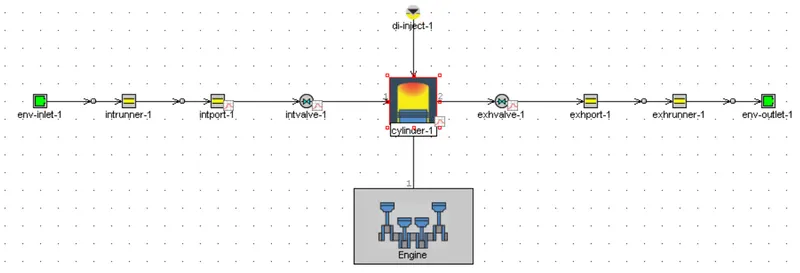
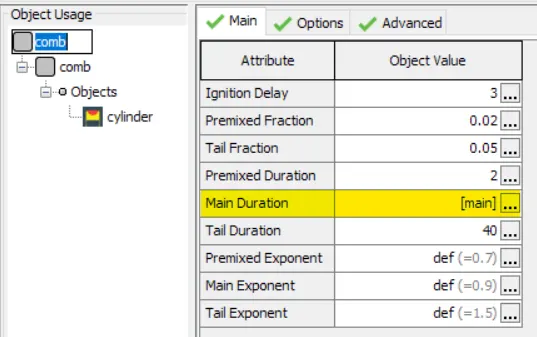
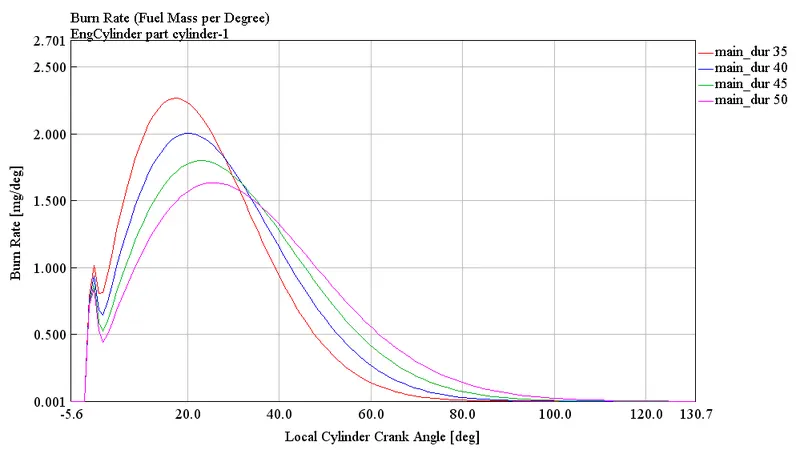
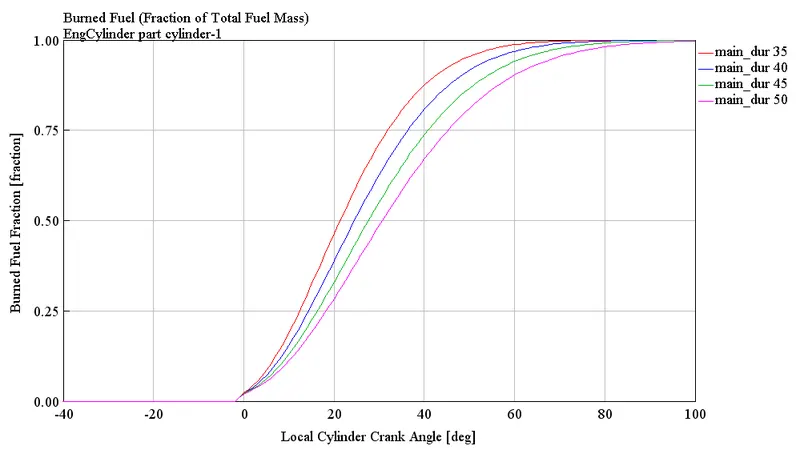
The tutorial file in the path "local drive:GTIv2019tutorialsModeling_ApplicationsEngine_Performance�1-1cylDIorSI1cylDI-Final.gtm" was selected and the crank angle where MFB 50 (Mass of Fuel Burned 50%) is varied by changing 'main duration' in the combustion object of the engine cylinder.
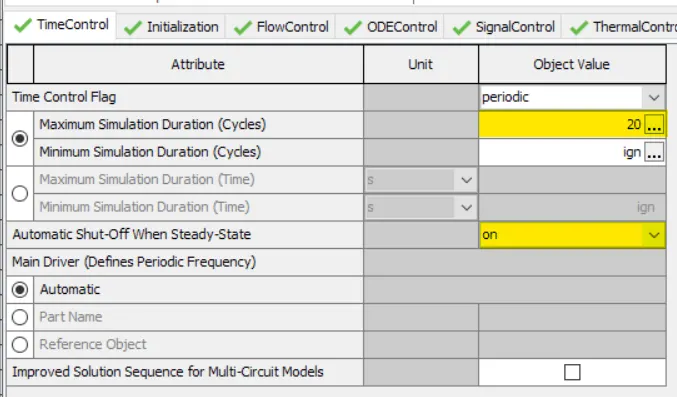
The project map, case setup & run setup are shown below.

# Results and post-processing:
# Observations:
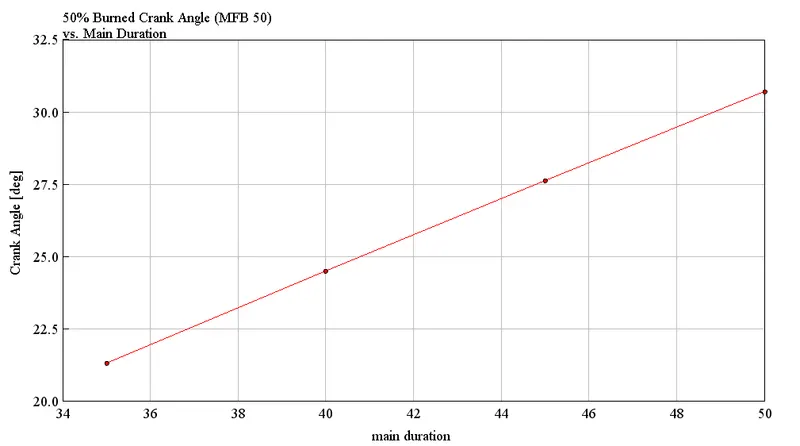
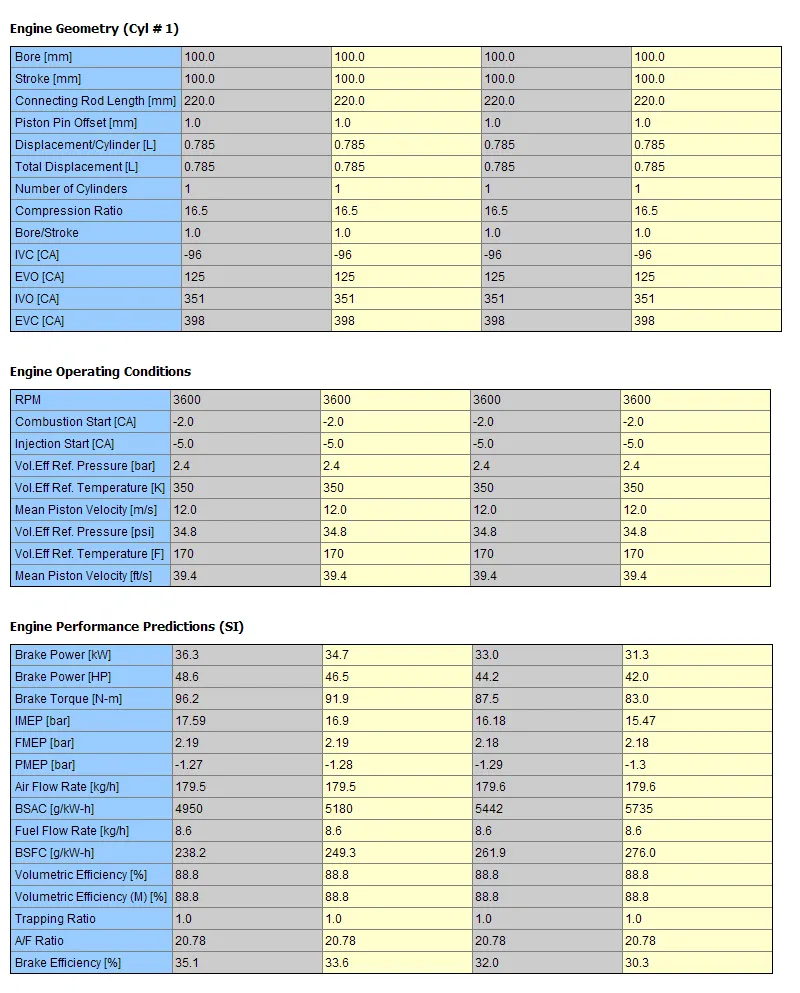
- It can be seen that MFB 50 increases linearly with an increase in main combustion duration. Hence MFB 50 is directly proportional to the main combustion duration.
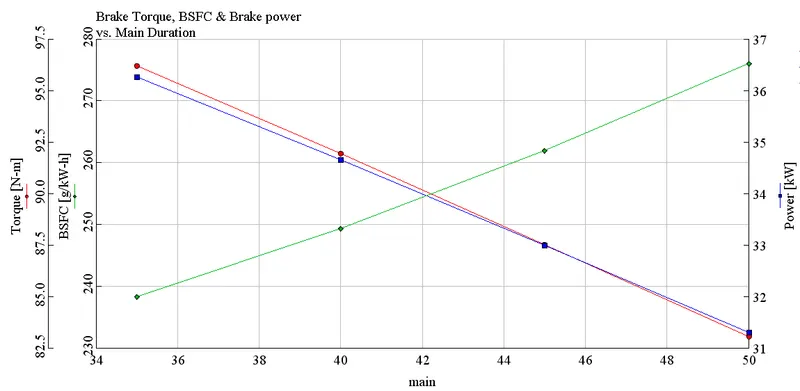
- BSCF increases with MFB 50 (since MFB 50 `prop` main combustion duration)
- Also, brake torque and brake power show a significant drop.
- So, the overall performance of the engine reduces as the main combustion duration & MFB 50 increase.