Week 4 - 2D Meshing for Sheet Metal
Title: CAD Model Cleanup and Meshing of CCB using 2D Elements
Aim: The aim of this report is to perform geometry cleanup, mid-surface extraction, and meshing of the Carbon-Carbon Brake (CCB) using 2D elements while adhering to quality criteria.
Objectives:
- To check the CAD model of the CCB for any geometry cleanup requirements.
- To create a mid-surface of the CCB.
- To mesh the mid-surface of the CCB using 2D elements.
- To adhere to quality criteria during the meshing process.
- To obtain accurate and reliable results from the computational analysis.’
Body of the Content:
Introduction:
Carbon-Carbon Brake (CCB) is an essential component of an aircraft's braking system. The CAD model of the CCB is created using various CAD software tools like CATIA, SolidWorks, etc. The aim of this report is to perform geometry cleanup, mid-surface extraction, and meshing of the CCB using 2D elements while adhering to quality criteria.
CAD Model Cleanup:
The CAD model of the CCB is checked for any geometry cleanup requirements. The geometry cleanup process involves removing any unwanted features or geometries from the CAD model that may lead to meshing difficulties or inaccuracies. After the cleanup process, the CAD model is ready for meshing.
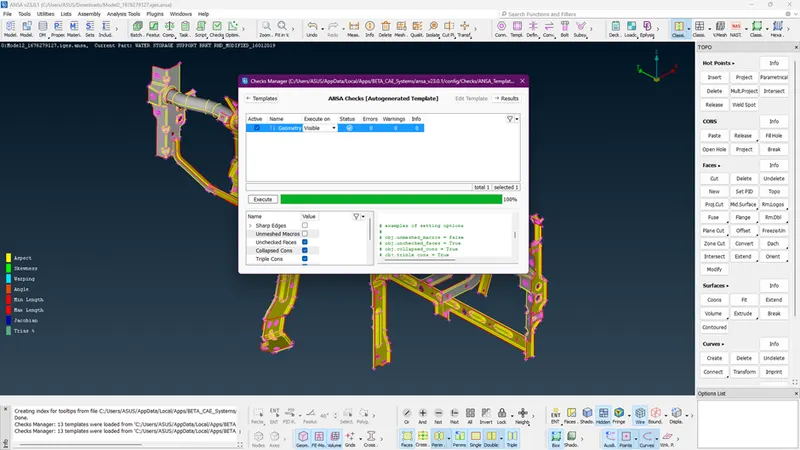
Mid-Surface Extraction:
A mid-surface of the CCB is created by extracting the thickness of the brake rotor. The mid-surface is a thin shell or surface that is used for meshing the component with 2D elements.
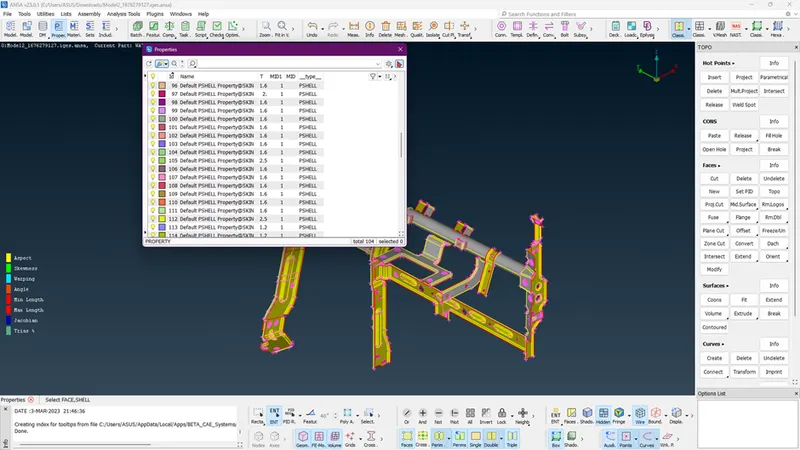
Meshing:
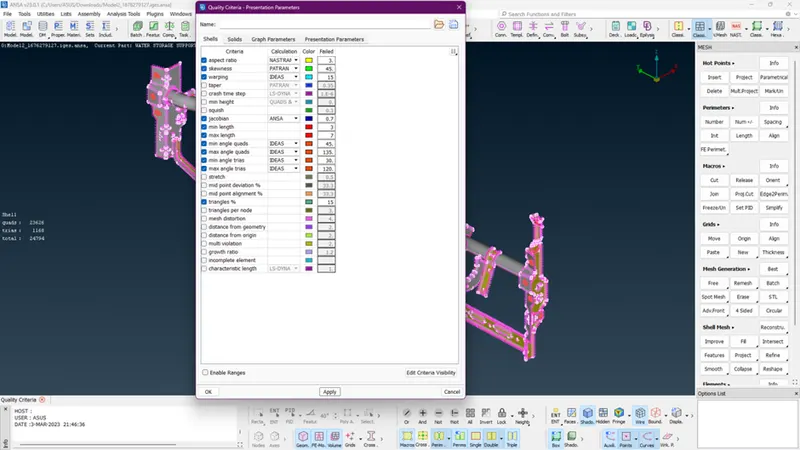
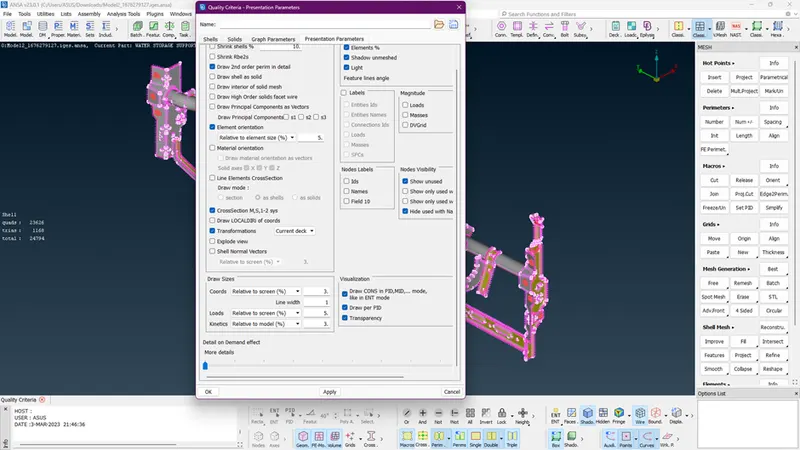
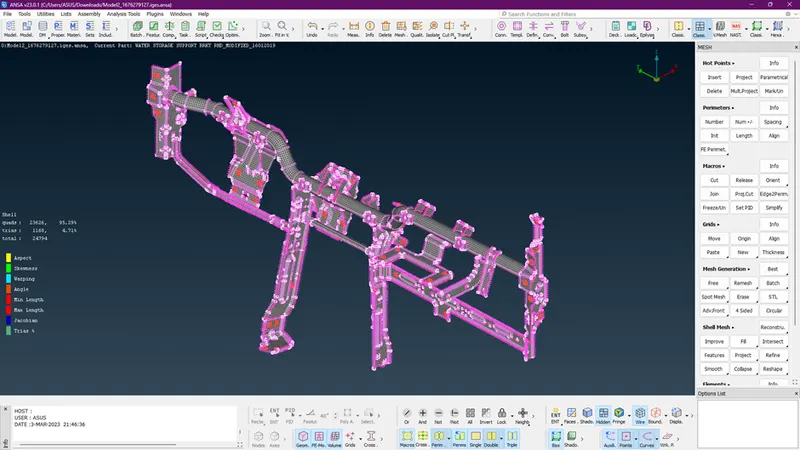
The mid-surface of the CCB is meshed using 2D elements. The meshing process adheres to the following quality criteria:
Element Size:
The element size is kept small enough to capture the details of the component accurately but not too small that it affects the computational time and memory requirements.
Aspect Ratio:
The aspect ratio of the element is kept within a certain range to avoid the creation of stretched elements that may lead to inaccuracies in the results.
Skewness:
The skewness of the element is kept within a certain range to avoid the creation of distorted elements that may lead to inaccuracies in the results.
Results:
- The CAD model cleanup, mid-surface extraction, and meshing processes are completed successfully, and the meshed model is ready.
- The meshed model adheres to the quality criteria mentioned above, ensuring the accuracy and reliability of the results obtained from the computational analysis.
- The total quad element present are 95.29%.
- The total trias are 4.71%.
Conclusion:
- In conclusion, the CAD model cleanup and meshing of the CCB using 2D elements are essential steps in obtaining accurate and reliable resultss.
- The geometry cleanup process involves removing any unwanted features or geometries from the CAD model that may lead to meshing difficulties or inaccuracies.
- The mid-surface extraction process creates a thin shell or surface that is used for meshing the component with 2D elements.
- The meshing process adheres to quality criteria like element size, aspect ratio, and skewness, ensuring the accuracy and reliability of the results obtained from the computational analysis.