Week 3 - 2D meshing for Sheet metal
Aim: To take the mid surface for all the components after checking the geometrical errors and meshing the mid surface with the given element Quality criteria.
Objectives of the project:
- To accurately identify and rectify any geometrical errors in the hood to ensure that the mid surfaces can be correctly generated and meshed.
- To generate mid surfaces for hood in the project using the appropriate software tools, ensuring that the mid surfaces are accurate and free of errors.
- To mesh the mid surfaces using the given element quality criteria, producing a high-quality mesh that meets the specified requirements for the project.
Body of the content
Steps carried out
- Import the 3D CAD model of the component into the meshing software.
- Check the geometrical accuracy of the component and make any necessary corrections to ensure that the mid-surface can be accurately generated.
- Extract the mid-surface of the component using the appropriate tools in the meshing software.
- Refine the mid-surface mesh to meet the given element quality criteria, ensuring that the mesh is of high quality and suitable for further analysis.
- Lower the percentage of tria and number of offset by reconstructing and improving the mesh quality.
Theory behind each step
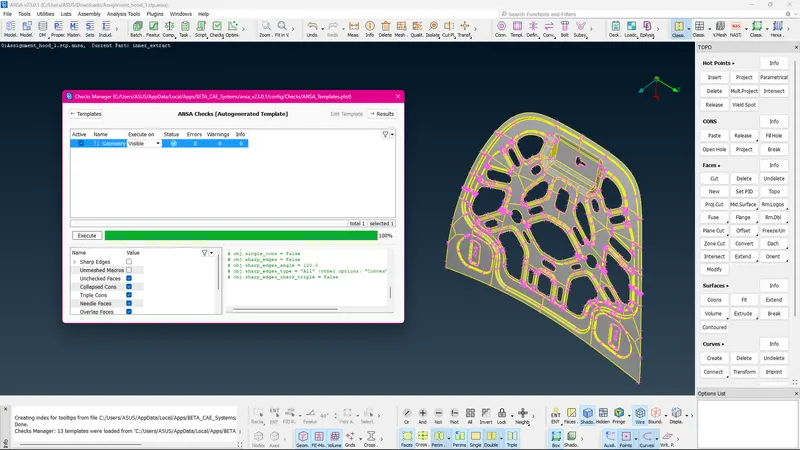
- Geometrical errors: Before generating the mid-surface, it is important to check the geometrical accuracy of the component. This involves identifying any errors in the geometry, such as gaps, overlaps, or distorted shapes, and correcting them to ensure that the mid-surface can be accurately generated.
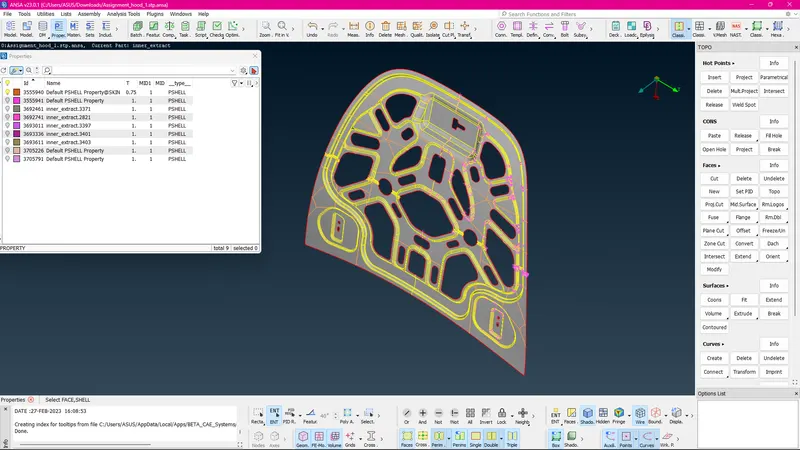
- Mid-surface extraction: The process of extracting the mid-surface of a 3D component involves identifying and selecting the middle surface of the component, which is equidistant from the top and bottom surfaces. This mid-surface is then used to generate a 2D mesh, which can be used for further analysis.
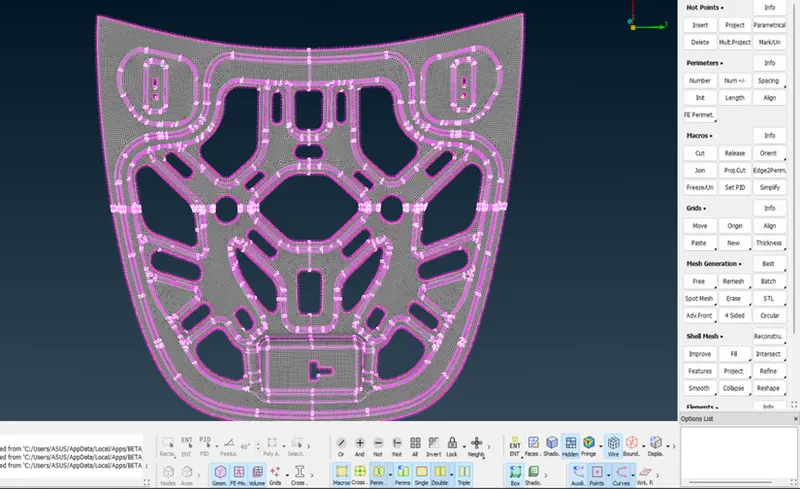
- Meshing: Once the mid-surface has been extracted, it can be meshed using the given element quality criteria. This involves dividing the mid-surface into a series of smaller elements, each of which must meet certain criteria for size, shape, and aspect ratio. The resulting mesh should be of high quality and suitable for further analysis.
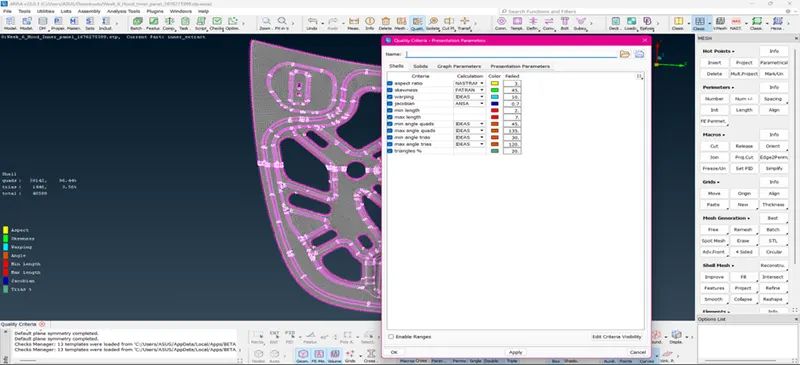
- Element quality criteria: The element quality criteria refer to a set of guidelines or standards that determine the quality of the mesh. This can include requirements for the size, shape, and aspect ratio of the individual elements, as well as the overall distribution of elements across the mid-surface. By ensuring that the mesh meets these criteria, the accuracy and reliability of any subsequent analysis can be improved.
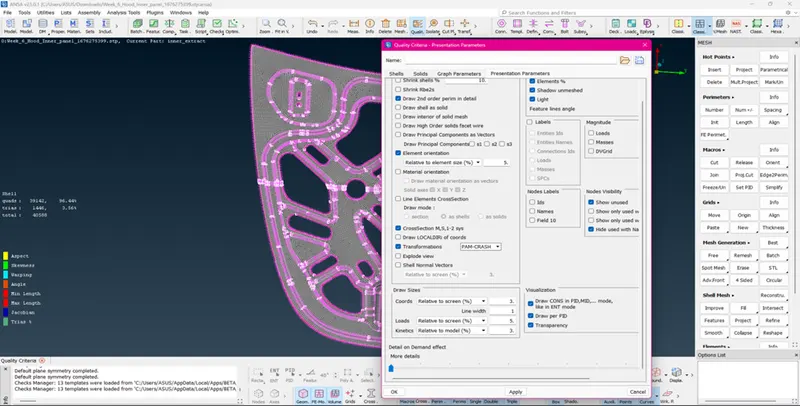
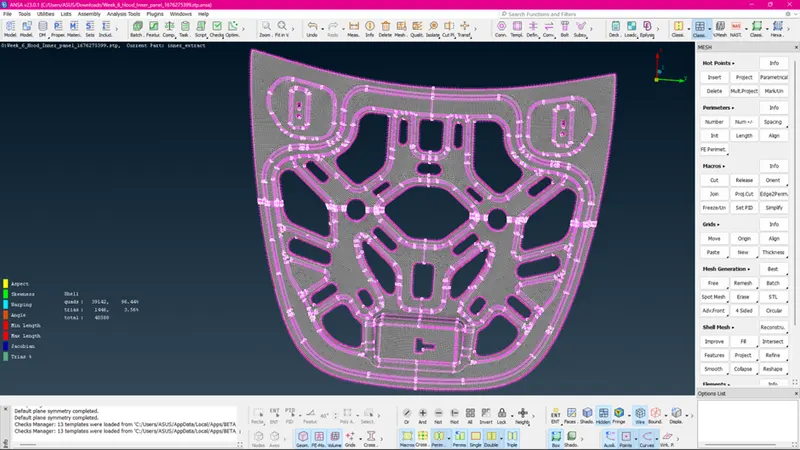
Final results
Conclusion
- The trias percentage at the end of the meshing were 3.59 %
- All the off elements were solved.
- Total percentage of quad element were 96.41%